



PD176252
Based on 2 publication(s) in Google Scholar
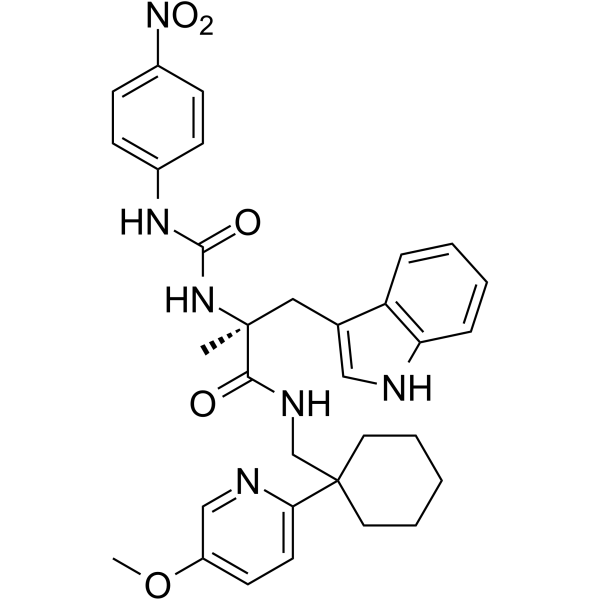
PD176252 is a potent antagonist of neuromedin-B preferring (BB1) and gastrin-releasing peptide-preferring (BB2) receptor with Kis of 0.17 nM and 1 nM for human BB1 and BB2 receptors, and 0.66 nM, 16 nM for Rat BB1 and BB2 receptors, respectively; PD176252 is also an agonist of N-Formyl peptide receptor1/2 (FPR1/FPR2), with EC50s of 0.31 and 0.66 μM in HL-60 cells.
For research use only. We do not sell to patients.
- Purity : 99.38%
- CAS No.: 204067-01-6
- Formula: C32H36N6O5
- Molecular Weight:584.67
-
Storage:
4°C, stored under nitrogen, away from moisture
* In solvent : -80°C, 6 months; -20°C, 1 month (stored under nitrogen, away from moisture)

To place orders, for customer services and technical support, please contact: MedChemExpress USA
Tel: 609-228-6898 E-mail: [email protected] [email protected]


-
 Biological Activity
-
Chemical Information
-
Solvent & Solubility
- Purity & Documentation
- References
-
 Help & FAQs


-

HY-P0238
Gastrin-Releasing Peptide, humanGastrin Releasing Peptide -
HY-116216
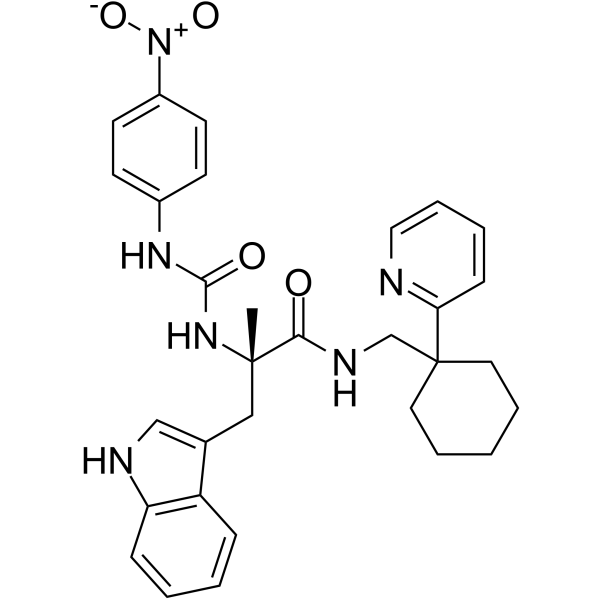
PD 168368NMB-R/GRPR Antagonist -
HY-P0107A
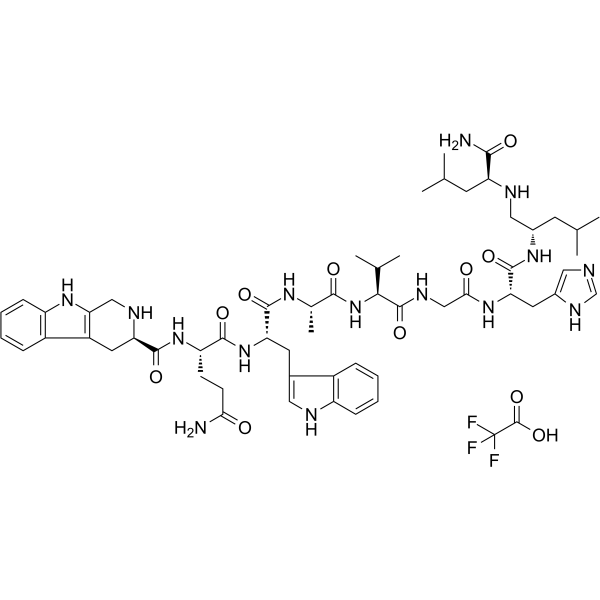
RC-3095 TFAGRPR Antagonist -
HY-P0195
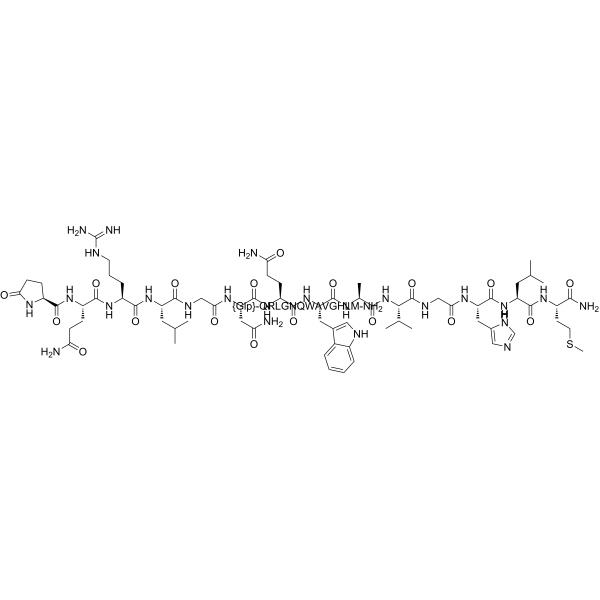
BombesinBombesin Receptor Modulator -
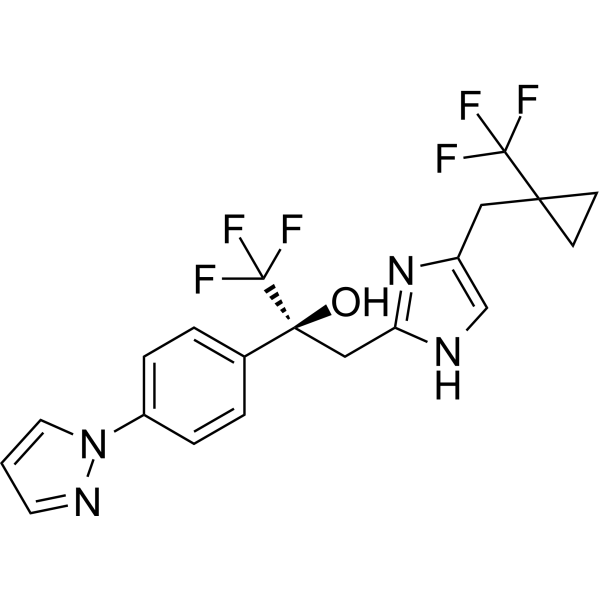
HY-14342
MK-5046BRS-3 Agonist -
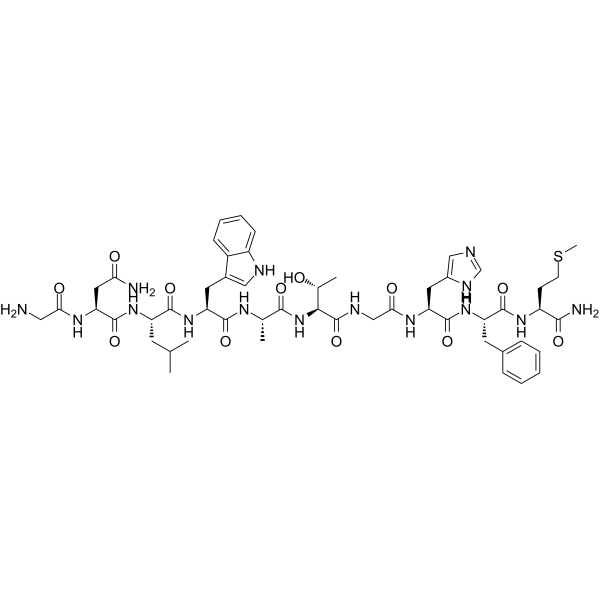
HY-P0241
Neuromedin BEndogenous Metabolite -

HY-103286R
PD176252 (Standard)Reference Standard -
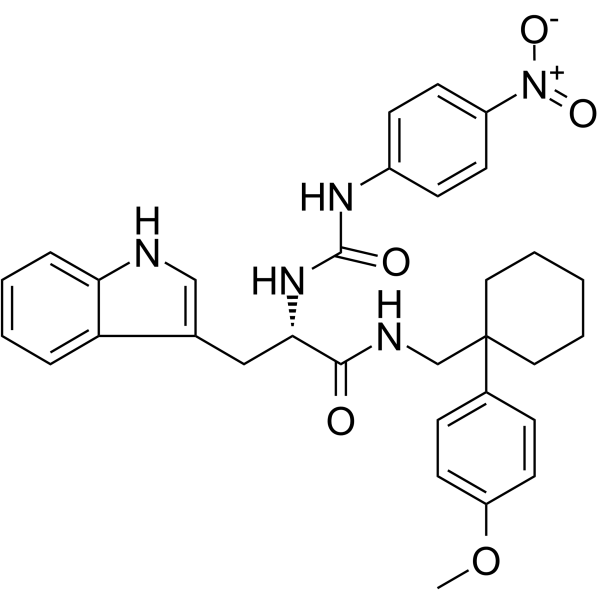
HY-101844
ML-18BRS-3 Antagonist -
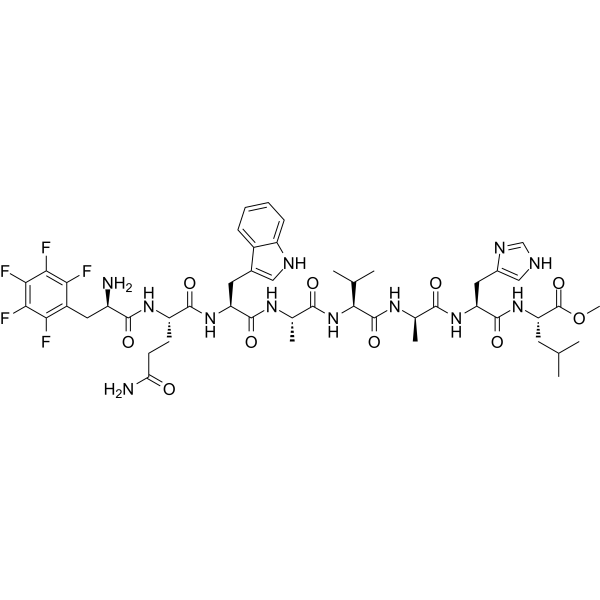
HY-P0039
BIM-26226GRP/BN receptor Antagonist -
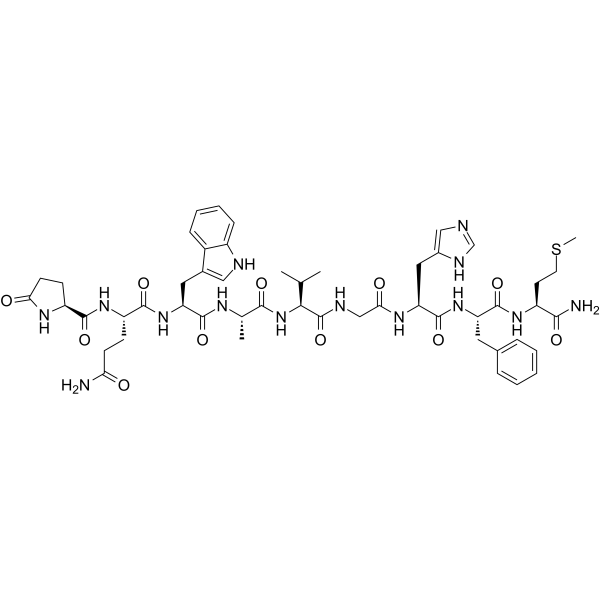
HY-103281
LitorinBombesin Receptor Agonist -
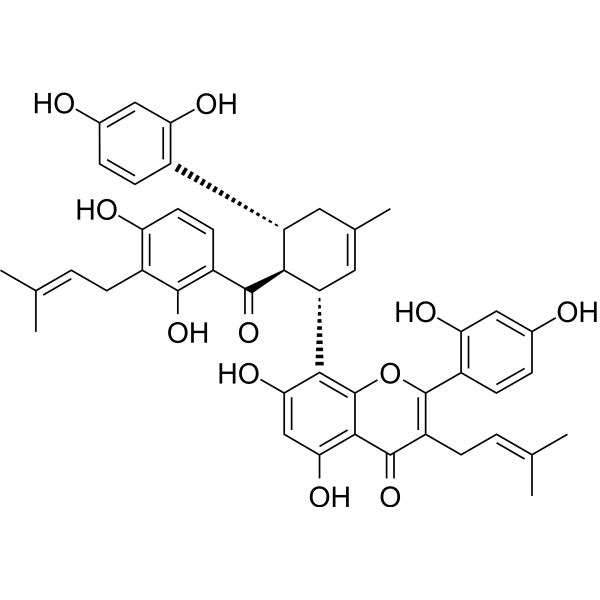
HY-N2600
Kuwanon HBombesin Receptor Antagonist/Platelet Activation Inhibitor/GRPR Antagonist -
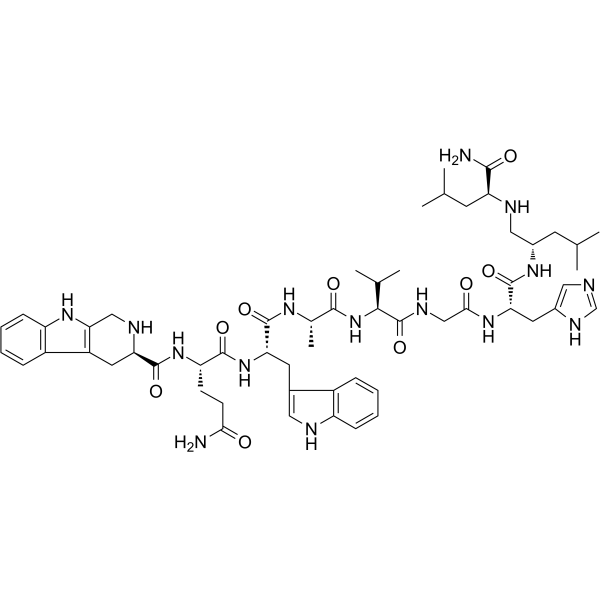
HY-P0107
RC-3095GRPR Antagonist
Publications Citing Use of MedChemExpress (MCE) PD176252
More

Biological Activity
Description
IC50 & Target
Ki: 0.17 nM (Human BB1 receptor), 0.66 nM (Rat BB1 receptor), 1 nM (Human BB2 receptor), 16 nM (Rat BB2 receptor)[1]
EC50: 0.31 μM (FPR1), 0.66 μM (FPR2)[2]
In Vitro
PD176252 is a potent antagonist of neuromedin-B preferring (BB1) and gastrin-releasing peptide-preferring (BB2) receptor with Kis of 0.17 nM and 1 nM for human BB1 and BB2 receptors, and 0.66 nM, 16 nM for Rat BB1 and BB2 receptors, respectively. PD176252 inhibits acidification responses to neuromedin-B or neuromedin-C at the human BB1 or BB2 receptors expressed in CHO cells, with the appKBs of 4.0 nM or 13 nM, and blocks bombesin-evoked increases in intracellular calcium levels in CHO cells stably expressing human BB1 or BB2 receptors, with appKBs of 2.3 nM and 36 nM, respectively. PD176252 is also an agonist of N-Formyl peptide receptor1/2 (FPR1/FPR2), with EC50s of 0.31 and 0.66 μM in HL-60 cells. PD176252 activates Ca2+ mobilization in HL-60 cells transfected with human FPRs (EC50, 0.72 ± 0.21 μM)[2]. PD176252 inhibits little specific 125I-gastrin releasing peptide binding to NCI-H345 cells at 1 nM and suppresses almost all specific bindings at 1000 nM, with an IC50 of 30 nM. PD176252 (10, 30 μM) significantly inhibits the growth of NCI-H345 or H1299 cells, with IC50s of 7 and 5 μM[3].
MedChemExpress (MCE) has not independently confirmed the accuracy of these methods. They are for reference only.
In Vivo
MedChemExpress (MCE) has not independently confirmed the accuracy of these methods. They are for reference only.


Chemical Information
-
CAS No. 204067-01-6
-
Appearance Solid
-
Molecular Weight 584.67
-
Formula C32H36N6O5
-
Color Light yellow to yellow
-
SMILES
O=C(NC1=CC=C([N+]([O-])=O)C=C1)N[C@](CC2=CNC3=C2C=CC=C3)(C)C(NCC4(C5=CC=C(OC)C=N5)CCCCC4)=O
-
Shipping
Room temperature in continental US; may vary elsewhere.
-
Storage
4°C, stored under nitrogen, away from moisture
* In solvent : -80°C, 6 months; -20°C, 1 month (stored under nitrogen, away from moisture)


Publications (2)
-
Journal Impact Factor
-
Most Recent
-
Nat Commun
Neuropeptide Y neurons mediate opioid-induced itch by disinhibiting GRP-GRPR microcircuits in the spinal cord. [Abstract]2025 Aug 1;16(1):7074. PMID: 40750771 -
Cell Rep
Cannabinoid CB2 receptor controls chronic itch by regulating spinal microglial activation and synaptic transmission. [Abstract]2025 Apr 11;44(4):115559. PMID: 40222011


Solvent & Solubility
In Vitro:
DMSO : 100 mg/mL (171.04 mM; Need ultrasonic; Hygroscopic DMSO has a significant impact on the solubility of product, please use newly opened DMSO)
Please refer to the solubility information to select the appropriate solvent. Once prepared, please aliquot and store the solution to prevent product inactivation from repeated freeze-thaw cycles.
Storage method and period of stock solution: -80°C, 6 months; -20°C, 1 month (stored under nitrogen, away from moisture). When stored at -80°C, please use it within 6 months. When stored at -20°C, please use it within 1 month.
Please refer to the solubility information to select the appropriate solvent. Once prepared, please aliquot and store the solution to prevent product inactivation from repeated freeze-thaw cycles.
Storage method and period of stock solution: -80°C, 6 months; -20°C, 1 month (stored under nitrogen, away from moisture). When stored at -80°C, please use it within 6 months. When stored at -20°C, please use it within 1 month.
Concentration (start) × Volume (start) = Concentration (final) × Volume (final)
In Vivo:
Select the appropriate dissolution method based on your experimental animal and administration route.
- For the following dissolution methods, please ensure to first prepare a clear stock solution using an In Vitro approach and then sequentially add co-solvents:
- To ensure reliable experimental results, the clarified stock solution can be appropriately stored based on storage conditions. As for the working solution for In Vivo experiments, it is recommended to prepare freshly and use it on the same day.
- The percentages shown for the solvents indicate their volumetric ratio in the final prepared solution. If precipitation or phase separation occurs during preparation, heat and/or sonication can be used to aid dissolution.
Add each solvent one by one: 10% DMSO 40% PEG300 5% Tween-80 45% Saline
Solubility: 5.75 mg/mL (9.83 mM); Suspended solution; Need ultrasonic
This protocol yields a suspended solution of 5.75 mg/mL. Suspended solution can be used for oral and intraperitoneal injection.
Taking 1 mL working solution as an example, add 100 μL DMSO stock solution (57.5 mg/mL) to 400 μL PEG300, and mix evenly; then add 50 μL Tween-80 and mix evenly; then add 450 μL Saline to adjust the volume to 1 mL.
Preparation of Saline: Dissolve 0.9 g sodium chloride in ddH₂O and dilute to 100 mL to obtain a clear Saline solution.
In Vivo Dissolution Calculator
Please enter the basic information of animal experiments:
-
-
-
-
Recommended: Prepare an additional quantity of animals to account for potential losses during experiments.
Please enter your animal formula composition:
-
%DMSO +
Recommended: Keep the proportion of DMSO in working solution below 2% if your animal is weak.
-
%+
-
+%Tween-80 + +
-
%Saline +
The co-solvents required include: DMSO, . All of co-solvents are available by MedChemExpress (MCE). , Tween 80. All of co-solvents are available by MedChemExpress (MCE).
Working solution concentration: 0.22 mg/mL
Method for preparing stock solution: mg drug dissolved in μL DMSO. Stock solution concentration: mg/mL. * In solvent : -80°C, 6 months; -20°C, 1 month (stored under nitrogen, away from moisture)
1. Take μL DMSO stock solution;
2. Add μL .
μL , mix evenly;
3. Then add μL Tween 80, mix evenly;
4. Then add μL
Please ensure that the stock solution in the first step is dissolved to a clear state, and add co-solvents in sequence. You can use ultrasonic heating (ultrasonic cleaner, recommended frequency 20-40 kHz), vortexing, etc. to assist dissolution.


Purity & Documentation
-
Data Sheet (282 KB)
-
SDS (393 KB)
- English - EN (393 KB)
- Français - FR (393 KB)
- Deutsch - DE (393 KB)
- Norwegian - NO (393 KB)
- Español - ES (393 KB)
- Swedish - SV (393 KB)
- Italian - IT (393 KB)
- Korean - KR (393 KB)
- Portuguese - PT (393 KB)
-
Handling Instructions (2659 KB)
References
[1]. Ashwood V, et al. PD 176252--the first high affinity non-peptide gastrin-releasing peptide (BB2) receptor antagonist. Bioorg Med Chem Lett. 1998 Sep 22;8(18):2589-94. [Content Brief]
[2]. Schepetkin IA, et al. Gastrin-releasing peptide/neuromedin B receptor antagonists PD176252, PD168368, and related analogs are potent agonists of human formyl-peptide receptors. Mol Pharmacol. 2011 Jan;79(1):77-90. [Content Brief]
[3]. Moody TW, et al. Nonpeptide gastrin releasing peptide receptor antagonists inhibit the proliferation of lung cancer cells. Eur J Pharmacol. 2003 Aug 1;474(1):21-9. [Content Brief]


Complete Stock Solution Preparation Table
Please refer to the solubility information to select the appropriate solvent. Once prepared, please aliquot and store the solution to prevent product inactivation from repeated freeze-thaw cycles.
Storage method and period of stock solution: -80°C, 6 months; -20°C, 1 month (stored under nitrogen, away from moisture). When stored at -80°C, please use it within 6 months. When stored at -20°C, please use it within 1 month.
| Optional Solvent | Concentration Solvent Mass | 1 mg | 5 mg | 10 mg | 25 mg |
|---|---|---|---|---|---|
| DMSO | 1 mM | 1.7104 mL | 8.5518 mL | 17.1037 mL | 42.7592 mL |
| 5 mM | 0.3421 mL | 1.7104 mL | 3.4207 mL | 8.5518 mL | |
| 10 mM | 0.1710 mL | 0.8552 mL | 1.7104 mL | 4.2759 mL | |
| 15 mM | 0.1140 mL | 0.5701 mL | 1.1402 mL | 2.8506 mL | |
| 20 mM | 0.0855 mL | 0.4276 mL | 0.8552 mL | 2.1380 mL | |
| 25 mM | 0.0684 mL | 0.3421 mL | 0.6841 mL | 1.7104 mL | |
| 30 mM | 0.0570 mL | 0.2851 mL | 0.5701 mL | 1.4253 mL | |
| 40 mM | 0.0428 mL | 0.2138 mL | 0.4276 mL | 1.0690 mL | |
| 50 mM | 0.0342 mL | 0.1710 mL | 0.3421 mL | 0.8552 mL | |
| 60 mM | 0.0285 mL | 0.1425 mL | 0.2851 mL | 0.7127 mL | |
| 80 mM | 0.0214 mL | 0.1069 mL | 0.2138 mL | 0.5345 mL | |
| 100 mM | 0.0171 mL | 0.0855 mL | 0.1710 mL | 0.4276 mL |


PD176252 Related Classifications
HY-103286 Related Classifications
 Powered by Bioz