



Hydroxocobalamin
Based on 3 publication(s) in Google Scholar
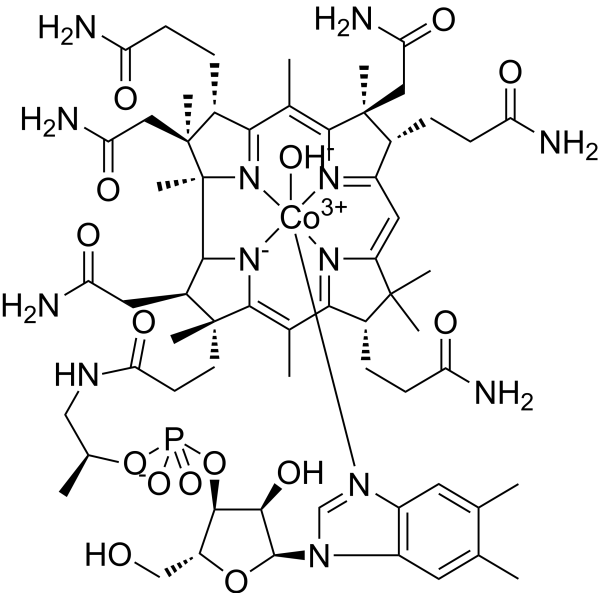
Hydroxocobalamin (Vitamin B12a) is a cyanide antidote. Hydroxocobalamin can decrease the cell and plasma cyanide concentrations and increase survival rate in acute cyanide poisoning. Hydroxocobalamin can improve newborn Cbl-C defect-induced metabolic profile and neurocognitive outcome. Hydroxocobalamin can normalize Vitamin B12 deficiency. Hydroxocobalamin can induce acute kidney injury. Hydroxocobalamin can be used for the researches of metabolic and neurological disease.
For research use only. We do not sell to patients.
- Purity : 99.32%
- CAS No.: 13422-51-0
- Formula: C62H89CoN13O15P
- Molecular Weight:1346.36
-
Storage:
4°C, sealed storage, away from moisture
* In solvent : -80°C, 6 months; -20°C, 1 month (sealed storage, away from moisture)

To place orders, for customer services and technical support, please contact: MedChemExpress USA
Tel: 609-228-6898 E-mail: [email protected] [email protected]


-
 Biological Activity
-
Chemical Information
-
Solvent & Solubility
- Protocols
- Purity & Documentation
- References
-
 Help & FAQs


-
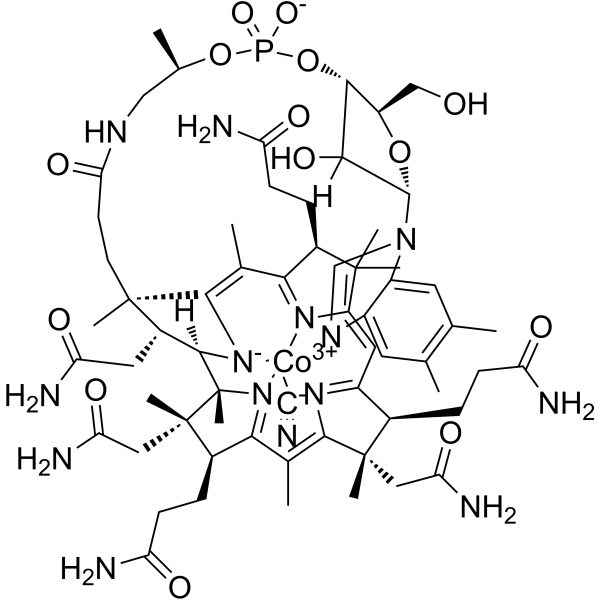
HY-B0315
Vitamin B12Endogenous Metabolite -
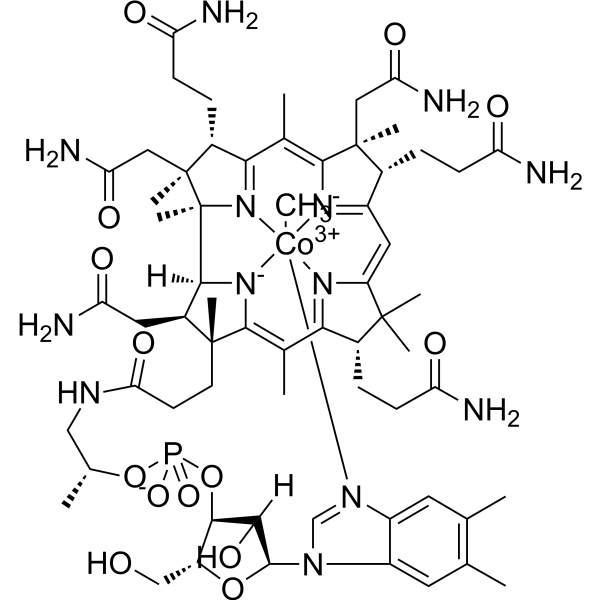
HY-B0586
MethylcobalaminVitamin B12 -
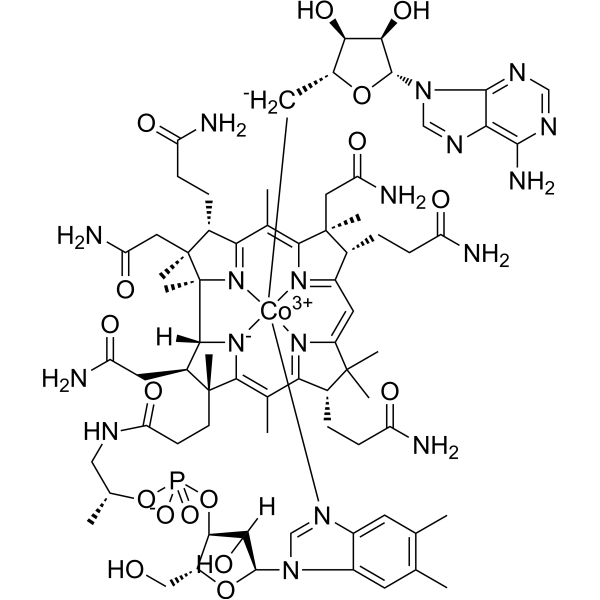
HY-112790
AdenosylcobalaminCoenzyme -

HY-B0586R
Methylcobalamin (Standard)Vitamin B12 -

HY-B1342
Vitamin A -
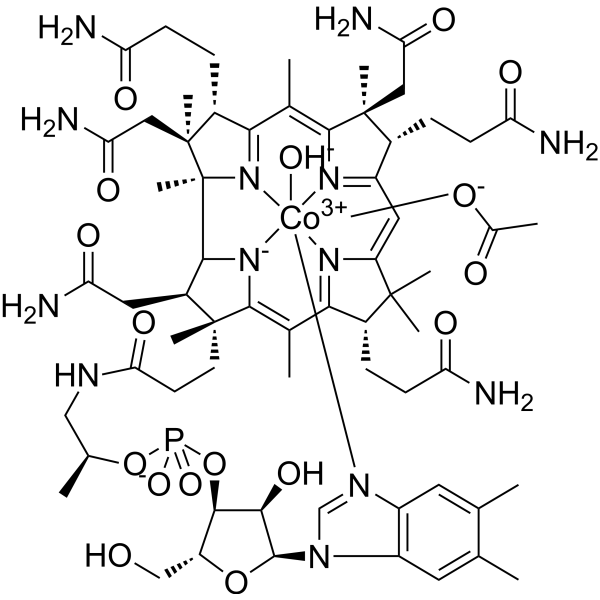
HY-B2209B
Hydroxocobalamin acetateCyanide Antidote -
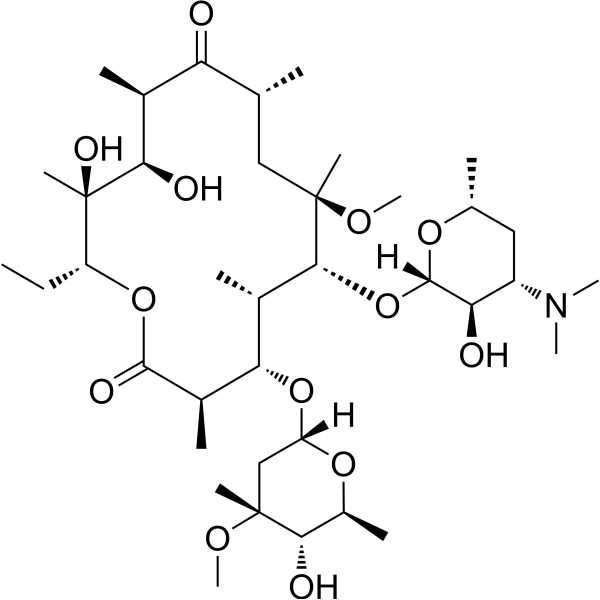
HY-17508
ClarithromycinAntimicrobial Agent -
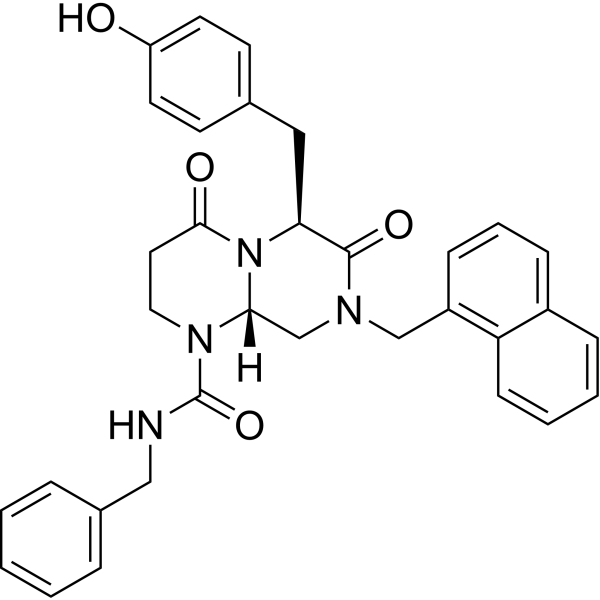
HY-14428
ICG-001Apoptosis Inducer -
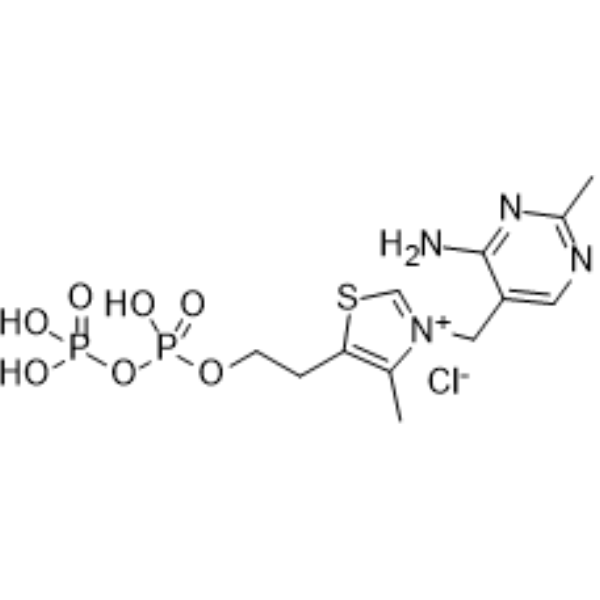
HY-113076
Thiamine pyrophosphateEndogenous Metabolite -

HY-B0315R
Vitamin B12 (Standard)Endogenous Metabolite -

HY-113076R
Thiamine pyrophosphate (Standard)Endogenous Metabolite -
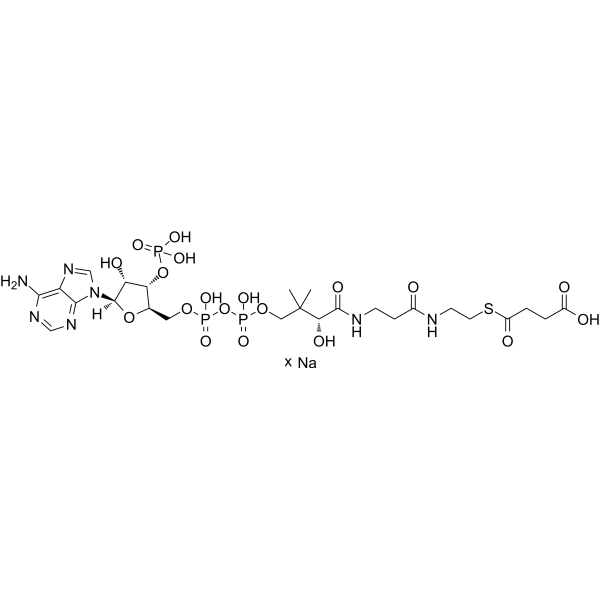
HY-137808
Succinyl-Coenzyme A sodiumCoenzyme A Derivative
Publications Citing Use of MedChemExpress (MCE) Hydroxocobalamin
MoreAll Endogenous Metabolite Isoforms
More

Biological Activity
Description
In Vitro
Hydroxocobalamin (1 mM, 5 mins) recovers sodium cyanide-induced inotropy decrease in cardiac papillary muscle[1].
Hydroxocobalamin (500 μM, 10 mins) decreases intracellular cyanide in fibroblasts[1].
MedChemExpress (MCE) has not independently confirmed the accuracy of these methods. They are for reference only. Further protocols information, click here.
In Vivo
MedChemExpress (MCE) has not independently confirmed the accuracy of these methods. They are for reference only.
-
Animal Model:Yorkshire swine (Sus scrofa); hemorrhage model, induced by volume-controlled and uncontrolled hemorrhage[2]
-
Dosage:150 mg/kg
-
Administration:Intravenously injection
-
Result:Maintained higher systolic blood pressure.
Heart rate (HR), cardiac output (CO), Spo2 and vascular resistance were comparable with whole blood.
Clinical Trial
| NCT Number | Sponsor | Condition | Start Date |
Phase

|
|---|---|---|---|---|
| NCT01329991 | Plexxikon| | 2011-05 | PHASE1 |


Chemical Information
-
CAS No. 13422-51-0
-
Appearance Solid
-
Molecular Weight 1346.36
-
Formula C62H89CoN13O15P
-
Color Purple to reddish brown
-
SMILES
C[C@@]12[N]([Co+3]34([N]5=C[N@@]([C@@H](O[C@H](CO)[C@H]6OP7([O-])=O)[C@@H]6O)C8=C5C=C(C)C(C)=C8)([OH-])[N-]9C2[C@H](CC(N)=O)[C@@](C)(CCC(NC[C@H](C)O7)=O)C9=C(C)C([C@@H](CCC(N)=O)C%10(C)C)=[N]3C%10=CC%11=[N]4C([C@](CC(N)=O)(C)[C@@H]%11CCC(N)=O)=C%12C)=C%12[C@@H](CCC(N)=O)[C@]1(C)CC(N)=O
-
Synonyms
Vitamin B12a
-
Structure Classification
-
Initial Source
-
Shipping
Room temperature in continental US; may vary elsewhere.
-
Storage
4°C, sealed storage, away from moisture
* In solvent : -80°C, 6 months; -20°C, 1 month (sealed storage, away from moisture)


Publications (3)
-
Journal Impact Factor
-
Most Recent
-
Nat Commun
2025 Jan 31;16(1):1233. PMID: 39890804 -
Nat Commun
Design of modular autoproteolytic gene switches responsive to anti-coronavirus drug candidates. [Abstract]2021 Nov 22;12(1):6786. PMID: 34811361 -
J Clin Transl Hepatol
Hydrogen Sulfide Promotes Platelet Autophagy via PDGFR-α/PI3K/Akt Signaling in Cirrhotic Thrombocytopenia. [Abstract]2024 Jul 28;12(7):625-633. PMID: 38993511


Solvent & Solubility
In Vitro:
DMSO : 25 mg/mL (18.57 mM; Need ultrasonic; Hygroscopic DMSO has a significant impact on the solubility of product, please use newly opened DMSO)
Please refer to the solubility information to select the appropriate solvent. Once prepared, please aliquot and store the solution to prevent product inactivation from repeated freeze-thaw cycles.
Storage method and period of stock solution: -80°C, 6 months; -20°C, 1 month (sealed storage, away from moisture). When stored at -80°C, please use it within 6 months. When stored at -20°C, please use it within 1 month.
Please refer to the solubility information to select the appropriate solvent. Once prepared, please aliquot and store the solution to prevent product inactivation from repeated freeze-thaw cycles.
Storage method and period of stock solution: -80°C, 6 months; -20°C, 1 month (sealed storage, away from moisture). When stored at -80°C, please use it within 6 months. When stored at -20°C, please use it within 1 month.
Concentration (start) × Volume (start) = Concentration (final) × Volume (final)

Protocols
-
Nephrotoxicity Study
This protocol assesses nephrotoxicity by combining functional kidney injury readouts, urinary/tissue injury biomarkers, and renal histopathology. Serum creatinine and BUN reflect impaired kidney function, while KIM-1, NGAL, clusterin, osteopontin, IL-18, cystatin C, nephrin, Oat5, urinary protein, glucose, and alkaline phosphatase have been used to detect tubular injury in cisplatin-, gentamicin-, and acetaminophen-induced nephrotoxicity models.
-
Research Protocol for Neurological Diseases
PINK1/Parkin-mediated mitophagy pathway is a mitochondrial quality-control signaling axis in which mitochondrial depolarization stabilizes PINK1 on damaged mitochondria, activates Parkin recruitment and E3 ubiquitin ligase activity, promotes ubiquitination of outer mitochondrial membrane proteins, recruits selective autophagy adaptors, and drives lysosomal degradation of damaged mitochondria. In neurological disease research, this pathway is experimentally important because neurons, especially dopaminergic neurons, are highly dependent on mitochondrial integrity, and defective mitochondrial turnover can lead to mitochondrial dysfunction, oxidative stress, impaired neuronal survival, α-synuclein accumulation, and neuroinflammatory damage-associated signals. The genetic disease link is strongest in Parkinson’s disease because mutations in PRKN/parkin cause autosomal recessive juvenile parkinsonism, mutations in PINK1 cause hereditary early-onset Parkinson’s disease, and Drosophila studie


Purity & Documentation
-
Data Sheet (294 KB)
-
SDS (394 KB)
- English - EN (394 KB)
- Français - FR (394 KB)
- Deutsch - DE (394 KB)
- Norwegian - NO (394 KB)
- Español - ES (394 KB)
- Swedish - SV (394 KB)
- Italian - IT (394 KB)
- Korean - KR (394 KB)
- Portuguese - PT (394 KB)
-
Handling Instructions (2659 KB)
References
[1]. Thompson JP, et al. Hydroxocobalamin in cyanide poisoning. Clin Toxicol (Phila). 2012;50(10):875-885. [Content Brief]
[2]. Paredes RM, et al. Comparison of hydroxocobalamin with other resuscitative fluids in volume-controlled and uncontrolled hemorrhage models in swine ( Sus-scrofa ). J Trauma Acute Care Surg. 2023;95(2S Suppl 1):S120-S128. [Content Brief]
[3]. Olivieri G, et al. Improved biochemical and neurodevelopmental profiles with high-dose hydroxocobalamin therapy in cobalamin C defect. J Inherit Metab Dis. 2025;48(1):e12787. [Content Brief]
[4]. Dépret F, et al. Association between hydroxocobalamin administration and acute kidney injury after smoke inhalation: a multicenter retrospective study. Crit Care. 2019;23(1):421. Published 2019 Dec 23. [Content Brief]
[5]. Bruins Slot, et al. Normalization of plasma vitamin B12 concentration by intranasal hydroxocobalamin in vitamin B12-deficient patients. Gastroenterology. 1997 Aug;113(2):430-3. [Content Brief]
[6]. Shepherd G, et al. Role of hydroxocobalamin in acute cyanide poisoning. Ann Pharmacother. 2008;42(5):661-669. [Content Brief]


Complete Stock Solution Preparation Table
Please refer to the solubility information to select the appropriate solvent. Once prepared, please aliquot and store the solution to prevent product inactivation from repeated freeze-thaw cycles.
Storage method and period of stock solution: -80°C, 6 months; -20°C, 1 month (sealed storage, away from moisture). When stored at -80°C, please use it within 6 months. When stored at -20°C, please use it within 1 month.
| Optional Solvent | Concentration Solvent Mass | 1 mg | 5 mg | 10 mg | 25 mg |
|---|---|---|---|---|---|
| DMSO | 1 mM | 0.7427 mL | 3.7137 mL | 7.4274 mL | 18.5686 mL |
| 5 mM | 0.1485 mL | 0.7427 mL | 1.4855 mL | 3.7137 mL | |
| 10 mM | 0.0743 mL | 0.3714 mL | 0.7427 mL | 1.8569 mL | |
| 15 mM | 0.0495 mL | 0.2476 mL | 0.4952 mL | 1.2379 mL |


Hydroxocobalamin Related Classifications
HY-B2209 Related Classifications
 Powered by Bioz