



Ibipinabant
Based on 1 publication(s) in Google Scholar
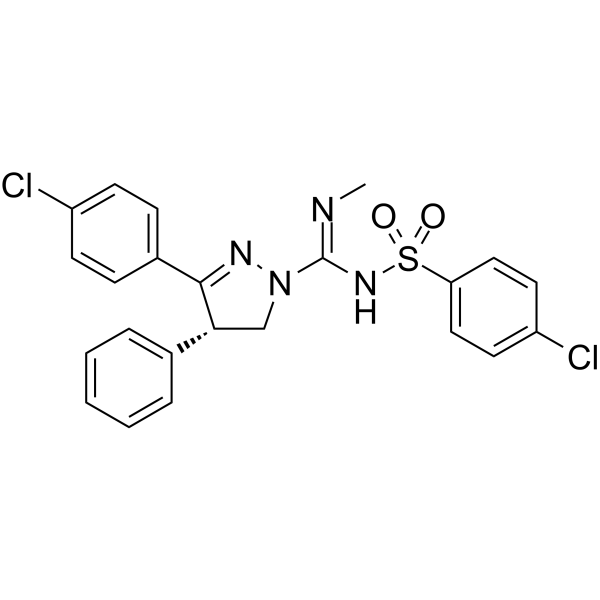
Ibipinabant (SLV319) is a potent, selective and orally active antagonist of cannabinoid CB1 receptor, with a Ki of 7.8 nM. Ibipinabant shows more than 1000-fold selectivity for CB1 over CB2 (Ki=7943 nM). Ibipinabant can be used for the research of obesity and diabetic.
For research use only. We do not sell to patients.
- Purity : 99.9%
- CAS No.: 464213-10-3
- Formula: C23H20Cl2N4O2S
- Molecular Weight:487.40
-
Storage:
-20°C, sealed storage, away from moisture
* In solvent : -80°C, 6 months; -20°C, 1 month (sealed storage, away from moisture)

To place orders, for customer services and technical support, please contact: MedChemExpress USA
Tel: 609-228-6898 E-mail: [email protected] [email protected]


-
 Biological Activity
-
Chemical Information
- Protocols
- Purity & Documentation
- References
-
 Help & FAQs


-
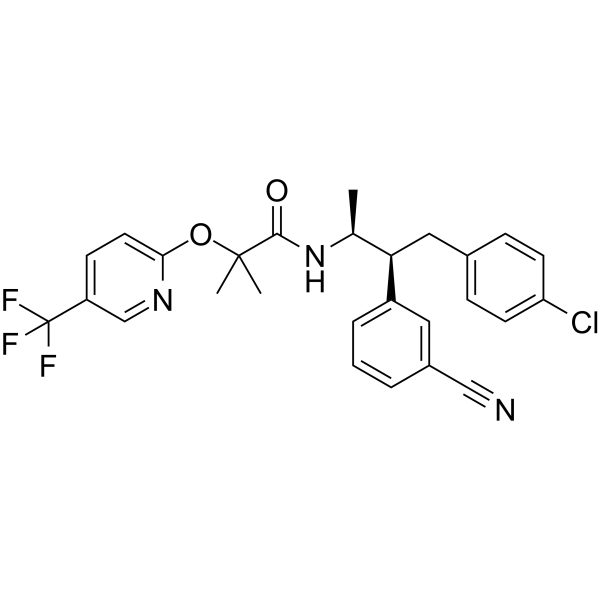
HY-10013
TaranabantCB1 Receptor Invert Agonist -
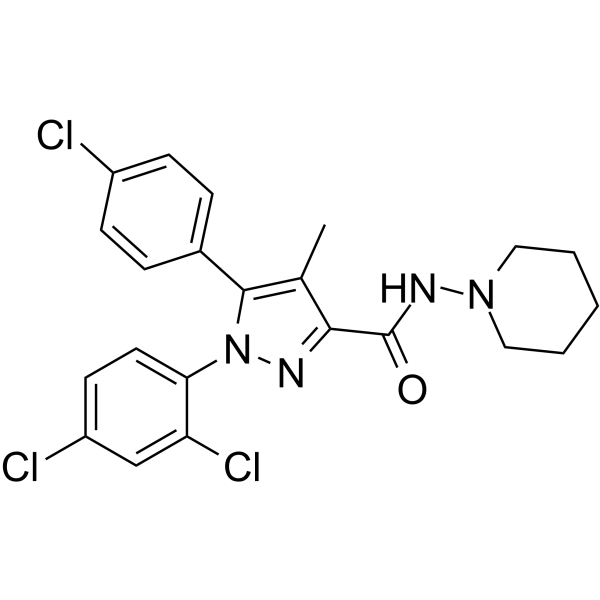
HY-14136
Rimonabant -
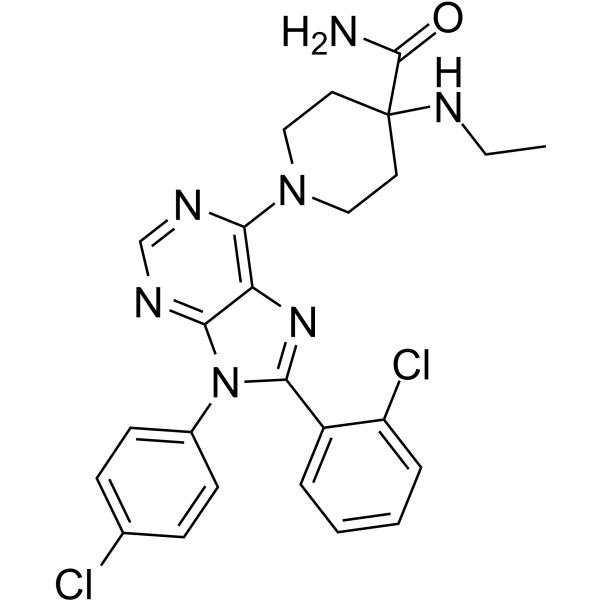
HY-10871
OtenabantCannabinoid Receptor Antagonist -
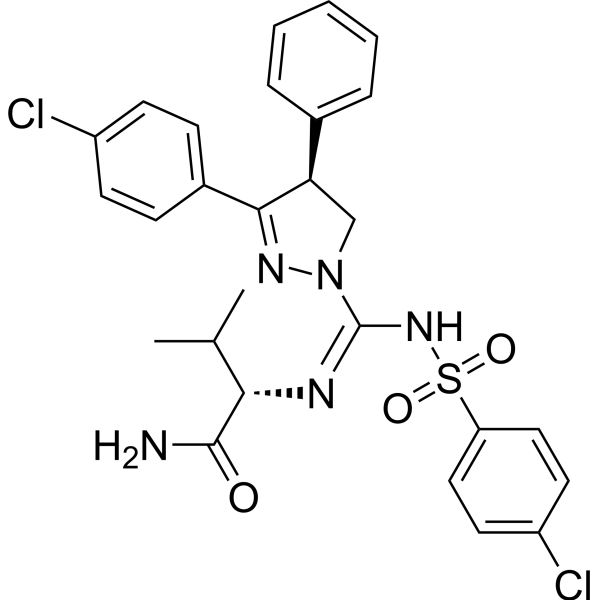
HY-18697
JD-5037CB1 Receptor Antagonist -
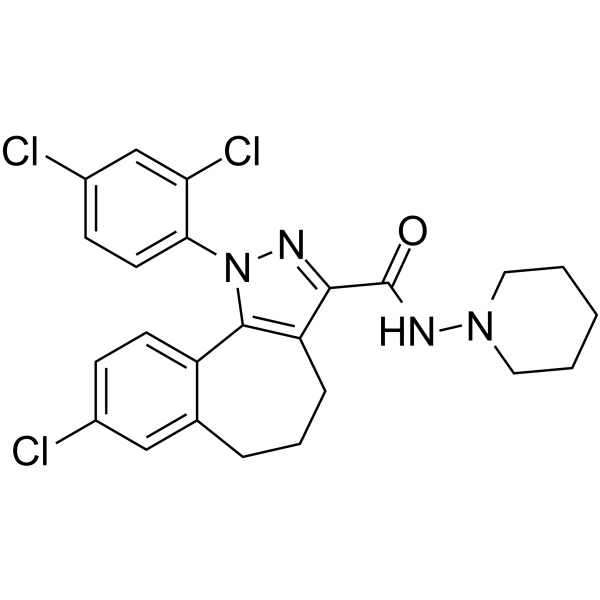
HY-117139
NESS 0327Cannabinoid Antagonist -
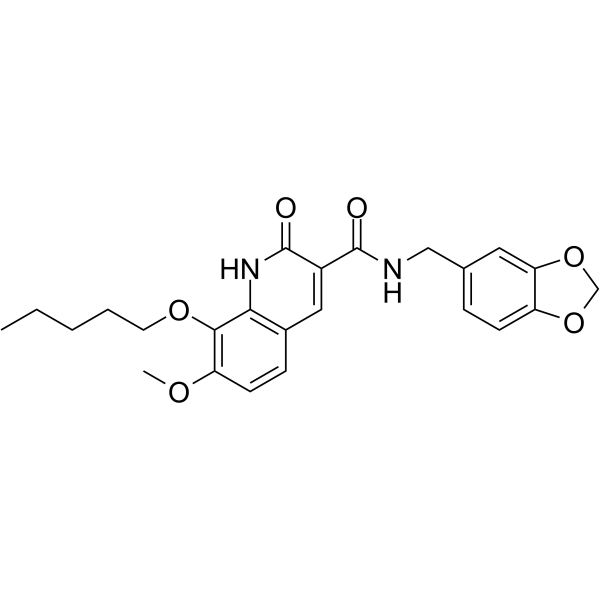
HY-103325
JTE-907Cannabinoid CB2 Receptor Inverse Agonist -
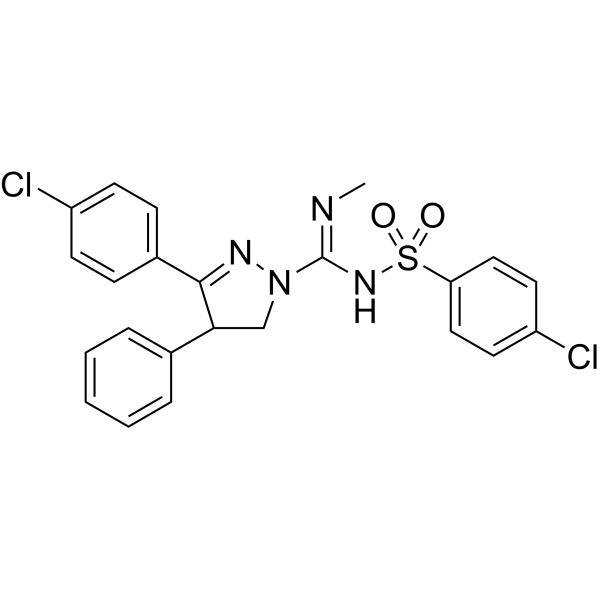
HY-14791A
(±)-IbipinabantCannabinoid Receptor Antagonist -
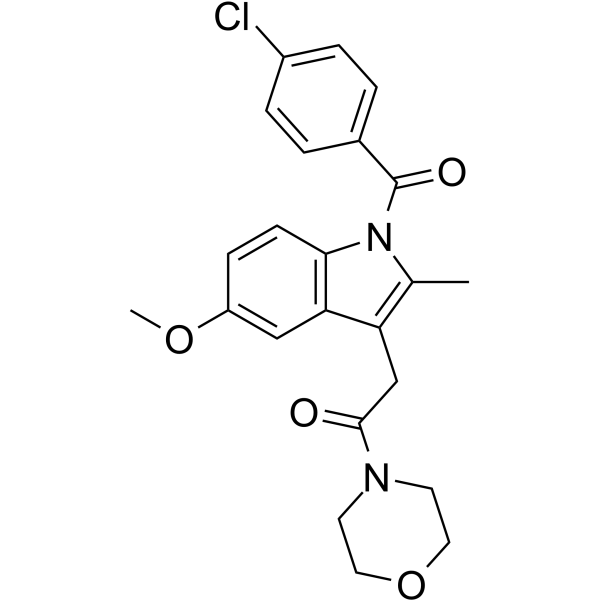
HY-15420
BML-190Cannabinoid Receptor Agonist -
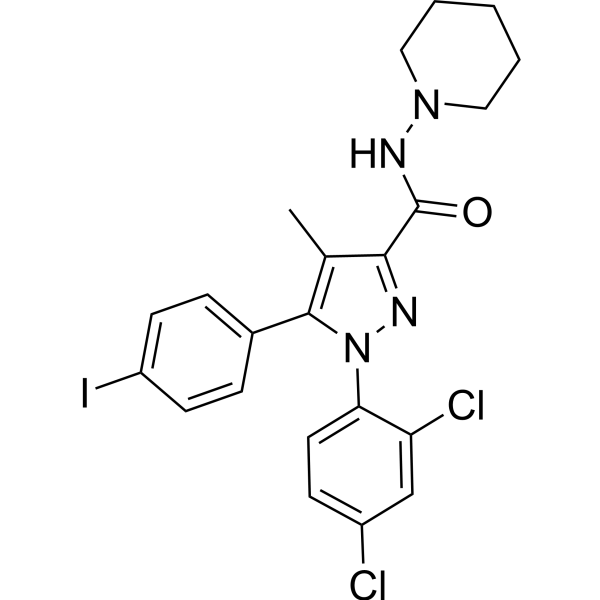
HY-15443
AM251CB1 Receptor Antagonist -
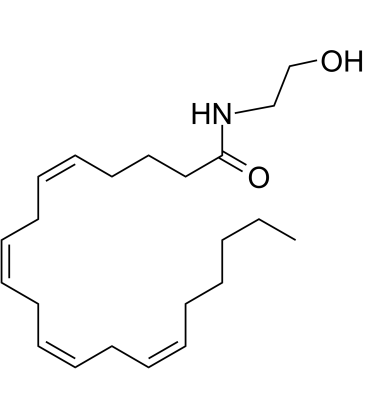
HY-10863
AnandamideCB1/2 Agonist -
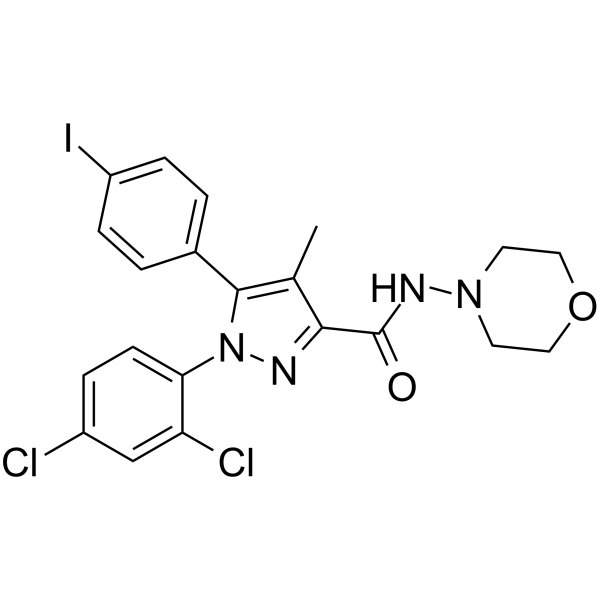
HY-13505
AM281CB1 Antagonist -
HY-110004
ACEABiochemical Assay Reagent
Publications Citing Use of MedChemExpress (MCE) Ibipinabant
More

Biological Activity
Description
IC50 & Target
[1]|
CB1 7.8 nM (Ki) |
CB2 7943 nM (Ki) |
Cellular Effect
|
Cell Line

|
Type | Value | Description | References |
|---|---|---|---|---|
| CHO | IC50 |
1100 nM
Compound: SLV-319
|
Inhibition of [3H]CP-55940 binding to human recombinant CB2 receptor in CHO cells
Inhibition of [3H]CP-55940 binding to human recombinant CB2 receptor in CHO cells
|
[PMID: 17181138] |
| CHO | IC50 |
17 nM
Compound: SLV-319
|
Inhibition of [3H]CP-55940 binding to human recombinant CB1 receptor in CHO cells
Inhibition of [3H]CP-55940 binding to human recombinant CB1 receptor in CHO cells
|
[PMID: 17181138] |
In Vitro
SLV319 displaces the specific CP-55940 (CB agonist) binding in CHO cells stably transfected with human CB1 receptor, with a Ki of 7.8 nM[1].
SLV319 concentration dependently antagonizes WIN-55212 (CB1 agonist)-induced arachidonic acid release in CHO cells, with a pA2 of 9.9[1].
MedChemExpress (MCE) has not independently confirmed the accuracy of these methods. They are for reference only. Further protocols information, click here.
In Vivo
SLV319 (3 mg/kg/day, p.o. for 28 d) reverses the HFD-induced increase in adipose tissue leptin mRNA[2].
SLV319 (3-10 mg/kg; daily oral gavage for 56 d) has weight loss-independent antidiabetic effects and attenuates β-cell loss in a rat model of progressive β-cell dysfunction[3].
SLV319 (oral administration) antagonizes CB agonist (CP55940) induced hypotension in rats and hypothermia in mice, with an ED50 of 5.5 and 3 mg/kg, respectively[1].
MedChemExpress (MCE) has not independently confirmed the accuracy of these methods. They are for reference only.
-
Animal Model:Six-week-old male C57Bl/6J mice received a diet containing 60% of calories as fat, resulting in body weights >42 g in 12-14 weeks[2]
-
Dosage:3 mg/kg/day
-
Administration:P.o. for 28 days
-
Result:Caused reductions in food intake, body weight and adiposity in DIO mice.
Clinical Trial
| NCT Number | Sponsor | Condition | Start Date |
Phase
|
|---|---|---|---|---|
| NCT01329991 | Plexxikon| | 2011-05 | PHASE1 |


Chemical Information
-
CAS No. 464213-10-3
-
Appearance Solid
-
Molecular Weight 487.40
-
Formula C23H20Cl2N4O2S
-
Color White to off-white
-
SMILES
C/N=C(N1N=C(C2=CC=C(Cl)C=C2)[C@@H](C3=CC=CC=C3)C1)\NS(=O)(C4=CC=C(Cl)C=C4)=O
-
Synonyms
SLV319; BMS-646256
-
Shipping
Room temperature in continental US; may vary elsewhere.
-
Storage
-20°C, sealed storage, away from moisture
* In solvent : -80°C, 6 months; -20°C, 1 month (sealed storage, away from moisture)


Publications (1)
-
Journal Impact Factor
-
Most Recent
-
ACS Bio Med Chem Au
Iso-α-acids in Nonalcoholic and Alcoholic Beer Stimulate Growth of Neuron-like SH-SY5Y Cells and Neuroepithelial Stem Cells. [Abstract]2021 Sep 7;1(1):11-20. PMID: 37101982

Protocols
-
Research Protocol for Metabolic Diseases
AMP-activated protein kinase, AMPK, is a conserved cellular energy sensor that responds to reduced cellular energy status and coordinates metabolism by increasing ATP-generating catabolic pathways while suppressing ATP-consuming anabolic processes. In metabolic disease research, the AMPK pathway is experimentally relevant because it regulates hepatic lipid synthesis, fatty acid oxidation, glucose production, skeletal-muscle glucose disposal, mTORC1-linked biosynthesis, autophagy, mitochondrial homeostasis, and whole-body energy balance. The central pathway logic is that energy stress, metformin, exercise-like stimulation, or direct AMPK activators increase AMPKα Thr172 phosphorylation and downstream substrate phosphorylation, including ACC and RAPTOR. Phosphorylation of ACC suppresses lipogenesis and supports fatty acid oxidation, whereas phosphorylation of RAPTOR suppresses mTORC1 signaling and links cellular energy status to growth and protein synthesis control. The pathway is linked


Purity & Documentation
-
Data Sheet (274 KB)
-
SDS (394 KB)
- English - EN (394 KB)
- Français - FR (394 KB)
- Deutsch - DE (394 KB)
- Norwegian - NO (394 KB)
- Español - ES (394 KB)
- Swedish - SV (394 KB)
- Italian - IT (394 KB)
- Korean - KR (394 KB)
- Portuguese - PT (394 KB)
-
Handling Instructions (2659 KB)
References
[1]. Lange JHM, et, al. Synthesis, biological properties, and molecular modeling investigations of novel 3,4-diarylpyrazolines as potent and selective CB(1) cannabinoid receptor antagonists. J Med Chem. 2004 Jan 29;47(3):627-43. [Content Brief]
[2]. Tam J, et, al. Peripheral cannabinoid-1 receptor inverse agonism reduces obesity by reversing leptin resistance. Cell Metab. 2012 Aug 8;16(2):167-79. [Content Brief]
[3]. Rohrbach K, et, al. Ibipinabant attenuates β-cell loss in male Zucker diabetic fatty rats independently of its effects on body weight. Diabetes Obes Metab. 2012 Jun;14(6):555-64. [Content Brief]

Calculators
Concentration (start) × Volume (start) = Concentration (final) × Volume (final)


Ibipinabant Related Classifications
HY-14791 Related Classifications
 Powered by Bioz