



Ibutamoren Mesylate
Based on 5 publication(s) in Google Scholar
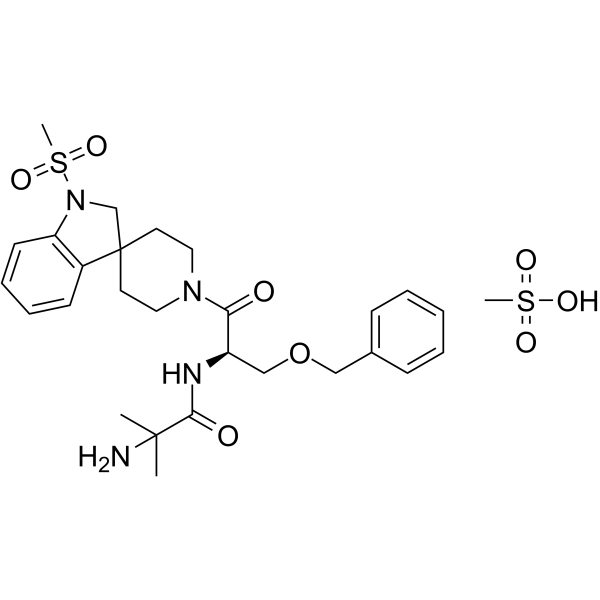
Ibutamoren Mesylate (MK-677) is a potent, non-peptide Growth hormone secretagogue receptor (GHSR) agonist. Ibutamoren Mesylate is an orally active growth hormone (GH) secretagogue.
For research use only. We do not sell to patients.
- Purity : 99.86%
- CAS No.: 159752-10-0
- Formula: C28H40N4O8S2
- Molecular Weight:624.77
-
Storage:
4°C, sealed storage, away from moisture
* In solvent : -80°C, 6 months; -20°C, 1 month (sealed storage, away from moisture)

To place orders, for customer services and technical support, please contact: MedChemExpress USA
Tel: 609-228-6898 E-mail: [email protected] [email protected]


-
 Biological Activity
-
Chemical Information
-
Solvent & Solubility
- Protocols
- Purity & Documentation
- References
-
 Help & FAQs


-
HY-14734
AnamorelinGhrelin Receptor Agonist -
HY-12584
PF-5190457GHSR Inverse Agonist -
HY-14734A
Anamorelin hydrochlorideGhrelin Receptor Agonist -
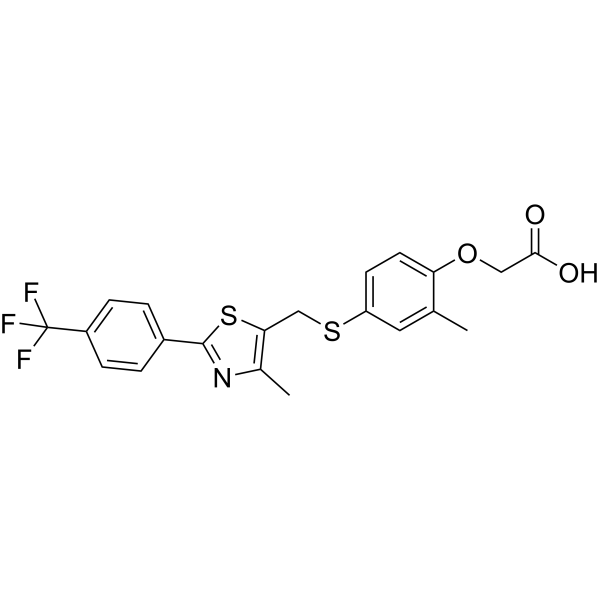
HY-10838
GW 501516PPARδ Agonist -
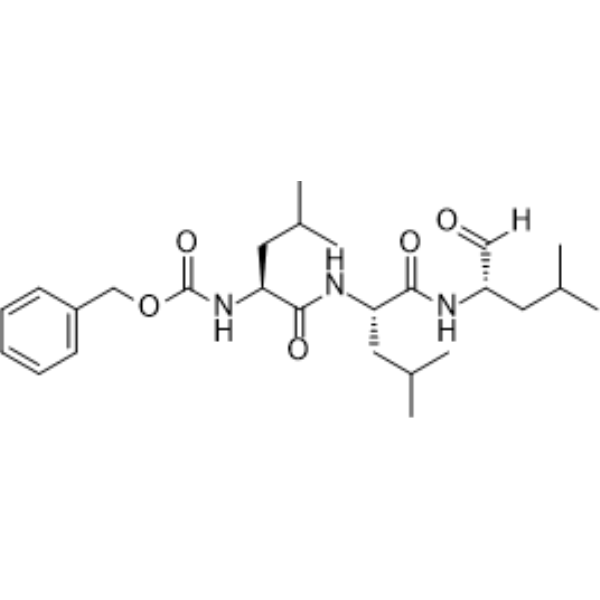
HY-13259
MG-132Proteasome Inhibitor -
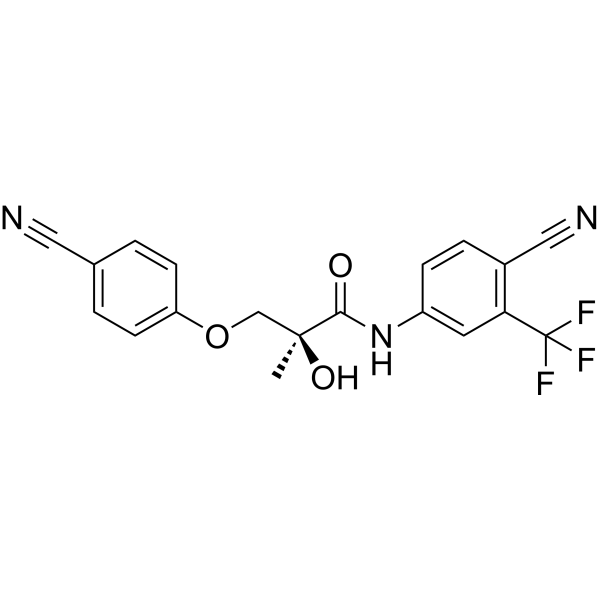
HY-13273
OstarineSARMs -
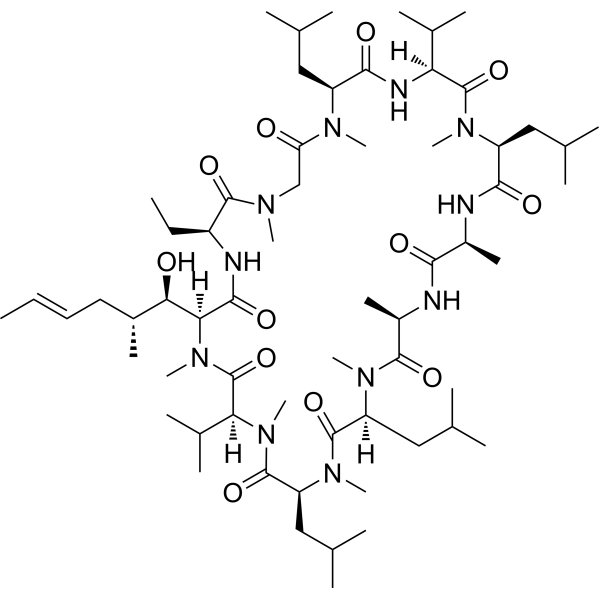
HY-B0579
Cyclosporin ACalcineurin Inhibitor -
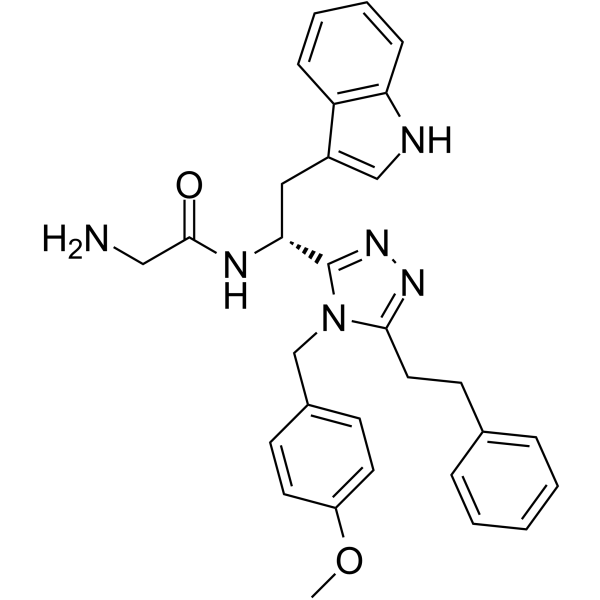
HY-U00433
JMV 2959 -
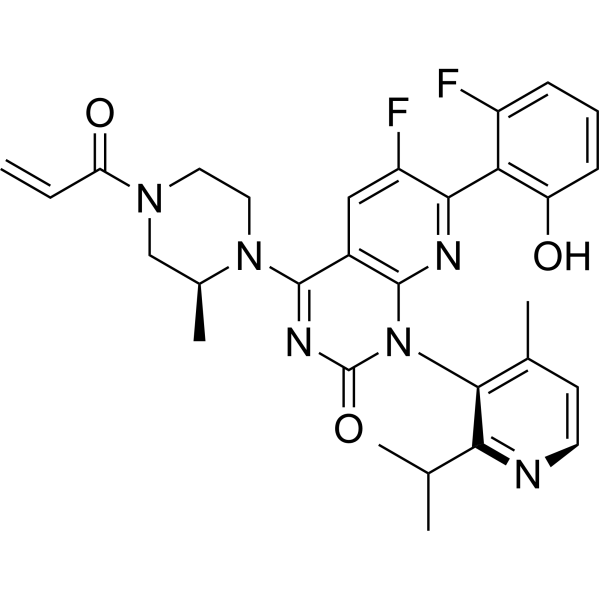
HY-114277
SotorasibKRAS G12C Inhibitor -
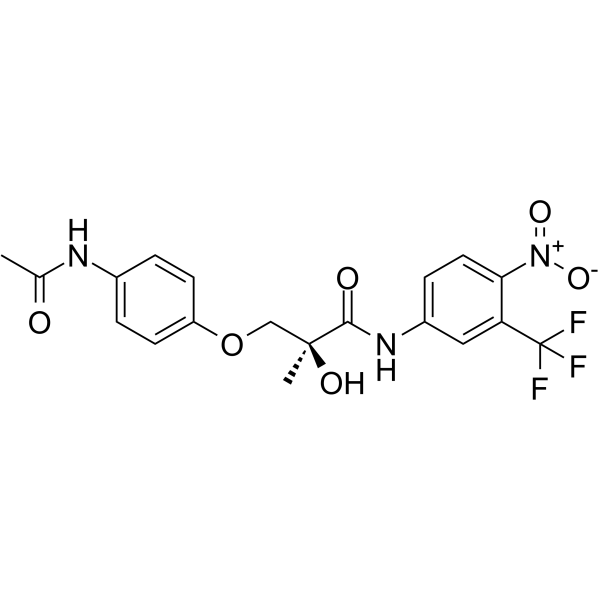
HY-12023
GTx-007Androgen Receptor SARM -
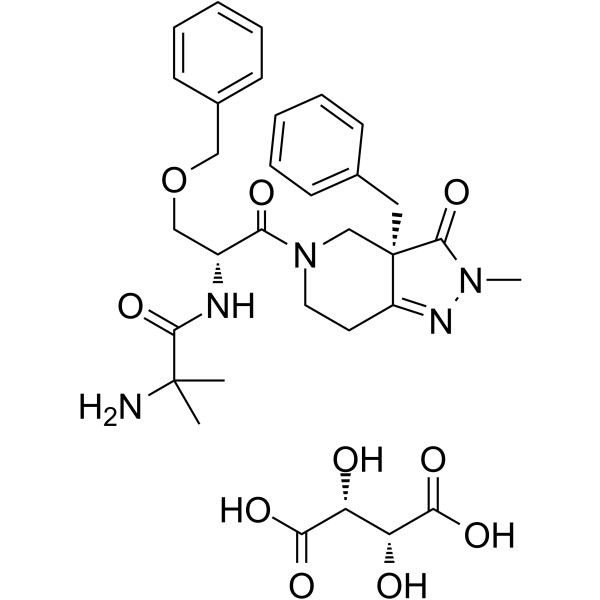
HY-15243
Capromorelin TartrateGHSR Agonist -
HY-122025
AC-262536Androgen Receptor Agonist
Publications Citing Use of MedChemExpress (MCE) Ibutamoren Mesylate
More

Biological Activity
Description
In Vivo
MedChemExpress (MCE) has not independently confirmed the accuracy of these methods. They are for reference only.


Chemical Information
-
CAS No. 159752-10-0
-
Appearance Solid
-
Molecular Weight 624.77
-
Formula C28H40N4O8S2
-
Color White to light yellow
-
SMILES
CC(N)(C(N[C@@H](C(N1CCC2(CN(C3=C2C=CC=C3)S(=O)(C)=O)CC1)=O)COCC4=CC=CC=C4)=O)C.CS(=O)(O)=O
-
Synonyms
MK-677; MK-0677
-
Shipping
Room temperature in continental US; may vary elsewhere.
-
Storage
4°C, sealed storage, away from moisture
* In solvent : -80°C, 6 months; -20°C, 1 month (sealed storage, away from moisture)


Publications (5)
-
Journal Impact Factor
-
Most Recent
-
Anal Bioanal Chem
Fully automated dried blood spot sample preparation enables the detection of lower molecular mass peptide and non-peptide doping agents by means of LC-HRMS. [Abstract]2020 Jun;412(15):3765-3777. PMID: 32300840 -
Amino Acids
Novel bioluminescent receptor-binding assays for peptide hormones: using ghrelin as a model. [Abstract]2015 Oct;47(10):2237-43. PMID: 26002812 -
Drug Test Anal
An in vitro assay approach to investigate the potential impact of different doping agents on the steroid profile. [Abstract]2021 May;13(5):916-928. PMID: 33283964 -
Drug Test Anal
Recent improvements in sports drug testing concerning the initial testing for peptidic drugs (< 2 kDa) - sample preparation, mass spectrometric detection, and data review. [Abstract]2018 Nov;10(11-12):1755-1760. PMID: 30239151 -


Solvent & Solubility
In Vitro:
DMSO : 50 mg/mL (80.03 mM; Need ultrasonic; Hygroscopic DMSO has a significant impact on the solubility of product, please use newly opened DMSO)
H2O : ≥ 50 mg/mL (80.03 mM)
* "≥" means soluble, but saturation unknown.
Please refer to the solubility information to select the appropriate solvent. Once prepared, please aliquot and store the solution to prevent product inactivation from repeated freeze-thaw cycles.
Storage method and period of stock solution: -80°C, 6 months; -20°C, 1 month (sealed storage, away from moisture). When stored at -80°C, please use it within 6 months. When stored at -20°C, please use it within 1 month.
* Note: If you choose water as the stock solution, please dilute it to the working solution, then filter and sterilize it with a 0.22 μm filter before use.
Please refer to the solubility information to select the appropriate solvent. Once prepared, please aliquot and store the solution to prevent product inactivation from repeated freeze-thaw cycles.
Storage method and period of stock solution: -80°C, 6 months; -20°C, 1 month (sealed storage, away from moisture). When stored at -80°C, please use it within 6 months. When stored at -20°C, please use it within 1 month.
* Note: If you choose water as the stock solution, please dilute it to the working solution, then filter and sterilize it with a 0.22 μm filter before use.
Concentration (start) × Volume (start) = Concentration (final) × Volume (final)
In Vivo:
Select the appropriate dissolution method based on your experimental animal and administration route.
- For the following dissolution methods, please ensure to first prepare a clear stock solution using an In Vitro approach and then sequentially add co-solvents:
- To ensure reliable experimental results, the clarified stock solution can be appropriately stored based on storage conditions. As for the working solution for In Vivo experiments, it is recommended to prepare freshly and use it on the same day.
- The percentages shown for the solvents indicate their volumetric ratio in the final prepared solution. If precipitation or phase separation occurs during preparation, heat and/or sonication can be used to aid dissolution.
Add each solvent one by one: 10% DMSO 40% PEG300 5% Tween-80 45% Saline
Solubility: ≥ 2.5 mg/mL (4.00 mM); Clear solution
This protocol yields a clear solution of ≥ 2.5 mg/mL (saturation unknown).
Taking 1 mL working solution as an example, add 100 μL DMSO stock solution (25.0 mg/mL) to 400 μL PEG300, and mix evenly; then add 50 μL Tween-80 and mix evenly; then add 450 μL Saline to adjust the volume to 1 mL.
Preparation of Saline: Dissolve 0.9 g sodium chloride in ddH₂O and dilute to 100 mL to obtain a clear Saline solution.
Add each solvent one by one: 10% DMSO 90% (20% SBE-β-CD in Saline)
Solubility: ≥ 2.5 mg/mL (4.00 mM); Clear solution
This protocol yields a clear solution of ≥ 2.5 mg/mL (saturation unknown).
Taking 1 mL working solution as an example, add 100 μL DMSO stock solution (25.0 mg/mL) to 900 μL 20% SBE-β-CD in Saline, and mix evenly.
Preparation of 20% SBE-β-CD in Saline (4°C, storage for one week): 2 g SBE-β-CD powder is dissolved in 10 mL Saline, completely dissolve until clear.
For the following dissolution methods, please prepare the working solution directly:
It is recommended to prepare fresh solutions and use them promptly within a short period of time.
The percentages shown for the solvents indicate their volumetric ratio in the final prepared solution. If precipitation or phase separation occurs during preparation, heat and/or sonication can be used to aid dissolution.
Add each solvent one by one: PBS
Solubility: 100 mg/mL (160.06 mM); Clear solution; Need ultrasonic
In Vivo Dissolution Calculator
Please enter the basic information of animal experiments:
-
-
-
-
Recommended: Prepare an additional quantity of animals to account for potential losses during experiments.
Working solution concentration: 0.22 mg/mL
This product has good water solubility, please refer to the measured solubility data in water/PBS/Saline for details.

Protocols
-
Research Protocol for Endocrine Diseases
Endocrine diseases often arise from disrupted hormone production, hormone signaling, or target-tissue responsiveness; for diabetes-focused endocrine disease models, insulin signaling regulates glucose uptake, hepatic glucose output, lipid metabolism, and β-cell compensation. Type 2 diabetes develops through interacting defects in insulin resistance, β-cell dysfunction, adipose inflammation, hepatic glucose overproduction, altered incretin signaling, and ectopic lipid metabolism. A major unresolved question is whether endocrine dysfunction is driven primarily by target-tissue insulin resistance, intrinsic β-cell failure, immune/inflammatory stress, or combined multi-organ failure that differs by disease stage.


Purity & Documentation
-
Data Sheet (280 KB)
-
SDS (558 KB)
- English - EN (558 KB)
- Français - FR (558 KB)
- Deutsch - DE (558 KB)
- Norwegian - NO (558 KB)
- Español - ES (558 KB)
- Swedish - SV (558 KB)
- Italian - IT (558 KB)
- Korean - KR (558 KB)
- Portuguese - PT (558 KB)
-
Handling Instructions (2659 KB)
References
[1]. Prahalada S, et al. Insulin-like growth factor-1 and growth hormone (GH) levels in canine cerebrospinal fluid are unaffected by GH or GH secretagogue (MK-0677) administration. Horm Metab Res. 1999 Feb-Mar;31(2-3):133-7. [Content Brief]
[2]. Zheng H, et al. Somatostatin receptor subtype 2 knockout mice are refractory to growth hormone-negative feedback on arcuate neurons. Mol Endocrinol. 1997 Oct;11(11):1709-17. [Content Brief]
[3]. Hickey GJ, et al. Repeat administration of the GH secretagogue MK-0677 increases and maintains elevated IGF-I levels in beagles. J Endocrinol. 1997 Feb;152(2):183-92. [Content Brief]
[4]. Jacks T, et al. MK-0677, a potent, novel, orally active growth hormone (GH) secretagogue: GH, insulin-like growth factor I, and other hormonal responses in beagles. Endocrinology. 1996 Dec;137(12):5284-9. [Content Brief]


Complete Stock Solution Preparation Table
Please refer to the solubility information to select the appropriate solvent. Once prepared, please aliquot and store the solution to prevent product inactivation from repeated freeze-thaw cycles.
Storage method and period of stock solution: -80°C, 6 months; -20°C, 1 month (sealed storage, away from moisture). When stored at -80°C, please use it within 6 months. When stored at -20°C, please use it within 1 month.
| Optional Solvent | Concentration Solvent Mass | 1 mg | 5 mg | 10 mg | 25 mg |
|---|---|---|---|---|---|
| DMSO / H2O | 1 mM | 1.6006 mL | 8.0029 mL | 16.0059 mL | 40.0147 mL |
| 5 mM | 0.3201 mL | 1.6006 mL | 3.2012 mL | 8.0029 mL | |
| 10 mM | 0.1601 mL | 0.8003 mL | 1.6006 mL | 4.0015 mL | |
| 15 mM | 0.1067 mL | 0.5335 mL | 1.0671 mL | 2.6676 mL | |
| 20 mM | 0.0800 mL | 0.4001 mL | 0.8003 mL | 2.0007 mL | |
| 25 mM | 0.0640 mL | 0.3201 mL | 0.6402 mL | 1.6006 mL | |
| 30 mM | 0.0534 mL | 0.2668 mL | 0.5335 mL | 1.3338 mL | |
| 40 mM | 0.0400 mL | 0.2001 mL | 0.4001 mL | 1.0004 mL | |
| 50 mM | 0.0320 mL | 0.1601 mL | 0.3201 mL | 0.8003 mL | |
| 60 mM | 0.0267 mL | 0.1334 mL | 0.2668 mL | 0.6669 mL | |
| 80 mM | 0.0200 mL | 0.1000 mL | 0.2001 mL | 0.5002 mL |
* Note: If you choose water as the stock solution, please dilute it to the working solution, then filter and sterilize it with a 0.22 μm filter before use.


Ibutamoren Mesylate Related Classifications
HY-50844 Related Classifications
 Powered by Bioz