



DiI
Based on 66 publication(s) in Google Scholar
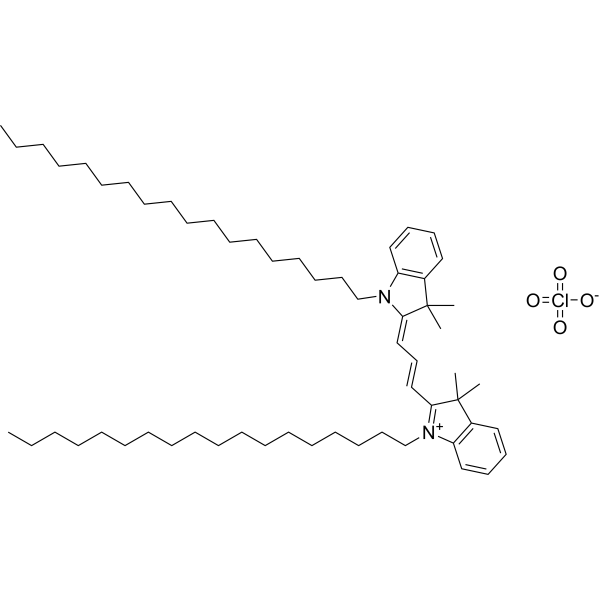
DiI is a long-chain carbocyanine dye. Carbocyanine dyes are widely used as Di to label cells, organelles, liposomes, viruses and lipoproteins.
For research use only. We do not sell to patients.
- Purity : 99.98%
- CAS No.: 41085-99-8
- Formula: C59H97ClN2O4
- Molecular Weight:933.87
-
Storage:
4°C, sealed storage, away from moisture and light
* In solvent : -80°C, 6 months; -20°C, 1 month (sealed storage, away from moisture and light)

To place orders, for customer services and technical support, please contact: MedChemExpress USA
Tel: 609-228-6898 E-mail: [email protected] [email protected]


-
 Biological Activity
-
Chemical Information
-
Solvent & Solubility
- Purity & Documentation
- References
-
 Help & FAQs


-
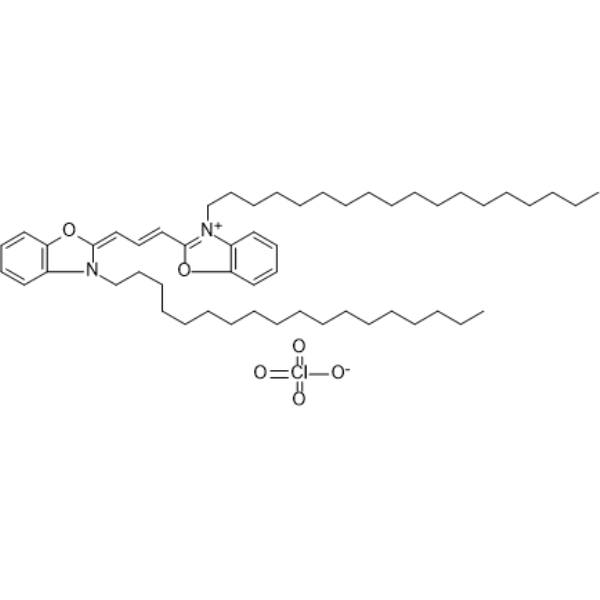
HY-D0969
DiOFluorescent Probe -
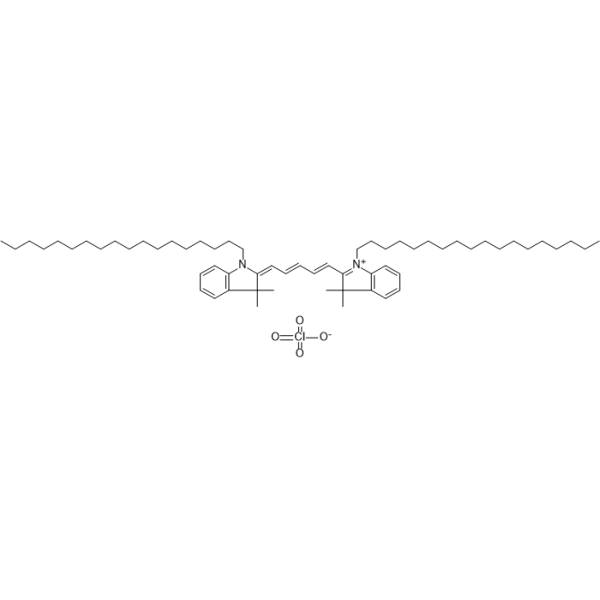
HY-D1028
DiD perchlorateDye -
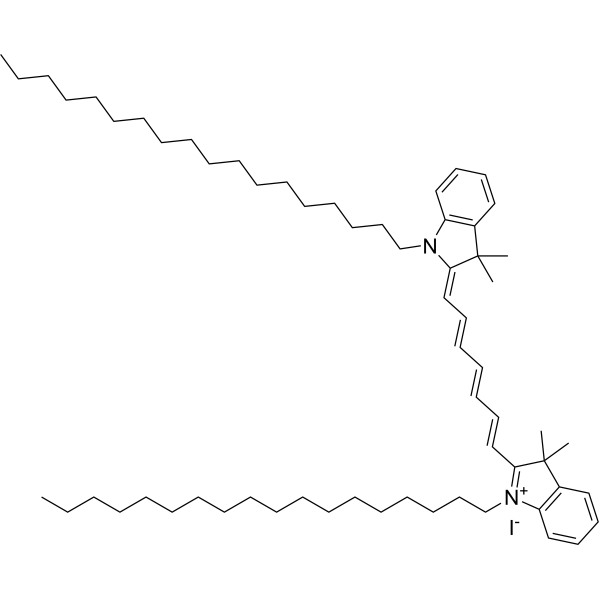
HY-D1048
DiRMembrane Dye -
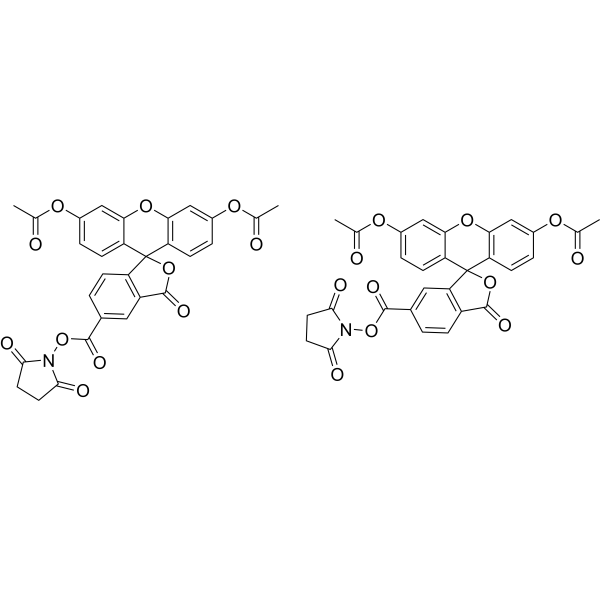
HY-D0938
CFDA-SECell Proliferation Fluorescent Probe -
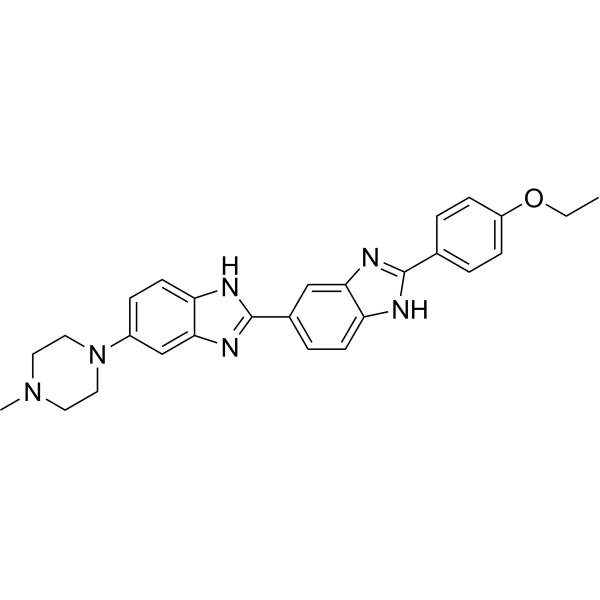
HY-15559
Hoechst 33342DNA Fluorescent Stain -
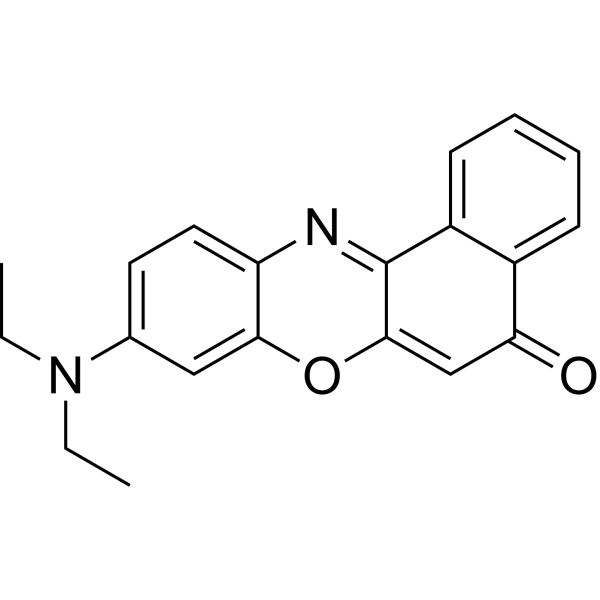
HY-D0718
Nile RedHydrophobic Fluorescent Stain -
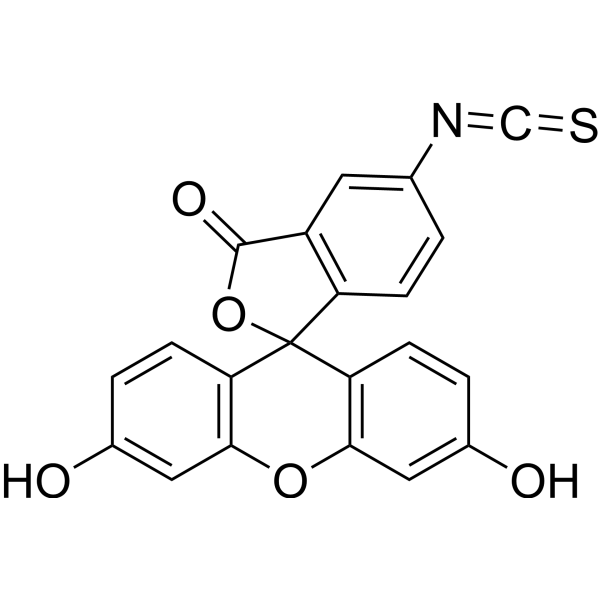
HY-66019
FITCFluorochrome -

HY-DY1012
DiI (solution)Fluorescent Dye -
HY-N0322
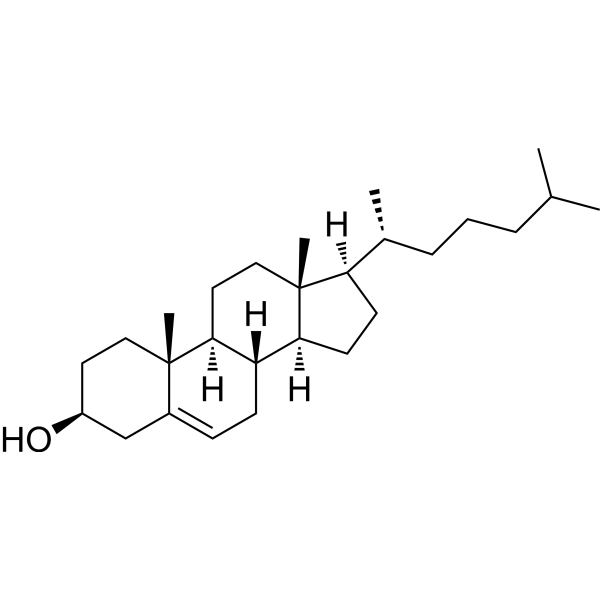
Cholesterol (from animal)ERRα Agonist -
HY-15142
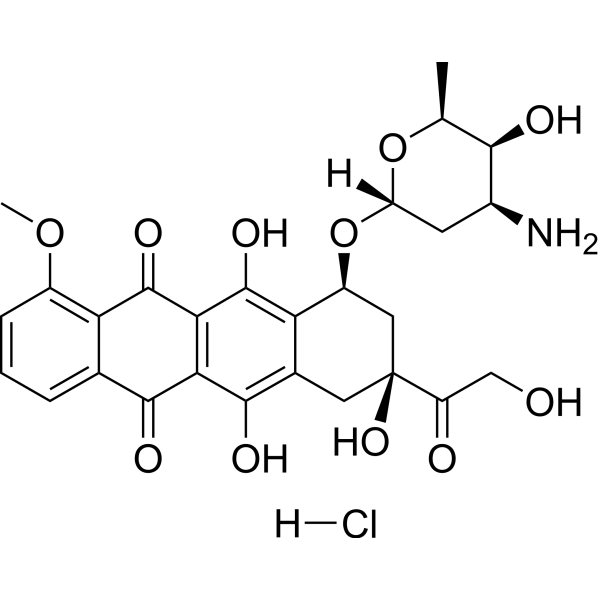
Doxorubicin hydrochlorideTopoisomerase Inhibitor -
HY-10162
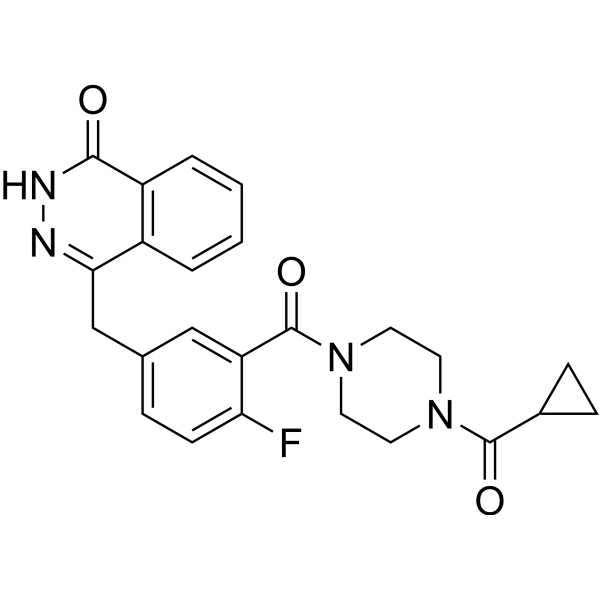
OlaparibPARP Inhibitor -

HY-Y0320
Dimethyl sulfoxide, meets analytical specification of Ch.P.Aprotic Solvent
Publications Citing Use of MedChemExpress (MCE) DiI
More- Cancer Cell. 2024 Apr 8;42(4):682-700.e12. [Abstract]
- Science. 2025 Aug 21;389(6762):eadr0475. [Abstract]
- Adv Mater. 2025 Sep;37(35):e2500631. [Abstract]
- J Extracell Vesicles. 2025 Aug;14(8):e70143. [Abstract]
- Adv Funct Mater. 2024 May 9.
- Nat Commun. 2025 Aug 9;16(1):7368. [Abstract]
- Matter. 2026 Jun 10.
- J Nanobiotechnology. 2025 Dec 20. [Abstract]
- J Nanobiotechnology. 2025 Sep 1;23(1):599. [Abstract]
- J Nanobiotechnology. 2025 Jan 22;23(1):34. [Abstract]
- Adv Sci (Weinh). 2026 May 20:e22185. [Abstract]
- Adv Sci (Weinh). 2025 Oct 24:e02079. [Abstract]
- Sci Adv. 2026 Jun 19;12(25):eaea6844. [Abstract]
- Food Hydrocoll. 2025 Dec.
- Biomaterials. 2026 Jun:329:123922. [Abstract]
- Chem Eng J. 2026 May 28.
- Chem Eng J. 2026 May 3;538:176959.
- Chem Eng J. 2026 Mar 24.
- Chem Eng J. 2025 Sep 9.
- Chem Eng J. 2024 Feb 16, 149761.
- J Control Release. 2025 Jul 10:383:113836. [Abstract]
- J Control Release. 2019 Dec 28:316:66-78. [Abstract]
- Small. 2025 Oct 28:e09306. [Abstract]
- J Immunother Cancer. 2022 Mar;10(3):e003950. [Abstract]
- J Immunother Cancer. 2020 Aug;8(2):e000330. [Abstract]
- NPJ Biofilms Microbiomes. 2025 Jun 21;11(1):113. [Abstract]
- Adv Healthc Mater. 2025 Jul;14(17):e2404719. [Abstract]
- Dev Cell. 2025 Apr 21;60(8):1168-1181.e6. [Abstract]
- Sep Purif Technol. 2025 Nov 17;382:136108.
- Cell Chem Biol. 2026 Mar 19;33(3):307-320.e4. [Abstract]
- Arterioscler Thromb Vasc Biol. 2023 Jul;43(7):1281-1294. [Abstract]
- Int J Nanomedicine. 2026 Jul 22:21:617608.
- Int J Biol Macromol. 2024 Apr 6;267(Pt 1):131453. [Abstract]
- Biofabrication. 2026 Jun 24. [Abstract]
- Mater Today Adv. 2026 Mar 11.
- Brain Behav Immun. 2026 Aug:136:106770. [Abstract]
- Anal Chem. 2023 Sep 19;95(37):13880-13888. [Abstract]
- Anal Chem. 2020 Jan 21;92(2):2103-2111. [Abstract]
- J Ethnopharmacol. 2026 Jan 10:354:120495. [Abstract]
- Virulence. 2025 Dec;16(1):2542455. [Abstract]
- Neurosci Bull. 2023 May;39(5):745-758. [Abstract]
- Bioeng Transl Med. 2023 Jan 4;8(6):e10482. [Abstract]
- Biomater Sci. 2024 Feb 27;12(5):1281-1293. [Abstract]
- Colloids Surf B Biointerfaces. 2026 Jan:257:115197. [Abstract]
- Cancer Nanotechnol. 2025 Oct 21;16(1):1-20.
- Front Microbiol. 2022 Oct 5:13:1024899. [Abstract]
- J Cell Mol Med. 2024 Dec;28(23):e70237. [Abstract]
- ACS Synth Biol. 2025 Sep 19;14(9):3767-3783. [Abstract]
- FASEB J. 2020 May;34(5):6215-6228. [Abstract]
- Bionanoscience. 2025 Mar 17.
- J Proteome Res. 2025 Nov 18. [Abstract]
- Materials. 2025 Jul 24;18(15):3470. [Abstract]
- J Biochem Mol Toxicol. 2025 Dec;39(12):e70645. [Abstract]
- Chemistry. 2020 Aug 6;26(44):10014-10023. [Abstract]
- J Gastroenterol Hepatol. 2026 Mar 12. [Abstract]
- Appl Biochem Biotechnol. 2025 Nov 20. [Abstract]
- Micromachines. 2024 Apr 18;15(4):542. [Abstract]
- Brain Res. 2026 May 15:1879:150207. [Abstract]
- Ultrasound Med Biol. 2025 Mar;51(3):508-518. [Abstract]
- ChemNanoMat. 2025 Oct 28.
- J Vis Exp. 2024 Feb 2:(204). [Abstract]
- SSRN. 2026 Mar 12.
- bioRxiv. 2025 Nov 18:2025.11.17.688953. [Abstract]
- Res Sq. 2024 Aug 29.
- Res Sq. 2024 Aug 30.
- Research Square Preprint. 2021 Jan.
 Customer Validation & Images

-
Flow Cytometry
-
Flow Cytometry
-
Flow Cytometry
-
Flow Cytometry
-
Cell Imaging/Staining


Biological Activity
Description
In Vitro
Carbocyanine dyes are widely used as Di to label cells, organelles, liposomes, viruses and lipoproteins. Long-chain carbocyanines which include DiO (DiOC18(3)), DiI (DiIC18(3)), DiD (DiIC18(5)) and DiR, and dialkyl aminostyryl dye DiA (4-Di-16-ASP) are used for labeling membranes and other hydrophobic structures. DiIC16(3) has shorter alkyl substituents (C16) than DiI (C18). They have extremely high extinction coefficients, environmental dependent fluorescence and short excited-state lifetimes in lipid environments. They are oils at room temperature and weakly fluorescent in water but highly fluorescent and quite photostable when incorporated into membranes or bound to lipophilic biomolecules. These optical characteristics make them ideal for staining the cytoplasmic membranes of cells. Once applied to cells, these dyes diffuse laterally within the plasma membrane, resulting in staining of the entire cell[1].
DiO, DiI, DiD and DiR exhibit distinct green, orange, red and infrared fluorescence, respectively thus facilitating multicolor imaging and flow cytometric analysis of live cells . DiO and DiI can be used with standard FITC and TRITC filters respectively. Among them DiI and its analogs are most frequently used since they usually exhibit very low cell toxicity. In addition, DiI is widely used for determining lipoproteins such as LDL and HDL. The lipophilic aminostyryl dye DiA is also often used for neuronal tracing[2].
Guide (The following is our recommended experimental protocol. This protocol is for reference only and should be modified according to your specific needs).
1. Preparation of CPM working solution
General Protocol
1. Preparing Stain Solutions of Di
a. Prepare DMF, DMSO or ethanol stock solutions: The stock solutions should be prepared in dimethyl formamide (DMF), dimethylsulfoxide (DMSO, or ethanol DMSO at 1-5 mM. DMF is preferable to ethanol as a solvent for Di. The stock solution should be used promptly. Any unused solution need to be aliquoted and refrozen at least -20°C. Avoid repeated freeze/thaw cycle. The solution can be stored for 6 months.
b. Prepare working solutions: Dilute the stock solutions into a suitable buffer such as serum-free culture medium, HBSS or PBS to make 1 to 5 μM working solutions. We do not recommend storing the aqueous solution for more than one day.
Note: The final concentration of the working solution should be empirically determined for different cell types and/or experimental conditions.
2. Suspension cells
a. Centrifuge at 1000 g at 4°C for 3-5 minutes and then discard the supernatant. Wash twice with PBS, 5 minutes each time.The cell density is 1×10⁶/mL.
b. Add 1 mL of Di working solution, and then incubate at room temperature for 5-30 minutes.
c. Centrifuge at 400 g at 4°C for 3-4 minutes and then discard the supernatant.
d. Wash twice with PBS, 5 minutes each time.
e. Resuspend cells with serum-free cell culture medium or PBS.Observation by fluorescence microscopy or flow cytometry.
3. Adherent cells
a. Culture adherent cells on sterile coverslips.
b. Remove the coverslip from the medium and aspirate excess medium.
c. Add 100 μL of working solution, gently shake it to completely cover the cells, and then incubate at room temperature for 5-30 minutes.
d. Wash twice with medium, 5 minutes each time. Observation by fluorescence microscopy or flow cytometry.
MedChemExpress (MCE) has not independently confirmed the accuracy of these methods. They are for reference only.
In Vivo
MedChemExpress (MCE) has not independently confirmed the accuracy of these methods. They are for reference only.
Emission (Em)
565
Excitation (Ex)
549
Dyeing Example


Chemical Information
-
CAS No. 41085-99-8
-
Appearance Solid
-
Molecular Weight 933.87
-
Formula C59H97ClN2O4
-
SMILES
CCCCCCCCCCCCCCCCCC[N+]1=C(/C=C/C=C2N(CCCCCCCCCCCCCCCCCC)C3=C(C=CC=C3)C/2(C)C)C(C)(C)C4=C1C=CC=C4.O=Cl(=O)([O-])=O
-
Synonyms
DiIC18(3)
-
Shipping
Room temperature in continental US; may vary elsewhere.
-
Storage
4°C, sealed storage, away from moisture and light
* In solvent : -80°C, 6 months; -20°C, 1 month (sealed storage, away from moisture and light)


Publications (66)
-
Journal Impact Factor
-
Most Recent
-
Cancer Cell
PDGFRα+ITGA11+ fibroblasts foster early-stage cancer lymphovascular invasion and lymphatic metastasis via ITGA11-SELE interplay. [Abstract]2024 Apr 8;42(4):682-700.e12. PMID: 38428409 -
Science
Stereo-cell: Spatial enhanced-resolution single-cell sequencing with high-density DNA nanoball-patterned arrays. [Abstract]2025 Aug 21;389(6762):eadr0475. PMID: 40839715 -
Adv Mater
Fueling IgA-Dominated Humoral Immunity with an Intranasal Hybrid Tumor Vaccine to Opsonize and Strike Epithelial Breast Cancer. [Abstract]2025 Sep;37(35):e2500631. PMID: 40589412
DiI purchased from MedChemExpress. Usage Cited in: Adv Mater. 2025 Sep;37(35):e2500631. [Abstract]
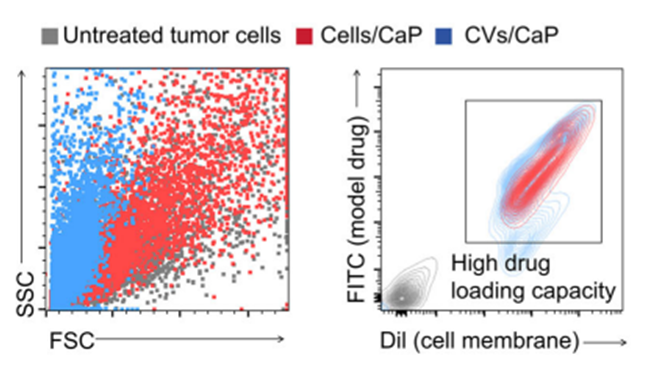
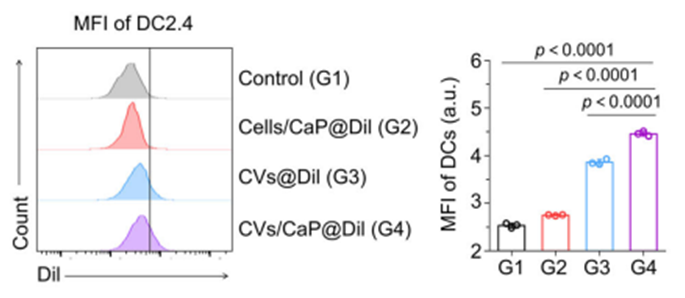
Flow cytometric analysis of Cells/Cap and CVs/CaP with fluorescent dye (FITC) loading and cell membrane (Dil) staining.
DiI purchased from MedChemExpress. Usage Cited in: Adv Mater. 2025 Sep;37(35):e2500631. [Abstract]
Flow cytometry analysis and quantification of CVs/CaP@Dil uptake in DC2.4 in the lower chamber of Transwell.
DiI purchased from MedChemExpress. Usage Cited in: Adv Mater. 2025 Sep;37(35):e2500631. [Abstract]
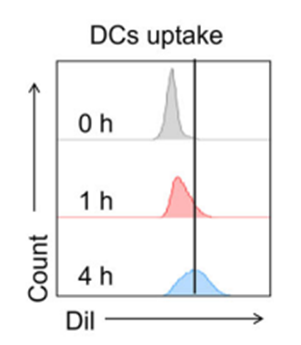
Flow cytometry analysis of CVs/CaP@Dil uptake by DC2.4 at different temporal points.
DiI purchased from MedChemExpress. Usage Cited in: Adv Mater. 2025 Sep;37(35):e2500631. [Abstract]
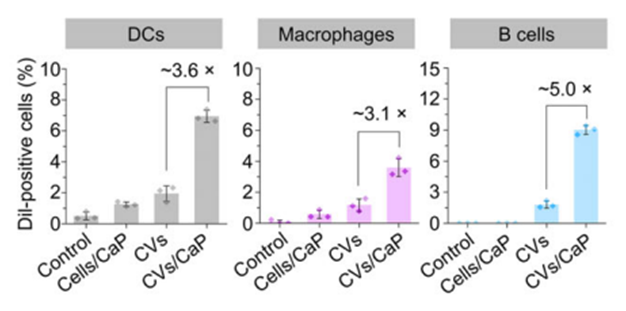
Quantitative analysis of Dil-positive DCs, macrophages, and B cells in the NALT of mice 48 h after immunization with Cells/CaP, CVs, or CVs/CaP (all vaccines were co-loaded with 1v209 and Dil).
-
J Extracell Vesicles
Extracellular Vesicles From Limosilactobacillus johnsonii Enhance Milk Fat Synthesis by Inducing CD36 Dynamic Palmitoylation and Activating PPARγ Signalling. [Abstract]2025 Aug;14(8):e70143. PMID: 40767021 -
-
Nat Commun
Design of Ig-like binders targeting α-synuclein fibril for mitigating its pathological activities. [Abstract]2025 Aug 9;16(1):7368. PMID: 40783395 -
-
J Nanobiotechnology
Nitric oxide-releasing nanocarriers integrated with ginsenoside compound K in dissolvable microneedles for androgenetic alopecia. [Abstract]2025 Dec 20. PMID: 41422253 -
J Nanobiotechnology
Intraoperative application of an antioxidant nanoparticle-hydrogel targeting microglia regulates neuroinflammation in traumatic brain injury. [Abstract]2025 Sep 1;23(1):599. PMID: 40890874 -
J Nanobiotechnology
Delivery of FGF18 using mRNA-LNP protects the cartilage against degeneration via alleviating chondrocyte senescence. [Abstract]2025 Jan 22;23(1):34. PMID: 39844298 -
Adv Sci (Weinh)
Targeting Supramolecular Active Complexes of Nav1.7/Nav1.8 to Relieve Chronic Neuropathic Pain. [Abstract]2026 May 20:e22185. PMID: 42159924 -
Adv Sci (Weinh)
Cortico-Striatal-Midbrain Circuit Dysregulation Underlying MK-801 Induced Impulsivity and the Ameliorative Effects of SEP. [Abstract]2025 Oct 24:e02079. PMID: 41133933 -
Sci Adv
Piezobiomimetic delivery nanosystem converts cold tumors to hot by parallel PANoptosis/STING activation in hepatocellular carcinoma. [Abstract]2026 Jun 19;12(25):eaea6844. PMID: 42308311 -
-
Biomaterials
Ultrasound-responsive renal-targeted nanoparticles deliver TAK-242 to inhibit NF-κB/NLRP3 signaling and attenuate sepsis-associated acute kidney injury. [Abstract]2026 Jun:329:123922. PMID: 41481962 -
-
-
-
-
-
J Control Release
IgM-functionalized biomimetic nanovaccine for immunological activation and bacterial toxin neutralization. [Abstract]2025 Jul 10:383:113836. PMID: 40360045 -
J Control Release
A self-assembled, ROS-responsive Janus-prodrug for targeted therapy of inflammatory bowel disease. [Abstract]2019 Dec 28:316:66-78. PMID: 31682913 -
Small
Betulinic Acid Self-Assembled Nanodelivery System Attenuates Osteoarthritis by Dually Modulating Macrophage Polarization and Macrophage-Chondrocyte Crosstalk via Disruption of the GSK3β/NF-κB/CCL20 Axis. [Abstract]2025 Oct 28:e09306. PMID: 41146595 -
J Immunother Cancer
Immunotherapy combining tumor and endothelium cell lysis with immune enforcement by recombinant MIP-3α Newcastle disease virus in a vessel-targeting liposome enhances antitumor immunity. [Abstract]2022 Mar;10(3):e003950. PMID: 35256516 -
J Immunother Cancer
A recombinant oncolytic Newcastle virus expressing MIP-3α promotes systemic antitumor immunity. [Abstract]2020 Aug;8(2):e000330. PMID: 32759233
DiI purchased from MedChemExpress. Usage Cited in: J Immunother Cancer. 2020 Aug;8(2):e000330. [Abstract]
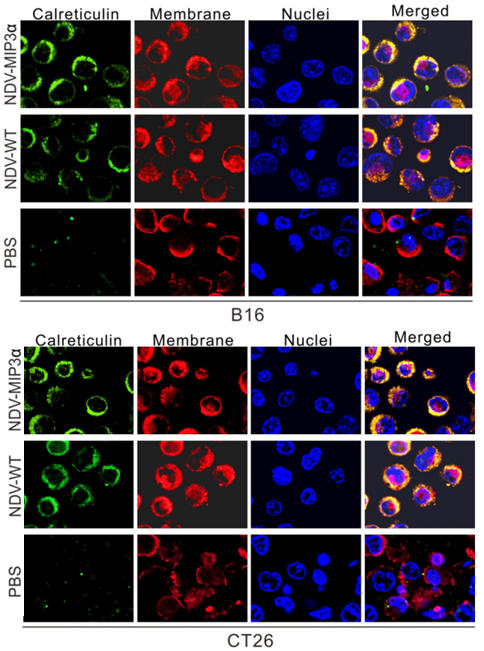
Ecto-CRT translocation to cell surfaces confirmed by three counterstains and merged analysis with an anti-CRT antibody followed by FITG-conjugated secondary antibody (green), DiI (red), and 4',6-diamidino-2-phenylindole (DAPI, blue).
-
NPJ Biofilms Microbiomes
Lactobacillus amylovorus extracellular vesicles mitigate mammary gland ferroptosis via the gut-mammary gland axis. [Abstract]2025 Jun 21;11(1):113. PMID: 40544167 -
Adv Healthc Mater
Ultrasound-Guided Functionalized Extracellular Vesicles for Visualized, Controlled, and Efficient Renal Delivery for Enhanced Kidney Repair. [Abstract]2025 Jul;14(17):e2404719. PMID: 40183711 -
Dev Cell
Rice extracellular vesicles send defense proteins into fungus Rhizoctonia solani to reduce disease. [Abstract]2025 Apr 21;60(8):1168-1181.e6. PMID: 39755117 -
-
Cell Chem Biol
2026 Mar 19;33(3):307-320.e4. PMID: 41650963 -
Arterioscler Thromb Vasc Biol
Hypoxia-Preconditioned Bone Marrow Mesenchymal Stem Cells Improved Cerebral Collateral Circulation and Stroke Outcome in Mice. [Abstract]2023 Jul;43(7):1281-1294. PMID: 37226732 -
-
Int J Biol Macromol
Inhibition of ESCRT-independent extracellular vesicles biogenesis suppresses enterovirus 71 replication and pathogenesis in mice. [Abstract]2024 Apr 6;267(Pt 1):131453. PMID: 38588842 -
Biofabrication
2026 Jun 24. PMID: 42341782 -
-
Brain Behav Immun
Maternal immune activation causes sex-specific impairment of microglial function during prefrontal cortex development. [Abstract]2026 Aug:136:106770. PMID: 42013920 -
Anal Chem
2023 Sep 19;95(37):13880-13888. PMID: 37677106 -
Anal Chem
Chemoenzymatic Labeling of Extracellular Vesicles for Visualizing Their Cellular Internalization in Real Time. [Abstract]2020 Jan 21;92(2):2103-2111. PMID: 31876137 -
J Ethnopharmacol
Linggui formula improves asthenozoospermia by modulating seminal plasma exosomes Wnt signaling via the LRP6/GSK3/Septin4 pathway. [Abstract]2026 Jan 10:354:120495. PMID: 40882792 -
Virulence
A human intestinal organoid derived from fetal human colon cells model for studying enteroviral pathogenesis. [Abstract]2025 Dec;16(1):2542455. PMID: 40745909 -
Neurosci Bull
Netrin-3 Suppresses Diabetic Neuropathic Pain by Gating the Intra-epidermal Sprouting of Sensory Axons. [Abstract]2023 May;39(5):745-758. PMID: 36587114 -
Bioeng Transl Med
2023 Jan 4;8(6):e10482. PMID: 38023709 -
Biomater Sci
Visualization of therapeutic intervention for acute liver injury using low-intensity pulsed ultrasound-responsive phase variant nanoparticles. [Abstract]2024 Feb 27;12(5):1281-1293. PMID: 38252410 -
Colloids Surf B Biointerfaces
Ultrasound molecular imaging of antibody-mediated rejection with CD16a-targeted probes in a complement-independent pathway. [Abstract]2026 Jan:257:115197. PMID: 41076856 -
-
Front Microbiol
Enterovirus 71 non-structural protein 3A hijacks vacuolar protein sorting 25 to boost exosome biogenesis to facilitate viral replication. [Abstract]2022 Oct 5:13:1024899. PMID: 36274707 -
J Cell Mol Med
Endothelial KDM5B Regulated by Piezo1 Contributes to Disturbed Flow Induced Atherosclerotic Plaque Formation. [Abstract]2024 Dec;28(23):e70237. PMID: 39643939 -
ACS Synth Biol
Signal Peptide-Guided Delivery of a Mucin-Like Collagen Analogue for Periplasmic Barrier Reinforcement: A Platform for Enhancing Microbial Survival. [Abstract]2025 Sep 19;14(9):3767-3783. PMID: 40924575 -
FASEB J
Plasma exosomal miRNAs involved in endothelial injury in microscopic polyangiitis patients. [Abstract]2020 May;34(5):6215-6228. PMID: 32232900 -
-
J Proteome Res
A Cluster of Potential Molecular Contributors in Myocardial-Tissue-Derived In Situ Proteomic Profiling Mediate Myocardial Hypertrophy Linked to Right Heart Dysfunction. [Abstract]2025 Nov 18. PMID: 41252162 -
Materials
Modification of Silver-Loaded Biodegradable Polymer Nanoparticles with Bacterial Membrane Vesicles for Treating Intracellular Bacterial Infections. [Abstract]2025 Jul 24;18(15):3470. PMID: 40805348 -
J Biochem Mol Toxicol
Exosomes From Hepatitis B Virus-Infected Hepatocytes Induce Liver Fibrosis Through METTL3-Mediated m6A Modification of P2RX7 mRNA. [Abstract]2025 Dec;39(12):e70645. PMID: 41405154 -
Chemistry
2020 Aug 6;26(44):10014-10023. PMID: 32638402 -
J Gastroenterol Hepatol
Exosomes From Cancer-Associated Fibroblasts Promote Colorectal Cancer Progression and Glutamine Metabolism Through METTL1-Mediated m7G Modification of SLC1A5 mRNA. [Abstract]2026 Mar 12. PMID: 41820224 -
Appl Biochem Biotechnol
Exosomal FOSL1 From Cancer-associated Fibroblasts Drives the Progression and Pro-tumorigenic M2 Macrophage Polarization of Hepatocellular Carcinoma By Activating PLAU Transcription. [Abstract]2025 Nov 20. PMID: 41264215 -
Micromachines
Precision Phenotypic Profiling and Capture of Circulating Tumor Cells via a Vertical Laminar Flow-Stacked Microfluidic Chip. [Abstract]2024 Apr 18;15(4):542. PMID: 38675353 -
Brain Res
Mesenchymal stem cell-derived exosomes rescue stress-dependent morphological deficits in primary hippocampal neurons via Wnt5a/β-catenin/WAVE2 pathway. [Abstract]2026 May 15:1879:150207. PMID: 41698632 -
Ultrasound Med Biol
A Novel Nanoscale Phase-Change Contrast Agent Evaluates the Hepatic Fibrosis Through Targeting Hepatic Stellate Cell Platelet-Derived Factor Beta Receptor by Ultrasound in Vitro. [Abstract]2025 Mar;51(3):508-518. PMID: 39690041 -
-
J Vis Exp
2024 Feb 2:(204). PMID: 38372398 -
-
bioRxiv
Inactivation of microtubule organizing center function of the centrosome is required for neuronal development and centriole elimination. [Abstract]2025 Nov 18:2025.11.17.688953. PMID: 41332590 -
-
-


Solvent & Solubility
In Vitro:
DMSO : 30 mg/mL (32.12 mM; Need ultrasonic and warming; Hygroscopic DMSO has a significant impact on the solubility of product, please use newly opened DMSO)
Please refer to the solubility information to select the appropriate solvent. Once prepared, please aliquot and store the solution to prevent product inactivation from repeated freeze-thaw cycles.
Storage method and period of stock solution: -80°C, 6 months; -20°C, 1 month (sealed storage, away from moisture and light). When stored at -80°C, please use it within 6 months. When stored at -20°C, please use it within 1 month.
Please refer to the solubility information to select the appropriate solvent. Once prepared, please aliquot and store the solution to prevent product inactivation from repeated freeze-thaw cycles.
Storage method and period of stock solution: -80°C, 6 months; -20°C, 1 month (sealed storage, away from moisture and light). When stored at -80°C, please use it within 6 months. When stored at -20°C, please use it within 1 month.
Concentration (start) × Volume (start) = Concentration (final) × Volume (final)


Purity & Documentation
-
Data Sheet (277 KB)
-
SDS (396 KB)
- English - EN (396 KB)
- Français - FR (396 KB)
- Deutsch - DE (396 KB)
- Norwegian - NO (396 KB)
- Español - ES (396 KB)
- Swedish - SV (396 KB)
- Italian - IT (396 KB)
- Korean - KR (396 KB)
- Portuguese - PT (396 KB)
-
Handling Instructions (2659 KB)
References
[1]. Gan WB, et al. Multicolor "DiOlistic" labeling of the nervous system using lipophilic dye combinations. Neuron. 2000 Aug;27(2):219-25. [Content Brief]
[2]. D P Kuffler, et al. Long-term survival and sprouting in culture by motoneurons isolated from the spinal cord of adult frogs. J Comp Neurol. 1990 Dec 22;302(4):729-38. [Content Brief]
[3]. D P Kuffler, et al. Long-term survival and sprouting in culture by motoneurons isolated from the spinal cord of adult frogs. J Comp Neurol. 1990 Dec 22;302(4):729-38. [Content Brief]


Complete Stock Solution Preparation Table
Please refer to the solubility information to select the appropriate solvent. Once prepared, please aliquot and store the solution to prevent product inactivation from repeated freeze-thaw cycles.
Storage method and period of stock solution: -80°C, 6 months; -20°C, 1 month (sealed storage, away from moisture and light). When stored at -80°C, please use it within 6 months. When stored at -20°C, please use it within 1 month.
| Optional Solvent | Concentration Solvent Mass | 1 mg | 5 mg | 10 mg | 25 mg |
|---|---|---|---|---|---|
| DMSO | 1 mM | 1.0708 mL | 5.3541 mL | 10.7081 mL | 26.7703 mL |
| 5 mM | 0.2142 mL | 1.0708 mL | 2.1416 mL | 5.3541 mL | |
| 10 mM | 0.1071 mL | 0.5354 mL | 1.0708 mL | 2.6770 mL | |
| 15 mM | 0.0714 mL | 0.3569 mL | 0.7139 mL | 1.7847 mL | |
| 20 mM | 0.0535 mL | 0.2677 mL | 0.5354 mL | 1.3385 mL | |
| 25 mM | 0.0428 mL | 0.2142 mL | 0.4283 mL | 1.0708 mL | |
| 30 mM | 0.0357 mL | 0.1785 mL | 0.3569 mL | 0.8923 mL |


DiI Related Classifications
HY-D0083 Related Classifications
 Powered by Bioz