



Irsogladine
Based on 3 publication(s) in Google Scholar
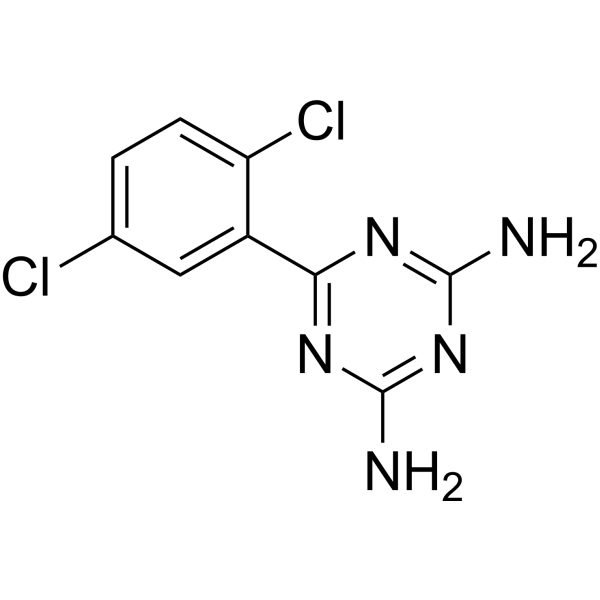
Irsogladine (Dicloguamine) is an orally active gastric mucosal protective agent. Irsogladine inhibits breast cancer recurrence and lung metastasis in nude mice. Irsogladine inhibits the transcriptional activities of NF-κB and AP-1, suppresses the activities of PDE and PDE4 to elevate intracellular cAMP levels, and activates TRPV1 and KATP channels. Irsogladine enhances iNOS expression, NO production, and the activation of cAMP-responsive elements. Irsogladine inhibits the development and progression of intestinal polyps in Apc-mutant mice. Irsogladine alleviates oxidative stress, increases gastric mucosal blood flow, and stimulates the production of endogenous prostaglandins. Irsogladine promotes insulin secretion in MIN6 cells. Irsogladine inhibits tumor angiogenesis, cancer cell proliferation, and the production of proinflammatory cytokines. Irsogladine exerts protective effects on astrocytes in ethanol/hydrochloric acid-induced gastric ulcers in mice. Irsogladine prevents colitis in IL-10 gene-deficient mice by reducing the production of IL-12 and IL-23. Irsogladine upregulates gap junction intercellular communication in pancreatic cancer cells via the PKA pathway. Irsogladine is applicable to research related to breast cancer, intestinal polyposis, gastric ulcer, spontaneous colitis, glioma, liver cancer, and pancreatic cancer[5][6].
For research use only. We do not sell to patients.
- Purity: 99.88%
- CAS No.: 57381-26-7
- Formula: C9H7Cl2N5
- Molecular Weight:256.09
-
Storage:Powder -20°C, 3 years , 4°C, 2 years ; In solvent -80°C, 2 years , -20°C, 1 year


-
 Biological Activity
-
Chemical Information
-
Solvent & Solubility
- Purity & Documentation
- References
-
 Help & FAQs
-

Immunology/Inflammation Compound Library
HY-L007
-
Membrane Transporter/Ion Channel Compound Library
HY-L011
-
Metabolism/Protease Compound Library
HY-L012
-
Neuronal Signaling Compound Library
HY-L013
-
NF-κB Signaling Compound Library
HY-L014
-
Stem Cell Signaling Compound Library
HY-L017
-
FDA-Approved Drug Library
HY-L022
-
Anti-Cancer Compound Library
HY-L025
-
Anti-Aging Compound Library
HY-L034
-
Drug Repurposing Compound Library
HY-L035
-
Antioxidant Compound Library
HY-L037
-
Differentiation Inducing Compound Library
HY-L038
-
Oxygen Sensing Compound Library
HY-L045
-
Anti-COVID-19 Compound Library
HY-L052
-
NMPA-Approved Drug Library
HY-L053
-
Pyroptosis Compound Library
HY-L059
-
Orally Active Compound Library
HY-L061
-
FDA Approved & Pharmacopeial Drug Library
HY-L066
-
Anti-Alzheimer's Disease Compound Library
HY-L069
-
Anti-Breast Cancer Compound Library
HY-L074
-
Anti-Pancreatic Cancer Compound Library
HY-L077
-
Anti-Blood Cancer Compound Library
HY-L079
-
Anti-Cancer Metabolism Compound Library
HY-L083
-
Anti-Parkinson's Disease Compound Library
HY-L085
-
Neurodegenerative Disease-related Compound Library
HY-L086
-
Anti-Obesity Compound Library
HY-L087
-
Angiogenesis-Related Compound Library
HY-L088
-
Transcription Factor-Targeted Library
HY-L090
-
Mechanoreceptors Compound Library
HY-L095
-
Anti-Liver Cancer Compound Library
HY-L101
-
Anti-Colorectal Cancer Compound Library
HY-L103
-
Antidepressant Compound Library
HY-L108
-
FDA-Approved Anticancer Drug Library
HY-L122
-
Human Metabolite Library
HY-L123
-
Anti-Prostate Cancer Compound Library
HY-L124
-
Anti-Pulmonary Fibrosis Compound Library
HY-L125
-
Cancer Stem Cells Compound Library
HY-L135
-
Pain-Related Compound Library
HY-L139
-
Off-patent Drug Library
HY-L141
-
Metabolic Enzyme Compound Library
HY-L146
-
Membrane Protein-targeted Compound Library
HY-L149
-
Membrane Receptor-targeted Compound Library
HY-L150
-
Autoimmune Disease Compound Library
HY-L156
-
Ion Channel Compound Library
HY-L166
-
Anti-Hematopathy Compound Library
HY-L171
-
Anti-Ovarian Cancer Compound Library
HY-L173
-
Multi-Target Compound Library
HY-L176
-
Radioprotector Library
HY-L178
-
Bioactive Compound Library Max
HY-L181
-
MCE Bioactive Compound Library
HY-L001V
-
Drug Repurposing Compound Library Plus
HY-L035P
-
FDA-Approved Drug Library Plus
HY-L022P
-
FDA-Approved Drug Library Mini
HY-L022M
-
Bioactive Compound Library
HY-L001
-
Anti-Gastric Cancer Compound Library
HY-L184
-
Anti-Fibrosis Compound Library
HY-L185
-
Anti-Brain Cancer Compound Library
HY-L188
-
Non-Alcoholic Fatty Liver Disease (NAFLD) Compound Library
HY-L199
-
Cell Proliferation Compound Library
HY-L201
-
High-Throughput Bioactive Compound Library
HY-L205
-
Mass Spectrometry Human Metabolite Library
HY-L215
-
Lactylation Compound Library
HY-L249


Publications Citing Use of MedChemExpress (MCE) Irsogladine
MoreAll AP-1 Isoforms
More

Biological Activity
|
PDE4 |
Irsogladine (1-100 μM; 48 h) inhibits the proliferation of HUVEC and MDA-MB-435 cells by 15% at the concentration of 100 μM[1].
Irsogladine maleate (100-200 μM; 24-48 h) inhibits the transcriptional activity of AP-1 and NF-κB in Caco-2 cells[2].
Irsogladine maleate (100-200 μM; 24 h) inhibits the basal transcriptional activity of NF-κB in HCT-15 cells[2].
Irsogladine (1-10 μM; 24 h) significantly enhances the antiproliferative effects of NO donors SNAP and NONOate on glomerular mesangial cells[4].
Irsogladine (10 μM; 24 h) slightly upregulates the expression of connexin 43 in rat glomerular mesangial cells, and significantly enhances the SNAP (HY-121526)-induced increase in connexin 43 expression in these cells[4].
Irsogladine (10 μM; 1 h) causes a small but significant increase in intracellular cAMP levels in rat glomerular mesangial cells, and exerts a synergistic effect on elevating cAMP levels when used in combination with SNAP in these cells[4].
Irsogladine (10 μM; 1 h) weakly activates PKA in rat glomerular mesangial cells and potently enhances SNAP-induced PKA activation in these cells[4].
Irsogladine (0.1-100 μM; 24 h) synergistically activates CRE[4] in rat glomerular mesangial cells when used in combination with NO donors (SNAP, SNP (HY-B0564), NONOate) or cytokine-induced endogenous NO.
Combination treatment with irsogladine (10 μM; 24 h) and either the sGC activator Bay 41-2272 (HY-12376) or the PDE3-interacting cGMP analog 8-bromo-cGMP (HY-101379A) synergistically activates CRE and PKA in rat glomerular mesangial cells[4].
Irsogladine (10 μM; 24 h) significantly enhances cytokine (TNF-α + IL-1β)-induced iNOS expression and NO production in rat glomerular mesangial cells[4].
Irsogladine (1.0×10⁻⁸-1.0×10⁻⁵ M; 30 min pre-incubation, 60 min co-incubation with glucose) increases insulin secretion by 1.7-fold at a concentration of 1.0×10⁻⁵ M, and this effect depends on functional gap junctions and the cAMP-PKA pathway[5].
Irsogladine (1.0×10⁻⁵ M; 30 min) increases the levels of plasma membrane-associated Cx36 protein and cAMP in MIN6 cells[5].
Irsogladine (10-7-10-4 M; 24 h) dose-dependently inhibits the gene expression and protein secretion of IL-12p40 and IL-23p19, suppresses IL-23 secretion, and reduces TNF-α mRNA expression in J774A.1 mouse monocyte/macrophage cells[6].
Irsogladine (10-6-10-4 M; 5 days) specifically inhibits the proliferation of human microvascular endothelial cells and human umbilical vein endothelial cells[7].
Irsogladine (10-6-10-4 M; 3 days) inhibits U251-induced tube formation in human microvascular endothelial cells[7].
Irsogladine malate (10-6 M; administered for 3-5 days until 90-95% confluence) significantly upregulates GJIC between human pancreatic cancer cells PANC-1[8].
Irsogladine malate (10-8-10-6 M; treated for 3-5 days until 90-95% confluence) dose-dependently increases the levels of phosphorylated Cx43 (P1, P2) in the membrane fraction of human pancreatic cancer cell line PANC-1[8].
Irsogladine malate (10-6 M; treated for 3-5 days until 90-95% confluence) induces the relocalization of Cx43 protein from the cytoplasm to the intercellular borders in human pancreatic cancer cells PANC-1[8].
Irsogladine malate (10-6 M; treated for 3-5 days until 90-95% confluence) significantly increases intracellular cAMP levels in PANC-1 human pancreatic cancer cells[8].
MedChemExpress (MCE) has not independently confirmed the accuracy of these methods. They are for reference only.
-
Cell Line:HUVEC cells, MDA-MB-435 cells
-
Concentration:1 μM; 10 μM; 100 μM
-
Incubation Time:48 h
-
Result:Inhibited the proliferation of HUVEC and MDA-MB-435 cells by 15% at 100 μM.
Had no effect on proliferation of either cell line at 1 μM and 10 μM.
-
Cell Line:rat glomerular mesangial cells (SM43 line)
-
Concentration:1 μM, 10 μM
-
Incubation Time:24 h
-
Result:Did not affect PDGF-induced mesangial cell proliferation at 10 μM.
Significantly potentiated the anti-proliferative effect of the NO donor SNAP at 1 μM.
Potentiated the anti-proliferative effect of the NO donor NONOate at 1 μM.
Showed no cytotoxic effects at 1, 10 μM when evaluated by LDH release.
-
Cell Line:rat glomerular mesangial cells
-
Concentration:10 μM
-
Incubation Time:24 h
-
Result:Modestly elevated Cx43 expression in mesangial cells when used alone.
Greatly potentiated the concentration-dependent SNAP-induced elevation of Cx43 levels when combined with SNAP (1, 10, 100 μM).
-
Cell Line:rat glomerular mesangial cells
-
Concentration:10 μM
-
Incubation Time:1 h
-
Result:Induced a slight increase in VASP serine 157 phosphorylation when used alone.
Potently induced VASP serine 157 phosphorylation, reflecting strong PKA activation, when combined with 100 μM SNAP.
-
Cell Line:mouse insulin-secreting MIN6 cells
-
Concentration:1.0×10⁻⁸ M, 1.0×10⁻⁷ M, 1.0×10⁻⁶ M, 1.0×10⁻⁵ M
-
Incubation Time:30 min (pre-incubation); 60 min (co-incubation with glucose)
-
Result:Had no effect on insulin secretion under 5.6 mM glucose conditions.
Induced a 1.7 fold increase in insulin secretion compared to control under 16.8 mM glucose conditions.
Showed this insulin secretion-inducing effect was inhibited by co-treatment with a gap junction inhibitor, pre-treatment with Rp-cAMP, or co-treatment with H89.
-
Cell Line:human microvascular endothelial cells, human umbilical endothelial cells, human glioma U251 cells, human epidermoid cancer KB cells
-
Concentration:10-6 M, 10-5 M, 10-4 M
-
Incubation Time:5 days
-
Result:Inhibited the proliferation of human microvascular endothelial cells and human umbilical endothelial cells by >30% of control levels.
Did not affect the proliferation of human glioma U251 cells or human epidermoid cancer KB cells.
-
Cell Line:PANC-1 human pancreatic cancer cells
-
Concentration:10-6 M
-
Incubation Time:3-5 days (until 90-95% confluence)
-
Result:Induced Cx43 immunofluorescence to appear as large spots or short lines at the boundaries between adjacent cells, indicating relocalization from the cytoplasm (particularly perinuclear regions in untreated cells) to cell-cell junctions.
Had this relocalization inhibited by co-treatment with H-89 or SQ22536.
-
Cell Line:PANC-1 human pancreatic cancer cells
-
Concentration:10-6 M
-
Incubation Time:3-5 days (until 90-95% confluence)
-
Result:Increased intracellular cAMP levels by approximately fivefold relative to untreated controls.
Showed a significant increase.
Irsogladine maleate (5-50 ppm; administered via diet; ad libitum access; 8 weeks) inhibits intestinal polyp formation in male Min mice (reducing the total number of polyps to 69.3% and 66.1% of that in the control group, respectively), and its mechanism of action involves, in part, inhibition of the NF-κB signaling pathway and reduction of reactive carbonyl species associated with oxidative stress[2].
Irsogladine maleate (ad libitum access for 25 consecutive weeks) inhibits the development of gastrointestinal tumors in male Wistar rats with gastric carcinogenesis initiated by N-methyl-N'-nitro-N-nitrosoguanidine and promoted by glyoxal[2].
Irsogladine maleate (125 ppm; administered via diet; ad libitum access; 35 weeks) completely inhibits liver tumorigenesis (0% incidence) in male F344 rats initiated with diethylnitrosamine and promoted with phenobarbital[2].
Irsogladine (1-10 mg/kg; p.o.; single administration; 1 h prior to ulcer induction) exerts a dose-dependent gastroprotective effect against ethanol/hydrochloric acid-induced gastric ulcers in male ICR mice, with an 84.2% injury inhibition rate at the dose of 10 mg/kg. Its action is partially mediated by elevated cAMP levels, enhanced prostaglandin activity, opening of KATP channels, and antioxidant properties[3].
Irsogladine (100 ppm; p.o.; daily; for 10 consecutive weeks) prevents spontaneous colitis in IL-10−/− mice by reducing the colonic histological score to 1.6 and inhibiting cytokine expression in the Th1/Th17 pathway via suppression of IL-12 and IL-23 production[6].
Irsogladine (30-120 mg/kg; p.o.; daily; for 4 consecutive weeks) dose-dependently inhibits glioma tumor growth and reduces tumor microvessel density in BALB/c nu/nu mice. Specifically, the dose of 60 mg/kg/day reduces tumor volume by approximately 50%, while the dose of 120 mg/kg/day decreases microvessel count to approximately 30% of the control level[7].
Irsogladine (30-60 mg/kg; p.o.; daily; for 7 consecutive days) inhibits liver cancer-induced tumor neovascularization in the dorsal air sac of mice. Specifically, the dose of 60 mg/kg/day completely blocks the formation of tumor-specific neovasculature without affecting pre-existing blood vessels[7].
MedChemExpress (MCE) has not independently confirmed the accuracy of these methods. They are for reference only.
-
Animal Model:BALB/c nude (female, 6-8 weeks old, human MDA-MB-435 breast cancer cell mammary fat pad injection model)[1]
-
Dosage:120 mg/kg
-
Administration:p.o.; daily; 5 weeks
-
Result:Inhibited primary tumor regrowth by 39.6%.
Reduced pulmonary metastasis incidence, with 31% of treated mice free of pulmonary metastases.
Inhibited mean volume of pulmonary metastases by 48.4%.
Did not affect mouse body weight.
-
Animal Model:C57BL/6-ApcMin/+ (male, 5 weeks of age)[2]
-
Dosage:5 ppm; 50 ppm
-
Administration:dietary; ad libitum; 8 weeks
-
Result:Reduced total intestinal polyp number to 69.3% of control, proximal small intestine polyps to 61.5% of control, distal small intestine polyps to 21.9% of control, polyps <0.5 mm and 1.5-2.0 mm in diameter, serum triglyceride levels to 42.1% of control, and suppressed IL-1β mRNA levels in polyps to 85% of control, IL-6 mRNA levels in polyps to 51% of control, and reduced levels of 194 hepatic reactive carbonyl species peaks, and significantly reduced levels of specific reactive carbonyl species including acetaldehyde, acrolein, pentanal, hexanal, 2,4-NDE, 2-nonenal, HNE, decanal, undecanal, dodecanal, tridecanal, tetradecanal, hexadecanal, 8-HpDE, and heptadecanal at 5 ppm.
Reduced total intestinal polyp number to 66.1% of control, proximal small intestine polyps to 53.8% of control, middle small intestine polyps to 39.7% of control, polyps <0.5 mm and 0.5-1.0 mm in diameter, serum triglyceride levels to 73.4% of control, and reduced levels of 163 hepatic reactive carbonyl species peaks, and significantly reduced levels of specific reactive carbonyl species including acrolein, pentanal, 2-hexenal, hexanal, 2,4-NDE, 2-nonenal, HNE, tetradecanal, hexadecanal, and heptadecanal at 50 ppm.
Did not affect body weight, food intake, clinical signs, organ weights, gastric histopathology, serum free fatty acid or total cholesterol levels, and only slightly reduced PCNA-positive cell percentage in polyps (not statistically significant) at both doses.
-
Animal Model:F344 (male)[2]
-
Dosage:125 ppm
-
Administration:dietary; ad libitum; 35 weeks
-
Result:Prevented the development of liver neoplasms, with an incidence of 0/14 rats.
-
Animal Model:ICR (male, 25-30 g)[3]
-
Dosage:1 mg/kg; 10 mg/kg
-
Administration:p.o.; single dose; 1 hour before ulcer induction
-
Result:Reduced gastric mucosal injury area to 7.86 mm2, achieving 15.0% inhibition of ethanol/HCl-induced lesions compared to vehicle.
Showed slight reduction of gastric mucosal damage via histological analysis.
Reduced gastric mucosal injury area to 1.42 mm2, achieving 84.2% inhibition of ethanol/HCl-induced lesions compared to vehicle.
Showed near-restoration of normal gastric mucosa via histological analysis.
Increased gastric mucosal cAMP levels to 5.8 pmol/mg protein (165% of vehicle levels); when combined with S-nitroso acetyl penicillamine, cAMP levels synergistically increased to 8.3 pmol/mg protein (243% of vehicle levels).
Reduced ethanol/HCl-induced mucosal lesions to 8.4% of total gastric size; this effect was slightly reversed by the K_ATP channel blocker glibenclamide, and slightly reduced by the TRPV1 antagonist capsazepine and cyclooxygenase inhibitor indomethacin.
Reduced thiobarbituric acid reactive substances (TBARS) levels to 40.5 nM/g tissue at 1 mg/kg; reduced TBARS levels to 28.9 nM/g tissue at 10 mg/kg, indicating inhibition of lipid peroxidation.
-
Animal Model:IL-10−/− (5 weeks old, gender ratio balanced)[6]
-
Dosage:100 ppm
-
Administration:oral; daily; 10 consecutive weeks
-
Result:Increased mean colon length significantly.
Reduced mean colon weight significantly.
Reduced mean histological colitis score from 3.8 to 1.6.
Suppressed colonic tissue mRNA expression of proinflammatory cytokines: TNF-α (-2.5-fold), IL-1β (-5.4-fold), IFN-γ (-4.5-fold), IL-17 (-113.0-fold), IL-12p35 (-21.0-fold), IL-12p40 (-3.4-fold), and IL-23p19 (-4.2-fold) relative to controls.
Showed no significant difference in body weight gain compared to controls over the 10-week period.
Reduced colonic wall thickening and redness compared to controls.
-
Animal Model:BALB/c nu/nu (male, 5 weeks old, ~20 g, subcutaneous implantation of human glioma U251 cells)[7]
-
Dosage:30 mg/kg; 60 mg/kg; 120 mg/kg
-
Administration:p.o.; daily; 4 weeks
-
Result:Reduced average tumor volume to ~50% of control at 60 mg/kg/day, with greater reduction at 120 mg/kg/day.
Reduced factor VIII-positive microvessels per ×100 field to ~95 at 30 mg/kg/day, ~60 at 60 mg/kg/day, and ~35 at 120 mg/kg/day (control ~115).
Did not affect mouse body weight at any dose.
-
Animal Model:(implantation of diffusion chambers with human hepatic cancer HepG2 cells into dorsal air sacs)[7]
-
Dosage:30 mg/kg; 60 mg/kg
-
Administration:p.o.; daily; 7 days
-
Result:Reduced the development of HepG2-induced tumor neovasculatures, with only short neovasculatures observed at 30 mg/kg/day.
Almost completely eliminated the appearance of HepG2-induced tumor neovasculatures at 60 mg/kg/day.
Did not affect preexisting blood vessels at 60 mg/kg/day.


Chemical Information
-
CAS No. 57381-26-7
-
Appearance Solid
-
Molecular Weight 256.09
-
Formula C9H7Cl2N5
-
Color White to off-white
-
SMILES
NC1=NC(N)=NC(C2=CC(Cl)=CC=C2Cl)=N1
-
Synonyms
Dicloguamine
-
Shipping
Room temperature in continental US; may vary elsewhere.
-
Storage
Powder -20°C 3 years 4°C 2 years In solvent -80°C 2 years -20°C 1 year


Publications (3)
-
Journal Impact Factor
-
Most Recent
-
Anal Chem
Exposome-Scale Investigation of Cl-/Br-Containing Chemicals Using High-Resolution Mass Spectrometry, Multistage Machine Learning, and Cloud Computing. [Abstract]2025 Jun 3;97(21):11099-11109. PMID: 40401576 -
Cell Rep Methods
RECOVER identifies synergistic drug combinations in vitro through sequential model optimization. [Abstract]2023 Oct 23;3(10):100599. PMID: 37797618 -


Solvent & Solubility
DMSO : 120 mg/mL (468.59 mM; Need ultrasonic; Hygroscopic DMSO has a significant impact on the solubility of product, please use newly opened DMSO)
H2O : < 0.1 mg/mL (insoluble)
Please refer to the solubility information to select the appropriate solvent. Once prepared, please aliquot and store the solution to prevent product inactivation from repeated freeze-thaw cycles.
Storage method and period of stock solution: -80°C, 2 years; -20°C, 1 year. When stored at -80°C, please use it within 2 years. When stored at -20°C, please use it within 1 year.
Please refer to the solubility information to select the appropriate solvent. Once prepared, please aliquot and store the solution to prevent product inactivation from repeated freeze-thaw cycles.
Storage method and period of stock solution: -80°C, 2 years; -20°C, 1 year. When stored at -80°C, please use it within 2 years. When stored at -20°C, please use it within 1 year.
Concentration (start) × Volume (start) = Concentration (final) × Volume (final)
Select the appropriate dissolution method based on your experimental animal and administration route.
- For the following dissolution methods, please ensure to first prepare a clear stock solution using an In Vitro approach and then sequentially add co-solvents:
- To ensure reliable experimental results, the clarified stock solution can be appropriately stored based on storage conditions. As for the working solution for In Vivo experiments, it is recommended to prepare freshly and use it on the same day.
- The percentages shown for the solvents indicate their volumetric ratio in the final prepared solution. If precipitation or phase separation occurs during preparation, heat and/or sonication can be used to aid dissolution.
Add each solvent one by one: 10% DMSO 40% PEG300 5% Tween-80 45% Saline
Solubility: 3 mg/mL (11.71 mM); Suspended solution; Need ultrasonic
This protocol yields a suspended solution of 3 mg/mL. Suspended solution can be used for oral and intraperitoneal injection.
Taking 1 mL working solution as an example, add 100 μL DMSO stock solution (30.0 mg/mL) to 400 μL PEG300, and mix evenly; then add 50 μL Tween-80 and mix evenly; then add 450 μL Saline to adjust the volume to 1 mL.
Preparation of Saline: Dissolve 0.9 g sodium chloride in ddH₂O and dilute to 100 mL to obtain a clear Saline solution.
Please enter the basic information of animal experiments:
-
-
-
-
Recommended: Prepare an additional quantity of animals to account for potential losses during experiments.
Please enter your animal formula composition:
-
%DMSO +
Recommended: Keep the proportion of DMSO in working solution below 2% if your animal is weak.
-
%+
-
+%Tween-80 + +
-
%Saline +
The co-solvents required include: DMSO, . All of co-solvents are available by MedChemExpress (MCE). , Tween 80. All of co-solvents are available by MedChemExpress (MCE).
Working solution concentration: 0.22 mg/mL
Method for preparing stock solution: mg drug dissolved in μL DMSO. Stock solution concentration: mg/mL.
1. Take μL DMSO stock solution;
2. Add μL .
μL , mix evenly;
3. Then add μL Tween 80, mix evenly;
4. Then add μL
Please ensure that the stock solution in the first step is dissolved to a clear state, and add co-solvents in sequence. You can use ultrasonic heating (ultrasonic cleaner, recommended frequency 20-40 kHz), vortexing, etc. to assist dissolution.


Purity & Documentation
-
Data Sheet (303 KB)
-
SDS (393 KB)
- English - EN (393 KB)
- Français - FR (393 KB)
- Deutsch - DE (393 KB)
- Norwegian - NO (393 KB)
- Español - ES (393 KB)
- Swedish - SV (393 KB)
- Italian - IT (393 KB)
- Portuguese - PT (393 KB)
-
Handling Instructions (2659 KB)
References
[1]. Nozaki S, et al. Inhibition of breast cancer regrowth and pulmonary metastasis in nude mice by anti-gastric ulcer agent, irsogladine. Breast Cancer Res Treat. 2004;83(3):195-199. [Content Brief]
[2]. Onuma W, et al. Irsogladine maleate, a gastric mucosal protectant, suppresses intestinal polyp development in Apc-mutant mice. Oncotarget. 2016;7(8):8640-8652. [Content Brief]
[3]. Kwon SC, et al. Gastroprotective effects of irsogladine maleate on ethanol/hydrochloric acid induced gastric ulcers in mice. Korean J Intern Med. 2021;36(1):67-75. [Content Brief]
[4]. Yao J, et al. Irsogladine maleate potentiates the effects of nitric oxide on activation of cAMP signalling pathways and suppression of mesangial cell mitogenesis. Br J Pharmacol. 2007;151(4):457-466. [Content Brief]
[5]. Matsumoto T, et al. The anti-ulcer agent, irsogladine, increases insulin secretion by MIN6 cells. Eur J Pharmacol. 2012;685(1-3):213-217. [Content Brief]
[6]. Nakagawa T, et al. Irsogladine Maleate Prevents Colitis in Interleukin-10 Gene-Deficient Mice by Reducing Interleukin-12 and -23 Production. Biol Pharm Bull. 2015;38(11):1681-1688. [Content Brief]
[7]. Ono M, et al. Inhibition of tumor growth and neovascularization by an anti-gastric ulcer agent, irsogladine. Cancer Res. 1996 Apr 1;56(7):1512-6. [Content Brief]
[8]. Kawasaki Y, et al. Irsogladine malate up-regulates gap junctional intercellular communication between pancreatic cancer cells via PKA pathway. Pancreas. 2002;25(4):373-377. [Content Brief]


Complete Stock Solution Preparation Table
Please refer to the solubility information to select the appropriate solvent. Once prepared, please aliquot and store the solution to prevent product inactivation from repeated freeze-thaw cycles.
Storage method and period of stock solution: -80°C, 2 years; -20°C, 1 year. When stored at -80°C, please use it within 2 years. When stored at -20°C, please use it within 1 year.
| Optional Solvent | Concentration Solvent Mass | 1 mg | 5 mg | 10 mg | 25 mg |
|---|---|---|---|---|---|
| DMSO | 1 mM | 3.9049 mL | 19.5244 mL | 39.0488 mL | 97.6219 mL |
| 5 mM | 0.7810 mL | 3.9049 mL | 7.8098 mL | 19.5244 mL | |
| 10 mM | 0.3905 mL | 1.9524 mL | 3.9049 mL | 9.7622 mL | |
| 15 mM | 0.2603 mL | 1.3016 mL | 2.6033 mL | 6.5081 mL | |
| 20 mM | 0.1952 mL | 0.9762 mL | 1.9524 mL | 4.8811 mL | |
| 25 mM | 0.1562 mL | 0.7810 mL | 1.5620 mL | 3.9049 mL | |
| 30 mM | 0.1302 mL | 0.6508 mL | 1.3016 mL | 3.2541 mL | |
| 40 mM | 0.0976 mL | 0.4881 mL | 0.9762 mL | 2.4405 mL | |
| 50 mM | 0.0781 mL | 0.3905 mL | 0.7810 mL | 1.9524 mL | |
| 60 mM | 0.0651 mL | 0.3254 mL | 0.6508 mL | 1.6270 mL | |
| 80 mM | 0.0488 mL | 0.2441 mL | 0.4881 mL | 1.2203 mL | |
| 100 mM | 0.0390 mL | 0.1952 mL | 0.3905 mL | 0.9762 mL |


Irsogladine Related Classifications
Cat. No.: HY-B0327
 Powered by Bioz
- Irsogladine
- 57381-26-7
- Dicloguamine
- Phosphodiesterase (PDE)
- NF-κB
- AP-1
- TRP Channel
- Interleukin Related
- gastric mucosal protective agent
- HUVEC
- MDA-MB-435 cells
- Caco-2 cells
- HCT-15 cells
- J774A.1 cells
- PANC-1 cells
- BALB/c nude mice
- C57BL/6-ApcMin/+mice
- F344rat
- ICRmice
- IL-10?/? mice
- breast cancer
- intestinal polyposis
- gastric ulcer
- spontaneous colitis
- glioma
- liver cancer
- pancreatic cancer
- Inhibitor
- inhibitor
- inhibit