



DL-AP5
Based on 3 publication(s) in Google Scholar
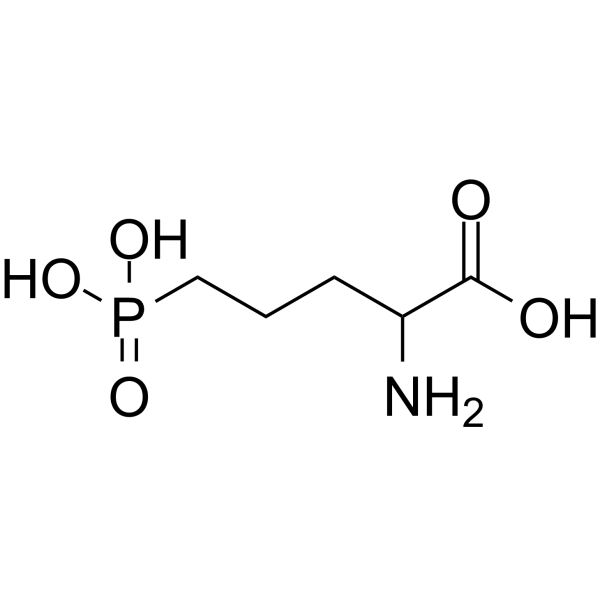
DL-AP5 (2-APV) is a competitive NMDA (N-methyl-D-aspartate) receptor antagonist. DL-AP5 shows significantly antinociceptive activity. DL-AP5 specifically blocks on channels in the rabbit retina.
For research use only. We do not sell to patients.
- Purity : 99.70%
- CAS No.: 76326-31-3
- Formula: C5H12NO5P
- Molecular Weight:197.13
-
Storage:Powder -20°C, 3 years ; In solvent -80°C, 6 months , -20°C, 1 month

To place orders, for customer services and technical support, please contact: MedChemExpress USA
Tel: 609-228-6898 E-mail: [email protected] [email protected]


-
 Biological Activity
-
Chemical Information
-
Solvent & Solubility
- Purity & Documentation
- References
-
 Help & FAQs


-
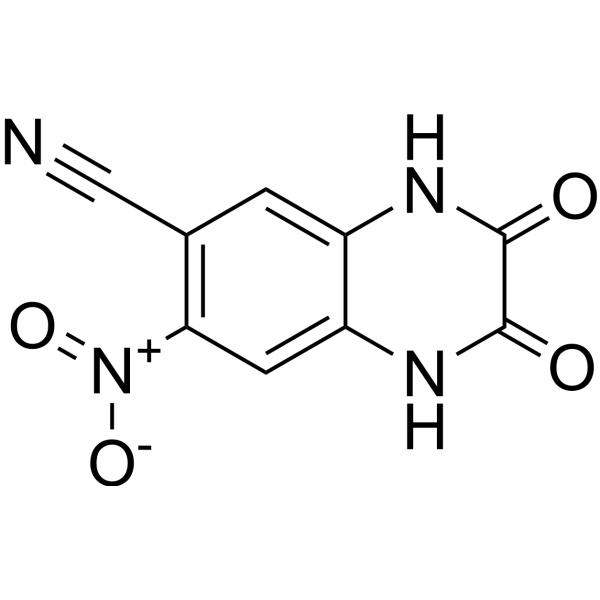
HY-15066
CNQXAMPA Antagonist -
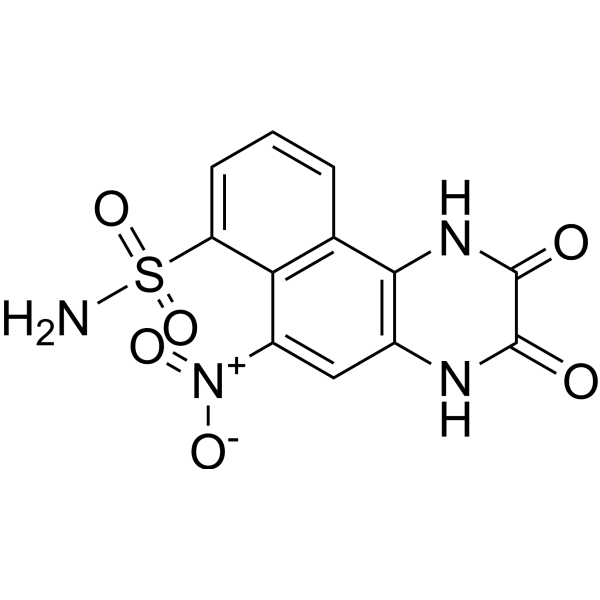
HY-15068
NBQXAMPA Receptor Antagonist -
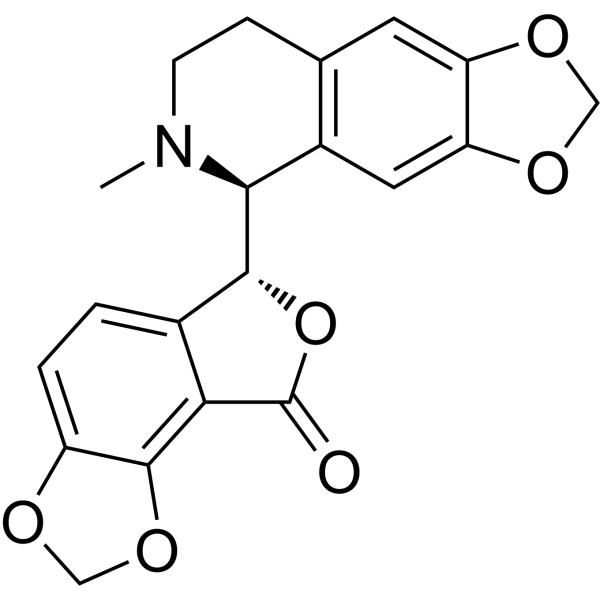
HY-N0219
BicucullineGABAA Receptor Antagonist -
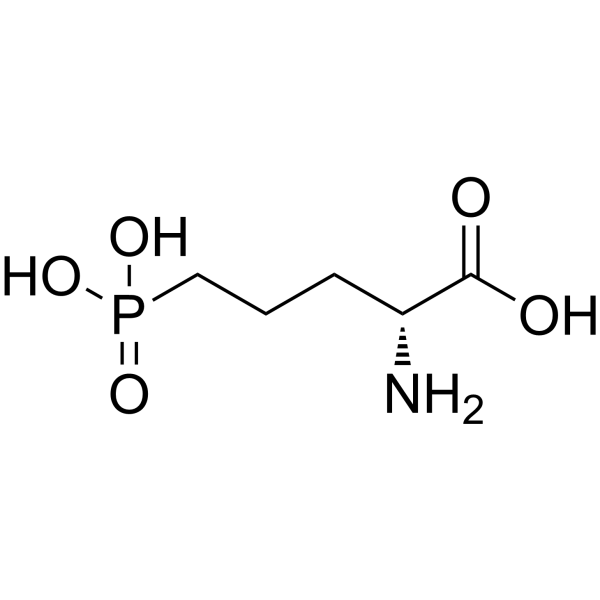
HY-100714A
D-AP5NMDA Antagonist -
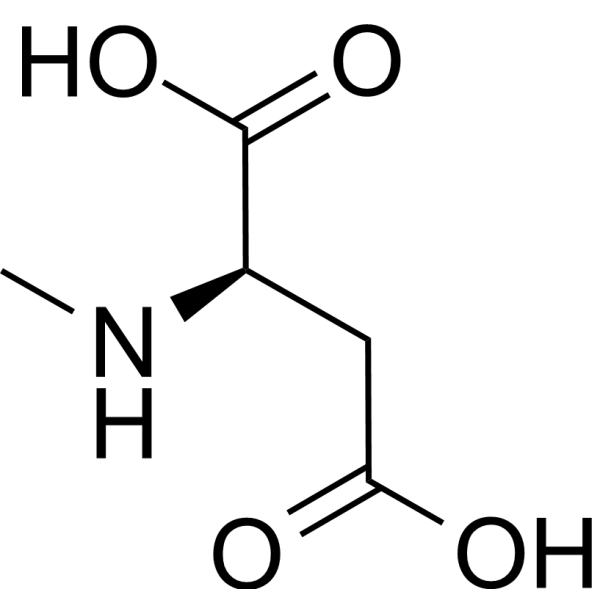
HY-17551
NMDAEndogenous Metabolite -
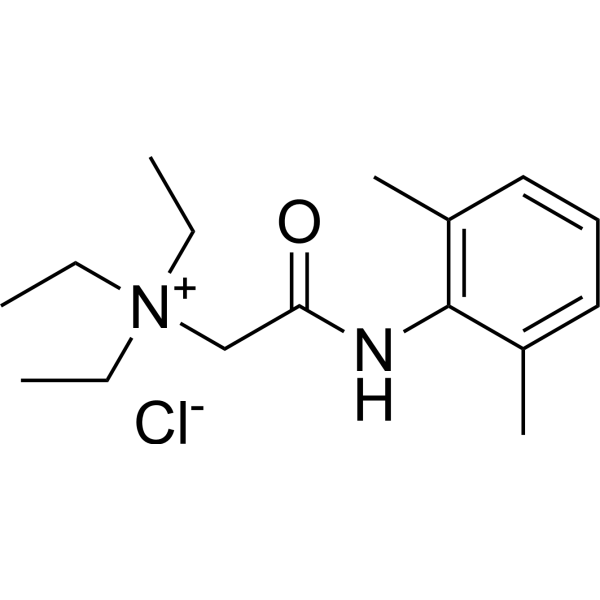
HY-108505
QX-314 chlorideSodium Channel Blocker -
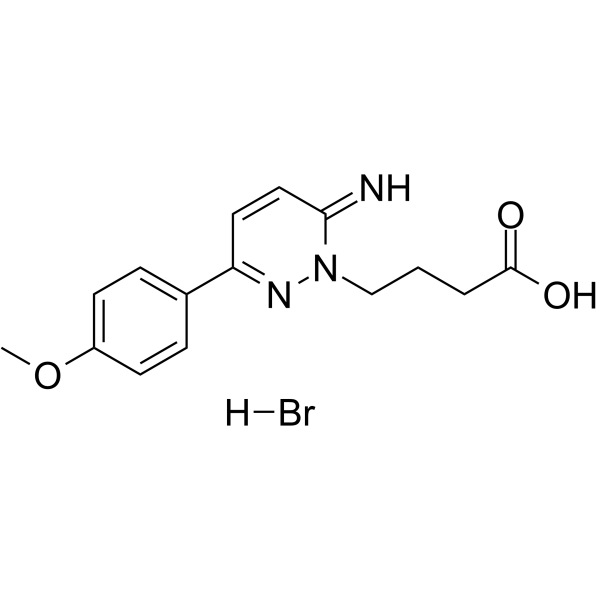
HY-103533
GabazineGABAA Antagonist -
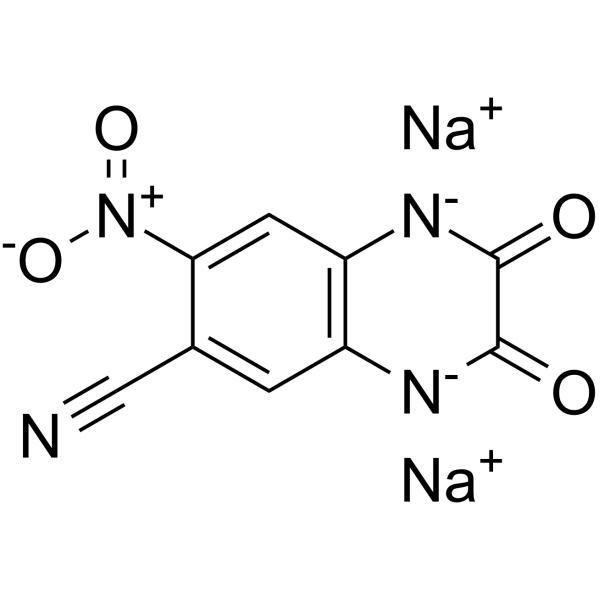
HY-15066A
CNQX disodiumiGluR Antagonist -
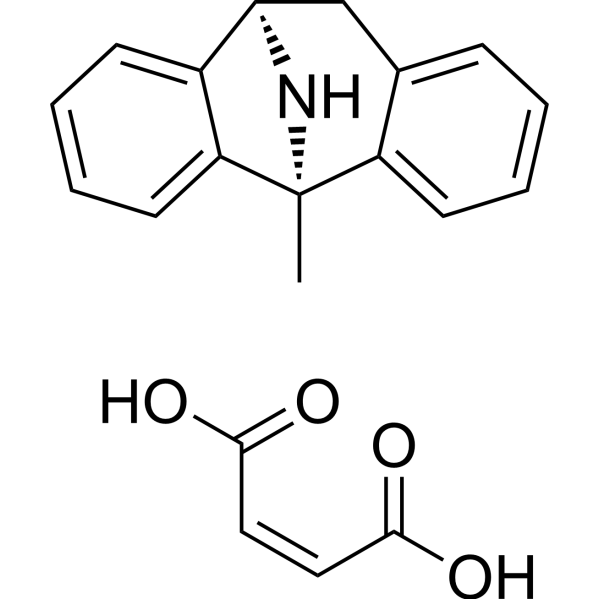
HY-15084
Dizocilpine maleateNMDA Antagonist -
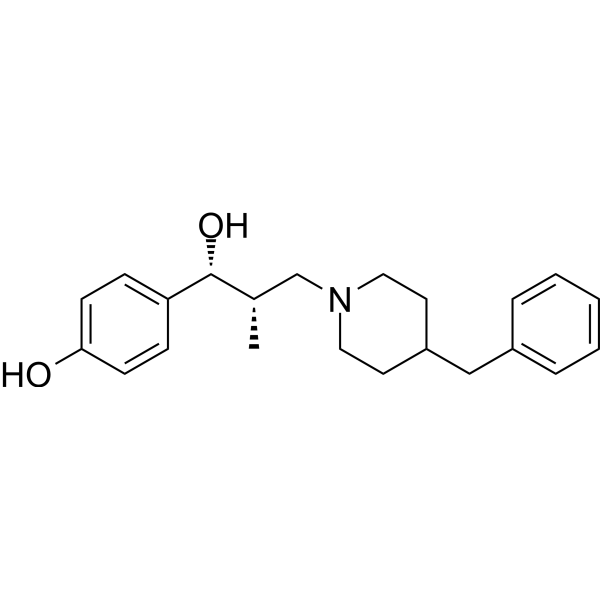
HY-13993
Ro 25-6981NMDAR Antagonist -
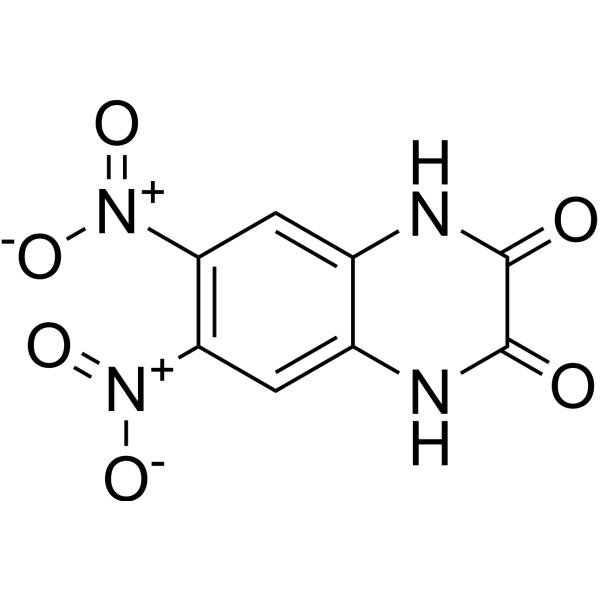
HY-15067
DNQXNon-NMDA Receptor Antagonist
Publications Citing Use of MedChemExpress (MCE) DL-AP5
More Customer Validation & Images

-
Bio/Physico-chemical Assay
-
Bio/Physico-chemical Assay
-
Bio/Physico-chemical Assay
-
In Vivo Efficacy Study
-
In Vivo Efficacy Study
All iGluR Isoforms
More

Biological Activity
Description
IC50 & Target
|
NMDA Receptor |
Cellular Effect
|
Cell Line

|
Type | Value | Description | References |
|---|---|---|---|---|
| Pyramidal neuron | IC50 |
0.31 μM
Compound: L-AP5
|
sensitization of CA1 pyramidal neurons by 2 to depolarizations by L-AP4,L-AP5 and L-AP6 after exposure to quisqualic acid
sensitization of CA1 pyramidal neurons by 2 to depolarizations by L-AP4,L-AP5 and L-AP6 after exposure to quisqualic acid
|
[PMID: 7966155] |
| Pyramidal neuron | IC50 |
2.2 μM
Compound: L-AP5
|
sensitization of CA1 pyramidal neurons by 2 to depolarizations by L-AP4, L-AP5 and L-AP6 after reversal with L-alpha-AA
sensitization of CA1 pyramidal neurons by 2 to depolarizations by L-AP4, L-AP5 and L-AP6 after reversal with L-alpha-AA
|
[PMID: 7966155] |
| Pyramidal neuron | IC50 |
2.3 μM
Compound: L-AP5
|
sensitization of CA1 pyramidal neurons by 2 to depolarizations by L-AP4, L-AP5 and L-AP6 before exposure to quisqualic acid
sensitization of CA1 pyramidal neurons by 2 to depolarizations by L-AP4, L-AP5 and L-AP6 before exposure to quisqualic acid
|
[PMID: 7966155] |
In Vitro
In Vivo
DL-AP5 (0-10 nmol, Intracerebroventricular injection) causes a dose-dependent increase in food consumption[4].
DL-AP5 (5 nmol, Intracerebroventricular injection) attenuates the decreased food consumption induced by the intracerebroventricular injection of ghrelin[4].
MedChemExpress (MCE) has not independently confirmed the accuracy of these methods. They are for reference only.
-
Animal Model:Male Wistar rats (180-230 g)[3]
-
Dosage:1, 3.2 and 10 μg/rat
-
Administration:Injected into the intra-dorsal hippocampal (intra-CA1) immediately after shock administration, once
-
Result:Significantly decreased the effect of NMDA (10-2 μg/rat, intra-CA1) with significant interaction.
-
Animal Model:Broilers cockerels (3-h fooddeprived (FD3), n=8 for each group)[4]
-
Dosage:0, 2.5, 5, and 10 nmol; in a volume of 10 μL
-
Administration:Intracerebroventricular injection
-
Result:Caused a dose-dependent increase in food consumption which was significant for 5 and 10 nmol doses.
-
Animal Model:Broilers cockerels (3-h fooddeprived (FD3), n=8 for each group)[4]
-
Dosage:5 nmol
-
Administration:Intracerebroventricular injection, followed by ghrelin (0.6 nmol)
-
Result:Attenuated the decreased food consumption induced by the intracerebroventricular injection of ghrelin.


Chemical Information
-
CAS No. 76326-31-3
-
Appearance Solid
-
Molecular Weight 197.13
-
Formula C5H12NO5P
-
Color White to off-white
-
SMILES
NC(CCCP(O)(O)=O)C(O)=O
-
Synonyms
2-APV; DL-2-Amino-5-phosphonovaleric acid
-
Shipping
Room temperature in continental US; may vary elsewhere.
-
Storage
Powder -20°C 3 years In solvent -80°C 6 months -20°C 1 month


Publications (3)
-
Journal Impact Factor
-
Most Recent
-
Neuron
Dual anterior insula-prefrontal cortex circuits mediate chronic stress-induced social interaction deficits. [Abstract]2026 Mar 26:S0896-6273(26)00120-0. PMID: 41895265 -
Int J Biol Macromol
SETD2 deficiency in peripheral sensory neurons induces allodynia by promoting NMDA receptor expression through NFAT5 in rodent models. [Abstract]2024 Dec;282(Pt 5):136767. PMID: 39476923
DL-AP5 purchased from MedChemExpress. Usage Cited in: Int J Biol Macromol. 2024 Dec;282(Pt 5):136767. [Abstract]
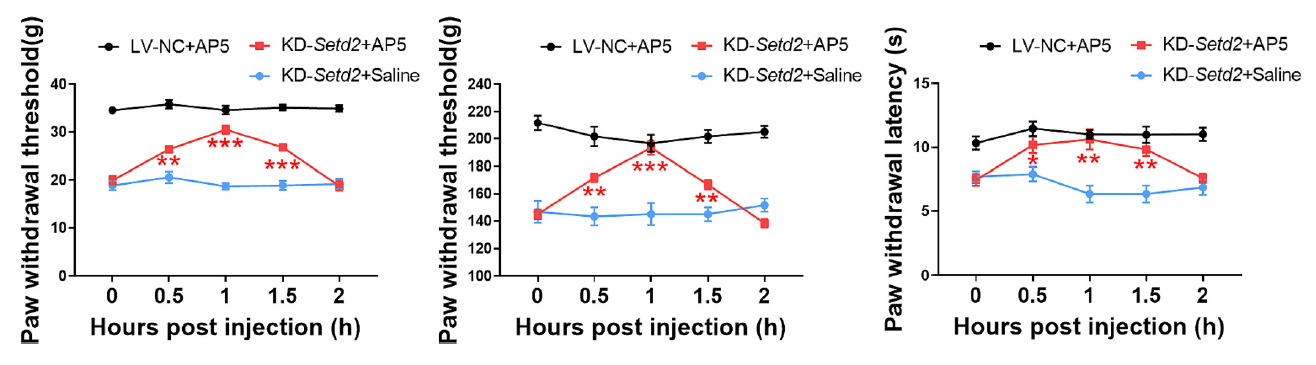
Effects of a single injection of DL-AP5 (5 μg; i.t.) on the tactile and pressure withdrawal thresholds and heat withdrawal latency within 2 h in KD-Setd2 and NC rats.
DL-AP5 purchased from MedChemExpress. Usage Cited in: Int J Biol Macromol. 2024 Dec;282(Pt 5):136767. [Abstract]
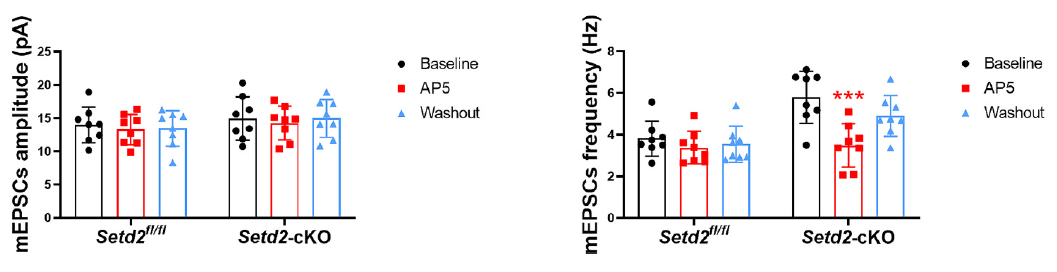
The mean changes of baseline values and the DL-AP5 (50 μM) effect on the frequency and amplitude of mEPSCs in spinal dorsal horn neurons of Setd2fl/fl and Setd2-cKO mice.
-
DL-AP5 purchased from MedChemExpress. Usage Cited in: bioRxiv. 2025 July 07.
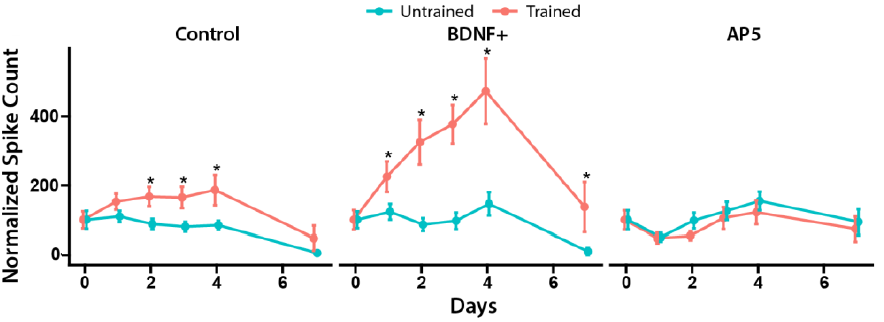
DL-AP5 (50 μM) abolished the training effect so that trained and untrained trajectories overlapped in the CNS-3D organoids.
DL-AP5 purchased from MedChemExpress. Usage Cited in: bioRxiv. 2025 July 07.
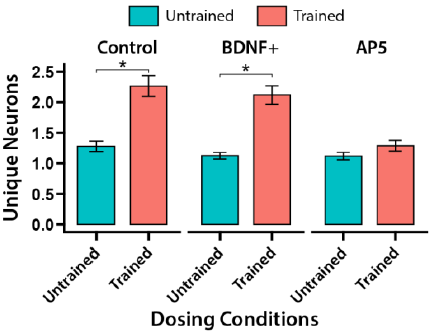
DL-AP5 (50 μM) suppressed activity-dependent neuronal recruitment and blocked stimulation-driven LTP in CNS-3D organoid networks, as the number of unique neurons remained low under NMDA receptor blockade.
DL-AP5 purchased from MedChemExpress. Usage Cited in: bioRxiv. 2025 July 07.
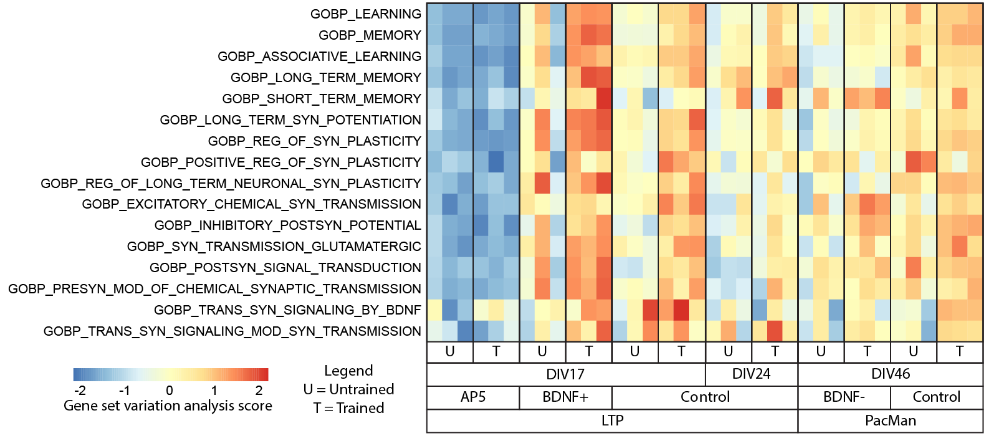
DL-AP5 (200 μM). Heat map of GSVA scores across 15 GO terms associated with learning, memory, LTP, and synaptic plasticity.


Solvent & Solubility
In Vitro:
H2O : 33.33 mg/mL (169.08 mM; ultrasonic and warming and heat to 60°C)
Please refer to the solubility information to select the appropriate solvent. Once prepared, please aliquot and store the solution to prevent product inactivation from repeated freeze-thaw cycles.
Storage method and period of stock solution: -80°C, 6 months; -20°C, 1 month. When stored at -80°C, please use it within 6 months. When stored at -20°C, please use it within 1 month.
* Note: If you choose water as the stock solution, please dilute it to the working solution, then filter and sterilize it with a 0.22 μm filter before use.
Please refer to the solubility information to select the appropriate solvent. Once prepared, please aliquot and store the solution to prevent product inactivation from repeated freeze-thaw cycles.
Storage method and period of stock solution: -80°C, 6 months; -20°C, 1 month. When stored at -80°C, please use it within 6 months. When stored at -20°C, please use it within 1 month.
* Note: If you choose water as the stock solution, please dilute it to the working solution, then filter and sterilize it with a 0.22 μm filter before use.
Concentration (start) × Volume (start) = Concentration (final) × Volume (final)
In Vivo:
For the following dissolution methods, please prepare the working solution directly:
It is recommended to prepare fresh solutions and use them promptly within a short period of time.
The percentages shown for the solvents indicate their volumetric ratio in the final prepared solution. If precipitation or phase separation occurs during preparation, heat and/or sonication can be used to aid dissolution.
Add each solvent one by one: PBS
Solubility: 50 mg/mL (253.64 mM); Clear solution; Need ultrasonic


Purity & Documentation
-
Data Sheet (276 KB)
-
SDS (393 KB)
- English - EN (393 KB)
- Français - FR (393 KB)
- Deutsch - DE (393 KB)
- Norwegian - NO (393 KB)
- Español - ES (393 KB)
- Swedish - SV (393 KB)
- Italian - IT (393 KB)
- Korean - KR (393 KB)
- Portuguese - PT (393 KB)
-
Handling Instructions (2659 KB)
References
[1]. Murray CW, et al. Neurokinin and NMDA antagonists (but not a kainic acid antagonist) are antinociceptive in the mouse formalin model. Pain. 1991;44(2):179-185. [Content Brief]
[2]. Massey SC, et al. N-methyl-D-aspartate receptors of ganglion cells in rabbit retina. J Neurophysiol. 1990;63(1):16-30. [Content Brief]
[3]. Jafari-Sabet M. NMDA receptor blockers prevents the facilitatory effects of post-training intra-dorsal hippocampal NMDA and physostigmine on memory retention of passive avoidance learning in rats. Behav Brain Res. 2006 Apr 25;169(1):120-7. [Content Brief]
[4]. Taati M, et al. The effects of DL-AP5 and glutamate on ghrelin-induced feeding behavior in 3-h food-deprived broiler cockerels. J Physiol Biochem. 2011 Jun;67(2):217-23. [Content Brief]
[5]. Chen T, et al. Glutamate-induced rapid induction of Arc/Arg3.1 requires NMDA receptor-mediated phosphorylation of ERK and CREB. Neurosci Lett. 2017 Nov 20;661:23-28. [Content Brief]


Complete Stock Solution Preparation Table
Please refer to the solubility information to select the appropriate solvent. Once prepared, please aliquot and store the solution to prevent product inactivation from repeated freeze-thaw cycles.
Storage method and period of stock solution: -80°C, 6 months; -20°C, 1 month. When stored at -80°C, please use it within 6 months. When stored at -20°C, please use it within 1 month.
| Optional Solvent | Concentration Solvent Mass | 1 mg | 5 mg | 10 mg | 25 mg |
|---|---|---|---|---|---|
| H2O | 1 mM | 5.0728 mL | 25.3640 mL | 50.7279 mL | 126.8199 mL |
| 5 mM | 1.0146 mL | 5.0728 mL | 10.1456 mL | 25.3640 mL | |
| 10 mM | 0.5073 mL | 2.5364 mL | 5.0728 mL | 12.6820 mL | |
| 15 mM | 0.3382 mL | 1.6909 mL | 3.3819 mL | 8.4547 mL | |
| 20 mM | 0.2536 mL | 1.2682 mL | 2.5364 mL | 6.3410 mL | |
| 25 mM | 0.2029 mL | 1.0146 mL | 2.0291 mL | 5.0728 mL | |
| 30 mM | 0.1691 mL | 0.8455 mL | 1.6909 mL | 4.2273 mL | |
| 40 mM | 0.1268 mL | 0.6341 mL | 1.2682 mL | 3.1705 mL | |
| 50 mM | 0.1015 mL | 0.5073 mL | 1.0146 mL | 2.5364 mL | |
| 60 mM | 0.0845 mL | 0.4227 mL | 0.8455 mL | 2.1137 mL | |
| 80 mM | 0.0634 mL | 0.3170 mL | 0.6341 mL | 1.5852 mL | |
| 100 mM | 0.0507 mL | 0.2536 mL | 0.5073 mL | 1.2682 mL |
* Note: If you choose water as the stock solution, please dilute it to the working solution, then filter and sterilize it with a 0.22 μm filter before use.


DL-AP5 Related Classifications
HY-100714 Related Classifications
 Powered by Bioz