



Erythrosine B

Based on 1 Customer Validation
Erythrosine B (Erythrosin extra bluish; Tetraiodofluorescein) is a visible red dye and insecticide with colorimetric and fluorescent properties. Erythrosine B serves as a membrane-impermeant live-cell dye for Gram-positive and Gram-negative bacteria, primarily staining dead cells with damaged plasma membranes. Erythrosine B exhibits photosensitive larvicidal toxicity against Culex pipiens quinquefasciatus larvae. Erythrosine B is used in live/dead bacterial assays in colorimetric and fluorescent measurements for low-, medium-, and high-throughput experiments, as well as in research related to mosquito-borne diseases and food coloring.
商品は「研究用試薬」です。人や動物の医療用・臨床診断用・食品用の製品ではありません。
研究用途以外に使用した場合、当社は一切の責任を負いかねます。
- 純度 : 98.0%
- CAS 番号: 16423-68-0
- 分子式: C20H6I4Na2O5
- 分子量:879.86
-
保管条件:
4°C, sealed storage, away from moisture and light
* In solvent : -80°C, 6 months; -20°C, 1 month (sealed storage, away from moisture and light)

To place orders, for customer services and technical support, please contact: MedChemExpress USA
Tel: 609-228-6898 E-mail: [email protected] [email protected]


-
 生物活性
生物活性
-
化学情報
-
溶剤 & 溶解度
- プロトコル
- 純度とドキュメンテーション
- 参考文献
-
 Help & FAQs


-
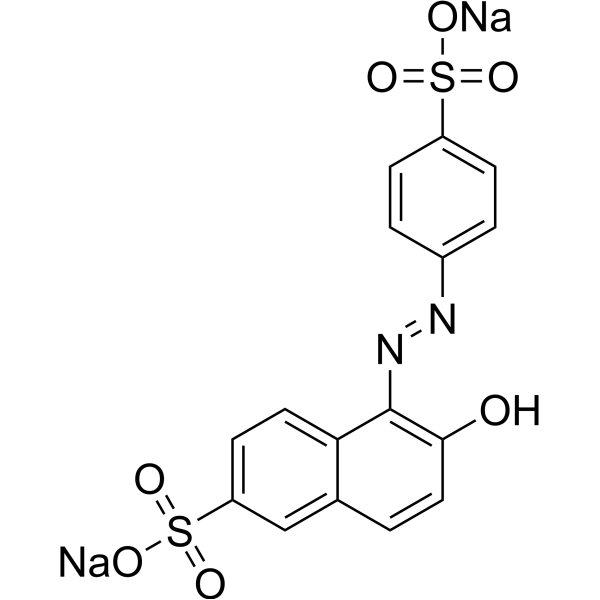
HY-D0249
Sunset Yellow FCFAzo Dye -
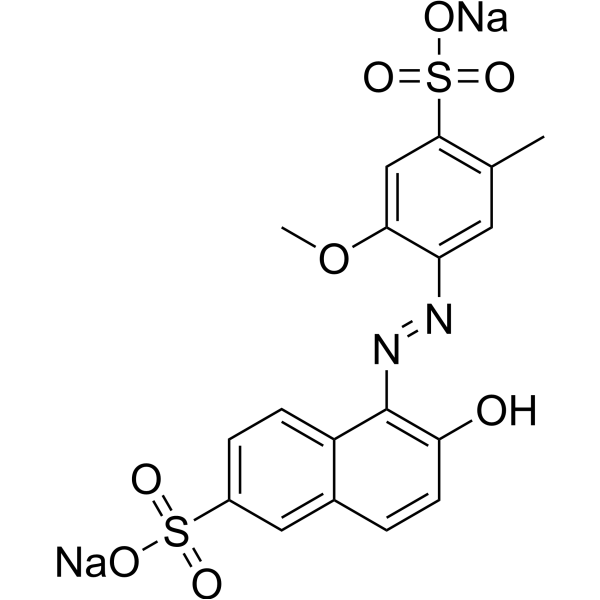
HY-123630
Allura Red ACFood Colourant -
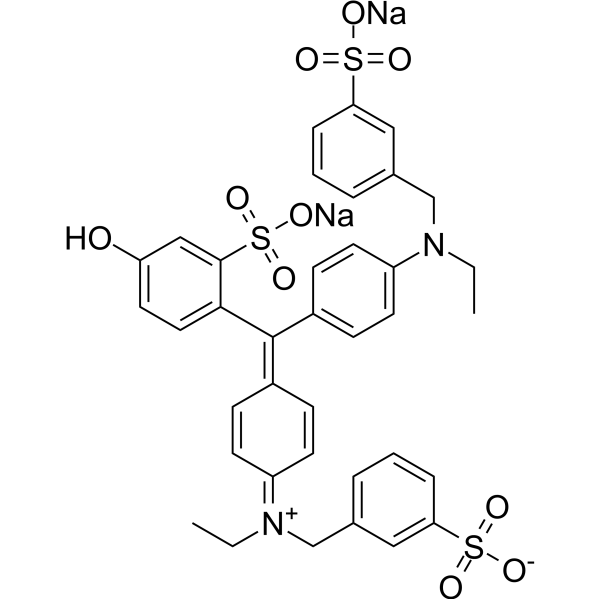
HY-D0914
Fast Green FCFSea Green Triarylmethane Food Dye -
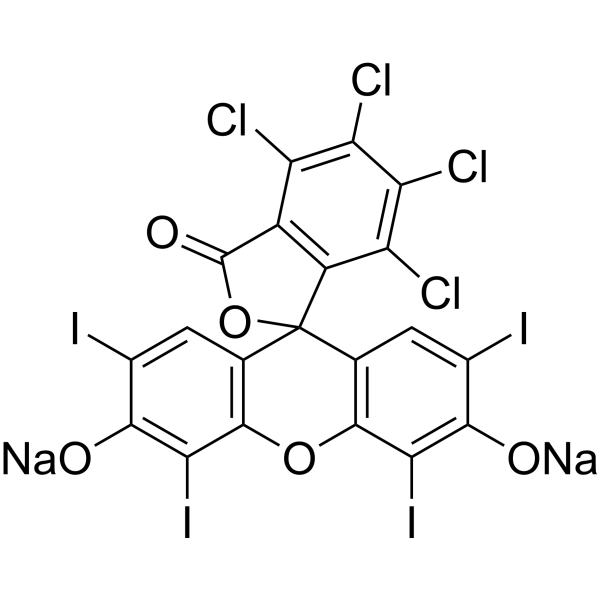
HY-D0214
Acid Red 94 sodiumPhotosensitizer -
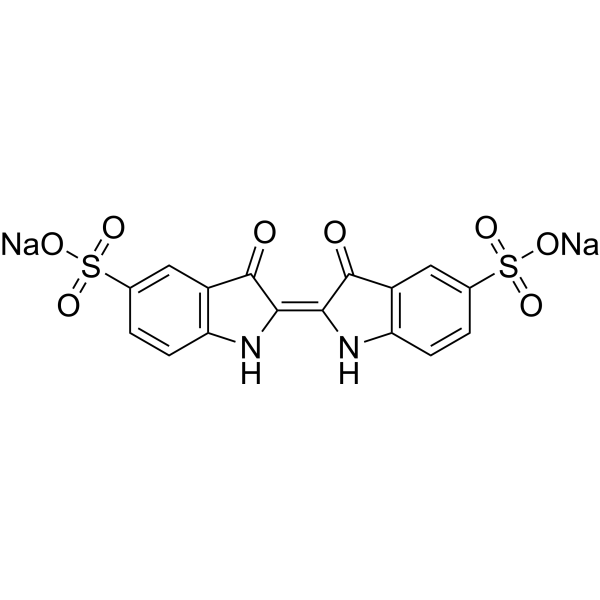
HY-W040226
Indigo carmine -
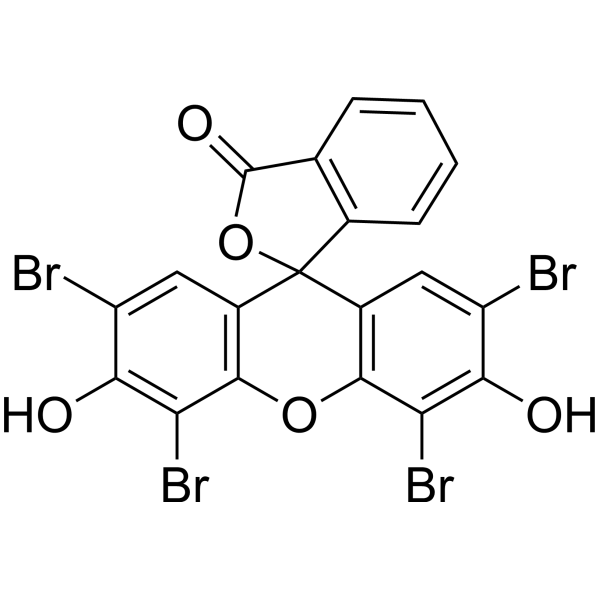
HY-D0505
Eosin YDye Molecule -
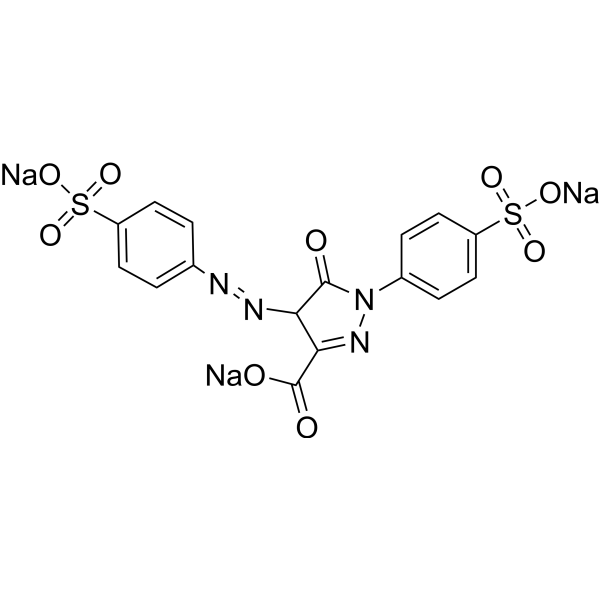
HY-D0257
TartrazineAzo Dye -
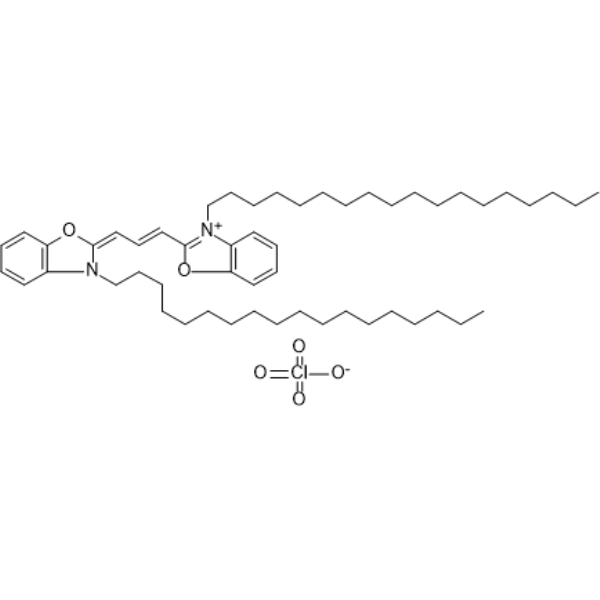
HY-D0969
DiOFluorescent Probe -
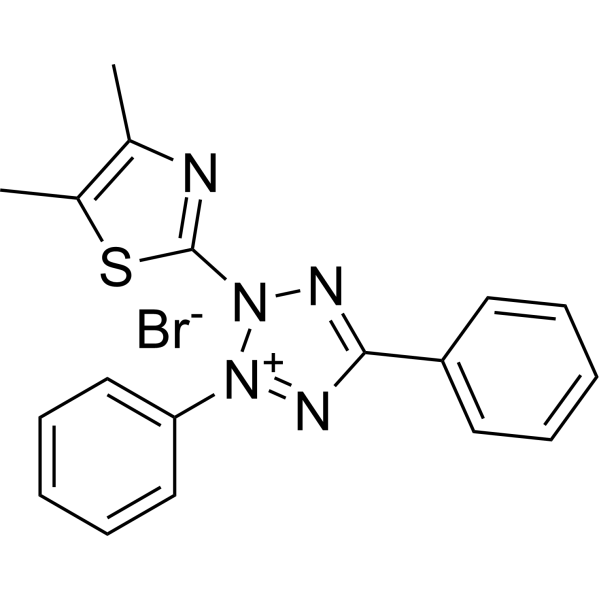
HY-15924
Thiazolyl BlueCytotoxicity Detection Reagent -
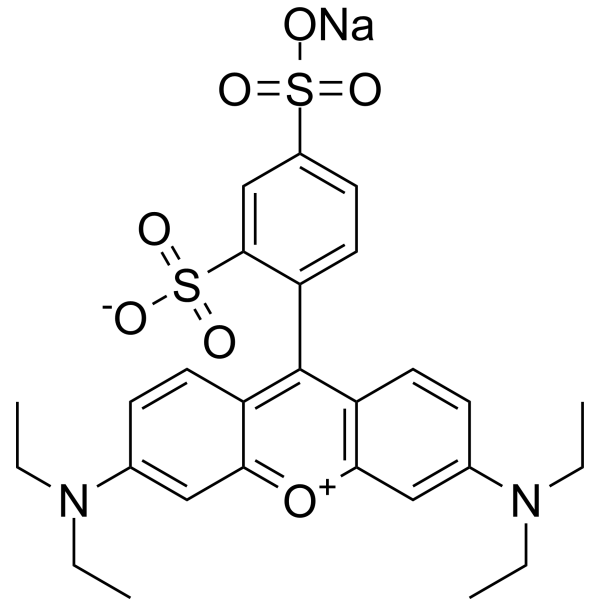
HY-D0974
Sulforhodamine B sodium saltFluorescent Dye -
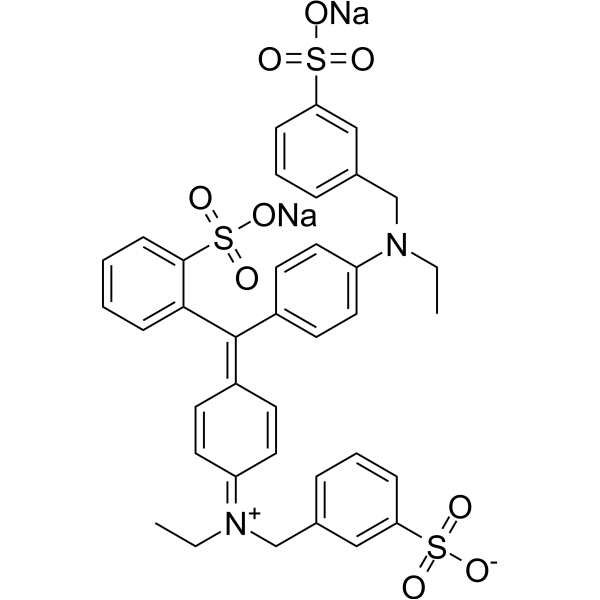
HY-D0915
Brilliant Blue FCFColorant -

HY-D0259R
Erythrosine B (Standard)Reference Standard


生物活性
製品説明
体外実験
Erythrosine B (0.8%; 5 min) is a membrane-impermeant live-cell dye that selectively stains dead or membrane-damaged Gram-positive and Gram-negative bacteria[2].
Erythrosine B shows a linear correlation between its absorbance at 530 nm and the proportion of dead cells in E. coli, K. pneumoniae, and P. mirabilis populations, enabling microplate-based quantitative colorimetric viability detection[2].
Erythrosine B (5 min) is a fluorescent viability dye detectable by flow cytometry that distinguishes live from dead cells across multiple bacterial species and tracks the time-dependent increase in cell death in sodium azide-treated cultures of S. marcescens[2].
Erythrosine B preferentially binds to the N-terminus of Aβ40 monomer (PDB 1BA4) with a binding free energy of 20.15 kcal mol-1, disrupts the Asp23-Lys28 salt bridge, and preserves the α-helical structure of residues 13-16 in the PDB 2LFM conformation. At a 2:1 ratio to Aβ40, it further stabilizes the C-terminal α-helix by excluding water molecules, thereby inhibiting the conformational transition to the aggregation-prone β-sheet structure[4].
MedChemExpress (MCE) has not independently confirmed the accuracy of these methods. They are for reference only. Further protocols information, click here.
体内実験
Erythrosine B (0.25-4 ppm; added to rearing water for larval ingestion; 24-h dark feeding period prior to light exposure; light exposure duration up to 24 h) exhibits approximately 16-fold greater larvicidal efficacy against fourth-instar Culex pipiens quinquefasciatus compared with conditions without dark pre-incubation[3].
MedChemExpress (MCE) has not independently confirmed the accuracy of these methods. They are for reference only.
-
Animal Model:fourth-instar larvae (laboratory colony)[3]
-
Dosage:0.25 ppm, 0.5 ppm, 1 ppm, 2 ppm, 4 ppm, 8 ppm, 12 ppm
-
Administration:added to rearing water for larval ingestion; ~15 min feeding before light exposure; up to 24 h light exposure
-
Result:Showed LC50 values of 9.05 ppm at 3 h, 7.81 ppm at 4 h, 6.61 ppm at 5 h, 5.89 ppm at 6 h, 5.44 ppm at 7 h, and 2.45 ppm at 24 h of light exposure.
Exhibited LT50 values of 7.76 h at 4 ppm, 6.73 h at 8 ppm, and 2.50 h at 12 ppm.
Demonstrated greater toxicity and faster action than fluorescein and both 1:1 and 1:3 nondispersible coprecipitated combinations.
When 8% SDS was added, the results showed LC50 values of 6.86 ppm at 0.5 h, 3.89 ppm at 1 h, 2.52 ppm at 2 h, 2.06 ppm at 3 h, 1.84 ppm at 4 h, 1.66 ppm at 5 h, 1.59 ppm at 6 h, 1.48 ppm at 7 h, and 0.66 ppm at 24 h of light exposure; LT50 values of 25.05 h at 0.5 ppm, 13.87 h at 1 ppm, 5.65 h at 2 ppm, 2.15 h at 4 ppm, 1.02 h at 5 ppm, and 0.49 h at 6 ppm; and approximately 3-fold greater toxicity than the nondispersible formulation after 24 h of light exposure.
-
Animal Model:fourth-instar larvae (laboratory colony)[3]
-
Dosage:0.25 ppm, 0.50 ppm, 1 ppm, 2 ppm, 4 ppm
-
Administration:added to rearing water for larval ingestion; 24-h dark feeding period before light exposure; up to 24 h light exposure
-
Result:Showed LC50 values of 1.69 ppm at 0.75 h, 1.19 ppm at 1 h, 0.27 ppm at 2 h, 0.20 ppm at 3 h, and 0.14 ppm at 4 h of light exposure.
Exhibited LT50 values of 2.54 h at 0.25 ppm, 1.95 h at 0.50 ppm, 1.08 h at 1 ppm, 0.76 h at 2 ppm, and 0.66 h at 4 ppm.
Increased toxic effect by about 16-fold relative to the dispersible formulation without dark preincubation.
Shortened the time required to kill 50% of test larvae.


化学情報
-
CAS 番号 16423-68-0
-
性状 Solid
-
分子量 879.86
-
分子式 C20H6I4Na2O5
-
Color Pink to red
-
SMILES
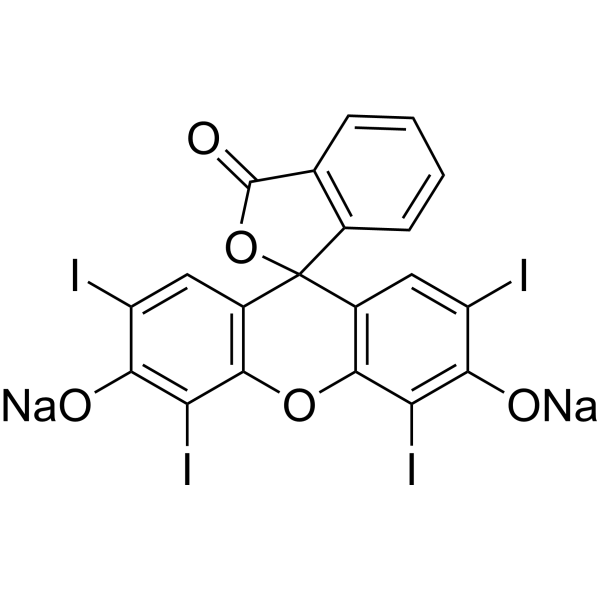
O=C1OC2(C3=C(OC4=C2C=C(I)C(O[Na])=C4I)C(I)=C(O[Na])C(I)=C3)C5=C1C=CC=C5
-
別名
Erythrosin extra bluish; エリトロシンB
-
輸送条件
Room temperature in continental US; may vary elsewhere.
-
保管条件
4°C, sealed storage, away from moisture and light
* In solvent : -80°C, 6 months; -20°C, 1 month (sealed storage, away from moisture and light)


溶剤 & 溶解度
体外:
H2O : 33.33 mg/mL (37.88 mM; Need ultrasonic)
DMSO : 33.33 mg/mL (37.88 mM; Need ultrasonic; Hygroscopic DMSO has a significant impact on the solubility of product, please use newly opened DMSO)
Please refer to the solubility information to select the appropriate solvent. Once prepared, please aliquot and store the solution to prevent product inactivation from repeated freeze-thaw cycles.
Storage method and period of stock solution: -80°C, 6 months; -20°C, 1 month (sealed storage, away from moisture and light). When stored at -80°C, please use it within 6 months. When stored at -20°C, please use it within 1 month.
* Note: If you choose water as the stock solution, please dilute it to the working solution, then filter and sterilize it with a 0.22 μm filter before use.
Please refer to the solubility information to select the appropriate solvent. Once prepared, please aliquot and store the solution to prevent product inactivation from repeated freeze-thaw cycles.
Storage method and period of stock solution: -80°C, 6 months; -20°C, 1 month (sealed storage, away from moisture and light). When stored at -80°C, please use it within 6 months. When stored at -20°C, please use it within 1 month.
* Note: If you choose water as the stock solution, please dilute it to the working solution, then filter and sterilize it with a 0.22 μm filter before use.
濃度 (開始) × 体積 (開始) = 濃度 (終了) × 体積 (終了)

プロトコル
-
Gram Staining of Tissue Sections
Gram staining of tissue sections is a histochemical technique used to differentiate Gram-positive and Gram-negative bacteria within histological specimens based on differences in bacterial cell wall structure and dye retention, adapted from classical bacteriological Gram staining into tissue-compatible “histological Gram stain” variants. In tissue applications, modifications of the Brown-Hopps and Brown-Brenn methods are commonly used to improve differentiation of microorganisms embedded within host connective tissue and to reduce overstaining or loss of Gram-negative signal, which are known limitations of earlier approaches. The principle relies on crystal violet-iodine complex retention in Gram-positive organisms and subsequent decolorization and counterstaining steps that allow contrast visualization of Gram-negative organisms against tissue background.


純度とドキュメンテーション
-
データシート (296 KB)
-
SDS (393 KB)
- English - EN (393 KB)
- Français - FR (393 KB)
- Deutsch - DE (393 KB)
- Norwegian - NO (393 KB)
- Español - ES (393 KB)
- Swedish - SV (393 KB)
- Italian - IT (393 KB)
- Korean - KR (393 KB)
- Portuguese - PT (393 KB)
-
取扱説明書 (2659 KB)
参考文献


Complete Stock Solution Preparation Table
Please refer to the solubility information to select the appropriate solvent. Once prepared, please aliquot and store the solution to prevent product inactivation from repeated freeze-thaw cycles.
Storage method and period of stock solution: -80°C, 6 months; -20°C, 1 month (sealed storage, away from moisture and light). When stored at -80°C, please use it within 6 months. When stored at -20°C, please use it within 1 month.
| Optional Solvent | Concentration Solvent Mass | 1 mg | 5 mg | 10 mg | 25 mg |
|---|---|---|---|---|---|
| H2O / DMSO | 1 mM | 1.1365 mL | 5.6827 mL | 11.3654 mL | 28.4136 mL |
| 5 mM | 0.2273 mL | 1.1365 mL | 2.2731 mL | 5.6827 mL | |
| 10 mM | 0.1137 mL | 0.5683 mL | 1.1365 mL | 2.8414 mL | |
| 15 mM | 0.0758 mL | 0.3788 mL | 0.7577 mL | 1.8942 mL | |
| 20 mM | 0.0568 mL | 0.2841 mL | 0.5683 mL | 1.4207 mL | |
| 25 mM | 0.0455 mL | 0.2273 mL | 0.4546 mL | 1.1365 mL | |
| 30 mM | 0.0379 mL | 0.1894 mL | 0.3788 mL | 0.9471 mL |
* Note: If you choose water as the stock solution, please dilute it to the working solution, then filter and sterilize it with a 0.22 μm filter before use.


Erythrosine B 関連分類
HY-D0259 関連分類
 Powered by Bioz
Keywords
- Erythrosine B
- 16423-68-0
- Erythrosin extra bluish
- Tetraiodofluorescein disodium
- Fluorescent Dye
- Bacterial
- P. mirabilis
- S. marcescens
- Gram-positive bacteria
- blood-brain barrier
- serum protein-bound-iodine
- K. pneumoniae
- xanthene dye
- Gram-negative bacteria
- Culex pipiens quinquefasciatus
- E. coli
- Inhibitor
- inhibitor
- inhibit