



Amarogentin (Standard)
Amarogentin (Standard) is the analytical standard of Amarogentin. This product is intended for research and analytical applications. Amarogentin is a secoiridoid glycoside that is mainly extracted from Swertia and Gentiana roots. Amarogentin exhibits many biological effects, including anti-oxidative, anti-tumour, and anti-diabetic activities. Amarogentin exerts hepatoprotective and immunomodulatory effects. Amarogentin promotes apoptosis, arrests G2/M cell cycle and downregulates of PI3K/Akt/mTOR signalling pathways. Amarogentin exerts beneficial vasculo-metabolic effect by activating AMPK.
商品は「研究用試薬」です。人や動物の医療用・臨床診断用・食品用の製品ではありません。
研究用途以外に使用した場合、当社は一切の責任を負いかねます。
- 純度 : 95%
- CAS 番号: 21018-84-8
- 分子式: C29H30O13
- 分子量:586.54
-
保管条件:
Please store the product under the recommended conditions in the Certificate of Analysis.


To place orders, for customer services and technical support, please contact: MedChemExpress USA
Tel: 609-228-6898 E-mail: [email protected] [email protected]


-
 Product Information
-
化学情報
- 純度とドキュメンテーション
-
 Help & FAQs


-
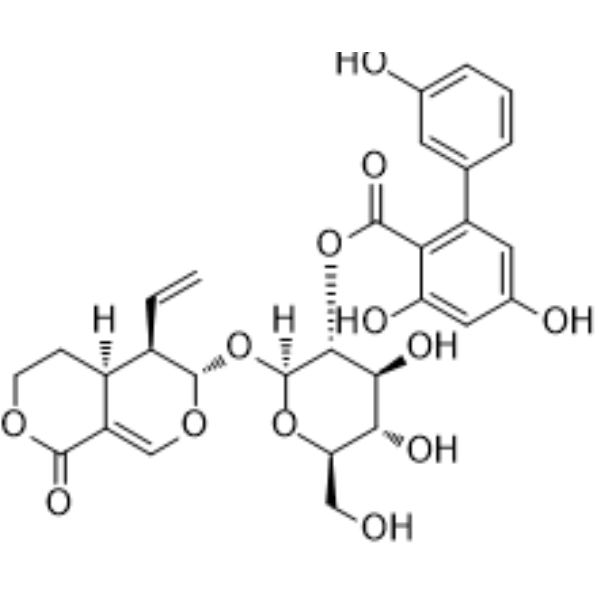
HY-N2447
AmarogentinAMPK Activator -
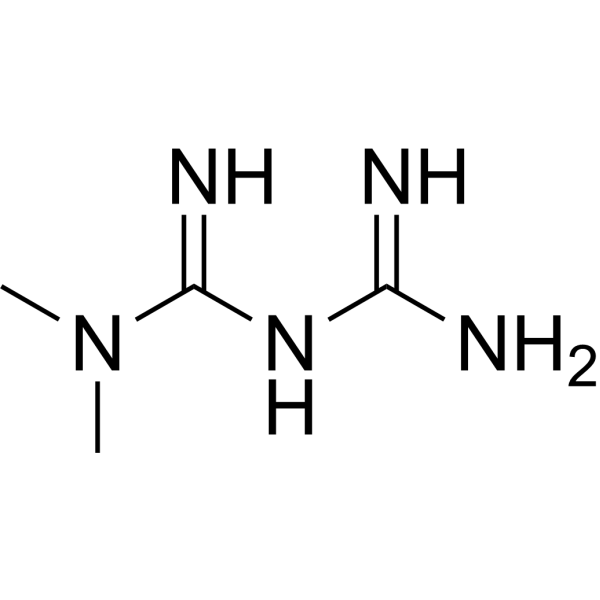
HY-B0627
MetforminAntihyperglycemic Agent -
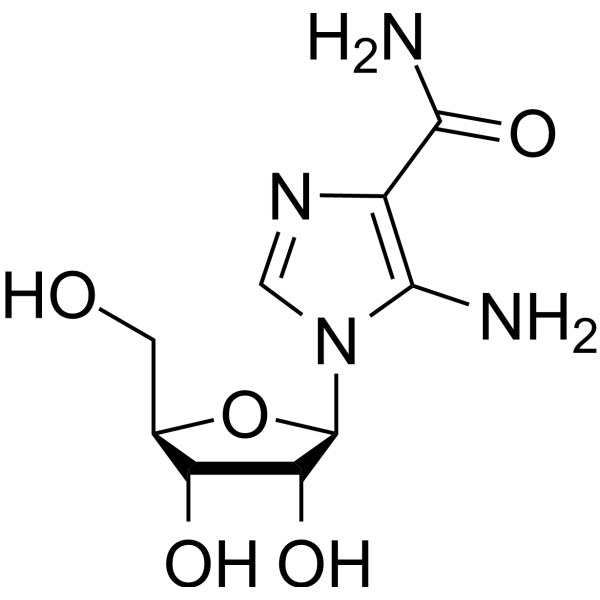
HY-13417
AICARAMPK Activator -
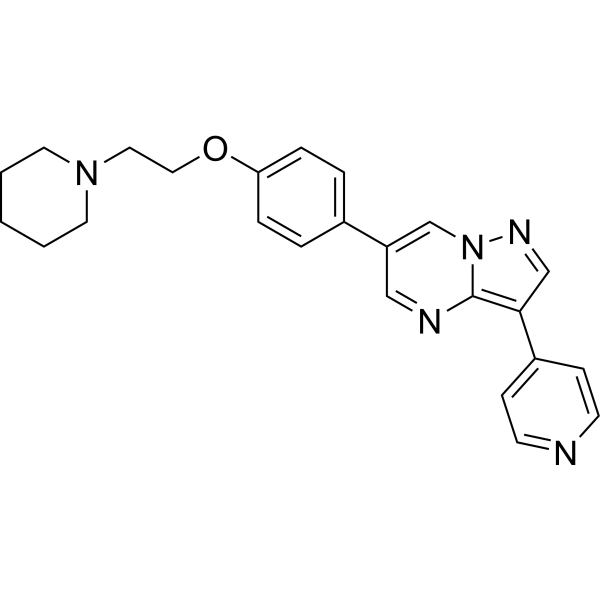
HY-13418A
DorsomorphinAMPK Inhibitor -
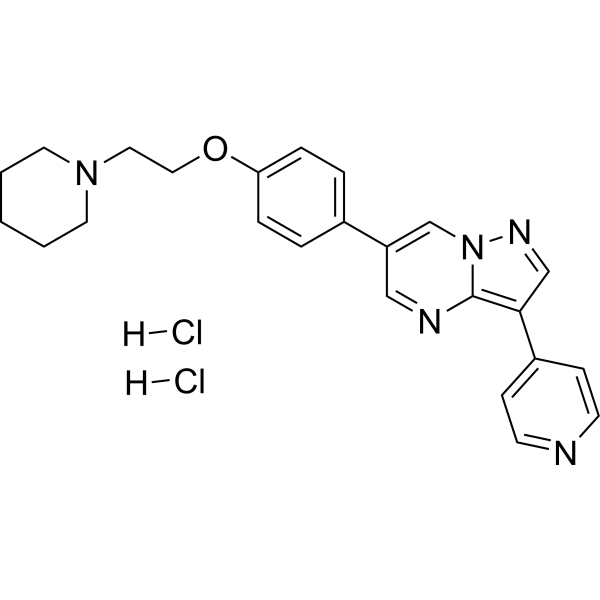
HY-13418
Dorsomorphin dihydrochlorideAMPK Inhibitor -
![[6]-Gingerol](https://file.medchemexpress.com/product_pic/hy-14615.gif)
HY-14615
[6]-GingerolApoptosis Inducer -
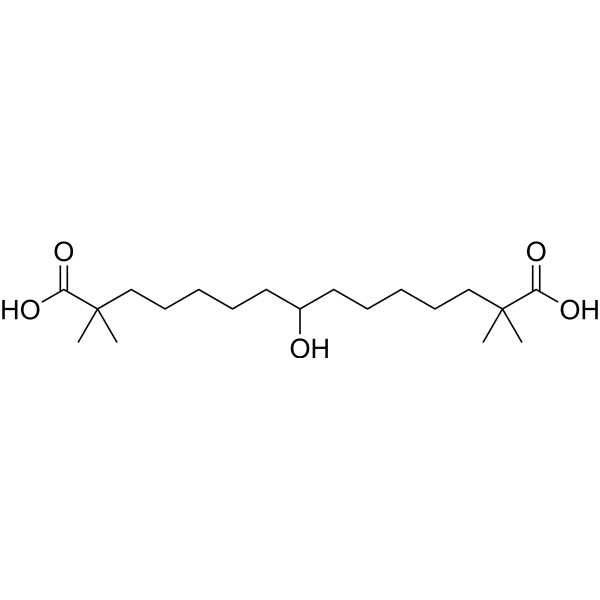
HY-12357
Bempedoic acidACL Inhibitor/AMPK Activator -
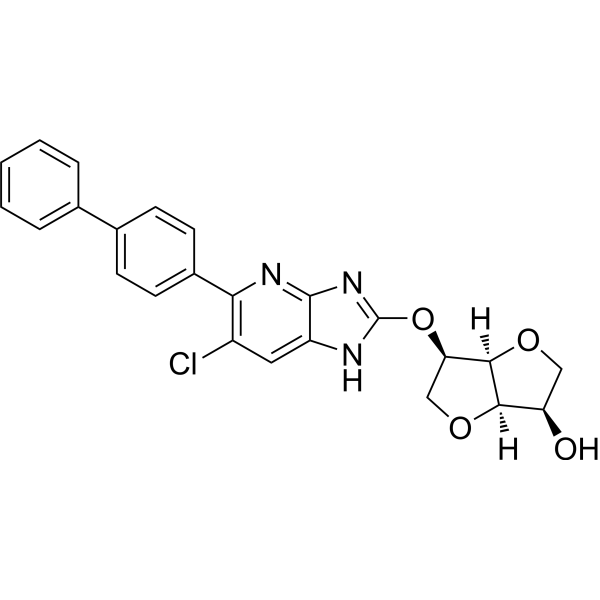
HY-111363
MK8722AMPK Activator -
![[6]-Gingerol (Standard)](https://file.medchemexpress.com/product_pic/hy-14615r.gif)
HY-14615R
[6]-Gingerol (Standard)Apoptosis Inducer -
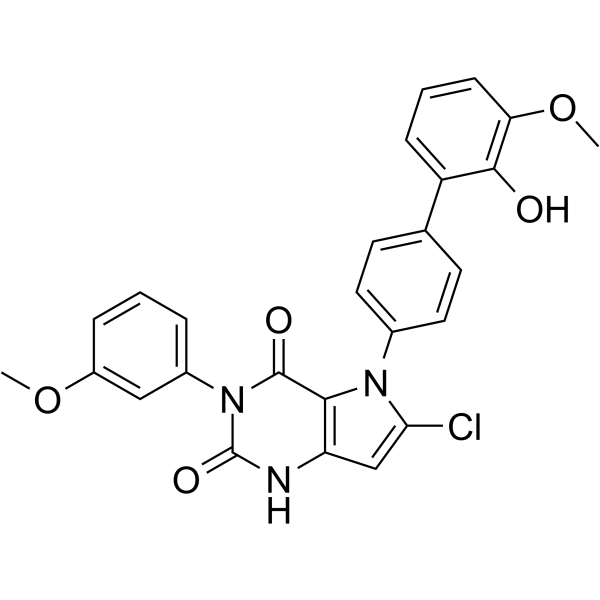
HY-100548
GSK621AMPK Activator -

HY-13417R
AICAR (Standard)AMPK Activator


Product Information
説明
アプリケーション
The compound is the grade of analytical standard, which is the reference standard supplied assay. It is commonly used in qualitative, quantitative and methodological research experiments in HPLC, GC and MS.


化学情報
-
CAS 番号 21018-84-8
-
分子量 586.54
-
分子式 C29H30O13
-
SMILES
C=C[C@H]([C@@]1([H])C(C(OCC1)=O)=CO2)[C@@H]2O[C@@](O[C@H](CO)[C@@H](O)[C@@H]3O)([H])[C@@H]3OC(C4=C(C5=CC(O)=CC=C5)C=C(O)C=C4O)=O
-
Structure Classification
-
Initial Source
-
輸送条件
Room temperature in continental US; may vary elsewhere.
-
保管条件
Please store the product under the recommended conditions in the Certificate of Analysis.


純度とドキュメンテーション
参考文献
[1]. Zhang Y, et al. Protective Effects of Amarogentin against Carbon Tetrachloride-Induced Liver Fibrosis in Mice. Molecules. 2017 May 6;22(5). pii: E754. [Content Brief]
[2]. Wölfle U, et al. Amarogentin Displays Immunomodulatory Effects in Human Mast Cells and Keratinocytes. Mediators Inflamm. 2015;2015:630128. [Content Brief]
[3]. Disasa D, et al. Amarogentin from Gentiana rigescens Franch Exhibits Antiaging and Neuroprotective Effects through Antioxidative Stress. Oxid Med Cell Longev. 2020 Aug 1;2020:3184019. [Content Brief]

Calculators
濃度 (開始) × 体積 (開始) = 濃度 (終了) × 体積 (終了)


Amarogentin (Standard) 関連分類
HY-N2447R 関連分類
 Powered by Bioz