



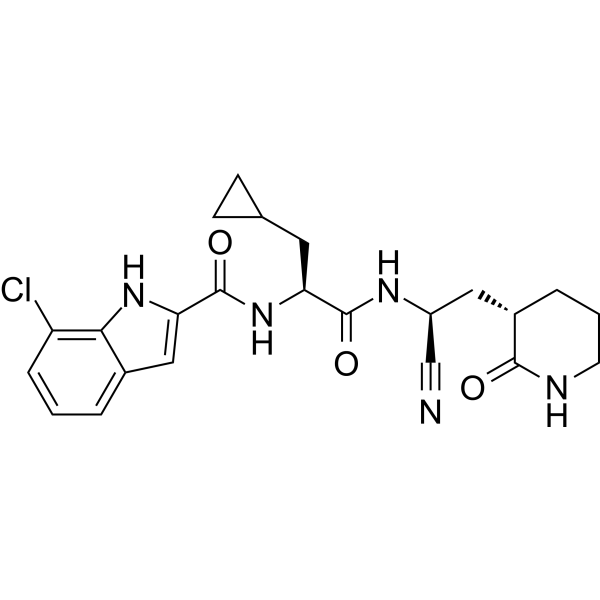
Pomotrelvir
Based on 1 publication(s) in Google Scholar
Pomotrelvir is a selective, competitive, orally active covalent inhibitor of the SARS-CoV-2 main protease (Mpro), with an IC50 of 24 nM for wild-type SARS-CoV-2 Mpro. Pomotrelvir inhibits viral polyprotein processing, thereby preventing viral replication. Pomotrelvir has shown broad antiviral activity against multiple SARS-CoV-2 variants (including Omicron) in cell-based experiments, and has an additive effect when combined with nucleoside analogs that target viral RNA synthesis. Pomotrelvir is primarily used for the research and development of COVID-19 antiviral drugs, especially for infections caused by SARS-CoV-2 and its variants.
商品は「研究用試薬」です。人や動物の医療用・臨床診断用・食品用の製品ではありません。
研究用途以外に使用した場合、当社は一切の責任を負いかねます。
- 純度 : 96.73%
- CAS 番号: 2713437-86-4
- 分子式: C23H26ClN5O3
- 分子量:455.94
-
保管条件:
4°C, protect from light, stored under nitrogen
* In solvent : -80°C, 6 months; -20°C, 1 month (protect from light, stored under nitrogen)

To place orders, for customer services and technical support, please contact: MedChemExpress USA
Tel: 609-228-6898 E-mail: [email protected] [email protected]


-
 生物活性
生物活性
-
化学情報
-
溶剤 & 溶解度
- プロトコル
- 純度とドキュメンテーション
- 参考文献
-
 Help & FAQs


-
HY-156654
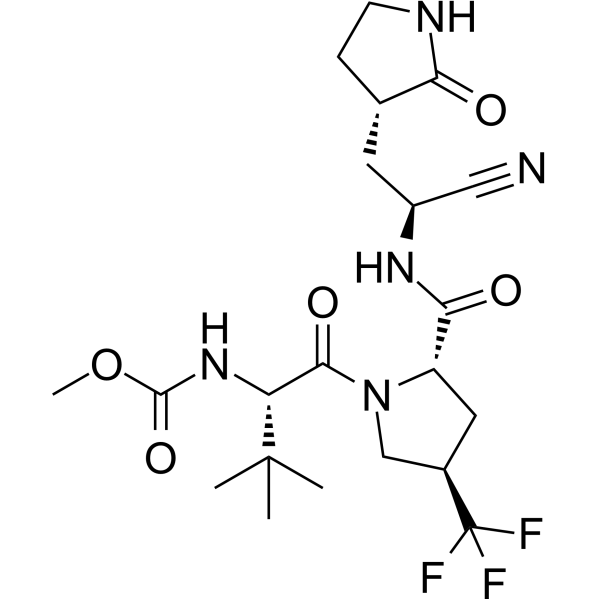
IbuzatrelvirVirul protease Inhibitor -
HY-138687
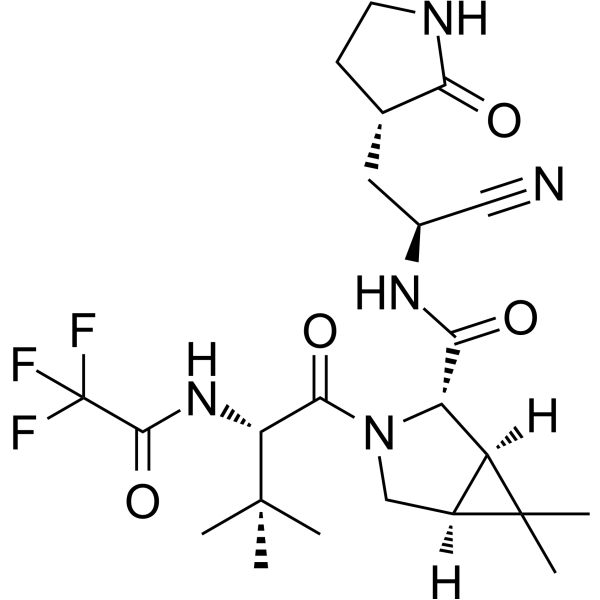
Nirmatrelvir3CLPRO Inhibitor -
HY-143216
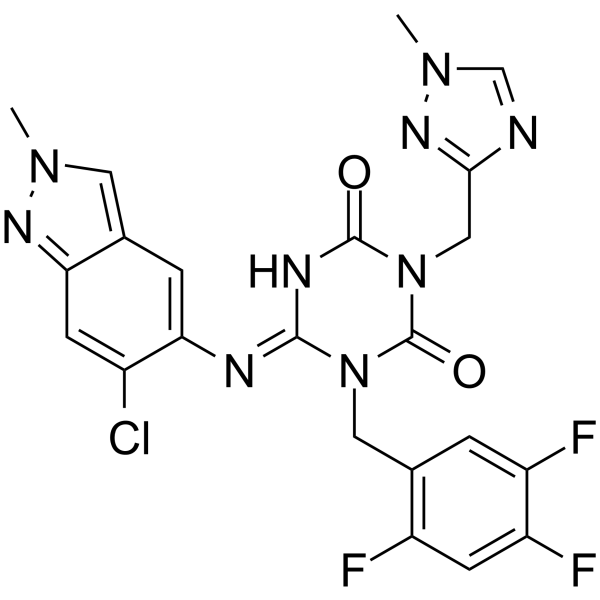
EnsitrelvirSARS-CoV-2 3CL Protease Inhibitor -
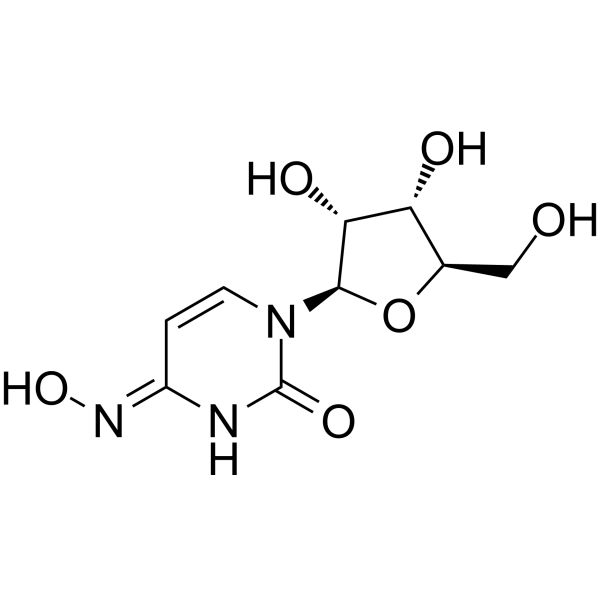
HY-125033
EIDD-1931Anti-Virus Agent -
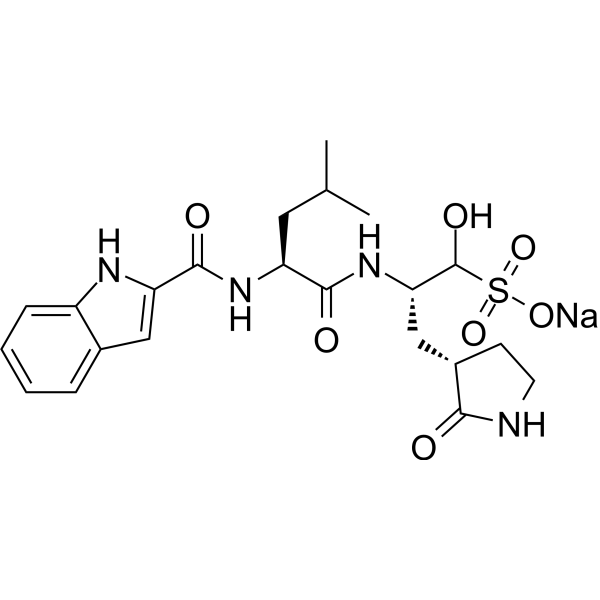
HY-156655A
Olgotrelvir sodiumMpro Inhibitor -
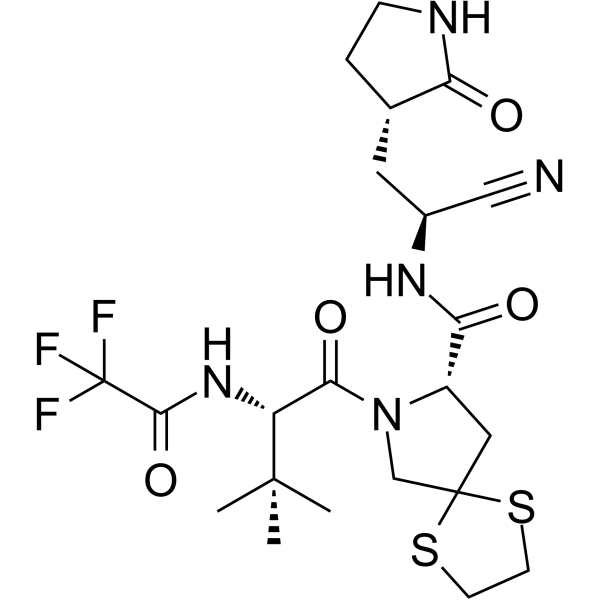
HY-154965
SimnotrelvirSARS-CoV-2 Inhibitor -
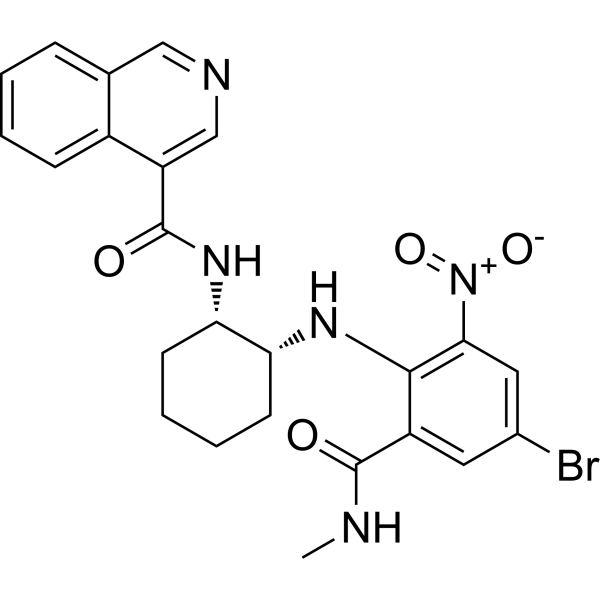
HY-149535
IscartrelvirSARS-CoV-2 Inhibitor
MedChemExpress(MCE)の使用を引用している文献 Pomotrelvir
More

生物活性
製品説明
IC50 & Target
|
SARS-CoV-2 (Mpro 24 nM (IC50) |
体外実験
Enzyme activity assay:
Pomotrelvir competitively inhibits SARS-CoV-2 Mpro with a Ki of 2.7 nM; it also inhibits the Mpro of other human coronaviruses (CoV-229E, CoV-OC43, etc.) with an IC50 of 61-379 nM[1].
Cell infection assay:
Pomotrelvir (23-36 nM; 48 h) significantly inhibits viral replication in SARS-CoV-2 infection or replication experiments in iPS-AT2, A549-hACE2 and Huh7 cells with an EC50 value of 23-36 nM, and is effective against clinical isolates such as Omicron[1].
Cross-resistance experiment:
Pomotrelvir significantly reduces its inhibitory activity against Mpro carrying Nirmatrelvir (HY-138687) resistance mutations (such as E166V, H172Y), while some mutations (such as L50F, T21I) does not affect its inhibitory effect[1].
Binding specificity experiment:
Pomotrelvir (100 μM) had no inhibitory effect on caspase-2, Chymotrypsin C, etc. in the human protease inhibition experiment, showing high selectivity for SARS-CoV-2 Mpro[1].
MedChemExpress (MCE) has not independently confirmed the accuracy of these methods. They are for reference only. Further protocols information, click here.
臨床実験
| NCT Number | Sponsor | Condition | Start Date |
Phase

|
|---|---|---|---|---|
| NCT01329991 | Plexxikon| | 2011-05 | PHASE1 |


化学情報
-
CAS 番号 2713437-86-4
-
性状 Solid
-
分子量 455.94
-
分子式 C23H26ClN5O3
-
Color White to off-white
-
SMILES
ClC1=C2C(C=C(N2)C(N[C@H](C(N[C@H](C#N)C[C@H]3C(NCCC3)=O)=O)CC4CC4)=O)=CC=C1
-
別名
PBI-0451
-
輸送条件
Room temperature in continental US; may vary elsewhere.
-
保管条件
4°C, protect from light, stored under nitrogen
* In solvent : -80°C, 6 months; -20°C, 1 month (protect from light, stored under nitrogen)


Publications (1)
-
Journal Impact Factor
-
Most Recent
-
Antiviral Res
2025 Aug:240:106212. PMID: 40505777


溶剤 & 溶解度
体外:
DMSO : 100 mg/mL (219.33 mM; Need ultrasonic; Hygroscopic DMSO has a significant impact on the solubility of product, please use newly opened DMSO)
Please refer to the solubility information to select the appropriate solvent. Once prepared, please aliquot and store the solution to prevent product inactivation from repeated freeze-thaw cycles.
Storage method and period of stock solution: -80°C, 6 months; -20°C, 1 month (protect from light, stored under nitrogen). When stored at -80°C, please use it within 6 months. When stored at -20°C, please use it within 1 month.
Please refer to the solubility information to select the appropriate solvent. Once prepared, please aliquot and store the solution to prevent product inactivation from repeated freeze-thaw cycles.
Storage method and period of stock solution: -80°C, 6 months; -20°C, 1 month (protect from light, stored under nitrogen). When stored at -80°C, please use it within 6 months. When stored at -20°C, please use it within 1 month.
濃度 (開始) × 体積 (開始) = 濃度 (終了) × 体積 (終了)

プロトコル
-
Research Protocol for Infectious Diseases
Infectious-disease experiments test how pathogens interact with host barriers, innate immune receptors, inflammatory signaling, pathogen replication, and tissue injury; pattern-recognition receptors such as TLRs, RIG-I-like receptors, NOD-like receptors, and inflammasomes detect microbial molecules and activate NF-κB, interferon, and cytokine responses. The central hypothesis is that infection severity reflects the balance between pathogen burden and host response: protective inflammation restricts pathogen growth, whereas excessive or mislocalized inflammation contributes to tissue damage and disease phenotype. Unresolved questions include which host pathways are protective versus pathogenic, why some infection models fail to translate to human disease, and which combined readouts best predict clinically relevant infection outcomes.
-
Directly Induced Neuron Culture
Directly induced neuron culture converts somatic cells, most commonly fibroblasts, into induced neurons without passing through a pluripotent or neural progenitor stage; classic evidence shows that mouse fibroblasts can be converted by Ascl1, Brn2/Pou3f2, and Myt1l, human fibroblasts can be converted by defined neuronal transcription factors, and human fibroblasts can also be converted by miR-9/9-124 with neurogenic or subtype-specifying transcription factors. The readout is acquisition of neuronal identity and function, assessed by neuronal morphology, neuronal markers such as Tuj1/βIII-tubulin, MAP2, synapsin, and subtype markers when relevant, together with functional assays such as action-potential firing, synaptic activity, and electrophysiology.


純度とドキュメンテーション
-
データシート (274 KB)
-
SDS (252 KB)
- English - EN (252 KB)
- Français - FR (252 KB)
- Deutsch - DE (252 KB)
- Norwegian - NO (252 KB)
- Español - ES (252 KB)
- Swedish - SV (252 KB)
- Italian - IT (252 KB)
- Korean - KR (252 KB)
- Portuguese - PT (252 KB)
-
取扱説明書 (2659 KB)
参考文献
[1]. Tong X, et al. Evaluation of in vitro antiviral activity of SARS-CoV-2 Mpro inhibitor pomotrelvir and cross-resistance to nirmatrelvir resistance substitutions. Antimicrob Agents Chemother. 2023 Nov 15;67(11):e0084023. [Content Brief]
[2]. Schillings J, et al. Pomotrelvir and Nirmatrelvir Binding and Reactivity with SARS-CoV-2 Main Protease: Implications for Resistance Mechanisms from Computations. Angew Chem Int Ed Engl. 2024 Oct 1;63(40):e202409527. [Content Brief]


Complete Stock Solution Preparation Table
Please refer to the solubility information to select the appropriate solvent. Once prepared, please aliquot and store the solution to prevent product inactivation from repeated freeze-thaw cycles.
Storage method and period of stock solution: -80°C, 6 months; -20°C, 1 month (protect from light, stored under nitrogen). When stored at -80°C, please use it within 6 months. When stored at -20°C, please use it within 1 month.
| Optional Solvent | Concentration Solvent Mass | 1 mg | 5 mg | 10 mg | 25 mg |
|---|---|---|---|---|---|
| DMSO | 1 mM | 2.1933 mL | 10.9664 mL | 21.9327 mL | 54.8318 mL |
| 5 mM | 0.4387 mL | 2.1933 mL | 4.3865 mL | 10.9664 mL | |
| 10 mM | 0.2193 mL | 1.0966 mL | 2.1933 mL | 5.4832 mL | |
| 15 mM | 0.1462 mL | 0.7311 mL | 1.4622 mL | 3.6555 mL | |
| 20 mM | 0.1097 mL | 0.5483 mL | 1.0966 mL | 2.7416 mL | |
| 25 mM | 0.0877 mL | 0.4387 mL | 0.8773 mL | 2.1933 mL | |
| 30 mM | 0.0731 mL | 0.3655 mL | 0.7311 mL | 1.8277 mL | |
| 40 mM | 0.0548 mL | 0.2742 mL | 0.5483 mL | 1.3708 mL | |
| 50 mM | 0.0439 mL | 0.2193 mL | 0.4387 mL | 1.0966 mL | |
| 60 mM | 0.0366 mL | 0.1828 mL | 0.3655 mL | 0.9139 mL | |
| 80 mM | 0.0274 mL | 0.1371 mL | 0.2742 mL | 0.6854 mL | |
| 100 mM | 0.0219 mL | 0.1097 mL | 0.2193 mL | 0.5483 mL |


Pomotrelvir 関連分類
HY-153228 関連分類
 Powered by Bioz