



Chrysoidine G

Based on 1 Customer Validation
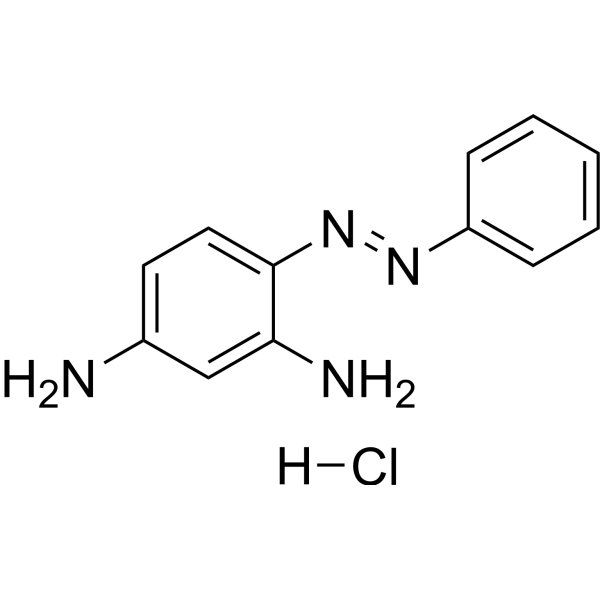
Chrysoidine G (Solvent Orange 3 hydrochloride; Basic Orange 2) is an industrial azo dye. Chrysoidine G is used in most textile dyeing, absorption fluorescent probes, and colorimetric sensors. Chrysoidine G can chemically complex with Co2+, or bind with Cs+ to inhibit the intramolecular charge transfer process, thereby triggering a red shift in the absorption spectrum and producing a significant color change. Chrysoidine G can induce DNA damage, and has moderate toxicity and carcinogenicity.
For research use only. We do not sell to patients.
- Purity : 99.60%
- CAS No.: 532-82-1
- Formula: C12H13ClN4
- Molecular Weight:248.71
-
Storage:
4°C, sealed storage, away from moisture and light
* In solvent : -80°C, 6 months; -20°C, 1 month (sealed storage, away from moisture and light)

To place orders, for customer services and technical support, please contact: MedChemExpress USA
Tel: 609-228-6898 E-mail: [email protected] [email protected]


-
 Biological Activity
-
Chemical Information
- Protocols
- Purity & Documentation
- References
-
 Help & FAQs


-
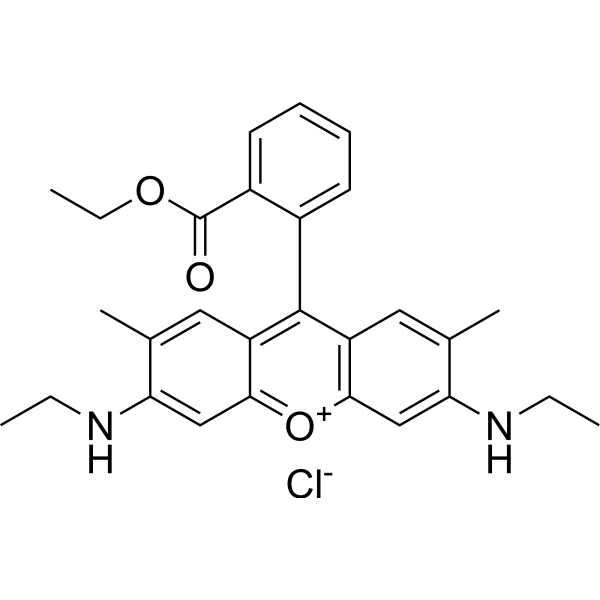
HY-D0309
Rhodamine 6GLaser Dye -
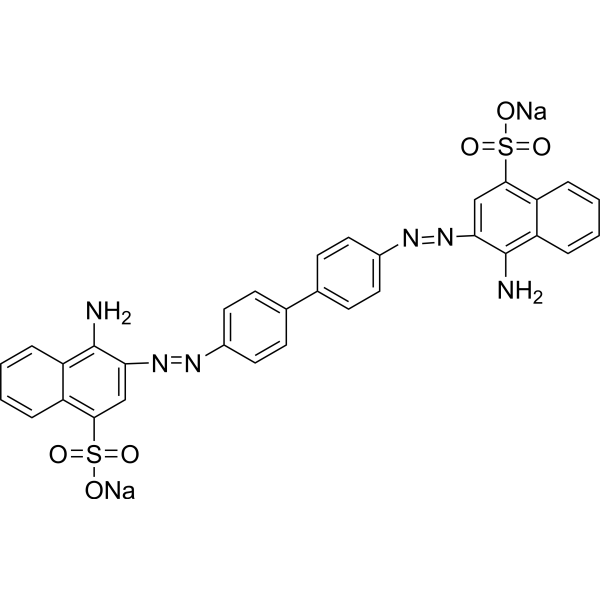
HY-D0236
Congo RedAzo Dye -
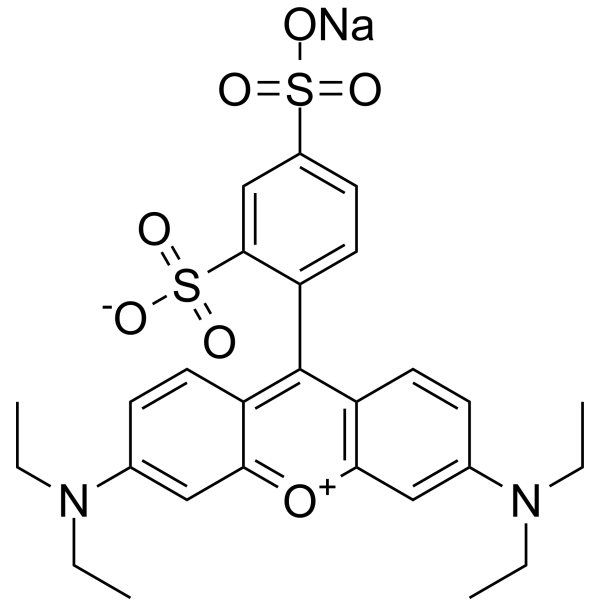
HY-D0974
Sulforhodamine B sodium saltFluorescent Dye -
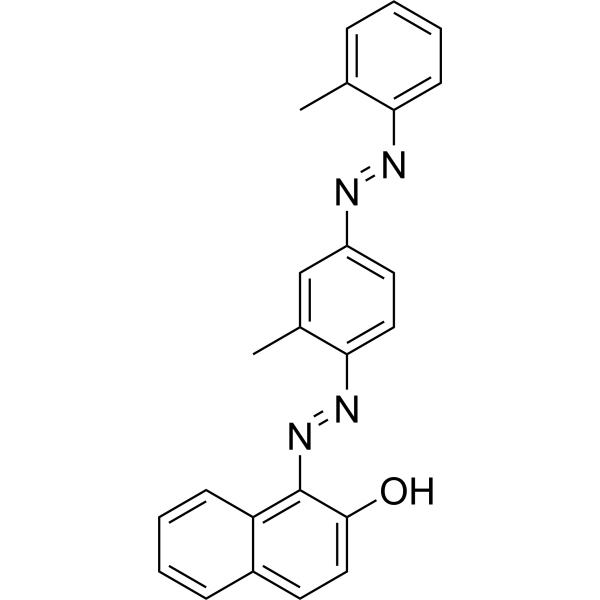
HY-D0932
Sudan IVDisazo Dye -

HY-D0309R
Rhodamine 6G (Standard)Laser Dye -

HY-D0932R
Sudan IV (Standard)Standard of Sudan IV -
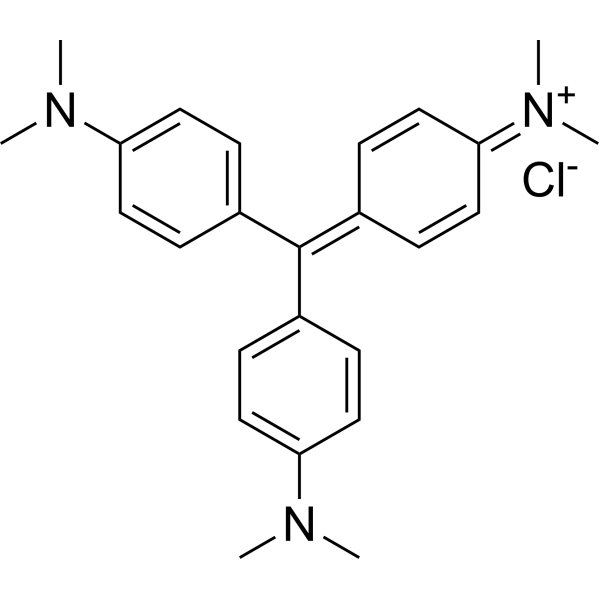
HY-B0324A
Crystal VioletFluorochrome -
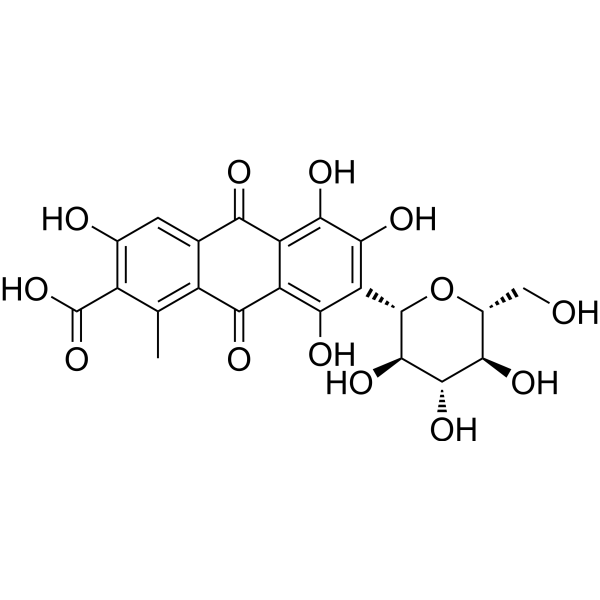
HY-N8407
Carminic acidRed Pigment -
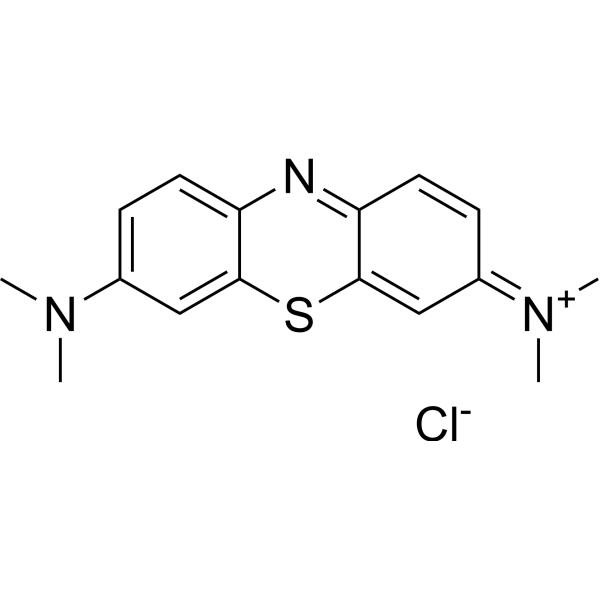
HY-14536
Methylene BluesGC Inhibitor -
HY-D0914
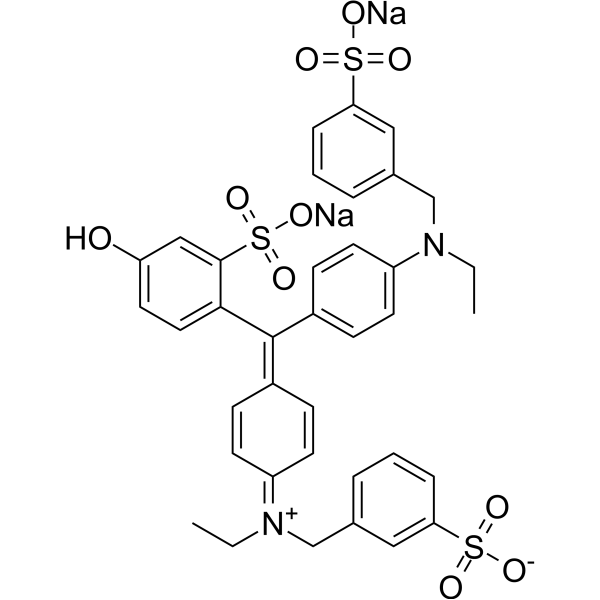
Fast Green FCFSea Green Triarylmethane Food Dye -

HY-D0303AR
Chrysoidine G (Standard)Reference Standard -

HY-DY2001
Crystal Violet (solution)Fluorochrome


Biological Activity
Description
In Vitro
Chrysoidine G (Solvent Orange 3 hydrochloride; Basic Orange 2) can detect Co2+ in aqueous solution, with a naked-eye detection limit of 2 ppm and a spectrophotometric detection limit of 0.1 ppm[3].
Chrysoidine G drop-coated on cellulose paper enables naked-eye colorimetric detection of Cs+, with a detection limit of 100 μg/L[2].
MedChemExpress (MCE) has not independently confirmed the accuracy of these methods. They are for reference only. Further protocols information, click here.


Chemical Information
-
CAS No. 532-82-1
-
Appearance Solid
-
Molecular Weight 248.71
-
Formula C12H13ClN4
-
Color Brown to black
-
SMILES
NC1=CC=C(/N=N/C2=CC=CC=C2)C(N)=C1.[H]Cl
-
Synonyms
Solvent Orange 3 hydrochloride; Basic Orange 2; Chrysoidine Y
-
Shipping
Room temperature in continental US; may vary elsewhere.
-
Storage
4°C, sealed storage, away from moisture and light
* In solvent : -80°C, 6 months; -20°C, 1 month (sealed storage, away from moisture and light)

Protocols
-
Carcinogenicity Bioassay
A carcinogenicity bioassay detects whether long-term exposure to a test substance increases benign or malignant tumor incidence, changes tumor spectrum, or shortens tumor latency in experimental animals; the classical rodent design exposes rats and/or mice to multiple dose levels for most of their lifespan, followed by complete necropsy and histopathologic diagnosis of neoplastic and non-neoplastic lesions. The readout is tumor incidence by organ, sex, species, dose group, and survival status; interpretation requires concurrent controls, dose-response assessment, survival-adjusted tumor statistics, and pathology review because mortality, spontaneous tumor background, and body-weight effects can influence apparent tumor rates.
-
Genotoxicity/Mutagenicity Study
The bacterial reverse mutation assay detects point mutations that restore amino-acid prototrophy in auxotrophic Salmonella typhimurium or Escherichia coli tester strains; after exposure to a test article, mutagenic activity is read out as an increased number of revertant colonies on minimal agar compared with the vehicle control. The assay uses tester strains with different mutation targets so that base-substitution and frameshift mutagens can be detected, and testing is performed with and without exogenous mammalian metabolic activation because some chemicals require biotransformation to become mutagenic.


Purity & Documentation
-
Data Sheet (277 KB)
-
SDS (923 KB)
- English - EN (923 KB)
- Français - FR (923 KB)
- Deutsch - DE (923 KB)
- Norwegian - NO (923 KB)
- Español - ES (923 KB)
- Swedish - SV (923 KB)
- Italian - IT (923 KB)
- Korean - KR (923 KB)
- Portuguese - PT (923 KB)
-
Handling Instructions (2659 KB)
References

Calculators
Concentration (start) × Volume (start) = Concentration (final) × Volume (final)


Chrysoidine G Related Classifications
HY-D0303A Related Classifications
 Powered by Bioz
Keywords
- Chrysoidine G
- 532-82-1
- Solvent Orange 3
- Basic Orange 2
- Chrysoidine Y
- Solvent Orange3
- Solvent Orange-3
- Basic Orange2
- Basic Orange 2
- Basic Orange-2
- Fluorescent Dye
- Biochemical Assay Reagents
- DNA damage
- Raman spectra
- SERS
- carcinogenic
- cellulose paper
- cesium
- charge transfer
- cobalt
- colorimetric chemosensor
- metal ion detection
- Inhibitor
- inhibitor
- inhibit