



CFTR corrector 4

Based on 1 Customer Validation
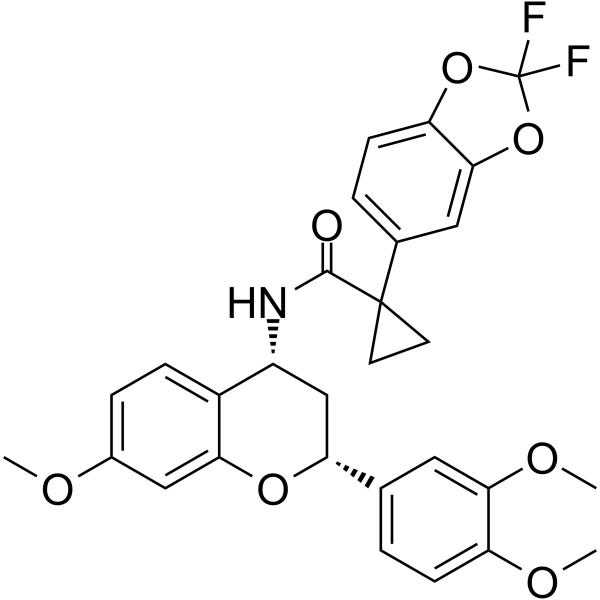
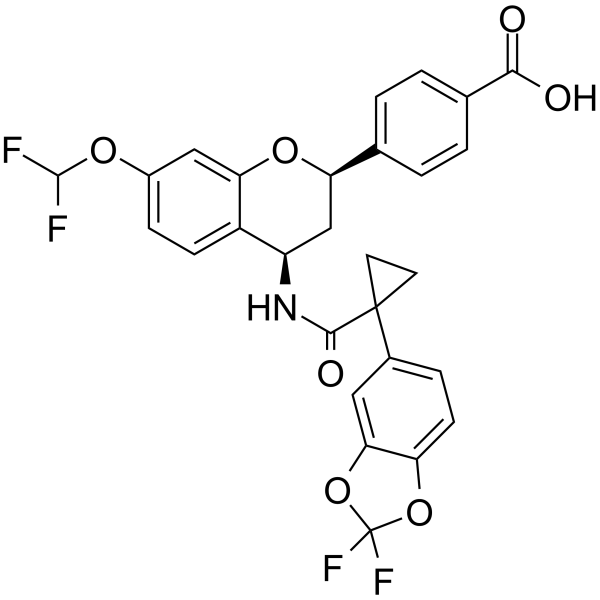
CFTR corrector 4 (Compound 13), an active (R,R)-form enantiomer, is a highly potent and orally active cystic fibrosis transmembrane conductance regulator (CFTR) corrector. CFTR corrector 4 can increase CFTR levels at the cell surface and have the potential for treatment of cystic fibrosis.
연구목적의 판매만을 진행합니다. 환자를 대상으로 한 판매는 하지 않습니다.
- Purity : 99.72%
- CAS No.: 1918142-34-3
- 화학식: C29H27F2NO7
- 분자량:539.52
-
보관:Powder -20°C, 3 years , 4°C, 2 years ; In solvent -80°C, 6 months , -20°C, 1 month

To place orders, for customer services and technical support, please contact: MedChemExpress USA
Tel: 609-228-6898 E-mail: [email protected] [email protected]


-
 Biological Activity
-
Chemical Information
-
용액&용해도
- Protocol
- 순도&문서
- References
-
 Help & FAQs


-
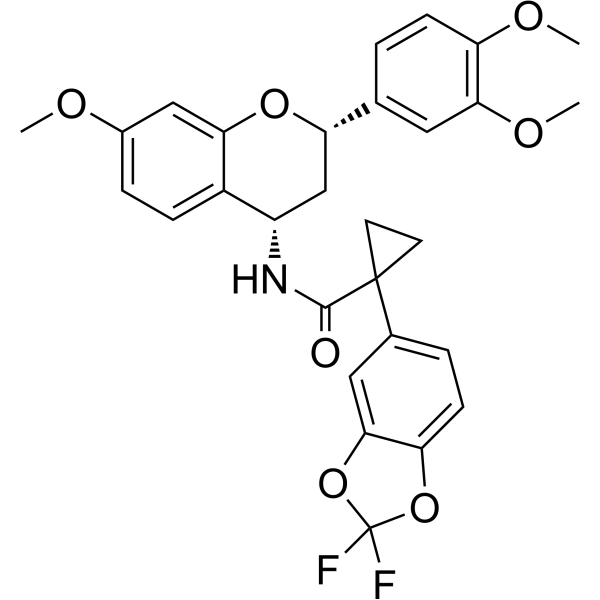
HY-147249
CFTR corrector 8CFTR Modulator -
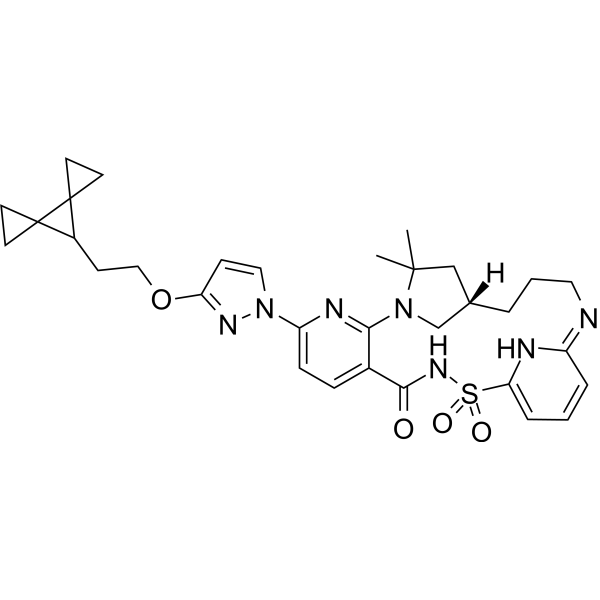
HY-145603
VanzacaftorCFTR Modulator -
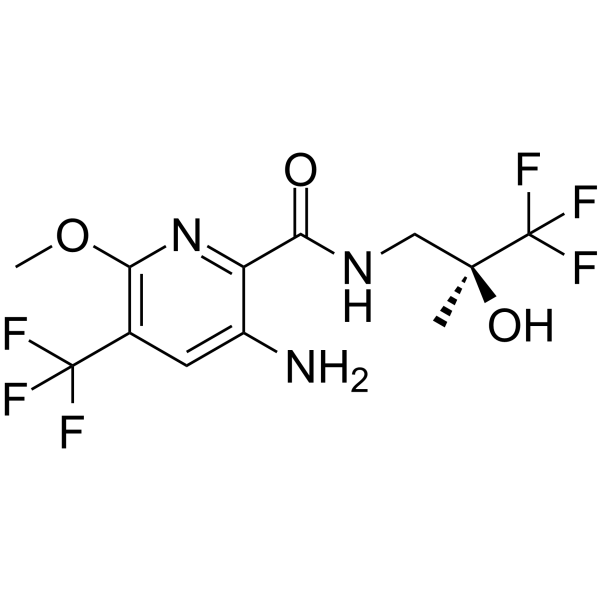
HY-109177
IcenticaftorCFTR Potentiator -
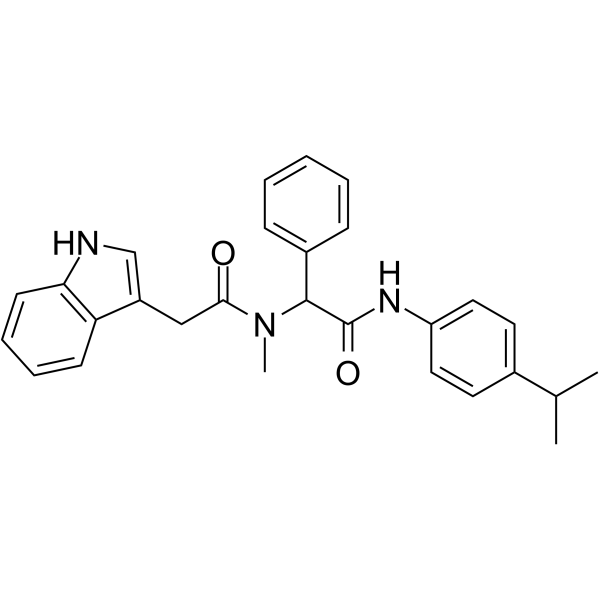
HY-111111
GalicaftorCFTR Corrector -
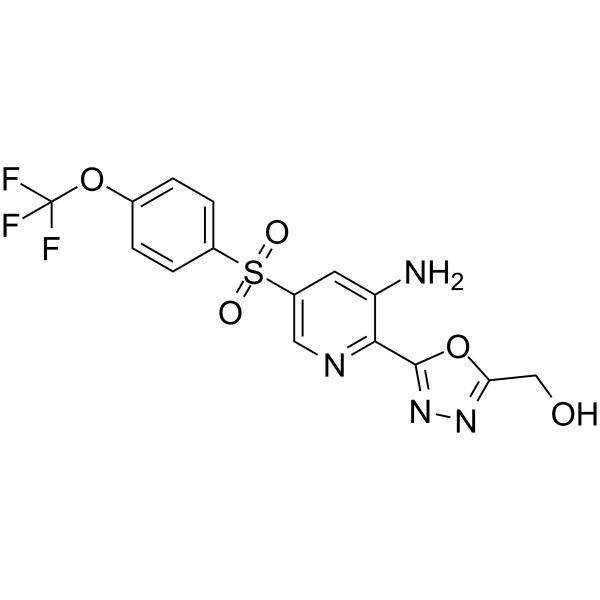
HY-103369
PG01CFTR Potentiator -
HY-109152
NavocaftorCystic Fibrosis Transmembrane Regulator -
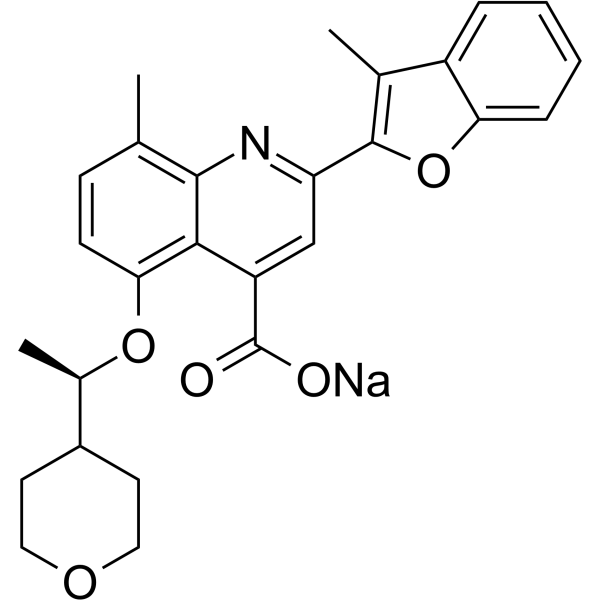
HY-109187A
Posenacaftor sodiumCFTR Modulator -
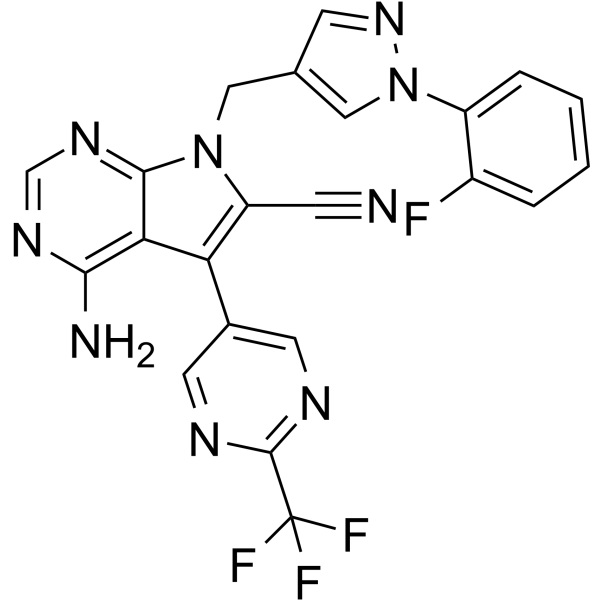
HY-136939
CFTR corrector 6CFTR Activator -
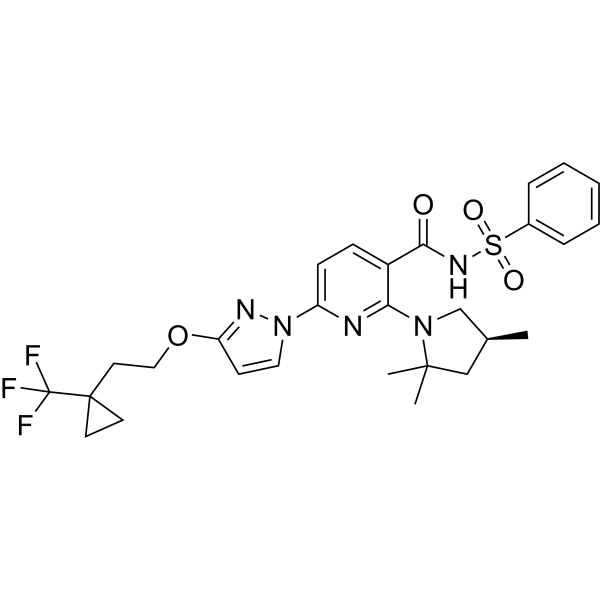
HY-126394
BamocaftorCFTR Corrector -
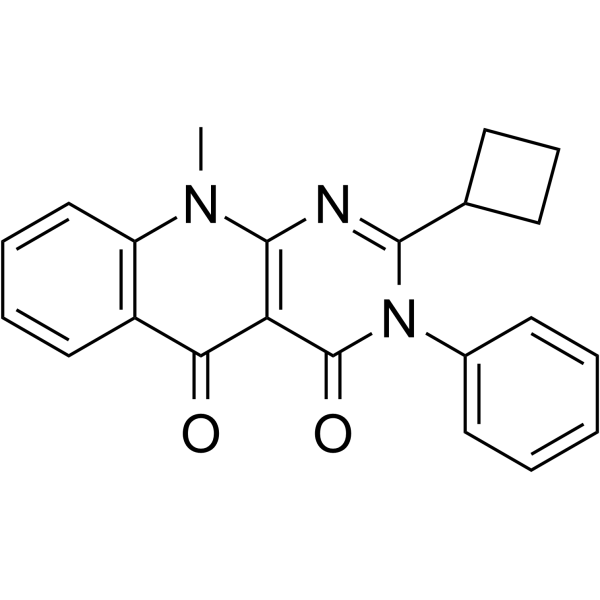
HY-150090
SRI-41315CFTR Activator -
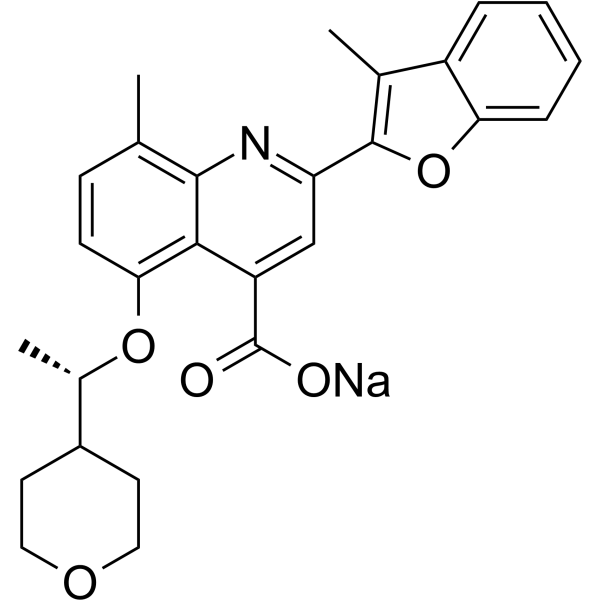
HY-109187B
(R)-Posenacaftor sodiumPosenacaftor R-Enantiomer -
HY-109027
CavosonstatGSNOR Inhibitor


Biological Activity
제품 설명
IC50 & Target
EC50:130 nM (CFTR)[1]
In Vitro
CFTR corrector 4 possesses high potency and efficacy with a EC50 of 0.028 μM in this HBE-TECC assay that assess the CFTR function, this lead resides in undesirable drug-like space with high molecular weight, and high HPLC Log D, indicating high lipophilicity. HBE-TECC: (Human Bronchial Epithelial-Trans-Epithelial Current Clamp) assay[1]. CFTR corrector 4 is tested its potency and efficacy in human bronchial epithelial (HBE) cells with a EC50 value 130 nM in the cell surface expression (CSE-HRP) assay[1].
MedChemExpress (MCE) has not independently confirmed the accuracy of these methods. They are for reference only.


Chemical Information
-
CAS No. 1918142-34-3
-
Appearance Solid
-
분자량 539.52
-
화학식 C29H27F2NO7
-
Color Off-white to pink
-
SMILES
O=C(C1(C2=CC=C(OC(F)(F)O3)C3=C2)CC1)N[C@@H]4C[C@H](C5=CC=C(OC)C(OC)=C5)OC6=CC(OC)=CC=C46
-
선적
Room temperature in continental US; may vary elsewhere.
-
보관
Powder -20°C 3 years 4°C 2 years In solvent -80°C 6 months -20°C 1 month


용액&용해도
In Vitro:
DMSO : 110 mg/mL (203.88 mM; Need ultrasonic; Hygroscopic DMSO has a significant impact on the solubility of product, please use newly opened DMSO)
Please refer to the solubility information to select the appropriate solvent. Once prepared, please aliquot and store the solution to prevent product inactivation from repeated freeze-thaw cycles.
Storage method and period of stock solution: -80°C, 6 months; -20°C, 1 month. When stored at -80°C, please use it within 6 months. When stored at -20°C, please use it within 1 month.
Please refer to the solubility information to select the appropriate solvent. Once prepared, please aliquot and store the solution to prevent product inactivation from repeated freeze-thaw cycles.
Storage method and period of stock solution: -80°C, 6 months; -20°C, 1 month. When stored at -80°C, please use it within 6 months. When stored at -20°C, please use it within 1 month.
Concentration (start) × Volume (start) = Concentration (final) × Volume (final)


순도&문서
-
Data Sheet (279 KB)
-
SDS (251 KB)
- English - EN (251 KB)
- Français - FR (251 KB)
- Deutsch - DE (251 KB)
- Norwegian - NO (251 KB)
- Español - ES (251 KB)
- Swedish - SV (251 KB)
- Italian - IT (251 KB)
- Korean - KR (251 KB)
- Portuguese - PT (251 KB)
-
Handling Instructions (2659 KB)
References
[1]. Wang X, et al. Discovery of 4-[(2R,4R)-4-({[1-(2,2-Difluoro-1,3-benzodioxol-5-yl)cyclopropyl]carbonyl}amino)-7-(difluoromethoxy)-3,4-dihydro-2H-chromen-2-yl]benzoic Acid (ABBV/GLPG-2222), a Potent Cystic Fibrosis Transmembrane Conductance Regulator (CFTR) Corrector for the Treatment of Cystic Fibrosis. [Content Brief]


Complete Stock Solution Preparation Table
Please refer to the solubility information to select the appropriate solvent. Once prepared, please aliquot and store the solution to prevent product inactivation from repeated freeze-thaw cycles.
Storage method and period of stock solution: -80°C, 6 months; -20°C, 1 month. When stored at -80°C, please use it within 6 months. When stored at -20°C, please use it within 1 month.
| Optional Solvent | Concentration Solvent Mass | 1 mg | 5 mg | 10 mg | 25 mg |
|---|---|---|---|---|---|
| DMSO | 1 mM | 1.8535 mL | 9.2675 mL | 18.5350 mL | 46.3375 mL |
| 5 mM | 0.3707 mL | 1.8535 mL | 3.7070 mL | 9.2675 mL | |
| 10 mM | 0.1853 mL | 0.9267 mL | 1.8535 mL | 4.6337 mL | |
| 15 mM | 0.1236 mL | 0.6178 mL | 1.2357 mL | 3.0892 mL | |
| 20 mM | 0.0927 mL | 0.4634 mL | 0.9267 mL | 2.3169 mL | |
| 25 mM | 0.0741 mL | 0.3707 mL | 0.7414 mL | 1.8535 mL | |
| 30 mM | 0.0618 mL | 0.3089 mL | 0.6178 mL | 1.5446 mL | |
| 40 mM | 0.0463 mL | 0.2317 mL | 0.4634 mL | 1.1584 mL | |
| 50 mM | 0.0371 mL | 0.1853 mL | 0.3707 mL | 0.9267 mL | |
| 60 mM | 0.0309 mL | 0.1545 mL | 0.3089 mL | 0.7723 mL | |
| 80 mM | 0.0232 mL | 0.1158 mL | 0.2317 mL | 0.5792 mL | |
| 100 mM | 0.0185 mL | 0.0927 mL | 0.1853 mL | 0.4634 mL |


CFTR corrector 4 Related Classifications
HY-135279 Related Classifications
 Powered by Bioz