



EIPA (Standard)
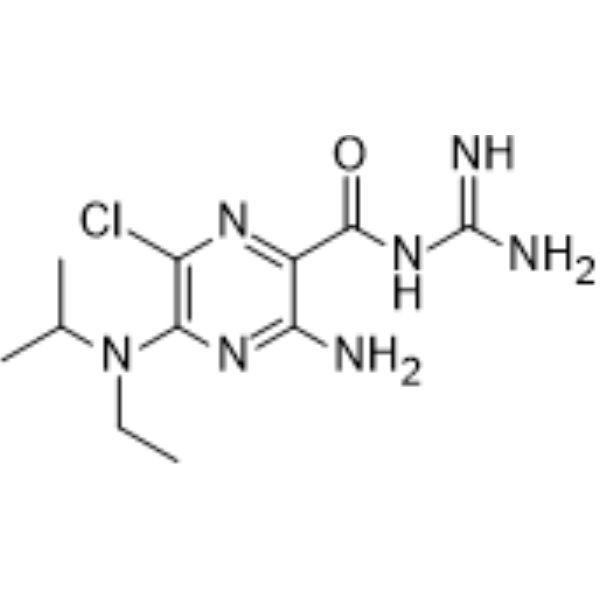
EIPA (Standard) is the analytical standard of EIPA. This product is intended for research and analytical applications. EIPA (L593754) is an orally active TRPP3 channel inhibitor with an IC50 of 10.5 μM. EIPA also enhances autophagy by inhibiting Na+/H+-exchanger 3 (NHE3). EIPA inhibits macropinocytosis as well. EIPA can be used in the research of inflammation and cancers, such as gastric cancer, colon carcinoma, pancreatic carcinoma.
연구목적의 판매만을 진행합니다. 환자를 대상으로 한 판매는 하지 않습니다.
- Purity : 98%
- CAS No.: 1154-25-2
- 화학식: C11H18ClN7O
- 분자량:299.76
-
보관:
Please store the product under the recommended conditions in the Certificate of Analysis.


To place orders, for customer services and technical support, please contact: MedChemExpress USA
Tel: 609-228-6898 E-mail: [email protected] [email protected]


-
 Product Information
-
Chemical Information
- 순도&문서
-
 Help & FAQs


-
HY-101840
EIPATRPP3 Channel Inhibitor -
HY-100001
SKF-96365 (hydrochloride)TRPC Channel Antagonist, SOCE Inhibitor -
HY-101840A
EIPA hydrochlorideTRPP3 Channel Inhibitor -
HY-15064
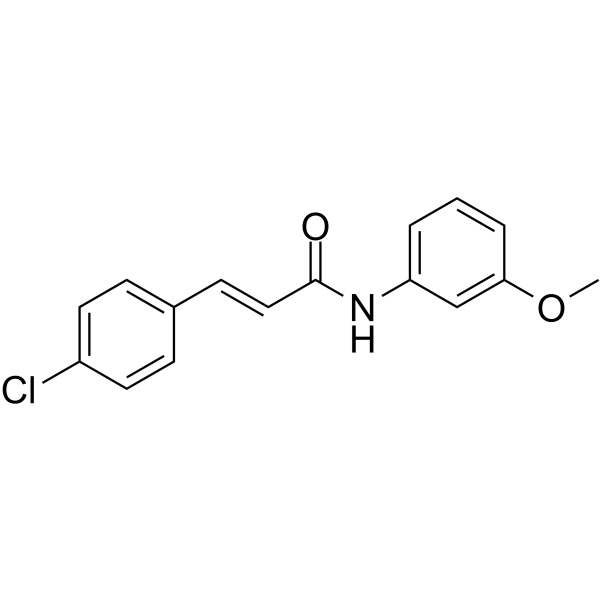
HC-030031TRP Channel Inhibitor -
HY-12245
SB-366791VR1/TRPV1 Antagonist -
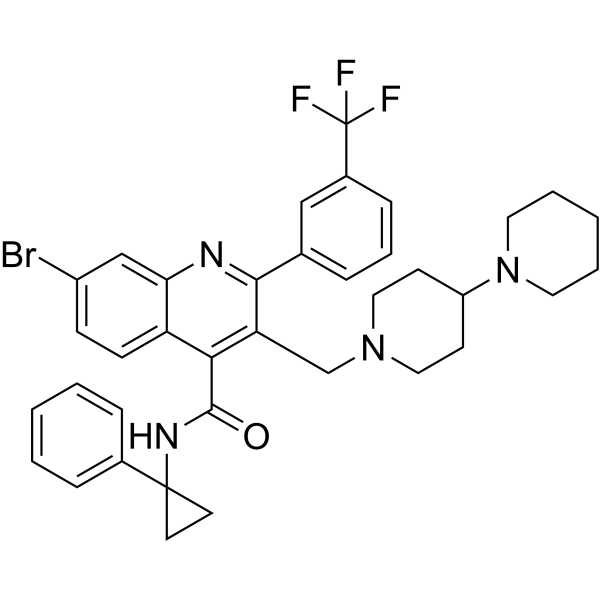
HY-100720
GSK2193874TRPV4 Antagonist -
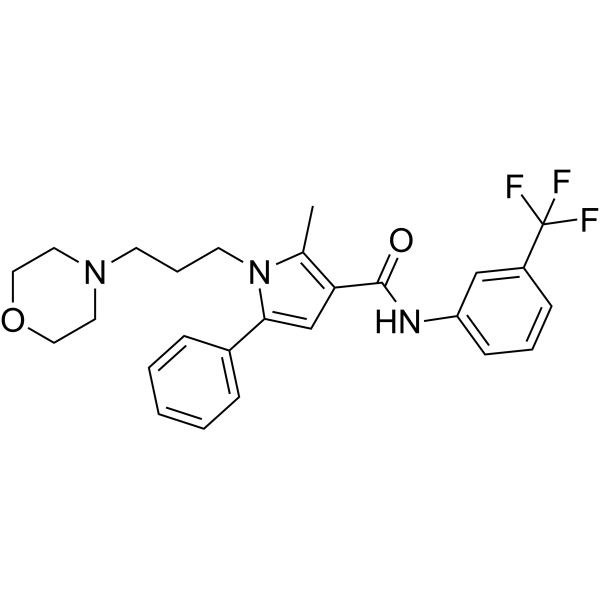
HY-100208
HC-067047TRPV4 Antagonist -
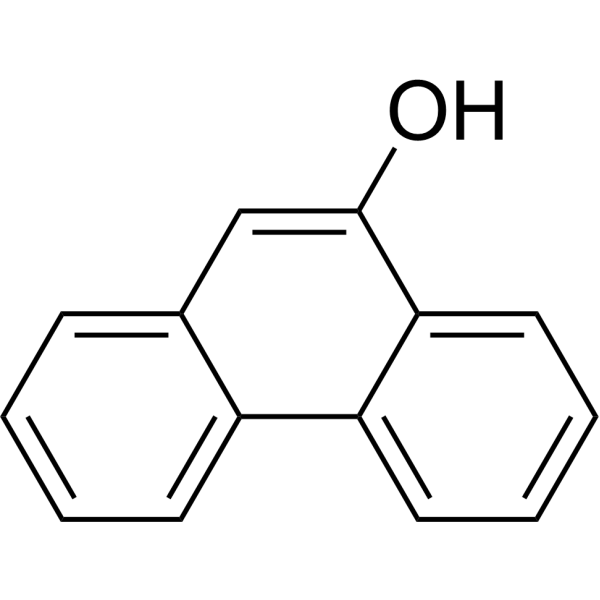
HY-108457
9-PhenanthrolTRPM4 Inhibitor -
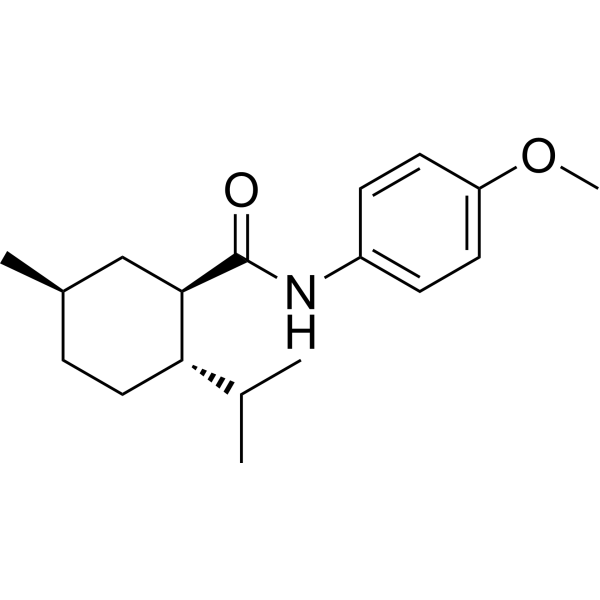
HY-108449
AcoltremonTRPM8 agonist -
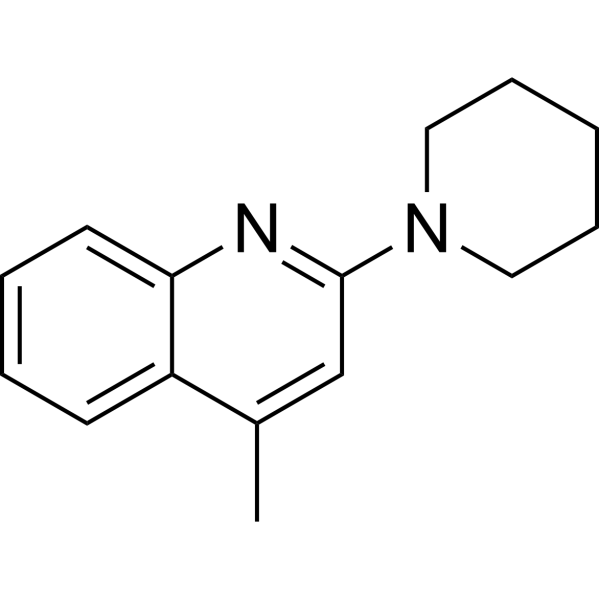
HY-12949
ML204TRPC4/TRPC5 Channel Inhibitor -
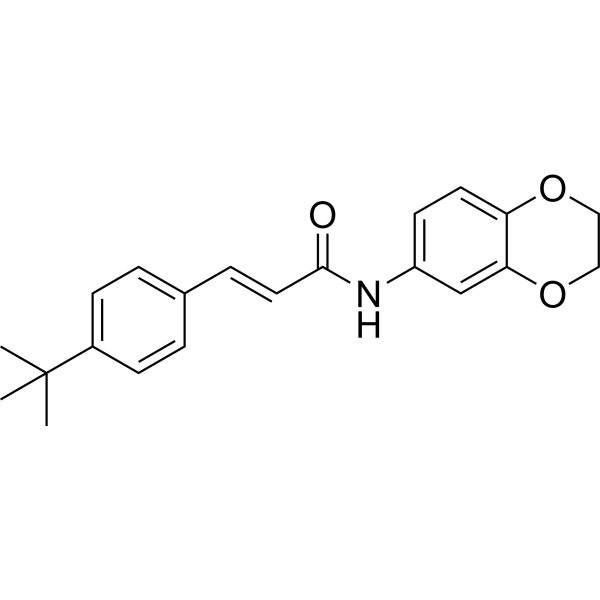
HY-101736
AMG9810TRPV1 Antagonist -
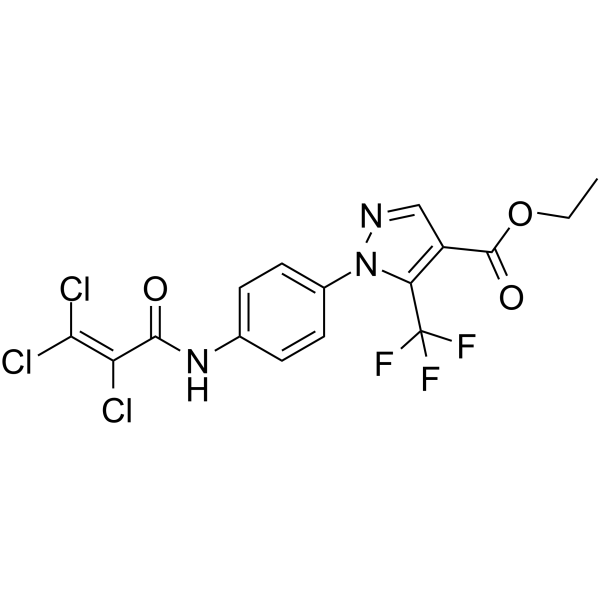
HY-108465
Pyr3TRPC3 Channel Inhibitor


Product Information
Information
신청
The compound is the grade of analytical standard, which is the reference standard supplied assay. It is commonly used in qualitative, quantitative and methodological research experiments in HPLC, GC and MS.


Chemical Information
-
CAS No. 1154-25-2
-
분자량 299.76
-
화학식 C11H18ClN7O
-
SMILES
O=C(C1=NC(Cl)=C(N(CC)C(C)C)N=C1N)NC(N)=N
-
Synonyms
L593754 (Standard); MH 12-43 (Standard); Ethylisopropylamiloride (Standard)
-
선적
Room temperature in continental US; may vary elsewhere.
-
보관
Please store the product under the recommended conditions in the Certificate of Analysis.


순도&문서
References
[1]. Dai XQ, et al. Inhibition of TRPP3 channel by MK-870 and analogs. Mol Pharmacol. 2007 Dec;72(6):1576-85. [Content Brief]
[2]. Shi H, et al. Na+/H+ Exchanger Regulates Amino Acid-Mediated Autophagy in Intestinal Epithelial Cells. Cell Physiol Biochem. 2017;42(6):2418-2429. [Content Brief]
[3]. Zhu BY, et al. A new HDAC inhibitor cinnamoylphenazine shows antitumor activity in association with intensive macropinocytosis. [Content Brief]
[4]. E V Stelmashook, et al. Acidosis and 5-(N-ethyl-N-isopropyl)amiloride (EIPA) Attenuate Zinc/Kainate Toxicity in Cultured Cerebellar Granule Neurons. Biochemistry (Mosc). 2015 Aug;80(8):1065-72. [Content Brief]
[5]. Shigekuni Hosogi, et al. An inhibitor of Na(+)/H(+) exchanger (NHE), ethyl-isopropyl amiloride (EIPA), diminishes proliferation of MKN28 human gastric cancer cells by decreasing the cytosolic Cl(-) concentration via DIDS-sensitive pathways. Cell Physiol Biochem. 2012;30(5):1241-53. [Content Brief]
[6]. Junji Yamashita, et al. Role of Na+/H+ exchanger in the pathogenesis of ischemic acute renal failure in mice. J Cardiovasc Pharmacol. 2007 Mar;49(3):154-60. [Content Brief]
[7]. Fumitaka Kamachi, et al. Inhibition of lipopolysaccharide-induced prostaglandin E2 production and inflammation by the Na+/H+ exchanger inhibitors. J Pharmacol Exp Ther. 2007 Apr;321(1):345-52. [Content Brief]

Calculators
Concentration (start) × Volume (start) = Concentration (final) × Volume (final)


EIPA (Standard) Related Classifications
HY-101840R Related Classifications
 Powered by Bioz
Keywords
- EIPA (Standard)
- 1154-25-2
- L593754 (Standard)
- MH 12-43 (Standard)
- Ethylisopropylamiloride (Standard)
- Reference Standards
- TRP Channel
- Prostaglandin Receptor
- Autophagy
- COX
- Na+/H+ Exchanger (NHE)
- Cation channel
- NHE3
- IECs
- IBDs
- IEC-18
- neuron
- zinc
- calcium
- kainite
- MKN28
- gastric cancer
- colon carcinoma
- pancreatic carcinoma
- renal failure
- ddY strain mice
- Inhibitor
- inhibitor
- inhibit