



Sodium 2-mercaptoethanesulfonate
Based on 2 publication(s) in Google Scholar
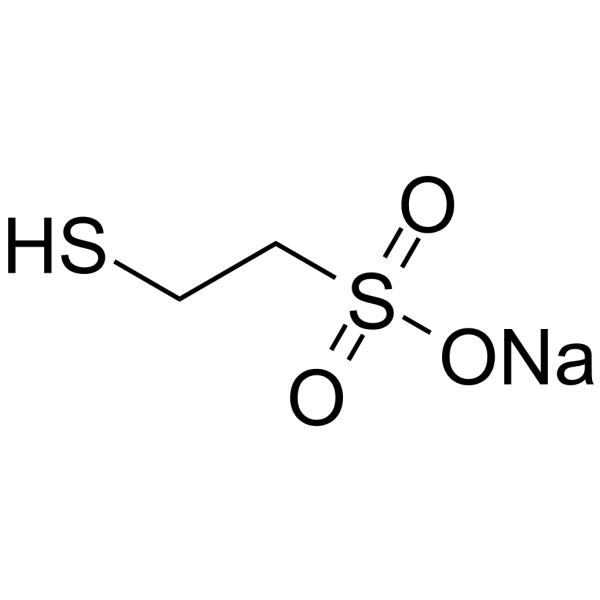
Sodium 2-mercaptoethanesulfonate (Mesnum) is a thiol-containing urinary tract protective agent and aldehyde scavenger that detoxifies acrolein via its thiol group to form an inert thioether excreted in urine, and competitively inhibits human myeloperoxidase, thereby mitigating Cyclophosphamide (HY-17420)-induced cytogenetic damage. Sodium 2-mercaptoethanesulfonate can be used for research on hemorrhagic cystitis.
For research use only. We do not sell to patients.
- Purity : 99.92%
- CAS No.: 19767-45-4
- Formula: C2H5NaO3S2
- Molecular Weight:164.18
-
Storage:
4°C, sealed storage, away from moisture
* In solvent : -80°C, 6 months; -20°C, 1 month (sealed storage, away from moisture)

To place orders, for customer services and technical support, please contact: MedChemExpress USA
Tel: 609-228-6898 E-mail: [email protected] [email protected]


-
 Biological Activity
-
Chemical Information
-
Solvent & Solubility
- Purity & Documentation
- References
-
 Help & FAQs


-
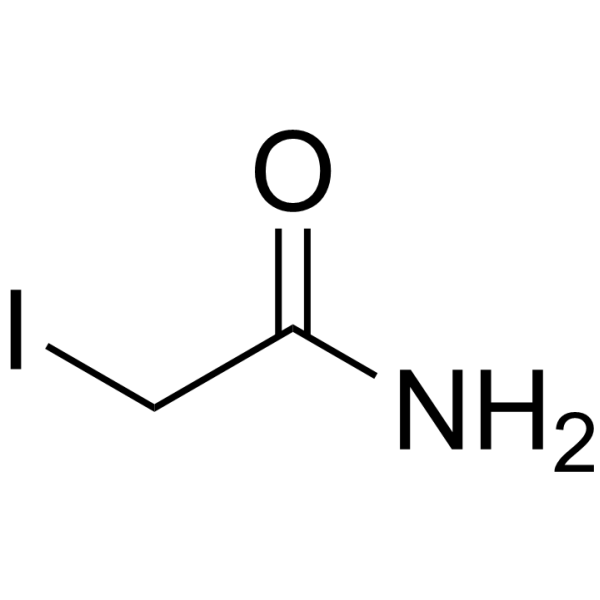
HY-34477
2-IodoacetamideAlkylating Agent -
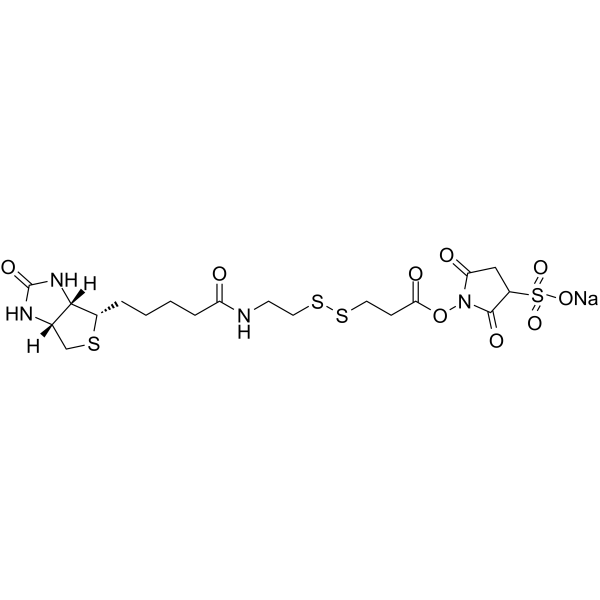
HY-111496
Sulfo-NHS-SS-Biotin sodiumCell-Surface Protein Label -
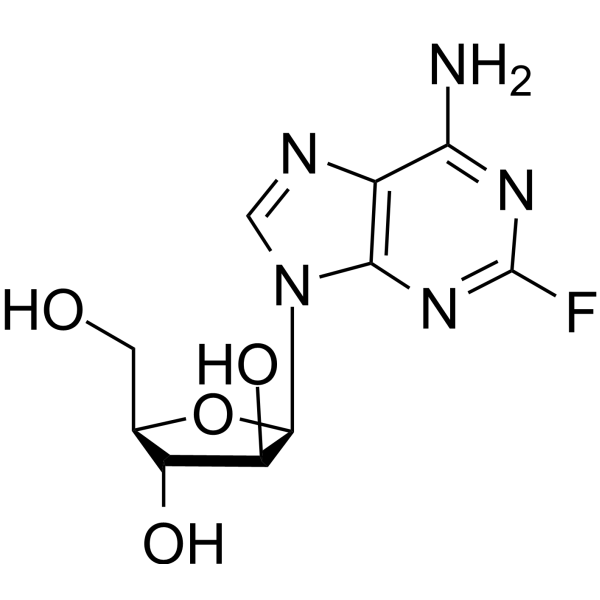
HY-B0069
FludarabineDNA Synthesis Inhibitor -
HY-13679R
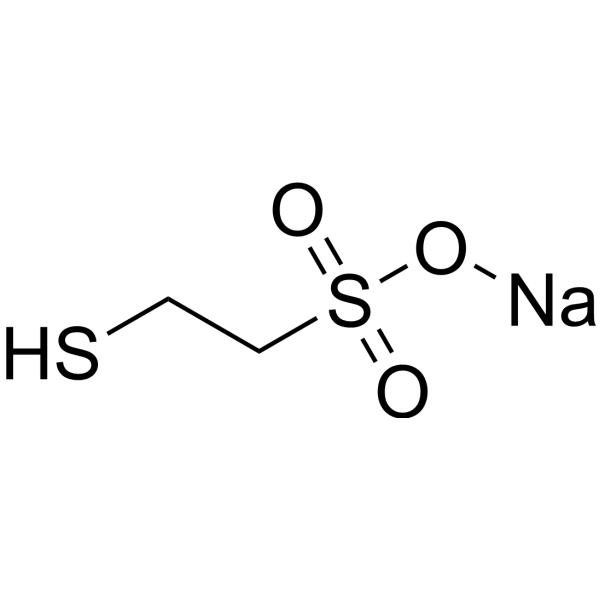
Sodium 2-mercaptoethanesulfonate (Standard)Cytoprotective Drug -
HY-17420
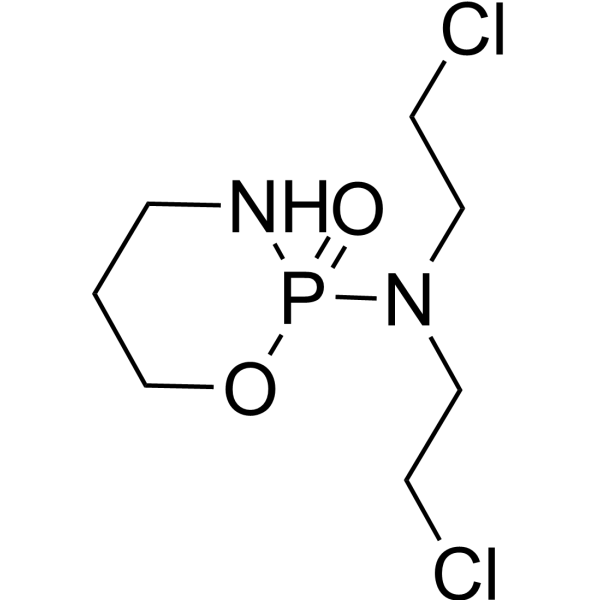
CyclophosphamideAlkylating Agent -
HY-N0142
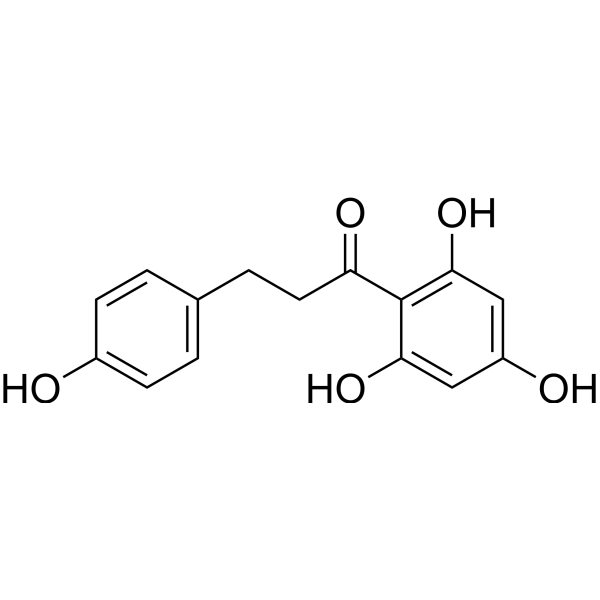
PhloretinAnti-inflammatory Agent -
HY-B1257
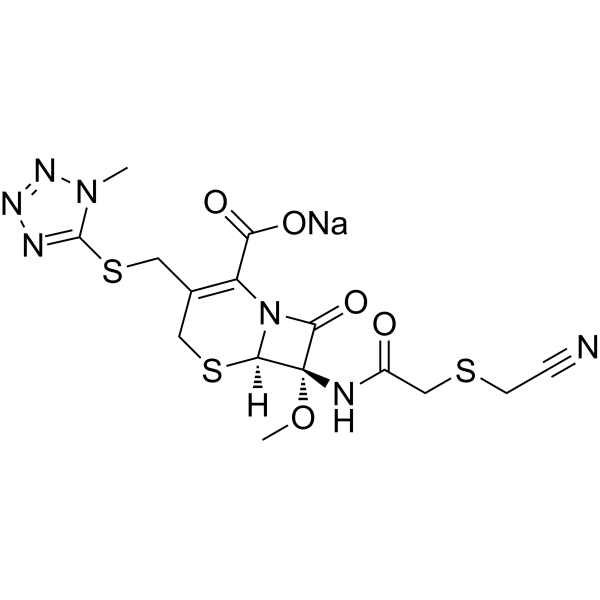
Cefmetazole sodiumCephamycin Antibiotic -
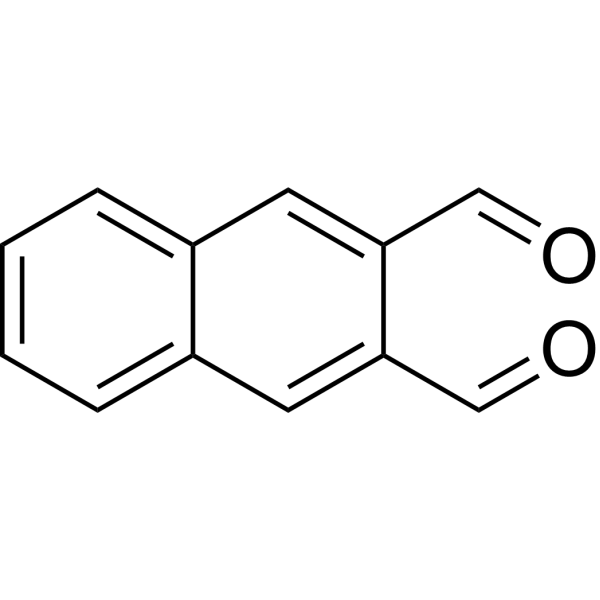
HY-W016288
Naphthalene-2,3-dicarboxaldehydeAntifungal Agents -
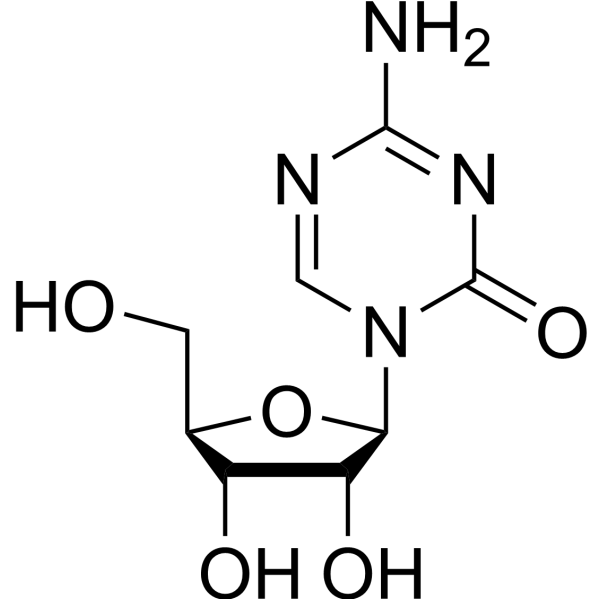
HY-10586
5-AzacytidineDNMT Inhibitor -
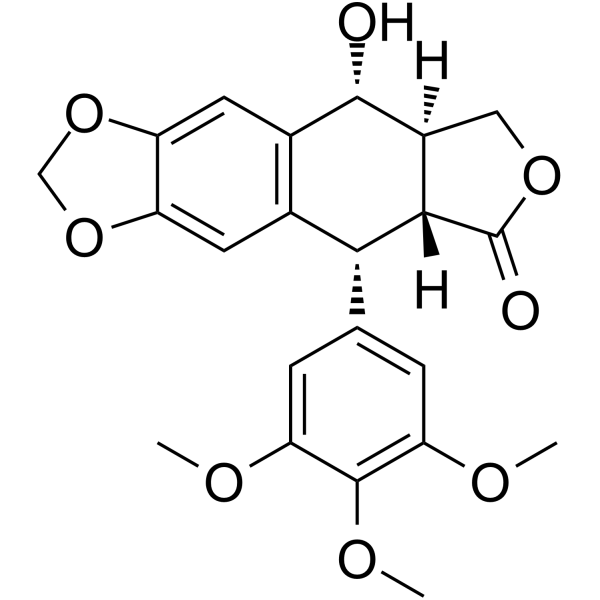
HY-15552
PodofiloxMicrotubule/Tubulin Inhibitor -
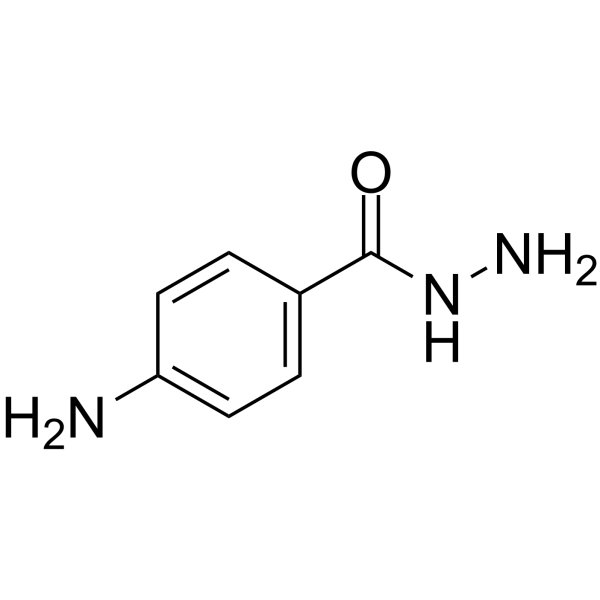
HY-B0880
4-AminobenzohydrazideGlutathione Peroxidase Inhibitor -

HY-10586R
5-Azacytidine (Standard)DNMT Inhibitor
Publications Citing Use of MedChemExpress (MCE) Sodium 2-mercaptoethanesulfonate
More

Biological Activity
Description
Cellular Effect
|
Cell Line

|
Type | Value | Description | References |
|---|---|---|---|---|
| L1210 | IC50 |
> 200 μM
Compound: Mesna
|
Concentration required to reduce the viability of L1210 cells by 50% after 1-h incubation at 37 degrees C
Concentration required to reduce the viability of L1210 cells by 50% after 1-h incubation at 37 degrees C
|
[PMID: 1992116] |
| HSC-4 | CC50 |
> 400 μM
Compound: mesna
|
Cytotoxicity against human HSC4 cells by MTT method
Cytotoxicity against human HSC4 cells by MTT method
|
[PMID: 17499885] |
| HL-60 | CC50 |
> 400 μM
Compound: mesna
|
Cytotoxicity against human HL60 cells in presence of RPMI1640 containing 10% fetal bovine serum by trypan blue exclusion test
Cytotoxicity against human HL60 cells in presence of RPMI1640 containing 10% fetal bovine serum by trypan blue exclusion test
|
[PMID: 17499885] |
| HSC-2 | CC50 |
> 400 μM
Compound: mesna
|
Cytotoxicity against human HSC2 by MTT method
Cytotoxicity against human HSC2 by MTT method
|
[PMID: 17499885] |
In Vitro
Sodium 2-mercaptoethanesulfonate (Mesna) (1-10 mM; 48 h) significantly attenuates cyclophosphamide-induced sister chromatid exchange and protects against cytotoxicity in concanavalin A-stimulated cultured human lymphocytes[1].
2-Mercaptoethanesulfonic acid (ampule, 3.0 M ± 0.1 M in H2O) (1 mM) provides complete protection against acrolein-induced SCEs and cell lethality up to 40 μM in concanavalin A-stimulated cultured human lymphocytes, although it does not completely prevent cell cycle inhibition at the highest concentration[1].
2-Mercaptoethanesulfonic acid (ampule, 3.0 M±0.1 M in H2O) (1 mM) completely protects human lymphocytes stimulated with concanavalin A against SCEs induced by 10 and 15 μM DEHP-CP and cytotoxicity up to 40 μM, and provides partial protection against SCEs at higher concentrations[1].
2-Mercaptoethanesulfonic acid (ampule, 3.0 M±0.1 M in H2O) (1 mM) significantly reduces HY-
Polyacrylamide,Anion,Mw 18 million (PAM) (W115727B)-induced SCEs at concentrations of 0.0068 μM and above in concanavalin A-stimulated cultured human lymphocytes, but does not consistently protect against PAM-induced cytotoxicity[1].
2-Mercaptoethanesulfonic acid (ampule, 3.0 M ± 0.1 M in H2O) (1 mM) significantly reduces the frequency of structural chromosomal aberrations induced by PAM at concentrations of 0.339 μM and above in concanavalin A-stimulated cultured human lymphocytes[1].
2-Mercaptoethanesulfonic acid (ampule, 3.0 M±0.1 M in H2O) (300 μM; 24 h), when used as a co-treatment or 6 h pretreatment, provides complete neuroprotection against acrolein-induced cell death in SN56 cholinergic neurons[4].
2-Mercaptoethanesulfonic acid (ampule, 3.0 M±0.1 M in H2O) increases cysteine levels in SN56 cholinergic neurons[4].
MedChemExpress (MCE) has not independently confirmed the accuracy of these methods. They are for reference only. .
-
Cell Line:Murine SN56.B5.G4 cholinergic neurons
-
Concentration:300 μM
-
Incubation Time:24 h
-
Result:Achieved approximately 100% neuroprotection against acrolein-induced cell death as a co-treatment and as a 6-h pre-treatment, compared to 100% cell death with acrolein alone.
In Vivo
2-Mercaptoethanesulfonic acid (ampule, 3.0 M±0.1 M in H2O) (80 mg/kg; i.p.; 1 h before acrolein) or (2 mg/bladder; intravesical; simultaneously with acrolein) significantly inhibits acrolein-induced hemorrhagic cystitis in mice[8].
2-Mercaptoethanesulfonic acid (ampule, 3.0 M ± 0.1 M in H2O) (40 mg/kg; i.p.; administered at 0, 4, and 8 h after IFO) almost completely eliminates IFO-induced hemorrhagic cystitis in rats[9].
MedChemExpress (MCE) has not independently confirmed the accuracy of these methods. They are for reference only.
-
Animal Model:Sprague-Dawley (Male, 300-400 g)[6]
-
Dosage:150 mg/kg
-
Administration:i.p.; single dose; 60 min
-
Result:Decreased serum total homocysteine to 0.9 (0.1) μM compared to control 2.9 (0.8) μM.
Decreased serum cysteine to 40 (8) μM compared to control 234 (46) μM, representing 17% of control.
Decreased serum cystathionine to 587 (76) nmol/L compared to control 872 (181) nmol/L.
Serum SAM was 252 (44) nmol/L compared to control 234 (24) nmol/L, with no significant change.
Serum SAH was 128 (99) nmol/L compared to control 69 (9.2) nmol/L, with no significant change.
Liver tHcys was 23.4 (12.1) nmol/g compared to control 19.2 (4.1) nmol/g, unchanged.
Liver cysteine was 1003 (153) nmol/g compared to control 963 (197) nmol/g, unchanged.
Liver methionine was 248 (38) nmol/g compared to control 257 (42) nmol/g, unchanged.
Liver cystathionine was 13.6 (7.1) nmol/g compared to control 12.2 (5.9) nmol/g, unchanged.
-
Animal Model:Sprague-Dawley (male, 300-400 g)[7]
-
Dosage:150 mg/kg
-
Administration:i.p.; single injection; 60 min
-
Result:Decreased serum total homocysteine to 0.9 μM versus 2.9 μM in controls.
Decreased serum cysteine to 40 μM versus 234 μM in controls (17% of control).
Decreased serum cystathionine to 587 nM versus 872 nM in controls.
Did not significantly change serum SAM (252 nM versus 234 nM in controls).
Did not significantly change serum SAH (128 nM versus 69 nM in controls).
Did not change serum methionine (60.0 μM versus 63.0 μM in controls).
Did not change liver tHcys (23.4 nmol/g versus 19.2 nmol/g).
Did not change liver cysteine (1003 nmol/g versus 963 nmol/g).
Did not change liver methionine (248 nmol/g versus 257 nmol/g).
Did not change liver cystathionine (13.6 nmol/g versus 12.2 nmol/g).
-
Animal Model:Swiss mice (Male, 25-35 g, acrolein-induced hemorrhagic cystitis)[9]
-
Dosage:80 mg/kg (i.p.); 2 mg/bladder (intravesical)
-
Administration:i.p. (1 h before acrolein); intravesical (simultaneously with acrolein)
-
Result:Inhibited acrolein-induced increases in bladder wet weight and Evans blue extravasation at 3 h.
Reduced edema, hemorrhage, and microscopic scores to 0 (0-1) at 3 h and 24 h with intravesical administration.
Reduced edema scores to 1 (0-1) at 3 h and 0 (0-1) at 24 h, hemorrhage scores to 0 (0-1) at 3 h and 1 (0-1) at 24 h, and microscopic scores to 0 (0-2) at 3 h and 0 (0-1) at 24 h with intraperitoneal administration.
-
Animal Model:Wistar rats (albino)[10]
-
Dosage:40 mg/kg
-
Administration:i.p.; at 0, 4, and 8 h after IFO
-
Result:Reduced edema score to 0 (0-1), hemorrhage score to 0 (0-1), and microscopic analysis score to 0 (0-0).
Noted dilatation of the bladder vessels in four bladders.
Induced mild histopathological changes suggestive of hemorrhagic cystitis in only one animal.
Showed no significant difference in bladder damage scores compared to Groups I and IV.


Chemical Information
-
CAS No. 19767-45-4
-
Appearance Solid
-
Molecular Weight 164.18
-
Formula C2H5NaO3S2
-
Color White to off-white
-
SMILES
SCCS(=O)(O[Na])=O
-
Synonyms
Mesnum
-
Shipping
Room temperature in continental US; may vary elsewhere.
-
Storage
4°C, sealed storage, away from moisture
* In solvent : -80°C, 6 months; -20°C, 1 month (sealed storage, away from moisture)


Publications (2)
-
Journal Impact Factor
-
Most Recent
-
Nat Cell Biol
TOLLIP targets GSDME-NT-carrying endocytic vesicles for autophagy to regulate pyroptosis and chemotherapy efficacy. [Abstract]2026 Apr;28(4):812-827. PMID: 41803502 -
Cell Rep
Cholesterol suppresses GOLM1-dependent selective autophagy of RTKs in hepatocellular carcinoma. [Abstract]2022 Apr 19;39(3):110712. PMID: 35443161


Solvent & Solubility
In Vitro:
DMSO : 100 mg/mL (609.09 mM; Need ultrasonic; Hygroscopic DMSO has a significant impact on the solubility of product, please use newly opened DMSO)
H2O : ≥ 50 mg/mL (304.54 mM)
* "≥" means soluble, but saturation unknown.
Please refer to the solubility information to select the appropriate solvent. Once prepared, please aliquot and store the solution to prevent product inactivation from repeated freeze-thaw cycles.
Storage method and period of stock solution: -80°C, 6 months; -20°C, 1 month (sealed storage, away from moisture). When stored at -80°C, please use it within 6 months. When stored at -20°C, please use it within 1 month.
* Note: If you choose water as the stock solution, please dilute it to the working solution, then filter and sterilize it with a 0.22 μm filter before use.
Please refer to the solubility information to select the appropriate solvent. Once prepared, please aliquot and store the solution to prevent product inactivation from repeated freeze-thaw cycles.
Storage method and period of stock solution: -80°C, 6 months; -20°C, 1 month (sealed storage, away from moisture). When stored at -80°C, please use it within 6 months. When stored at -20°C, please use it within 1 month.
* Note: If you choose water as the stock solution, please dilute it to the working solution, then filter and sterilize it with a 0.22 μm filter before use.
Concentration (start) × Volume (start) = Concentration (final) × Volume (final)
In Vivo:
For the following dissolution methods, please prepare the working solution directly:
It is recommended to prepare fresh solutions and use them promptly within a short period of time.
The percentages shown for the solvents indicate their volumetric ratio in the final prepared solution. If precipitation or phase separation occurs during preparation, heat and/or sonication can be used to aid dissolution.
Add each solvent one by one: PBS
Solubility: 100 mg/mL (609.09 mM); Clear solution; Need ultrasonic


Purity & Documentation
-
Data Sheet (294 KB)
-
SDS (394 KB)
- English - EN (394 KB)
- Français - FR (394 KB)
- Deutsch - DE (394 KB)
- Norwegian - NO (394 KB)
- Español - ES (394 KB)
- Swedish - SV (394 KB)
- Italian - IT (394 KB)
- Korean - KR (394 KB)
- Portuguese - PT (394 KB)
-
Handling Instructions (2659 KB)
References


Complete Stock Solution Preparation Table
Please refer to the solubility information to select the appropriate solvent. Once prepared, please aliquot and store the solution to prevent product inactivation from repeated freeze-thaw cycles.
Storage method and period of stock solution: -80°C, 6 months; -20°C, 1 month (sealed storage, away from moisture). When stored at -80°C, please use it within 6 months. When stored at -20°C, please use it within 1 month.
| Optional Solvent | Concentration Solvent Mass | 1 mg | 5 mg | 10 mg | 25 mg |
|---|---|---|---|---|---|
| H2O / DMSO | 1 mM | 6.0909 mL | 30.4544 mL | 60.9088 mL | 152.2719 mL |
| 5 mM | 1.2182 mL | 6.0909 mL | 12.1818 mL | 30.4544 mL | |
| 10 mM | 0.6091 mL | 3.0454 mL | 6.0909 mL | 15.2272 mL | |
| 15 mM | 0.4061 mL | 2.0303 mL | 4.0606 mL | 10.1515 mL | |
| 20 mM | 0.3045 mL | 1.5227 mL | 3.0454 mL | 7.6136 mL | |
| 25 mM | 0.2436 mL | 1.2182 mL | 2.4364 mL | 6.0909 mL | |
| 30 mM | 0.2030 mL | 1.0151 mL | 2.0303 mL | 5.0757 mL | |
| 40 mM | 0.1523 mL | 0.7614 mL | 1.5227 mL | 3.8068 mL | |
| 50 mM | 0.1218 mL | 0.6091 mL | 1.2182 mL | 3.0454 mL | |
| 60 mM | 0.1015 mL | 0.5076 mL | 1.0151 mL | 2.5379 mL | |
| 80 mM | 0.0761 mL | 0.3807 mL | 0.7614 mL | 1.9034 mL | |
| 100 mM | 0.0609 mL | 0.3045 mL | 0.6091 mL | 1.5227 mL |
* Note: If you choose water as the stock solution, please dilute it to the working solution, then filter and sterilize it with a 0.22 μm filter before use.


Sodium 2-mercaptoethanesulfonate Related Classifications
HY-13679 Related Classifications
 Powered by Bioz