



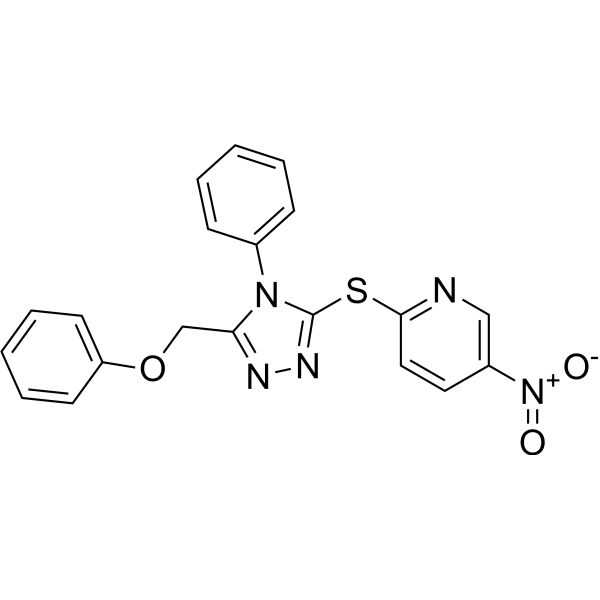
MIND4-17

Based on 1 Customer Validation
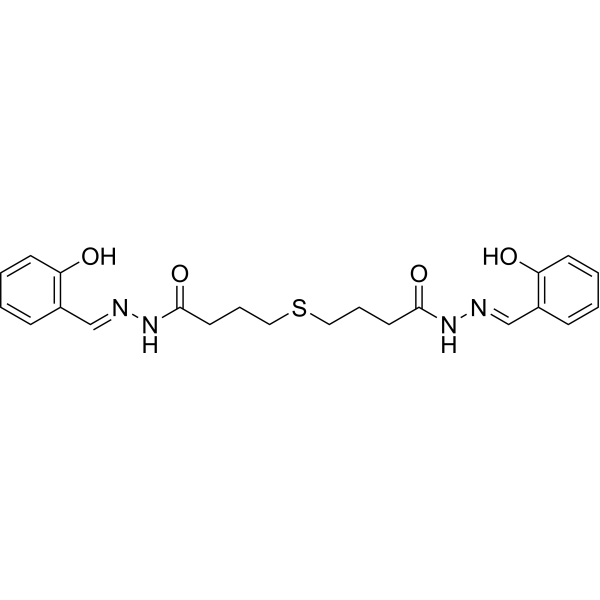
MIND4-17 is a potent NRF2 activator that covalently modifies a C151 residue of Keap1. MIND4-17 disrupts Keap1-Nrf2 association, leading to Nrf2 protein stabilization and nuclear translocation. MIND4‐17 exerts potent antioxidant activity.
For research use only. We do not sell to patients.
- Purity : 99.05%
- CAS No.: 345989-24-4
- Formula: C20H15N5O3S
- Molecular Weight:405.43
-
Storage:Powder -20°C, 3 years , 4°C, 2 years ; In solvent -80°C, 6 months , -20°C, 1 month

To place orders, for customer services and technical support, please contact: MedChemExpress USA
Tel: 609-228-6898 E-mail: [email protected] [email protected]


-
 Biological Activity
-
Chemical Information
-
Solvent & Solubility
- Protocols
- Purity & Documentation
- References
-
 Help & FAQs


-
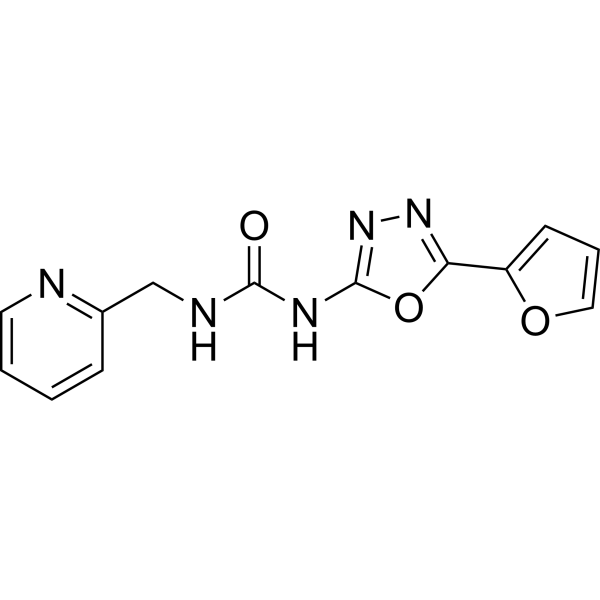
HY-19734
NK-252Nrf2 Activator -
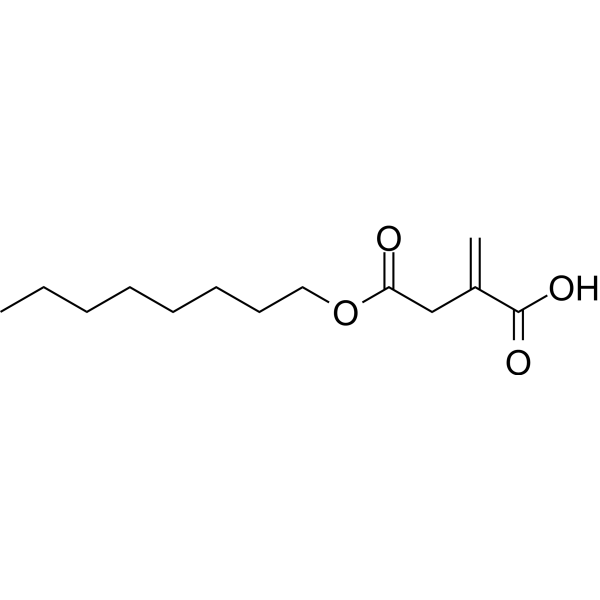
HY-112675
4-Octyl itaconateNrf2 Activator -
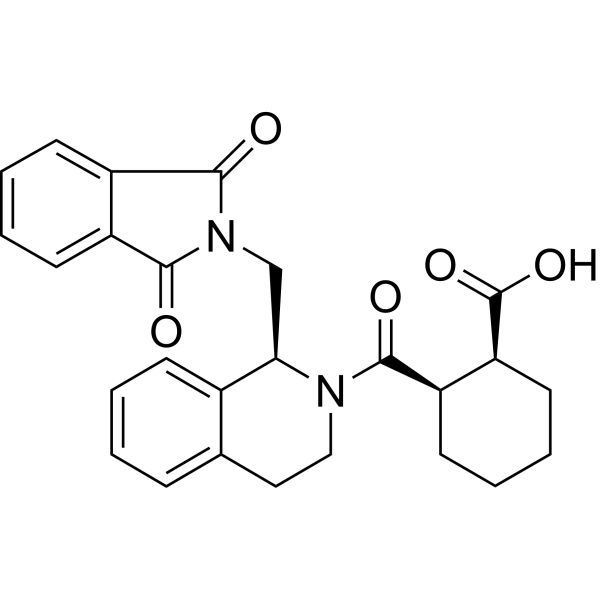
HY-110258
ML334NRF2 Activator -
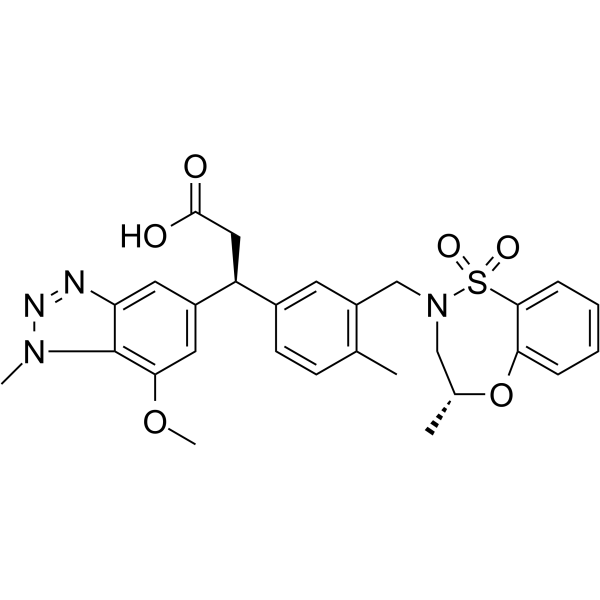
HY-101140
KI696KEAP1/NRF2 Protein-protein Interaction Inhibitor -
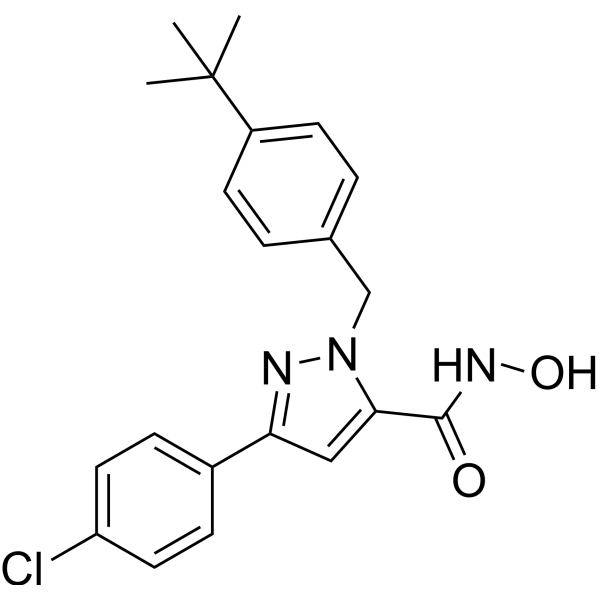
HY-101025
Nrf2-IN-1Nrf2 Inhibitor -
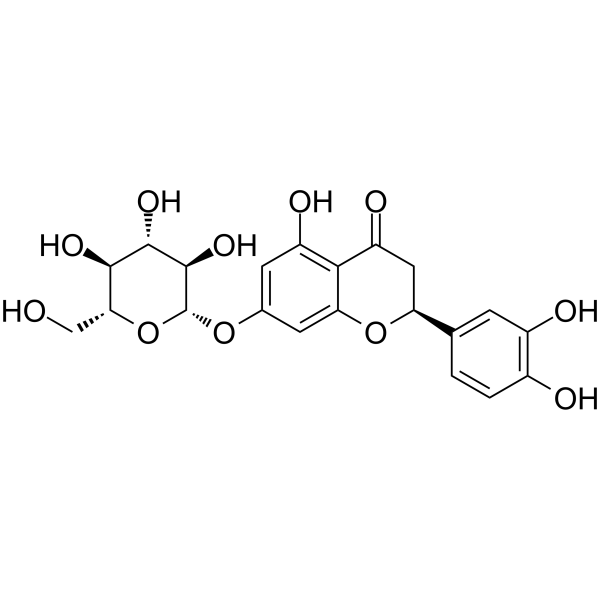
HY-N3847
Eriodictyol-7-O-glucosideNrf2 Activator -
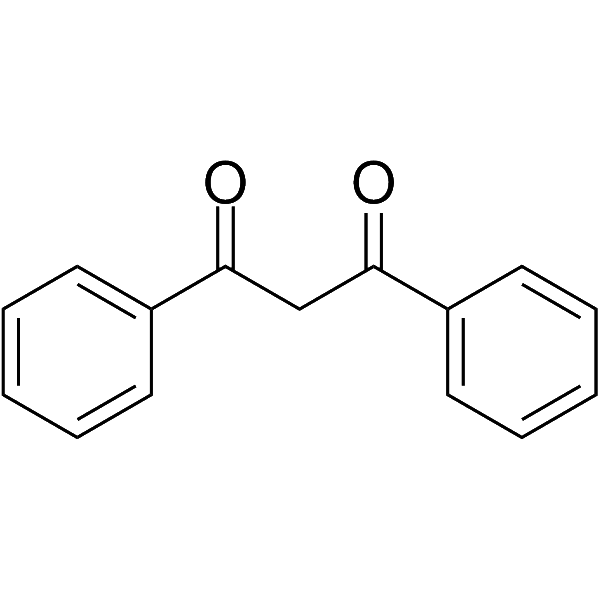
HY-W009731
Dibenzoylmethane -
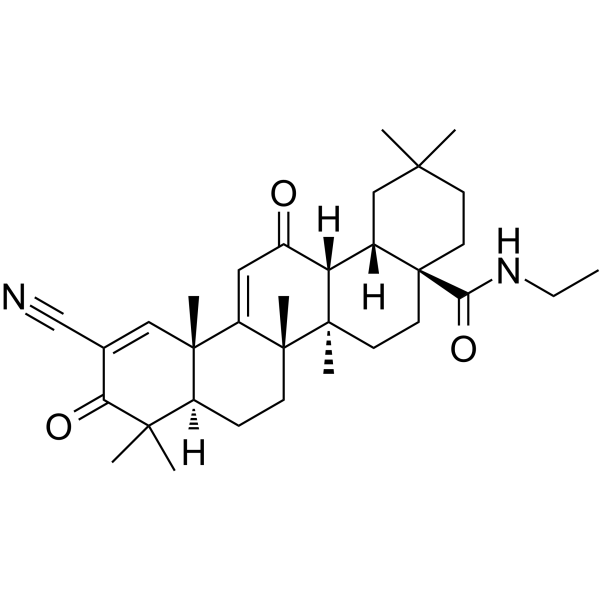
HY-12213
CDDO-EAKeap1-Nrf2 Activator -
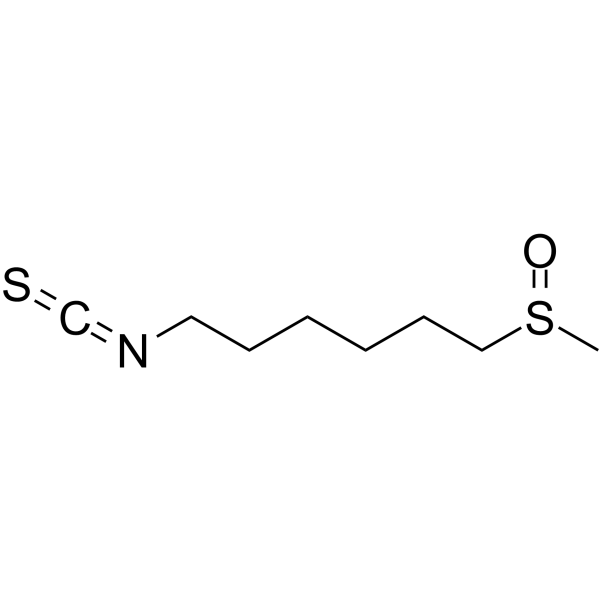
HY-101371
HesperinNrf2 Activator -
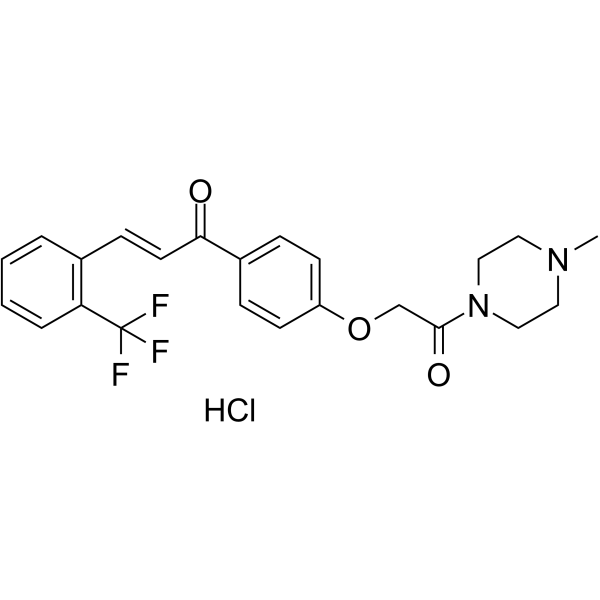
HY-146086
Nrf2 activator-4Nrf2 Activator -
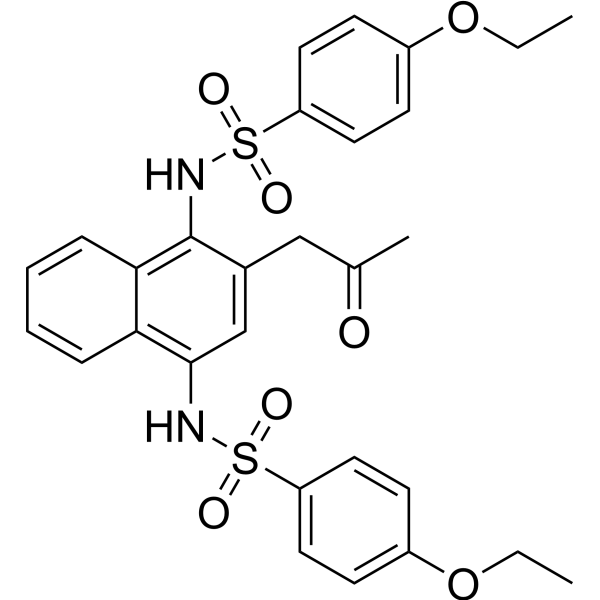
HY-111126
K67Keap1/S349-p-p62 Interaction Inhibitor -
HY-149508
Nrf2-IN-3Nrf2 Inhibitor


Biological Activity
Description
In Vitro
MIND4-17 (0.1-2 μM; 24 hr) significantly and concentration-dependently increases the expression of the canonical ARE genes Nqo1, Hmox1, Srx1, and to a lesser degree Gclc[1].
MIND4-17 (0.1-2 μM; 24 hr) shows a concentration-dependent induction of NQO1 and GCLM proteins in both WT and HD mutant ST14A cells[1].
MIN4-17 (0.1-10 μM) reduces ROS levels and nitrogen intermediates production in microglia[1].
MedChemExpress (MCE) has not independently confirmed the accuracy of these methods. They are for reference only. Further protocols information, click here.
-
Cell Line:Rat corticostriatal neuronal
-
Concentration:1 μM, 5 μM
-
Incubation Time:4 hours, 16 hours
-
Result:Significantly and concentration-dependently increased the expression of the canonical ARE genes Nqo1, Hmox1, Srx1, and to a lesser degree Gclc.
-
Cell Line:Wild-type (WT) and Huntington's disease (HD) mutant ST14A cells
-
Concentration:0.1 μM, 0.2 μM, 0.5 μM, 0.7 μM, 1 μM, 1.5 μM, 2 μM
-
Incubation Time:24 hours
-
Result:Showed a concentration-dependent induction of NQO1 and GCLM proteins.
In Vivo
MedChemExpress (MCE) has not independently confirmed the accuracy of these methods. They are for reference only.
-
Animal Model:BALB/c mice bearing white fluorescent light exposure[2]
-
Dosage:2 mg/kg
-
Administration:Intravitreal injection; once
-
Result:Activated Nrf2 signaling and attenuated retinal dysfunction by light damage in mice.


Chemical Information
-
CAS No. 345989-24-4
-
Appearance Solid
-
Molecular Weight 405.43
-
Formula C20H15N5O3S
-
Color Off-white to light yellow
-
SMILES
O=[N+](C1=CN=C(C=C1)SC2=NN=C(COC3=CC=CC=C3)N2C4=CC=CC=C4)[O-]
-
Shipping
Room temperature in continental US; may vary elsewhere.
-
Storage
Powder -20°C 3 years 4°C 2 years In solvent -80°C 6 months -20°C 1 month


Solvent & Solubility
In Vitro:
DMSO : 100 mg/mL (246.65 mM; Need ultrasonic; Hygroscopic DMSO has a significant impact on the solubility of product, please use newly opened DMSO)
Please refer to the solubility information to select the appropriate solvent. Once prepared, please aliquot and store the solution to prevent product inactivation from repeated freeze-thaw cycles.
Storage method and period of stock solution: -80°C, 6 months; -20°C, 1 month. When stored at -80°C, please use it within 6 months. When stored at -20°C, please use it within 1 month.
Please refer to the solubility information to select the appropriate solvent. Once prepared, please aliquot and store the solution to prevent product inactivation from repeated freeze-thaw cycles.
Storage method and period of stock solution: -80°C, 6 months; -20°C, 1 month. When stored at -80°C, please use it within 6 months. When stored at -20°C, please use it within 1 month.
Concentration (start) × Volume (start) = Concentration (final) × Volume (final)
In Vivo:
Select the appropriate dissolution method based on your experimental animal and administration route.
- For the following dissolution methods, please ensure to first prepare a clear stock solution using an In Vitro approach and then sequentially add co-solvents:
- To ensure reliable experimental results, the clarified stock solution can be appropriately stored based on storage conditions. As for the working solution for In Vivo experiments, it is recommended to prepare freshly and use it on the same day.
- The percentages shown for the solvents indicate their volumetric ratio in the final prepared solution. If precipitation or phase separation occurs during preparation, heat and/or sonication can be used to aid dissolution.
Add each solvent one by one: 10% DMSO 40% PEG300 5% Tween-80 45% Saline
Solubility: 2.5 mg/mL (6.17 mM); Clear solution; Need ultrasonic
This protocol yields a clear solution of 2.5 mg/mL.
Taking 1 mL working solution as an example, add 100 μL DMSO stock solution (25.0 mg/mL) to 400 μL PEG300, and mix evenly; then add 50 μL Tween-80 and mix evenly; then add 450 μL Saline to adjust the volume to 1 mL.
Preparation of Saline: Dissolve 0.9 g sodium chloride in ddH₂O and dilute to 100 mL to obtain a clear Saline solution.
In Vivo Dissolution Calculator
Please enter the basic information of animal experiments:
-
-
-
-
Recommended: Prepare an additional quantity of animals to account for potential losses during experiments.
Please enter your animal formula composition:
-
%DMSO +
Recommended: Keep the proportion of DMSO in working solution below 2% if your animal is weak.
-
%+
-
+%Tween-80 + +
-
%Saline +
The co-solvents required include: DMSO, . All of co-solvents are available by MedChemExpress (MCE). , Tween 80. All of co-solvents are available by MedChemExpress (MCE).
Working solution concentration: 0.22 mg/mL
Method for preparing stock solution: mg drug dissolved in μL DMSO. Stock solution concentration: mg/mL.
1. Take μL DMSO stock solution;
2. Add μL .
μL , mix evenly;
3. Then add μL Tween 80, mix evenly;
4. Then add μL
Please ensure that the stock solution in the first step is dissolved to a clear state, and add co-solvents in sequence. You can use ultrasonic heating (ultrasonic cleaner, recommended frequency 20-40 kHz), vortexing, etc. to assist dissolution.

Protocols
-
Cytoplasmic-Nuclear Fractionated Protein Extraction
Cytoplasmic-nuclear fractionated protein extraction separates soluble cytoplasmic proteins from nuclear-enriched proteins by mild plasma-membrane permeabilization, differential centrifugation, washing of nuclei, and extraction of nuclear proteins for downstream immunoblotting or related molecular analysis. The readout is the relative abundance of a protein in cytoplasmic and nuclear fractions, commonly assessed by western blotting together with compartment markers such as tubulin or pyruvate kinase for cytoplasm and lamin, nucleoporin, hnRNP, H2AX, or Lamin B for nuclear fractions.


Purity & Documentation
-
Data Sheet (276 KB)
-
SDS (393 KB)
- English - EN (393 KB)
- Français - FR (393 KB)
- Deutsch - DE (393 KB)
- Norwegian - NO (393 KB)
- Español - ES (393 KB)
- Swedish - SV (393 KB)
- Italian - IT (393 KB)
- Korean - KR (393 KB)
- Portuguese - PT (393 KB)
-
Handling Instructions (2659 KB)
References
[1]. Luisa Quinti, et al. SIRT2- and NRF2-Targeting Thiazole-Containing Compound with Therapeutic Activity in Huntington's Disease Models. Cell Chem Biol. 2016 Jul 21;23(7):849-861. [Content Brief]
[2]. Nan Chen, et al. The Nrf2 activator MIND4-17 protects retinal ganglion cells from high glucose-induced oxidative injury. J Cell Physiol. 2020 Oct;235(10):7204-7213. [Content Brief]


Complete Stock Solution Preparation Table
Please refer to the solubility information to select the appropriate solvent. Once prepared, please aliquot and store the solution to prevent product inactivation from repeated freeze-thaw cycles.
Storage method and period of stock solution: -80°C, 6 months; -20°C, 1 month. When stored at -80°C, please use it within 6 months. When stored at -20°C, please use it within 1 month.
| Optional Solvent | Concentration Solvent Mass | 1 mg | 5 mg | 10 mg | 25 mg |
|---|---|---|---|---|---|
| DMSO | 1 mM | 2.4665 mL | 12.3326 mL | 24.6652 mL | 61.6629 mL |
| 5 mM | 0.4933 mL | 2.4665 mL | 4.9330 mL | 12.3326 mL | |
| 10 mM | 0.2467 mL | 1.2333 mL | 2.4665 mL | 6.1663 mL | |
| 15 mM | 0.1644 mL | 0.8222 mL | 1.6443 mL | 4.1109 mL | |
| 20 mM | 0.1233 mL | 0.6166 mL | 1.2333 mL | 3.0831 mL | |
| 25 mM | 0.0987 mL | 0.4933 mL | 0.9866 mL | 2.4665 mL | |
| 30 mM | 0.0822 mL | 0.4111 mL | 0.8222 mL | 2.0554 mL | |
| 40 mM | 0.0617 mL | 0.3083 mL | 0.6166 mL | 1.5416 mL | |
| 50 mM | 0.0493 mL | 0.2467 mL | 0.4933 mL | 1.2333 mL | |
| 60 mM | 0.0411 mL | 0.2055 mL | 0.4111 mL | 1.0277 mL | |
| 80 mM | 0.0308 mL | 0.1542 mL | 0.3083 mL | 0.7708 mL | |
| 100 mM | 0.0247 mL | 0.1233 mL | 0.2467 mL | 0.6166 mL |


MIND4-17 Related Classifications
HY-121523 Related Classifications
 Powered by Bioz