



Motavizumab

Based on 1 Customer Validation
Motavizumab (MEDI-524) is an anti-human RSV (respiratory syncytial virus) monoclonal antibody. Motavizumab can be used in respiratory syncytial virus infection in high-risk infants research.
For research use only. We do not sell to patients.
- Purity : 99.17%
- CAS No.: 677010-34-3
- Molecular Weight:145.32 kDa
-
Storage:
Please store the product under the recommended conditions in the Certificate of Analysis.

To place orders, for customer services and technical support, please contact: MedChemExpress USA
Tel: 609-228-6898 E-mail: [email protected] [email protected]


-
 Biological Activity
-
Chemical Information
- Protocols
- Purity & Documentation
- References
-
 Help & FAQs


-
HY-P9944
PalivizumabRSV Inhibitor -
HY-P99756
NirsevimabAnti-RSV Antibody -

HY-P99804
ClesrovimabAnti-RSV Monoclonal Antibody -
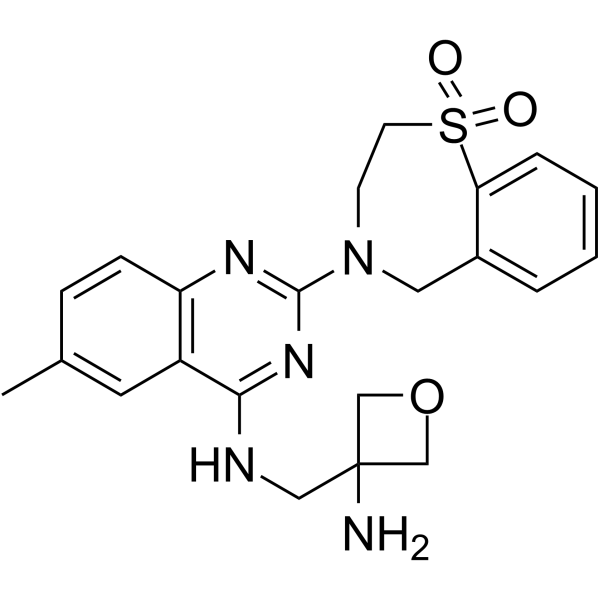
HY-109142
ZiresovirRSV F Inhibitor -
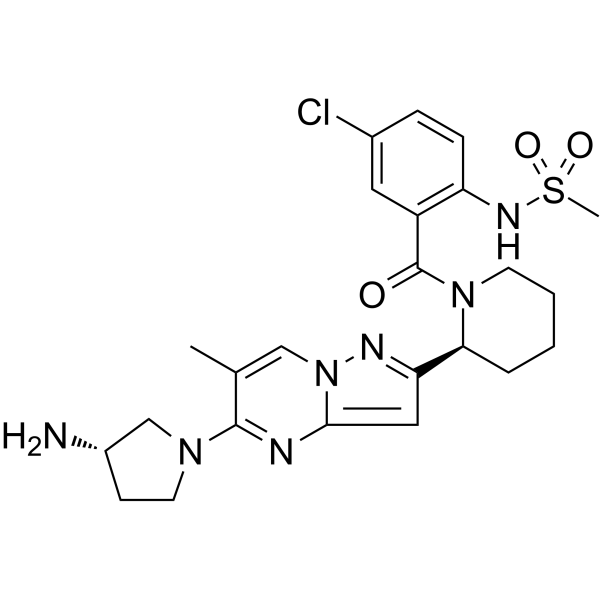
HY-16727
PresatovirRSV Fusion Inhibitor -
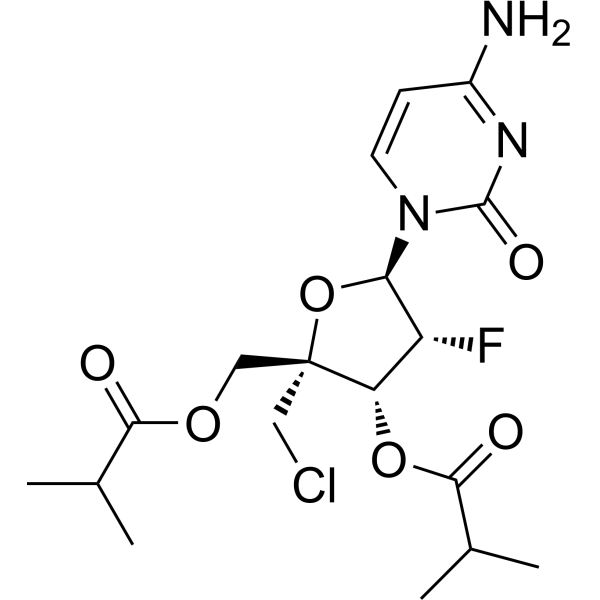
HY-12983A
LumicitabineRSV Polymerase Inhibitor -
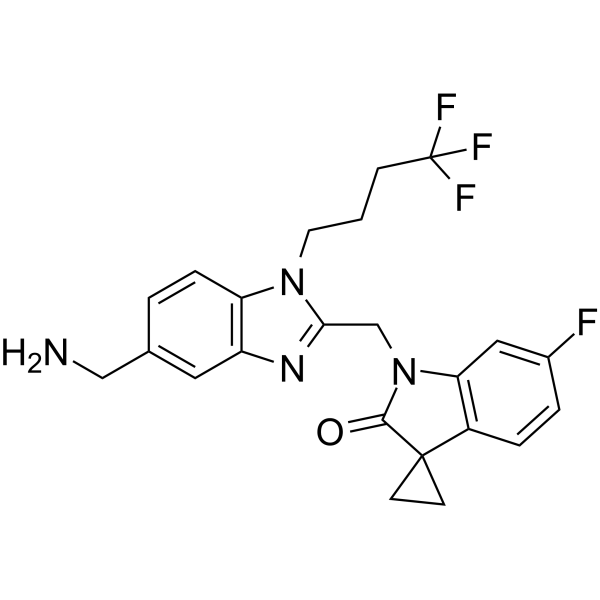
HY-123475
SisunatovirRSV-F Protein Inhibitor -

HY-P99586
SuptavumabRSV Inhibitor -
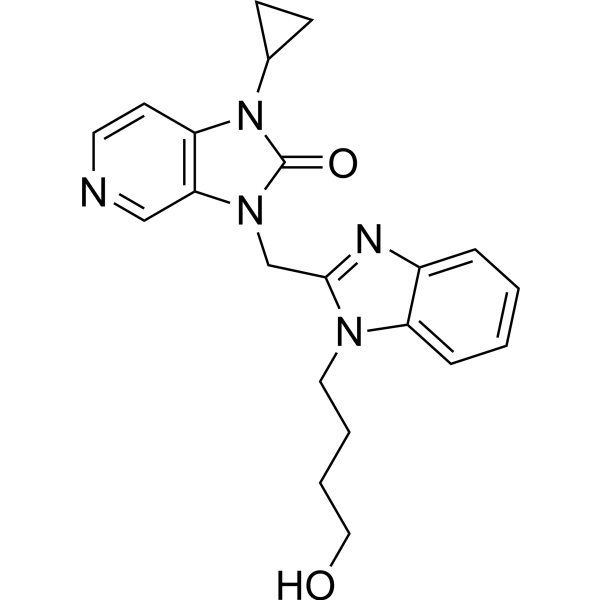
HY-120632
BMS-433771RSV Inhibitor -

HY-P9904
AtezolizumabAnti-PD-L1 Antibody -
HY-P9913
RituximabCD20 Inhibitor -

HY-P99103
BebtelovimabSARS-CoV-2 Antibody


Biological Activity
Description
Isotype
Human IgG1 kappa
Recommend Isotype Controls
Species Reactivity
Human
IC50 & Target
RSV-F
In Vitro
Motavizumab shows activity after F protein initiates interaction with the cell membrane and before virus transcription[2].
Motavizumab inhibits F protein-mediated cell-to-cell fusion[2].
MedChemExpress (MCE) has not independently confirmed the accuracy of these methods. They are for reference only. Further protocols information, click here.
In Vivo
MedChemExpress (MCE) has not independently confirmed the accuracy of these methods. They are for reference only.
-
Animal Model:Seven-week-old female, pathogen-free BALB/c mice intranasally inoculated with 106.5 PFU RSV-A2[1]
-
Dosage:1.25 mg in 0.1 ml of PBS/per mouse
-
Administration:Intraperitoneal injection; 1.25 mg in 0.1 ml of PBS/per mouse; once
-
Result:Resulted in significant reductions of RSV loads compared with untreated controls on days 1 and 5.
Showed lower BAL concentrations of IL-1α, IL-12p70, TNF-α and IFN-γ and serum IL-10 and KC compared with RSV-infected untreated mice.
Clinical Trial
| NCT Number | Sponsor | Condition | Start Date |
Phase

|
|---|---|---|---|---|
| NCT01329991 | Plexxikon| | 2011-05 | PHASE1 |
Accession
A0A0X8XRK2
Conjugated
Unconjugated
Reconsititution
The product can be reconstituted/diluted with sterile PBS or saline.
Format
-
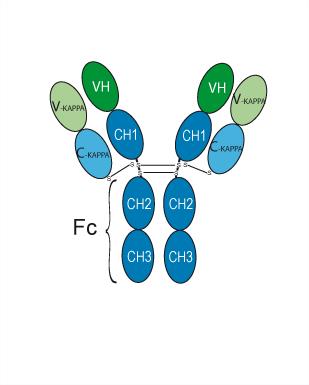
Human IgG1 kappa
Application
ELISA, FACS, Functional assay
Verified Bioactivity
-
 Immobilized Human RSV (A2) Post-fusion glycoprotein F Protein (His Tag) can bind Motavizumab. The EC50 for this effect is 3.866 ng/mL.


Chemical Information
-
CAS No. 677010-34-3
-
Appearance Liquid
-
Molecular Weight 145.32 kDa
-
Color Colorless to light yellow
-
SMILES
[Motavizumab]
-
Synonyms
MEDI-524
-
Shipping
Shipping with dry ice.
-
Formulation
Please refer to the lot-specific COA for specific buffer information.
-
Storage
Please store the product under the recommended conditions in the Certificate of Analysis.

Protocols
-
Research Protocol for Infectious Diseases
Infectious-disease experiments test how pathogens interact with host barriers, innate immune receptors, inflammatory signaling, pathogen replication, and tissue injury; pattern-recognition receptors such as TLRs, RIG-I-like receptors, NOD-like receptors, and inflammasomes detect microbial molecules and activate NF-κB, interferon, and cytokine responses. The central hypothesis is that infection severity reflects the balance between pathogen burden and host response: protective inflammation restricts pathogen growth, whereas excessive or mislocalized inflammation contributes to tissue damage and disease phenotype. Unresolved questions include which host pathways are protective versus pathogenic, why some infection models fail to translate to human disease, and which combined readouts best predict clinically relevant infection outcomes.


Purity & Documentation
-
Data Sheet (259 KB)
-
SDS (251 KB)
- English - EN (251 KB)
- Français - FR (251 KB)
- Deutsch - DE (251 KB)
- Norwegian - NO (251 KB)
- Español - ES (251 KB)
- Swedish - SV (251 KB)
- Italian - IT (251 KB)
- Korean - KR (251 KB)
- Portuguese - PT (251 KB)
-
Inhibitory Antibodies User Guide (603 KB)
References
[1]. Mejías A, et al. Motavizumab, a neutralizing anti-Respiratory Syncytial Virus (Rsv) monoclonal antibody significantly modifies the local and systemic cytokine responses induced by Rsv in the mouse model. Virol J. 2007 Oct 25;4:109. [Content Brief]
[2]. Huang K, et al. Respiratory syncytial virus-neutralizing monoclonal antibodies motavizumab and palivizumab inhibit fusion. J Virol. 2010 Aug;84(16):8132-40. [Content Brief]

Calculators
Concentration (start) × Volume (start) = Concentration (final) × Volume (final)


Motavizumab Related Classifications
HY-P99209 Related Classifications
 Powered by Bioz