



Norstictic acid

Based on 1 Customer Validation
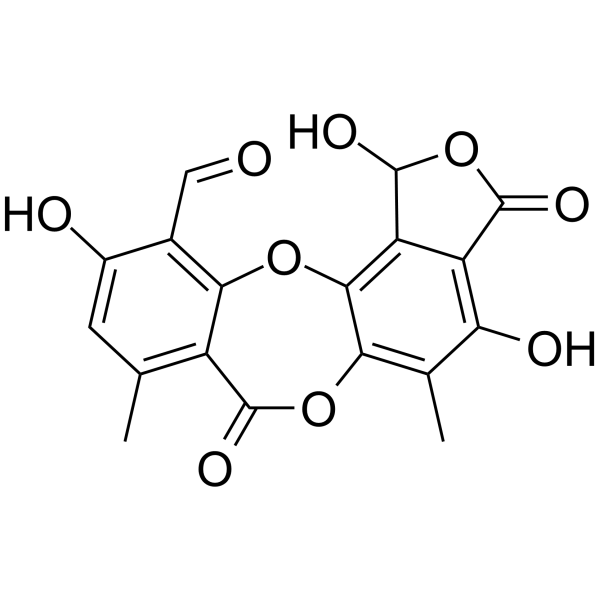
Norstictic acid is a potent and selective allossteric transcriptional regulator. Norstictic acid shows anticancer activity. Norstictic acid shows antioxidant activity and antimicrobial activity.
For research use only. We do not sell to patients.
- Purity : 96.6%
- CAS No.: 571-67-5
- Formula: C18H12O9
- Molecular Weight:372.28
-
Storage:
-20°C, protect from light, stored under nitrogen
* In solvent : -80°C, 6 months; -20°C, 1 month (protect from light, stored under nitrogen)

To place orders, for customer services and technical support, please contact: MedChemExpress USA
Tel: 609-228-6898 E-mail: [email protected] [email protected]


-
 Biological Activity
-
Chemical Information
- Protocols
- Purity & Documentation
- References
-
 Help & FAQs


-

HY-W714137
(6-Isothiocyanatohexyl)(methyl)sulfaneIsothiocyanate -
HY-33037
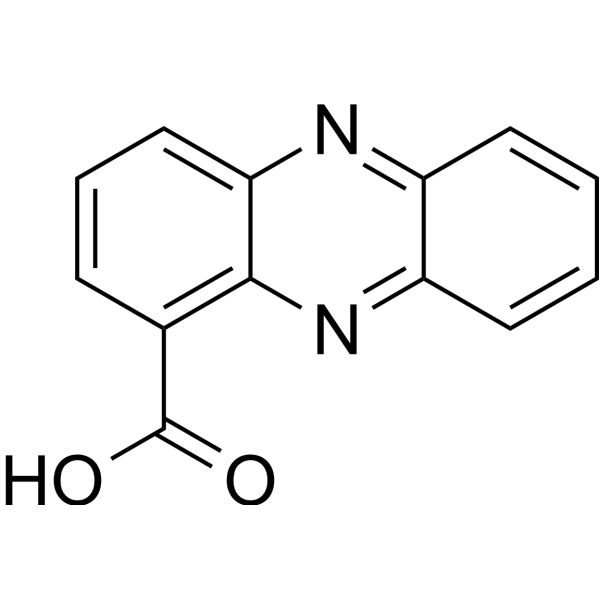
Phenazine-1-carboxylic acidFungal Inhibitor -
HY-121620
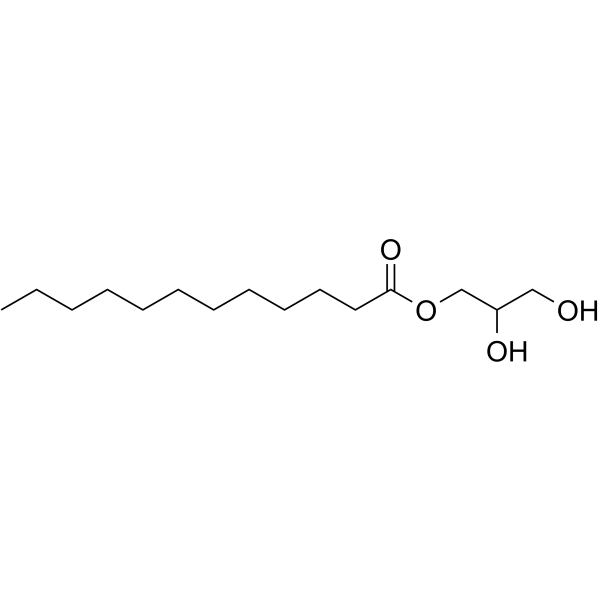
MonolaurinAntimicrobial Agent -

HY-W793613
DrimendiolAntibiofilm Agent -

HY-33037R
Phenazine-1-carboxylic acid (Standard)Fungal Inhibitor -
HY-128026
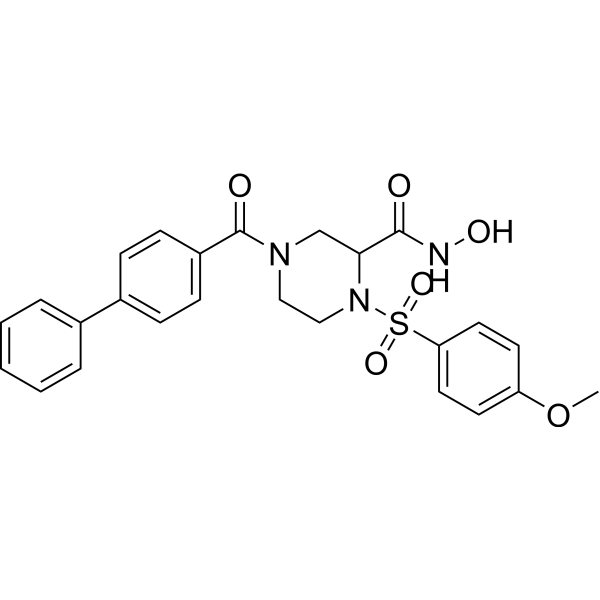
MMP-9/MMP-13 Inhibitor IMMP-9/MMP-13 Inhibitor -
HY-N8329
AS-2077715Antifungal Agent -
HY-107209
RKI-1313ROCK Inhibitor -

HY-121620R
Monolaurin (Standard)Antimicrobial Agent -
HY-114785
BPHAMMP-2/MMP-9/MMP-14 Inhibitor -

HY-126461
Salazinic acidAntimicrobial Agents -

HY-W928623
2-Acetylthiophene thiosemicarbazoneAntibacterial Agent


Biological Activity
Description
In Vitro
Norstictic acid significantly suppresses the TNBC MDA-MB-231 cell proliferation, migration, invasion with low toxicity[2].
MedChemExpress (MCE) has not independently confirmed the accuracy of these methods. They are for reference only. Further protocols information, click here.


Chemical Information
-
CAS No. 571-67-5
-
Appearance Solid
-
Molecular Weight 372.28
-
Formula C18H12O9
-
Color White to off-white
-
SMILES
O=CC1=C(OC(C(OC2=O)=C(C)C(O)=C34)=C3C(O)OC4=O)C2=C(C)C=C1O
-
Structure Classification
-
Initial Source
-
Shipping
Room temperature in continental US; may vary elsewhere.
-
Storage
-20°C, protect from light, stored under nitrogen
* In solvent : -80°C, 6 months; -20°C, 1 month (protect from light, stored under nitrogen)

Protocols
-
Research Protocol for Infectious Diseases
Infectious-disease experiments test how pathogens interact with host barriers, innate immune receptors, inflammatory signaling, pathogen replication, and tissue injury; pattern-recognition receptors such as TLRs, RIG-I-like receptors, NOD-like receptors, and inflammasomes detect microbial molecules and activate NF-κB, interferon, and cytokine responses. The central hypothesis is that infection severity reflects the balance between pathogen burden and host response: protective inflammation restricts pathogen growth, whereas excessive or mislocalized inflammation contributes to tissue damage and disease phenotype. Unresolved questions include which host pathways are protective versus pathogenic, why some infection models fail to translate to human disease, and which combined readouts best predict clinically relevant infection outcomes.


Purity & Documentation
-
Data Sheet (275 KB)
-
SDS (252 KB)
- English - EN (252 KB)
- Français - FR (252 KB)
- Deutsch - DE (252 KB)
- Norwegian - NO (252 KB)
- Español - ES (252 KB)
- Swedish - SV (252 KB)
- Italian - IT (252 KB)
- Korean - KR (252 KB)
- Portuguese - PT (252 KB)
-
Handling Instructions (2659 KB)
References
[1]. Garlick JM, et al. Norstictic Acid Is a Selective Allosteric Transcriptional Regulator. J Am Chem Soc. 2021 Jun 30;143(25):9297-9302. [Content Brief]
[2]. Ebrahim HY, et al. Norstictic Acid Inhibits Breast Cancer Cell Proliferation, Migration, Invasion, and In Vivo Invasive Growth Through Targeting C-Met. Phytother Res. 2016 Apr;30(4):557-66. [Content Brief]
[3]. Ranković B, et al. Biological activities of Toninia candida and Usnea barbata together with their norstictic acid and usnic acid constituents. Int J Mol Sci. 2012 Nov 12;13(11):14707-22. [Content Brief]
[4]. Tay T, et al. Evaluation of the antimicrobial activity of the acetone extract of the lichen Ramalina farinacea and its (+)-usnic acid, norstictic acid, and protocetraric acid constituents. Z Naturforsch C J Biosci. 2004 May-Jun;59(5-6):384-8. [Content Brief]

Calculators
Concentration (start) × Volume (start) = Concentration (final) × Volume (final)


Norstictic acid Related Classifications
HY-N10457 Related Classifications
 Powered by Bioz