



OF-02

Based on 1 Customer Validation
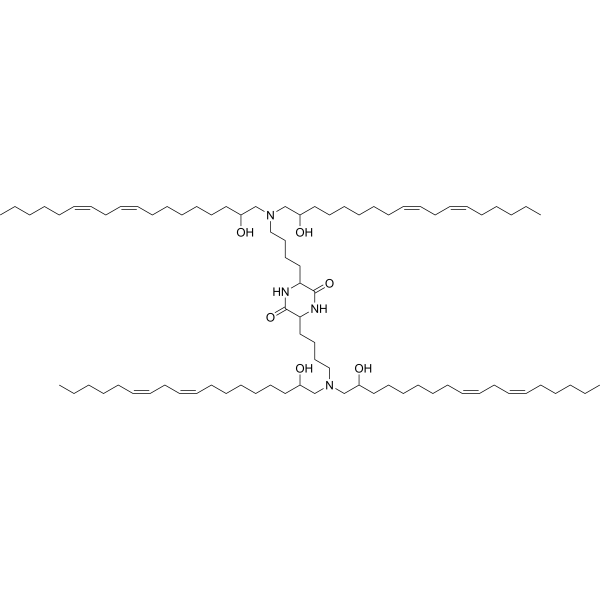
OF-02 is an ionizable lipid for mRNA delivery and a key component of lipid nanoparticles (LNPs). OF-02 is protonated in the acidic endosomal environment to promote endosomal escape of mRNA and efficiently induce protein expression in target cells. OF-02 relies on the pH-responsive membrane fusion properties to form a complex with mRNA and destroy the endosomal membrane structure to achieve mRNA release in the cytoplasm. OF-02 is mainly used in the development of mRNA vaccines, gene editing, and protein replacement therapy[1][2][3].
For research use only. We do not sell to patients.
- Purity : 98.0%
- CAS No.: 1883431-67-1
- Formula: C84H152N4O6
- Molecular Weight:1314.13
-
Storage:
4°C, stored under nitrogen
* In solvent : -80°C, 6 months; -20°C, 1 month (stored under nitrogen)

To place orders, for customer services and technical support, please contact: MedChemExpress USA
Tel: 609-228-6898 E-mail: [email protected] [email protected]


-
 Biological Activity
-
Chemical Information
-
Solvent & Solubility
- Protocols
- Purity & Documentation
- References
-
 Help & FAQs


-
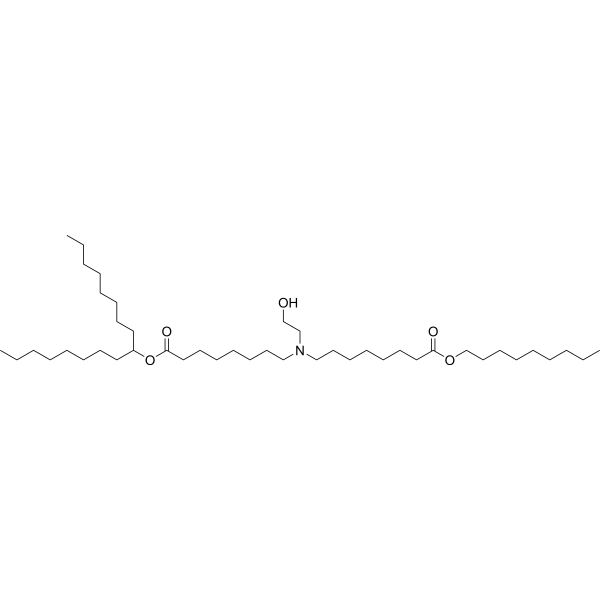
HY-138171
Lipid 5Amino Lipid -
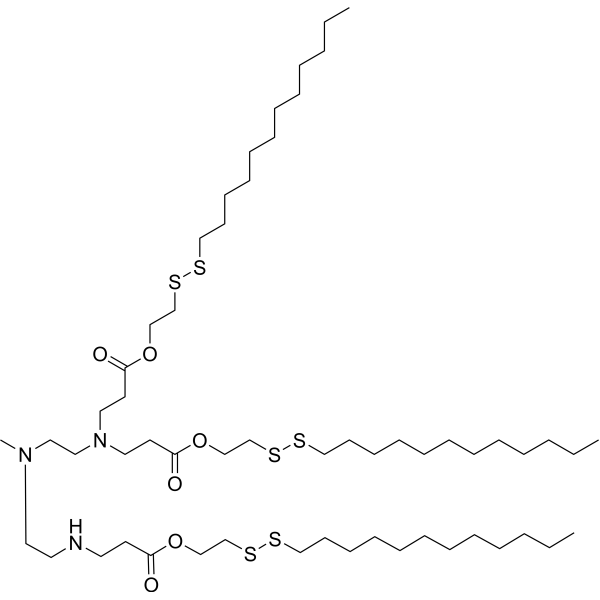
HY-139306
BAMEA-O16BLipid Nanoparticle -
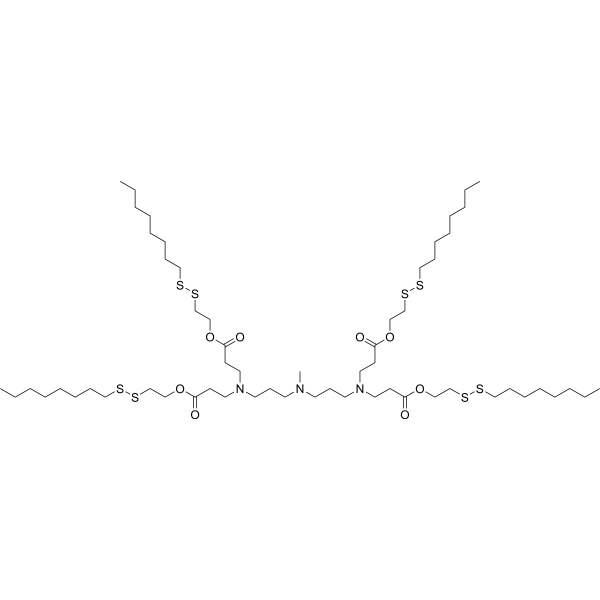
HY-W590532
306-O12BCationic Lipid -
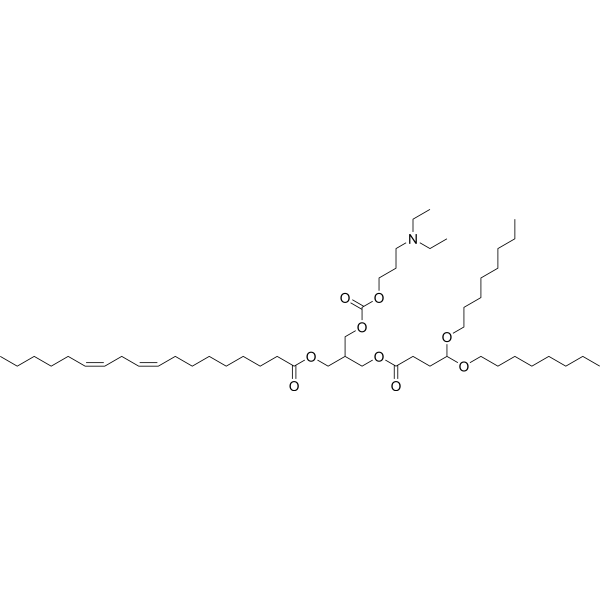
HY-46760
LP01Cationic Lipid -
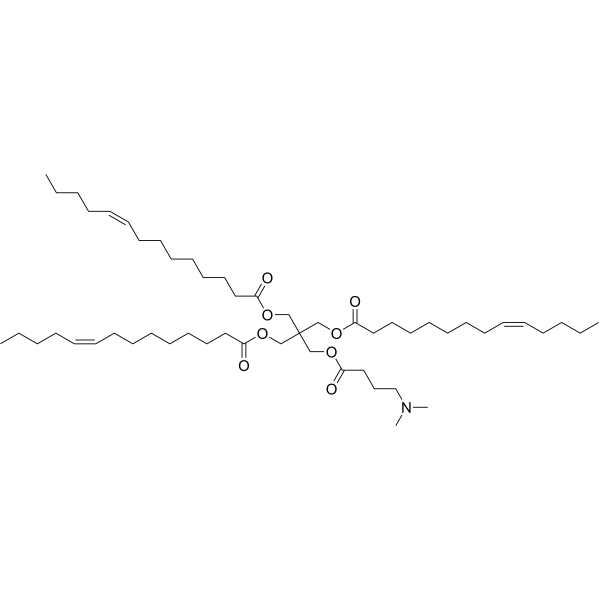
HY-147332
TCL053Nucleic Acid Carrier -
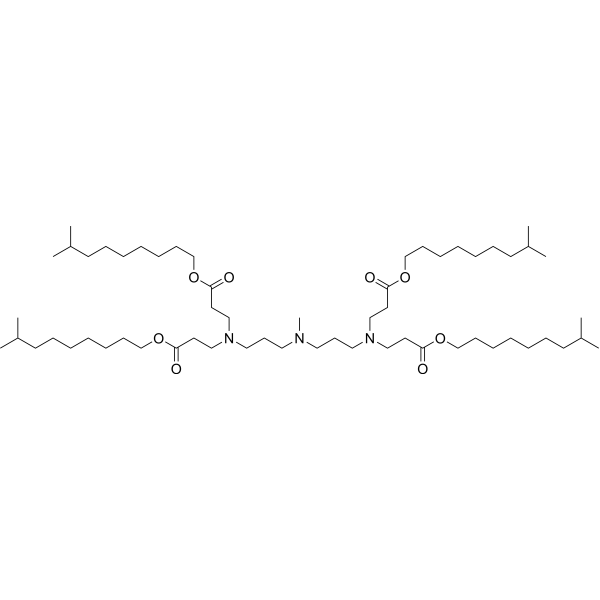
HY-151507
306Oi10Ionizable Lipidoid -
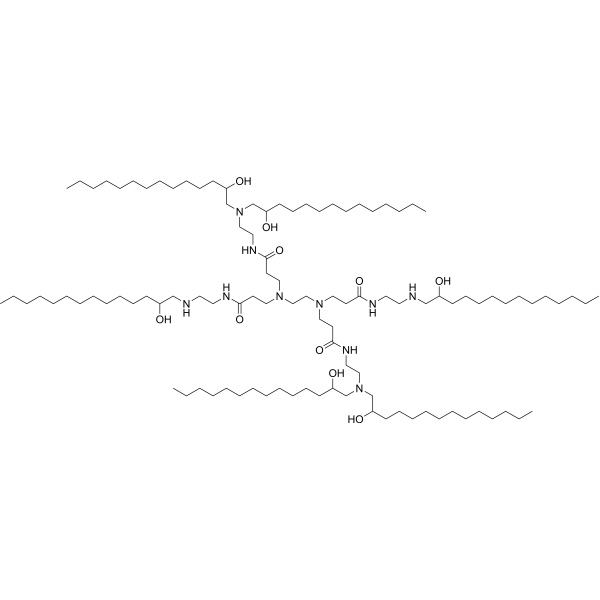
HY-152229
G0-C14PAMAM -
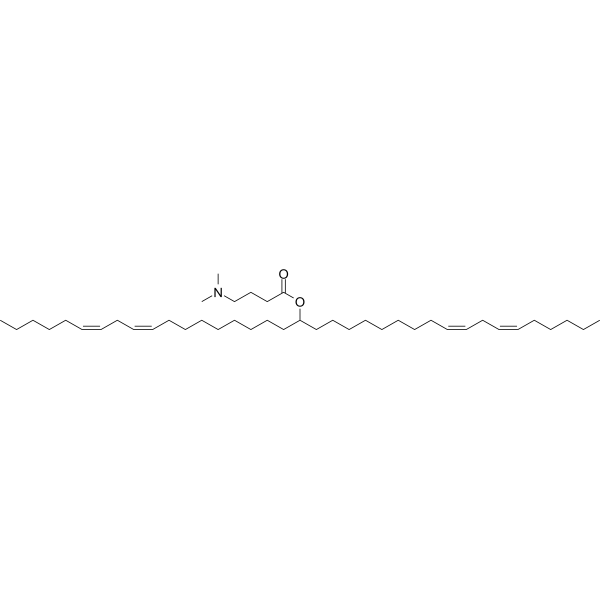
HY-112251
D-Lin-MC3-DMAsiRNA Delivery Vehicle -
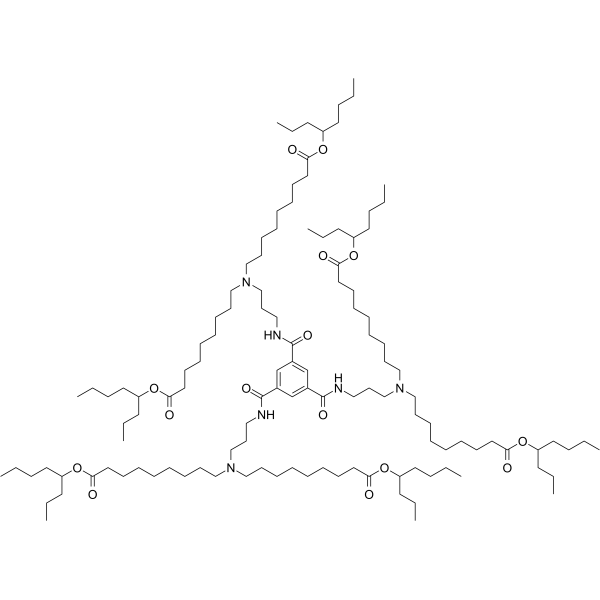
HY-145793
FTT5Ionizable Lipid -
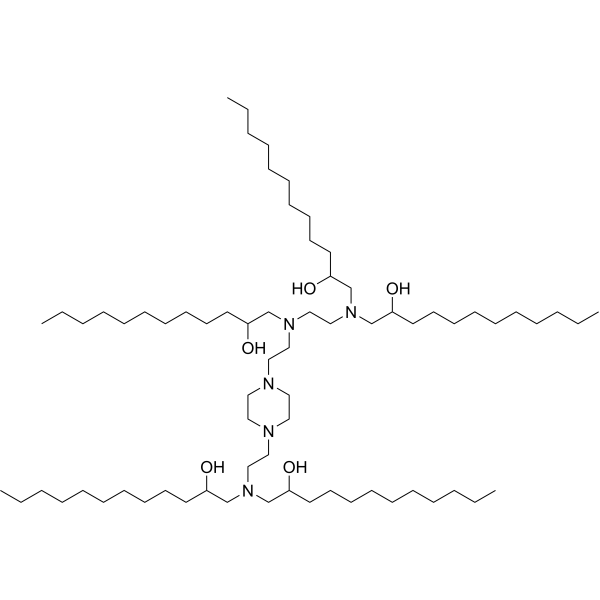
HY-145405
C12-200Cationic Lipidoid -
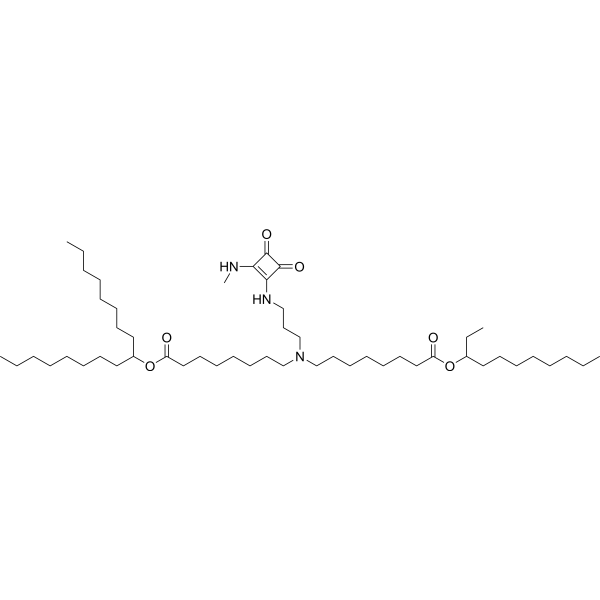
HY-148648
Lipid 29Lipid -

HY-125853
Phosphatidylcholines,soyaPhosphatidylcholine


Biological Activity
Description
In Vitro
OF-02 (1-50 μM lipid concentration; 48 h) formed LNPs with a particle size of approximately 100 nm and a PDI of <0.2 in vitro, with an mRNA encapsulation efficiency of over 90% and low cytotoxicity[1][2].
MedChemExpress (MCE) has not independently confirmed the accuracy of these methods. They are for reference only. Further protocols information, click here.
In Vivo
OF-02 (0.75 mg/kg; intravenous injection; single dose; 24 h) shows liver-dominant biodistribution in luciferase mRNA delivery experiments, with some expression in the spleen[1].
MedChemExpress (MCE) has not independently confirmed the accuracy of these methods. They are for reference only.


Chemical Information
-
CAS No. 1883431-67-1
-
Appearance Oil
-
Molecular Weight 1314.13
-
Formula C84H152N4O6
-
Color Colorless to light yellow
-
SMILES
CCCCC/C=C\C/C=C\CCCCCCC(O)CN(CC(O)CCCCCC/C=C\C/C=C\CCCCC)CCCCC1C(NC(C(N1)=O)CCCCN(CC(O)CCCCCC/C=C\C/C=C\CCCCC)CC(O)CCCCCC/C=C\C/C=C\CCCCC)=O
-
Shipping
Room temperature in continental US; may vary elsewhere.
-
Storage
4°C, stored under nitrogen
* In solvent : -80°C, 6 months; -20°C, 1 month (stored under nitrogen)


Solvent & Solubility
In Vitro:
DMSO : 100 mg/mL (76.10 mM; ultrasonic and warming and heat to 60°C; Hygroscopic DMSO has a significant impact on the solubility of product, please use newly opened DMSO)
Ethanol : 50 mg/mL (38.05 mM; Need ultrasonic)
Please refer to the solubility information to select the appropriate solvent. Once prepared, please aliquot and store the solution to prevent product inactivation from repeated freeze-thaw cycles.
Storage method and period of stock solution: -80°C, 6 months; -20°C, 1 month (stored under nitrogen). When stored at -80°C, please use it within 6 months. When stored at -20°C, please use it within 1 month.
Please refer to the solubility information to select the appropriate solvent. Once prepared, please aliquot and store the solution to prevent product inactivation from repeated freeze-thaw cycles.
Storage method and period of stock solution: -80°C, 6 months; -20°C, 1 month (stored under nitrogen). When stored at -80°C, please use it within 6 months. When stored at -20°C, please use it within 1 month.
Concentration (start) × Volume (start) = Concentration (final) × Volume (final)
In Vivo:
Select the appropriate dissolution method based on your experimental animal and administration route.
- For the following dissolution methods, please ensure to first prepare a clear stock solution using an In Vitro approach and then sequentially add co-solvents:
- To ensure reliable experimental results, the clarified stock solution can be appropriately stored based on storage conditions. As for the working solution for In Vivo experiments, it is recommended to prepare freshly and use it on the same day.
- The percentages shown for the solvents indicate their volumetric ratio in the final prepared solution. If precipitation or phase separation occurs during preparation, heat and/or sonication can be used to aid dissolution.
In Vivo Dissolution Calculator
Please enter the basic information of animal experiments:
-
-
-
-
Recommended: Prepare an additional quantity of animals to account for potential losses during experiments.
Please enter your animal formula composition:
-
%DMSO +
Recommended: Keep the proportion of DMSO in working solution below 2% if your animal is weak.
-
%+
-
+%Tween-80 + +
-
%Saline +
The co-solvents required include: DMSO, . All of co-solvents are available by MedChemExpress (MCE). , Tween 80. All of co-solvents are available by MedChemExpress (MCE).
Working solution concentration: 0.22 mg/mL
Method for preparing stock solution: mg drug dissolved in μL DMSO. Stock solution concentration: mg/mL. * In solvent : -80°C, 6 months; -20°C, 1 month (stored under nitrogen)
1. Take μL DMSO stock solution;
2. Add μL .
μL , mix evenly;
3. Then add μL Tween 80, mix evenly;
4. Then add μL
Please ensure that the stock solution in the first step is dissolved to a clear state, and add co-solvents in sequence. You can use ultrasonic heating (ultrasonic cleaner, recommended frequency 20-40 kHz), vortexing, etc. to assist dissolution.

Protocols
-
Gene Editing
Gene editing modify specific sites within the genome through gene deletions, insertions or conversions to study functionally unknown genes or conduct gene therapy. It is also used to change the biological traits of organisms to establish new varieties. Gene editing techniques include zinc finger nuclease (ZFN), transcription activator-like effector nuclease (TALEN), and clustered regularly interspaced short palindromic repeats (CRISPR)/CRISPR-associated protein 9 (Cas 9) (CRISPR/Cas9).
-
RNA extraction experimental
By lysing cells, releasing RNA, and removing impurities such as proteins and DNA, high-purity RNA products are finally obtained. The commonly used traditional method is the guanidine isothiocyanate/phenol/chloroform method (Trizol), which is suitable for a variety of animal materials including animal tissues, microorganisms, cultured cells, etc., and most plant materials.
-
Western Blot
Western blotting (WB) is a commonly used experimental method in molecular biology, biochemistry, and immunogenetics for identifying and quantifying target proteins. It combines gel electrophoresis with immunoassay, enabling researchers to analyze protein expression, post-translational modifications, and molecular weight.
-
CRISPR-Cas9 editing of human pluripotent stem cells
CRISPR-Cas9 editing of human pluripotent stem cells uses a guide RNA to direct Cas9 to a genomic target, where Cas9 creates a double-strand break that is repaired mainly by non-homologous end joining for knockout mutations or by homology-directed repair when a donor template is supplied for precise knock-in or sequence correction. The readout is generated by genotyping edited bulk populations or single-cell-derived clones, using PCR, sequencing, restriction-based assays, reporter fluorescence, or allele-specific analysis to distinguish unedited alleles, indels, precise donor-mediated edits, biallelic deletions, and unwanted on-target lesions.
-
Protocol For Protein Expression And Purification
Recombinant protein expression in Escherichia coli followed by purification of a His-tagged soluble protein by immobilized metal affinity chromatography (IMAC), with optional MBP fusion and TEV tag removal when the construct includes these elements. The biological readout is production of the encoded target protein, detected as an inducible band at the expected molecular mass by SDS-PAGE and quantified by total protein assay or chromatographic absorbance; the purification readout is enrichment of the target protein in elution fractions after selective binding of polyhistidine residues to immobilized Ni2+/metal-chelate resin and elution by imidazole-containing buffer. Expression is driven by an inducible bacterial expression system, commonly T7/lac-based, in which IPTG or lactose/auto-induction activates transcription and translation of the cloned gene; lower induction temperature, lower inducer concentration, induction timing, and solubility-enhancing fusion tags can influence the frac


Purity & Documentation
-
Data Sheet (273 KB)
-
SDS (393 KB)
- English - EN (393 KB)
- Français - FR (393 KB)
- Deutsch - DE (393 KB)
- Norwegian - NO (393 KB)
- Español - ES (393 KB)
- Swedish - SV (393 KB)
- Italian - IT (393 KB)
- Korean - KR (393 KB)
- Portuguese - PT (393 KB)
-
Handling Instructions (2659 KB)
References
[1]. Fenton OS, et al. Bioinspired Alkenyl Amino Alcohol Ionizable Lipid Materials for Highly Potent In Vivo mRNA Delivery. Adv Mater. 2016;28(15):2939-2943. [Content Brief]
[2]. Liu L, et al. PEGylated lipid screening, composition optimization, and structure-activity relationship determination for lipid nanoparticle-mediated mRNA delivery. Nanoscale. 2025 May 9;17(18):11329-11344. [Content Brief]
[3]. Fenton OS, et al. Synthesis and Biological Evaluation of Ionizable Lipid Materials for the In Vivo Delivery of Messenger RNA to B Lymphocytes. Adv Mater. 2017 Sep;29(33). [Content Brief]


Complete Stock Solution Preparation Table
Please refer to the solubility information to select the appropriate solvent. Once prepared, please aliquot and store the solution to prevent product inactivation from repeated freeze-thaw cycles.
Storage method and period of stock solution: -80°C, 6 months; -20°C, 1 month (stored under nitrogen). When stored at -80°C, please use it within 6 months. When stored at -20°C, please use it within 1 month.
| Optional Solvent | Concentration Solvent Mass | 1 mg | 5 mg | 10 mg | 25 mg |
|---|---|---|---|---|---|
| Ethanol / DMSO | 1 mM | 0.7610 mL | 3.8048 mL | 7.6096 mL | 19.0240 mL |
| 5 mM | 0.1522 mL | 0.7610 mL | 1.5219 mL | 3.8048 mL | |
| 10 mM | 0.0761 mL | 0.3805 mL | 0.7610 mL | 1.9024 mL | |
| 15 mM | 0.0507 mL | 0.2537 mL | 0.5073 mL | 1.2683 mL | |
| 20 mM | 0.0380 mL | 0.1902 mL | 0.3805 mL | 0.9512 mL | |
| 25 mM | 0.0304 mL | 0.1522 mL | 0.3044 mL | 0.7610 mL | |
| 30 mM | 0.0254 mL | 0.1268 mL | 0.2537 mL | 0.6341 mL | |
| DMSO | 40 mM | 0.0190 mL | 0.0951 mL | 0.1902 mL | 0.4756 mL |
| 50 mM | 0.0152 mL | 0.0761 mL | 0.1522 mL | 0.3805 mL | |
| 60 mM | 0.0127 mL | 0.0634 mL | 0.1268 mL | 0.3171 mL |


OF-02 Related Classifications
HY-145795 Related Classifications
 Powered by Bioz