



Petunidin chloride
Based on 1 publication(s) in Google Scholar
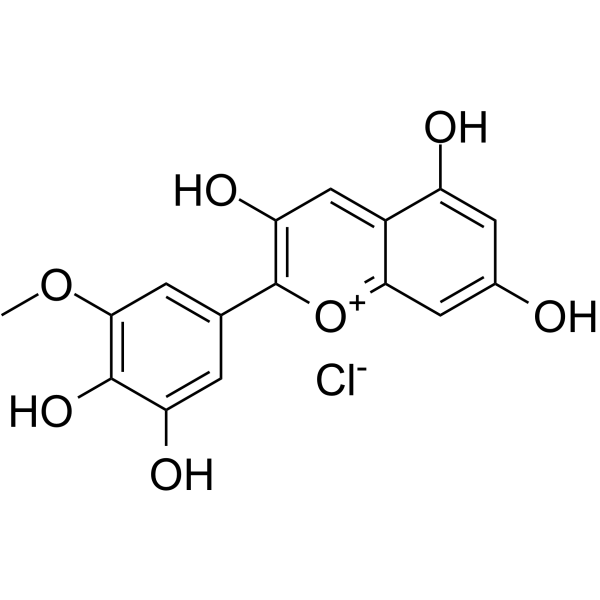
Petunidin chloride is an anthocyanin and also a pentoside (PEN) synthesis inhibitor. Petunidin chloride directly inhibits the synthesis of PEN without degrading or sequestering already synthesized PEN. Petunidin chloride can be used in studies related to PEN accumulation and advanced glycation associated with schizophrenia.
For research use only. We do not sell to patients.
- Purity : 99.47%
- CAS No.: 1429-30-7
- Formula: C16H13ClO7
- Molecular Weight:352.72
-
Storage:
-20°C, sealed storage, away from moisture
* The compound is unstable in solutions, freshly prepared is recommended.

To place orders, for customer services and technical support, please contact: MedChemExpress USA
Tel: 609-228-6898 E-mail: [email protected] [email protected]


-
 Biological Activity
-
Chemical Information
-
Solvent & Solubility
- Purity & Documentation
- References
-
 Help & FAQs


-
HY-N2409
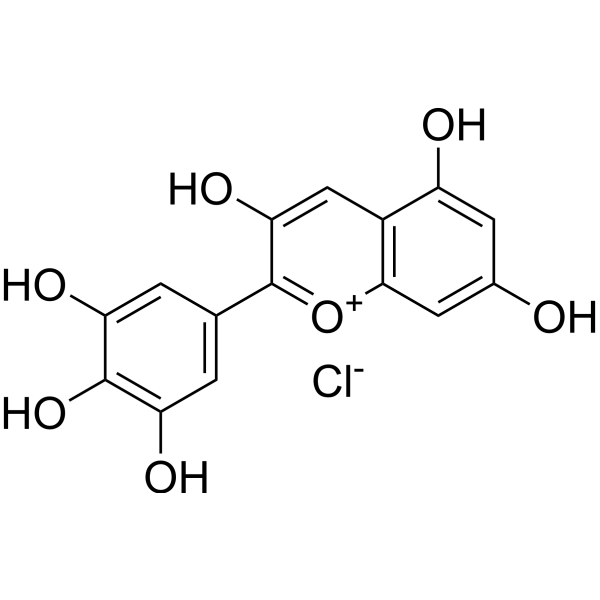
Delphinidin chlorideAnthocyanidin -
HY-N2459
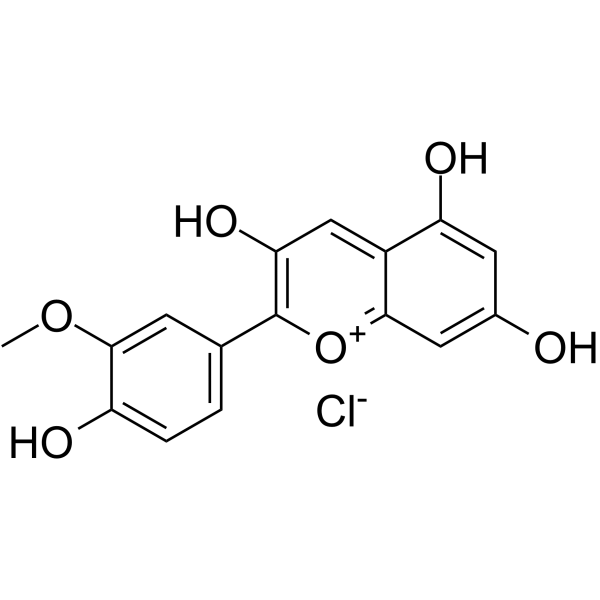
Peonidin chlorideAnthocyanin Compound -
HY-W011370
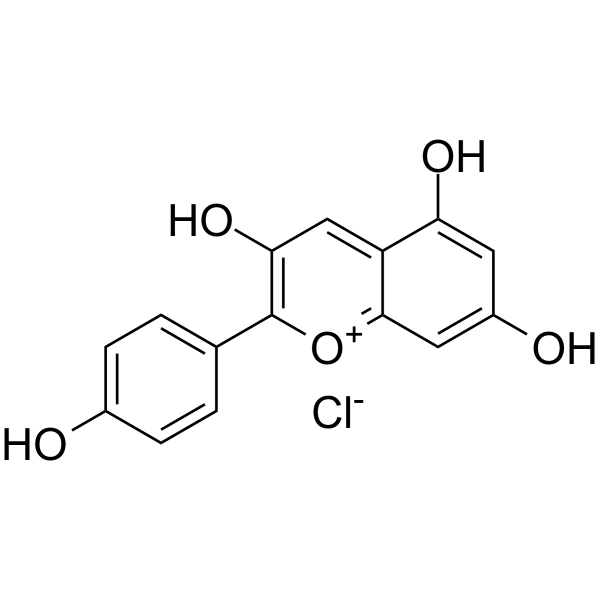
Pelargonidin chlorideAntioxidant Agent -
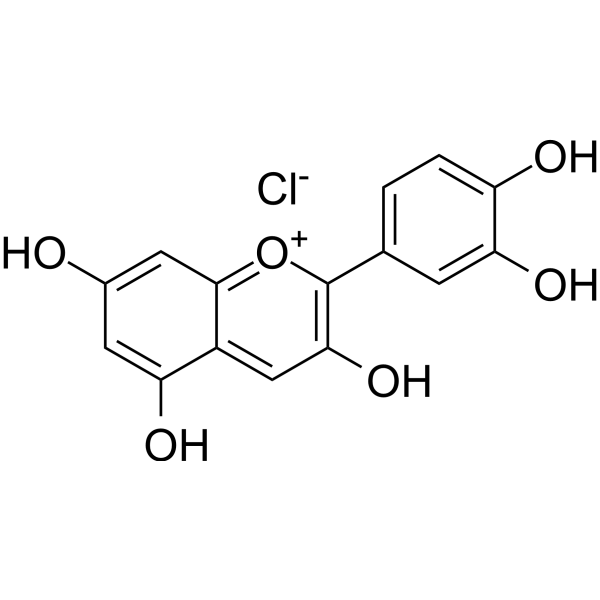
HY-N0499
Cyanidin ChlorideAntioxidant -
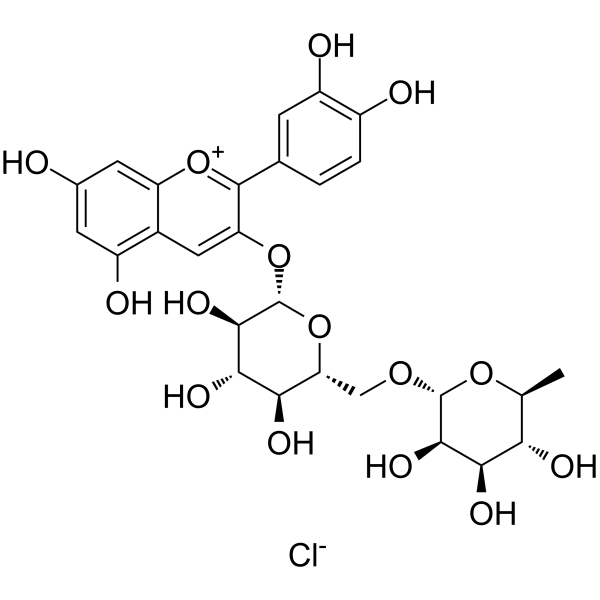
HY-105935
Keracyanin chlorideAntioxidant Agent -
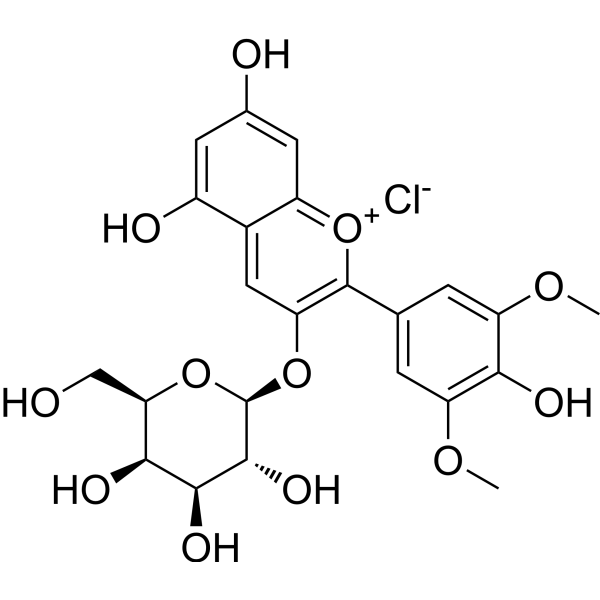
HY-N6623
Malvidin-3-galactoside chlorideROS Inhibitor -
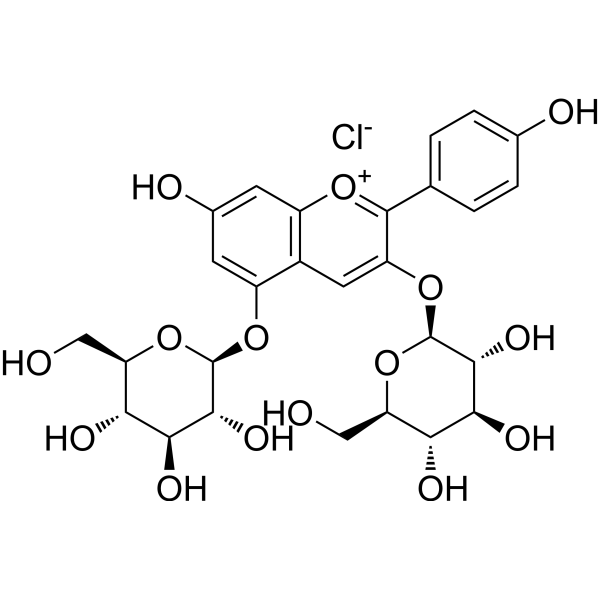
HY-123894
Pelargonidin 3,5-diglucoside chlorideNatural Pigment -
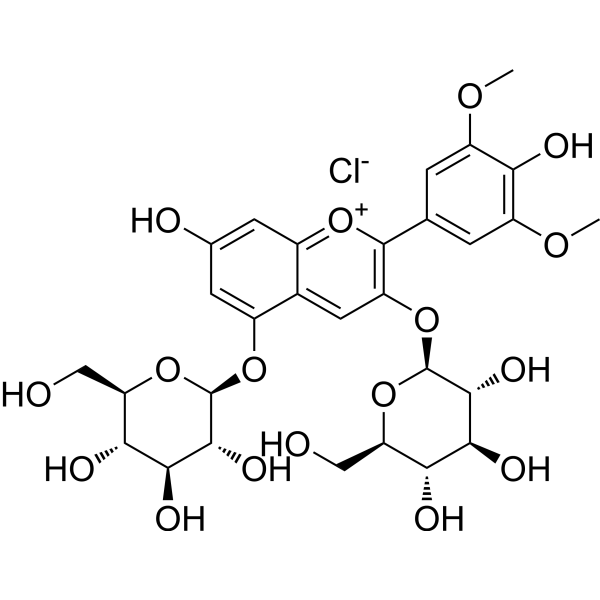
HY-N7900
Malvidin 3,5-diglucoside chlorideNatural Product -
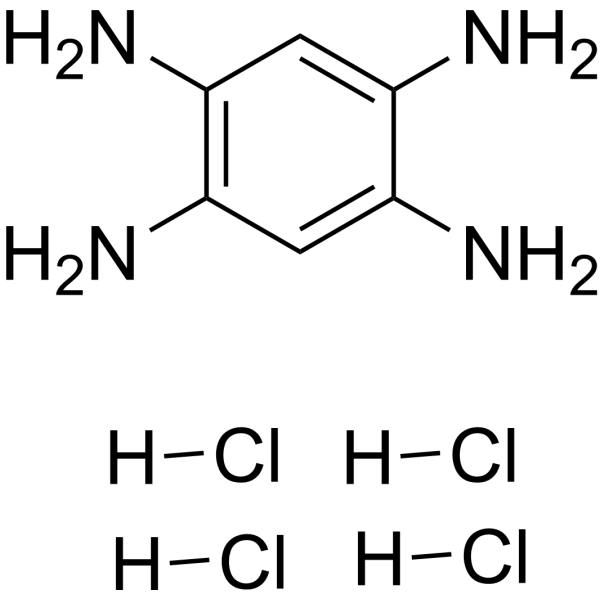
HY-12444
Y15FAK Inhibitor -
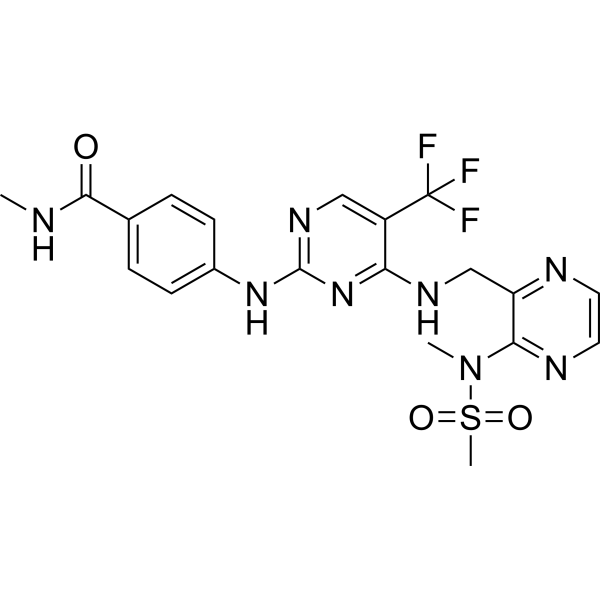
HY-12289
DefactinibFAK Inhibitor -

HY-126410R
Petunidin chloride (Standard)Focal Adhesion Kinase Inhibitor -
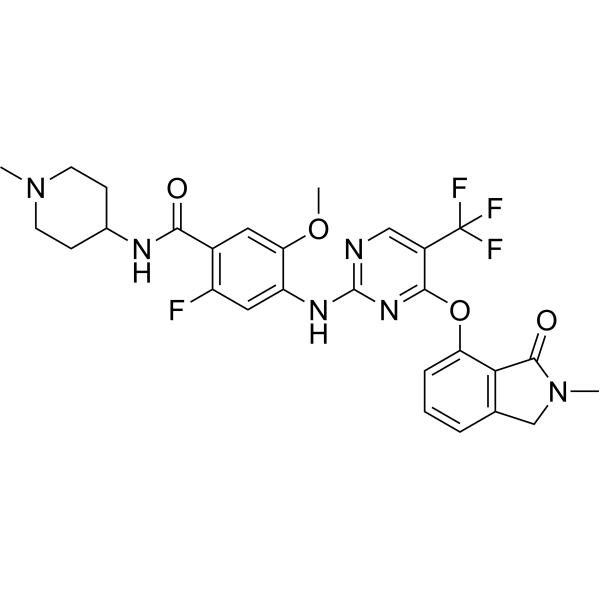
HY-122844
IfebemtinibFAK Inhibitor
Publications Citing Use of MedChemExpress (MCE) Petunidin chloride
More

Biological Activity
Description
In Vitro
Petunidin chloride (1 nM-1 mM; 1 week) potently inhibits the glucuronate-mediated formation of pentosidine in human plasma, with an IC50 of 0.220 mM; at a concentration of 2 mM, it reduces the synthesis amount by approximately 90%[1].
Petunidin chloride (2 mM; 1 week) directly inhibits the synthesis of pentosidine from purified glucuronic acid, Nα-acetyl-L-arginine and Nα-acetyl-L-lysine precursors[1].
Petunidin chloride (1 nM-1 mM; 1 week) inhibits PEN synthesis in human plasma containing 2 mM GlcA in a concentration-dependent manner, with an IC50 of approximately 0.220 mM[1].
MedChemExpress (MCE) has not independently confirmed the accuracy of these methods. They are for reference only. .


Chemical Information
-
CAS No. 1429-30-7
-
Appearance Solid
-
Molecular Weight 352.72
-
Formula C16H13ClO7
-
Color Pale purple to purple
-
SMILES
OC1=CC2=[O+]C(C3=CC(OC)=C(O)C(O)=C3)=C(O)C=C2C(O)=C1.[Cl-]
-
Structure Classification
-
Initial Source
-
Shipping
Room temperature in continental US; may vary elsewhere.
-
Storage
-20°C, sealed storage, away from moisture
* The compound is unstable in solutions, freshly prepared is recommended.


Publications (1)
-
Journal Impact Factor
-
Most Recent
-
Cell Immunol
Petunidin suppresses Hashimoto's thyroiditis by regulating Th1/Th17 homeostasis and oxidative stress. [Abstract]2024 Sep-Oct:403-404:104858. PMID: 39053379


Solvent & Solubility
In Vitro:
DMSO : 50 mg/mL (141.76 mM; Need ultrasonic; Hygroscopic DMSO has a significant impact on the solubility of product, please use newly opened DMSO)
Please refer to the solubility information to select the appropriate solvent. The compound is unstable in solutions, freshly prepared is recommended.
Please refer to the solubility information to select the appropriate solvent. The compound is unstable in solutions, freshly prepared is recommended.
Concentration (start) × Volume (start) = Concentration (final) × Volume (final)
In Vivo:
Select the appropriate dissolution method based on your experimental animal and administration route.
- For the following dissolution methods, please ensure to first prepare a clear stock solution using an In Vitro approach and then sequentially add co-solvents:
- To ensure reliable experimental results, the clarified stock solution can be appropriately stored based on storage conditions. As for the working solution for In Vivo experiments, it is recommended to prepare freshly and use it on the same day.
- The percentages shown for the solvents indicate their volumetric ratio in the final prepared solution. If precipitation or phase separation occurs during preparation, heat and/or sonication can be used to aid dissolution.
Add each solvent one by one: 10% DMSO 40% PEG300 5% Tween-80 45% Saline
Solubility: ≥ 2.5 mg/mL (7.09 mM); Clear solution
This protocol yields a clear solution of ≥ 2.5 mg/mL (saturation unknown).
Taking 1 mL working solution as an example, add 100 μL DMSO stock solution (25.0 mg/mL) to 400 μL PEG300, and mix evenly; then add 50 μL Tween-80 and mix evenly; then add 450 μL Saline to adjust the volume to 1 mL.
Preparation of Saline: Dissolve 0.9 g sodium chloride in ddH₂O and dilute to 100 mL to obtain a clear Saline solution.
Add each solvent one by one: 10% DMSO 90% (20% SBE-β-CD in Saline)
Solubility: ≥ 2.5 mg/mL (7.09 mM); Clear solution
This protocol yields a clear solution of ≥ 2.5 mg/mL (saturation unknown).
Taking 1 mL working solution as an example, add 100 μL DMSO stock solution (25.0 mg/mL) to 900 μL 20% SBE-β-CD in Saline, and mix evenly.
Preparation of 20% SBE-β-CD in Saline (4°C, storage for one week): 2 g SBE-β-CD powder is dissolved in 10 mL Saline, completely dissolve until clear.
In Vivo Dissolution Calculator
Please enter the basic information of animal experiments:
-
-
-
-
Recommended: Prepare an additional quantity of animals to account for potential losses during experiments.
Please enter your animal formula composition:
-
%DMSO +
Recommended: Keep the proportion of DMSO in working solution below 2% if your animal is weak.
-
%+
-
+%Tween-80 + +
-
%Saline +
The co-solvents required include: DMSO, . All of co-solvents are available by MedChemExpress (MCE). , Tween 80. All of co-solvents are available by MedChemExpress (MCE).
Working solution concentration: 0.22 mg/mL
Method for preparing stock solution: mg drug dissolved in μL DMSO. Stock solution concentration: mg/mL. * The compound is unstable in solutions, freshly prepared is recommended.
1. Take μL DMSO stock solution;
2. Add μL .
μL , mix evenly;
3. Then add μL Tween 80, mix evenly;
4. Then add μL
Please ensure that the stock solution in the first step is dissolved to a clear state, and add co-solvents in sequence. You can use ultrasonic heating (ultrasonic cleaner, recommended frequency 20-40 kHz), vortexing, etc. to assist dissolution.


Purity & Documentation
-
Data Sheet (285 KB)
-
SDS (252 KB)
- English - EN (252 KB)
- Français - FR (252 KB)
- Deutsch - DE (252 KB)
- Norwegian - NO (252 KB)
- Español - ES (252 KB)
- Swedish - SV (252 KB)
- Italian - IT (252 KB)
- Korean - KR (252 KB)
- Portuguese - PT (252 KB)
-
Handling Instructions (2659 KB)
References


Complete Stock Solution Preparation Table
Please refer to the solubility information to select the appropriate solvent. The compound is unstable in solutions, freshly prepared is recommended.
| Optional Solvent | Concentration Solvent Mass | 1 mg | 5 mg | 10 mg | 25 mg |
|---|---|---|---|---|---|
| DMSO | 1 mM | 2.8351 mL | 14.1755 mL | 28.3511 mL | 70.8777 mL |
| 5 mM | 0.5670 mL | 2.8351 mL | 5.6702 mL | 14.1755 mL | |
| 10 mM | 0.2835 mL | 1.4176 mL | 2.8351 mL | 7.0878 mL | |
| 15 mM | 0.1890 mL | 0.9450 mL | 1.8901 mL | 4.7252 mL | |
| 20 mM | 0.1418 mL | 0.7088 mL | 1.4176 mL | 3.5439 mL | |
| 25 mM | 0.1134 mL | 0.5670 mL | 1.1340 mL | 2.8351 mL | |
| 30 mM | 0.0945 mL | 0.4725 mL | 0.9450 mL | 2.3626 mL | |
| 40 mM | 0.0709 mL | 0.3544 mL | 0.7088 mL | 1.7719 mL | |
| 50 mM | 0.0567 mL | 0.2835 mL | 0.5670 mL | 1.4176 mL | |
| 60 mM | 0.0473 mL | 0.2363 mL | 0.4725 mL | 1.1813 mL | |
| 80 mM | 0.0354 mL | 0.1772 mL | 0.3544 mL | 0.8860 mL | |
| 100 mM | 0.0284 mL | 0.1418 mL | 0.2835 mL | 0.7088 mL |


Petunidin chloride Related Classifications
HY-126410 Related Classifications
 Powered by Bioz