



PF-4693627

Based on 1 Customer Validation
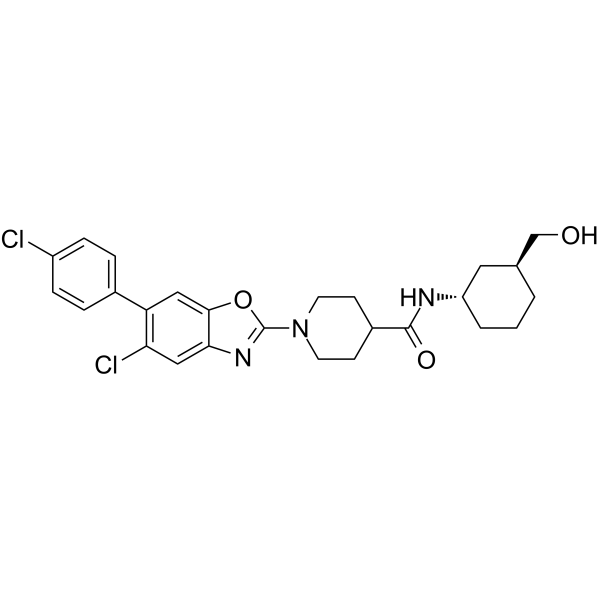
PF-4693627 is a potent, selective and orally bioavailable microsomal prostaglandin E synthase-1 (mPGES-1) inhibitor (IC50=3 nM) for the treatment of inflammation caused by osteoarthritis (OA) and rheumatoid arthritis (RA).
For research use only. We do not sell to patients.
- Purity : 99.63%
- CAS No.: 1312815-93-2
- Formula: C26H29Cl2N3O3
- Molecular Weight:502.43
-
Storage:Powder -20°C, 3 years , 4°C, 2 years ; In solvent -80°C, 6 months , -20°C, 1 month

To place orders, for customer services and technical support, please contact: MedChemExpress USA
Tel: 609-228-6898 E-mail: [email protected] [email protected]


-
 Biological Activity
-
Chemical Information
-
Solvent & Solubility
- Protocols
- Purity & Documentation
- References
-
 Help & FAQs


-
HY-13283
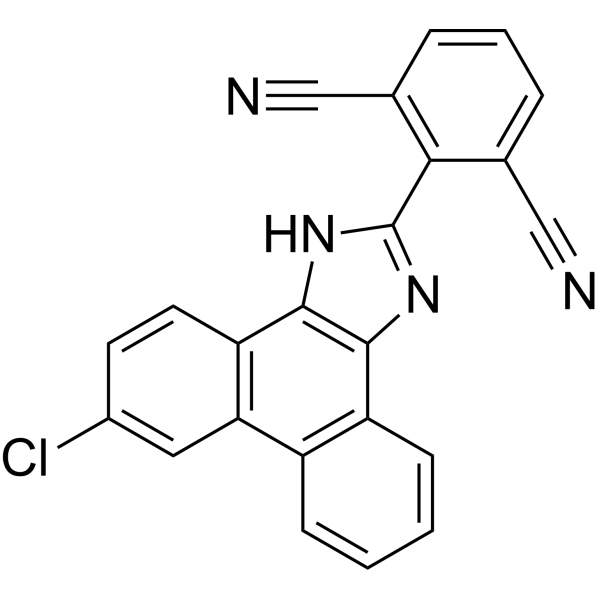
MF63MF63 Inhibitor -
HY-108259
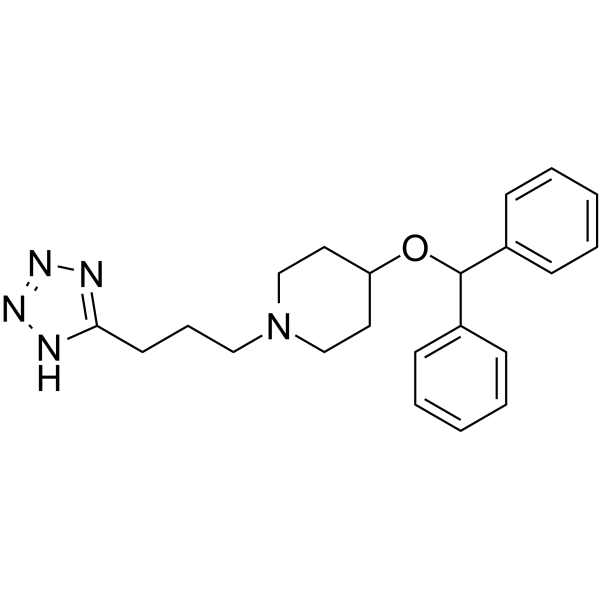
HQL-79Prostaglandin D Synthase Inhibitor -
HY-B0683
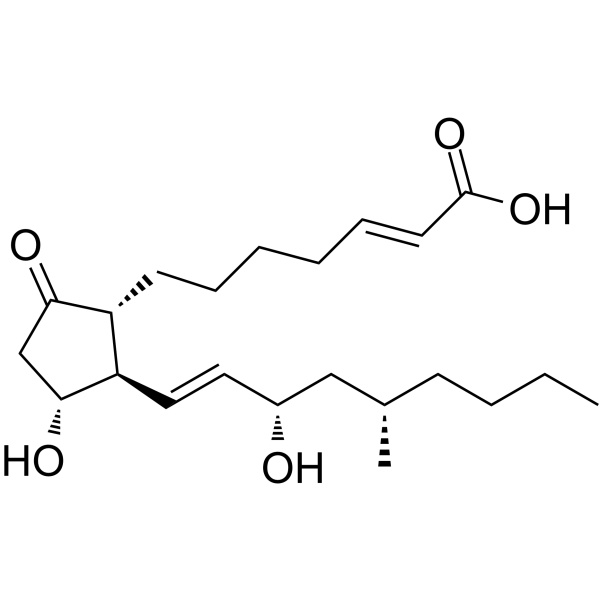
LimaprostVasodilator Agent -
HY-147416
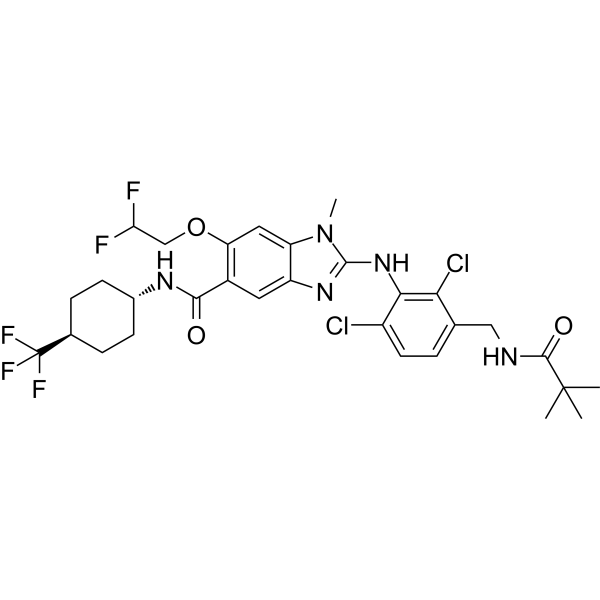
VipoglanstatmPGES-1 Inhibitor -
HY-118119
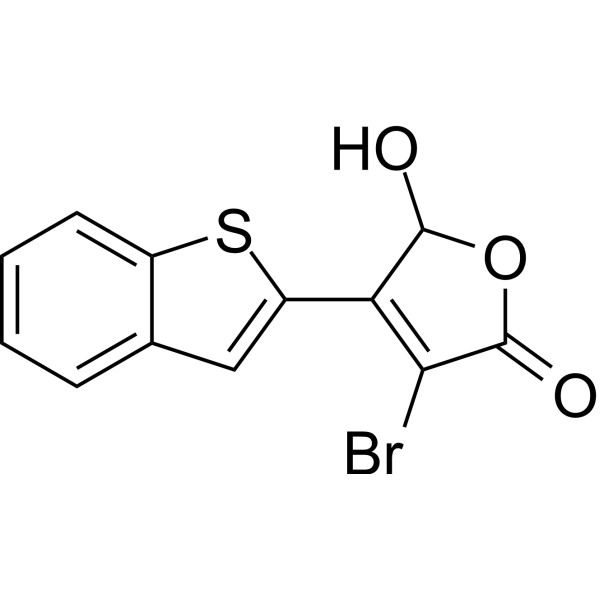
CAY10526YB-1/mPGES1 Inhibitor -
HY-N0297
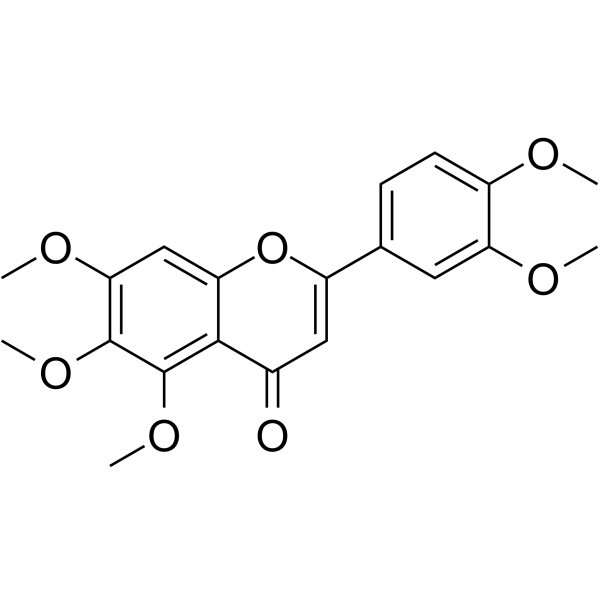
SinensetinTNF Receptor Inhibitor -
HY-B0890
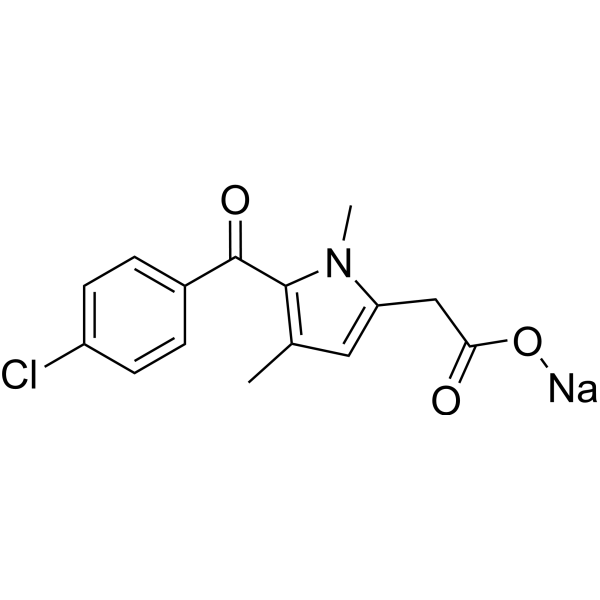
Zomepirac sodium saltProstaglandin Synthetase Inhibitor -
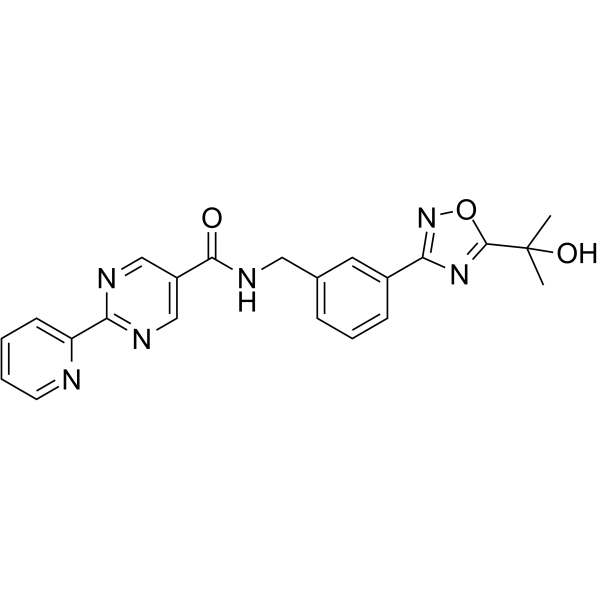
HY-12791
hPGDS-IN-1hPGDS Inhibitor -
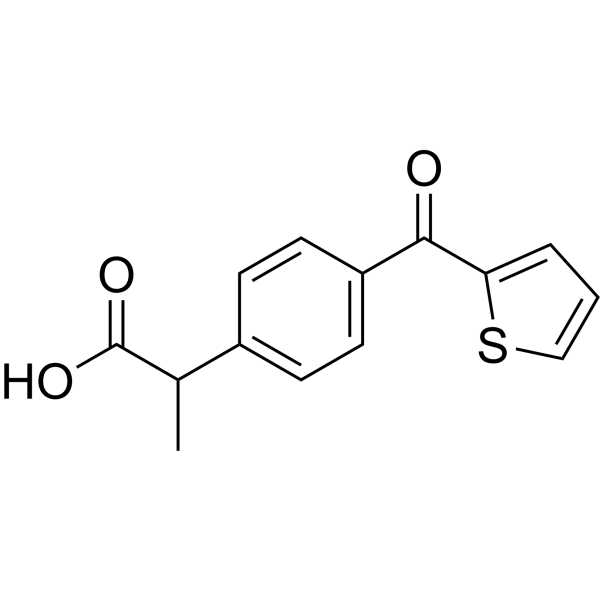
HY-B0270
SuprofenPGE synthase Inhibitor -
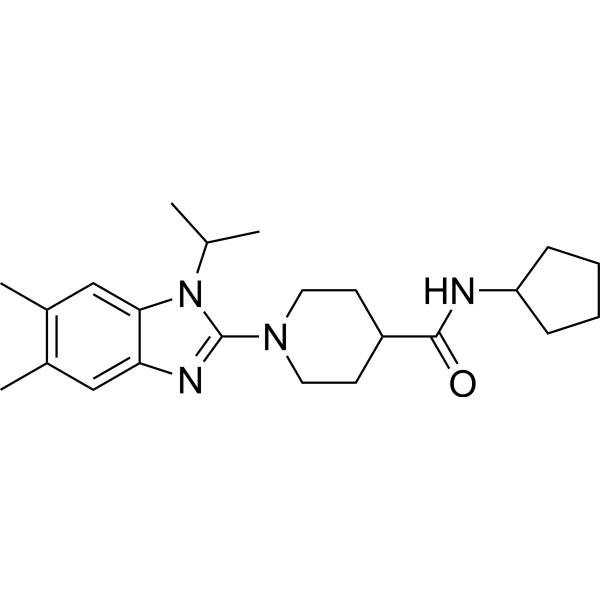
HY-118282
mPGES1-IN-7mPGES-1 Inhibitor -
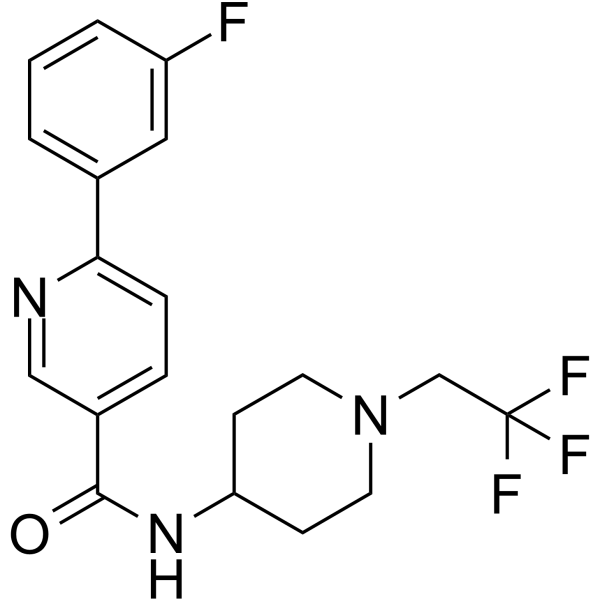
HY-10439
HPGDS inhibitor 1HPGDS Inhibitor -
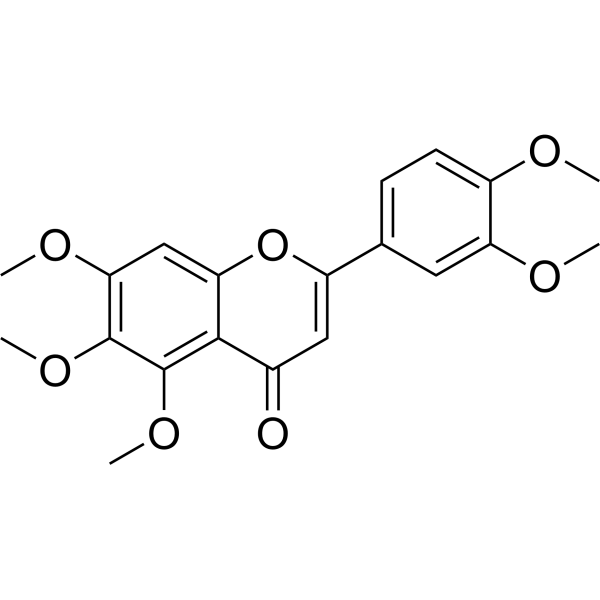
HY-N0297R
Sinensetin (Standard)


Biological Activity
Description
IC50 & Target
IC50: 3 nM (mPGES-1)[1]
Cellular Effect
|
Cell Line

|
Type | Value | Description | References |
|---|---|---|---|---|
| Fibroblast | IC50 |
>10 μM
Compound: 26, PF-4693627
|
Inhibition of COX2 in human fetal fibroblast cells assessed as PGF2alpha level after 50 mins by ELISA
Inhibition of COX2 in human fetal fibroblast cells assessed as PGF2alpha level after 50 mins by ELISA
|
[PMID: 23260349] |
| Fibroblast | IC50 |
0.006 μM
Compound: 26, PF-4693627
|
Inhibition of mPGES-1 in human fetal fibroblast cells assessed as PGF2alpha level after 50 mins by ELISA
Inhibition of mPGES-1 in human fetal fibroblast cells assessed as PGF2alpha level after 50 mins by ELISA
|
[PMID: 23260349] |
In Vitro
PF-4693627 also inhibits mPGES-1 with IC50s of 180 and 6 nM in HWB-1483 and human fetal fibroblast, respectively[1].
PF-4693627 shows high activity in lipopolysaccharide (LPS) stimulated human whole blood (HWB) cell assay (IC50=109 nM)[1].
MedChemExpress (MCE) has not independently confirmed the accuracy of these methods. They are for reference only. Further protocols information, click here.
In Vivo
PF-4693627 (1.0 mg/kg; i.v.) shows good bioavailability (59%) and modest half life (t1/2=3.7 h) in Sprague-Dawley rats[1].
MedChemExpress (MCE) has not independently confirmed the accuracy of these methods. They are for reference only.
-
Animal Model:Guinea pig with carrageenan stimulated air pouch inflammation model[1]
-
Dosage:10 mg/kg
-
Administration:Administered orally
-
Result:63% PGE2 inhibition.
-
Animal Model:Sprague-Dawley rats[1].
-
Dosage:1.0 mg/kg (Pharmacokinetic Analysis)
-
Administration:Administered i.v.
-
Result:Clearance (CL), volume of distribution (Vdss), t1/2, mean residence time (MRT) and bioavailability (F) is 12 mL/min/kg, 3.0 L/kg, 3.7 h, 4.42 h, 59%, respectively.


Chemical Information
-
CAS No. 1312815-93-2
-
Appearance Solid
-
Molecular Weight 502.43
-
Formula C26H29Cl2N3O3
-
Color White to off-white
-
SMILES
O=C(C1CCN(C2=NC3=CC(Cl)=C(C4=CC=C(Cl)C=C4)C=C3O2)CC1)N[C@@H]5C[C@@H](CO)CCC5
-
Shipping
Room temperature in continental US; may vary elsewhere.
-
Storage
Powder -20°C 3 years 4°C 2 years In solvent -80°C 6 months -20°C 1 month


Solvent & Solubility
In Vitro:
DMSO : 100 mg/mL (199.03 mM; Need ultrasonic; Hygroscopic DMSO has a significant impact on the solubility of product, please use newly opened DMSO)
Please refer to the solubility information to select the appropriate solvent. Once prepared, please aliquot and store the solution to prevent product inactivation from repeated freeze-thaw cycles.
Storage method and period of stock solution: -80°C, 6 months; -20°C, 1 month. When stored at -80°C, please use it within 6 months. When stored at -20°C, please use it within 1 month.
Please refer to the solubility information to select the appropriate solvent. Once prepared, please aliquot and store the solution to prevent product inactivation from repeated freeze-thaw cycles.
Storage method and period of stock solution: -80°C, 6 months; -20°C, 1 month. When stored at -80°C, please use it within 6 months. When stored at -20°C, please use it within 1 month.
Concentration (start) × Volume (start) = Concentration (final) × Volume (final)

Protocols
-
Collagen-Induced Arthritis
Collagen-induced arthritis (CIA) is an autoimmune murine model of rheumatoid arthritis in which immunization with type II collagen (CII) emulsified in an adjuvant induces a T cell- and autoantibody-driven inflammatory arthritis characterized by synovial hyperplasia, immune cell infiltration, and joint destruction. The model typically relies on genetically susceptible mouse strains (e. g. , DBA/1) and reproduces key features of human rheumatoid arthritis, including anti-collagen immune responses and progressive joint inflammation. Disease onset generally occurs within ~3-4 weeks after immunization, depending on antigen/adjuvant combinations and protocol variation. The immunopathology is driven by adaptive immune activation against CII, leading to systemic and local joint inflammation mediated by pro-inflammatory cytokines and effector immune cells, making CIA a standard preclinical platform for evaluating immunomodulatory and anti-arthritic interventions.
-
Cell Cytotoxicity Assay
Cytotoxicity assays are usually based on the assessment of cell membrane damage, which can also be indirectly detected by measuring cell viability. Detection methods include MTT assay, CKK-8 assay, LDH assay and ATP assay, etc.
-
Research Protocol for Inflammation-related Diseases
The NLRP3 inflammasome is a cytosolic innate immune signaling platform that integrates priming signals and danger-signal activation to promote caspase-1 activation, maturation of IL-1β and IL-18, and gasdermin D-mediated pyroptotic cell death. The core experimental logic is to determine whether inflammatory disease phenotypes are driven by increased NLRP3 expression, ASC-containing inflammasome assembly, caspase-1 cleavage, GSDMD cleavage, and extracellular release of IL-1β/IL-18 rather than by nonspecific cell injury alone. The pathway is strongly linked to inflammation-related disease phenotypes because monosodium urate crystals activate NALP3/NLRP3 inflammasome signaling in gout-like crystal inflammation, cholesterol crystals activate NLRP3 inflammasomes in atherogenesis models, and DSS-induced intestinal inflammation has been reported to involve NLRP3 inflammasome activity. However, experimental colitis studies also show context-dependent protective effects of NLRP3 inflammasome co


Purity & Documentation
-
Data Sheet (281 KB)
-
SDS (251 KB)
- English - EN (251 KB)
- Français - FR (251 KB)
- Deutsch - DE (251 KB)
- Norwegian - NO (251 KB)
- Español - ES (251 KB)
- Swedish - SV (251 KB)
- Italian - IT (251 KB)
- Korean - KR (251 KB)
- Portuguese - PT (251 KB)
-
Handling Instructions (2659 KB)
References


Complete Stock Solution Preparation Table
Please refer to the solubility information to select the appropriate solvent. Once prepared, please aliquot and store the solution to prevent product inactivation from repeated freeze-thaw cycles.
Storage method and period of stock solution: -80°C, 6 months; -20°C, 1 month. When stored at -80°C, please use it within 6 months. When stored at -20°C, please use it within 1 month.
| Optional Solvent | Concentration Solvent Mass | 1 mg | 5 mg | 10 mg | 25 mg |
|---|---|---|---|---|---|
| DMSO | 1 mM | 1.9903 mL | 9.9516 mL | 19.9033 mL | 49.7582 mL |
| 5 mM | 0.3981 mL | 1.9903 mL | 3.9807 mL | 9.9516 mL | |
| 10 mM | 0.1990 mL | 0.9952 mL | 1.9903 mL | 4.9758 mL | |
| 15 mM | 0.1327 mL | 0.6634 mL | 1.3269 mL | 3.3172 mL | |
| 20 mM | 0.0995 mL | 0.4976 mL | 0.9952 mL | 2.4879 mL | |
| 25 mM | 0.0796 mL | 0.3981 mL | 0.7961 mL | 1.9903 mL | |
| 30 mM | 0.0663 mL | 0.3317 mL | 0.6634 mL | 1.6586 mL | |
| 40 mM | 0.0498 mL | 0.2488 mL | 0.4976 mL | 1.2440 mL | |
| 50 mM | 0.0398 mL | 0.1990 mL | 0.3981 mL | 0.9952 mL | |
| 60 mM | 0.0332 mL | 0.1659 mL | 0.3317 mL | 0.8293 mL | |
| 80 mM | 0.0249 mL | 0.1244 mL | 0.2488 mL | 0.6220 mL | |
| 100 mM | 0.0199 mL | 0.0995 mL | 0.1990 mL | 0.4976 mL |


PF-4693627 Related Classifications
HY-125415 Related Classifications
 Powered by Bioz