



Poly(methyl vinyl ether-alt-maleic anhydride) (MW 1080000)
Poly(methyl vinyl ether-alt-maleic anhydride) (MW 1080000) can be used to prepare antibacterial hydrogels with good mechanical strength and excellent swelling ability.
For research use only. We do not sell to patients.
- CAS No.: 9011-16-9
- Formula: (C4H2O3.C3H6O)n
- Molecular Weight:1080000 (Average)
-
Storage:
Please store the product under the recommended conditions in the Certificate of Analysis.


To place orders, for customer services and technical support, please contact: MedChemExpress USA
Tel: 609-228-6898 E-mail: [email protected] [email protected]


-
 Biological Activity
-
Chemical Information
- Protocols
- Purity & Documentation
- References
-
 Help & FAQs


-
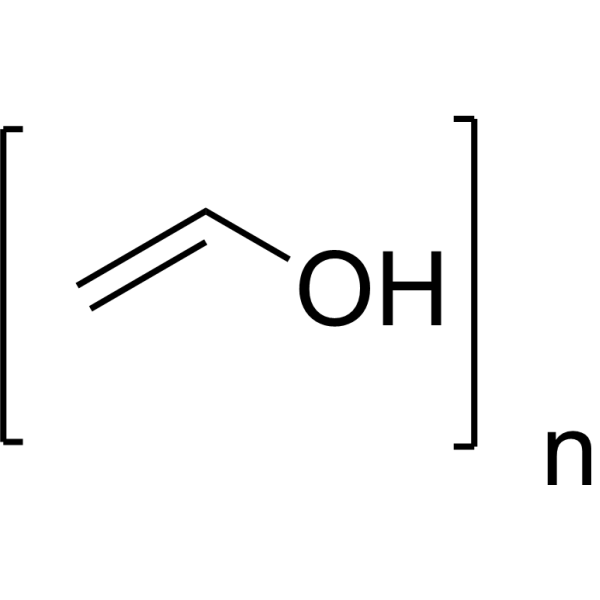
HY-Y0850E
Polyvinyl alcohol (Mw 30000-70000, 87-90% hydrolyzed)Dressing Meterial -
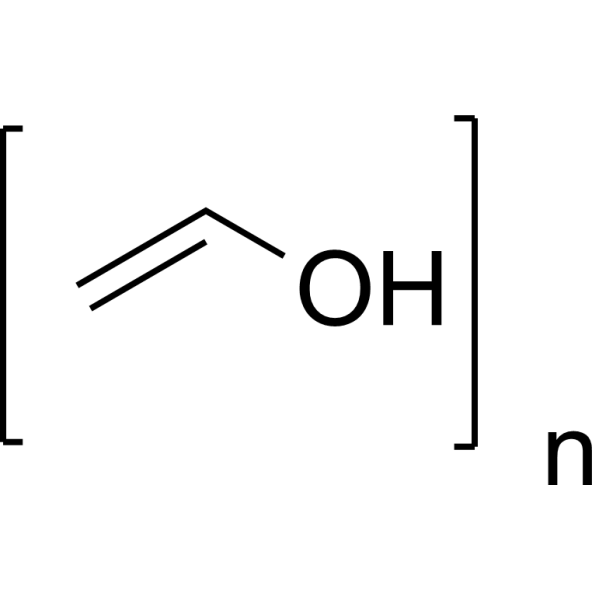
HY-Y0850
Polyvinyl alcohol (Mw 146000-186000, 99+% hydrolyzed)Biochemical reagents -
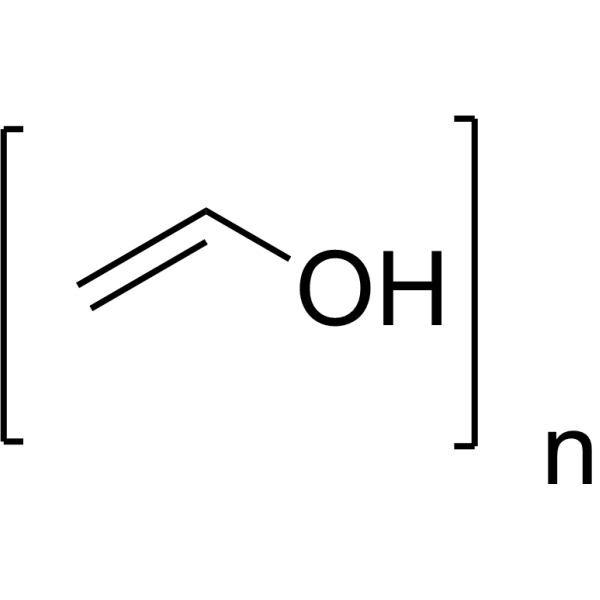
HY-Y0850J
Polyvinyl alcohol (Mw 13000-23000, 87-89% hydrolyzed)Polyvinyl Alcohol -

HY-Y0850U4
PVA (Mw 145000, 99+% hydrolyzed, ~3300 polymerization)Polyvinyl Alcohol -

HY-Y0850U
PVA (Mw 31000, 87-89% hydrolyzed, ~630 polymerization)Polymer -
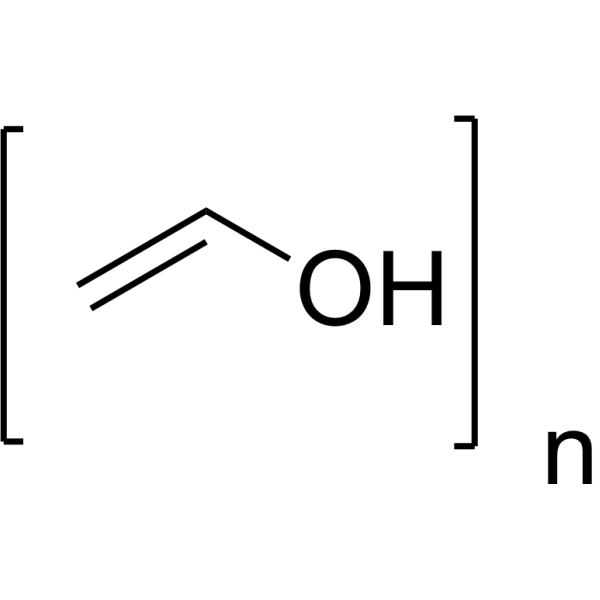
HY-Y0850K
Polyvinyl alcohol (Mw 31000-50000, 98-99% hydrolyzed)Biochemical Reagent -
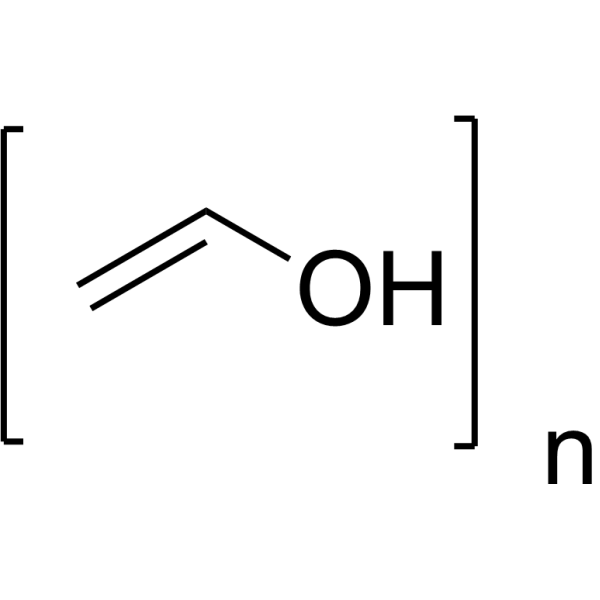
HY-Y0850O
Polyvinyl alcohol (Mw 31000-50000, 87-89% hydrolyzed)Emulsification Stabilizer -
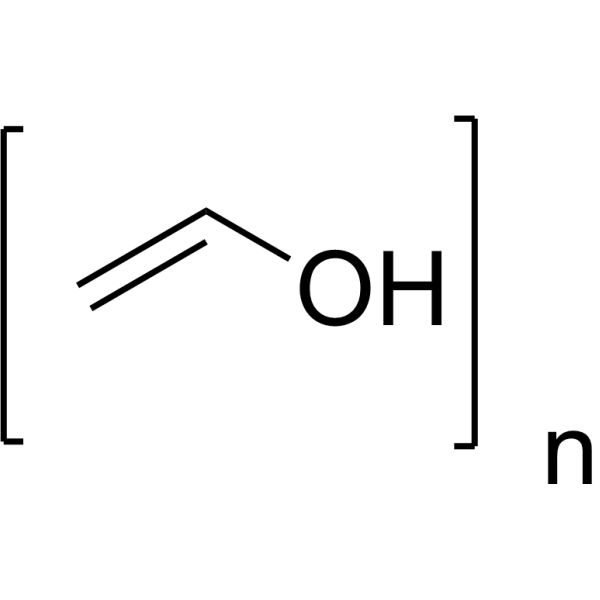
HY-Y0850H
Polyvinyl alcohol (Mw 89000-98000, 99+% hydrolyzed)Biochemical Reagent -
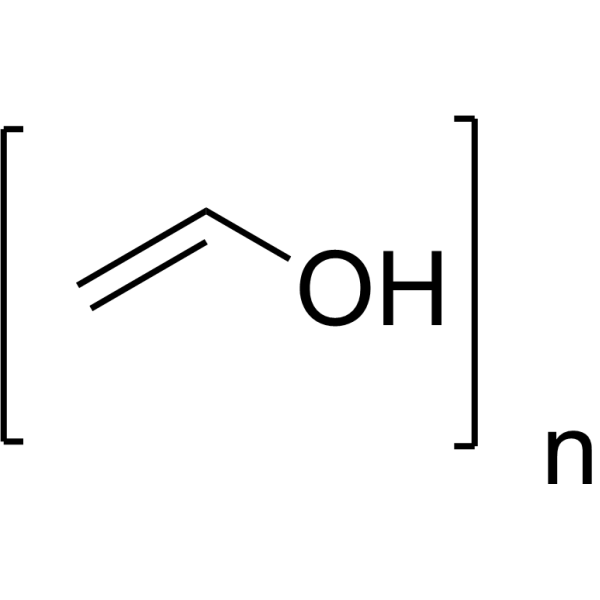
HY-Y0850I
Polyvinyl alcohol (Mw 9000-10000, 80% hydrolyzed)Biochemical Reagent -

HY-Y0850U6
PVA (Mw 205000)Polyvinyl Alcohol -
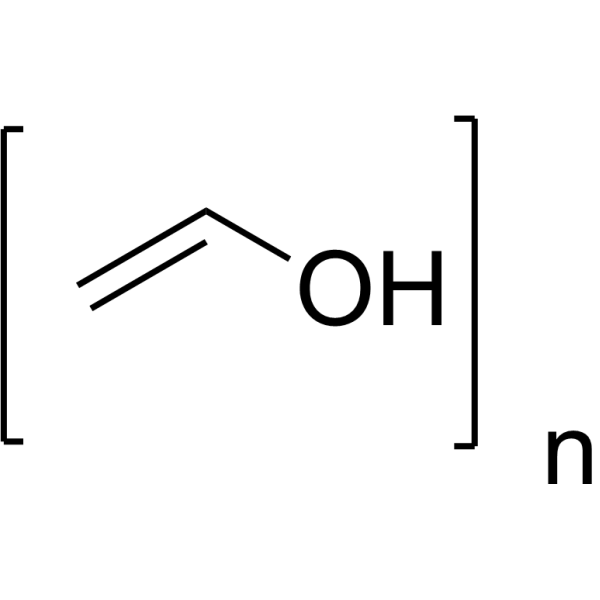
HY-Y0850N
Polyvinyl alcohol (Mw 13000-23000, 98% hydrolyzed)Biochemical Reagent -

HY-Y0850U3
PVA (Mw 125000, 98-99% hydrolyzed, ~2800 polymerization)Wound Dressing


Biological Activity
Description


Chemical Information
-
CAS No. 9011-16-9
-
Molecular Weight 1080000 (Average)
-
Formula (C4H2O3.C3H6O)n
-
SMILES
O=C(C=C1)OC1=O.C=COC.[n]
-
Shipping
Room temperature in continental US; may vary elsewhere.
-
Storage
Please store the product under the recommended conditions in the Certificate of Analysis.

Protocols
-
Research Protocol for Infectious Diseases
Infectious-disease experiments test how pathogens interact with host barriers, innate immune receptors, inflammatory signaling, pathogen replication, and tissue injury; pattern-recognition receptors such as TLRs, RIG-I-like receptors, NOD-like receptors, and inflammasomes detect microbial molecules and activate NF-κB, interferon, and cytokine responses. The central hypothesis is that infection severity reflects the balance between pathogen burden and host response: protective inflammation restricts pathogen growth, whereas excessive or mislocalized inflammation contributes to tissue damage and disease phenotype. Unresolved questions include which host pathways are protective versus pathogenic, why some infection models fail to translate to human disease, and which combined readouts best predict clinically relevant infection outcomes.
-
Hepatotoxicity Study
This protocol evaluates hepatotoxicity using complementary in vivo mouse APAP acute liver injury and in vitro hepatocyte-based cytotoxicity readouts. In vivo APAP injury is assessed by serum ALT/AST, liver histology, hepatic glutathione, protein adducts, necrosis, inflammation, and regeneration-related endpoints. In vitro hepatotoxicity is assessed by loss of viability, leakage of ALT/AST/LDH, oxidative-stress markers, mitochondrial function, nuclear morphology, intracellular calcium, and high-content imaging endpoints.


Purity & Documentation
References

Calculators
Concentration (start) × Volume (start) = Concentration (final) × Volume (final)


Poly(methyl vinyl ether-alt-maleic anhydride) (MW 1080000) Related Classifications
HY-W392258A Related Classifications
 Powered by Bioz