



Pyrazole-3-carboxylic acid

Based on 1 Customer Validation
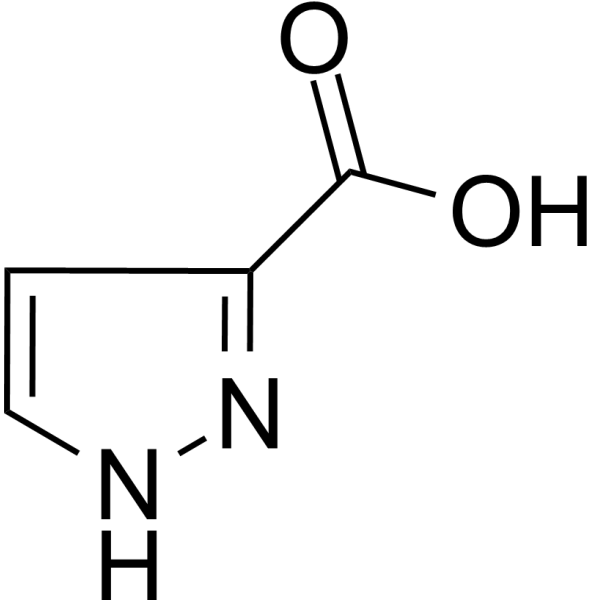
Pyrazole-3-carboxylic acid is an alternative anchoring group to carboxylic acid in phthalocyanine dyes. Pyrazole-3-carboxylic acid shows flexible coordination modes when coordinates with metal ions. Pyrazole-3-carboxylic acid can chelate to metal ions and form very stable complexes through its N and O atoms. Pyrazole-3-carboxylic acid can be used to synthesize derivatives that possess antibacterial, anti-inflammatory, ulcerogenic liability and antiproliferative activities.
For research use only. We do not sell to patients.
- Purity : 99.97%
- CAS No.: 1621-91-6
- Formula: C4H4N2O2
- Molecular Weight:112.09
-
Storage:Powder -20°C, 3 years , 4°C, 2 years ; In solvent -80°C, 6 months , -20°C, 1 month

To place orders, for customer services and technical support, please contact: MedChemExpress USA
Tel: 609-228-6898 E-mail: [email protected] [email protected]


-
 Biological Activity
-
Chemical Information
-
Solvent & Solubility
- Protocols
- Purity & Documentation
- References
-
 Help & FAQs


-

HY-B0876
FomepizoleCytochrome P450 Inhibitor -
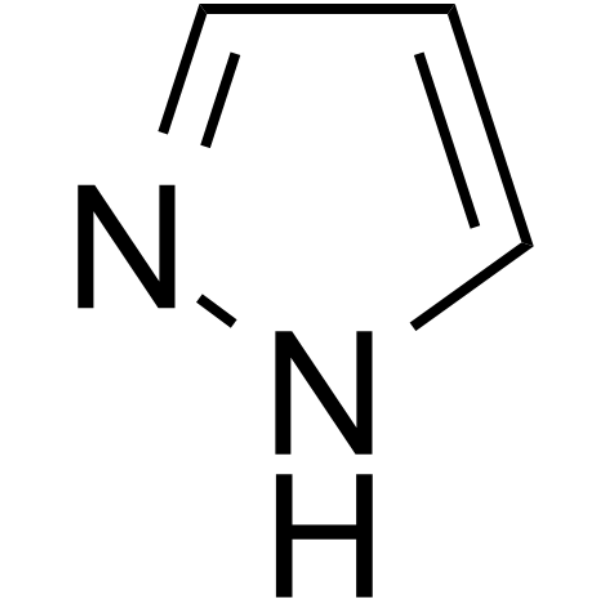
HY-76228
1H-pyrazoleAnti-malarial/leishmanial Agent -
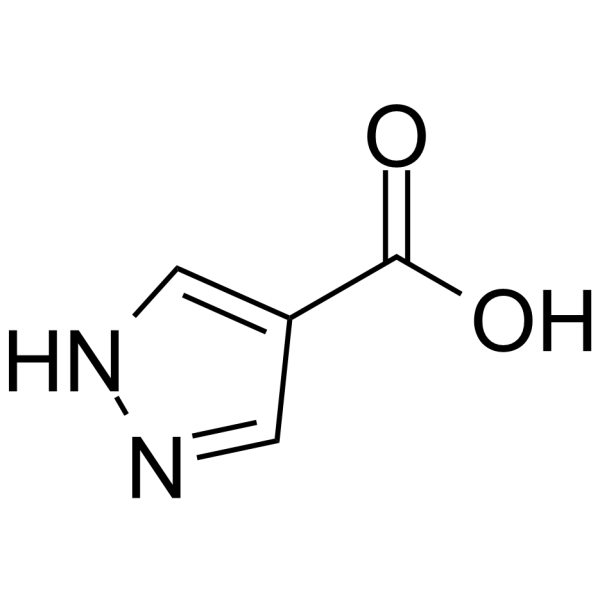
HY-W002065
4-CarboxypyrazoleAlcohol Dehydrogenase Ligand -
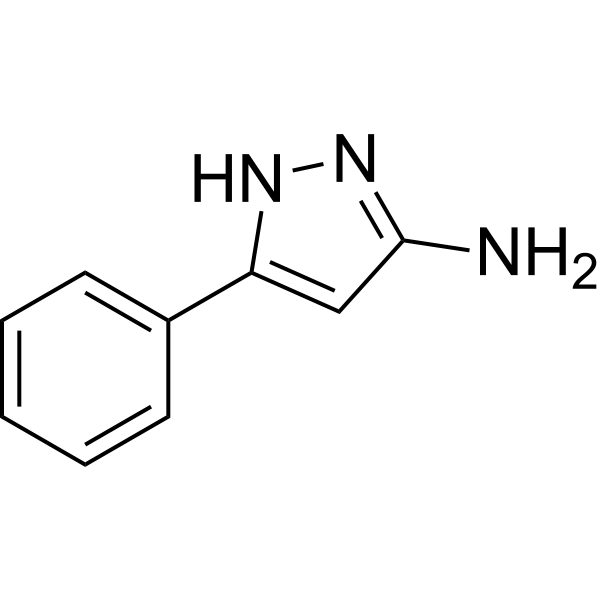
HY-W041232
5-Phenyl-1H-pyrazol-3-amineBiochemical Reagent -
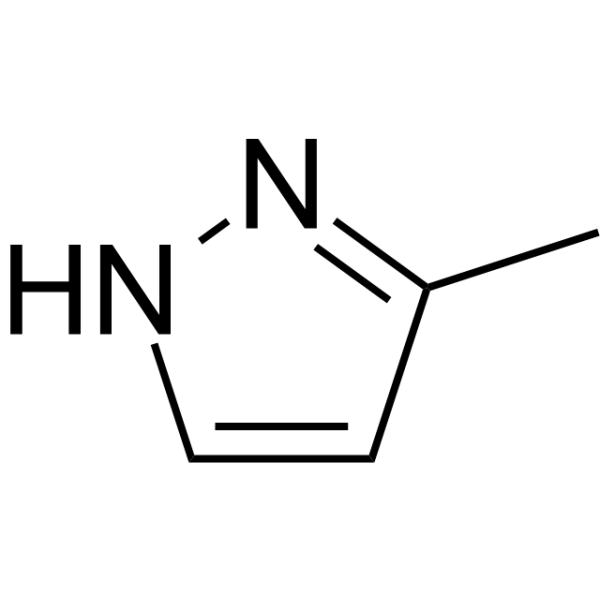
HY-66054
3-MethylpyrazoleNitrification Inhibito -
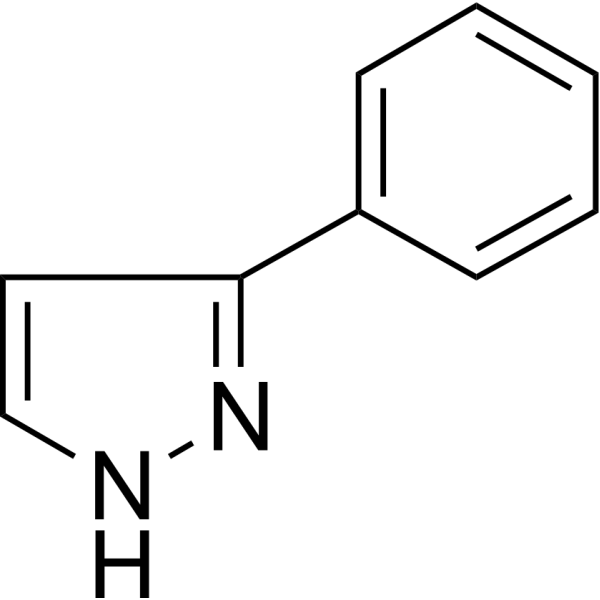
HY-W002461
3-PhenylpyrazoleBiochemical Reagent -
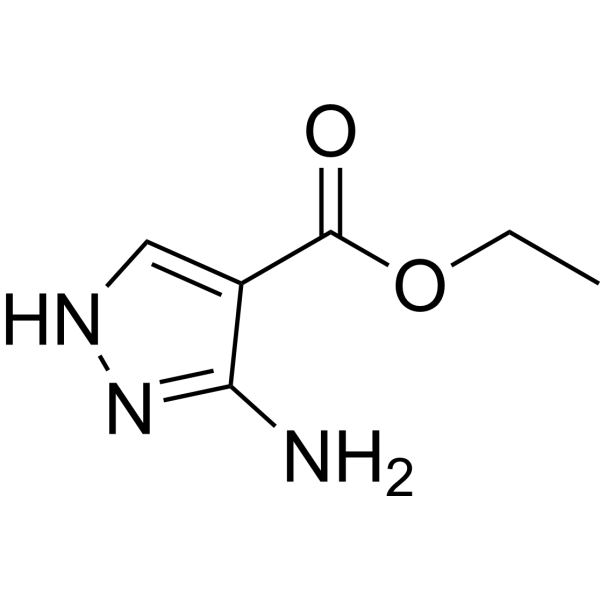
HY-W007997
Ethyl 3-amino-1H-pyrazole-4-carboxylatePyrazole Derivative Ligand -
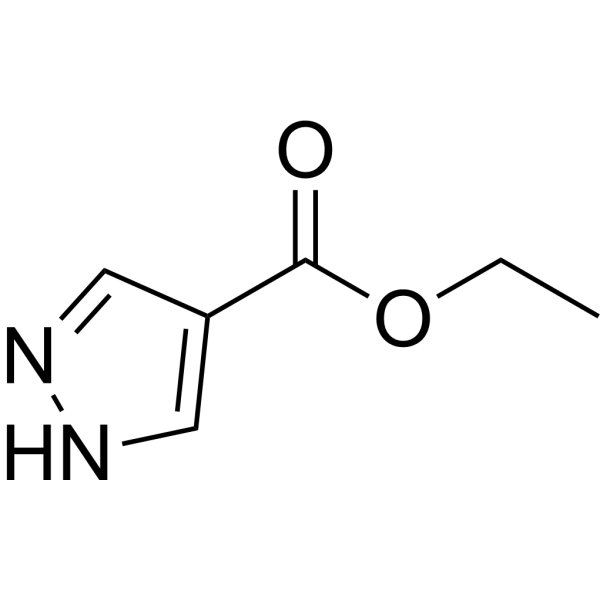
HY-100040
Ethyl 1H-pyrazole-4-carboxylateBiochemical Reagent -
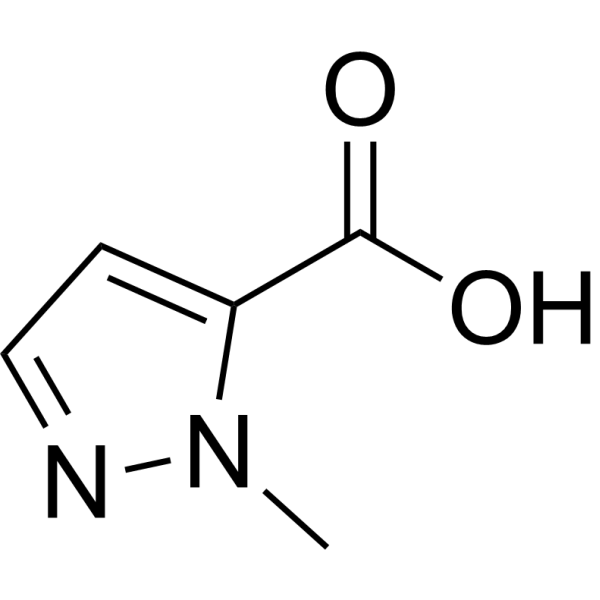
HY-34505
1-Methyl-5-pyrazolecarboxylic acidBuilding Block -
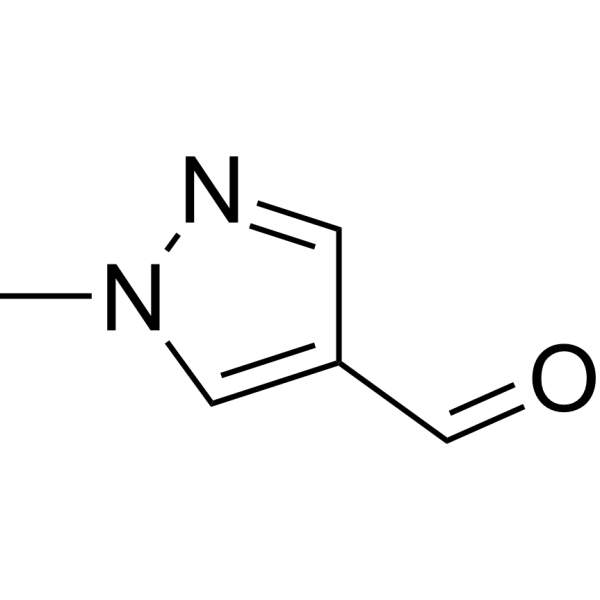
HY-69052
1-Methyl-1H-pyrazole-4-carboxaldehydePyrazole Aldehyde Intermediate -
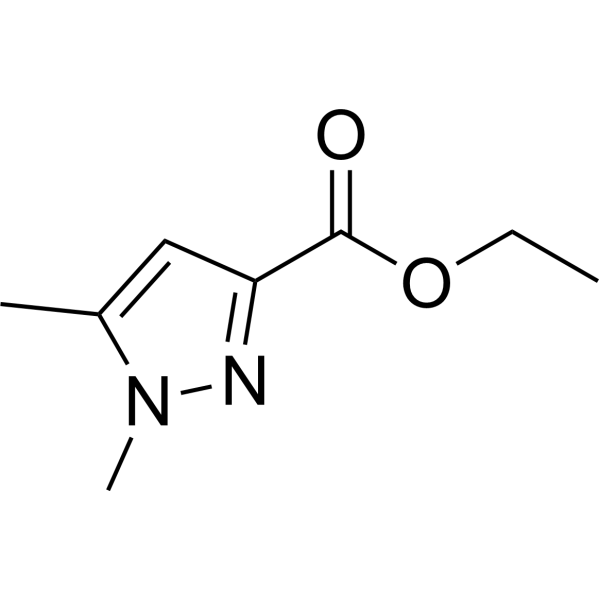
HY-W002351
Ethyl 1,5-dimethyl-1H-pyrazole-3-carboxylateBiochemical Reagent -

HY-Z1094
1-Ethyl-1H-pyrazoleDrug Impurity


Biological Activity
Description
In Vitro
Pyrazole-3-carboxylic acid can be used to synthesize derivatives that possess antibacterial, anti-inflammatory, ulcerogenic liability and antiproliferative activities[1][2][3].
MedChemExpress (MCE) has not independently confirmed the accuracy of these methods. They are for reference only. Further protocols information, click here.


Chemical Information
-
CAS No. 1621-91-6
-
Appearance Solid
-
Molecular Weight 112.09
-
Formula C4H4N2O2
-
Color White to off-white
-
SMILES
O=C(C1=NNC=C1)O
-
Shipping
Room temperature in continental US; may vary elsewhere.
-
Storage
Powder -20°C 3 years 4°C 2 years In solvent -80°C 6 months -20°C 1 month


Solvent & Solubility
In Vitro:
DMSO : 100 mg/mL (892.16 mM; Need ultrasonic; Hygroscopic DMSO has a significant impact on the solubility of product, please use newly opened DMSO)
Please refer to the solubility information to select the appropriate solvent. Once prepared, please aliquot and store the solution to prevent product inactivation from repeated freeze-thaw cycles.
Storage method and period of stock solution: -80°C, 6 months; -20°C, 1 month. When stored at -80°C, please use it within 6 months. When stored at -20°C, please use it within 1 month.
Please refer to the solubility information to select the appropriate solvent. Once prepared, please aliquot and store the solution to prevent product inactivation from repeated freeze-thaw cycles.
Storage method and period of stock solution: -80°C, 6 months; -20°C, 1 month. When stored at -80°C, please use it within 6 months. When stored at -20°C, please use it within 1 month.
Concentration (start) × Volume (start) = Concentration (final) × Volume (final)

Protocols
-
Research Protocol for Infectious Diseases
Infectious-disease experiments test how pathogens interact with host barriers, innate immune receptors, inflammatory signaling, pathogen replication, and tissue injury; pattern-recognition receptors such as TLRs, RIG-I-like receptors, NOD-like receptors, and inflammasomes detect microbial molecules and activate NF-κB, interferon, and cytokine responses. The central hypothesis is that infection severity reflects the balance between pathogen burden and host response: protective inflammation restricts pathogen growth, whereas excessive or mislocalized inflammation contributes to tissue damage and disease phenotype. Unresolved questions include which host pathways are protective versus pathogenic, why some infection models fail to translate to human disease, and which combined readouts best predict clinically relevant infection outcomes.
-
Research Protocol for Inflammation-related Diseases
The NLRP3 inflammasome is a cytosolic innate immune signaling platform that integrates priming signals and danger-signal activation to promote caspase-1 activation, maturation of IL-1β and IL-18, and gasdermin D-mediated pyroptotic cell death. The core experimental logic is to determine whether inflammatory disease phenotypes are driven by increased NLRP3 expression, ASC-containing inflammasome assembly, caspase-1 cleavage, GSDMD cleavage, and extracellular release of IL-1β/IL-18 rather than by nonspecific cell injury alone. The pathway is strongly linked to inflammation-related disease phenotypes because monosodium urate crystals activate NALP3/NLRP3 inflammasome signaling in gout-like crystal inflammation, cholesterol crystals activate NLRP3 inflammasomes in atherogenesis models, and DSS-induced intestinal inflammation has been reported to involve NLRP3 inflammasome activity. However, experimental colitis studies also show context-dependent protective effects of NLRP3 inflammasome co
-
Cell Viability Determination by MTT Colorimetric Assay
The following protocol uses the MTT colorimetric assay as a classic literature-established method for assessing cell viability/metabolic activity in cultured mammalian cells. MTT[3-(4,5-dimethylthiazol-2-yl)-2,5-diphenyltetrazolium bromide] is reduced by metabolically active cells to a colored formazan product; the amount of formazan is quantified spectrophotometrically and provides an indirect measure of metabolically active viable cells. Importantly, MTT reduction reflects cellular oxidoreductase/metabolic activity rather than an absolute direct count of living cells, so changes in cellular metabolism can alter the signal independently of cell number.


Purity & Documentation
-
Data Sheet (273 KB)
-
SDS (393 KB)
- English - EN (393 KB)
- Français - FR (393 KB)
- Deutsch - DE (393 KB)
- Norwegian - NO (393 KB)
- Español - ES (393 KB)
- Swedish - SV (393 KB)
- Italian - IT (393 KB)
- Korean - KR (393 KB)
- Portuguese - PT (393 KB)
-
Handling Instructions (2659 KB)
References


Complete Stock Solution Preparation Table
Please refer to the solubility information to select the appropriate solvent. Once prepared, please aliquot and store the solution to prevent product inactivation from repeated freeze-thaw cycles.
Storage method and period of stock solution: -80°C, 6 months; -20°C, 1 month. When stored at -80°C, please use it within 6 months. When stored at -20°C, please use it within 1 month.
| Optional Solvent | Concentration Solvent Mass | 1 mg | 5 mg | 10 mg | 25 mg |
|---|---|---|---|---|---|
| DMSO | 1 mM | 8.9216 mL | 44.6078 mL | 89.2156 mL | 223.0390 mL |
| 5 mM | 1.7843 mL | 8.9216 mL | 17.8431 mL | 44.6078 mL | |
| 10 mM | 0.8922 mL | 4.4608 mL | 8.9216 mL | 22.3039 mL | |
| 15 mM | 0.5948 mL | 2.9739 mL | 5.9477 mL | 14.8693 mL | |
| 20 mM | 0.4461 mL | 2.2304 mL | 4.4608 mL | 11.1520 mL | |
| 25 mM | 0.3569 mL | 1.7843 mL | 3.5686 mL | 8.9216 mL | |
| 30 mM | 0.2974 mL | 1.4869 mL | 2.9739 mL | 7.4346 mL | |
| 40 mM | 0.2230 mL | 1.1152 mL | 2.2304 mL | 5.5760 mL | |
| 50 mM | 0.1784 mL | 0.8922 mL | 1.7843 mL | 4.4608 mL | |
| 60 mM | 0.1487 mL | 0.7435 mL | 1.4869 mL | 3.7173 mL | |
| 80 mM | 0.1115 mL | 0.5576 mL | 1.1152 mL | 2.7880 mL | |
| 100 mM | 0.0892 mL | 0.4461 mL | 0.8922 mL | 2.2304 mL |


Pyrazole-3-carboxylic acid Related Classifications
HY-W002328 Related Classifications
 Powered by Bioz