



Fibronectin Protein, Human
Based on 9 publication(s) in Google Scholar
Fibronectin binds collagen, fibrin, heparin, DNA, and actin. It is involved in cell adhesion, motility, opsonization, wound healing and maintenance of cell shape. Fibronectin Protein, Human is the recombinant human-derived Fibronectin protein, expressed by E. coli, with tag free.
- Species: Human
- Source: E. coli
-
Storage:Stored at -20°C for 2 years from date of receipt. After reconstitution, it is stable at 4°C for 1 week or -20°C for longer (with carrier protein). It is recommended to freeze aliquots at -20°C or -80°C for extended storage.


To place orders, for customer services and technical support, please contact: MedChemExpress USA
Tel: 609-228-6898 E-mail: [email protected] [email protected]


-
 Biological Activity
-
Technical Parameters
-
Product Properties
- Documentation
- References
- Help & FAQs


-

HY-P7109
EGF Protein, Human -
HY-P70485
Vitronectin Protein, Human (HEK293, His) -

HY-P0035
Insulin (human) -
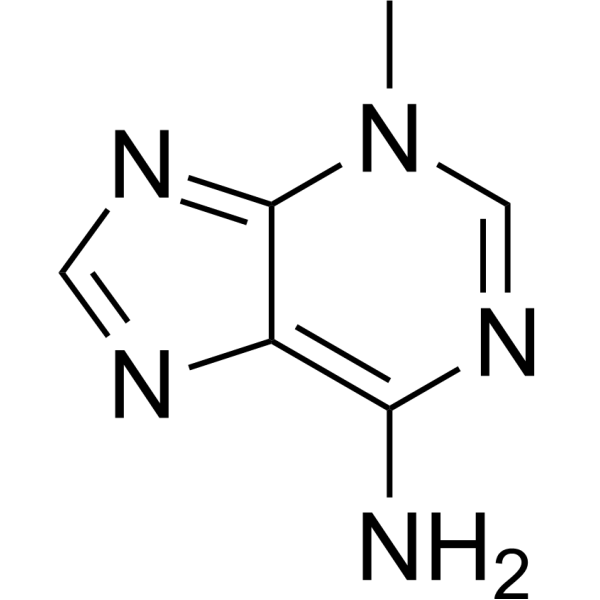
HY-19312
3-Methyladenine -
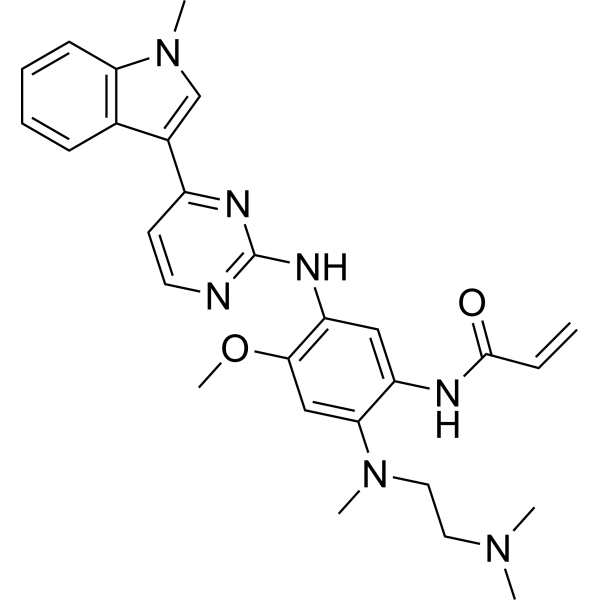
HY-15772
Osimertinib -
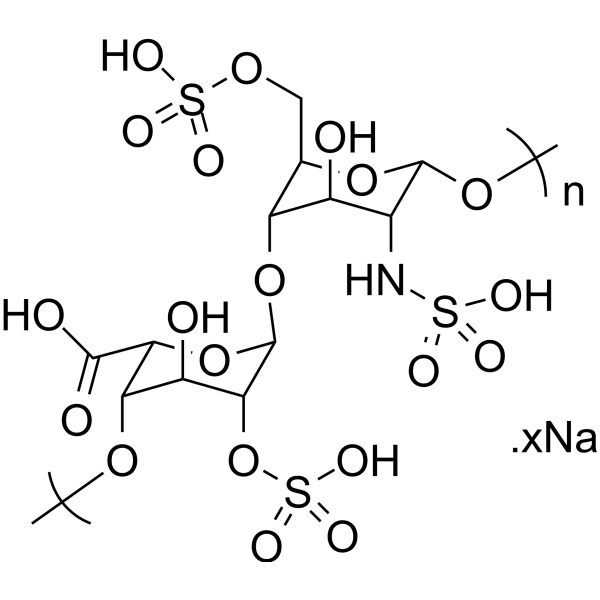
HY-17567A
Heparin sodium salt -
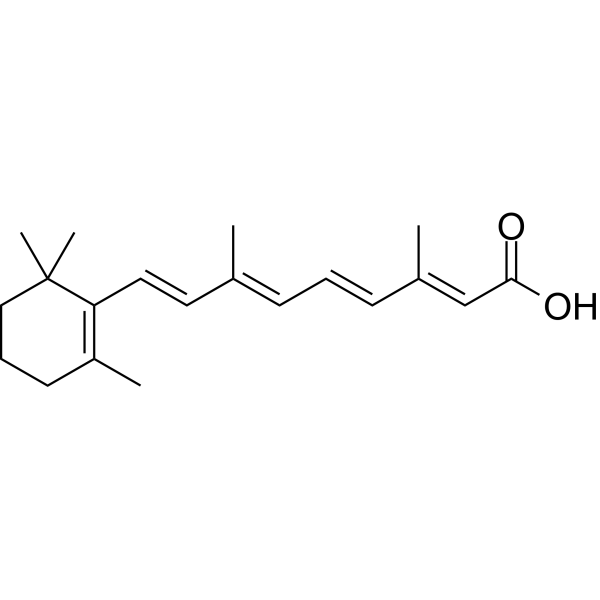
HY-14649
Retinoic acid -
HY-10586
5-Azacytidine -
HY-10583
Y-27632 dihydrochloride -
HY-16592
Brefeldin A -
HY-13259
MG-132 -
HY-P7018
IGF-I/IGF-1 Protein, Human (70a.a)


Biological Activity
Description
Fibronectin binds collagen, fibrin, heparin, DNA, and actin. It is involved in cell adhesion, motility, opsonization, wound healing and maintenance of cell shape. Fibronectin Protein, Human is the recombinant human-derived Fibronectin protein, expressed by E. coli, with tag free.
Background
Fibronectin, a versatile glycoprotein, plays a crucial role in cellular interactions by binding to various compounds such as collagen, fibrin, heparin, DNA, and actin. Its involvement in cell adhesion, motility, opsonization, wound healing, and maintenance of cell shape underscores its significance in fundamental cellular processes. Fibronectin also contributes to osteoblast compaction through the fibronectin fibrillogenesis cell-mediated matrix assembly process, essential for osteoblast mineralization, and regulates the deposition of type I collagen by osteoblasts. Acting as a ligand for the LILRB4 receptor, Fibronectin inhibits FCGR1A/CD64-mediated monocyte activation. Moreover, Fibronectin's ability to induce fibril formation, as observed in the fibronectin polymer named superfibronectin, imparts enhanced adhesive properties. Notably, both anastellin and superfibronectin exhibit inhibitory effects on tumor growth, angiogenesis, and metastasis, with anastellin activating p38 MAPK and inhibiting lysophospholipid signaling. The multifaceted functions of Fibronectin underscore its pivotal role in cellular dynamics and its potential as a target for therapeutic interventions in various pathological conditions.
In Vitro
Fibronectin protein (Human) (2-40 nM, 24-100 h) dose-dependently promotes the growth of mouse embryonic cells lacking endogenous fibronectin[11]. Fibronectin protein (Human) has high binding affinity for the human LILRB4 receptor and its direct homolog gp49B receptor in mice, with KD values of 421 nM and 50.1 nM, respectively[12].
In Vivo
FN30-Fc is a recombinant protein formed by fusing the N-terminal 30 kDa fragment of human fibronectin (FN30) with mouse IgG2a Fc. FN30-Fc (200 μg, intraperitoneally injected into 10-week-old mice, a total of 2 doses with a 2-week interval) shows efficacy in improving autoimmune nephritis in the BXSB/Yaa lupus (SLE) mouse model[12].
Verified Bioactivity
1.Measured by its ability to support cell attachment and spreading when used as a substratum for cell culture. The ED50 for this effect is ≤ 385.7 ng/mL.
2.Measured by the ability of the immobilized protein to support the adhesion of B16-F1 mouse melanoma cells. The ED50 for this effect is ≤182.9 ng/mL, corresponding to a specific activity is ≥5.467×10³ units/mg.
MCE Validation Data
-
Purity - SDS-PAGE
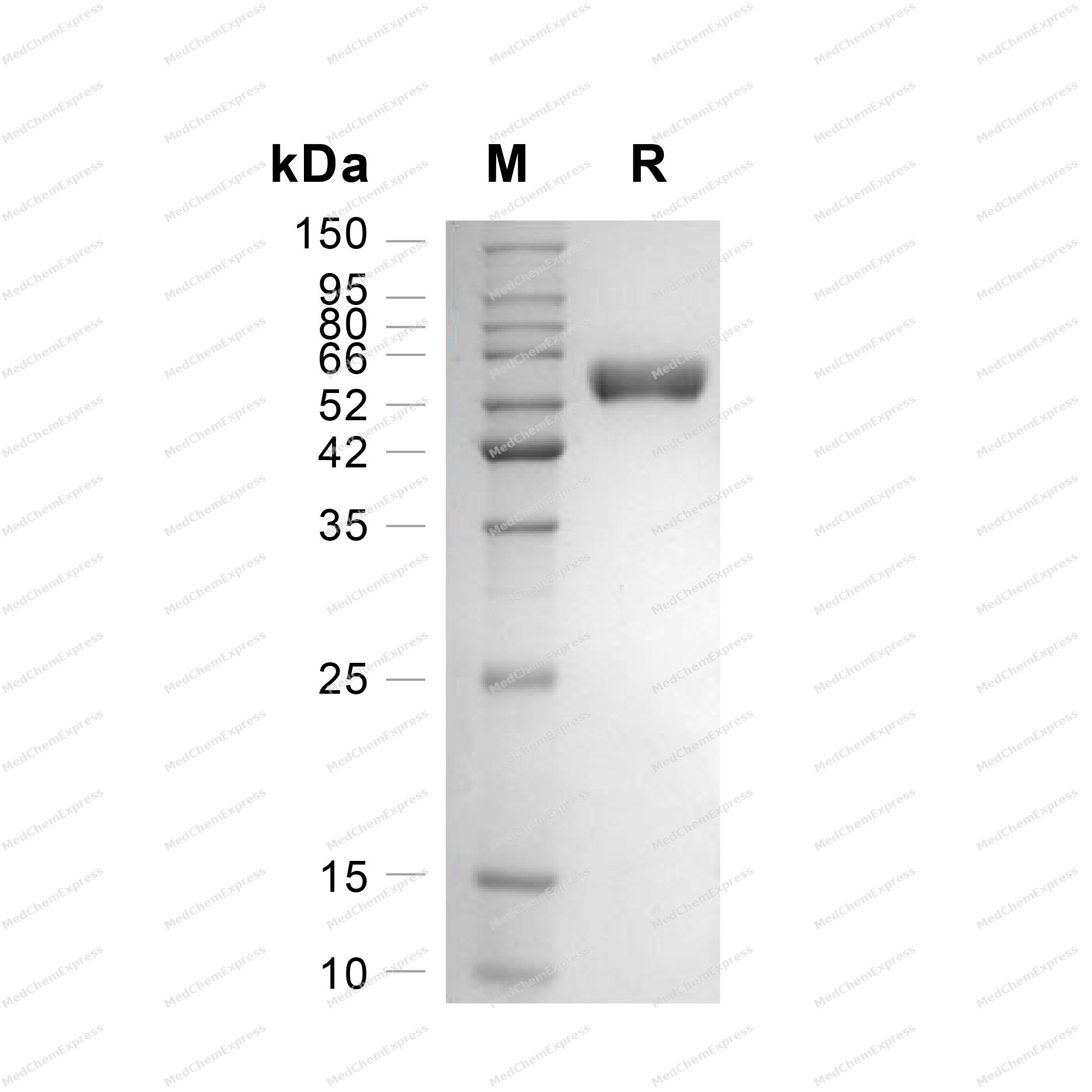
Purity - SDS-PAGE
-
Bioactivity - Cell-Based Assay
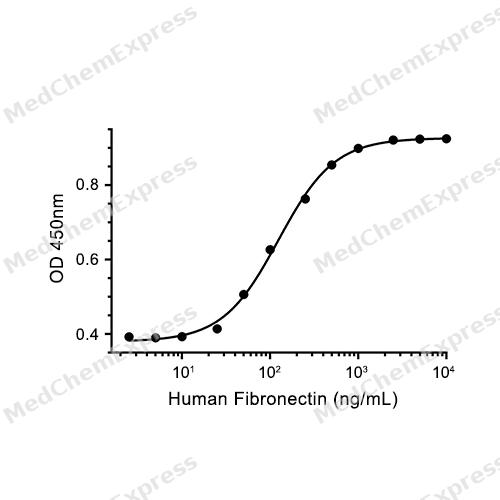
Bioactivity - Cell-Based Assay


Publications (9)
-
Journal Impact Factor
-
Most Recent
-
Bioact Mater
Stem cell niche-inspired microcarriers with ADSCs encapsulation for diabetic wound treatment. [Abstract]2023 Mar 3:26:159-168. PMID: 36923266 -
ACS Nano
Three-Dimensional Semiconductor Network as Regulators of Energy Metabolism Drives Angiogenesis in Bone Regeneration. [Abstract]2024 Nov 26;18(47):32602-32616. PMID: 39530623 -
J Nanobiotechnology
Modulating cell stiffness for improved vascularization: leveraging the MIL-53(fe) for improved interaction of titanium implant and endothelial cell. [Abstract]2024 Jul 17;22(1):422. PMID: 39014416 -
Adv Sci (Weinh)
Evolution of Multivalent Aptamer Corona for High-Throughput Multiplexed Detection of Multiple Cancers. [Abstract]2025 Nov 25:e14976. PMID: 41290548 -
Oncogene
Fibroblast Activation Protein (FAP)+ cancer-associated fibroblasts induce macrophage M2-like polarization via the Fibronectin 1-Integrin α5β1 axis in breast cancer. [Abstract]2025 Jul;44(28):2396-2412. PMID: 40263422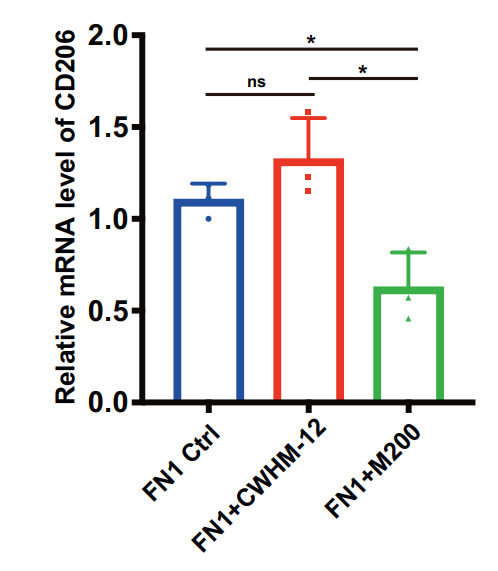
Fibronectin Protein, Human purchased from MedChemExpress. Usage Cited in: Oncogene. 2025 Jul;44(28):2396-2412. [Abstract]
Relative mRNA expression of CD206 in macrophages treated with FN1 alone (20 μg/mL), FN1 + CWHM-12 (pan-αV integrin inhibitor), or FN1 + M200 (α5β1 integrin-blocking antibody).
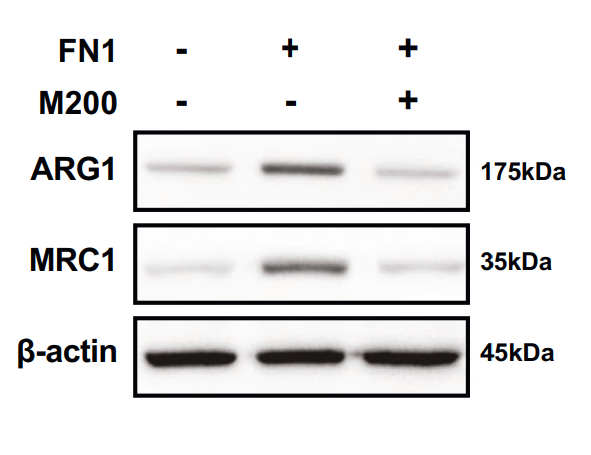
Fibronectin Protein, Human purchased from MedChemExpress. Usage Cited in: Oncogene. 2025 Jul;44(28):2396-2412. [Abstract]
The expression of M2 markers MRC1 and ARG1 in macrophages was analyzed by Western blotting, with or without Fibronectin Protein, Human (FN1: 20 μg/mL) and M200 treatment, respectively.
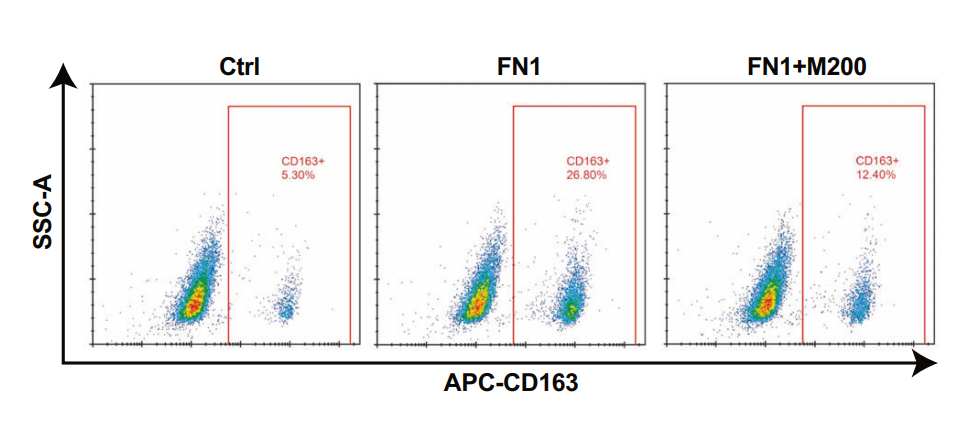
Fibronectin Protein, Human purchased from MedChemExpress. Usage Cited in: Oncogene. 2025 Jul;44(28):2396-2412. [Abstract]
Representative flow cytometry images and quantitative analysis results of CD163+ cell populations in THP-1-derived and primary macrophages treated or untreated with Fibronectin Protein, Human (FN1: 20 μg/mL) and M200.
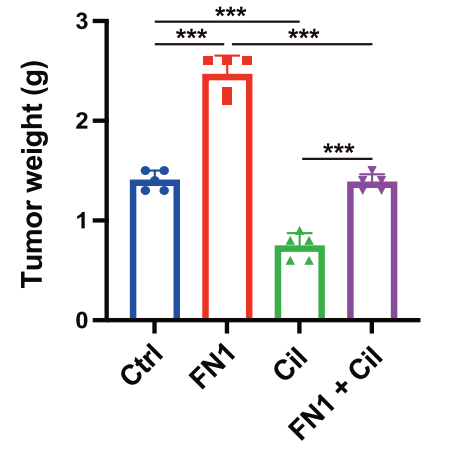
Fibronectin Protein, Human purchased from MedChemExpress. Usage Cited in: Oncogene. 2025 Jul;44(28):2396-2412. [Abstract]
The final tumor weight showed the antitumor effect of silengilide and its partial reversal by Fibronectin Protein, Human (FN1: 10 μg/kg).
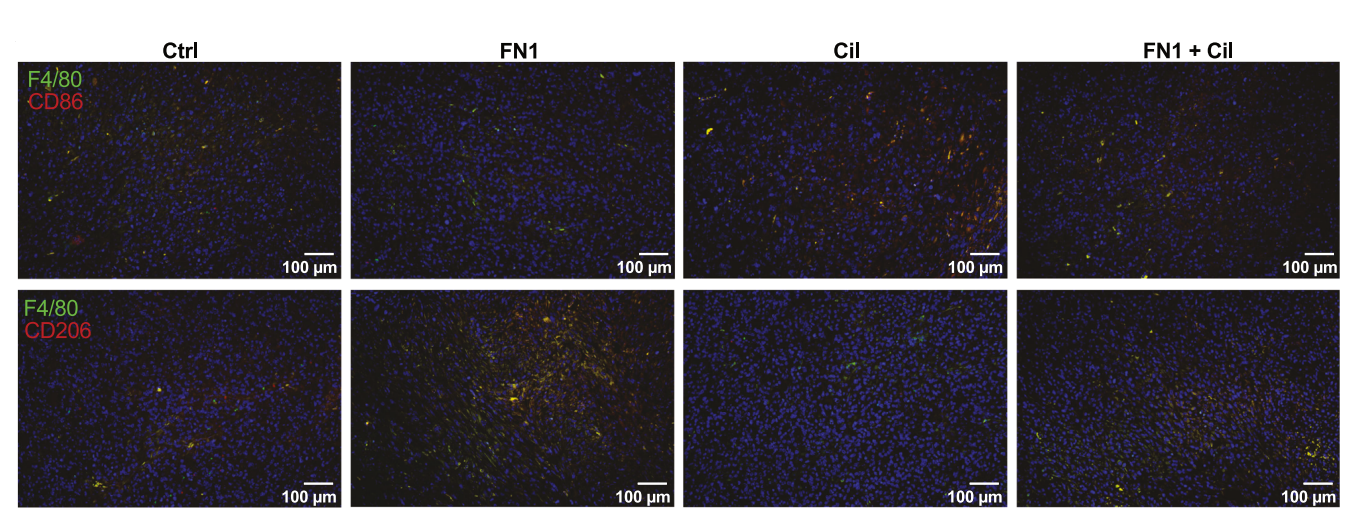
Fibronectin Protein, Human purchased from MedChemExpress. Usage Cited in: Oncogene. 2025 Jul;44(28):2396-2412. [Abstract]
Fibronectin Protein, Human (FN1: 10 μg/kg). Multiplex immunofluorescence images of tumor sections show the distribution of F4/80+ macrophages (green) expressing CD86 or CD206 (red) in each treatment group. Cell nuclei were counterstained with DAPI (blue).
-
Oncogene
MAP4K4 promotes ovarian cancer metastasis through diminishing ADAM10-dependent N-cadherin cleavage. [Abstract]2023 May;42(18):1438-1452. PMID: 36922678 -
Cell Rep
THBS2-producing matrix CAFs promote colorectal cancer progression and link to poor prognosis via the CD47-MAPK axis. [Abstract]2025 Apr 11;44(4):115555. PMID: 40222008 -
Respir Res
Loss of PTPN21 disrupted mitochondrial metabolic homeostasis and aggravated experimental pulmonary fibrosis. [Abstract]2024 Dec 4;25(1):426. PMID: 39633451 -
Bioorg Chem
Drug repurposing of 6-AZA-UTP and itraconazole reveals novel B3GALT5 inhibitors for pancreatic cancer. [Abstract]2025 Jun 15:160:108464. PMID: 40273705


Technical Parameters
-
Species Human
-
Source E. coli
-
Tag Tag Free
-
Accession
P02751-1 (P1270-S1546&A1721-T2016)
-
Molecular Construction
-
N-term
-
Fibronectin (P1270-S1546 & A1721-T2016)
Accession # P02751-1 -
C-term
-
-
Protein Length
Partial
-
Synonyms
FN1; Epididymis Secretory Sperm Binding Protein; Fibronectin 1; Fibronectin Splice Variant A; CIG; Fibronectin Splice Variant B; Cold-Insoluble Globulin; Fibronectin Splice Variant C; Lnc-ABCA12-8; Fibronectin Splice Variant D; Fibronectin; Fibronectin Sp
-
AA Sequence
PTDLRFTNIGPDTMRVTWAPPPSIDLTNFLVRYSPVKNEEDVAELSISPSDNAVVLTNLLPGTEYVVSVSSVYEQHESTPLRGRQKTGLDSPTGIDFSDITANSFTVHWIAPRATITGYRIRHHPEHFSGRPREDRVPHSRNSITLTNLTPGTEYVVSIVALNGREESPLLIGQQSTVSDVPRDLEVVAATPTSLLISWDAPAVTVRYYRITYGETGGNSPVQEFTVPGSKSTATISGLKPGVDYTITVYAVTGRGDSPASSKPISINYRTEIDKPS&AIPAPTDLKFTQVTPTSLSAQWTPPNVQLTGYRVRVTPKEKTGPMKEINLAPDSSSVVVSGLMVATKYEVSVYALKDTLTSRPAQGVVTTLENVSPPRRARVTDATETTITISWRTKTETITGFQVDAVPANGQTPIQRTIKPDVRSYTITGLQPGTDYKIYLYTLNDNARSSPVVIDASTAIDAPSNLRFLATTPNSLLVSWQPPRARITGYIIKYEKPGSPPREVVPRPRPGVTEATITGLEPGTEYTIYVIALKNNQKSEPLIGRKKTDELPQLVTLPHPNLHGPEILDVPST
-
Molecular Weight
Approximately 55-70 kDa, based on SDS-PAGE under reducing conditions.
-
Purity
≥ 95%, as determined by reducing SDS-PAGE.


Product Properties
Lyophilized powder
1.Lyophilized from a 0.22 μm filtered solution of 12.5 mM sodium citrate, 1.25% sucrose, pH 5.5.
2.Lyophilized from a 0.22 μm filtered solution of PBS, pH 6.8, 5% trehalose, 5% mannitol, 0.01% Tween 80.
Please refer to the lot-specific COA for specific buffer information.
<0.01 EU/μg, determined by LAL method.
It is not recommended to reconstitute to a concentration less than 100 μg/mL in ddH2O. For long term storage it is recommended to add a carrier protein (0.1% BSA, 5% HSA, 10% FBS or 5% Trehalose).
Stored at -20°C for 2 years from date of receipt. After reconstitution, it is stable at 4°C for 1 week or -20°C for longer (with carrier protein). It is recommended to freeze aliquots at -20°C or -80°C for extended storage.
Room temperature in continental US; may vary elsewhere.


Documentation
-
Data Sheet (268 KB)
-
SDS (251 KB)
- English - EN (251 KB)
- Français - FR (251 KB)
- Deutsch - DE (251 KB)
- Norwegian - NO (251 KB)
- Español - ES (251 KB)
- Swedish - SV (251 KB)
- Italian - IT (251 KB)
- Korean - KR (251 KB)
- Portuguese - PT (251 KB)
-
Handling Instructions (2659 KB)


References
[1]. Patten J, Wang K. Fibronectin in development and wound healing. Adv Drug Deliv Rev. 2021 Mar;170:353-368. [Content Brief]
[2]. Lenselink EA. Role of fibronectin in normal wound healing. Int Wound J. 2015 Jun;12(3):313-6. doi: 10.1111/iwj.12109. Epub 2013 Jun 7. [Content Brief]
[3]. Bielefeld K A, et al. Fibronectin and β-catenin act in a regulatory loop in dermal fibroblasts to modulate cutaneous healing[J]. Journal of Biological Chemistry, 2011, 286(31): 27687-27697. [Content Brief]
[4]. Shi F, et al. MT1-MMP regulates the turnover and endocytosis of extracellular matrix fibronectin[J]. Journal of cell science, 2011, 124(23): 4039-4050. [Content Brief]
[6]. Clark RA, et al. Blood vessel fibronectin increases in conjunction with endothelial cell proliferation and capillary ingrowth during wound healing. J Invest Dermatol. 1982 Nov;79(5):269-76. [Content Brief]
[7]. Oyama F, et al. Deregulation of alternative splicing of fibronectin pre-mRNA in malignant human liver tumors. J Biol Chem. 1989 Jun 25;264(18):10331-4. [Content Brief]
[8]. Yi M, Ruoslahti E. A fibronectin fragment inhibits tumor growth, angiogenesis, and metastasis. Proc Natl Acad Sci U S A. 2001 Jan 16;98(2):620-4. [Content Brief]
[9]. Quirós J, et al. Beneficial effect of fibronectin administration on chronic nephritis in rats. Arthritis Rheum. 1990 May;33(5):685-92. [Content Brief]
[10]. Su MT, et al. Blockade of checkpoint ILT3/LILRB4/gp49B binding to fibronectin ameliorates autoimmune disease in BXSB/Yaa mice. Int Immunol. 2021 Jul 23;33(8):447-458. [Content Brief]
[11]. Sottile J, et al. Fibronectin matrix assembly enhances adhesion-dependent cell growth. J Cell Sci. 1998 Oct;111 ( Pt 19):2933-43. [Content Brief]

Calculators
Concentration (start) × Volume (start) = Concentration (final) × Volume (final)


 Powered by Bioz

