



Neurotrophin-3 Protein, Human (HEK293)
Based on 1 Customer Validation
Neurotrophin-3 (NT-3) is crucial for promoting the survival of sensory neurons, specifically those linked to visceral and proprioceptive functions. Its role highlights NT-3's significance in maintaining and supporting the functionality of these specialized sensory cells, emphasizing its potential as a key regulator in the complex network governing essential physiological sensory processes. Neurotrophin-3 Protein, Human (HEK293) is the recombinant human-derived Neurotrophin-3 protein, expressed by HEK293 , with tag free.
- Species: Human
- Source: HEK293
-
Storage:Stored at -20°C for 2 years from date of receipt. After reconstitution, it is stable at 4°C for 1 week or -20°C for longer (with carrier protein). It is recommended to freeze aliquots at -20°C or -80°C for extended storage.


To place orders, for customer services and technical support, please contact: MedChemExpress USA
Tel: 609-228-6898 E-mail: [email protected] [email protected]


-
 Biological Activity
-
Technical Parameters
-
Product Properties
- Documentation
- Help & FAQs


-

HY-P7116A
BDNF Protein, Human/Mouse/Rat -
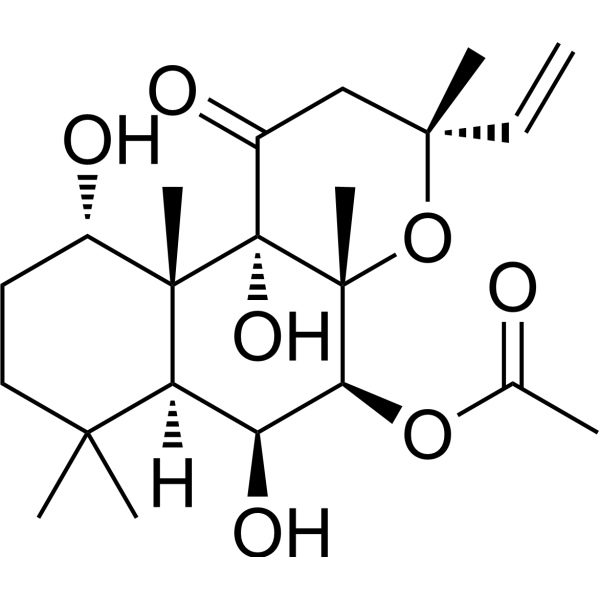
HY-15371
ForskolinAdenylate Cyclase Activator -
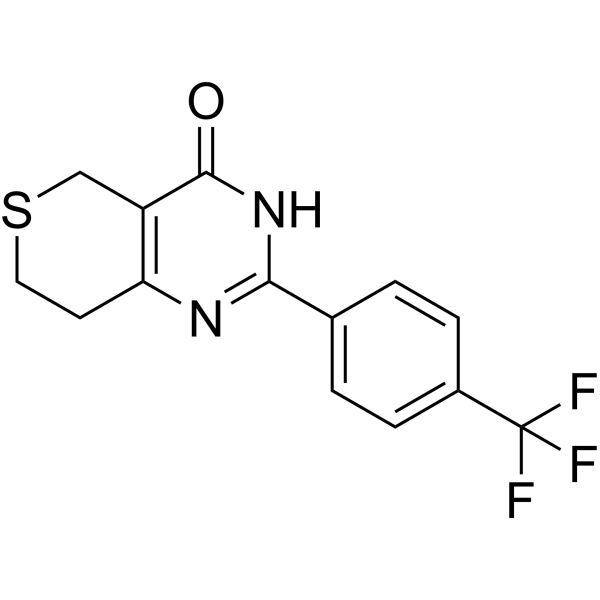
HY-15147
XAV-939Tankyrase Inhibitor -
HY-P73074
GDNF Protein, Human (HEK293) -
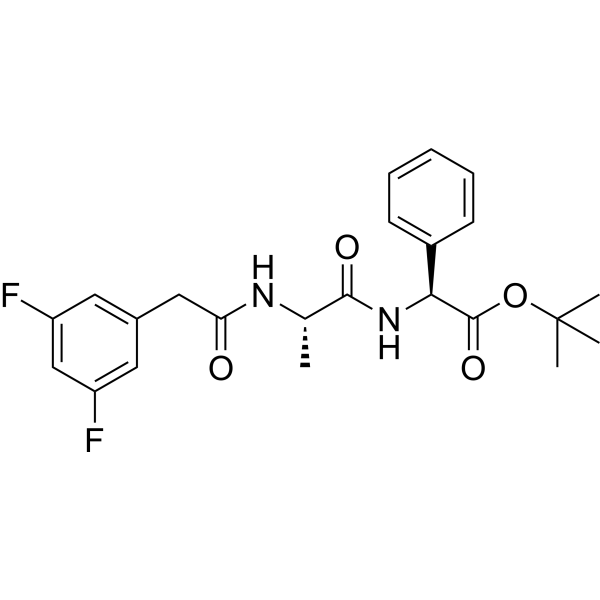
HY-13027
DAPTγ-secretase Inhibitor -
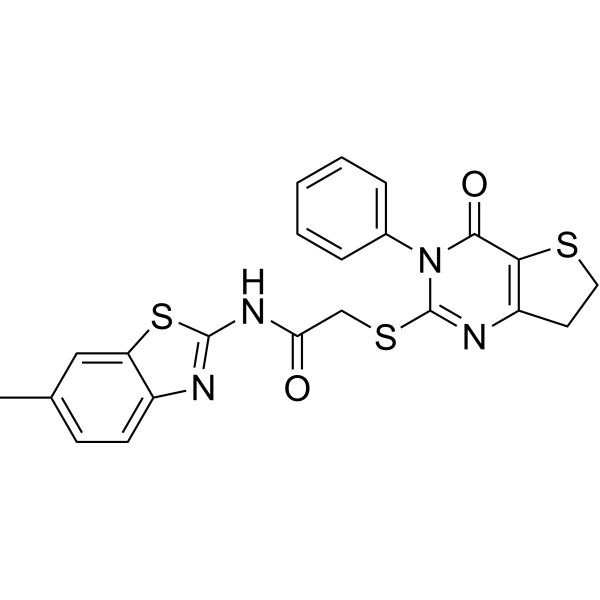
HY-13912
IWP-2Wnt Production Inhibitor -
HY-B0764
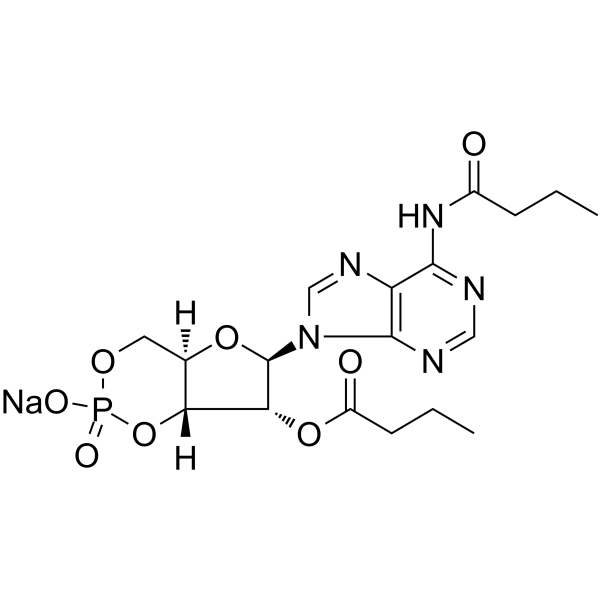
Bucladesine sodiumcAMP Analog -
HY-12848
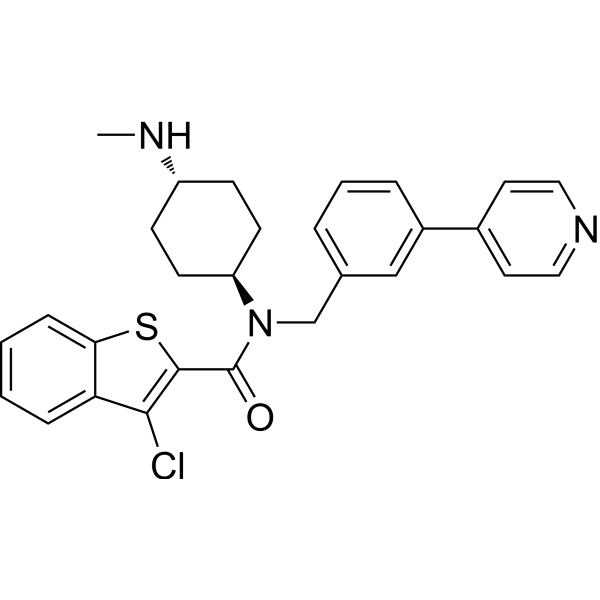
SAGSmoothened Agonist -
HY-A0070A
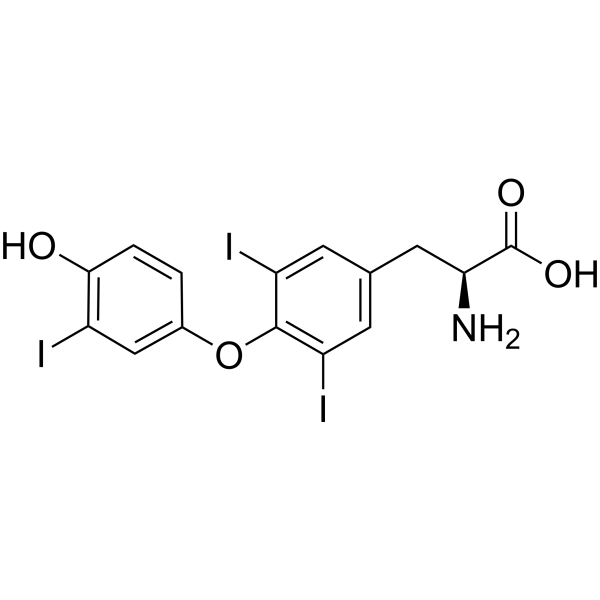
LiothyronineTIGIT/PVR Blocker -
HY-10182
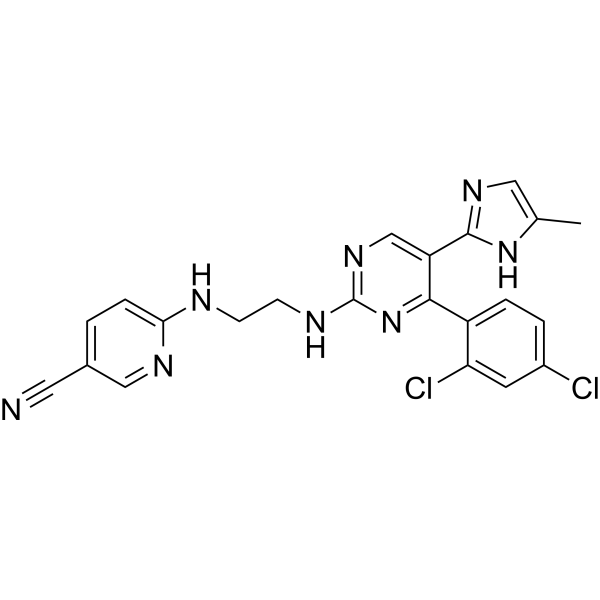
LaduviglusibGSK-3 Inhibitor -
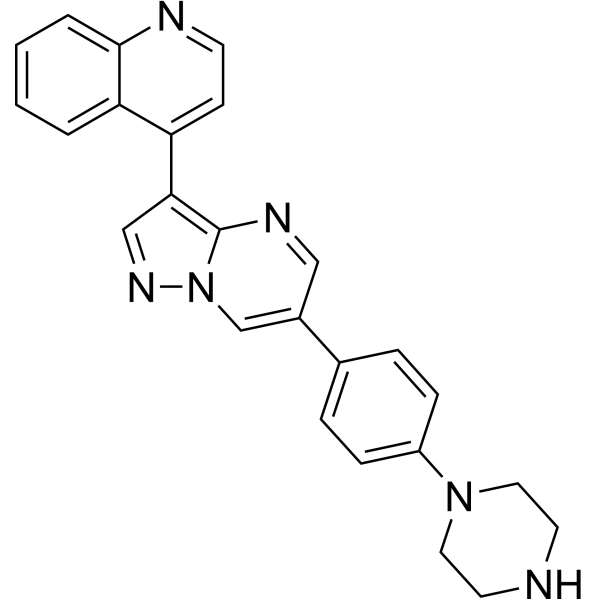
HY-12071
LDN193189ALK2/3 Inhibitor -
HY-P7182
GDNF Protein, Human


Biological Activity
Description
Neurotrophin-3 (NT-3) is crucial for promoting the survival of sensory neurons, specifically those linked to visceral and proprioceptive functions. Its role highlights NT-3's significance in maintaining and supporting the functionality of these specialized sensory cells, emphasizing its potential as a key regulator in the complex network governing essential physiological sensory processes. Neurotrophin-3 Protein, Human (HEK293) is the recombinant human-derived Neurotrophin-3 protein, expressed by HEK293 , with tag free.
Background
Neurotrophin-3 (NT-3) emerges as a crucial factor in fostering the survival of sensory neurons, particularly those associated with visceral and proprioceptive functions. Its role in supporting the viability of these specialized sensory cells underscores the significance of NT-3 in orchestrating the intricate mechanisms that contribute to the maintenance and functionality of visceral and proprioceptive neuronal populations. The specific actions of NT-3 in promoting neuronal survival shed light on its potential as a key regulator in the complex network governing sensory processes essential for proper physiological functioning.
Verified Bioactivity
1. Measured in a cell proliferation assay using BaF3 mouse pro-B cells transfected with TrkB. The ED50 for this effect is < 40 ng/mL.
2. Human TrkC immobilized on CM5 Chip can bind Human NT-3 with an affinity constant of ≤0.06 nM as determined in a SPR assay.
MCE Validation Data
-
Purity - SDS-PAGE
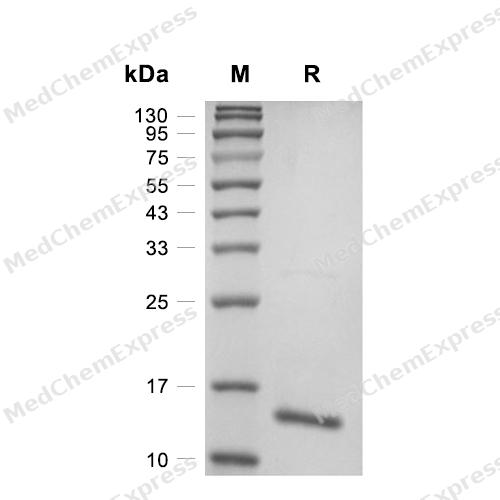
Purity - SDS-PAGE
-
Bioactivity - Cell-Based Assay
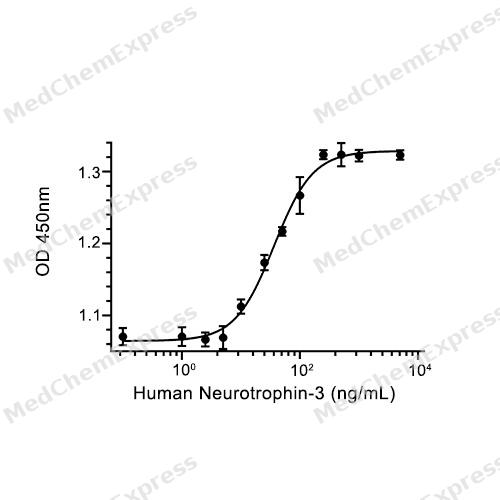
Bioactivity - Cell-Based Assay


Technical Parameters
-
Species Human
-
Source HEK293
-
Tag Tag Free
-
Accession
P20783-1 (Y139-T257)
-
Gene ID4908
-
Molecular Construction
-
N-term
-
Neurotrophin-3 (Y139-T257)
Accession # P20783-1 -
C-term
-
-
Protein Length
Full Length of Isoform-1
-
Synonyms
NTF3; Neurotrophin-3; Neurotrophin 3; NGF-2; NGF2; HDNF; Nerve Growth Factor 2; NT-3; Neurotrophic Factor; NT3
-
AA Sequence
YAEHKSHRGEYSVCDSESLWVTDKSSAIDIRGHQVTVLGEIKTGNSPVKQYFYETRCKEARPVKNGCRGIDDKHWNSQCKTSQTYVRALTSENNKLVGWRWIRIDTSCVCALSRKIGRT
-
Predicted Molecular Mass
13.6 kDa
-
Molecular Weight
Approximately 13-14 kDa, based on SDS-PAGE under reducing conditions, due to the glycosylation.
-
Structure/Form
Monomer
-
Purity
≥ 95%, as determined by reducing SDS-PAGE.


Product Properties
Lyophilized powder
Lyophilized from a 0.22 μm filtered solution of PBS, pH 7.4.
<0.1 EU/μg, determined by LAL method.
It is not recommended to reconstitute to a concentration less than 100 μg/mL in PBS. For long term storage it is recommended to add a carrier protein (0.1% BSA, 5% HSA, 10% FBS or 5% Trehalose).
Stored at -20°C for 2 years from date of receipt. After reconstitution, it is stable at 4°C for 1 week or -20°C for longer (with carrier protein). It is recommended to freeze aliquots at -20°C or -80°C for extended storage.
Room temperature in continental US; may vary elsewhere.


Documentation
-
Data Sheet (236 KB)
-
SDS (252 KB)
- English - EN (252 KB)
- Français - FR (252 KB)
- Deutsch - DE (252 KB)
- Norwegian - NO (252 KB)
- Español - ES (252 KB)
- Swedish - SV (252 KB)
- Italian - IT (252 KB)
- Korean - KR (252 KB)
- Portuguese - PT (252 KB)
-
Handling Instructions (2659 KB)

Calculators
Concentration (start) × Volume (start) = Concentration (final) × Volume (final)


 Powered by Bioz

