



PDGF-BB Protein, Rat
Based on 13 publication(s) in Google Scholar
PDGF-BB Protein, Rat is a member of PDGF family, which promotes cell proliferation, survival and migration, through binding to the tyrosine kinase PDGF receptor.
- Species: Rat
- Source: E. coli
-
Storage:Stored at -20°C for 2 years from date of receipt. After reconstitution, it is stable at 4°C for 1 week or -20°C for longer (with carrier protein). It is recommended to freeze aliquots at -20°C or -80°C for extended storage.


To place orders, for customer services and technical support, please contact: MedChemExpress USA
Tel: 609-228-6898 E-mail: [email protected] [email protected]


-
 Biological Activity
-
Technical Parameters
-
Product Properties
- Documentation
- References
- Help & FAQs





Biological Activity
Description
PDGF-BB Protein, Rat is a member of PDGF family, which promotes cell proliferation, survival and migration, through binding to the tyrosine kinase PDGF receptor.
Background
Platelet derived growth factor (PDGF) is a potent mitogen and chemoattractant for mesenchymal and osteogenic cells and stimulates angiogenic molecules which play an essential role in bone regeneration[1]. Platelet-Derived Growth Factor-BB is a member of PDGF family, which promotes cell proliferation, survival and migration, through binding to the tyrosine kinase PDGF receptor. PDGF-BB exerts beneficial effects on haemorrhagic shock, which are closely related to targeting CX43 to improve vascular reactivity and haemodynamics. PDGF-BB functions in corporal cavernosum smooth muscle cells (CCSMCs) via binding to PDGFR[2].
Verified Bioactivity
The ED50 is <2 ng/mL as measured by Balb/c 3T3 cells, corresponding to a specific activity of >5.0 × 10⁵ units/mg.
MCE Validation Data
-
Purity - SDS-PAGE
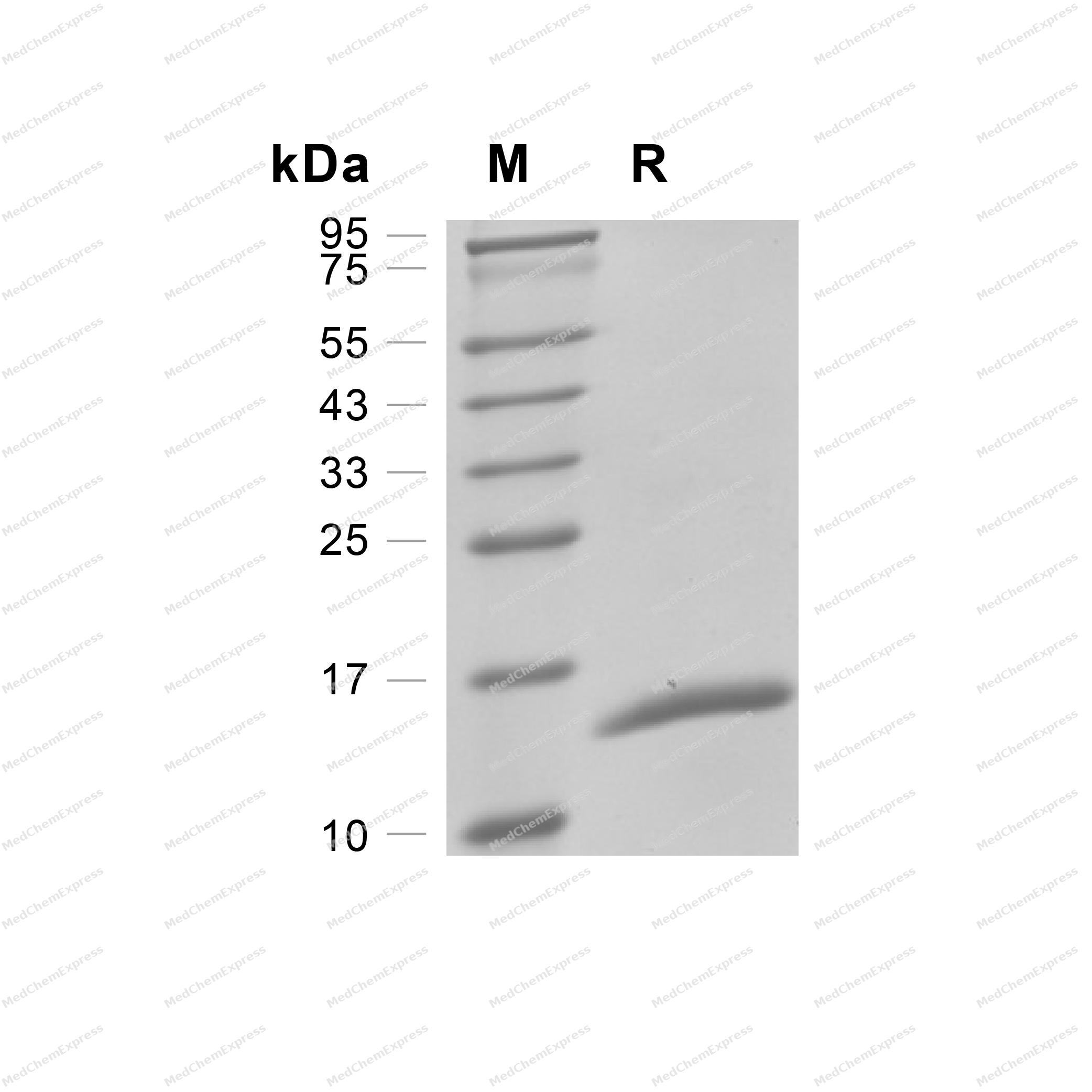
Purity - SDS-PAGE
-
Bioactivity - Cell-Based Assay
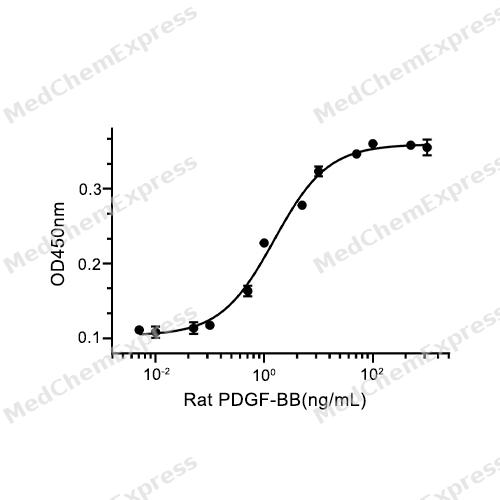
Bioactivity - Cell-Based Assay


Publications (13)
-
Journal Impact Factor
-
Most Recent
-
-
-
Phytomedicine
Betulinaldehyde inhibits vascular remodeling by regulating the microenvironment through the PLCγ1/Ca2+/MMP9 pathway. [Abstract]2023 Jul 25:116:154891. PMID: 37229891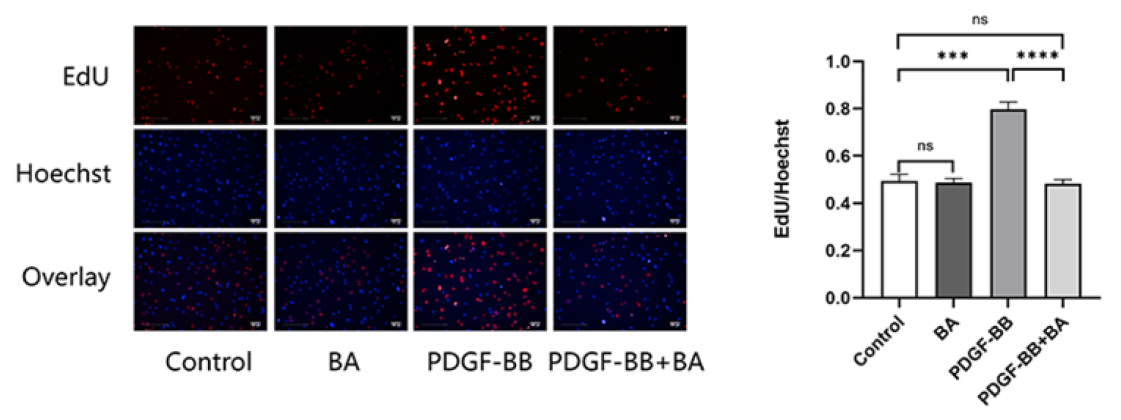
PDGF-BB Protein, Rat purchased from MedChemExpress. Usage Cited in: Phytomedicine. 2023 Jul 25:116:154891. [Abstract]
PDGF-BB Protein, Rat (20 ng/mL) increased the proliferation of VSMCs by approximately 30%.
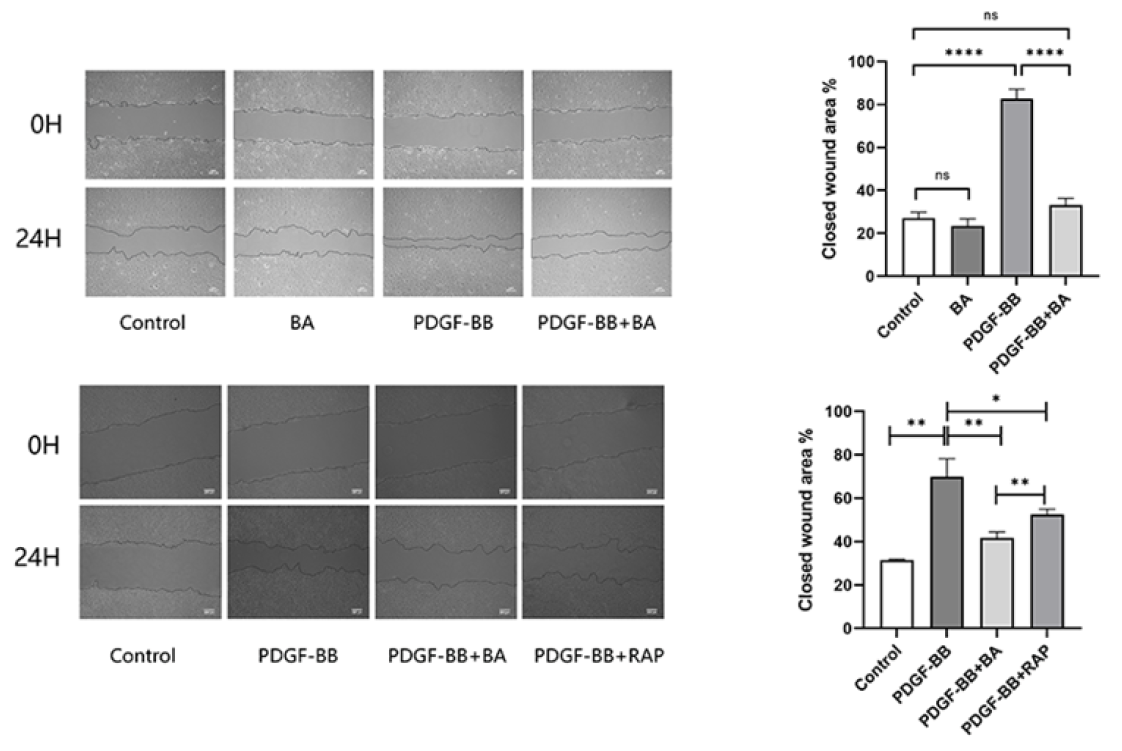
PDGF-BB Protein, Rat purchased from MedChemExpress. Usage Cited in: Phytomedicine. 2023 Jul 25:116:154891. [Abstract]
The Wound healing assay revealed that PDGF-BB Protein, Rat (20 ng/mL) induced VSMC migration.
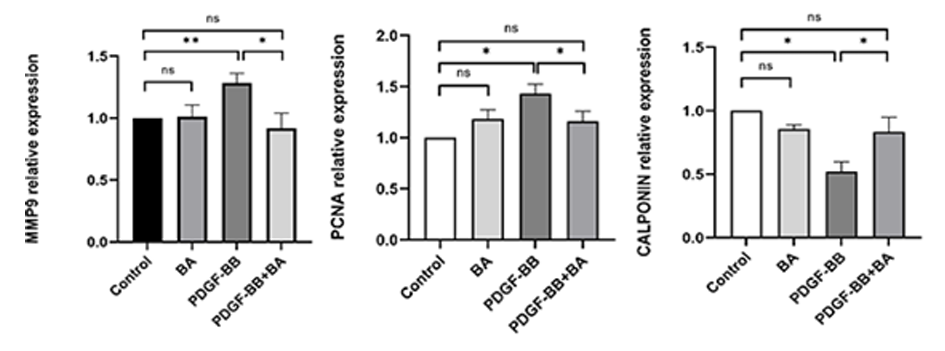
PDGF-BB Protein, Rat purchased from MedChemExpress. Usage Cited in: Phytomedicine. 2023 Jul 25:116:154891. [Abstract]
PDGF-BB Protein, Rat (20 ng/mL) induced increased levels of PCNA and MMP9 and a decreased level of CALPONIN in VSMCs.
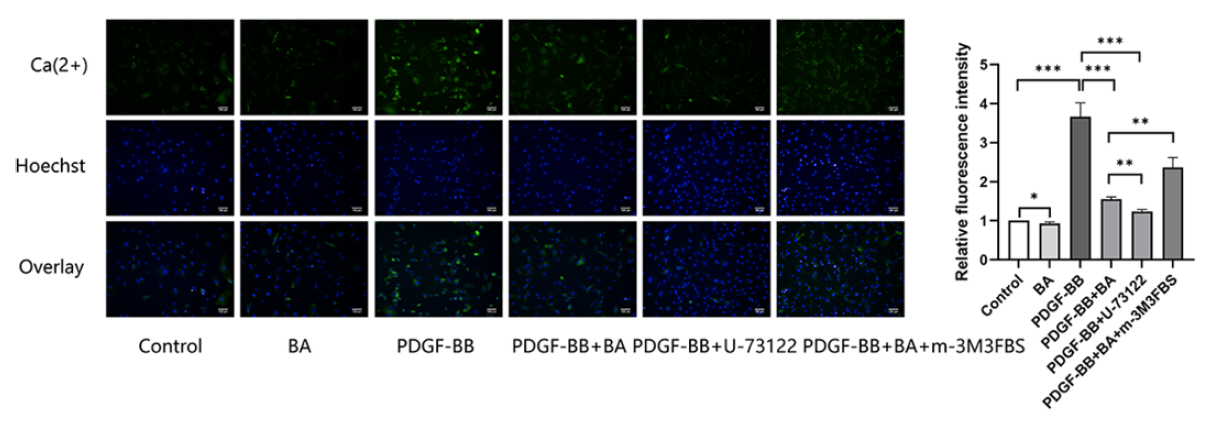
PDGF-BB Protein, Rat purchased from MedChemExpress. Usage Cited in: Phytomedicine. 2023 Jul 25:116:154891. [Abstract]
PDGF-BB Protein, Rat (20 ng/mL) significantly increased intracellular Ca2+ levels in VSMCs.
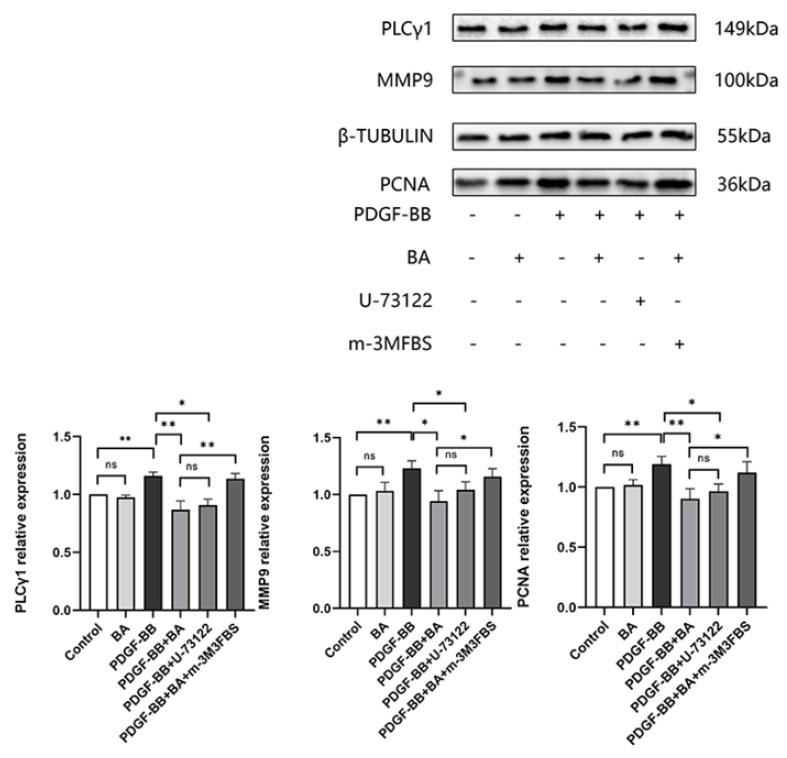
PDGF-BB Protein, Rat purchased from MedChemExpress. Usage Cited in: Phytomedicine. 2023 Jul 25:116:154891. [Abstract]
PDGF-BB Protein, Rat (20 ng/mL) induction increased the expression of PLCγ1, MMP9, and PCNA in VSMCs.
-
-
Environ Pollut
Assessing the toxicological effects of exposure to environmental pollutants PET-MPs on vascular diseases: insights from network toxicology, molecular docking, molecular dynamics, and experimental validation. [Abstract]2025 Sep 10:385:127082. PMID: 40939713 -
Life Sci
Betulinaldehyde regulates VSMC phenotypic transition to alleviate vascular hyperplasia through PPARγ/mitochondria/ROS axis. [Abstract]2025 Nov 15:381:124002. PMID: 41033650 -
Eur J Pharmacol
SIRT3 mediates Tubeimoside I's inhibition on pulmonary artery smooth muscle cell proliferation and oxidative stress in pulmonary arterial hypertension. [Abstract]2025 Oct 5:1004:177938. PMID: 40685102 -
Eur J Pharmacol
Restoration of ARA metabolic disorders in vascular smooth muscle cells alleviates intimal hyperplasia. [Abstract]2024 Nov 15:983:176824. PMID: 39265882 -
Acta Physiol
Early growth response 1 exacerbates thoracic aortic aneurysm and dissection of mice by inducing the phenotypic switching of vascular smooth muscle cell through the activation of Krüppel-like factor 5. [Abstract]2024 Nov;240(11):e14237. PMID: 39345002 -
Am J Pathol
Methyltransferase-Like 3-Driven N6-Methyladenosine Modification of RBPJ Promotes Vascular Remodeling in Pulmonary Hypertension. [Abstract]2024 Dec;194(12):2252-2271. PMID: 39222906 -
Toxicol Appl Pharmacol
Berberine alleviates acute embolism-induced lung inflammation and injury by suppressing miR-22-5p expression and modulating the TLR4/NF-κB signaling pathway. [Abstract]2025 Dec:505:117563. PMID: 40953642 -
Biochem Biophys Res Commun
The role and mechanism of asiaticoside in regulating smooth muscle cell mitochondrial Drp1 during neointimal hyperplasia and atherosclerosis. [Abstract]2026 Jan 8:795:153102. PMID: 41371186 -


Technical Parameters
-
Species Rat
-
Source E. coli
-
Tag Tag Free
-
Accession
Q05028 (S74-T182)
-
Molecular Construction
-
N-term
-
PDGF-BB (S74-T182)
Accession # Q05028 -
C-term
-
-
Protein Length
Full Length of Mature Protein
-
Synonyms
PDGFB; Platelet-Derived Growth Factor 2; Prev. SIS; PDGF Subunit B; Platelet-Derived Growth Factor Beta Polypeptide; PDGF2; Platelet-Derived Growth Factor Subunit B; Platelet-Derived Growth Factor, Beta Polypeptide (Oncogene SIS); Platelet-Derived Growth
-
AA Sequence
SLGSLAAAEPAVIAECKTRTEVFQISRNLIDRTNANFLVWPPCVEVQRCSGCCNNRNVQCRASQVQMRPVQVRKIEIVRKKPVFKKATVTLEDHLACKCETVVTPRPVT
-
Molecular Weight
Approximately 16-25 kDa, based on SDS-PAGE under non reducing (N) conditions.
-
Purity
≥ 95%, as determined by reducing SDS-PAGE.


Product Properties
Lyophilized powder
1.Lyophilized from a 0.22 μm filtered solution of 20 mM acetic acid.
2.Lyophilized from a 0.22 μm filtered solution of 50 mM Tris-HCl, 300 mM NaCl, pH 8.0.
3.Lyophilized from a 0.22 μm filtered solution of PBS, pH 7.4, 8% trehalose.
Please refer to the lot-specific COA for specific buffer information.
Note: For SPR assay, please replace the buffer. Primary amine components (e.g., Tris, imidazole) can affect protein-coupled chips.
<0.2 EU/μg, determined by LAL method.
It is not recommended to reconstitute to a concentration less than 100 μg/mL in 20mM HAc. For long term storage it is recommended to add a carrier protein (0.1% BSA, 5% HSA, 10% FBS or 5% Trehalose).
Stored at -20°C for 2 years from date of receipt. After reconstitution, it is stable at 4°C for 1 week or -20°C for longer (with carrier protein). It is recommended to freeze aliquots at -20°C or -80°C for extended storage.
Room temperature in continental US; may vary elsewhere.


Documentation
-
Data Sheet (262 KB)
-
SDS (251 KB)
- English - EN (251 KB)
- Français - FR (251 KB)
- Deutsch - DE (251 KB)
- Norwegian - NO (251 KB)
- Español - ES (251 KB)
- Swedish - SV (251 KB)
- Italian - IT (251 KB)
- Korean - KR (251 KB)
- Portuguese - PT (251 KB)
-
Handling Instructions (2659 KB)


References
[1]. Badwelan M, et al. The Efficacy of Recombinant Platelet-Derived Growth Factor on Beta-Tricalcium Phosphate to Regenerate Femoral Critical Sized Segmental Defects: Longitudinal In Vivo Micro-CT Study in a Rat Model. J Invest Surg. 2018 Nov 15:1-13. [Content Brief]
[2]. Zhao F, et al. Effect of platelet-derived growth factor-BB on gap junction and connexin43 in rat penile corpus cavernosum smooth muscle cells. Andrologia. 2018 Nov 23:e13200. [Content Brief]

Calculators
Concentration (start) × Volume (start) = Concentration (final) × Volume (final)


 Powered by Bioz

