

206 Results for "

Food Additive

" in MedChemExpress (MCE) Product Catalog:
Products (206)

206 Results for "Food Additive" in MCE Product Catalog:

Cat. No.: HY-Y1134R
CAS No.: 147-71-7
Synonyms: D-(-)-Tartaric acid (Standard)
D-Tartaric acid (Standard) is the analytical standard of D-Tartaric acid (HY-Y1134). This product is intended for research and analytical applications. D-Tartaric acid (D-(-)-Tartaric acid) serves as an additive in beverages and other food products. When combined with pyrrole, D-Tartaric acid is used to construct a D-TA/polypyrrole-based bacterial imprinted polymer sensor for the detection of Vibrio parahaemolyticus. D-Tartaric acid enhances the sensitivity of polypyrrole-based bacterial imprinted polymer sensors for detecting Vibrio parahaemolyticus. D-Tartaric acid is applicable to research on Vibrio parahaemolyticus infection .
loading...
    loading...
Cat. No.: HY-W012399
CAS No.: 88-58-4
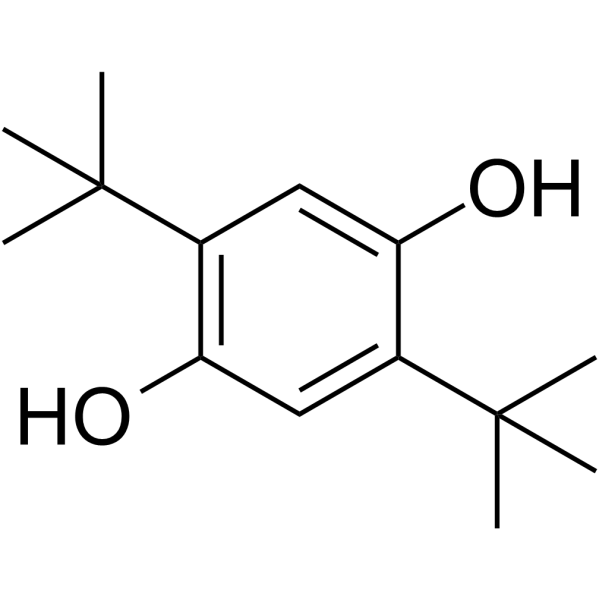
2,5-Di-tert-butylhydroquinone (BHQ) (Compound 2), an indirect food additive, is a Sarco/endoplasmic reticulum Ca 2+ ATPase (SERCA) inhibitor with an IC50 of 400 nM. 2,5-Di-tert-butylhydroquinone disrupts the gating function of the residue Glu309 which prevents Ca 2+ from reaching their binding site. 2,5-Di-tert-butylhydroquinone regulates the activity of 5-lipoxygenase and COX-2 (IC50: 1.8 and 14.1 μM for 5-LO and COX-2, respectively) .
loading...
    loading...
Cat. No.: HY-W134423
CAS No.: 9002-18-0
Agar, microbiology tested, for cell culture (powder) is a jelly like substance that contains agarose and agar gel. Agar, microbiology tested, for cell culture (powder) can be isolated from the cell walls of red algae species such as Gelidium and Gracilaria (Ogonori). The gelation and melting of Agar, microbiology tested, for cell culture (powder) is based on the hydrogen bridge (physical gels), so the gelation is reversible. Agar, microbiology tested, for cell culture (powder) is widely used in food additives, plant tissue culture, microorganisms culture media, fingerprint recognition, and medical fields .
loading...
    loading...
Cat. No.: HY-W012952R
CAS No.: 4313-03-5
Synonyms: trans,trans-2,4-Heptadienall (Standard)
(2E,4E)-Hepta-2,4-dienal (Standard) is the analytical standard of (2E,4E)-Hepta-2,4-dienal. This product is intended for research and analytical applications. (2E,4E)-Hepta-2,4-dienal is a naturally occurring organic compound that belongs to the group of aldehydes. It is an unsaturated aldehyde with two conjugated double bonds, giving it unique chemical and physical properties. (2E,4E)-Hepta-2,4-dienal is commonly found in various plant sources, especially in spices such as parsley and coriander. It is used as a flavoring agent and food additive in the formulation of various foods such as baked goods, snacks and beverages. It is also used in the fragrance industry, especially in the production of perfume and cologne.
loading...
    loading...
Cat. No.: HY-N6660R
CAS No.: 621-71-6
Synonyms: Tricaprin (Standard); Glyceryl tridecanoate (Standard)
Trisdecanoin (Standard) is the analytical standard of Trisdecanoin. This product is intended for research and analytical applications. Trisdecanoin (Tricaprin; Glyceryl tridecanoate) is an orally available precursor of decanoic acid (DA precursor) that can be hydrolyzed to decanoic acid. Trisdecanoin and its metabolite capric acid not only provide the body with a quick source of energy, but can also affect lipid metabolism. Trisdecanoin is a major component of medium chain triglycerides (MCT), which has preventive or inhibitory properties for abdominal aortic aneurysms (AAA), inhibition of cardiovascular disease, and anti-androgen (NSAA) and anti-hyperglycemic properties. Trisdecanoin can be used as an additive in food, medicine and cosmetics .
loading...
    loading...
Cat. No.: HY-W010807
CAS No.: 540-10-3
Hexadecyl palmitate is an organic compound commonly used in the cosmetic industry as an emollient, thickener and skin conditioning agent. Cetyl palmitate is derived from a mixture of cetyl alcohol (a fatty alcohol) and palmitic acid (a saturated fatty acid). It is often used in skin care products such as moisturizers, lotions, and creams to improve their texture and Helps them glide smoothly on the skin. In addition to its use in cosmetics, cetyl palmitate is used in other industries including pharmaceuticals, food additives and lubricants. Overall, it's considered safe for use in personal care products, but like any other ingredient, it may cause irritation or an allergic reaction in some people.
loading...
    loading...
Cat. No.: HY-W013762
CAS No.: 77-94-1
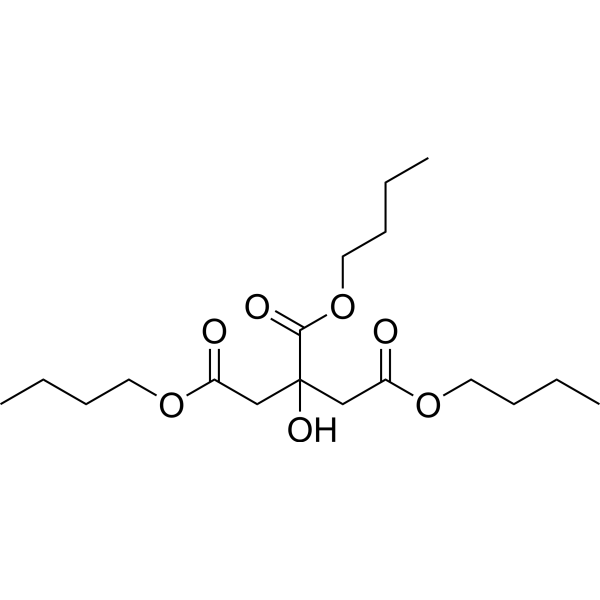
Tributyl citrate is a low-toxicity and orally active citrate ester with no genotoxicity or skin sensitizing activity. Tributyl citrate also acts as a plasticizer, solvent, FDA-approved indirect food additive, and topical anesthetic, among other uses. Tributyl citrate induces a needle-prick insensitivity response that lasts for more than 2 hours, and a 5% suspension of it temporarily eliminates the corneal reflex in rabbits. Tributyl citrate causes no significant systemic toxicity in rats and cats at most tested doses, and only may cause growth retardation and gastrointestinal reactions such as diarrhea and nausea at high doses or with repeated oral administration .
loading...
    loading...
Cat. No.: HY-Y0121
CAS No.: 103-36-6
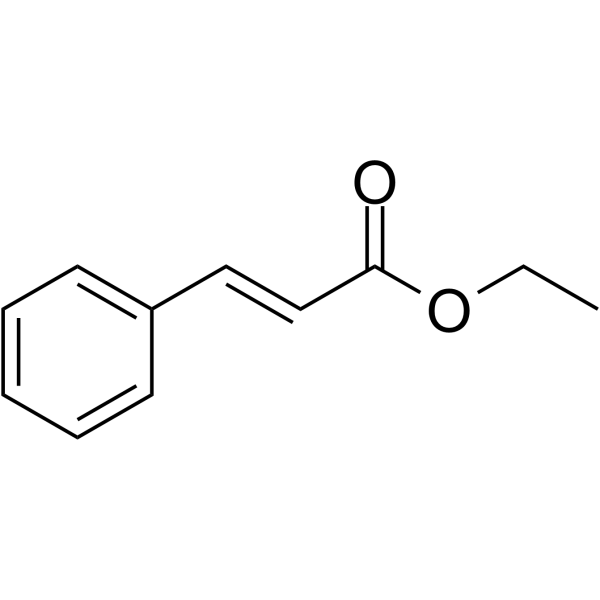
Ethyl cinnamate, an orally active chemical constituent of the rhizome of Kaempferia galanga, exhibits anti-cancer, nematocidal, sedative and vasorelaxant activities. Ethyl cinnamate is a fragrance ingredient used as a food flavor and additive for cosmetic products. Ethyl cinnamate is also an excellent clearing reagent for mammalian tissues. Ethyl cinnamate suppresses tumor growth through anti-angiogenesis by attenuating VEGFR2 signal pathway in colorectal cancer. Ethyl cinnamate inhibits the tonic contractions induced by high K+ and phenylephrine (PE) with respective IC50 values of 0.30 mM and 0.38 mM in rat aorta .
loading...
    loading...
Cat. No.: HY-W017187
CAS No.: 3602-55-9
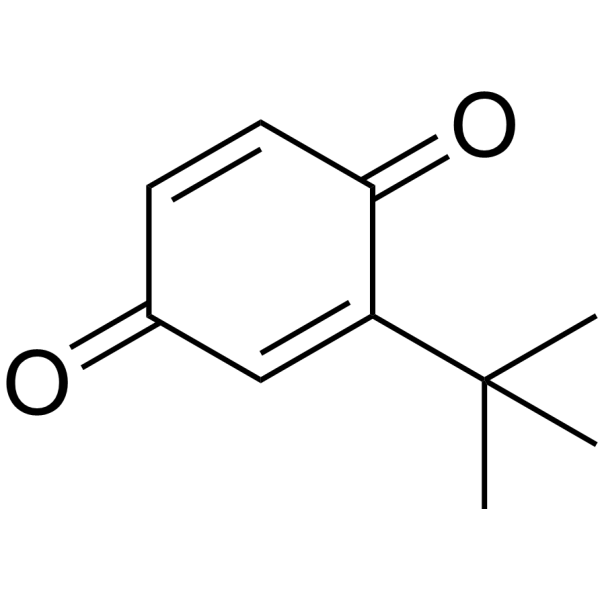
2-tert-Butyl-1,4-benzoquinone is a food additive oxidant, an electrophilic metabolite of Butylated hydroxyanisole (HY-B1066), and an antibacterial agent. 2-tert-Butyl-1,4-benzoquinone reduces virulence factors, activates Nrf2, and induces S-arylation of its negative regulator Keap1. 2-tert-Butyl-1,4-benzoquinone induces HO-1. 2-tert-Butyl-1,4-benzoquinone exhibits quorum sensing inhibitory activity against Chromobacterium violaceum .
loading...
    loading...
Cat. No.: HY-W770203
Synonyms: DG(18:1/0:0/18:2)-d5
1-Oleoyl-2-linoleoyl-rac-glycerol-d5 (DG(18:1/0:0/18:2)-d5) is the deuterium labeled 1-Oleoyl-2-linoleoyl-rac-glycerol (HY-W777107). 1-Oleoyl-2-linoleoyl-rac-glycerol (DG(18:1/0:0/18:2)) is a diacylglycerol, which is composed of a linoleic acid and an oleic acid. 1-Oleoyl-2-linoleoyl-rac-glycerol can be found in dry-cured ham, and acts as the food additive .
loading...
    loading...
Cat. No.: HY-Y0543R
CAS No.: 620-02-0
5-Methylfurfural (Standard) is the analytical standard of 5-Methylfurfural. This product is intended for research and analytical applications. 5-Methylfurfural is a chemical that can be utilized as food additive, intermediate in the production of agrochemicals, and precursor of certain anti-cancer natural products. 5-Methylfurfural is formed during the photoexposition of ranitidine hydrochloride. 5-Methylfurfural is an organic compound. 5-Methylfurfural has a strong tendency to be further hydrogenated to 2,5-dimethylfuran (DMF). 5-Methylfurfural can predominantly evoke skin inflammation and barrier disintegration. 5-Methylfurfural degrades native DNA through the formation of single-strand breaks .
loading...
    loading...
Cat. No.: HY-N7402
CAS No.: 6378-65-0
Target:  

Others

Hexyl hexanoate is a fruit aroma component with potential food and beverage additive activity. Hexyl hexanoate is found in alcoholic beverages and is used to blend fruit flavors. Hexyl hexanoate is present in many fruits, Parmesan cheese, alcoholic beverages, and black tea. Hexyl hexanoate is a volatile component produced as a result of fruit ripening. Toxicity assessments of hexyl hexanoate showed that it is not mutagenic and that exposure is below safety thresholds for repeated dose, reproduction, and local respiratory toxicity. Hexyl hexanoate is also below thresholds in skin sensitization assessments, and for phototoxicity and photosensitization, the results showed that it does not present a relevant risk. Hexyl hexanoate is considered non-persistent, non-bioaccumulative, and non-toxic according to the environmental criteria of the International Fragrance Association .
loading...
    loading...
Cat. No.: HY-W010807R
CAS No.: 540-10-3
Research Areas:  

Others

Hexadecyl palmitate (Standard) is the analytical standard of Hexadecyl palmitate. This product is intended for research and analytical applications. Hexadecyl palmitate is an organic compound commonly used in the cosmetic industry as an emollient, thickener and skin conditioning agent. Cetyl palmitate is derived from a mixture of cetyl alcohol (a fatty alcohol) and palmitic acid (a saturated fatty acid). It is often used in skin care products such as moisturizers, lotions, and creams to improve their texture and Helps them glide smoothly on the skin. In addition to its use in cosmetics, cetyl palmitate is used in other industries including pharmaceuticals, food additives and lubricants. Overall, it's considered safe for use in personal care products, but like any other ingredient, it may cause irritation or an allergic reaction in some people.
loading...
    loading...
Cat. No.: HY-W013762R
CAS No.: 77-94-1
Research Areas:  

Others

Tributyl citrate (Standard) is the analytical standard of Tributyl citrate. This product is intended for research and analytical applications. Tributyl citrate is a low-toxicity and orally active citrate ester with no genotoxicity or skin sensitizing activity. Tributyl citrate also acts as a plasticizer, solvent, FDA-approved indirect food additive, and topical anesthetic, among other uses. Tributyl citrate induces a needle-prick insensitivity response that lasts for more than 2 hours, and a 5% suspension of it temporarily eliminates the corneal reflex in rabbits. Tributyl citrate causes no significant systemic toxicity in rats and cats at most tested doses, and only may cause growth retardation and gastrointestinal reactions such as diarrhea and nausea at high doses or with repeated oral administration .
loading...
    loading...
Cat. No.: HY-Y0121R
CAS No.: 103-36-6
Ethyl cinnamate (Standard) is the analytical standard of Ethyl cinnamate. This product is intended for research and analytical applications. Ethyl cinnamate, an orally active chemical constituent of the rhizome of Kaempferia galanga, exhibits anti-cancer, nematocidal, sedative and vasorelaxant activities. Ethyl cinnamate is a fragrance ingredient used as a food flavor and additive for cosmetic products. Ethyl cinnamate is also an excellent clearing reagent for mammalian tissues. Ethyl cinnamate suppresses tumor growth through anti-angiogenesis by attenuating VEGFR2 signal pathway in colorectal cancer. Ethyl cinnamate inhibits the tonic contractions induced by high K+ and phenylephrine (PE) with respective IC50 values of 0.30 mM and 0.38 mM in rat aorta .
loading...
    loading...
Cat. No.: HY-Y0121S1
CAS No.: 1336882-58-6
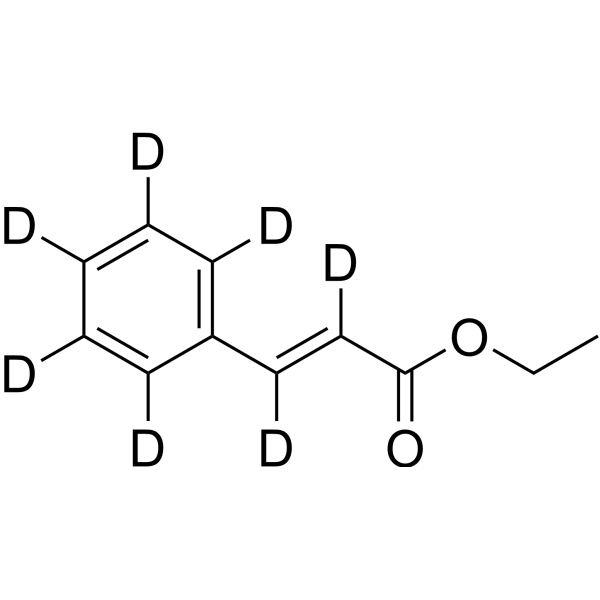
Ethyl cinnamate-d7 is deuterated labeled Ethyl cinnamate (HY-Y0121). Ethyl cinnamate, an orally active chemical constituent of the rhizome of Kaempferia galanga, exhibits anti-cancer, nematocidal, sedative and vasorelaxant activities. Ethyl cinnamate is a fragrance ingredient used as a food flavor and additive for cosmetic products. Ethyl cinnamate is also an excellent clearing reagent for mammalian tissues. Ethyl cinnamate suppresses tumor growth through anti-angiogenesis by attenuating VEGFR2 signal pathway in colorectal cancer. Ethyl cinnamate inhibits the tonic contractions induced by high K+ and phenylephrine (PE) with respective IC50 values of 0.30 mM and 0.38 mM in rat aorta .
loading...
    loading...
Cat. No.: HY-B1580
CAS No.: 4075-81-4
Synonyms: Propionic acid calcium
Calcium propionate (Propionic acid calcium) is a calcium salt of Propionic acid with oral activity, which can be hydrolyzed into propionate and calcium ions. Calcium propionate elevates intracellular ROS levels in tumor cells, depletes GSH, reduces mitochondrial membrane potential, and thereby induces tumor cell apoptosis. In mouse colitis models, Calcium propionate modulates inflammatory factors such as IFN-γ, calprotectin, and Pglyrp3, ameliorating intestinal inflammation and metabolic disorders. In ruminants, Calcium propionate serves as a gluconeogenic precursor, regulating rumen fermentation and microbial diversity; in high-fat diet rats, it alters gut microbiota composition and affects blood biochemical parameters. Calcium propionate is commonly used as a food and feed additive, and is also used in research related to hypocalcemia, dyslipidemia, colitis, and lung cancer .
loading...
    loading...
Cat. No.: HY-W012399R
CAS No.: 88-58-4
2,5-Di-tert-butylhydroquinone (Standard) is the analytical standard of 2,5-Di-tert-butylhydroquinone. This product is intended for research and analytical applications. 2,5-Di-tert-butylhydroquinone (BHQ) (Compound 2), an indirect food additive, is a Sarco/endoplasmic reticulum Ca 2+ ATPase (SERCA) inhibitor with an IC50 of 400 nM. 2,5-Di-tert-butylhydroquinone disrupts the gating function of the residue Glu309 which prevents Ca 2+ from reaching their binding site. 2,5-Di-tert-butylhydroquinone regulates the activity of 5-lipoxygenase and COX-2 (IC50: 1.8 and 14.1 μM for 5-LO and COX-2, respectively) .
loading...
    loading...
Cat. No.: HY-Y0286
CAS No.: 506-87-6
Synonyms: Hartshorn salt, 99%
Ammonium carbonate (Ammonium carbonate), 99% is a solid amino compound that functions as a buffer, pH regulator, pore-forming agent, and electrocatalytic oxidation substrate. Ammonium carbonate, 99% is a GRAS-grade direct food additive with no restricted daily intake specified by FAO/WHO, and it shows no acute skin toxicity, clinical signs of toxicity, or effects on body weight in rats. Ammonium carbonate, 99% undergoes electrocatalytic oxidation in alkaline solutions with a Pt/C catalyst (carbonate adsorption interferes with activity). Ammonium carbonate, 99% can serve as a fuel for low-temperature polymer fuel cells and anion exchange membrane fuel cells (with performance superior to pure ammonia), and can also form pores in the carrier-free Pt cathode catalyst layer after low-temperature decomposition, thereby enhancing catalyst activity under low-humidity conditions and the performance of proton exchange membrane fuel cells .
loading...
    loading...
Cat. No.: HY-112624E
CAS No.: 9004-54-0
Synonyms: Dextran 0.8; Dextran D0.8; Dextran T0.8(MW 640-960)
Dextran T0.8 (Dextran 0.8; Dextran T0.8(MW 640-960)) is a food additive with a porous network structure that exhibits strong hydration capacity and low browning activity. Dextran T0.8 (MW 800) can improve the coagulation of dairy products and is used as a prebiotic in baked goods. Dextran T0.8 (MW 800) is non-toxic to HeLa cells at a concentration of ~500 μg/mL and has a low relative browning rate in the Maillard reaction. The Dextran series of compounds are also natural polysaccharide drug carriers that can be connected to drugs through covalent bonding methods such as ester bonds, amide bonds or click chemistry, or self-assembled to form carriers such as nanoparticles and hydrogels. Dextran is biodegradable and biocompatible, and can achieve targeted delivery and controlled release of drugs. Dextran derivatives can prolong the half-life of drugs, increase local concentrations, and reduce the activity of immune clearance .
loading...
    loading...

