233 Results for "

aqueous solution

" in MedChemExpress (MCE) Product Catalog:
Products (233)

233 Results for "aqueous solution" in MCE Product Catalog:

Cat. No.: HY-W133963
CAS No.: 9063-38-1
Carboxyl methylstarch sodium is an anionic polymer prepared by carboxymethylation of starch, with properties of stability, thickening ability and film-forming capacity . Carboxyl methylstarch sodium exhibits metal adsorption activity and can remove copper ions and cadmium ions from aqueous solutions. Carboxyl methylstarch sodium can serve as a hydrophilic shell component for AIE-active luminescent polymer nanoprobes to achieve high water dispersibility. Carboxyl methylstarch sodium can bind to vancomycin without altering the in vitro antibacterial activity of vancomycin. Carboxyl methylstarch sodium possesses biodegradable, non-toxic and environmentally friendly characteristics. Carboxyl methylstarch sodium can be applied to relevant researches in various fields such as food, medicine and industry .
loading...
    loading...
Cat. No.: HY-34409
CAS No.: 107-86-8
Synonyms: 3-Methylbut-2-en-1-al
3-Methyl-2-butenal (3-Methylbut-2-en-1-al) is an enone aldehyde that occurs in hops (Humulus lupulus L.) .
loading...
    loading...
Cat. No.: HY-P1696
CAS No.: 114376-16-8
Target:  

Renin

Research Areas:  

Cardiovascular Disease

U 70714E is a Renin inhibitor with an IC50 of 3.0 nM. U 70714E is used for the research of renin-related hypertension .
loading...
    loading...
Cat. No.: HY-121120
CAS No.: 77900-75-5
Isosulfazecin (iSZ) is a novel β-lactam antibiotic produced by Pseudomonas acidophilus sp., synthesized in a nutrient solution supplemented with glycerol and sodium thiosulfate under aerobic conditions in parallel with bacterial growth. It is purified by chromatography and crystallization from aqueous methanol. Physicochemical analysis determined its molecular formula to be C12H20N4O9S, showing a structure with a β-lactam ring, methoxyl and sulfonate groups. Acid hydrolysis yields L-alanine and D-glutamic acid. iSZ is a diastereomer of sulfadiazine and exhibits moderate activity against both gram-positive and gram-negative bacteria, but potent activity against bacteria resistant to β-lactam antibiotics .
loading...
    loading...
Cat. No.: HY-D0877
CAS No.: 29915-38-6
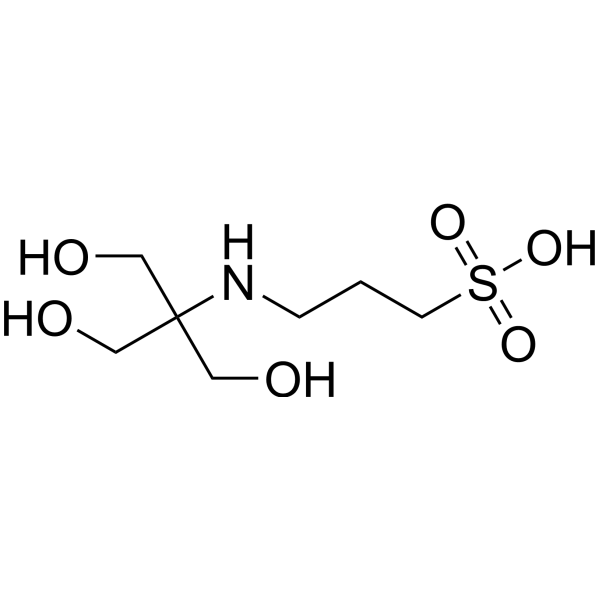
TAPS is an aminosulfonate-based lysozyme stabilizer and connexin channel inhibitor. TAPS maintains the native structure of lysozyme in aqueous solution at pH 7.0 and significantly protects it from heat-induced denaturation. TAPS directly inhibits the activity of heteromeric connexin 32/connexin 26 channels (Cx32/Cx26) via its protonated form, and this inhibitory effect is dependent on the presence of connexin 26. TAPS reduces connexin channel-mediated solute exchange in a recombinant liposome system, resulting in a decreased degree of liposome density shift in transport-specific separation assays. TAPS is a critical compound for investigating the structure and function of connexin channels .
loading...
    loading...
Cat. No.: HY-D1859
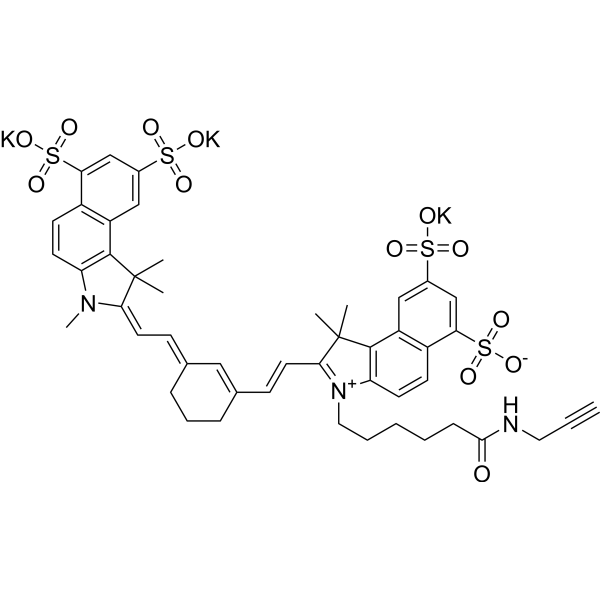
Sulfo-Cy7.5 alkyne is a dye derivative of Cyanine 7.5 (Cy7.5) (HY-D0926) containing a sulfonate ion and an alkyne functional group. The sulfonate ion increases the water solubility of the compound, making it suitable for use in aqueous solutions. Cy7.5 is a near-infrared fluorescent dye commonly used for biolabeling and cell imaging. The alkyne functionality of Sulfo-Cy7.5 alkyne can react with molecules containing the azide functionality to form covalent bonds. Sulfo-Cy7.5 alkyne can bind to biomolecules such as proteins and antibodies to track their location and dynamic changes in biological samples.
loading...
    loading...
Cat. No.: HY-N2362S8
Synonyms: DL-2-Aminopropionic acid-d7
DL-Alanine-d7 (DL-2-Aminopropionic acid-d7) is deuterium labeled DL-Alanine. DL-alanine, an orally active amino acid, is the racemic compound of L- and D-alanine. DL-alanine is employed both as a reducing and a capping agent, used with silver nitrate aqueous solutions for the production of nanoparticles. DL-alanine can be used for the research of transition metals chelation, such as Cu(II), Zn(II), Cd(11). DL-alanine, a sweetener, is classed together with glycine and sodium saccharin. DL-alanine plays a key role in the glucose-alanine cycle between tissues and liver .
loading...
    loading...
Cat. No.: HY-W099581R
CAS No.: 14933-09-6
Synonyms: SB3-14 (Standard); DMAPS (Standard)
Sulfobetaine-14 (Standard) is the analytical standard of Sulfobetaine-14. This product is intended for research and analytical applications. Zwittergent 3-14 (DMAPS) is a zwitterionic detergent commonly used in biochemistry and molecular biology for the solubilization and purification of membrane-bound proteins and other hydrophobic biomolecules, which have both hydrophilic and hydrophobic moieties , so that it has good detergency properties, making it suitable for stabilizing membrane proteins in aqueous solutions. In addition, DMAPS has been used in various techniques such as electrophoresis and chromatography for the separation and analysis of biomolecules. The long The hydrocarbon chains provide it with good membrane penetration and solubilization capabilities, while the sulfonate and quaternary ammonium groups ensure water solubility and charge neutrality.
loading...
    loading...
Cat. No.: HY-Y0532R
CAS No.: 128-09-6
Synonyms: Succinchlorimide (Standard)
N-Chlorosuccinimide (Standard) (Succinchlorimide (Standard)) is the analytical standard of N-Chlorosuccinimide (HY-Y0532). This product is intended for research and analytical applications. N-Chlorosuccinimide (Succinchlorimide) is an oxidizing, hydrolyzable biochemical reagent with bactericidal and amoebicidal activities. N-Chlorosuccinimide can either form N-chloramines via concerted transfer of Cl + or hydrolyze in aqueous solution to produce hypochlorous acid/hypochlorite. N-Chlorosuccinimide is effective in killing Shigella dysenteriae, Escherichia typhi and cysts of Entamoeba histolytica. N-Chlorosuccinimide can be formulated into fast-dispersing, fully soluble water purification tablets. N-Chlorosuccinimide is used in studies related to bacterial infections and parasitic infections .
loading...
    loading...
Cat. No.: HY-D0005
CAS No.: 4733-39-5
Target:  

Amyloid-β

Research Areas:  

Neurological Disease

Bathocuproine is a phenanthroline chelator that binds specifically to Cu +. Bathocuproine preferentially binds Cu + over Cu 2+ to form a chromogenic complex, which is used to detect the oxidation state of copper in biomolecules. Bathocuproine undergoes concentration-dependent self-association to form dimers, and it can engage in aromatic stacking interactions with aromatic residues of (Kd ≈ 1 mM). Bathocuproine is applicable to research related to Alzheimer's disease .
loading...
    loading...
Cat. No.: HY-150119
CAS No.: 1312013-29-8
Target:  

Sirtuin

Research Areas:  

Endocrinology

2'/3'-O-Acetyl-ADP-ribose sodium is an inhibitor of cell division and oocyte maturation. 2'/3'-O-Acetyl-ADP-ribose sodium causes delay or arrest of oocyte maturation and blastomere division in embryos. 2'/3'-O-Acetyl-ADP-ribose sodium is produced by Sir2 family deacetylases during the coupling of histone/protein deacetylation with β-NAD+ cleavage. In neutral or weakly alkaline aqueous solutions, the direct enzymatic product forms of 2'/3'-O-Acetyl-ADP-ribose sodium, namely the 2'-O-acetyl form and the 3'-O-acetyl form, undergo intramolecular lactone exchange reaction and interconvert with each other .
loading...
    loading...
Cat. No.: HY-N2362S9
CAS No.: 221080-39-3
Synonyms: DL-2-Aminopropionic acid-13C2,15N2
DL-Alanine- 13C2, 15N (DL-2-Aminopropionic acid- 13C2, 15N) is 13C and 15N labeled DL-Alanine. DL-alanine, an orally active amino acid, is the racemic compound of L- and D-alanine. DL-alanine is employed both as a reducing and a capping agent, used with silver nitrate aqueous solutions for the production of nanoparticles. DL-alanine can be used for the research of transition metals chelation, such as Cu(II), Zn(II), Cd(11). DL-alanine, a sweetener, is classed together with glycine and sodium saccharin. DL-alanine plays a key role in the glucose-alanine cycle between tissues and liver .
loading...
    loading...
Cat. No.: HY-D3233
Ctrl-BDPS1 is a BODIPY-based control probe that shows no response to copper ions (exhibiting two emission peaks at 575 nm and 708 nm; the maximum excitation wavelength is at 627 nm). Ctrl-BDPS1 has no fluorescent response to Cu + .
loading...
    loading...
Cat. No.: HY-W075708
CAS No.: 41699-93-8
Synonyms: Cu(II) Meso-Tetra(4-carboxyphenyl)porphyrin
Target:  

MOFs

Research Areas:  

Others

Cu (II) MTCPP (Cu (II) Meso-Tetra (4-carboxyphenyl) porphyrin) is a copper coordination complex. Cu (II) MTCPP-sensitized TiO2 nanotubes are a type of visible-light photocatalyst. Cu (II) MTCPP-sensitized TiO2 nanotubes can expand the wavelength response range, transfer excited electrons more efficiently, and separate photogenerated electron-hole pairs .
loading...
    loading...
Cat. No.: HY-N2362S7
CAS No.: 144476-54-0
Synonyms: DL-2-Aminopropionic acid-13C3-4
DL-Alanine- 13C3-4 (DL-2-Aminopropionic acid- 13C3-4) is the 13C-labeled DL-Alanine (HY-N2362). DL-Alanine, an orally active amino acid, is the racemic compound of L- and D-alanine. DL-alanine is employed both as a reducing and a capping agent, used with silver nitrate aqueous solutions for the production of nanoparticles. DL-alanine can be used for the research of transition metals chelation, such as Cu(II), Zn(II), Cd(11). DL-alanine, a sweetener, is classed together with glycine and sodium saccharin. DL-alanine plays a key role in the glucose-alanine cycle between tissues and liver .
loading...
    loading...
Cat. No.: HY-155927
CAS No.: 474922-82-2
Synonyms: 14:0 PEG1000 PE ammonium; 1,2-Dimyristoyl-sn-glycero-3-phosphoethanolamine-N-[methoxy(polyethylene glycol)-1000] ammonium
Target:  

Liposome

Research Areas:  

Others

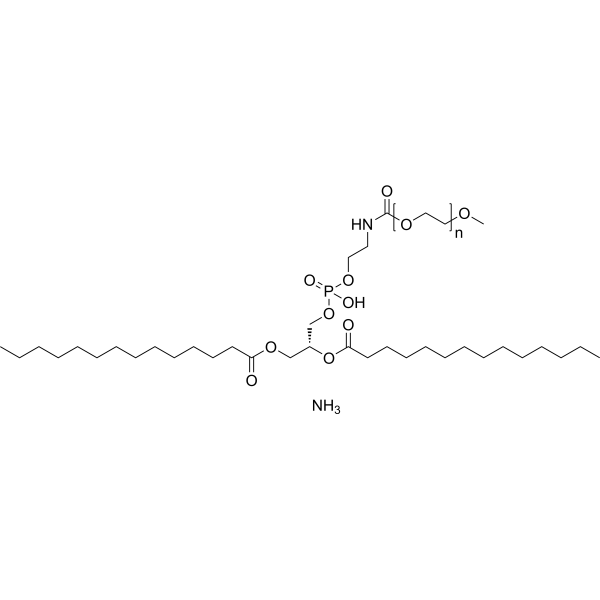
DMPE-PEG1000 ammonium (14:0 PEG1000 PE ammonium) is a methoxy-capped PEGylated phospholipid containing two C14 lipid chains and a PEG1000 group. DMPE-PEG1000 can be incorporated as a PEG-lipid component into conjugated polymer nanoparticles for nanoparticle surface modification. DMPE-PEG1000 ammonium is applicable for researches related to PEGylated nanoparticle preparation and fluorescence imaging .
loading...
    loading...
Cat. No.: HY-W087904
CAS No.: 5989-81-1
Synonyms: α-D-Lactose hydrate
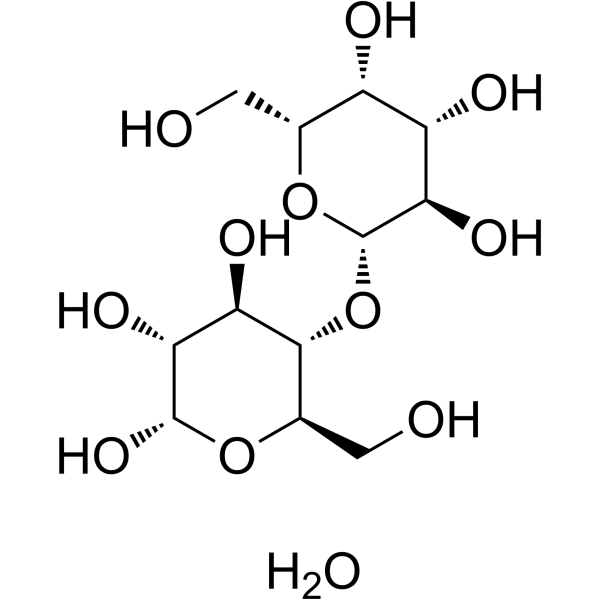
α-Lactose hydrate (α-D-Lactose (hydrate)) is the primary carbohydrate in the milk of most mammals. α-Lactose hydrate consists of glucose and galactose and exists in two isomeric forms, α and β. α-Lactose hydrate has numerous applications in the food and pharmaceutical industries, such as serving as a bulking or agglomerating agent, and a diluent for pigments, flavors or enzymes .
loading...
    loading...
Cat. No.: HY-W110540
CAS No.: 25852-47-5
Poly(ethylene glycol) dimethacrylate (MW 550) is a photopolymerizable poly(ethylene glycol)-based macromer and biocompatible crosslinking agent with a molecular weight of approximately 550. Poly(ethylene glycol) dimethacrylate (MW 550) can form photopolymerized hydrogels. Poly(ethylene glycol) dimethacrylate (MW 550) can be used for research on tissue engineering and drug delivery .
loading...
    loading...
Cat. No.: HY-W110540A
CAS No.: 25852-47-5
Poly(ethylene glycol) dimethacrylate (MW 750) is a photopolymerizable poly(ethylene glycol)-based macromer and biocompatible crosslinking agent with a molecular weight of approximately 750. Poly(ethylene glycol) dimethacrylate (MW 750) can form photopolymerized hydrogels. Poly(ethylene glycol) dimethacrylate (MW 750) can be used for research on tissue engineering and drug delivery .
loading...
    loading...
Cat. No.: HY-W110540C
CAS No.: 25852-47-5
Poly(ethylene glycol) dimethacrylate (MW 1000) is a photopolymerizable poly(ethylene glycol)-based macromer and biocompatible crosslinking agent with a molecular weight of approximately 1000. Poly(ethylene glycol) dimethacrylate (MW 1000) can form photopolymerized hydrogels. Poly(ethylene glycol) dimethacrylate (MW 1000) can be used for research on tissue engineering and drug delivery .
loading...
    loading...

