
2735 Results for "

complexes

" in MedChemExpress (MCE) Product Catalog:
Products (2735)

2735 Results for "complexes" in MCE Product Catalog:

Cat. No.: HY-W509797
CAS No.: 21618-92-8
5-(3',4'-Dihydroxyphenyl)-γ-valerolactone is an intestinal microbiota metabolite of (-)-Epicatechin (HY-N0001). 5-(3',4'-Dihydroxyphenyl)-γ-valerolactone downregulates TNF-α-stimulated phosphorylation of IKK and IκBα, inhibits the transcriptional activation of NF-κB, and suppresses the expression of adhesion molecules and chemokines. 5-(3',4'-Dihydroxyphenyl)-γ-valerolactone promotes autophagy, alleviates oxidative stress, maintains osteoblast differentiation, induces G1 phase arrest, inhibits adipogenesis, and scavenges ABTS free radicals. 5-(3',4'-Dihydroxyphenyl)-γ-valerolactone inhibits the adhesion of uropathogenic Escherichia coli to bladder epithelial cells; when used in combination with Curcumin (HY-N0005), it downregulates the NLRP3 and NOX2/Nrf2 signaling pathways, thereby reducing microglial activation. 5-(3',4'-Dihydroxyphenyl)-γ-valerolactone can be used in research related to diabetes, atherosclerosis, osteoporosis, obesity, neurodegenerative diseases involving microglial activation, and urinary tract infections .
loading...
    loading...
Cat. No.: HY-100072
CAS No.: 51544-64-0
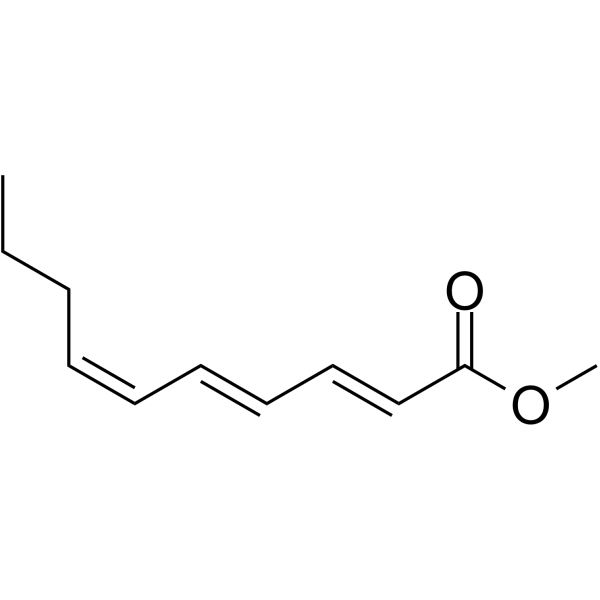
Synonyms: Methyl (2E,4E,6Z)-decatrienoate
Target:  

Sex Pheromone

Research Areas:  

Infection

(2E,4E,6Z)-Methyl deca-2,4,6-trienoate (Methyl (2E,4E,6Z)-decatrienoate) is the aggregation pheromone of the brown-winged green bug, Plautia stali. (2E,4E,6Z)-Methyl deca-2,4,6-trienoate exposed to daylight in solutions and/or on dispensers used for field trapping can readily isomerize to form complex mixtures of isomers, thus causing a concern about lure stability and longevity .
loading...
    loading...
Cat. No.: HY-106539
CAS No.: 182815-44-7
Purity:  ≥95.0%
Colesevelam hydrochloride is an orally active bile acid sequestrant, lipid-lowering agent, and glycemic control agent. Colesevelam hydrochloride binds bile acids in the gastrointestinal tract to form nonabsorbable complexes, interrupts enterohepatic recirculation and increases fecal bile acid elimination. Colesevelam hydrochloride modulates FXR, TGR5, and Cyp7a1 activity and triggers cAMP signaling and GLP-1 release. Colesevelam hydrochloride alters hepatic lipid and glucose metabolism, suppresses hepatic glycogenolysis, reduces hepatic triglyceride and cholesterol levels, and increases LDL-C (low-density lipoprotein cholesterol) clearance. Colesevelam hydrochloride can be used for the research of type 2 diabetes mellitus, hypercholesterolemia, and alcohol-related liver disease .
loading...
    loading...
Cat. No.: HY-114402
CAS No.: 2316837-10-0
Purity:  99.61%
Research Areas:  

Cancer

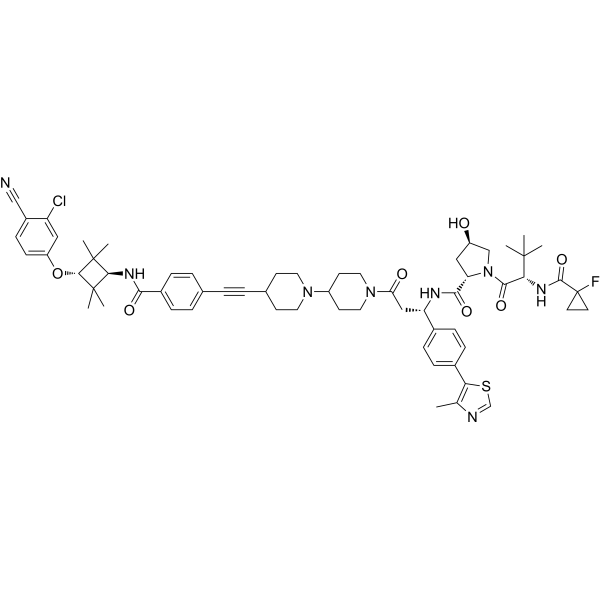
ARD-69 is a PROTAC degrader based on the E3 ubiquitin ligase VHL and targeting the androgen receptor, which can induce androgen receptor (AR) protein degradation in AR-positive prostate cancer cells. ARD-69 inhibits AR-regulated gene expression, binds to the AR ligand binding domain at one end and binds to VHL at the other end, prompting AR to be recruited to the E3 ubiquitin ligase complex, triggering proteasome degradation, thereby inhibiting AR signaling pathways and downstream gene expression (such as PSA, TMPRSS2). ARD-69 can be used to study of castration-resistant prostate cancer (mCRPC) .
loading...
    loading...
Cat. No.: HY-122822
CAS No.: 2260944-68-9
GSK699 is a KAT2A/B/PCAF/GCN5 PROTAC degrader . GSK699 induces proteasome-dependent degradation of KAT2A, KAT2B, PCAF and GCN5, regulates the histone acetyltransferase activity of the SAGA complex, and reduces the level of histone H3K9ac. GSK699 inhibits the growth of neuroblastoma, acute myeloid leukemia and small cell lung cancer cells. GSK699 reduces the production of inflammatory cytokines and chemokines, and impairs LPS-stimulated immune cell responses. GSK699 is applicable to research related to acute myeloid leukemia, small cell lung cancer, neuroblastoma and inflammatory diseases .
loading...
    loading...
Cat. No.: HY-122895A
CAS No.: 2285446-67-3
Purity:  98.09%
Target:  

Apoptosis PDI

Research Areas:  

Cancer

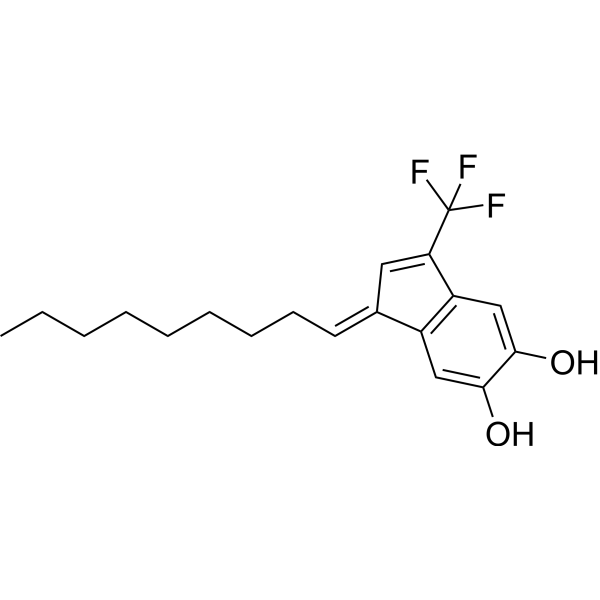
(E/Z)-E64FC26 is a mixture complex of E-E64FC26 and Z-E64FC26. E64FC26 (E-E64FC26) is a potent pan-inhibitor of the protein disulfide isomerase (PDI) family, with IC50s of 1.9, 20.9, 25.9, 16.3, and 25.4 μM against PDIA1, PDIA3, PDIA4, TXNDC5, and PDIA6. E64FC26 shows anti-myeloma activity .
loading...
    loading...
Cat. No.: HY-124940
CAS No.: 446877-42-5
Research Areas:  

Cardiovascular Disease

CPU-228 is a complex class III antiarrhythmic agent. CPU-228 concentration-dependently blocks the activities of the rapid component 50 of the delayed rectifier potassium channel (IKr) and the L-type calcium channel (ICa,L), with an IC50 value of 0.909 μM for ICa,L current. CPU-228 produces negative inotropic effects and induces mild, non-frequency-dependent prolongation of the effective refractory period (ERP) in isolated left atria. CPU-228 reduces the incidence of torsades de pointes (TDP) in anesthetized rabbits and inhibits ischemia/reperfusion-induced arrhythmias in rats. CPU-228 can be used in studies related to torsades de pointes .
loading...
    loading...
Cat. No.: HY-134813A
Target:  

Ras

Research Areas:  

Cancer

MRTX1133 formic is a noncovalent, potent, and selective KRAS G12D inhibitor. MRTX1133 formic optimally fills the switch II pocket and extends three substituents to favorably interact with the protein, resulting in an estimated KD against KRAS G12D of 0.2 pM. MRTX1133 formic prevents SOS1-catalyzed nucleotide exchange and/or formation of the KRASG12D/GTP/RAF1 complex, thereby inhibiting mutant KRAS-dependent signal transduction. MRTX1133 formic shows efficacy in tumor models harboring KRAS G12D mutations .
loading...
    loading...
Cat. No.: HY-13803R
CAS No.: 1403254-99-8
Synonyms: EPZ-6438 (Standard); E-7438 (Standard)
Tazemetostat (Standard) is the analytical standard of Tazemetostat. This product is intended for research and analytical applications. Tazemetostat (EPZ-6438) is a potent, selective and orally available EZH2 inhibitor. Tazemetostat inhibits the activity of human polycomb repressive complex 2 (PRC2)-containing wild-type EZH2 with a Ki value of 2.5 nM. Tazemetostat inhibits EZH2 with IC50s of 11 and 16 nM in peptide assay and nucleosome assay, respectively. Tazemetostat inhibits rat EZH2 with an IC50 of 4 nM. Tazemetostat also inhibits EZH1 with an IC50 of 392 nM. Tazemetostat induces apoptosis and differentiation specifically in SMARCB1-deleted MRT cells .
loading...
    loading...
Cat. No.: HY-150177
CAS No.: 3672-15-9
Mannose 6 phosphate is an essential precursor for mannosyl glycoconjugates, including lipid-linked oligosaccharides (LLO; glucose3mannose9GlcNAc2-P-P-dolichol) used for protein N-glycosylation. Mannose 6 phosphate causes specific LLO cleavage. Mannose 6 phosphate causes specific degradation of G3M9Gn2-P-P-Dol. Complexes containing Mannose 6 phosphate can remodel the dermal collagen network, improve skin biomechanical properties, and reverse visible signs of aging. Mannose 6 phosphate can be used in research related to skin aging .
loading...
    loading...
Cat. No.: HY-162813
Research Areas:  

Cancer

PROTAC SMARCA2/4 degrader-25 is a selective SMARCA2/SMARCA4 PROTAC degrader with selective anti-tumor activity. PROTAC SMARCA2/4 degrader-25 is activated by endogenous GSH, forms a ternary complex with SMARCA2 or SMARCA4 and VHL E3 ubiquitin ligase, and mediates degradation via the proteasome pathway. PROTAC SMARCA2/4 degrader-25 induces DNA damage and apoptosis, and inhibits cancer cell proliferation. PROTAC SMARCA2/4 degrader-25 is applicable to lung cancer-related research .
loading...
    loading...
Cat. No.: HY-174996
CAS No.: 3031840-36-2
Research Areas:  

Cancer

NEP162 is a BRD4 PROTAC degrader based on the E3 ubiquitin ligase GID4, with DC50 values of 1.2 μM and 1.6 μM in SW480 and U2OS cells, respectively, and a Kd value of 0.13 µM for GID4. NEP162 bridges the E3 ligase GID4 and BRD4 to form a ternary complex, promotes polyubiquitination and subsequent degradation of BRD4 via the ubiquitin-proteasome system, reduces the proliferation capacity of tumor cells and induces apoptosis. NEP162 can be used for research on cancers such as osteosarcoma, colorectal cancer and non-small cell lung cancer .
loading...
    loading...
Cat. No.: HY-175280
CAS No.: 3095033-62-5
Lck degrader-1 is a molecular glue degrader that recruits cereblon to target LCK and CK1α. Lck degrader-1 promotes the formation of the LCK/CRBN-DDB1 ternary complex with an EC50 of 77.1 nM, and induces the degradation of LCK and CK1α. LCK degradation induced by Lck degrader-1 depends on the G415-containing helical G-loop degron, and maintains LCK-degrading activity in cells with the LCK T316I gatekeeper mutation. Lck degrader-1 can be used for research related to T-cell acute lymphoblastic leukemia (T-ALL) and LCK inhibitor resistance .
loading...
    loading...
Cat. No.: HY-176702
CAS No.: 3078322-88-7
Research Areas:  

Cancer

PRMT5-MTA-IN-5 (Compound 7) is an orally active, irreversible PRMT5-MTA complex (PRMT5•MTA) inhibitor (IC50=1.15 nM). PRMT5-MTA-IN-5 blocks arginine methylation and inhibits ribosomal RNA processing and cell cycle-related protein expression. PRMT5-MTA-IN-5 potently inhibits proliferation in MTAP-deficient tumor cells. PRMT5-MTA-IN-5 is promising for research of MTAP-deficient solid tumors, such as liver, breast, and pancreatic cancers .
loading...
    loading...
Cat. No.: HY-178042
CAS No.: 2756257-56-2
Target:  

Ras Akt ERK

Research Areas:  

Cancer

SS-3091 is a pan-KRas inhibitor active across KRas G12D, KRas G12C, KRas G12V, KRas G12S mutants, with minimal effects on non-KRas-driven cancer cells. SS-3091 binds to the KRas·ARaf interaction interface, destabilizes the complex, and attenuates KRas activity. SS-3091 suppresses phosphorylation of S6K, Akt, and ERK. SS-3091 reduces proliferation and decreases colony formation of cancer cells bearing KRas G12 mutations. SS-3091 can be used for the research of KRas-driven cancers .
loading...
    loading...
Cat. No.: HY-180787
Target:  

PROTACs IRE1

Research Areas:  

Cancer

G6374 is a IRE1 PRORAC degrader with DC50 values of 0.04 μM (AMO1) and 0.13 μM (KMS27), an EC50 value of 0.11 μM, and KD values of 0.56 nM and 90.2 nM for IRE1 and VHL, respectively. G6374 binds to the ATP pocket of the IRE1 kinase domain and VHL to form a ternary complex that recruits CRL2 VHL, inducing K48-linked polyubiquitination of IRE1 at lysine residues K704 and K717, which in turn drives proteasomal degradation of monomeric and dimeric IRE1. G6374 can be used for the research of multiple myeloma .
loading...
    loading...
Cat. No.: HY-180809
CAS No.: 3049753-10-5
Target:  

PARP

Research Areas:  

Cancer

YCH3292, a derivative of YCH189 (HY-155993) is a potent, selective and orally active PARP1/2 inhibitor with IC50 both <0.001 nM. YCH3292 can increase the stability of PARP-DNA complexes. YCH3292 exhibits robust antiproliferative activity. YCH3292 can induce double-strand breaks in DNA, increase the protein levels of γH2AX, P-RPA32, and P-Chk1 and induce tumor cells S or G2/M phase arrest and apoptosis. YCH3292 can inhibit tumor growth in MC38 xenograft model .
loading...
    loading...
Cat. No.: HY-183080
CAS No.: 2872654-37-8
Research Areas:  

Infection

VNRX-14079 is an antibacterial agent and PBP2 inhibitor, with an IC50 value of 1.7 μM against wild-type Neisseria gonorrhoeae PBP2. VNRX-14079 forms a covalent bond with Ser310 of PBP2, interacts with multiple residues of PBP2 to stabilize the complex, and induces an inward conformational change of the β34 loop in chimeric PBP2. VNRX-14079 exhibits antibacterial activity against Ceftriaxone (HY-B0712)-resistant Neisseria gonorrhoeae strains. VNRX-14079 can be used in the research of gonorrhea .
loading...
    loading...
Cat. No.: HY-183575
Research Areas:  

Cancer

JQ1-JX5 is a DCAF16-based BRD4 PROTAC degrader. JQ1-JX5 covalently modifies Cys58 of DCAF16, promotes ternary complex formation with BRD4, enables BRD4 ubiquitination and proteasomal degradation. JQ1-JX5 induces time-dependent degradation of BRD4 long and short isoforms in AGS cells with DC50 of 43.97 and 16.77 nM. JQ1-JX5 can be used for the research of cancer, such as acute myeloid leukemia .
loading...
    loading...
Cat. No.: HY-183644
Target:  

Lysyl Oxidase

Research Areas:  

Cardiovascular Disease

LNO 9 is an orally active LOXL2 inhibitor and NO donor, with an IC50 of 0.17 μM against human LOXL2. LNO 9 competitively binds to the LTQ cofactor of LOXL2 to form an irreversible complex, thereby inhibiting collagen oxidation and abnormal cross-linking. LNO 9 releases nitric oxide (NO) to increase cGMP levels in pulmonary artery smooth muscle cells. LNO 9 inhibits hypoxia-induced collagen modification and possesses vasodilatory activity. LNO 9 ameliorates right ventricular hypertrophy and pulmonary artery medial thickness in rat models induced by hypoxia and Monocrotaline (HY-N0750), and can be used for research on pulmonary hypertension .
loading...
    loading...

