254 Results for "

internalization

" in MedChemExpress (MCE) Product Catalog:
Products (254)

254 Results for "internalization" in MCE Product Catalog:

Cat. No.: HY-D3573
Research Areas:  

Others

AF488 C5 Maleimide is a thiol-reactive Fluorescent dye used to label target proteins and bacterial structures. AF488 C5 Maleimide irreversibly forms covalent thioether conjugates with cysteine ​​thiol groups. AF488 C5 Maleimide stabilizes pre-formed globular low-molecular-weight Tau protein oligomers by blocking cysteine-dependent tau protein aggregation, allowing observation of the internalization process of tau protein oligomers into neuronal cells via confocal microscopy. AF488 C5 Maleimide can label cysteine-modified pili; the outer membrane permeability varies among different bacterial species, allowing imaging via epifluorescence microscopy using a FITC filter set .
loading...
    loading...
Cat. No.: HY-P11887
CAS No.: 1174559-81-9
VHPKQHR is a peptide-based delivery enhancer that binds to VCAM-1. VHPKQHR enables intracellular internalization of relevant nanomaterials and facilitates the targeted delivery of miRNA inhibitors to inflamed endothelial cells and endothelial cells activated by disturbed flow. When conjugated with magnetic mesoporous silica nanoparticles, VHPKQHR achieves targeted accumulation at atherosclerotic plaque sites. When displayed on the surface of polyelectrolyte complex micelles, VHPKQHR enhances the relevant effects of anti-miR-92a in Apoe -/- mice. When conjugated with ultrasmall superparamagnetic iron oxide nanoparticles, VHPKQHR forms a contrast agent for T1-weighted magnetic resonance imaging. VHPKQHR can be used in research related to atherosclerosis, stenosis and rheumatoid arthritis .
loading...
    loading...
Cat. No.: HY-P990049
CAS No.: 2648260-93-7
Synonyms: JMT-101; MRG003 Antibody

Target:  

EGFR ADC Antibodies

Research Areas:  

Cancer

Becotatug (JMT-101) is a humanized IgG1 monoclonal antibody targeting epidermal growth factor receptor (EGFR), and serves as the antibody component of the antibody-drug conjugate Becotatug vedotin (HY-171265). Becotatug specifically binds to the extracellular domain of EGFR, induces receptor internalization and degradation, blocks the EGFR signaling pathway, and mediates antibody-dependent cellular cytotoxicity. When conjugated to monomethyl auristatin E (MMAE) (HY-15162) via a valine-citrulline cleavable linker, Becotatug enables targeted delivery of cytotoxic drugs to EGFR-positive tumor cells. Becotatug can be used for research related to non-small cell lung cancer, nasopharyngeal carcinoma, and head and neck squamous cell carcinoma. .
loading...
    loading...
Cat. No.: HY-P990049A
Synonyms: JMT-101 (powder); MRG003 Antibody (powder)
Target:  

EGFR

Research Areas:  

Cancer

Becotatug (powder) (JMT-101) is a humanized IgG1 monoclonal antibody targeting epidermal growth factor receptor (EGFR), and serves as the antibody component of the antibody-drug conjugate Becotatug vedotin (HY-171265). Becotatug (powder) specifically binds to the extracellular domain of EGFR, induces receptor internalization and degradation, blocks the EGFR signaling pathway, and mediates antibody-dependent cellular cytotoxicity. When conjugated to monomethyl auristatin E (MMAE) (HY-15162) via a valine-citrulline cleavable linker, Becotatug (powder) enables targeted delivery of cytotoxic drugs to EGFR-positive tumor cells. Becotatug (powder) can be used for research related to non-small cell lung cancer, nasopharyngeal carcinoma, and head and neck squamous cell carcinoma .
loading...
    loading...
Cat. No.: HY-P991342
Synonyms: PCA062 antibody

Target:  

Cadherin

Research Areas:  

Cancer

CQY684 (PCA062 antibody) is a monoclonal antibody targeting CDH3/P-cadherin, which locks P-cadherin in an X-dimer conformation and enhances the stability of this adhesion structure. CQY684 induces P-cadherin phosphorylation and promotes its dissociation from the cytoplasmic region of P-cadherin. As an endocytosis inducer and lysosome-targeting agent, CQY684 facilitates the internalization of the P-cadherin-CQY684 complex and improves the turnover efficiency of P-cadherin. CQY684 serves as a platform for the delivery of intracellular anticancer compounds, which is achieved through the targeted lysosomal transport of the antibody-P-cadherin complex. CQY684 is applicable to the research of breast cancer, esophageal cancer, and head and neck cancer .
loading...
    loading...
Cat. No.: HY-P992449
Synonyms: PRLR ADC antibody

Target:  

ADC Antibodies

Research Areas:  

Cancer

REGN2878 (PRLR ADC antibody) is a monoclonal antibody targeting the prolactin receptor (PRLR) and can block prolactin‑mediated activation of PRLR. REGN2878 exhibits an equilibrium dissociation constant (KD) of 1.05 nM and an IC50 of 0.344 nM for human PRLR. REGN2878 can be rapidly internalized and degraded in lysosomes by PRLR‑positive tumor cells, showing antigen‑specific binding and targeted enrichment properties. REGN2878 derivatives can be used as an immunoPET agent for antigen‑specific imaging of PRLR‑related tumors, and can also serve as a component of ADCs to exert anti‑tumor activity in breast cancer xenograft models. REGN2878 can be used in the research of breast cancer and prostate cancer. Isotype Comparison HY-P99001 .
loading...
    loading...
Cat. No.: HY-108556AR
CAS No.: 2387505-58-8
RWJ-56110 dihydrochloride (Standard) is the analytical standard of RWJ-56110 (dihydrochloride) (HY-108556A). This product is intended for research and analytical applications. RWJ-56110 dihydrochloride is a potent, selective, peptide-mimetic inhibitor of PAR-1 activation and internalization (binding IC50=0.44 uM) and shows no effect on PAR-2, PAR-3, or PAR-4. RWJ-56110 dihydrochloride inhibits the aggregation of human platelets induced by both SFLLRN-NH2 (IC50=0.16 μM) and thrombin (IC50=0.34 μM), quite selective relative to U46619 (HY-108566). RWJ-56110 dihydrochloride blocks angiogenesis and blocks the formation of new vessels in vivo. RWJ-56110 dihydrochloride induces cell apoptosis .
loading...
    loading...
Cat. No.: HY-144012
CAS No.: 474922-84-4
Purity:  99.83%
Synonyms: 16:0 PEG2000 PE ammonium; 1,2-Dipalmitoyl-sn-glycero-3-phosphoethanolamine-N-[methoxy(polyethylene glycol)-2000] ammonium
Target:  

Liposome

Research Areas:  

Others

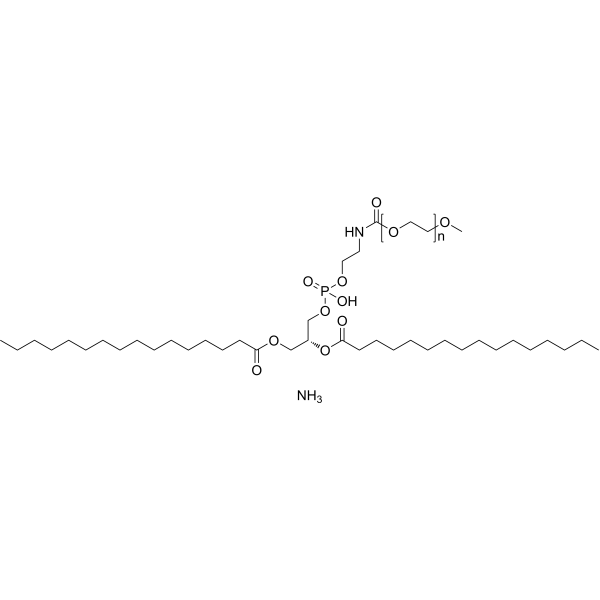
DPPE-PEG2000 ammonium (16:0 PEG5000 PE) is a polymer-lipid conjugate and LipoParticle stabilizer with a PEG chain of 5,000 g/mol molecular weight attached to its polar head, and it can be internalized by biological membranes. DPPE-PEG2000 ammonium enables LipoParticle to maintain colloidal stability after 20-fold dilution in PBS or cell culture medium, and prevents aggregate formation during lyophilization and rehydration. DPPE-PEG2000 ammonium helps enhance the non-cytotoxic property of LipoParticle formulations against human osteoblasts. DPPE-PEG2000 ammonium serves as a PEG lipid functional end group for synthesizing liposomes (LPs), is used in the design of conjugated polymer nanoparticles, and applies to research related to bone and joint infections .
loading...
    loading...
Cat. No.: HY-178219
CAS No.: 3103526-19-5
Bis-sulfone-(PEG24)-Glu-Val-Cit-PAB-MMAE is a drug-linker conjugate for ADC. Bis-sulfone-(PEG24)-Glu-Val-Cit-PAB-MMAE contains a linker and bioactive small molecule toxins MMAE (HY-15162). Bis-sulfone-(PEG24)-Glu-Val-Cit-PAB-MMAE can conjugate with NN2101 (HY-P991293) (anti c-Kit) for synthesizing NN3201. NN3201 rapidly internalizes and inhibits SCF-driven signaling, thereby delivering its payload to induce cell cycle arrest and apoptosis. NN3201 exhibits significant c-Kit-dependent anti-tumor efficacies in various tumor models, such as small cell lung cancer (SCLC) and gastrointestinal stromal tumor (GIST) .
loading...
    loading...
Cat. No.: HY-P1345C
[DArg10, Aib20] TLQP-21 is a functional antagonist of the complement 3a receptor (C3aR), with EC50 values of 854 nM, 1007 nM, and 1715 nM against human C3aR. [DArg10, Aib20] TLQP-21 recruits β-arrestin, activates Gi3, mediates β-arrestin-dependent receptor internalization, and does not induce calcium influx. [DArg10, Aib20] TLQP-21 inhibits the adrenergic‑induced lipolysis enhancement mediated by TLQP-21 (HY-P1345) and also inhibits the β-hexosaminidase secretion induced by C3a63-77. [DArg10, Aib20] TLQP-21 can be used in research related to asthma and inflammatory diseases .
loading...
    loading...
Cat. No.: HY-P991381
Synonyms: PPMX-T003; TSP-A18
JST‑TfR09 (PPMX‑T003) is a human monoclonal antibody (mAb) targeting transferrin receptor 1 (TfR1/CD71). JST‑TfR09 blocks the binding of transferrin to TfR1, inhibits TfR1 internalization, and suppresses cellular iron uptake. JST‑TfR09 triggers ferritin degradation via activating the autolysosomal system, promotes ROS production and lipid peroxidation, and ultimately induces ferroptosis. JST‑TfR09 exhibits cytotoxicity toward human erythroblasts differentiated from hematopoietic stem cells. JST-TfR09 can be used in leukemia research. Recommended isotype control: Human IgG1 lambda, Isotype Control (HY-P99992) .
loading...
    loading...
Cat. No.: HY-P992209

Research Areas:  

Cancer

Anti-CD318/CDCP1 Antibody (25A11) is an anti-CDCP1 antibody. Anti-CD318/CDCP1 Antibody (25A11) drives the internalization of antibody-CDCP1 complexes, inhibits cancer cell migration and invasion, and blocks downstream migration/invasion signaling pathways. When conjugated with saponin, Anti-CD318/CDCP1 Antibody (25A11) mediates the killing of prostate cancer cells. When conjugated with saponin, this antibody acts as an immunotoxin to inhibit the growth and metastasis of primary prostate tumors in mouse xenograft models. Anti-CD318/CDCP1 Antibody (25A11) is applicable to prostate cancer-related research .
loading...
    loading...
Cat. No.: HY-148776
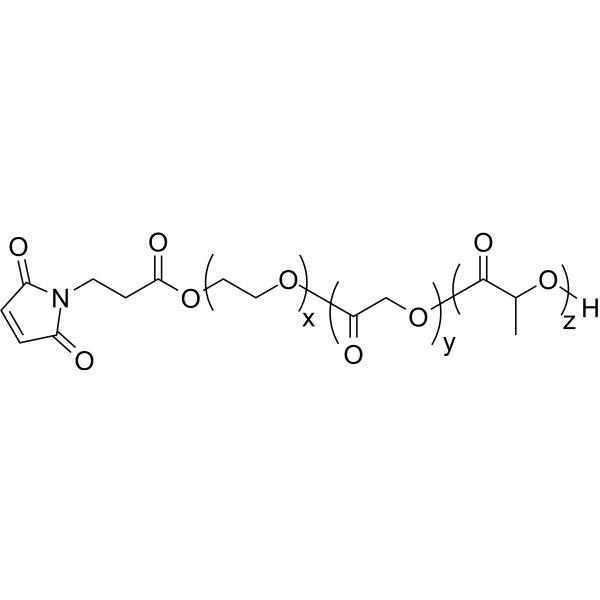
PLGA-PEG-MAL (20kDA-5.0kDA, LA:GA ratio 50:50) is a degradable amphiphilic polymer nanocarrier of poly (lactic acid-co-glycolic acid)-block-poly (ethylene glycol) (PLGA-PEG-Mal) that allows covalent modification of functional molecules. PLGA-PEG-MAL (20kDA-5.0kDA, LA:GA ratio 50:50) serves as a core polymer for nanoparticle synthesis, and also acts as a nanoparticle component for site-specific antibody conjugation to construct artificial antigen-presenting cells. PLGA-PEG-MAL (20kDA-5.0kDA, LA:GA ratio 50:50) is applicable for drug delivery-related research .
loading...
    loading...
Cat. No.: HY-119234
CAS No.: 41609-06-7
Target:  

CXCR

Research Areas:  

Inflammation/Immunology

CX4338 is a CXCL8-mediated chemokine inhibitor with the activity of inhibiting CXCR2-mediated cell migration. CX4338 selectively inhibits CXCR2-mediated β-arrestin-2 recruitment and receptor internalization while enhancing CXCR2-mediated MAPK activation. CX4338 also inhibited CXCL8-induced chemotaxis, showing efficacy in CXCR2-overexpressing cells and human neutrophils. In vivo, CX4338 significantly reduced LPS-induced neutrophil numbers in mouse bronchoalveolar lavage fluid. The mechanism of action of CX4338 is to selectively inhibit CXCR2-mediated β-arrestin-2 activation, which is sufficient to inhibit CXCL8-mediated chemotaxis .
loading...
    loading...
Cat. No.: HY-177204
DSPE-PEG2000-WLSEAGPVVTVRALRGTGSW is a polypeptide targeting tenascin-X (Tenascin-X) that can be conjugated with liposomes and exosomes. DSPE-PEG2000-WLSEAGPVVTVRALRGTGSW specifically binds to Tenascin-X on the surface of cardiomyocytes, mediates receptor-dependent uptake of nanocarriers, enhances targeted drug delivery of cargo to cardiomyocytes, and increases drug accumulation in cardiac tissue. DSPE-PEG2000-WLSEAGPVVTVRALRGTGSW protects cardiomyocytes treated with LPS, alleviates oxidative stress, repairs mitochondrial function, inhibits ferroptosis and apoptosis, and downregulates the secretion of pro-inflammatory cytokines at the same time. DSPE-PEG2000-WLSEAGPVVTVRALRGTGSW improves cardiac injury and pathological morphology in mice with sepsis-induced cardiomyopathy, restores GPX4 expression, and promotes the internalization of cardiomyocyte-derived exosomes, making it suitable for related research on sepsis-induced cardiomyopathy, myocardial ischemia-reperfusion injury, and other conditions .
loading...
    loading...
Cat. No.: HY-183607
Research Areas:  

Cancer

SMU-3k is a STING activator and PD-L1 inhibitor, with a PD-L1 IC50 of 106 nM, a KD of 386 nM for human PD-L1, and a KD of 352 nM for murine PD-L1. SMU-3k activates the STING pathway, induces phosphorylation of TBK1 and IRF3, and promotes the expression of IFN-β, IL-6 and CXCL10. SMU-3k blocks the PD-1/PD-L1 interaction, reduces PD-L1 levels and induces PD-L1 internalization. Through dual immunomodulation, SMU-3k exerts synergistic tumor growth inhibitory effects in a mouse colon cancer model. SMU-3k can be used for the research of colon cancer .
loading...
    loading...
Cat. No.: HY-185280
CAS No.: 3042848-25-6
Synonyms: HS-20089 (DAR6); GSK5733584 (DAR6)
Research Areas:  

Cancer

Mocertatug rezetecan (DAR6) (HS-20089 (DAR6); GSK5733584 (DAR6)) is an antibody-drug conjugate (ADC) targeting B7-H4, composed of Mocertatug (HY-P991703) and MC-Gly-Gly-Phe-Gly-(R)-Cyclopropane-Exatecan (HY-148668). Mocertatug rezetecan (DAR6) delivers a TOPO1 inhibitor payload. It binds to B7-H4-expressing tumor cells, triggers ADC internalization, and induces S-phase cell cycle arrest, cytotoxicity, and bystander killing effect. Mocertatug rezetecan (DAR6) exhibits dose-dependent tumor growth inhibition in breast cancer and endometrial cancer CDX models. It can be used in research related to platinum-resistant ovarian cancer, breast cancer, endometrial cancer, cholangiocarcinoma, and cervical cancer .
loading...
    loading...
Cat. No.: HY-185280A
CAS No.: 3042848-25-6
Synonyms: HS-20089 (DAR4); GSK5733584 (DAR4)
Research Areas:  

Cancer

Mocertatug rezetecan (DAR4) (HS-20089 (DAR4); GSK5733584 (DAR4)) is an antibody-drug conjugate (ADC) targeting B7-H4, composed of Mocertatug (HY-P991703) and MC-Gly-Gly-Phe-Gly-(R)-Cyclopropane-Exatecan (HY-148668). Mocertatug rezetecan (DAR4) delivers a TOPO1 inhibitor payload. It binds to B7-H4-expressing tumor cells, triggers ADC internalization, and induces S-phase cell cycle arrest, cytotoxicity, and bystander killing effect. Mocertatug rezetecan (DAR4) exhibits dose-dependent tumor growth inhibition in breast cancer and endometrial cancer CDX models. It can be used in research related to platinum-resistant ovarian cancer, breast cancer, endometrial cancer, cholangiocarcinoma, and cervical cancer .
loading...
    loading...
Cat. No.: HY-D3210
CAS No.: 2098632-04-1
Target:  

Fluorescent Dye

Research Areas:  

Inflammation/Immunology

DCM-KPV is a fluorescent probe targeting the human intestinal oligopeptide transporter PEPT1/SLC15A1 receptor (λex=480 nm, λem=620-670 nm). DCM-KPV specifically binds to PepT1 via its KPV domain and mediates receptor-targeted internalization, thus effectively accumulating in the cytoplasm and nucleus of cells overexpressing this receptor. DCM-KPV has the advantages of long emission wavelength, high emission efficiency, low photobleaching, and negligible cytotoxicity. DCM-KPV maintains stable fluorescence intensity under continuous illumination, exhibiting extremely high live cell compatibility. DCM-KPV can specifically accumulate at colonic inflammatory sites through the intestinal mucosa, enabling direct non-invasive visual differentiation between chronic and acute ulcerative colitis groups and the normal group .
loading...
    loading...
Cat. No.: HY-N9941
CAS No.: 30377-37-8
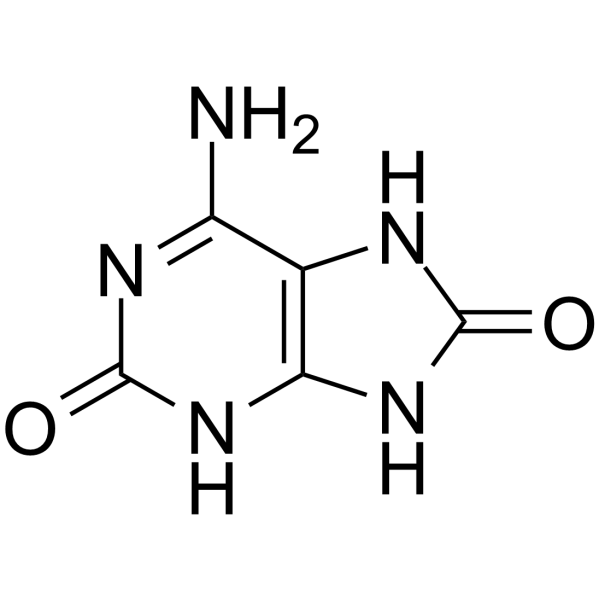
2,8-Dihydroxyadenine is an endogenous metabolite that forms crystals in urine, leading to kidney stone formation and crystal deposition in the kidney. 2,8-Dihydroxyadenine induces crystal-induced tubular injury, inflammation, and fibrosis through crystal deposition in renal tubules, where crystals are excreted in urine, internalized by tubular epithelial cells, and transported to the interstitium. 2,8-Dihydroxyadenine upregulates CD44 expression near crystals, TNF-α signaling through NF-κB, and mTORC1 signaling, while inducing actin stress fiber formation and cytoskeletal remodeling. 2,8-Dihydroxyadenine downregulates epithelial-mesenchymal transition pathways and oxidative phosphorylation, and induces changes affecting inflammation, metabolism, and cell cycle regulation. 2,8-Dihydroxyadenine can be used in research on kidney disease, adenine phosphoribosyltransferase deficiency, and kidney stone disease .
loading...
    loading...