2567 Results for "

acyclovir-resistant strains

" in MedChemExpress (MCE) Product Catalog:
Products (2567)

2567 Results for "acyclovir-resistant strains" in MCE Product Catalog:

Cat. No.: HY-P11927
Target:  

GSK-3

Research Areas:  

Cancer

BiS3 is a selective hyperbivalent macrocyclic peptide GSK3β inhibitor, with a Kd of 0.28 nM and an IC50 of 4.8 nM against GSK3β. BiS3 is applicable to studies related to GSK3β signaling and colorectal cancer .
loading...
    loading...
Cat. No.: HY-130654
CAS No.: 2597167-24-1
Synonyms: VH032-C2-PEG4-N3
Research Areas:  

Cancer

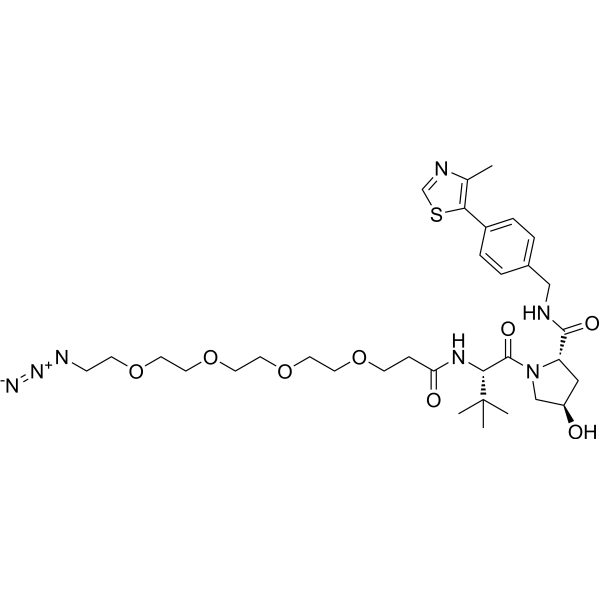
(S,R,S)-AHPC-C2-PEG4-N3 (VH032-C2-PEG4-N3) is a synthesized E3 ligase ligand-linker conjugate that incorporates the (S,R,S)-AHPC based VHL ligand and 4-unit PEG linker used in PROTAC technology. (S,R,S)-AHPC-C2-PEG4-N3 can be used in the synthesis of vRucaparib-TP4 (HY-130647). vRucaparib-TP4 a highly potent PARP1 degrader with a half-maximal degrading concentration (DC50) of 82 nM . (S,R,S)-AHPC-C2-PEG4-N3 is a click chemistry reagent, it contains an Azide group and can undergo copper-catalyzed azide-alkyne cycloaddition reaction (CuAAc) with molecules containing Alkyne groups. It can also undergo strain-promoted alkyne-azide cycloaddition (SPAAC) reactions with molecules containing DBCO or BCN groups.
loading...
    loading...
Cat. No.: HY-L950
2,787 compounds

Seven-membered rings are privileged medium-sized scaffolds with distinct twist-chair conformations and greater 3D diversity than five- and six-membered rings. Their flexible conformations allow induced-fit protein binding and precise pharmacophore positioning. They also modulate Fsp³, pKa and logP to enhance solubility and permeability. Azepanes, oxepanes and benzodiazepines serve as bioisosteres for hit discovery against GPCRs, ion channels and kinases.

Widely found in plant and microbial alkaloids, seven-membered heterocycles show excellent biocompatibility and target affinity. They underpin many approved drugs for CNS, cancer and infectious diseases, including diazepam, imipramine and carbamazepine. Clinical candidates further highlight their unique value. However, high transannular strain and synthetic difficulty limit their availability, leaving them rare in standard screening libraries.

MCE 7 Membered Scaffold Library contains 2,792 structurally diverse, lead-like molecules covering azepanes, oxepanes, benzodiazepines and dibenzazepines. With varied substitutions, chiral centers and synthetic accessibility, it fills the shortage of medium-ring scaffolds. Ideal for HTS, virtual screening and SAR studies, these novel, patent-clear compounds offer a distinctive starting point for drug discovery in CNS disorders, oncology, antivirals and challenging targets such as PPIs.

Cat. No.: HY-12888
CAS No.: 907543-25-3
Target:  

Topoisomerase Bacterial

Research Areas:  

Infection

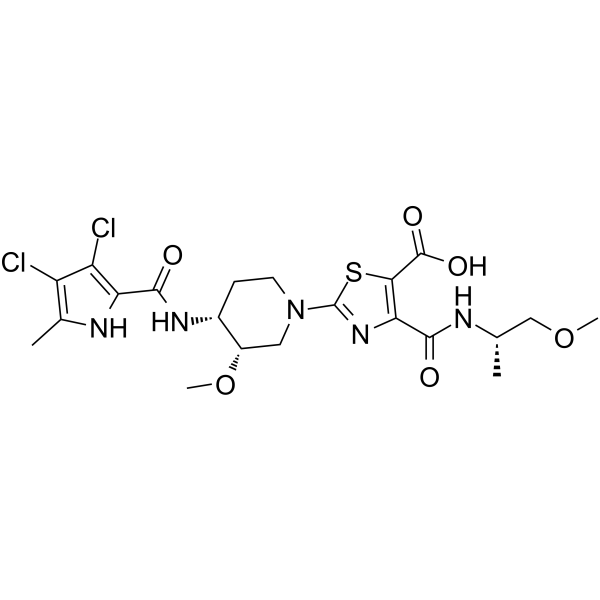
AZD5099 is an orally effective pyrrole amide inhibitor and antibacterial agent. AZD5099 shows over 10000-fold higher selectivity for bacterial type II topoisomerases than for human topoisomerase IIα, with a IC50 value of 0.032 μmol/L against Staphylococcus aureus GyrB, a IC50 of 0.760 μmol/L against Escherichia coli GyrB, a IC50 of 73 nM against Escherichia coli ParE, a Kd of 83.8 nmol/L for Staphylococcus aureus GyrB, and a IC50 of >50 μM against human topoisomerase IIα. AZD5099 inhibits rat Mrp2 ATPase activity, competitively binds to the ATP-binding site of bacterial type II topoisomerases, blocks enzyme activity, reduces bacterial DNA and RNA synthesis, disrupts DNA replication and transcription processes, and induces mitochondrial toxicity. AZD5099 exhibits activity against Gram-positive bacteria, fastidious Gram-negative bacteria and drug-resistant strains, reduces bacterial loads in mouse infection models, and has a low spontaneous resistance frequency. AZD5099 can be used in studies related to infections caused by Gram-positive bacteria and fastidious Gram-negative bacteria, methicillin-resistant Staphylococcus aureus infections, Streptococcus pneumoniae pulmonary infections, as well as Staphylococcus aureus and Escherichia coli infections .
loading...
    loading...
Cat. No.: HY-180525
Target:  

Influenza Virus

Research Areas:  

Infection

PB2-IN-2 is an orally active PB2 inhibitor with RNA-dependent RNA Polymerase (RNP) IC50 = 0.2 nM, LRA (Ligand Receptor Assay) EC50 = 0.8 nM, Cytopathic Effect (CPE) EC50 = 0.1 nM. PB2-IN-2 exhibits broad-spectrum, nanomolar antiviral potency against a panel of influenza A strains (including H1N1pdm09, Lyon/1337/2007/H1N1, Tex12-Like/H3N2, PR/8/34/H1N1, WSN/1933/H1N1, rPR8(H1N1)/H7N9 with EC50 = 1.5, 3.6, 3.7, 13.8, 2.9 and 9.8 nM and all the CC50 values > 2 μM. PB2-IN-2 possesses an excellent pharmacokinetic profile and metabolic stability. PB2-IN-2 can be used for anti-influenza research .
loading...
    loading...
Cat. No.: HY-P4948
CAS No.: 1926163-49-6
Research Areas:  

Others

Coumarin-phalloidin is a kind of phalloidin labeled with Coumarin (HY-N0709). Coumarin-phalloidin is a new type of actin probe that can be used for triple immunofluorescence microscopic observation of the cell skeleton .
loading...
    loading...
Cat. No.: HY-W127487
CAS No.: 479050-96-9
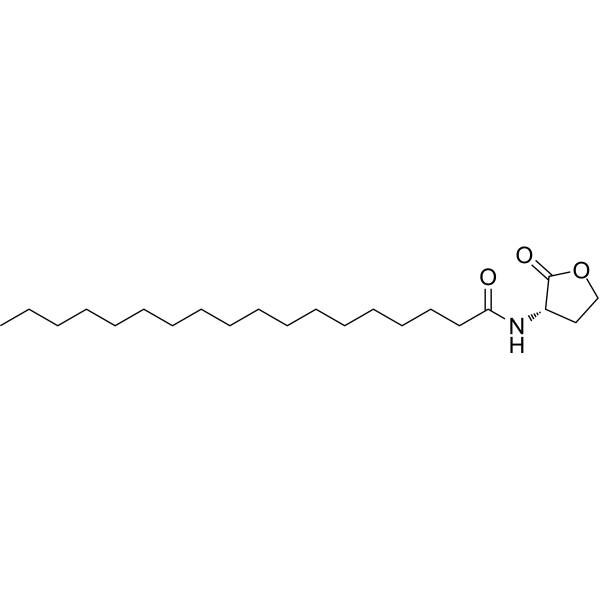
Quorum sensing is a regulatory system used by bacteria to control gene expression in response to increased cell density. This regulatory process manifests itself in a variety of phenotypes, including biofilm formation and virulence factor production. Coordinated gene expression is achieved through the production, release and detection of small diffusible signaling molecules called autoinducers. N-acylated homoserine lactones (AHLs) comprise a class of such autoinducers, each of which generally consists of a fatty acid coupled to a homoserine lactone (HSL). Modulation of bacterial quorum-sensing signaling systems to suppress pathogenesis represents a new approach to antimicrobial research for infectious diseases. AHLs differ in acyl length (C4-C18), C3 substitution (hydrogen, hydroxyl, or oxo group), and the presence or absence of one or more carbon-carbon double bonds in the fatty acid chain. These differences confer signaling specificity through the affinity of the LuxR family of transcriptional regulators. C18-HSL, one of four lipophilic long acyl side chain AHLs produced by the LuxI AHL synthase homolog SinI, is involved in quorum-sensing signaling in strains of Rhizobium meliloti (a nitrogen-fixing bacterial symbiont of the legume M. sativa) . C18-HSL and other hydrophobic AHLs tend to localize in the relatively lipophilic environment of bacterial cells and cannot diffuse freely across the cell membrane. Long-chain N-acyl homoserine lactones can be exported from cells by efflux pumps, or can be transported between communicating cells by extracellular outer membrane vesicles.
loading...
    loading...

