273 Results for "

co-factor

" in MedChemExpress (MCE) Product Catalog:
Products (273)

273 Results for "co-factor" in MCE Product Catalog:

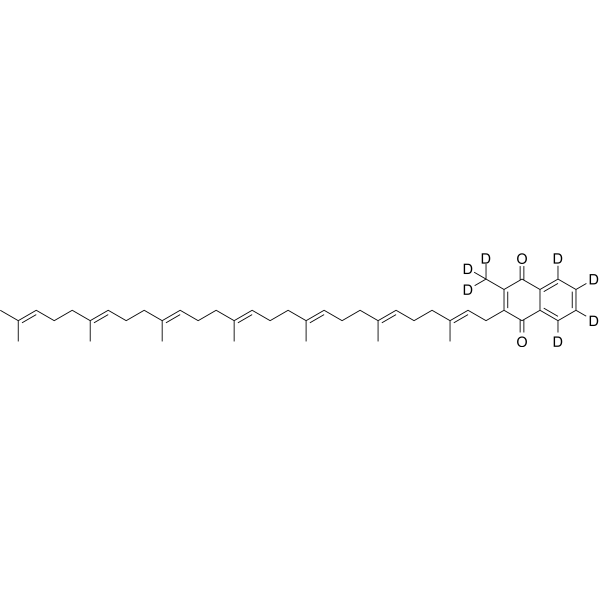
Cat. No.: HY-112499S
CAS No.: 1233937-31-9
Synonyms: Vitamin K2-7-d7; Vitamin K2(35)-d7; Vitamin MK-7-d7
Menaquinone-7-d7 is the deuterium labeled Menaquinone-7. Menaquinone-7 (Vitamin K2-7), belongs to a class of K2-vitamin homologs, is originally discovered as the anti-hemorrhagic factors . Menaquinone-7 (Vitamin K2-7) is identified as the most bioactive cofactor for the carboxylation reaction of Gla-proteins . Supplementation with Menaquinone-7 (Vitamin K2-7) is a pharmacological option for activating matrix Gla protein and intervening in the progression of calcific aortic valve stenosis (CAVS) .
loading...
    loading...
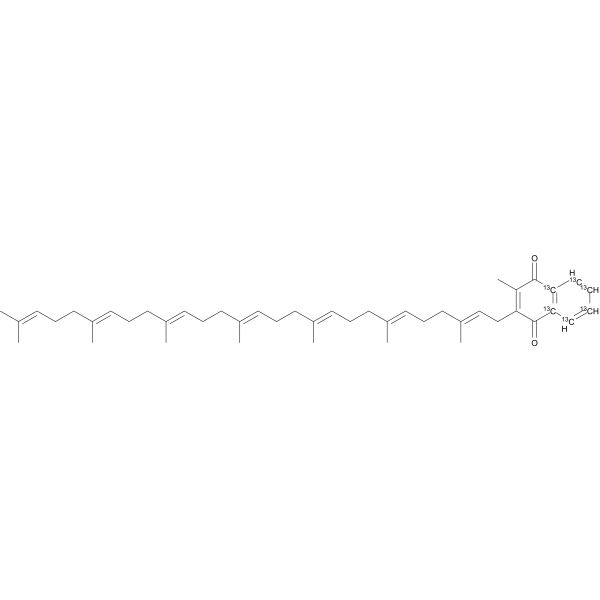
Cat. No.: HY-112499S1
Purity:  ≥96.0%
Synonyms: Vitamin K2-7-13C6; Vitamin K2(35)-13C6; Vitamin MK-7-13C6
Menaquinone-7- 13C6 is the 13C-labeled Menaquinone-7. Menaquinone-7 (Vitamin K2-7), belongs to a class of K2-vitamin homologs, is originally discovered as the anti-hemorrhagic factors . Menaquinone-7 (Vitamin K2-7) is identified as the most bioactive cofactor for the carboxylation reaction of Gla-proteins . Supplementation with Menaquinone-7 (Vitamin K2-7) is a pharmacological option for activating matrix Gla protein and intervening in the progression of calcific aortic valve stenosis (CAVS) .
loading...
    loading...
Cat. No.: HY-124655
CAS No.: 1897406-94-8
Target:  

LPL Receptor

Research Areas:  

Inflammation/Immunology

S1PL-IN-2 (Compound 28) is a potent sphingosine-1-phosphate lyase (S1PL) inhibitor with an IC50 of 120 nM. S1PL-IN-2 shows an IC50 of 230 nM on HEK293 cells. S1PL-IN-2 block the conversion of Vitamin B6 into the active pyridoxal-4-phosphate cofactor required for S1P lyase activity. S1PL-IN-2 can be used for the researches of inflammation and immunology, such as rheumatoid arthritis .
loading...
    loading...
Cat. No.: HY-181963
Research Areas:  

Cancer

ZINC-1000507824 is a non-covalent reversible RNA cytosine-5 methyltransferase NSUN2 inhibitor. ZINC-1000507824 targets the SAM cofactor binding pocket of NSUN2 and forms stable NSUN2-ligand complexes. ZINC-1000507824 destabilizes oncogenic mRNAs encoding PI3K/AKT and MAPK/ERK pathway components, attenuates growth signals, reduces proliferative drive, and restores therapy sensitivity in cancer cells. ZINC-1000507824 can be used for the research of NSUN2-driven malignancies .
loading...
    loading...
Cat. No.: HY-E71528
Research Areas:  

Others

2-epi-5-epi-Valiolone synthase (EC 4.2.3.152) exhibits high specificity for α-D-sedaripogonanone-7-phosphate. 2-epi-5-epi-Valiolone synthase (EC 4.2.3.152) requires a divalent metal ion (Zn2+ or Co2+) and a NAD+ cofactor, the latter of which is transiently reduced during the reaction. 2-epi-5-epi-Valiolone synthase (EC 4.2.3.152) participates in the biosynthesis of C7N-aminocyclic alcohols.
loading...
    loading...
Cat. No.: HY-116073
CAS No.: 1113-41-3
Target:  

Acyltransferase

Research Areas:  

Infection Cancer

L-Penicillamine is an orally active serine palmitoyltransferase (SPT) inhibitor. L-Penicillamine inactivates the PLP cofactor by forming adducts, thereby inhibiting SPT activity and reducing sphingolipid biosynthesis. L-Penicillamine not only blocks tumor access to vitamin B6, but also stabilizes the human papillomavirus 16 E6 oncoprotein monomer and inhibits its polymerization, exhibiting a unique anticancer mechanism. L-Penicillamine effectively delays the growth of Sarcoma-180, induces tumor necrosis and prolongs survival (though long-term use may lead to Pyridoxine (HY-B1328) deficiency and weight loss) .
loading...
    loading...
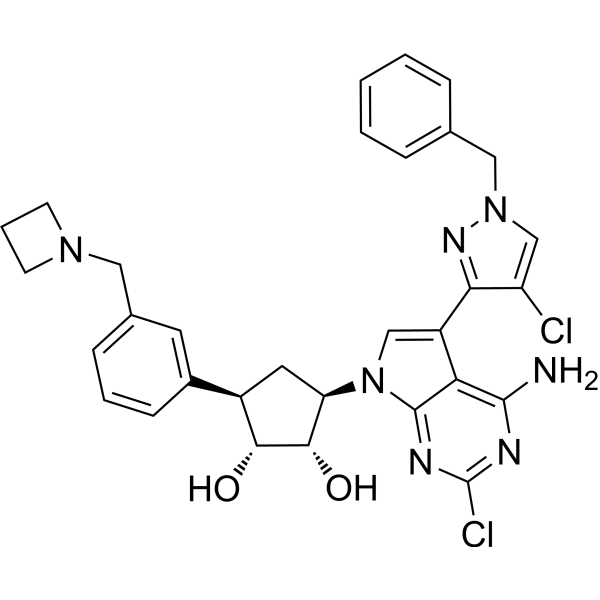
Cat. No.: HY-157486
Purity:  98.00%
Research Areas:  

Cancer

KMI169 is a potent and selective inhibitor targeting lysine methyl-transferase (KMT9) (IC50 = 0.05 μM, Kd = 0.025 μM). KMI169 functions as a bi-substrate inhibitor targeting the cofactor S-5’-adenosyl-L-methionine (SAM) and substrate binding pockets of KMT9. KMI169 can downregulate target genes involved in cell cycle regulation and impair proliferation of tumor cells by inhibiting KMT9. KMI169 is a valuable tool to probe cellular KMT9 functions and can be research for combating diseases including prostate, lung, colon, and invasive bladder cancer .
loading...
    loading...
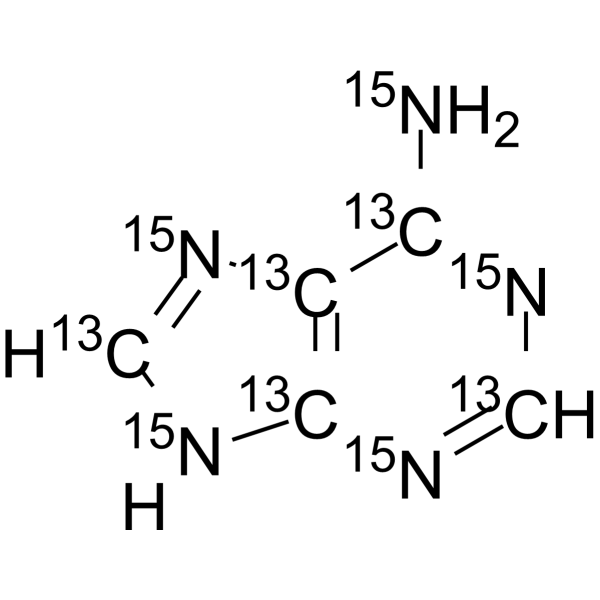
Cat. No.: HY-B0152S2
Synonyms: 6-Aminopurine-13C5,15N5; Vitamin B4-13C5,15N5
Adenine- 13C5,15C5 (6-Aminopurine- 13C5,15C5; Vitamin B4- 13C5,15C5) is 13C-labeled Adenine (HY-B0152). Adenine (6-Aminopurine), a purine, is one of the four nucleobases in the nucleic acid of DNA. Adenine acts as a chemical component of DNA and RNA. Adenine also plays an important role in biochemistry involved in cellular respiration, the form of both ATP and the cofactors (NAD and FAD), and protein synthesis.
loading...
    loading...
Cat. No.: HY-FLN0492
CAS No.: 1077-28-7
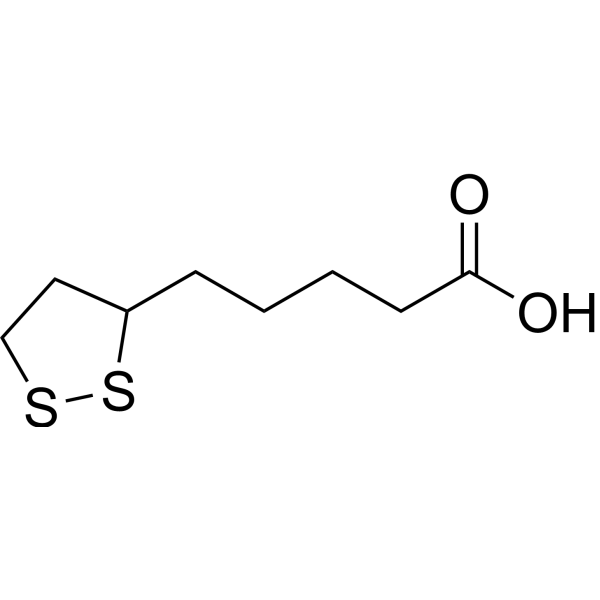
Thioctic acid solution is mainly composed of Thioctic Acid (HY-N0492). α-Lipoic Acid (Thioctic acid) is an antioxidant, which is an essential cofactor of mitochondrial enzyme complexes. α-Lipoic Acid inhibits NF-κB-dependent HIV-1 LTR activation . α-Lipoic Acid induces endoplasmic reticulum (ER) stress-mediated apoptosis in hepatoma cells . α-Lipoic Acid can be used with CPUL1 (HY-151802) to construct the self-assembled nanoaggregate CPUL1-LA NA, which has improved antitumor efficacy than CPUL1 .
loading...
    loading...
Cat. No.: HY-N0492AR
CAS No.: 2319-84-8
Synonyms: Thioctic acid sodium (Standard); (±)-α-Lipoic acid sodium (Standard); DL-α-Lipoic acid sodium (Standard)
α-Lipoic Acid (sodium) (Standard) is the analytical standard of α-Lipoic Acid (sodium). This product is intended for research and analytical applications. α-Lipoic Acid (Thioctic acid) sodium is an antioxidant, which is an essential cofactor of mitochondrial enzyme complexes. α-Lipoic Acid sodium inhibits NF-κB-dependent HIV-1 LTR activation. α-Lipoic Acid sodium induces endoplasmic reticulum (ER) stress-mediated apoptosis in hepatoma cells. α-Lipoic Acid sodium can be used with CPUL1 (HY-151802) to construct the self-assembled nanoaggregate CPUL1-LA NA, which has improved antitumor efficacy than CPUL1.
loading...
    loading...
Cat. No.: HY-P86986
Synonyms: A730008L03Rik antibody; AB041607 antibody; AI663983 antibody; cobra1 antibody; cofactor of BRCA1 antibody; DKFZp586B0519 antibody; KIAA1182 antibody; Negative elongation factor B antibody; Negative elongation factor protein B antibody; Nelf b antibody; A730008L03Rik antibody; AB041607 antibody; AI663983 antibody; cobra1 antibody; cofactor of BRCA1 antibody; DKFZp586B0519 antibody; KIAA1182 antibody; Negative elongation factor B antibody; Negative elongation factor protein B antibody; Nelf b antibody; NELF-B antibody; NELFB antibody; RGD1307832 antibody; RP13-122B23.3 antibody; RP23-132N23.4 antibody;

Host:  

Rabbit

Application:  

WB

Reactivity:  

Human, Mouse, Rat, Monkey

loading...
    loading...
Cat. No.: HY-108190
CAS No.: 33103-21-8
Target:  

Antibiotic Bacterial

Research Areas:  

Infection

Tuberactinomycin A is a basic cyclic peptide antibiotic and a group I intron RNA splicing inhibitor, with an IC50 of 10 μM against the G-binding site of bacteriophage T4 group I intron RNA. Tuberactinomycin A exerts antibacterial effects by acting on the initiation and elongation steps of bacterial bacteria ribosomes to inhibit prokaryotic protein synthesis. Tuberactinomycin A competes with guanosine cofactors for binding to the G-binding site of group I intron RNA, forms electrostatic interactions with the RNA backbone, and inhibits the self-splicing of bacteriophage T4 td and sunY group I introns, and its inhibitory activity depends on Mg 2+ concentration. Tuberactinomycin A can be used in studies related to bacterial infections .
loading...
    loading...
Cat. No.: HY-182891
Target:  

Histone Demethylase

Research Areas:  

Cancer

MC4455 is a LSD1/PRMT5 dual inhibitor. MC4455 inhibits the LSD1/CoREST and PRMT5/MEP50 complex with IC50 values of 0.104 μM and 0.014 μM. MC4455 covalently binds to LSD1’s FAD cofactor, stabilizes the LSD1/CoREST complex. MC4455 induces myeloid differentiation, alters transcriptomic profiles, drives alternative splicing changes, and impairs leukemic cell viability in AML cells. MC4455 can be used for the research of acute myeloid leukemia .
loading...
    loading...
Cat. No.: HY-183644
Target:  

Lysyl Oxidase

Research Areas:  

Cardiovascular Disease

LNO 9 is an orally active LOXL2 inhibitor and NO donor, with an IC50 of 0.17 μM against human LOXL2. LNO 9 competitively binds to the LTQ cofactor of LOXL2 to form an irreversible complex, thereby inhibiting collagen oxidation and abnormal cross-linking. LNO 9 releases nitric oxide (NO) to increase cGMP levels in pulmonary artery smooth muscle cells. LNO 9 inhibits hypoxia-induced collagen modification and possesses vasodilatory activity. LNO 9 ameliorates right ventricular hypertrophy and pulmonary artery medial thickness in rat models induced by hypoxia and Monocrotaline (HY-N0750), and can be used for research on pulmonary hypertension .
loading...
    loading...
Cat. No.: HY-N0492R
CAS No.: 1077-28-7
Synonyms: Thioctic acid (Standard); (±)-α-Lipoic acid (Standard); DL-α-Lipoic acid (Standard)
α-Lipoic Acid (Standard) is the analytical standard of α-Lipoic Acid. This product is intended for research and analytical applications. α-Lipoic Acid (Thioctic acid) is an antioxidant, which is an essential cofactor of mitochondrial enzyme complexes. α-Lipoic Acid inhibits NF-κB-dependent HIV-1 LTR activation . α-Lipoic Acid induces endoplasmic reticulum (ER) stress-mediated apoptosis in hepatoma cells . α-Lipoic Acid can be used with CPUL1 (HY-151802) to construct the self-assembled nanoaggregate CPUL1-LA NA, which has improved antitumor efficacy than CPUL1 .
loading...
    loading...
Cat. No.: HY-W140346
CAS No.: 14915-37-8
Research Areas:  

Infection Cancer

Copper (II) pyrithione is a New Delhi metallo-β-lactamase 1 inhibitor. Copper (II) pyrithione inhibits New Delhi metallo-β-lactamase 1 via transmetallation of its zinc (II) cofactor with copper (II). Copper (II) pyrithione exerts cytotoxic effects on pancreatic cancer cells and osteosarcoma cells. Copper (II) pyrithione exhibits antibacterial activity against Gram-positive bacteria and some Gram-negative bacteria. Copper (II) pyrithione can synergistically enhance the activity of β-lactam antibiotics against β-lactam-resistant bacteria. Copper (II) pyrithione can be used in studies related to pancreatic cancer, osteosarcoma and bacterial infections .
loading...
    loading...
Cat. No.: HY-184777
CAS No.: 94367-34-7
Target:  

Aminopeptidase

Research Areas:  

Others

Met-AMC is a fluorescent substrate used to detect the activity of methionine aminopeptidase (MetAP). Hydrolysis of the substrate releases the fluorophore AMC, with detection performed at an excitation wavelength of 360 nm and an emission wavelength of 460 nm. Met-AMC can distinguish the effects of different metal cofactors on the substrate preference of MetAP1: Zn (II)-MetAP1 barely hydrolyzes Met-AMC, while Co (II)-, Mn (II)-, and Ni (II)-MetAP1 can stably cleave this substrate. Met-AMC can be used to establish an intracellular MetAP activity cell-based assay system, which quantifies the intracellular MetAP inhibition level by monitoring the fluorescence signal from substrate hydrolysis in living cells .
loading...
    loading...
Cat. No.: HY-P5357
CAS No.: 261521-21-5
Research Areas:  

Others

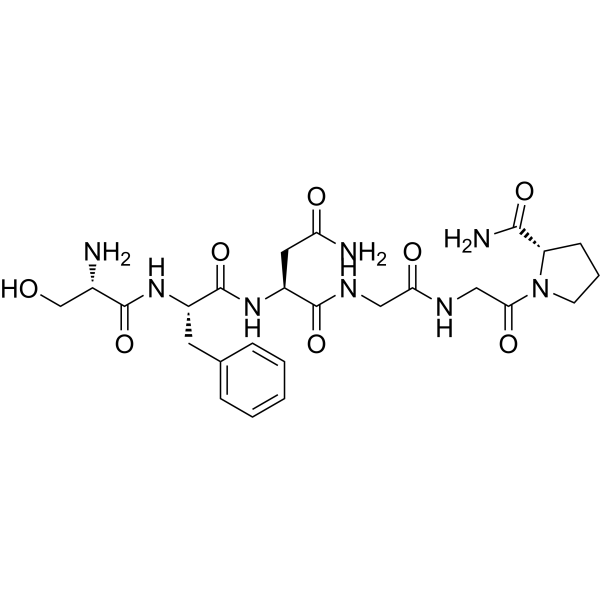
SFNGGP-NH2 is a biological active peptide. (PAR-3 is a high-affinity thrombin receptor. PAR-3 mRNA is expressed in the cutaneous mast cells of humans. Protease-Activated Receptors (PARs) have been studied for their roles in itch and their itch-associated response through histamine-dependent/independent pathways have been reported. PAR-3 has been shown not to induce itching alone but possibly in conjunction with PAR-4. Co-expression of PAR-3 and PAR-4 enhances thrombin action suggesting that PAR-3 alone does not mediate transmembrane signaling but instead functions as a cofactor to activate PAR-4.)
loading...
    loading...
Cat. No.: HY-184027
CAS No.: 2841468-09-3
IDO1/TDO-IN-12 is an IDO1/TDO2 inhibitor with IC50 values of 0.825 and 4.04 μM, respectively. IDO1/TDO-IN-12 interacts with the ferrous heme cofactor in IDO1 as a non-competitive tryptophan inhibitor. IDO1/TDO-IN-12 inhibits nitric oxide production in LPS (HY-D1056)-stimulated immune cells. IDO1/TDO-IN-12 relieves pulmonary edema and lung injury in LPS-induced mouse models. IDO1/TDO-IN-12 can be used for the research of acute lung injury (ALI) .
loading...
    loading...
Cat. No.: HY-187530
Research Areas:  

Cancer

IDO1/TDO-IN-18 is a IDO1/TDO inhibitor with an IC50 of 26.54 μM against human IDO1 and an IC50 of 15.63 μM against human TDO. IDO1/TDO-IN-18 targets the apo-forms of IDO1 and TDO to displace the heme cofactor, attenuates the IDO1/SHP-2 interaction, reduces the output of the kynurenine pathway in tumor cells, and inhibits the proliferation and migration of cancer cells. IDO1/TDO-IN-18 can serve as a chemical probe for enzymology and signal transduction-related studies of the IDO1/TDO axis, and can also be used in cancer-related research .
loading...
    loading...

