
315 Results for "

Biocompatibility

" in MedChemExpress (MCE) Product Catalog:
Products (315)

315 Results for "Biocompatibility" in MCE Product Catalog:

Cat. No.: HY-158221
Synonyms: CSMA
Chondroitin Sulfate Methacryloyl (CSMA) is methacrylated chondroitin sulfate and is biocompatible. Chondroitin Sulfate Methacryloyl has a higher degree of methacrylation than HAMA (HY-158220), and the degree of methacrylation is closely related to customizable mechanical properties, swelling properties and enzymatic degradability. Chondroitin Sulfate Methacryloyl is a versatile biomaterial suitable for biomimetic hydrogel scaffolds and an ideal 3D printing hydrogel ink . Chondroitin Sulfate Methacryloyl needs to self-assemble into fibrous hydrogel under the action of photoinitiator LAP (HY-44076), and target bioactive adhesion sites, play an inherent supporting role for tissue cells and biodegradable activity.
Application: cell culture, biological 3D printing, tissue engineering, etc.
loading...
    loading...
Cat. No.: HY-184404
CAS No.: 71357-99-8
Research Areas:  

Cancer

(S)-1,2-Dipalmitoyl-sn-glycero-3-phosphoethanolamine is a phosphatidylethanolamine lipid with palmitoyl fatty acid chains. (S)-1,2-Dipalmitoyl-sn-glycero-3-phosphoethanolamine serves as a substrate for glycosylation reactions and a component of biocompatible pH-sensitive hydrophobic copolymer nanoparticles. (S)-1,2-Dipalmitoyl-sn-glycero-3-phosphoethanolamine exhibits pH-sensitive drug release properties, enabling faster drug release in acidic environments. (S)-1,2-Dipalmitoyl-sn-glycero-3-phosphoethanolamine can be used in studies related to cancer drug delivery .
loading...
    loading...
Cat. No.: HY-184641
Aminated magnetic microspheres are superparamagnetic magnetic particles with amino functional groups modified on their surface, widely used in biomedical and molecular biology research. This 1μm aminated magnetic microsphere is composed of polystyrene and nano-iron oxide, exhibiting hydrophilicity and good biocompatibility. The aminated magnetic microspheres possess superparamagnetism, fast magnetic response, good monodispersity, ensuring reaction uniformity and detection consistency. The unique rough surface structure and polymer modification give the aminated magnetic microspheres a high amino density, allowing them to covalently couple with bioligands such as peptides, proteins, oligonucleotides, drug molecules, and glycoproteins through the action of special chemical reagents (such as glutaraldehyde). They serve as excellent coating materials and are important carrier tools in medical and biomolecular research.
loading...
    loading...
Cat. No.: HY-W591476
CAS No.: 134874-49-0
Synonyms: mPEG1000-SH
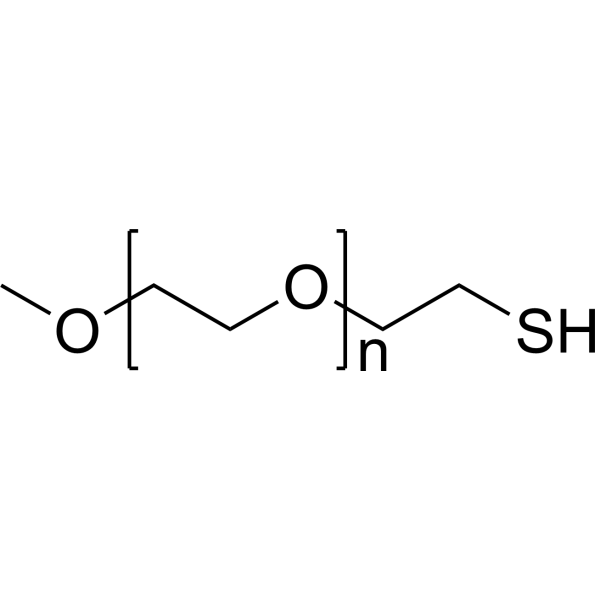
m-PEG1000-thiol (mPEG1000-SH) is a surface modifier that can modify DNA thiolation and is used in the synthesis of gold nanorods (AuNR). m-PEG1000-thiol can load thiolated DNA onto AuNR, form a covalent bond with the surface of gold nanoparticles through the thiol group, and stabilize the nanoparticles by the steric hindrance effect of the polyethylene glycol chain, preventing aggregation and enhancing its biocompatibility. m-PEG1000-thiol can also provide a platform for the subsequent coupling of biomolecules (such as DNA, antibodies) by replacing surfactants (such as CTAB) on the surface of nanoparticles, thereby exerting its activity in promoting the functionalization of nanomaterials [2].
loading...
    loading...
Cat. No.: HY-167142
CAS No.: 3397-16-8
Synonyms: N-Stearoyl-L-glutamic acid
Research Areas:  

Others

Stearoyl glutamic acid (N-Stearoyl-L-glutamic acid) is a saturated aliphatic amide compound and also an additive for lipid cubic phase materials. Stearoyl glutamic acid is used in studies as a surfactant and emulsifier .
loading...
    loading...
Cat. No.: HY-184870
CAS No.: 31621-87-1
Target:  

Others

Research Areas:  

Inflammation/Immunology

Polydioxanone is a colorless, crystalline semi-crystalline thermoplastic poly (ether-ester) bioabsorbable polymer. Polydioxanone serves as a hemostatic agent, biodegradable agent, degradant, lumen patency maintainer, as well as a temporary inducer of tracheal tissue injury and inflammation. Polydioxanone controls bone bleeding in biocompatible matrices, degrades via random hydrolytic scission and end-chain scission, with accelerated degradation occurring at pH <1.67, maintains tracheal lumen patency, and induces reversible tracheal epithelial necrosis, inflammation, fibrous tissue hyperplasia, and goblet cell hyperplasia. Polydioxanone can be used in research on bone bleeding, non-malignant tracheal stenosis, tracheobronchial stenosis, tracheobronchomalacia, and airway obstruction associated with vascular compression .
loading...
    loading...
Cat. No.: HY-D3153
CAS No.: 2693397-68-9
PbQ is a tubulin inhibitor (with an IC50 of 5 μM against goat tubulin) and a fluorescent probe for cuprous ions Cu (I). PbQ can penetrate the membrane of peripheral blood mononuclear cells, form a stable 1:1 complex with Cu + ions, and exhibits low toxicity and good biocompatibility toward macrophage cell lines. In addition, PbQ promotes tubulin degradation and disrupts the microtubule network in lung epithelial cells without affecting actin. PbQ also possesses genotoxicity by forming DNA base adducts, and it can activate caspase-3 and apoptosis-related genes, induce loss of mitochondrial membrane potential, and trigger cell apoptosis. PbQ can be used in studies related to chronic obstructive pulmonary disease .
loading...
    loading...
Cat. No.: HY-155927
CAS No.: 474922-82-2
Synonyms: 14:0 PEG1000 PE ammonium; 1,2-Dimyristoyl-sn-glycero-3-phosphoethanolamine-N-[methoxy(polyethylene glycol)-1000] ammonium
Target:  

Liposome

Research Areas:  

Others

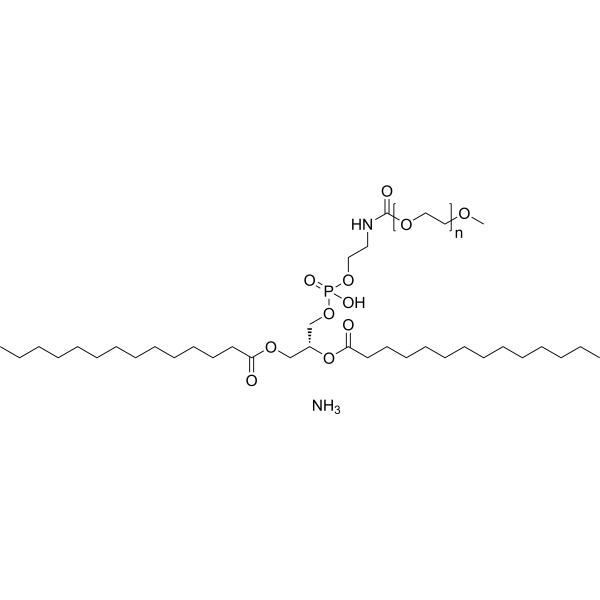
DMPE-PEG1000 ammonium (14:0 PEG1000 PE ammonium) is a methoxy-capped PEGylated phospholipid containing two C14 lipid chains and a PEG1000 group. DMPE-PEG1000 can be incorporated as a PEG-lipid component into conjugated polymer nanoparticles for nanoparticle surface modification. DMPE-PEG1000 ammonium is applicable for researches related to PEGylated nanoparticle preparation and fluorescence imaging .
loading...
    loading...
Cat. No.: HY-184626
Thiol-modified magnetite nanoparticles are prepared via high-temperature pyrolysis and surface-modified with thiol functional groups. Magnetite is widely used in magnetic resonance imaging, magnetic separation, targeted drug delivery, tumor hyperthermia, cell labeling and separation, as a contrast agent, and in retinal detachment repair surgery due to its stable properties, good biocompatibility, high strength, and lack of toxicity. It is also used as a catalyst carrier, microwave absorbing material, and magnetic recording material. Xianfeng has developed numerous derivatives of magnetite, including oleic acid-modified magnetite, magnetite with different PEG ends, DMSA-modified magnetite, polylysine-modified magnetite, carboxylated dextran-modified magnetite nanoparticles, streptavidin-modified magnetite particles, thiol-modified magnetite magnetic nanoparticles, and polyethyleneimine (PEI)-modified magnetic magnetite nanoparticles, among others.
loading...
    loading...
Cat. No.: HY-P2632
CAS No.: 289042-25-7
Synonyms: RADA16
Research Areas:  

Neurological Disease

RAD16-I (RADA16) is a non-directed self-assembling peptide hydrogel. Under physiological conditions, RAD16-I spontaneously forms a three-dimensional nanofiber network that mimics the extracellular matrix, and possesses excellent properties such as high water content, biocompatibility and degradability. RAD16-I serves as an ideal scaffold for three-dimensional cell culture. RAD16-I not only maintains cell viability and induces self-organization, but also supports cell adhesion, proliferation, differentiation and insulin secretion, effectively stabilizes islet clusters and promotes directed differentiation of the cardiac lineage. RAD16-I can construct a cell-friendly nano-microenvironment for research related to diseases such as myocardial infarction and diabetes .
loading...
    loading...
Cat. No.: HY-184607
Nanoclusters are essentially ultrasmall nanomaterials, typically with diameters between 1 and 10 nm, composed of a specific number of metal atoms (approximately 10 to several hundred) and ligands. This structure places their size between that of small molecules and traditional nanoparticles, exhibiting quantum effects. When the size of the metal core approaches the Fermi wavelength of electrons, its band structure transitions from a continuous state to discrete energy levels, thus exhibiting molecular-like properties such as single-electron transitions, multiple absorption bands, and strong photoluminescence. Iron nanoclusters (FeNCs) are a class of ultrasmall fluorescent nanomaterials composed of several to tens of iron atoms. Synthesized using bovine serum albumin (BSA) as a template and protectant via a chemical reduction method, these materials possess excellent optical properties and biocompatibility. Furthermore, they can be functionalized through surface modification, leading to their wide application in fields such as bioanalysis, environmental monitoring, and disease diagnosis.
loading...
    loading...
Cat. No.: HY-W127719
CAS No.: 96087-38-6
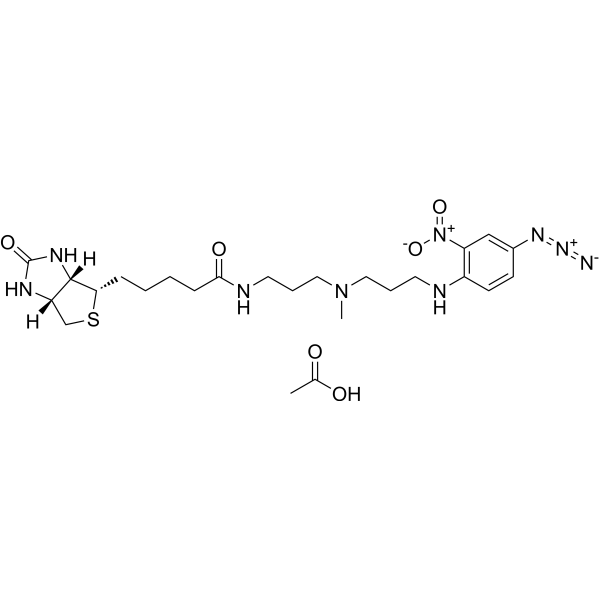
Photobiotin (acetate)It is a biological probe used to study biochemical processes such as protein interactions and enzymatic reactions. It is a molecule containing a photosensitive group, which can be combined with specific target molecules (such as proteins, nucleic acids, etc.) through photochemical cross-linking technology, so as to realize the labeling and detection of these molecules. During the photosensitive crosslinking process, Photobiotin (acetate)Can participate in the formation of covalent bonds and form stable compounds. In addition, the compound also has high biocompatibility and biological activity, so it is widely used in the field of biomedical research, such as enzymatic research, proteomics, western blotting and other aspects. Photobiotin (acetate) is a click chemistry reagent, it contains an Azide group and can undergo copper-catalyzed azide-alkyne cycloaddition reaction (CuAAc) with molecules containing Alkyne groups. It can also undergo strain-promoted alkyne-azide cycloaddition (SPAAC) reactions with molecules containing DBCO or BCN groups.
loading...
    loading...
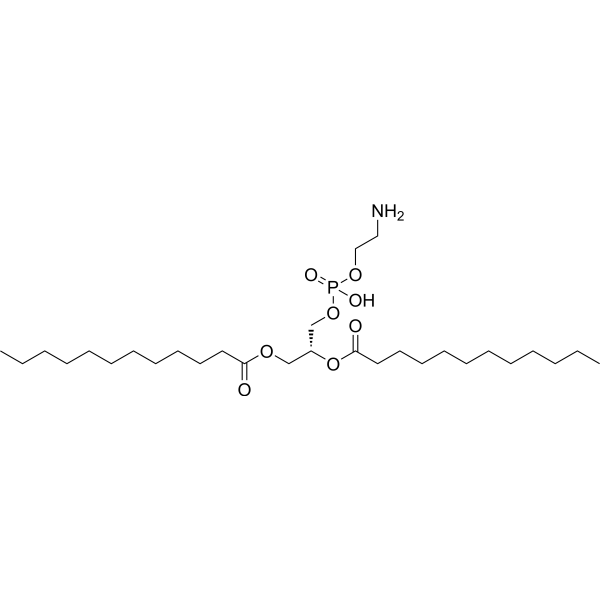
Cat. No.: HY-W322225
CAS No.: 59752-57-7
Synonyms: DLPE; 1,2-Dilauroyl-sn-glycero-3-PE
Target:  

Liposome

Research Areas:  

Others

1,2-Dilauroyl-sn-glycero-3-phosphoethanolamine (DLPE; 1,2-Dilauroyl-sn-glycero-3-PE) is an anionic phospholipid. 1,2-Dilauroyl-sn-glycero-3-phosphoethanolamine promotes the endocytosis of liposome-DNA complexes into target cells, and subsequently mediates membrane fusion between liposome carriers and endosomes to deliver DNA into the nucleus. 1,2-Dilauroyl-sn-glycero-3-phosphoethanolamine is a component of anionic artificial viral envelope liposomes, which deliver plasmid DNA to hepatoma cells without serum inhibition. 1,2-Dilauroyl-sn-glycero-3-phosphoethanolamine enables the construction of biocompatible non-viral gene delivery vector systems. 1,2-Dilauroyl-sn-glycero-3-phosphoethanolamine is applicable for liposome synthesis .
loading...
    loading...
Cat. No.: HY-L256
100 compounds

In modern drug discovery and chemical biology research, the azide group (-N3) is an important functional moiety that is widely used in click chemistry, biomolecular labeling, drug delivery systems, and prodrug design due to its unique reactivity and bioorthogonality.

The MCE Azide Structural Compound Library contains 100 compounds featuring -N3 functional groups. It is designed for the construction of click chemistry reaction systems and the subsequent development of functional molecules. This library enables the rapid assembly of targeting ligands, linkers, and functional molecular modules, thereby accelerating PROTAC assembly, optimization of antibody-drug conjugate (ADC) linkers, and the development of biological labeling probes. In addition, the high reaction selectivity and excellent biocompatibility of the azide group allow it to maintain stable reactivity even in complex biological environments, improving controllability and efficiency in drug design. It serves as an indispensable molecular tool in modern medicinal chemistry and chemical biology research.

Cat. No.: HY-112624E
CAS No.: 9004-54-0
Synonyms: Dextran 0.8; Dextran D0.8; Dextran T0.8(MW 640-960)
Dextran T0.8 (Dextran 0.8; Dextran T0.8(MW 640-960)) is a food additive with a porous network structure that exhibits strong hydration capacity and low browning activity. Dextran T0.8 (MW 800) can improve the coagulation of dairy products and is used as a prebiotic in baked goods. Dextran T0.8 (MW 800) is non-toxic to HeLa cells at a concentration of ~500 μg/mL and has a low relative browning rate in the Maillard reaction. The Dextran series of compounds are also natural polysaccharide drug carriers that can be connected to drugs through covalent bonding methods such as ester bonds, amide bonds or click chemistry, or self-assembled to form carriers such as nanoparticles and hydrogels. Dextran is biodegradable and biocompatible, and can achieve targeted delivery and controlled release of drugs. Dextran derivatives can prolong the half-life of drugs, increase local concentrations, and reduce the activity of immune clearance .
loading...
    loading...
Cat. No.: HY-112624J
CAS No.: 9004-54-0
Synonyms: Dextran 4; Dextran D4; Dextran T4(MW 3200-4800)
Dextran 4,000 is a mucus rheology modifier. The dextran molecules in Dextran 4,000 can reduce the cross-link density of mucus through osmotic effects and hydrogen bond substitution, and reduce viscoelasticity and improve the mucociliary/cough clearance index by destroying the DNA-mucin network structure in mucus. Dextran 4,000 has the ability to improve the rheological properties and clearance ability of cystic fibrosis (CF) sputum, and can be used in the study of inhalation therapy or aerosol delivery of mucostatic respiratory diseases. The Dextran series of compounds are also natural polysaccharide drug carriers that can be connected to drugs through covalent bonding methods such as ester bonds, amide bonds or click chemistry, or self-assembled to form carriers such as nanoparticles and hydrogels. Dextran is biodegradable and biocompatible, and can achieve targeted delivery and controlled release of drugs. Dextran derivatives can prolong the half-life of drugs, increase local concentrations, and reduce the activity of immune clearance .
loading...
    loading...
Cat. No.: HY-184603
Bovine serum albumin-modified gold nanoclusters (BSA-Au NCs) are nanomaterials combining gold nanoclusters and bovine serum albumin (BSA). Composed of several to dozens of gold atoms forming the core of the gold nanoclusters, BSA acts as a protective ligand, coating the surface of the gold nanoclusters. BSA-Au NCs are widely used due to their high luminescence properties and stability over a wide pH range. When Au(III) ions are introduced into a BSA solution, BSA acts as a scaffold protein, isolating and capturing Au ions, similar to the biomineralization behavior of inorganic ions in organisms in nature. The captured Au ions are then reduced in situ by BSA to form Au NCs. The synthesized Au NCs consist of 25-Au atoms and are stable in BSA as BSA-Au NCs, exhibiting strong red fluorescence. BSA-Au NCs possess good biocompatibility and their surface is easily modified or functionalized, making them attractive for many biomedical applications.
loading...
    loading...
Cat. No.: HY-184620
Ferric oxide (Fe3O4) is widely used in magnetic resonance imaging (MRI), magnetic separation, targeted drug delivery, tumor hyperthermia, cell labeling and separation, and as a contrast agent and enhancement agent in retinal detachment repair surgery due to its stable material properties, good biocompatibility, high strength, and lack of toxic side effects. It is also used as a catalyst carrier, microwave absorbing material, and magnetic recording material. Xianfeng has developed numerous derivatives of ferric oxide, including oleic acid-modified ferric oxide, PEG-terminated ferric oxide, DMSA-modified ferric oxide, polylysine-modified ferric oxide, carboxylated dextran-modified ferric oxide nanoparticles, streptavidin-modified ferric oxide particles, thiol-modified ferric oxide magnetic nanoparticles, and polyethyleneimine (PEI)-modified magnetic ferric oxide nanoparticles, among others. This wide range of modifications provides numerous options for subsequent experiments.
loading...
    loading...
Cat. No.: HY-D3119
CAS No.: 2246946-49-4
Research Areas:  

Others

MitoAIE1 is a Fluorescent probe for mitochondrial viscosity detection. MitoAIE1 contains a pyridinium structural unit, which endows it with mitochondria-targeting specificity. The detection mechanism of this probe is based on aggregation-induced emission (AIE): in low-viscosity media such as PBS buffer, intramolecular rotation leads to non-radiative energy dissipation, resulting in only weak fluorescence; however, in high-viscosity environments such as the mitochondrial matrix or the vicinity of the inner mitochondrial membrane, such intramolecular motion is restricted, thereby significantly enhancing its fluorescent signal; in addition, this probe is not interfered by changes in microenvironment polarity and pH. Its emission wavelength is 625 nm, with absorption peaks at 325 nm and 450 nm; when transferred from low-viscosity PBS to high-viscosity 99% glycerol, its fluorescence intensity at 625 nm can be increased by 38-fold. It can be used to monitor changes in mitochondrial viscosity during processes such as Stauroporine (HY-15141)-induced apoptosis and starvation-induced mitophagy in live cells, and has good biocompatibility .
loading...
    loading...
Cat. No.: HY-Y0850U1
CAS No.: 9002-89-5
Synonyms: Polyvinyl alcohol (Mw 61000, 98-99% hydrolyzed, ~1400 polymerization); Poly(Ethenol) (Mw 61000, 98-99% hydrolyzed, ~1400 polymerization)
PVA (Mw 61000, 98-99% hydrolyzed, ~1400 polymerization) is a semicrystalline and biocompatible synthetic polymer with excellent safety properties including non-toxicity, no accumulation, and non-mutagenicity. PVA (Mw 61000, 98-99% hydrolyzed, ~1400 polymerization) undergoes cross-linking via acetal bond formation between hydroxyl and aldehyde groups, and it can be used to prepare highly rigid, low-solubility degradable films as well as for dry or minimally invasive in vitro wound studies. PVA (Mw 61000, 98-99% hydrolyzed, ~1400 polymerization) can construct a hydroxyl-rich microenvironment to trap photogenerated holes, thereby promoting hydrogen peroxide production and enhancing the redox cycle of iron species in the photo-Fenton reaction. PVA (Mw 61000, 98-99% hydrolyzed, ~1400 polymerization) can act as a sacrificial agent and substrate to achieve synchronous degradation with pollutants, and it is applicable to sustainable waste management and water treatment .
loading...
    loading...

