318 Results for "

microenvironment

" in MedChemExpress (MCE) Product Catalog:
Products (318)

318 Results for "microenvironment" in MCE Product Catalog:

Cat. No.: HY-182671
CAS No.: 2409965-28-0
Target:  

PI3K Btk Apoptosis

Research Areas:  

Cancer

SRX3305 is an BTK/PI3K/BRD4 inhibitor with IC50s of 6.5 nM, 15 nM, and 4 nM toward BTK, PI3Kɑ and PI3Kδ, respectively. SRX3305 attenuates chronic lymphocytic leukemia (CLL) and mantle cell lymphoma (MCL) cell proliferation and promotes apoptosis in a dose-dependent fashion. SRX3305 yields potent anti-tumor effects but spares healthy bystander cells. SRX3305 inhibits the activation-induced proliferation of primary CLL cells in vitro and effectively blocks microenvironment-mediated survival signals. SRX3305 blocks CLL cell migration toward CXCL-12 and CXCL-13. SRX3305 maintains its anti-tumor effects in Ibrutinib (HY-10997)-resistant CLL cells. SRX3305 can be used for research in CLL, diffuse large B-cell lymphoma (DLBCL) and MCL .
loading...
    loading...
Cat. No.: HY-P991968
Synonyms: Halozyme patent anti-EGFR

Target:  

EGFR

Research Areas:  

Cancer

HTI-1511 Antibody (Halozyme patent anti-EGFR) is a monoclonal antibody inhibitor targeting EGFR. HTI-1511 Antibody can be used to synthesize a novel anti-EGFR-ADC, HTI-1511. HTI-1511 Antibody can be used in the research of head and neck squamous cell carcinoma, non-small cell lung cancer, pancreatic cancer, colorectal cancer, renal cell carcinoma, and epidermoid carcinoma .
loading...
    loading...
Cat. No.: HY-173703
CAS No.: 3025108-11-3
β-Glu-PAB (CH2NH2)-Exatecan is a linker-payload conjugate composed of Exatecan (HY-13631) and β-Glu-PAB (CH2NH2). β-Glu-PAB (CH2NH2)-Exatecan also serves as an intermediate of Mal ((3S,3aR,6S,6aR)-Hexahydrofuro[3,2-b]furan-3,6-diamine-PEG12)-β-Glu-PAB-Exatecan (HY-173634). β-Glu-PAB (CH2NH2)-Exatecan is specifically cleaved by β-glucuronidase, which is highly expressed in the tumor microenvironment, to release Exatecan that exerts cytotoxic effects. β-Glu-PAB (CH2NH2)-Exatecan can be used in cancer research .
loading...
    loading...
Cat. No.: HY-P2632C
Research Areas:  

Neurological Disease

RAD16-I, free acid TFA is a derivative of RADA16 (HY-P2632), with no Ac and NH2 modifications at both ends, and it has the same function as RADA16. RAD16-I, free acid TFA is a non-directed self-assembling peptide hydrogel. Under physiological conditions, RAD16-I, free acid TFA spontaneously forms a three-dimensional nanofiber network that mimics the extracellular matrix, and possesses excellent properties such as high water content, biocompatibility and degradability. RAD16-I, free acid TFA serves as an ideal scaffold for three-dimensional cell culture. RAD16-I, free acid TFA not only maintains cell viability and induces self-organization, but also supports cell adhesion, proliferation, differentiation and insulin secretion, effectively stabilizes islet clusters and promotes directed differentiation of the cardiac lineage. RAD16-I, free acid TFA can construct a cell-friendly nano-microenvironment for research related to diseases such as myocardial infarction and diabetes .
loading...
    loading...
Cat. No.: HY-L213
265 compounds

The anti-cancer drug library meticulously collects all drugs approved by FDA and other major national drug regulatory authorities for cancer treatment. These drugs cover a variety of cancer types, including but not limited to lung cancer, breast cancer, colorectal cancer, leukemia, and other common cancers. The library includes a wide range of drugs, from classic chemotherapeutic agents to cutting-edge targeted therapies and immunotherapies. It contains various types of drug compounds with different mechanisms of action. There are cytotoxic drugs that directly kill cancer cells, as well as drugs that work by modulating the tumor microenvironment, inhibiting tumor angiogenesis, and activating the immune system. This diversity provides researchers with a broad range of perspectives and options for intervention strategies.

This library can be used for basic research on cancer treatment, exploring new targets and new mechanisms of drug action; Conducting drug reuse research to look for potential therapeutic effects of existing drugs on other cancer types or diseases; Or conducting research into combination drugs to optimize cancer treatment.

MCE has collected 265 small-molecule compounds with cancer indications, which are good tools for drug repurposing.

Cat. No.: HY-N0819R
CAS No.: 89412-79-3
Raddeanin A (Standard) is the analytical standard of Raddeanin A (HY-N0819). This product is intended for research and analytical applications. Raddeanin A is an oleanane-type triterpenoid saponin with oral activity. Raddeanin A inhibits SRC, mTOR, JNK, VEGFR2, NLRP3 inflammasome, Wnt/β-catenin, Wee1, PI3K/AKT signaling pathway, MAPK/ERK signaling pathway, AR-FL, AR-Vs, and downregulates the expression of p-PI3K and p-AKT. Raddeanin A inhibits osteoclast formation, bone resorption, osteolysis, cancer cell invasion, migration, proliferation, angiogenesis and epithelial-mesenchymal transition, while induces apoptosis, cell cycle arrest, ROS production, immunogenic cell death and dendritic cell maturation. Raddeanin A improves blood-retinal barrier function, alleviates inflammation, regulates the tumor microenvironment, and enhances the activity of anti-PD-1 antibody. Raddeanin A is applicable to the research of breast cancer-associated osteolysis, human osteosarcoma, colorectal cancer, glioblastoma, Alzheimer's disease, cholangiocarcinoma, melanoma, non-small cell lung cancer, castration-resistant prostate cancer and multiple myeloma.
loading...
    loading...
Cat. No.: HY-L204
582 compounds

Lactic acid metabolism is one of the key metabolic pathways within living organisms. It plays a crucial role not only in cellular energy conversion but is also closely related to a variety of physiological and pathological processes. The production and clearance of lactic acid are important indicators of cellular metabolic balance, and its abnormal regulation may lead to conditions such as lactic acidosis, muscle fatigue, and hereditary metabolic diseases. Moreover, lactic acid is closely related to the malignancy of tumors and is considered a biomarker for malignant tumors and poor prognosis. Lactic acid can serve as a metabolic substrate to support the metabolic needs of tumor cells under hypoxic conditions, and it can also cause acidification of the tumor microenvironment, suppress immune cell function to promote immune evasion, and induce drug resistance in tumor cells. Currently, targeting lactic acid-lactylation and its related metabolic pathways has become a new research avenue for cancer treatment. In-depth exploration of the molecular mechanisms of lactic acid metabolism can help in screening lead compounds that regulate the lactic acid metabolism.

MCE contains 582 small molecule compounds targeting enzymes involved in lactic acid metabolism. This library is of significant value for researching the role of lactate metabolism in the mechanisms of diseases.

Cat. No.: HY-L251
93 compounds

Ionizable lipids are a class of specialized, functional lipid molecules with pH-sensitive charge characteristics. They are primarily divided into two major categories: ionizable cationic lipids and ionizable anionic lipids, though the term typically specifies ionizable cationic lipids within the biomedical field. Structurally, these lipids consist of an ionizable hydrophilic headgroup, a biodegradable linker, and hydrophobic tails. Their primary application is serving as the key delivery vehicle in lipid nanoparticles (LNPs) to encapsulate negatively charged nucleic acid macromolecules, such as mRNA vaccines, siRNA therapeutics, and CRISPR gene-editing components. In a physiological, neutral environment, they remain electrically neutral to minimize systemic toxicity and prolong circulation time. Upon entering the acidic microenvironment of cellular endosomes, however, they undergo protonation to become positively charged, thereby inducing membrane fusion and enabling the highly efficient intracellular release of the nucleic acid cargo. Consequently, they serve as the technological cornerstone for bringing nucleic acid therapies into clinical application.

To accelerate the translational process of cutting-edge nucleic acid drugs, MCE has meticulously constructed an ionizable lipid compound library containing 93 high-performance molecules, aiming to provide researchers and pharmaceutical professionals with a high-throughput, multi-dimensional lipid screening platform.

Cat. No.: HY-140736
CAS No.: 385437-57-0
Purity:  ≥95.0%
Research Areas:  

Cancer

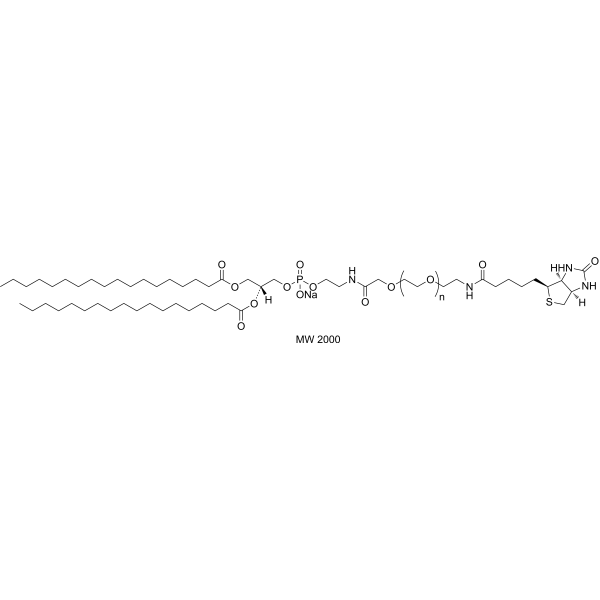
DSPE-PEG2000-Biotin is a biotin-labeled PEG derivative composed of phospholipid (DSPE), a hydrophilic polyethylene glycol chain (PEG2000) and a biotin tag. DSPE-PEG2000-Biotin is widely used in scientific research for constructing targeted liposomes, micelles and lipid nanoparticles for drug delivery and cell binding experiments .
loading...
    loading...
Cat. No.: HY-140736A
CAS No.: 385437-57-0
Research Areas:  

Cancer

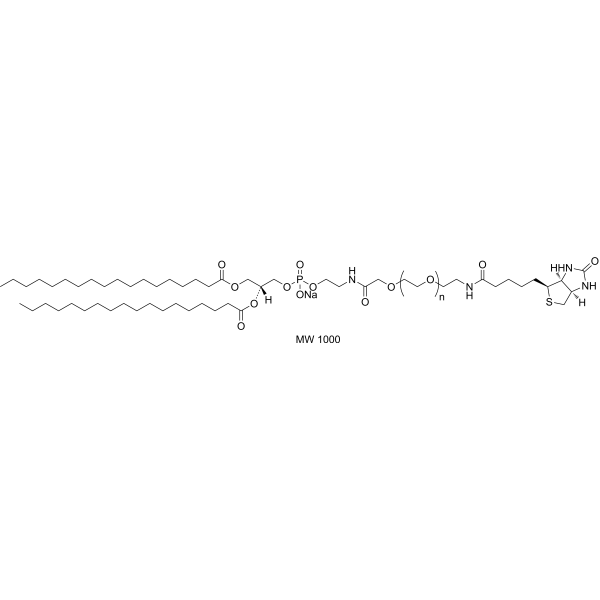
DSPE-PEG1000-Biotin is a biotin-labeled PEG derivative composed of phospholipid (DSPE), a hydrophilic polyethylene glycol chain (PEG1000) and a biotin tag. DSPE-PEG1000-Biotin is widely used in scientific research for constructing targeted liposomes, micelles and lipid nanoparticles for drug delivery and cell binding experiments .
loading...
    loading...
Cat. No.: HY-140736B
CAS No.: 385437-57-0
Research Areas:  

Cancer

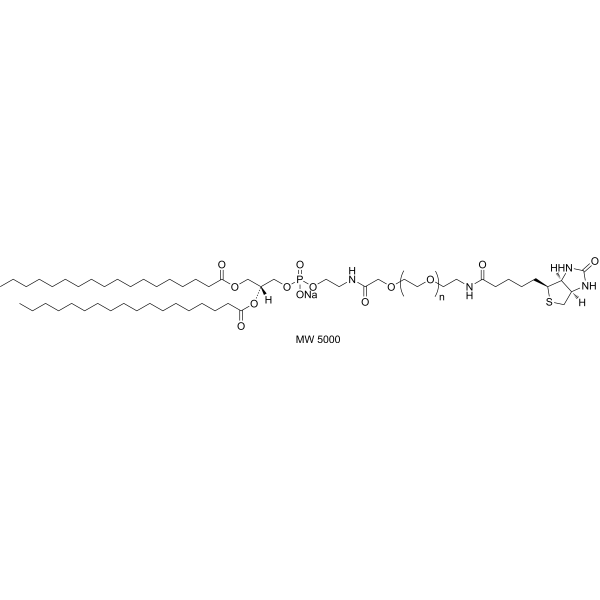
DSPE-PEG5000-Biotin is a biotin-labeled PEG derivative composed of phospholipid (DSPE), a hydrophilic polyethylene glycol chain (PEG5000) and a biotin tag. DSPE-PEG5000-Biotin is widely used in scientific research for constructing targeted liposomes, micelles and lipid nanoparticles for drug delivery and cell binding experiments .
loading...
    loading...
Cat. No.: HY-40146
CAS No.: 398489-26-4
Synonyms: N-Boc-3-azetidinone
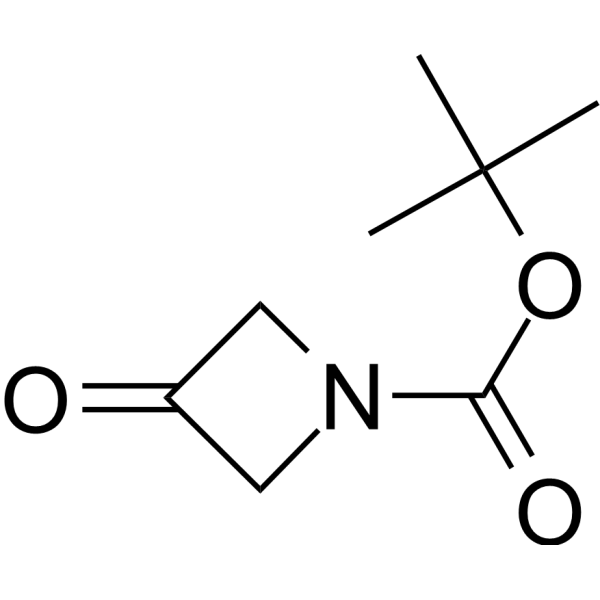
tert-Butyl 3-oxoazetidine-1-carboxylate is a synthetic intermediate. tert-Butyl 3-oxoazetidine-1-carboxylate can be used in compound research and development targeting cancer and tuberculosis .
loading...
    loading...
Cat. No.: HY-155052
CAS No.: 2642327-52-2
Research Areas:  

Cancer

PAD4-IN-2 is a highly tumor-targeted and irreversible PAD4 inhibitor with an IC50 of 1.94 μM. It selectively recognizes sialic acid on tumor surfaces and accumulates in tumor tissues, with distribution in the cytoplasm of tumor cells and nuclei of neutrophils. PAD4-IN-2 inhibits the PAD4-H3cit-NETs (Neutrophil Extracellular Traps) pathway, reduces senescent tumor-associated neutrophils, and promotes M1 macrophage polarization. The compound exhibits potent anti-tumor and anti-metastatic activities and is suitable for breast cancer research .
loading...
    loading...
Cat. No.: HY-155052A
Purity:  95.64%
Research Areas:  

Cancer

PAD4-IN-2 TFA is a highly tumor-targeted and irreversible PAD4 inhibitor with an IC50 of 1.94 μM. PAD4-IN-2 TFA selectively recognizes sialic acid on tumor surfaces and accumulates in tumor tissues, with distribution in the cytoplasm of tumor cells and nuclei of neutrophils. PAD4-IN-2 TFA inhibits the PAD4-H3cit-NETs (Neutrophil Extracellular Traps) pathway, reduces senescent tumor-associated neutrophils, and promotes M1 macrophage polarization. The compound exhibits potent anti-tumor and anti-metastatic activities and is suitable for breast cancer research .
loading...
    loading...
Cat. No.: HY-L228
146 compounds

Lipids are important energy storage substances in the human body. They are involved in the regulation of cell structure and function, as well as signaling pathways and gene expression. Abnormal lipid levels in tissues or their dysregulation can lead to various diseases. These include obesity, type 2 diabetes, non-alcoholic fatty liver disease, neurodegenerative diseases, infections, and cancer. Therefore, maintaining normal levels of lipid metabolism is critical to overall health.

One of the key features of cancer is aberrant lipid metabolism. This includes alterations in lipid uptake, lipid desaturation, neolipogenesis, lipid droplets, and fatty acid oxidation in cancer cells. These changes all contribute to cellular survival in an ever-changing microenvironment. They do this by modulating feed-forward oncogenic signals and key oncogenic functions. Additionally, they affect oxidative stress, other types of stress, immune responses, and intercellular communication. Alterations in lipid metabolism have a strong impact on the properties of cancer stem cells. This includes aspects such as self-renewal, differentiation, invasion, metastasis, drug sensitivity, and resistance. Furthermore, these alterations also modulate T cell responses.

MCE can offer 146 metabolites of lipid metabolism pathways, which can be used for drug screening in cancer, immune-based diseases, metabolic diseases, and other diseases.

Cat. No.: HY-D0074
CAS No.: 70504-01-7
Target:  

Fluorescent Dye

Research Areas:  

Others

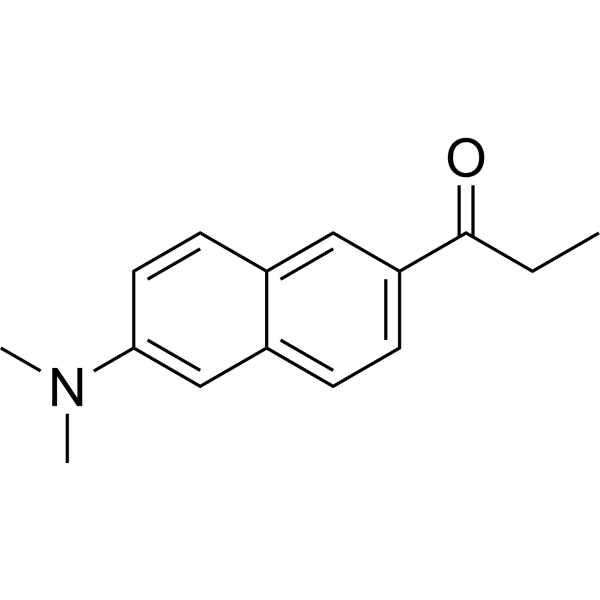
Prodan is an environment-sensitive fluorescent probe used to investigate the polarity, fluidity, and structure of lipid membranes. Prodan exhibits environment-dependent excitation/emission wavelengths, with its wavelength range covering Ex = 360-410 nm and Em = 430-530 nm when in solvents, bound to DNA, located in lipid bilayers, or associated with proteins. Prodan can interact with the major groove of DNA, regions of lipid bilayers, and hydrophobic pockets of proteins. During phase transitions, Prodan localizes to different regions of the bilayer: the emission minimum is 430-440 nm in the gel phase, while it shifts to 480-500 nm in the liquid-crystalline phase or interdigitated gel phase. When bound to rigid hydrophobic sites of proteins, the emission peak of Prodan undergoes a blue shift and its fluorescence intensity increases .
loading...
    loading...
Cat. No.: HY-W002199
CAS No.: 647-42-7
Synonyms: 6:2 FTOH; 1H,1H,2H,2H-Perfluoro-1-octanol; 2-(Perfluorohexyl)ethanol
6:2 Fluorotelomer alcohol (6:2 FTOH) is an orally active, blood-brain barrier-permeable modulator of cyclin D1 and ETS1. 6:2 Fluorotelomer alcohol downregulates cyclin D1 expression, upregulates ETS1 via the TNF-α/ERK 1/2 pathway, impairs mitochondrial membrane potential and respiratory function, increases reactive oxygen species levels, disrupts calcium homeostasis and activates endoplasmic reticulum stress markers, and induces cell proliferation inhibition and endothelial-mesenchymal transition. Furthermore, 6:2 Fluorotelomer alcohol induces morphological abnormalities in zebrafish embryos and liver developmental damage, while disrupting the brain immune microenvironment in mice, causing systemic toxicity and delayed pup maturation in CD-1 mice. 6:2 Fluorotelomer alcohol also induces cortical neuron apoptosis, glial cell activation, synaptic abnormalities, colonic barrier damage, intestinal dysbiosis and autism spectrum disorder-like symptoms in mice. 6:2 Fluorotelomer alcohol shows no mutagenic, clastogenic, primary skin/eye irritation or skin sensitizing effects, exhibits no selective reproductive toxicity in CD-1 mice, and is classified as GHS Category 4 for acute oral toxicity. 6:2 Fluorotelomer alcohol can be used in studies of neurodevelopmental disorders and autism spectrum disorders .
loading...
    loading...
Cat. No.: HY-184173
OXPHOS-IN-3 is a mitochondria-targeted dual OXPHOS/glycolysis inhibitor. OXPHOS-IN-3 exhibits potent antiproliferative activity against pancreatic cancer cells. OXPHOS-IN-3 induces mitochondrial dysfunction, ferroptosis, and immunogenic cell death (ICD). OXPHOS-IN-3 shows potent antitumor activity in pancreatic ductal adenocarcinoma (PDAC) models .
loading...
    loading...

