
318 Results for "

microenvironment

" in MedChemExpress (MCE) Product Catalog:
Products (318)

318 Results for "microenvironment" in MCE Product Catalog:

Cat. No.: HY-184162
CAS No.: 2991567-27-0
Target:  

HSP STAT VEGFR MMP PD-1/PD-L1

Research Areas:  

Cancer

HSP110-IN-1 is a HSP110 inhibitor. HSP110-IN-1 binds to HSP110, inhibits the activity of STAT3, and downregulates the expression of downstream genes VEGF, MMP7 and MMP9. HSP110-IN-1 abrogates IL-6-induced epithelial-mesenchymal transition and inhibits the proliferation of colorectal cancer cells. HSP110-IN-1 remodels the tumor microenvironment by inducing a pro-inflammatory phenotype, regulates macrophages, induces PD-L1 expression, and enhances anti-PD-L1 antibody-mediated tumor regression. HSP110-IN-1 can be used in studies related to colorectal cancer .
loading...
    loading...
Cat. No.: HY-188081
CAS No.: 3112733-78-2
Research Areas:  

Cancer

YH-36400 is an orally bioavailable inhibitor of HIF-1α and HIF-2α. YH-36400 disrupts the dimerization of HIF-1α and HIF-1β and triggers proteasomal degradation, thereby inhibiting the transcriptional activities of HIF-1 and HIF-2. YH-36400 reduces the expression of PD-L1 and CD73, reprograms the tumor immune microenvironment, inhibits angiogenesis, and can be used in combination with immune checkpoint blockade therapy. YH-36400 is applicable to research related to breast cancer, lung cancer, melanoma, pancreatic cancer, colorectal cancer, prostate cancer, and head and neck squamous cell carcinoma .
loading...
    loading...
Cat. No.: HY-D1450
CAS No.: 155613-98-2
Synonyms: S01448
Target:  

Fluorescent Dye

Research Areas:  

Cancer

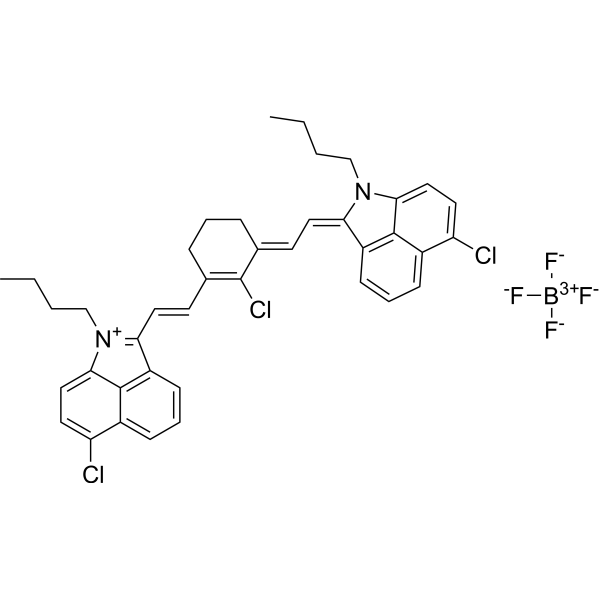
IR-1048 is a nitroreductase (NTR)-responsive near-infrared fluorescence (NIR)/photoacoustic (PA) imaging probe and photothermal agent. IR-1048 is coupled with a nitroimidazole group to form IR-1048-MZ. IR-1048-MZ is catalytically reduced by NTR in a hypoxic environment, restoring strong near-infrared absorption and fluorescence emission (NIR II window), while activating the photothermal effect. IR-1048 relies on NTR-mediated electron transfer to relieve intramolecular fluorescence quenching, achieving specific imaging and photothermal ablation of tumor hypoxic areas. IR-1048 is mainly used for high-contrast NIR II/photoacoustic imaging and photothermal therapy research and tumor diagnosis of the tumor hypoxic microenvironment .
loading...
    loading...
Cat. No.: HY-D3351
CAS No.: 2668963-61-7
Target:  

Fluorescent Dye

Research Areas:  

Inflammation/Immunology

PNO1 is a fluorescent probe for pulmonary fibrosis detection. The detection mechanism of PNO1 relies on sensing upregulated nitric oxide (NO) in the pulmonary fibrosis (PF) microenvironment. PNO1 contains an aniline group that reacts with NO or its derivatives under acidic conditions to form an N-nitrosylated intermediate, which is subsequently converted into a diazonium salt and undergoes deamination, eliminating the intramolecular electron transfer quenching effect and triggering a fluorescence turn-on response. The excitation wavelength of PNO1 includes 545 nm in in vitro solution studies, while an excitation range of 520-550 nm is used for cell, tissue and in vivo imaging; its emission wavelength centers at 572 nm in the unreacted state, and shifts to 559 nm with enhanced fluorescence intensity upon binding to NO. PNO1 can be used for pulmonary fibrosis research .
loading...
    loading...
Cat. No.: HY-N2452
CAS No.: 956103-79-0
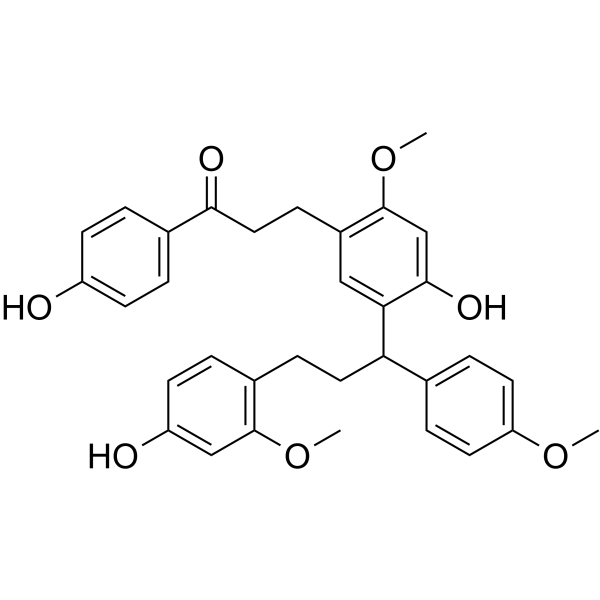
Cochinchinenin C is a GLP-1R agonist that binds to the extracellular domain of the receptor via hydrophobic interactions and hydrogen bonds, and promotes glucose-dependent insulin secretion from pancreatic β-cells. Cochinchinenin C also increases intracellular cAMP and ATP levels. At low concentrations, Cochinchinenin C binds to human serum albumin, alters its microenvironment, and induces dominant static fluorescence quenching. Cochinchinenin C shows almost no cytotoxicity to pancreatic β-cells, and exerts a synergistic effect with Loureirin A (HY-N1505) when binding to human serum albumin. Cochinchinenin C has been widely used in studies of type 2 diabetes, Helicobacter pylori infection, thrombotic diseases, and other conditions .
loading...
    loading...
Cat. No.: HY-N3387
CAS No.: 30508-27-1
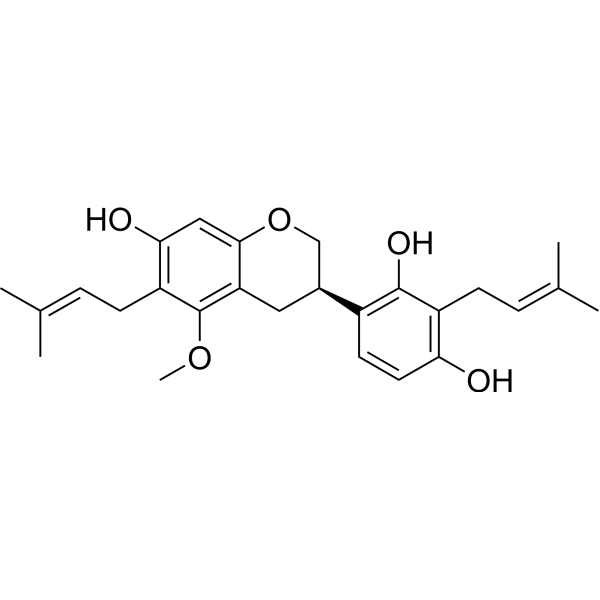
Licoricidin (LCD) is isolated from Glycyrrhiza uralensis Fisch, possesses anti-cancer activities. Licoricidin (LCD) inhibit SW480 cells (IC50=7.2 μM) by inducing cycle arrest, apoptosis and autophagy, and is a potential chemopreventive or chemotherapeutic agent against colorectal cancer . Licoricidin (LCD) inhibits Lung Metastasis by inhibition of tumor angiogenesis and lymphangiogenesis as well as changes in the local microenvironment of tumor tissues the anticarcinogenic effect . Licoricidin enhanced gemcitabine-induced cytotoxicity in Osteosarcoma (OS) cells by inactivation of the Akt and NF-κB pathways in vitro and in vivo . Licoricidin blocks UVA-induced photoaging via ROS scavenging, limits the activity of MMP-1, it can be considered as an active ingredient in new topically applied anti-ageing formulations .
loading...
    loading...
Cat. No.: HY-P992454

Target:  

Tim3

Research Areas:  

Cancer

S095018 (Sym023) is a human IgG2-type inhibitor targeting T cell immunoglobulin and TIM-3. S095018 competitively blocks the binding of multiple ligands such as Gal-9 and phosphatidylserine to TIM-3. S095018 stimulates the anti-tumor activity of T cells, dendritic cells and macrophages, and exhibits good safety both as a monotherapy and in combination with the anti-PD-1 antibody Sym021. S095018 also induces an increase in the density of CD8 + T cells in the tumor microenvironment, and upregulates gene signatures associated with IFN-γ signaling, antigen presentation and T cell activation. S095018 can be used for the research of advanced/metastatic recurrent biliary tract cancer .
loading...
    loading...
Cat. No.: HY-P992511

Target:  

PD-1/PD-L1 CTLA-4 VEGFR

Research Areas:  

Cancer

CS2009 is a trispecific antibody targeting PD-1, CTLA-4 and VEGFA. CS2009 blocks the interactions of PD-1/PD-L1, CTLA-4/CD80 and VEGFA/VEGFR2, mediates checkpoint inhibition, and suppresses tumor angiogenesis. CS2009 reactivates PD-1/CTLA-4 double-positive tumor-infiltrating T lymphocytes, induces T cell activation, enhances tumor growth inhibition, promotes vascular normalization, improves T lymphocyte infiltration, and converts the immunosuppressive tumor microenvironment into an immunocompetent one. CS2009 can be used for the research of various advanced solid tumors .
loading...
    loading...
Cat. No.: HY-L025
11,237 compounds

Cancer is the second leading cause of death globally and seriously threatens human health. A neoplasm and malignant tumor are other common names for cancer. Disruption of the normal regulation of cell-cycle progression and division lies at the heart of the events leading to cancer. Target therapy, which targets proteins that control how cancer cells grow, divide and spread, plays an important role in cancer treatment. Recent studies mainly focus on targeting the key proteins for cancer surviving, cancer stem cells, the tumor microenvironment, tumor immunology, etc.

MCE designs a unique collection of 11,237 anti-cancer compounds that target kinases, cell cycle key components, tumorigenesis related signaling pathways, etc. MCE Anti-cancer compound library is a useful tool for anti-cancer drug screening.

Cat. No.: HY-179626
CAS No.: 2138299-66-6
Target:  

STING ADC Payloads

Research Areas:  

Cancer

STING agonist-49 (Compound 1) is a STING agonist and can be used as a payload for ADCs. STING agonist-49 can be applied in lung cancer research .
loading...
    loading...
Cat. No.: HY-181919
Research Areas:  

Cancer

CD73-IN-22 (Compound HX-6) is a non-nucleoside CD73 inhibitor with an IC50 of 0.07 μM. When radiolabeled with 68Ga, CD73-IN-22 acts as a PET radiotracer for detecting CD73 expression. When radiolabeled with 177Lu, CD73-IN-22 exhibits anticancer activity against colorectal adenocarcinoma. CD73-IN-22 is applicable to research related to colon adenocarcinoma and breast cancer .
loading...
    loading...
Cat. No.: HY-168954
Target:  

c-Fms Apoptosis Akt ERK STAT

Research Areas:  

Inflammation/Immunology Cancer

CSF1R-IN-26 (Compound III-1) is the inhibitor for CSF-1R with an IC50 of 20.07 nM. CSF1R-IN-26 promotes the polarization of M2 macrophages to M1 macrophages, thereby inducing apoptosis in MC-38 cancer cell. CSF1R-IN-26 inhibits the activation of AKT/ERK/STAT3 signaling pathway. CSF1R-IN-26 reconstructs the tumor immune microenvironment and exhibits antitumor activity in mouse models. CSF1R-IN-26 exhibits pharmacokinetics characteristics in SD rats with a half-life 1.86 hours, and an oral bioavailability of 79.22% .
loading...
    loading...
Cat. No.: HY-175660
Target:  

Heme Oxygenase (HO)

Research Areas:  

Cancer

KCL-HO-1i is an orally active heme oxygenase-1 (HO-1) inhibitor (rat HO-1: IC50 = 123 nM) and human HO-1: IC50 = 128 nM). KCL-HO-1i targets immunosuppressive LYVE-1 + perivascular tumor-associated macrophages (PvTAMs) in the tumor microenvironment (TME), reduces PvTAM-mediated immune exclusion. KCL-HO-1i demonstrates synergistic anti-tumor efficacy with chemotherapy in MMTV-PyMT spontaneous breast cancer mice or C57Bl/6 mice bearing subcutaneous MN-MCA1 sarcomas. KCL-HO-1i can be used for the study of cancer .
loading...
    loading...
Cat. No.: HY-181877
Target:  

HDAC Adenosine Receptor

Research Areas:  

Cancer

IHCH-3185 is an orally active class I HDAC inhibitor (HDAC1 IC50 =102.9 nM) and A2AR antagonist (A2AR Ki =7.6 nM). IHCH-3185 reverses immune gene silencing by inducing histone acetylation and blocks the adenosine signaling pathway to relieve T-cell suppression. IHCH-3185 exhibits antiproliferative activity, induces cell cycle arrest, and significantly improves the tumor microenvironment. IHCH-3185 reduces the proportion of regulatory T cells, increases the CD8 +/Treg ratio, and upregulates the expression of key factors such as H2-K1, Cxcl9 and Cxcl10. IHCH-3185 shows significant antitumor potential in CT26 and MC38 mouse tumor models and is suitable for related cancer research .
loading...
    loading...
Cat. No.: HY-P2632
CAS No.: 289042-25-7
Synonyms: RADA16
Research Areas:  

Neurological Disease

RAD16-I (RADA16) is a non-directed self-assembling peptide hydrogel. Under physiological conditions, RAD16-I spontaneously forms a three-dimensional nanofiber network that mimics the extracellular matrix, and possesses excellent properties such as high water content, biocompatibility and degradability. RAD16-I serves as an ideal scaffold for three-dimensional cell culture. RAD16-I not only maintains cell viability and induces self-organization, but also supports cell adhesion, proliferation, differentiation and insulin secretion, effectively stabilizes islet clusters and promotes directed differentiation of the cardiac lineage. RAD16-I can construct a cell-friendly nano-microenvironment for research related to diseases such as myocardial infarction and diabetes .
loading...
    loading...
Cat. No.: HY-W048825
CAS No.: 87512-31-0
Research Areas:  

Others

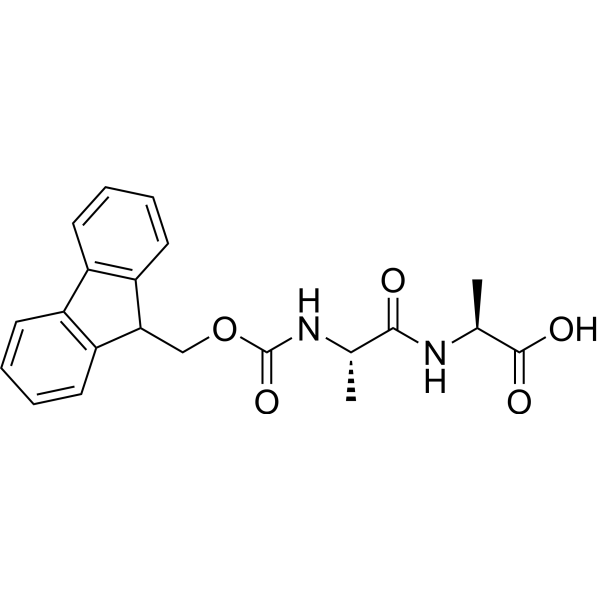
Fmoc-Ala-Ala-OH is a self-assembling fluorenylmethoxycarbonyl dipeptide, a small amphiphilic building block composed of a dipeptide linked to a fluorenylmethoxycarbonyl (Fmoc) group. Under conditions of pH < 4, Fmoc-Ala-Ala-OH spontaneously assembles to form a nanofiber network, constructing a hydrogel scaffold with a water content exceeding 99% (w/w). The fibers have a diameter of approximately 22 nm, matching the size of extracellular matrix (ECM) components. Fmoc-Ala-Ala-OH supports cell adhesion, proliferation, and maintains of cell phenotype. Fmoc-Ala-Ala-OH's function is to mimic the ECM, providing a 3D growth microenvironment for cells, and Fmoc-Ala-Ala-OH is primarily used in tissue engineering and 3D cell culture, particularly suitable for in vitro culture studies of cells such as chondrocytes[1] .
loading...
    loading...
Cat. No.: HY-182988
CAS No.: 2681258-65-9
Target:  

Liposome

Research Areas:  

Cancer

L-Arg-DSPE is an arginine-functionalized DSPE lipid containing free guanidine groups. L-Arg-DSPE serves as a component of NO-responsive degradable drug-loaded liposomal nanomotors (L-Arg@Lip-DOX), promoting drug deep tumor tissue penetration and cellular internalization. L-Arg-DSPE can be used for the research of drug delivery .
loading...
    loading...
Cat. No.: HY-P992517

Target:  

IFNAR CXCR TNF Receptor

Research Areas:  

Cancer

mDF6002 is a IL-12R-Fc fusion protein. mDF6002 induces sustained IFNγ production. mDF6002 exerts tumor-suppressive effects in mouse models of colon cancer and melanoma. mDF6002 can be used for research on solid tumors such as colon cancer and melanoma .
loading...
    loading...
Cat. No.: HY-172934
FGT-4 is a FR-β-targeted chimeric molecule. FGT-4 acts as a TLR7 agonist. FGT-4 binds to FR-β to enable delivery to tumor-associated macrophages and myeloid-derived suppressor cells. FGT-4 promotes the secretion of iNOS (associated with M1 macrophages) and the pro-inflammatory cytokine IL-6, and enhances the proliferation of cytotoxic CD8+ T cells. FGT-4 can be used for the research of breast cancer .
loading...
    loading...
Cat. No.: HY-174485
Target:  

mRNA

Research Areas:  

Inflammation/Immunology

OVA mRNA (N1-Me-Pseudo UTP) is an mRNA encoding chicken ovalbumin. The substitution with N1-Me-Pseudo UTP (m1Ψ) improves protein expression and reduces innate immune response. OVA mRNA binds to the STING-activating polymer PD18 and is encapsulated in optimized lipid nanoparticles to construct an mRNA vaccine platform (PD18 LNP). This platform not only enhances the lymphatic delivery efficiency and protein expression of mRNA, but also potently adjuvates immune responses via activating the STING pathway .
loading...
    loading...

