







318 Results for "

microenvironment

" in MedChemExpress (MCE) Product Catalog:
Products (318)

318 Results for "microenvironment" in MCE Product Catalog:

2
2 Cited Publications
Cat. No.: HY-N6985
CAS No.: 27548-93-2
Baccatin III is an orally available, selective inhibitor of the TGF-β1 signaling pathway and myeloid-derived suppressor cell (MDSC) activation. Baccatin III targets the AKT/STAT6 and Smad2/3 pathways, blocking TGF-β1-induced fibroblast differentiation and MDSC-mediated immunosuppression. Baccatin III exerts anti-inflammatory and anti-fibrotic effects by inhibiting macrophage activation and extracellular matrix deposition, and shows potential in the treatment of pulmonary fibrosis and cancer in terms of regulating the tumor immune microenvironment .
loading...
    loading...
2
2 Cited Publications
Cat. No.: HY-P990212
Anti-Mouse IL-6 Antibody (MP5-20F3) is an anti-mouse IL-6 IgG1 monoclonal antibody. Anti-Mouse IL-6 Antibody (MP5-20F3) reshapes the tumor microenvironment by blocking IL-6. Anti-Mouse IL-6 Antibody (MP5-20F3) can inhibit the STAT3 pathway and enhance T cell infiltration. Anti-Mouse IL-6 Antibody (MP5-20F3) can be used for researches on inflammation and infection conditions such as malignant pleural effusion (MPE) .
loading...
    loading...
2
2 Cited Publications
Cat. No.: HY-162080
CAS No.: 374705-10-9
Research Areas:  

Cancer

METTL1-WDR4-IN-1 (Compound 1) is a selective competitive inhibitor of the methyltransferase complex METTL1-WDR4 (IC50 = 144 μM). METTL1-WDR4-IN-1 inhibits the m 7G methyltransferase activity of the METTL1-WDR4 complex, blocking m 7G modification of PKM mRNA, reducing PKM2 protein expression, disrupting the METTL1/PKM2/H3K9la positive feedback loop, and simultaneously inhibiting PKM2 nuclear translocation-mediated CD155 transcriptional activation. METTL1-WDR4-IN-1 can inhibit tumor cell proliferation, weaken glycolytic metabolism, reverse tumor immune evasion (restoring NK cell and CD8 + T cell function), and regulate RNA epigenetic modification and the tumor immune microenvironment. METTL1-WDR4-IN-1 can be used in immunotherapy research for cancers such as colorectal cancer, and is particularly suitable for use in combination with PKM2 inhibitors to enhance anti-tumor treatment efficacy .
loading...
    loading...
2
2 Cited Publications
Cat. No.: HY-162080A
Research Areas:  

Cancer

METTL1-WDR4-IN-1 (Compound 1) TFA is a selective competitive inhibitor of the methyltransferase complex METTL1-WDR4 (IC50=144 μM). METTL1-WDR4-IN-1 TFA inhibits the m 7G methyltransferase activity of the METTL1-WDR4 complex, blocking the m 7G modification of PKM mRNA, reducing PKM2 protein expression, disrupting the METTL1/PKM2/H3K9la positive feedback loop, and simultaneously inhibiting PKM2 nuclear translocation-mediated CD155 transcriptional activation. METTL1-WDR4-IN-1 TFA can inhibit tumor cell proliferation, weaken glycolytic metabolism, reverse tumor immune evasion (restoring NK cell and CD8 + T cell function), and regulate RNA epigenetic modification and the tumor immune microenvironment. METTL1-WDR4-IN-1 TFA can be used in immunotherapy research for cancers such as colorectal cancer, and is particularly suitable for use in combination with PKM2 inhibitors to enhance anti-tumor treatment efficacy .
loading...
    loading...
1
1 Cited Publications
Cat. No.: HY-P99742
CAS No.: 2055640-86-1
Synonyms: ADC-1013; JNJ-64457107; Vanalimab

Target:  

TNF Receptor

Research Areas:  

Cancer

Mitazalimab (ADC-1013; JNJ-64457107) is FcγR-dependent CD40 agonist with tumor-directed activity. Mitazalimab activates antigen-presenting cells, e.g. dendritic cells (DC), to initiate tumor-reactive T cells. Therefore, Mitazalimab induces tumor-specific T cells to infiltrate and kill tumors. Mitazalimab remodels the tumor-infiltrating myeloid microenvironment .
loading...
    loading...
1
1 Cited Publications
Cat. No.: HY-W591424
CAS No.: 92451-01-9
Synonyms: mPEG2000-SC; mPEG2000-Succinimidyl ester
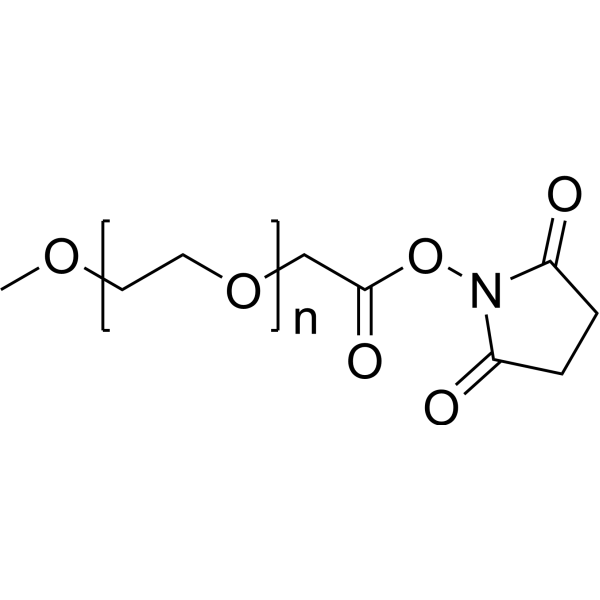
m-PEG2000-NHS ester (mPEG2000-SC) is a reagent with both cell adhesion inhibition and peptide conjugation functions. The NHS ester group of m-PEG2000-NHS ester forms stable amide bonds with primary amine-containing molecules (e.g., the N-terminus of MMP-2-cleavable octapeptide) to generate mPEG-peptide intermediates for liposome surface modification. When m-PEG2000-NHS ester is immobilized on a cystamine-modified gold surface, it can construct an in vitro model for cell adhesion kinetic studies, and higher PEG density and thicker layers correlate with lower cell adhesion rates. m-PEG2000-NHS ester can synthesize MMP-2-responsive PEGylated lipid conjugates to achieve MMP-triggered dePEGylation in the tumor microenvironment. m-PEG2000-NHS ester can be used in studies related to colon cancer and other conditions .
loading...
    loading...
1
1 Cited Publications
Cat. No.: HY-P3448
CAS No.: 2580154-02-3
Synonyms: CEND-1; iRGD; LSTA1
Research Areas:  

Cancer

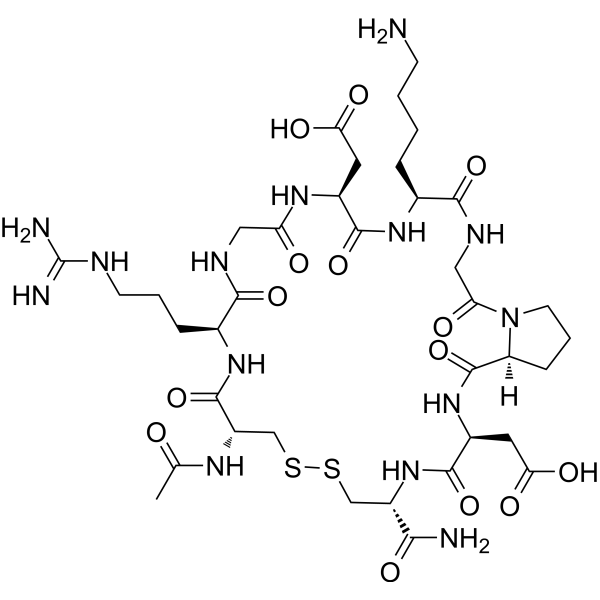
Certepetide (CEND-1) is a bifunctional cyclic peptide (a.k.a. iRGD). Certepetide is a tumor-penetrating enhancer via RGD motif interaction with alphav-integrins and via activating NRP-1, and transforms the solid tumor microenvironment into a temporary agent conduit. Certepetide accumulates in tumors, and is used in the research of pancreatic cancer and other solid tumors .
loading...
    loading...
1
1 Cited Publications
Cat. No.: HY-P99039
CAS No.: 1803176-05-7
Synonyms: MEDI9447

Target:  

CD73

Research Areas:  

Cancer

Oleclumab (MEDI9447) is a human IgG1λ monoclonal antibody targeting CD73 and inhibits the exonuclease activity of the extracellular enzyme CD73. Oleclumab can adjust the composition of bone marrow and lymphoid infiltrating leukocyte populations in the tumor microenvironment and has anti-tumor activity .
loading...
    loading...
1
1 Cited Publications
Cat. No.: HY-NP132A
Recombinant humanized type III collagen (MW 55900) is a type III collagen with a molecular weight of 55900 Da. Recombinant humanized type III collagen has various biological functions, such as promoting skin extracellular matrix regeneration and improving the cell microenvironment. Recombinant humanized type III collagen inhibits the proliferation, migration, and invasion of breast cancer cells. Type III collagen functions in cell adhesion, migration, proliferation and differentiation through its interaction with integrins .
loading...
    loading...
1
1 Cited Publications
Cat. No.: HY-P99242
CAS No.: 2254029-91-7

Target:  

CD276/B7-H3

Research Areas:  

Cancer

Alsevalimab is a humanized, afucosylated IgG1 monoclonal antibody against B7-H4. Alsevalimab blocks the binding of the B7-H4 protein to the receptors on the surface of T cells, reversing the immunosuppressive state in the tumor microenvironment, thereby activating the killing effect of T cells on cancer cells. Alsevalimab can be used in combination with Pembrolizumab (HY-P9902), and shows good safety profiles .
loading...
    loading...
1
1 Cited Publications
Cat. No.: HY-P99675
CAS No.: 2428381-53-5
Synonyms: AK112

Target:  

PD-1/PD-L1 VEGFR

Research Areas:  

Cancer

Ivonescimab (AK112) is a PD-1/VEGF bispecific antibody. Ivonescimab competitively inhibiting PD-1/PD-L1 interaction, reversing the immunosuppression mediated by it, and blocks the binding of VEGF-A to VEGFR2, inhibiting tumour angiogenesis in the tumour microenvironment. Ivonescimab also has significantly anticancer activity against EGFR-mutated locally advanced or metastatic non-squamous non-small cell lung cancer (NSCL) .
loading...
    loading...
1
1 Cited Publications
Cat. No.: HY-160041
CAS No.: 1390628-22-4
Synonyms: NOX-A12
Target:  

CXCR

Research Areas:  

Cancer

Olaptesed pegol (NOX-A12) is a L-oligoribonucleotide aptamer targeting CXCL12 based on a pegylated structure. Olaptesed pegol neutralizes CXCL12, and CXCL12 inhibition mobilizes chronic lymphocytic leukemia cells into the circulation and prevents their homing into the protective microenvironment. Olaptesed pegol can enhances the infiltration of human primary T cells and NK cells and inhibit tumor growth companied with anti-PD-1 antibody. Olaptesed pegol can be used for researches of colon cancer and lymphocytic leukemia .
loading...
    loading...
1
1 Cited Publications
Cat. No.: HY-160041A
Synonyms: NOX-A12 sodium
Target:  

CXCR

Research Areas:  

Cancer

Olaptesed pegol (NOX-A12) sodium is a pegylated L-oligoribonucleotide aptamer targeting CXCL12 based on a pegylated structure. Olaptesed pegol sodium neutralizes CXCL12, and CXCL12 inhibition mobilizes chronic lymphocytic leukemia cells into the circulation and prevents their homing into the protective microenvironment. Olaptesed pegol sodium can enhances the infiltration of human primary T cells and NK cells and inhibit tumor growth companied with anti-PD-1 antibody. Olaptesed pegol sodium can be used for researches of colon cancer and lymphocytic leukemia .
loading...
    loading...
1
1 Cited Publications
Cat. No.: HY-16938S1
CAS No.: 174838-38-1
Synonyms: 5'-(Methylthio)-5'-deoxyadenosine-d3; 5'-Deoxy-5'-(methylthio)adenosine-d3; 5'-S-Methyl-5'-thioadenosine-d3
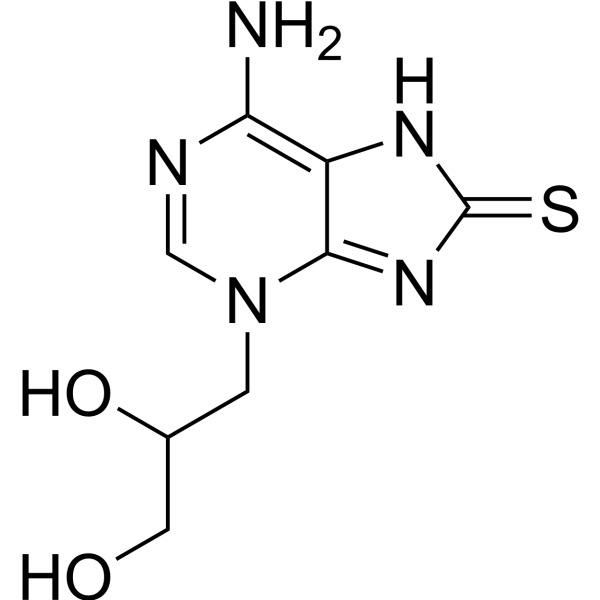
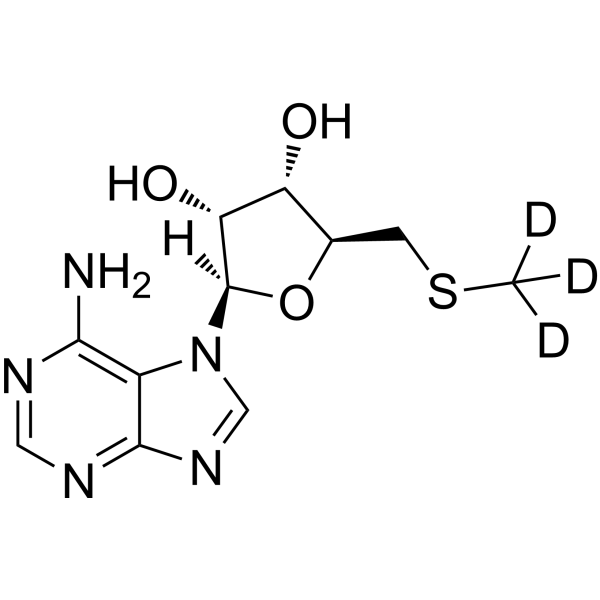
5'-Methylthioadenosine-d3 is the deuterium labeled 5'-Methylthioadenosine . 5'-Methylthioadenosine (5'-(Methylthio)-5'-deoxyadenosine) is a nucleoside generated from S-adenosylmethionine (SAM) during polyamine synthesis. 5'-Methylthioadenosine suppresses tumors by inhibiting tumor cell proliferation, invasion, and the induction of apoptosis while controlling the inflammatory micro-environments of tumor tissue. 5'-Methylthioadenosine and its associated materials have striking regulatory effects on tumorigenesis .
loading...
    loading...
1
1 Cited Publications
Cat. No.: HY-W089353
CAS No.: 194235-40-0
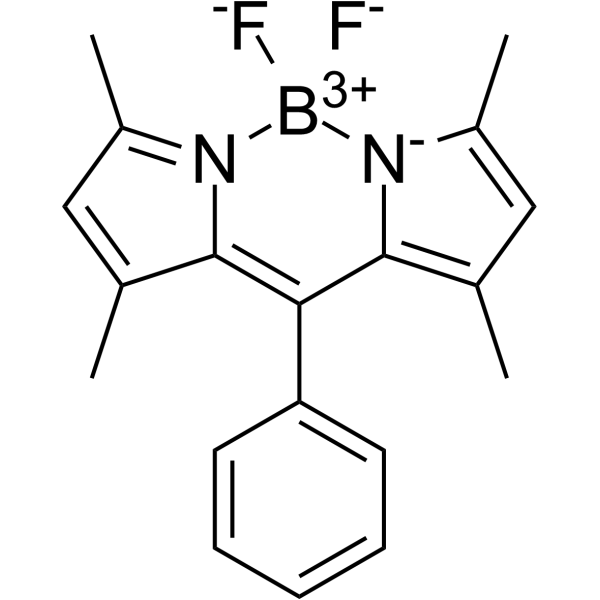
8-Phenyl-BODIPY 505/515 is a molecular rotor based on the BODIPY scaffold, specifically used as a microviscosity probe. The working principle of 8-Phenyl-BODIPY 505/515 is based on the restriction of molecular motion by viscosity: in a high-viscosity environment, the rotational freedom of its chemical bonds is inhibited, which leads to a significant extension of fluorescence lifetime. This property makes 8-Phenyl-BODIPY 505/515 an effective tool for monitoring changes in the viscosity of intracellular microenvironments via fluorescence lifetime imaging (FLIM) technology .
loading...
    loading...
1
1 Cited Publications
Cat. No.: HY-Y0756
CAS No.: 144-55-8
Synonyms: Sodium hydrogen carbonate
Target:  

Bacterial

Research Areas:  

Infection Cancer

Sodium bicarbonate (Sodium hydrogen carbonate; Soda bicarbonate) is an inorganic salt that is neutral to slightly alkaline and easily decomposes when exposed to moisture in the air. Sodium bicarbonate can maintain the pH of the culture medium, thereby affecting the expression of inducible nitric oxide synthase (iNOS) and nitric oxide (NO) production in macrophages and reversing the acidosis of the tumor microenvironment. Sodium bicarbonate is widely used in the fields of food, medicine, cosmetics, etc. Its main uses include buffers, flavoring agents, disinfectants, pharmaceuticals, and proton gradient regulators. Sodium bicarbonate is also commonly used as an antacid to inhibit gastrointestinal diseases, neutralize gastric acid, and reduce gastric discomfort .
loading...
    loading...
1
1 Cited Publications
Cat. No.: HY-148029
CAS No.: 2553413-93-5
Purity:  98.16%
Synonyms: TAK-676
Target:  

STING

Research Areas:  

Cancer

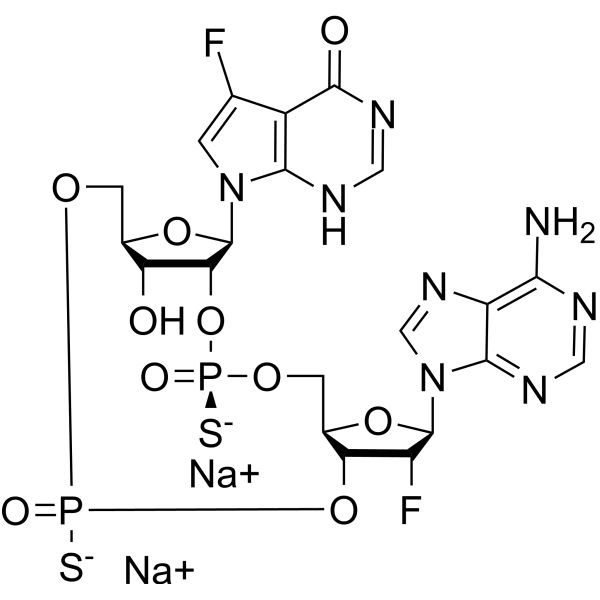
Dazostinag disodium (TAK-676) is an agonist of STING, triggering the activation of STING signaling pathway and type I interferons. Dazostinag disodium is also a modulator of immune system, resulting complete regressions and durable memory T-cell immunity. Dazostinag disodium promotes durable IFN-dependent antitumor immunity .
loading...
    loading...
1
1 Cited Publications
Cat. No.: HY-P991447

Target:  

VISTA

Research Areas:  

Cancer

Anti-VSIR/VISTA Antibody (SG7) is an antibody targeting VISTA, with a Kd of 0.14 nM for human VISTA and 1 nM for mouse VISTA. Anti-VSIR/VISTA Antibody (SG7) blocks the function of VISTA, prevents VISTA from binding to T cells, restores suppressed T cell activation, and blocks the interactions between VISTA and PSGL-1 as well as VSIG3. Anti-VSIR/VISTA Antibody (SG7) slows tumor growth, reduces PMN-MDSCs, and increases the numbers of CD4 + and CD8 + T cells in the tumor microenvironment. Anti-VSIR/VISTA Antibody (SG7) can be used in studies related to melanoma, colon cancer, and breast cancer .
loading...
    loading...
1
1 Cited Publications
Cat. No.: HY-P99144A

Target:  

PD-1/PD-L1

Research Areas:  

Inflammation/Immunology Cancer

Anti-Mouse PD-1 Antibody (S-5001) is a selective inhibitor targeting PD-1, blocking the PD-1/PD-L1 immune checkpoint axis through competitive binding to PD-1. Anti-Mouse PD-1 Antibody (S-5001) works by reversing the tumor immunosuppressive microenvironment and reactivating the anti-tumor activity of cytotoxic T lymphocytes. It can be used in research on tumors such as melanoma and HPV-positive oropharyngeal squamous cell carcinoma. Anti-Mouse PD-1 Antibody (S-5001) is often combined with photothermal therapy, chemotherapy, etc., to enhance efficacy .
loading...
    loading...
1
1 Cited Publications
Cat. No.: HY-126077
CAS No.: 1567915-38-1
Purity:  99.98%
Synonyms: LXI-15029
Target:  

mTOR

Research Areas:  

Inflammation/Immunology Cancer

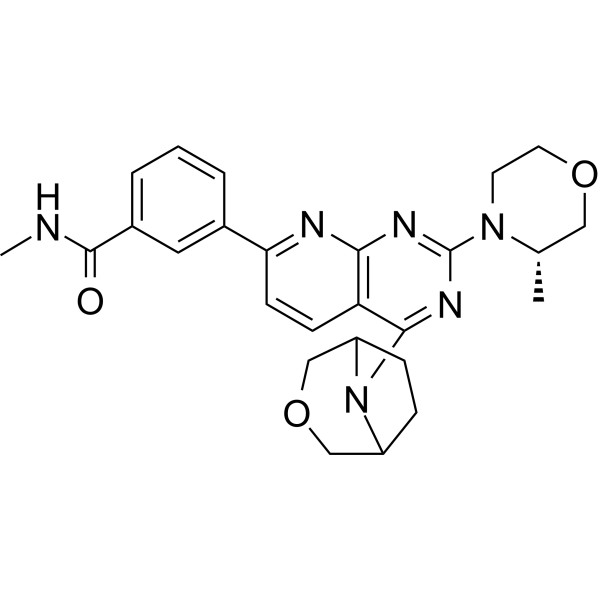
MTI-31 (LXI-15029) is a potent, orally active and highly selective inhibitor of mTORC1 and mTORC2. MTI-31 is selective for mTOR (Kd: 0.20 nM) versus PIK3CA, PIK3CB and PIK3G with >5,000 fold selectivity in mTOR binding assays. MTI-31 shows an IC50 of 39 nM for mTOR in LANCE assay of mTOR substrate phosphorylation with 100 μM ATP. MTI-31 can be used for the research of breast cancer .
loading...
    loading...

