310 Results for "

pro-inflammatory activity

" in MedChemExpress (MCE) Product Catalog:
Products (310)

310 Results for "pro-inflammatory activity" in MCE Product Catalog:

Cat. No.: HY-187692
CAS No.: 3112339-39-3
Target:  

IRAK JAK EGFR CDK TNF Receptor

Research Areas:  

Inflammation/Immunology

IRAK4-IN-35 is an orally active IRAK4 inhibitor with an IRAK4 IC50 of 9.88 nM. IRAK4-IN-35 also inhibits JAK3, EGFR, CDK2 with IC50 values of 6.72 nM, 32.35 nM, and 39.08 nM, respectively. IRAK4-IN-35 inhibits the production of proinflammatory cytokines, blocks inflammatory signaling pathways, and reduces serum TNF-α levels and spleen index in mouse models of acute inflammation. IRAK4-IN-35 decreases the disease activity index, paw swelling degree, and spleen index in a collagen-induced arthritis mouse model. IRAK4-IN-35 can be used for the research of rheumatoid arthritis .
loading...
    loading...
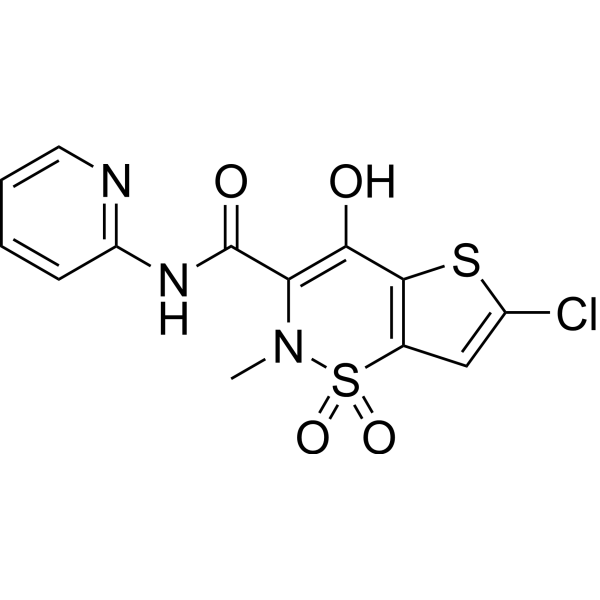
Cat. No.: HY-B0367
CAS No.: 70374-39-9
Synonyms: Chlortenoxicam; Ro 13-9297
Lornoxicam (Chlortenoxicam) is an orally active oxycontin nonsteroidal anti-inflammatory drug (NSAID) with analgesic, anti-inflammatory, antipyretic and anticancer activities. Lornoxicam exhibits good inhibitory effects on both COX-1 and COX-2 (COX-1: IC50=0.005 μM; COX-2:IC50=0.008 μM) and inhibits the production of NO by iNOS (IC50=65 μM) and the proinflammatory cytokine IL-6 (IC50=54 μM). Lornoxicam also inhibits tumor cell proliferation and migration and induces tumor cell apoptosis. Lornoxicam can be used in the study of inflammatory pain, colorectal cancer and breast cancer .
loading...
    loading...
Cat. No.: HY-108292R
CAS No.: 66532-86-3
Research Areas:  

Cancer

Propacetamol (hydrochloride) (Standard) is the analytical standard of Propacetamol (hydrochloride). This product is intended for research and analytical applications. Propacetamol hydrochloride is a potent, peptidic inhibitor targeting thrombin and granzyme GZMK. Propacetamol hydrochloride specifically blocks the activities of thrombin and GZMK, thereby inhibiting thrombin-mediated PAR-1 cleavage, as well as downstream inflammatory and procoagulant signaling pathways. Through stabilizing IκB proteins, blocking NF-κB activation and reducing systemic levels of proinflammatory/procoagulant biomarkers, Propacetamol hydrochloride exerts multiple effects including anti-inflammatory, antithrombotic, barrier repair, and inhibition of atherosclerotic plaque progression. Propacetamol hydrochloride binds to platelets without interference from kininogen, effectively limiting acute thrombus growth and reducing eosinophil infiltration and goblet cell hyperplasia in asthma models. Propacetamol hydrochloride is an important tool molecule for investigating the mechanisms of atherosclerosis, asthma and related thromboinflammatory diseases .
loading...
    loading...
Cat. No.: HY-124404
CAS No.: 82337-46-0
Purity:  ≥99.0%
12(R)-HETE is a CYP-dependent arachidonic acid metabolite that acts as a proinflammatory lipid mediator. 12 (R)-HETE widely exists in various tissues including the eye, skin and liver. In the cornea, 12(R)-HETE is metabolized via pathways such as β-oxidation into the precursor of 12(R)-HETrE. Without direct receptor binding, 12(R)-HETE indirectly activates AHR-mediated target gene transcription, while inhibiting the enzymatic activity of Na+,K+-ATPase and the intracellular calcium elevation induced by TP agonists. 12(R)-HETE also possesses multiple physiological effects such as chemotaxis, proangiogenesis, vasodilation, natriuresis, diuresis and intraocular pressure reduction, and can be widely used in studies related to psoriasis, inflammatory skin diseases and ocular inflammation .
loading...
    loading...
Cat. No.: HY-L114
1,665 compounds

Inflammation promotes physiological and pathological processes by the activation of the immune system, local vascular system, and various cells within the damaged tissue. Accumulating epidemiological and clinical evidence shows that chronic inflammation is causally linked to various human diseases, including cerebrovascular, cardiovascular, joint, cutaneous, pulmonary, blood, liver, and intestinal diseases as well as diabetes.

Various natural products from Traditional Chinese Medicine (TCM) have been shown to safely suppress proinflammatory pathways and control inflammation-associated disease. MCE designs a unique collection of 1,665 Traditional Chinese Medicine active compounds with anti-inflammatory activity, which are derived from Coptis chinensis, Radix isatidis, Flos Lonicerae, Forsythia suspensa, etc. MCE Anti-inflammatory Traditional Chinese Medicine Active Compound Library is a useful tool for discovery anti-inflammatory drugs from TCM.

Cat. No.: HY-183905
CAS No.: 1401564-00-8
KR-67607 is a selective 11β-HSD1 inhibitor, with an IC50 value of 4.8 nM against h11β-HSD1 and 7.1 nM against mouse 11β-HSD1. KR-67607 inhibits stress-induced Glucocorticoid receptor nuclear translocation, reduces cortisol levels, suppresses the expression of ROS and proinflammatory cytokines, and enhances Nrf-2-mediated antioxidant gene transcription. KR-67607 maintains trabecular meshwork structure and reverses elevated intraocular pressure. KR-67607 improves ocular antioxidant activity and mucus secretion, reverses ocular surface damage, and prevents ischemia-reperfusion induced ocular injury. KR-67607 can be used in research related to glaucoma and dry eye disease .
loading...
    loading...
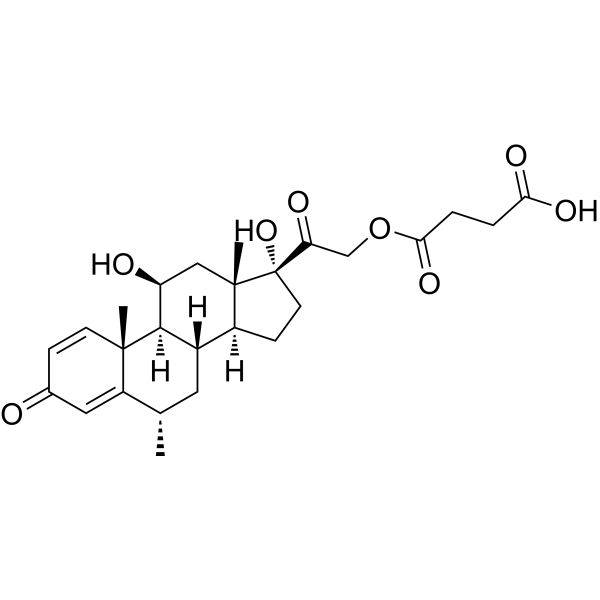
Cat. No.: HY-B1900R
CAS No.: 2921-57-5
Synonyms: Methylprednisolone hydrogen succinate (Standard)
Methylprednisolone succinate (Standard) is the analytical standard of Methylprednisolone succinate (HY-B1900). This product is intended for research and analytical applications. Methylprednisolone succinate (Methylprednisolone hydrogen succinate) is a prodrug of Methylprednisolone (HY-B0260) and glucocorticoid with immunosuppressant and anti-inflammatory activity. Methylprednisolone succinate binds cytosolic glucocorticoid receptors, translocates to nuclei, and modulates target gene transcription. Methylprednisolone succinate alters Bax, Bcl-2, occludin, and ZO-1 expression; attenuates TLR4/NF-κB signaling; suppresses proinflammatory cytokine production and immune cell activation. Methylprednisolone succinate can be used for the research of intracranial haemorrhage, rheumatoid arthritis, multiple sclerosis, preterminal cancer, inflammatory conditions, shock, immediate-type hypersensitivity, acute myocardial ischemia, hypoxic heart muscle damage, and traumatic spinal cord injury .
loading...
    loading...
Cat. No.: HY-N2434R
CAS No.: 36752-54-2
-Shogaol (Standard) is the analytical standard of -Shogaol (HY-N2434). This product is intended for research and analytical applications. [10]-Shogaol is an orally active antioxidant. [10]-Shogaol can be extracted from ginger (Zingiber officinale). [10]-Shogaol1 inhibits COX-2 with an IC50 value of 7.5 μM. [10]-Shogaol inhibits the production of proinflammatory cytokines (IL-1β, IL-6). [10]-Shogaol inhibits NF-κB phosphorylation. [10]-Shogaol has anti-inflammatory effects. [10]-Shogaol has anticancer effects against Docetaxel (HY-B0011)-resistant prostate cancer. [10]-Shogaol exhibits larvicidal activity against L5 larvae of Angiostrongylus cantonensis .
loading...
    loading...
Cat. No.: HY-N0493R
CAS No.: 520-12-7
Pectolinarigenin (Standard) is the analytical standard of Pectolinarigenin. This product is intended for research and analytical applications. Pectolinarigenin is an orally active dual inhibitor of COX-2/5-LOX with anti-inflammatory, antioxidant, antitumor and neuroprotective activities. Pectolinarigenin exerts neuroprotective and anti-inflammatory effects on astrocyte inflammation via the NFκB and MAPK pathways. Pectolinarigenin inhibits LPS-induced phosphorylation of ERK1/2, N-FκB and p38MAPK, directly inhibits the enzymatic activity or binding of COX-2, 5-LOX and HIF-1α, and reduces the level of XIAP. Pectolinarigenin modifies Keap1 to promote nuclear accumulation of Nrf2, induces ARE-mediated antioxidant enzyme expression, and possesses direct free radical scavenging activity. Pectolinarigenin reduces the release of NO, proinflammatory mediators and leukotrienes, and increases the level of IL-10. Pectolinarigenin induces G2/M cell cycle arrest, apoptosis (Apoptosis) and autophagy (Autophagy) via the PI3K/AKT/mTOR signaling pathway. Pectolinarigenin reduces renal crystal deposition and inhibits melanin synthesis. Pectolinarigenin inhibits inflammation and alleviates allergy in mouse models of inflammation. Pectolinarigenin alleviates renal injury, inflammation and oxidative stress in mice by inhibiting HIF-1α activity. Pectolinarigenin can be used for the research of neurodegenerative diseases, inflammatory/allergic diseases, calcium oxalate nephrocalcinosis, gastric cancer, melasma, post-inflammatory diseases and chloasma.
loading...
    loading...
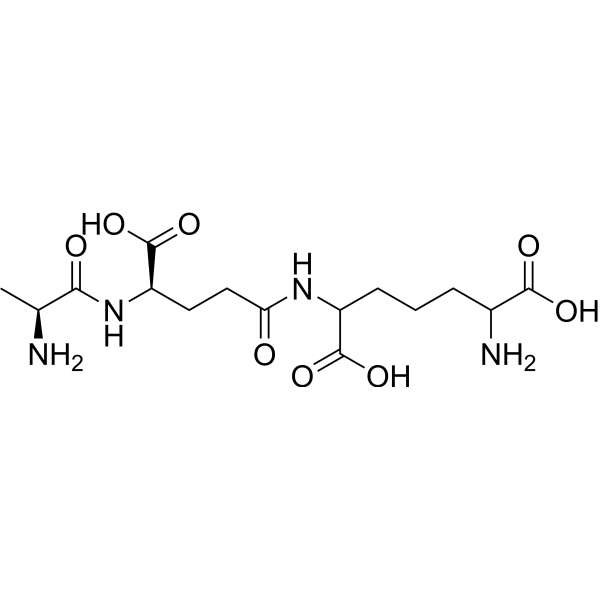
Cat. No.: HY-P5522
CAS No.: 877462-71-0
Synonyms: L-Ala-γ-D-Glu-meso-diaminopimelic acid
TriDAP (L-Ala-γ-D-Glu-meso-diaminopimelic acid) is a NOD1 agonist with a Kd value of 34.5 μM. TriDAP enhances the binding of NOD1-RICK, promotes RICK phosphorylation, and activates the NF-κB, TAK1, MEK/ERK, p38 and interferon response pathways. TriDAP downregulates Runx2 via increasing ubiquitination and reduces trabecular bone parameters. TriDAP decreases IκBα levels and increases p65 levels. TriDAP induces the secretion of proinflammatory mediators IL-8 and prostaglandins, triggers tissue inflammation and innate immune activation, and inhibits SARS-CoV-2 replication in lung epithelial cells. TriDAP increases the RANKL/OPG ratio in mice, reduces bone mass and enhances osteoclast activity, and inhibits new bone formation by decreasing the mineralization deposition rate in mice. TriDAP can be used in research related to pulpitis, chronic ulcerative colitis, Crohn's disease and SARS-CoV-2 infection .
loading...
    loading...