27 Results for "

APNEA

" in MedChemExpress (MCE) Product Catalog:
Products (27)

27 Results for "APNEA" in MCE Product Catalog:

Cat. No.: HY-129146S
Purity:  ≥99.0%
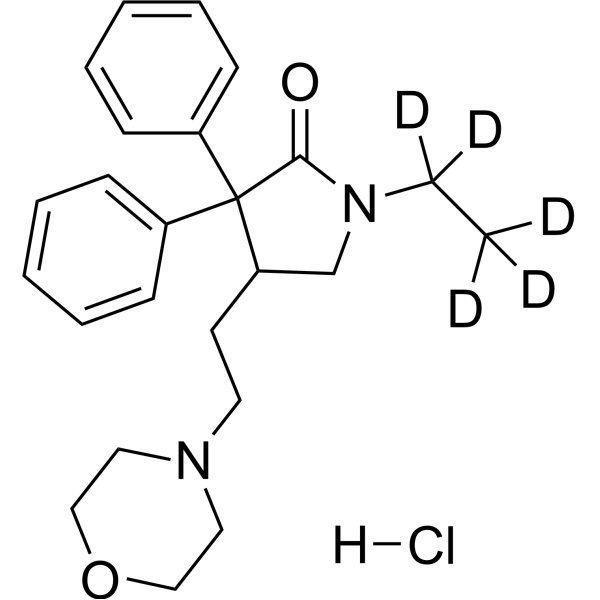
Doxapram-d5 hydrochloride is deuterium labeled Doxapram hydrochloride. Doxapram hydrochloride is a respiratory stimulant. Doxapram hydrochloride increases breathing rate and depth by acting on the brain's respiratory centers and peripheral chemoreceptors. Doxapram hydrochloride inhibits TASK-1, TASK-3, TASK-1/TASK-3 heterodimeric channel function with EC50s of 410 nM, 37 μM, 9 μM, respectively. Doxapram hydrochloride inhibits the Ca²⁺-activated potassium current (IC50 ≈ 13 μM) and Ca²⁺-independent potassium current (IC50 ≈ 20 μM) in type I cells of the carotid body. Doxapram hydrochloride significantly prolongs the effective refractory period of the atrium and has an anti-arrhythmic effect. Doxapram hydrochloride can be used for the study of respiratory depression such as post-anesthesia respiratory depression, chronic obstructive pulmonary disease and apnea of prematurity.
loading...
    loading...
Cat. No.: HY-B1718R
CAS No.: 4499-40-5
Synonyms: Oxtriphylline (Standard)
Choline theophyllinate (Standard) (Oxtriphylline (Standard)) is the analytical standard of Choline theophyllinate (HY-B1718). This product is intended for research and analytical applications. Choline theophyllinate (Oxtriphylline) is an orally active methylxanthine derivative. Choline theophyllinate exhibits weak antihistaminic and anticholinergic activities and potentiates the effects of histamine and acetylcholine. Choline theophyllinate relaxes bronchial smooth muscle, dilates coronary and peripheral blood vessels, increases urine output and electrolyte excretion, stimulates locomotor activity in the central nervous system, and induces transient hypotension following a pressor phase. It modulates sleep architecture by increasing wakefulness time and reducing slow-wave sleep, without altering the frequency or severity of nocturnal hypoxemia, apnea, or hypopnea events. Choline theophyllinate is used in studies of bronchospasm, nocturnal asthma, and chronic asthma .
loading...
    loading...
Cat. No.: HY-B0551S
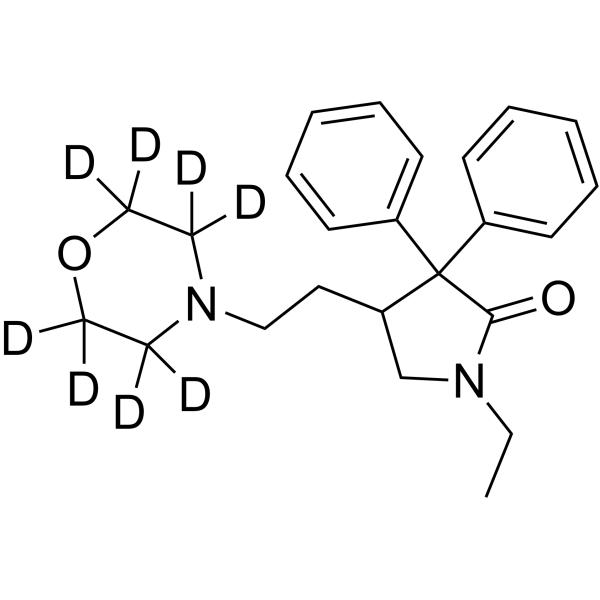
Doxapram-d8 is deuterated labeled Doxapram (HY-B0551). Doxapram is a respiratory stimulant. Doxapram increases breathing rate and depth by acting on the brain's respiratory centers and peripheral chemoreceptors. Doxapram inhibits TASK-1, TASK-3, TASK-1/TASK-3 heterodimeric channel function with EC50s of 410 nM, 37 μM, 9 μM, respectively. Doxapram inhibits the Ca²⁺-activated potassium current (IC50 ≈ 13 μM) and Ca²⁺-independent potassium current (IC50 ≈ 20 μM) in type I cells of the carotid body. Doxapram significantly prolongs the effective refractory period of the atrium and has an anti-arrhythmic effect. Doxapram can be used for the study of respiratory depression such as post-anesthesia respiratory depression, chronic obstructive pulmonary disease and apnea of prematurity.
loading...
    loading...
Cat. No.: HY-B0551AR
CAS No.: 7081-53-0
Doxapram hydrochloride hydrate (Standard) is the analytical standard of Doxapram hydrochloride hydrate (HY-B0551A). This product is intended for research and analytical applications. Doxapram hydrochloride hydrate is a respiratory stimulant. Doxapram hydrochloride hydrate increases breathing rate and depth by acting on the brain's respiratory centers and peripheral chemoreceptors. Doxapram hydrochloride hydrate inhibits TASK-1, TASK-3, TASK-1/TASK-3 heterodimeric channel function with EC50s of 410 nM, 37 μM, 9 μM, respectively. Doxapram hydrochloride hydrate inhibits the Ca²⁺-activated potassium current (IC50 ≈ 13 μM) and Ca²⁺-independent potassium current (IC50 ≈ 20 μM) in type I cells of the carotid body. Doxapram hydrochloride hydrate significantly prolongs the effective refractory period of the atrium and has an anti-arrhythmic effect. Doxapram hydrochloride hydrate can be used for the study of respiratory depression such as post-anesthesia respiratory depression, chronic obstructive pulmonary disease and apnea of prematurity.
loading...
    loading...
Cat. No.: HY-110190R
CAS No.: 1630936-95-6
Synonyms: ML396 (Standard)
Research Areas:  

Neurological Disease

VU0422288 (Standard) is the analytical standard of VU0422288 (HY-110190). This product is intended for research and analytical applications. VU0422288 (ML396) is a positive allosteric modulator of group III mGluRs. VU0422288 inhibits mGluRs with EC50s of 125 nM, 146 nM, and 108 nM for mGluR4, mGluR7, and mGluR8, respectively in calcium mobilization assays. VU0422288 reverses deficits in contextual fear memory, social recognition, and apneas in Rett syndrome (RTT) model mice .
loading...
    loading...
Cat. No.: HY-179164S
CAS No.: 287484-43-9
Choline- 15N chloride is the 15N-labeled Choline chloride (HY-B1337). Choline chloride is an orally active methylxanthine derivative. Choline chloride exhibits weak antihistaminic and anticholinergic activities and potentiates the effects of histamine and acetylcholine. Choline chloride relaxes bronchial smooth muscle, dilates coronary and peripheral blood vessels, increases urine output and electrolyte excretion, stimulates locomotor activity in the central nervous system, and induces transient hypotension following a pressor phase. Choline chloride modulates sleep architecture by increasing wakefulness time and reducing slow-wave sleep, without altering the frequency or severity of nocturnal hypoxemia, apnea, or hypopnea events. Choline chloride is used in studies of bronchospasm, nocturnal asthma, and chronic asthma .
loading...
    loading...
Cat. No.: HY-L087
3,741 compounds

Obesity is widely recognized as the largest and fastest growing public health problem and is associated with numerous chronic disorders including osteoarthritis, obstructive sleep apnea, gallstones, fatty liver disease, reproductive and gastrointestinal cancers, dyslipidemia, hypertension, type 2 diabetes, heart failure, coronary artery disease, stroke, etc. Although obesity has long been associated with serious health issues, it has only recently been regarded as a disease in the sense of being a specific target for medical therapy. Obesity may be viewed as the dysregulation of two physiological functions, appetite regulation and energy metabolism, which combine to create disordered energy balance. Consequently, developing obesity treatments that target novel pathways is a growing focus for both biopharmaceutical industries.

MCE Anti-Obesity Compound Library owns a unique collection of 3,741 compounds, which mainly target signaling pathway of controlling appetite, fatty acid metabolism and energy expenditure, etc. This library is a useful tool for discovery anti-obesity drugs.

