106 Results for "

ATM

" in MedChemExpress (MCE) Product Catalog:
Products (106)

106 Results for "ATM" in MCE Product Catalog:

  • Isoforms Recommended:
  • Targets Recommended:
  • Recombinant Proteins Recommended:
Cat. No.: HY-157941
CAS No.: 2267316-76-5
Purity:  99.89%
Synonyms: ART0380
Research Areas:  

Cancer

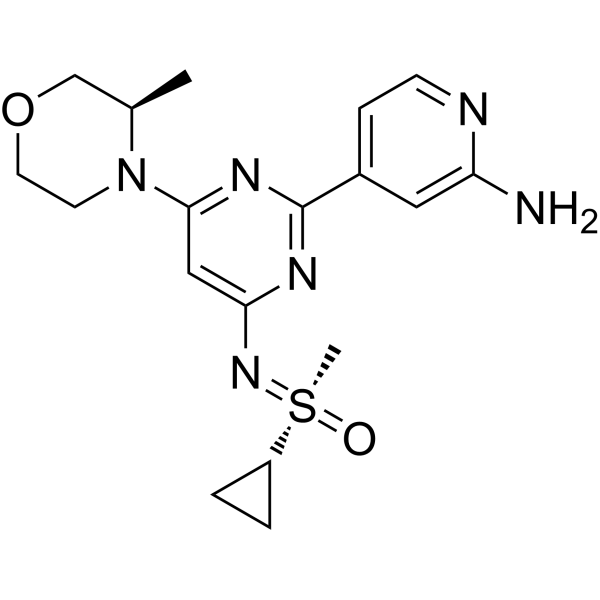
ART0380 is a potent, selective and orally active ATR kinase inhibitor. ART0380 potently inhibits human ATR-ATRIP complex with an IC50 of 51.7 nM. ART0380 binds the ATP pocket of the ATR-ATRIP complex, blocks ATR-dependent Chk1 serine 345 phosphorylation, and induces cell cycle disorder and DNA damage. ART0380 demonstrates potent and selective antitumor activity in preclinical models with varying types of ataxia-telangiectasia mutated (ATM) gene aberrancy. ART0380 can be used for the research of cancer, such as colorectal cancer and prostate cancer .
loading...
    loading...
Cat. No.: HY-162472
CAS No.: 2595308-10-2
Target:  

ATM/ATR DNA-PK

Research Areas:  

Cancer

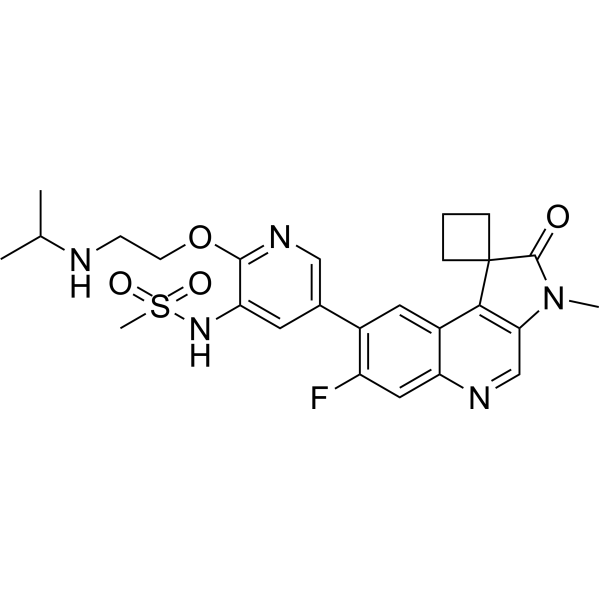
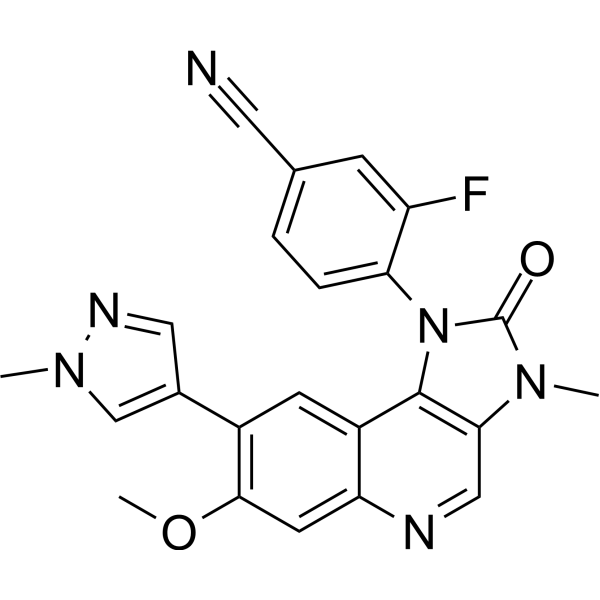
XRD-0394 is a potent and orally active dual ATM and DNA-PKcs inhibitor with IC50s of 0.39 nM and 0.89 nM, respectively. XRD-0394 shows selectivity over other PIKK and PI3K family members. XRD-0394 significantly enhances tumor cell killing in vitro and in vivo under therapeutic ionizing radiation conditions. XRD-0394 can potentiate the effects of PARP and topoisomerase I inhibitors in vitro .
loading...
    loading...
Cat. No.: HY-171124
Synonyms: AZD9592
Tilatamig samrotecan (AZD9592) is an anti-EGFR/c-MET antibody-drug conjugate (ADC). Tilatamig samrotecan consists of an anti-EGFR/c-MET antibody with the drug-linker conjugate being AZ14170133 (HY-145399) (a topoisomerase I (TOP1i) inhibitor payload). Tilatamig samrotecan induces multiple DNA damage response pathway markers (like ATM, ATR, γH2AX). Tilatamig samrotecan selectively binds to EGFR and c-MET, delivering the cytotoxic payload. Tilatamig samrotecan exerts anti-tumor activity in vivo. Tilatamig samrotecan can be used for non-small cell lung cancer (NSCLC) and head and neck squamous cell carcinoma (HNSCC) research .
loading...
    loading...
Cat. No.: HY-P991049
Synonyms: ATM-001

Target:  

TNF Receptor

Atrosimab is an Fv-Fc1K fusion protein with an EC50 value of 0.37 nM against humans. Atrosimab inhibits TNF-induced TNFR1 activation, release of IL-6 and IL-8, and cell death, and alleviates neuroinflammation. Atrosimab is applicable to research related to inflammatory diseases, neurodegenerative diseases, acute and chronic inflammation, experimental arthritis, non-alcoholic steatohepatitis, and experimental autoimmune encephalomyelitis .
loading...
    loading...
Cat. No.: HY-N0245
CAS No.: 30462-34-1
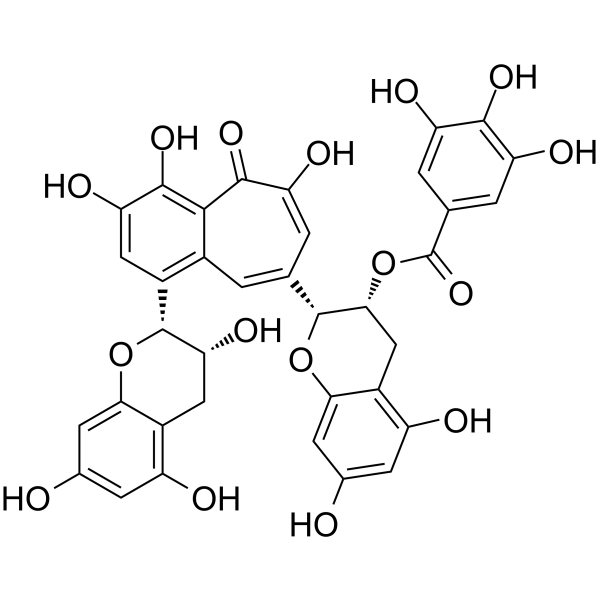
Theaflavin-3-gallate, a black tea theaflavin monomer, is regarded as the biologically important active component of black tea and provides health benefits. Theaflavin-3-gallate acts as prooxidants and induces oxidative stress in the carcinoma cells. Theaflavin-3-gallate reacts directly with reduced glutathione (GSH) in a time- and concentration-dependent manner. Theaflavin-3-gallate induces apoptosis and G1 cell cycle arrest in ovarian cancer A2780/CP70 cells through p53-dependent pathways. Theaflavin-3-gallate induces DNA damage through ATM/Chk/p53 pathway .
loading...
    loading...
Cat. No.: HY-162002
CAS No.: 2765448-96-0
Target:  

ATM/ATR

Research Areas:  

Cancer

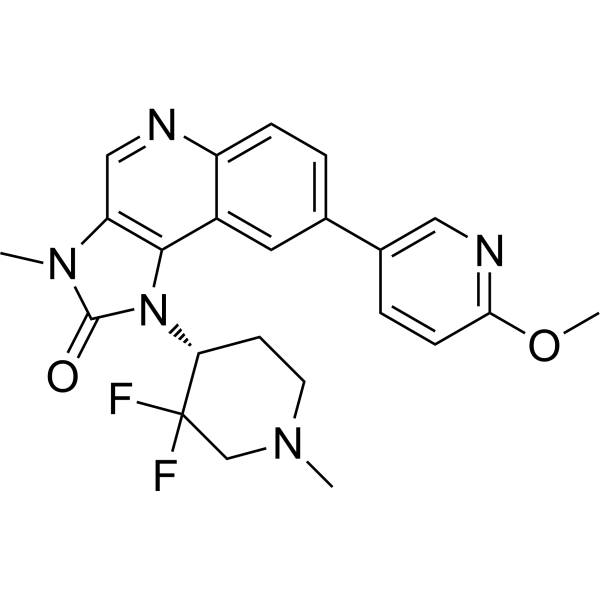
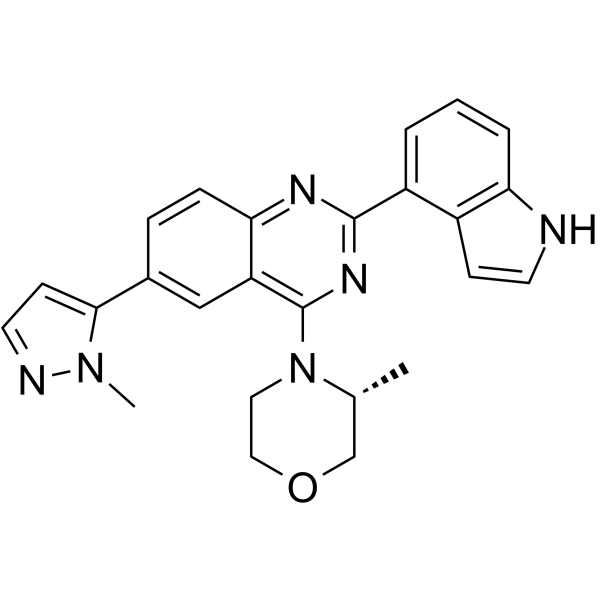
WSD0628 is a brain penetrant and potent ATM inhibitor with profound radiosensitizing effect .
loading...
    loading...
Cat. No.: HY-112198
CAS No.: 2088113-98-6
Purity:  98.13%
Target:  

ATM/ATR

Research Areas:  

Cancer

AZ31 is a a potent, highly selective, and orally active ATM inhibitor with an IC50 of <1.2 nM for ATM enzyme, and an IC50 of 46 nM for ATM in cell. AZ31 shows excellent selectivity over ATR (>500-fold) and excellent PIKK-family selectivity and pan-kinase selectivity. AZ31 is a potent radiosensitizer in vitro, it can be used for the research of cancer .
loading...
    loading...
Cat. No.: HY-161615
CAS No.: 3010273-12-5
Target:  

PROTACs ATM/ATR Apoptosis

Research Areas:  

Inflammation/Immunology Cancer

PROTAC ATR degrader-2 is a selective ATR PROTAC degrader. PROTAC ATR degrader-2 degrades ATR in acute myeloid leukemia (AML) cells MV-4-11 and MOLM-13, with DC50 values of 22.9 nM and 34.5 nM, respectively. PROTAC ATR degrader-2 has an IC50 of 29.6 nM against ATR, and its IC50 values against ATM and PI3K are both greater than 2000 nM. PROTAC ATR degrader-2 induces apoptosis, DNA damage, and upregulates p53 expression. PROTAC ATR degrader-2 inhibits cancer cell proliferation through the kinase-independent function of ATR protein. PROTAC ATR degrader-2 is applicable to research related to acute myeloid leukemia .
loading...
    loading...
Cat. No.: HY-163944
CAS No.: 3081311-94-3
LL-K12-18 is a CDK12 kinase inhibitor and a dual-site molecular glue. LL-K12-18 inhibits human CDK12 with an IC50 value of 283.9 nM, and selectively degrades cyclin K via the ubiquitin-proteasome system by stabilizing the CDK12-DDB1 complex. LL-K12-18 downregulates DNA damage response genes, reduces the phosphorylation level of CTD Ser2 in RNA polymerase II, and modulates biomarkers such as ATM, RAD51, γ-H2AX and cleaved PARP, thereby effectively inducing apoptosis and inhibiting proliferation of breast cancer cells. LL-K12-18 exhibits high target selectivity and serves as a research tool for studies on triple-negative breast cancer .
loading...
    loading...
Cat. No.: HY-100948
CAS No.: 1861449-70-8
Purity:  98.16%
Target:  

Myosin

Research Areas:  

Cancer

ATM-3507 is a potent tropomyosin inhibitor with IC50s from 3.83-6.84 μM in human melanoma cell lines.
loading...
    loading...
Cat. No.: HY-112305
CAS No.: 2288709-96-4
Purity:  99.94%
Target:  

ATM/ATR

Research Areas:  

Cancer

AZ32 is an orally bioavailable and blood-brain barrier-penetrating ATM inhibitor with an IC50 of <6.2 nM for ATM enzyme, and an IC50 of 0.31 μM for ATM in cell.
loading...
    loading...
Cat. No.: HY-158345
CAS No.: 2821804-13-9
Purity:  98.01%
Research Areas:  

Cancer

PROTAC ATM degrader-1 is a ATM PROTAC degrader with a KD value of 1.17 nM. PROTAC ATM degrader-1 triggers DNA damage response, cell cycle arrest, and apoptosis in cancer cells via the ubiquitin-proteasome-dependent degradation pathway. PROTAC ATM degrader-1 can be used for research on colorectal cancer .
loading...
    loading...
Cat. No.: HY-160096
CAS No.: 1360628-91-6
Research Areas:  

Cancer

M3541 is an orally effective DNA-dependent protein kinase (DNA-PK) inhibitor . M3541 inhibits ionizing radiation-induced ATM autophosphorylation and phosphorylation of downstream substrates (KAP1, CHK2, p53), blocks DSB end resection and homologous recombination repair, and simultaneously induces non-homologous end joining, G2-M phase arrest, polyploidization, and cell death. M3541 can be used for research on solid tumors, acute myeloid leukemia, non-small cell lung cancer, triple-negative breast cancer, etc. .
loading...
    loading...
Cat. No.: HY-170844
CAS No.: 2379405-61-3
Target:  

Endonuclease

Research Areas:  

Cancer

MU147 is an MRE11 nuclease inhibitor and chemical probe with anticancer activity, which is lethal to Ehrlich ascites tumor cells both in vitro and in vivo. MU147 also eliminates the double-strand break repair mechanism dependent on the MRE11 nuclease activity without impairing the activation of ATM. MU147 also impairs the degradation of nascent strands of stalled replication FOX and selectively affects brca2-deficient cells .
loading...
    loading...
Cat. No.: HY-118911
CAS No.: 1941214-06-7
Target:  

ATM/ATR

Research Areas:  

Cancer

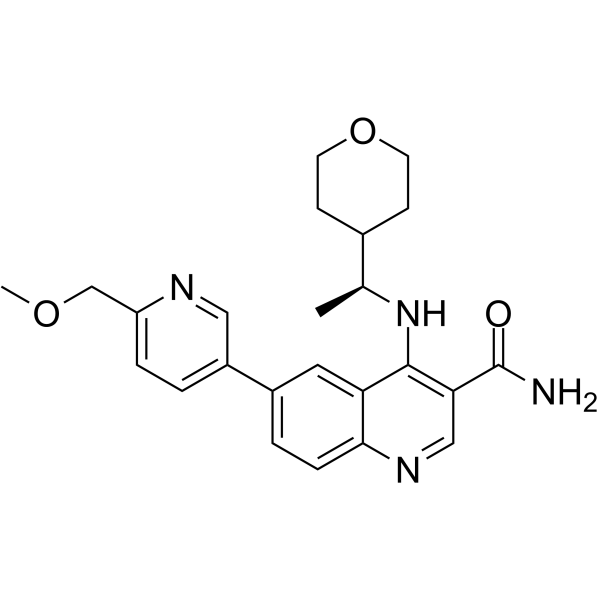
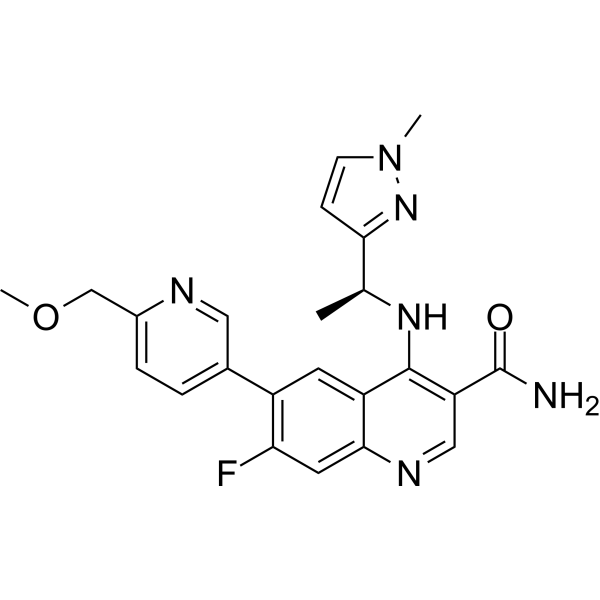
ATM Inhibitor-10 (compound 74), a 3-quinoline carboxamide, is a highly selective and orally active ATM inhibitor (IC50: 0.6 nM). ATM Inhibitor-10 has anti-tumor activity in SW620 xenograft models. ATM Inhibitor-10 is synergistic with Top I inhibitors .
loading...
    loading...
Cat. No.: HY-144217
CAS No.: 2713577-16-1
Purity:  99.91%
Target:  

ATM/ATR

Research Areas:  

Cancer

SKLB-197 showed an IC50 value of 0.013 μM against ATR but very weak or no activity against other 402 protein kinases. It displayed potent antitumor activity against ATM-deficent tumors both in vitro and in vivo.
loading...
    loading...
Cat. No.: HY-119757
CAS No.: 168835-90-3
Purity:  99.08%
Synonyms: SU1433; AG1433
Target:  

PDGFR VEGFR

Research Areas:  

Cancer

Tyrphostin AG1433 (SU1433) is a tyrosine kinases inhibitor. AG1433 is also a selective PDGFRβ and VEGFR-2 (Flk-1/KDR) inhibitor with IC50s of 5.0 μM and 9.3 μM, respectively. Tyrphostin AG1433 prevents blood vessel formation .
loading...
    loading...
Cat. No.: HY-118921
CAS No.: 3484-37-5
Ovatodiolide is a compound that can be isolated from Anisomeles indica. Ovatodiolide has anti-bacterial and anti-inflammatory properties. Ovatodiolide also has anti-cancer activity that induces cell cycle G2/M arrest and apoptosis via a ROS-dependent ATM/ATR signaling pathways .
loading...
    loading...
Cat. No.: HY-B0097R
CAS No.: 50-91-9
Synonyms: 5-Fluorouracil 2'-deoxyriboside (Standard)
Floxuridine (Standard) is the analytical standard of Floxuridine. This product is intended for research and analytical applications. Floxuridine (5-Fluorouracil 2'-deoxyriboside) is a pyrimidine analog and known as an oncology antimetabolite. Floxuridine inhibits Poly(ADP-Ribose) polymerase and induces DNA damage by activating the ATM and ATR checkpoint signaling pathways in vitro. Floxuridine is a extreamly potent inhibitor for S. aureus infection and induces cell apoptosis . Floxuridine has antiviral effects against HSV and CMV .
loading...
    loading...
Cat. No.: HY-164496
CAS No.: 1161826-19-2
Target:  

DNA/RNA Synthesis

Research Areas:  

Neurological Disease Cancer

KL-50 is an orally active N3-(2-fluoroethyl) imidazotetrazine DNA alkylating agent with selectivity for MGMT-deficient cells. KL-50 introduces a 2-fluoroethyl group at the O6 position of guanine, forming O6-(2-fluoroethyl) guanine (O6FEtG) lesions and further generating DNA interstrand crosslinks (ICLs). KL-50 induces DNA double-strand breaks, activates ATR-CHK1 and ATM-CHK2 DNA damage responses, and causes cell cycle arrest and micronucleus formation. KL-50 can be used for glioblastoma and DNA damage response research .
loading...
    loading...

