40 Results for "

ATP binding domain

" in MedChemExpress (MCE) Product Catalog:
Products (40)

40 Results for "ATP binding domain" in MCE Product Catalog:

Cat. No.: HY-W684904
CAS No.: 737791-20-7
Target:  

TGF-β Receptor

Research Areas:  

Cancer

LY550410 is a small-molecule ATP-competitive inhibitor against type I TGF-β receptor kinase, which contains heteroaryl rings for potent binding to the kinase-domain active site. LY550410 modulates TGF-β signalling, thereby regulates gene expression and ultimately cell growth. LY550410 is promising for research of cancers .
loading...
    loading...
Cat. No.: HY-W286614
CAS No.: 62001-32-5
Research Areas:  

Inflammation/Immunology Cancer

RSK2-IN-4 (Compound 10) is a RSK2 inhibitor, with an inhibition rate of 13.73% on RSK2 activity at 10 μM. RSK2-IN-4 binds to the ATP-binding site of RSK2 in the NTKD (N-terminal kinase domain), with the electron-donating group at the 4-position of the phenyl ring being the key determinant for its inhibitory activity .
loading...
    loading...
Cat. No.: HY-155975
CAS No.: 3038119-14-8
Target:  

PI3K

Research Areas:  

Inflammation/Immunology

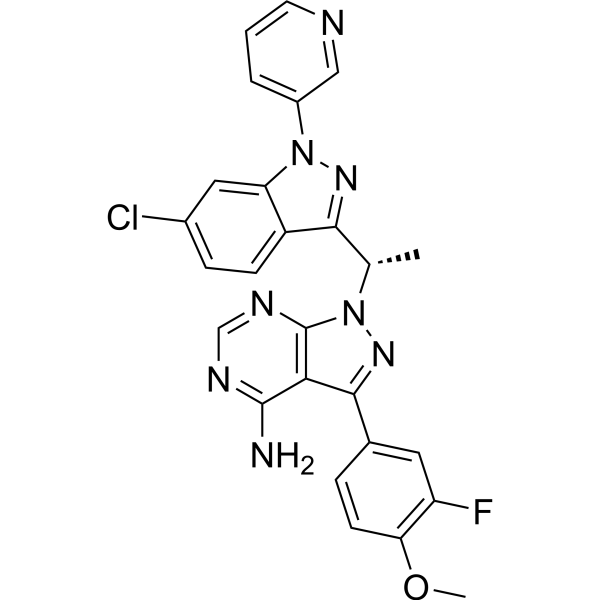
PI3Kδ-IN-14 (Compound (S)-29) is a selective PI3Kδ inhibitor (IC50: 0.8 nM, Kd: 84.8 nM). PI3Kδ-IN-14 binds to the ATP-binding site of the kinase domain of PI3Kδ. PI3Kδ-IN-14 has anti-inflammatory activity by inhibiting the PI3K/AKT pathway. PI3Kδ-IN-14 ameliorates acute lung injury (ALI) .
loading...
    loading...
Cat. No.: HY-111300
CAS No.: 848952-37-4
Target:  

HSP EGFR

Research Areas:  

Cancer

G3130 is a reversible HSP90 inhibitor with a Kd value of 280 nM for the N-terminal ATP-binding domain of purified human Hsp90α. G3130 binds to the adenine site via a multi-hydrogen bond network . G3130 induces the degradation of Hsp90 client protein Her-2 in breast cancer cells. G3130 activates Hsp70 promoter-driven luciferase expression in 293T cells. G3130 can be used in breast cancer-related research .
loading...
    loading...
Cat. No.: HY-112783
CAS No.: 1258295-27-0
Target:  

JAK

Research Areas:  

Inflammation/Immunology

TYK2 ligand 4 (Compound 2) is a TYK2 ligand. TYK2 ligand 4 binds to both the kinase domain and pseudokinase domain, and induces an inactive conformation of the kinase domain, thereby preventing ATP binding. TYK2 ligand 4 serves as a tool compound for the development of Deucravacitinib (HY-117287) .
loading...
    loading...
Cat. No.: HY-187350
LRPPRC-IN-1 is a LRPPRC inhibitor. LRPPRC-IN-1 exerts dual effects of inhibiting LRPPRC activity and inducing its degradation by binding to the RNA-binding domain of LRPPRC. LRPPRC-IN-1 downregulates the expression of mitochondrial OXPHOS complex subunits and ATP synthase, inhibits oxidative phosphorylation, reduces ATP production, suppresses the proliferation and colony formation of various cancer cells, and inhibits tumor growth in vivo. LRPPRC-IN-1 can be used in studies related to lung cancer, pancreatic cancer, breast cancer, esophageal cancer, colorectal cancer, lymphoma, melanoma, cervical cancer, ovarian cancer, and prostate cancer .
loading...
    loading...
Cat. No.: HY-103666R
CAS No.: 1073612-91-5
CY-09 (Standard) is the analytical standard of CY-09 (HY-103666). This product is intended for research and analytical applications. CY-09 is a selective and direct NLRP3 inhibitor. CY-09 directly binds to the ATP-binding motif of NLRP3 NACHT domain and inhibits NLRP3 ATPase activity, resulting in the suppression of NLRP3 inflammasome assembly and activation .
loading...
    loading...
Cat. No.: HY-10654
CAS No.: 1192216-03-7
Target:  

Ephrin Receptor

Research Areas:  

Cancer

EphB4-IN-2 is a tyrosine kinase inhibitor targeting the Eph family and Src family. EphB4-IN-2 binds to the ATP-binding site of the kinase domain of EphB4, and exhibits high affinity for tyrosine kinases with threonine as the gatekeeper residue, such as Abl, Lck and Src. EphB4-IN-2 can be used in research related to tumor-associated angiogenesis .
loading...
    loading...
Cat. No.: HY-189298
Research Areas:  

Cancer

Anticancer agent-365 is a pyrimidine-benzothiazole hybrid derivative that exhibits selective antiproliferative activity against A549 and MCF-7 tumor cells. Anticancer agent-365 is predicted to bind within the ATP-binding pocket of the VEGFR-2 kinase domain. Anticancer agent-365 possesses DNA intercalating binding ability, DNA oxidative damage protective activity, and antioxidant free radical scavenging activity. Anticancer agent-365 can be used for research on lung cancer and breast cancer .
loading...
    loading...
Cat. No.: HY-N17356
CAS No.: 57959-88-3
Atalaphyllidine is a natural product. Atalaphyllidine can be isolated from the stem bark of Glycosmis chlorosperma. Atalaphyllidine inhibits DYRK1A kinase activity with an IC50 of 2.2 μM. Atalaphyllidine can be used in the research of neurodegenerative diseases .
loading...
    loading...
Cat. No.: HY-P85851
Synonyms: Ras GTPase-activating protein-binding protein 1; G3BP-1; EC 3.6.4.13; ATP-dependent DNA helicase VIII; hDH VIII; GAP SH3 domain-binding protein 1;

Host:  

Mouse

Application:  

WB, ICC/IF, ELISA

Reactivity:  

Human, Mouse, Rat

loading...
    loading...
Cat. No.: HY-P86813
Synonyms: ATP dependent helicase CHD8 antibody; ATP-dependent helicase CHD8 antibody; Axis duplication inhibitor antibody; Beta catenin binding protein like antibody; CHD 8 antibody; CHD-8 antibody; chd8 antibody; CHD8_HUMAN antibody; Chromodomain helicase DNA binding protein 8 antibody; Chromodomain-helicase-DNA-binding protein 8 antibody; ATP dependent helicase CHD8 antibody; ATP-dependent helicase CHD8 antibody; Axis duplication inhibitor antibody; Beta catenin binding protein like antibody; CHD 8 antibody; CHD-8 antibody; chd8 antibody; CHD8_HUMAN antibody; Chromodomain helicase DNA binding protein 8 antibody; Chromodomain-helicase-DNA-binding protein 8 antibody; DKFZp686N17164 antibody; Duplin antibody; Helicase with SNF2 domain 1 antibody; HELSNF1 antibody; KIAA1564 antibody;

Host:  

Rabbit

Application:  

WB, ICC/IF, IHC-P, IP, ChIP

Reactivity:  

Human, Mouse, Rat

loading...
    loading...
Cat. No.: HY-P82687
Synonyms: G3BP1; G3BP; Ras GTPase-activating protein-binding protein 1; G3BP-1; ATP-dependent DNA helicase VIII; hDH VIII; GAP SH3 domain-binding protein 1

Host:  

Rabbit

Application:  

WB, IHC-P, ICC/IF, IP, FC

Reactivity:  

Human, Mouse, Rat

loading...
    loading...
Cat. No.: HY-184312
CAS No.: 1031072-40-8
PPAR agonist 8 is an orally active pan-PPAR agonist, with KD values of 0.576 μM, 2.06 μM and 1.45 μM for PPARα, PPARγ and PPARδ, respectively. PPAR agonist 8 upregulates the expression of ATP-binding cassette transporter A1 (ABCA1) and promotes cholesterol efflux. PPAR agonist 8 reduces plasma cholesterol levels, decreases cholesterol accumulation in the liver and cholesterol deposition in pancreatic islets, regulates glucose and lipid metabolism, and causes no side effects of weight gain and obesity. PPAR agonist 8 can be used in the research of type 2 diabetes, hepatic steatosis and pancreatic islet dysfunction .
loading...
    loading...
Cat. No.: HY-182936
Research Areas:  

Infection

Antibacterial agent 338 (Compound 65) is an antibacterial agent and GyrB inhibitor, with an IC50 of 12.60 nM against GyrB from E. coli. Antibacterial agent 338 binds to the ATP-binding domain of E. coli GyrB, thereby inhibiting the ATPase activity of GyrB. Antibacterial agent 338 exhibits broad-spectrum antibacterial activity against multidrug-resistant Gram-negative bacteria. Antibacterial agent 338 reduces bacterial load in a neutropenic mouse thigh infection model. Antibacterial agent 338 can be used for the research of Acinetobacter baumannii infection .
loading...
    loading...
Cat. No.: HY-P71588
Purity:  ≥ 90%, as determined by reducing SDS-PAGE.
Synonyms: CHD1L; Chromo domain-Containing Protein 1-Like; Chromodomain Helicase DNA binding Protein 1 Like; Amplified In Liver Cancer Protein 1; ALC1; Amplified In Liver Cancer 1; Chromodomain-Helicase-DNA-binding Protein 1-Like; CHDL; ATP-Dependent Chromatin Remod
Species:  
Human
Source:  
E. coli
loading...
    loading...
Cat. No.: HY-183373
Target:  

EGFR PARP

Research Areas:  

Cancer

EGFR/PARP-1-IN-1 is a dual EGFR and PARP-1 inhibitor with IC50 values of 64 nM and 12 nM, respectively. EGFR/PARP-1-IN-1 binds to the ATP-binding pocket of EGFR and interacts with the catalytic domain of PARP-1, inhibiting kinase and enzymatic activity via hydrogen bond formation with key residues in both targets. EGFR/PARP-1-IN-1 induces apoptosis through the endogenous mitochondrial pathway, arrests the cell cycle at the G2 phase, and inhibits cell proliferation. EGFR/PARP-1-IN-1 can be used for research on triple-negative breast cancer .
loading...
    loading...
Cat. No.: HY-L158
6,342 compounds

According to reports, most known kinase inhibitors exert their effects through competitive binding in highly conserved ATP pockets. Although genetic techniques such as RNA interference can inactivate specific genes, most kinases are multi domain proteins, each of which has an independent function. Highly selective inhibitors have higher efficiency than non-selective inhibitors, and the selectivity to the target is at least 100 times higher. Therefore, ensuring the validation of targets with the most selective inhibitors is crucial for a more thorough understanding of the pharmacology of the kinase field. The Highly Selective Inhibitors Library contains 6,342 compounds, covering multiple targets and subtypes, such as GPCR protein family, Ion channel, multiple kinases, etc. The Highly Selective Inhibitors Library is an effective tool for screening different phenotypes

Cat. No.: HY-186223
CAS No.: 897375-76-7
Enzyme modulator-1 (example 205) is a potent enzyme modulator that modulates p38, bcr-ab1, and VEGFR. Enzyme modulator-1 can be used for the research of cancer, rheumatoid arthritis, retinopathies including diabetic retinal neuropathy and macular degeneration .
loading...
    loading...
Cat. No.: HY-123925
CAS No.: 2244988-80-3
CSLP43 is a selective RIPK2 and XIAP inhibitor with an IC50 of 19.9 nM against human RIPK2. CSLP43 binds to the ATP-binding pocket of RIPK2 and disrupts the interaction between RIPK2 and the BIR2 domain of XIAP or cIAP1. CSLP43 inhibits RIPK2 ubiquitination, NOD1-dependent inflammatory signaling pathways, NOD2-dependent inflammatory signaling pathways, as well as NF-κB activation associated with NOD agonists. CSLP43 is selective for the NOD1/NOD2 signaling pathway and does not inhibit the kinase activity of RIPK1 or RIPK3. CSLP43 is applicable to research related to Crohn's disease, Blau syndrome, early-onset sarcoidosis and early-onset inflammatory bowel disease .
loading...
    loading...

