

99 Results for "

Biliary

" in MedChemExpress (MCE) Product Catalog:
Products (99)

99 Results for "Biliary" in MCE Product Catalog:

Cat. No.: HY-16747
CAS No.: 228113-66-4
Synonyms: SHP625 chloride; LUM001 chloride; Lopixibat chloride
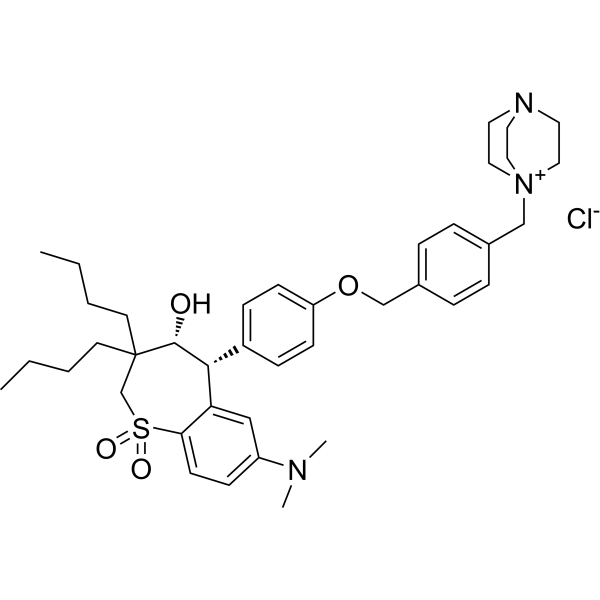
Maralixibat (SHP625) chloride is an orally active ileal bile acid transporter (IBAT) inhibitor. Maralixibat chloride can be used for the research of rare cholestatic liver diseases including Alagille syndrome (ALGS), progressive familial intrahepatic cholestasis (PFIC) and biliary atresia .
loading...
    loading...
Cat. No.: HY-P991564
CAS No.: 3031170-61-0
Synonyms: IBI-343 antibody; HB37A6; TAK-921 Antibody

Target:  

ADC Antibodies Claudin

Research Areas:  

Cancer

Arcotatug (IBI-343 antibody) is a CLDN18.2 targeting humanized monoclonal antibody. Arcotatug can be used for synthesis of ADCs .
loading...
    loading...
Cat. No.: HY-160719
NHS-activated 2-octynoic acid-BSA is an immunogen used to establish a mouse model of primary biliary cholangitis (PBC). When used in combination with Complete Freund's Adjuvant (HY-153808), NHS-activated 2-octynoic acid-BSA stimulates the body's immune system, which recognizes it as a foreign antigen and triggers an immune response against autologous biliary epithelial cells. This leads to the production of anti-PDC-E2 antibodies, causing bile duct damage and inflammation. NHS-activated 2-octynoic acid-BSA is promising for use in primary biliary cholangitis research .
loading...
    loading...
Cat. No.: HY-B1393
CAS No.: 81-23-2
Synonyms: Dehydrocholate
Target:  

Autophagy Amylases Lipase

Research Areas:  

Metabolic Disease

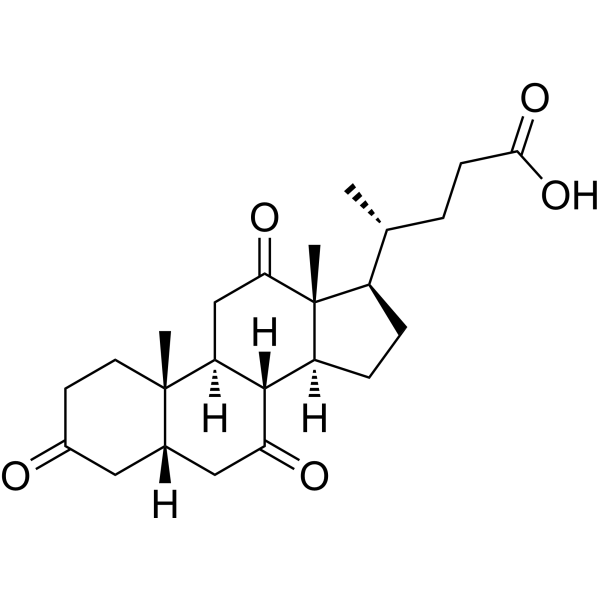
Dehydrocholic acid (Dehydrocholate) is an orally active hydrocholeretic agent. Dehydrocholic acid modulates Autophagy, reduces serum amylase and lipase levels. Dehydrocholic acid has the effects of promoting choleretic function, protecting the liver, reducing pancreatic damage, and regulating cholesterol metabolism. Dehydrocholic acid can be used in the study of acute biliary pancreatitis and obstructive jaundice .
loading...
    loading...
Cat. No.: HY-W353102
CAS No.: 1806-98-0
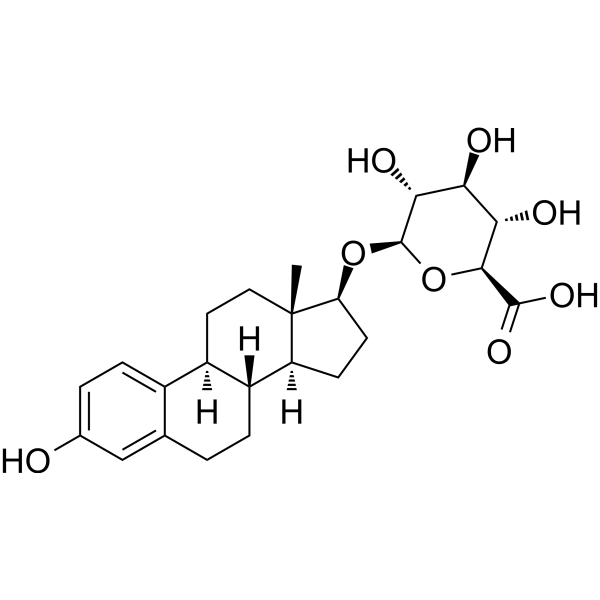
Estradiol 17-(β-D-Glucuronide) is a D-ring glucuronide metabolite of natural estrogen formed in the liver. Estradiol 17-(β-D-Glucuronide) is a substrate of the organic anion-transporting polypeptide family (Oatp) and multidrug resistance-associated protein 2 (Mrp2). Estradiol 17-(β-D-Glucuronide) regulates MRP8-mediated transport processes and inhibits MRP8-mediated transport of dehydroepiandrosterone 3-sulfate and taurocholic acid. Estradiol 17-(β-D-Glucuronide) induces immediate, reversible reduction of bile flow and acute intrahepatic cholestasis in female rats without altering the bile acid composition in bile. Estradiol 17-(β-D-Glucuronide) can be used in studies related to intrahepatic cholestasis .
loading...
    loading...
Cat. No.: HY-P99404
CAS No.: 2084037-83-0
Synonyms: E6011

Target:  

CXCR

Research Areas:  

Inflammation/Immunology Cancer

Quetmolimab (E6011) is a humanized anti-Fractalkine (CX3CL1) monoclonal antibody. Quetmolimab binds to membrane-bound and soluble Fractalkine, neutralizes Fractalkine-induced migration of CX3CR1-expressing cells, mediates target-bound complex elimination from serum. Quetmolimab suppresses free soluble Fractalkine levels in cynomolgus monkeys, with target engagement linked to increased serum total Fractalkine concentration. Quetmolimab can be used for the research of Crohn’s disease, rheumatoid arthritis, and primary biliary cholangitis .
loading...
    loading...
Cat. No.: HY-134988
CAS No.: 1933507-63-1
Purity:  96.01%
Research Areas:  

Inflammation/Immunology

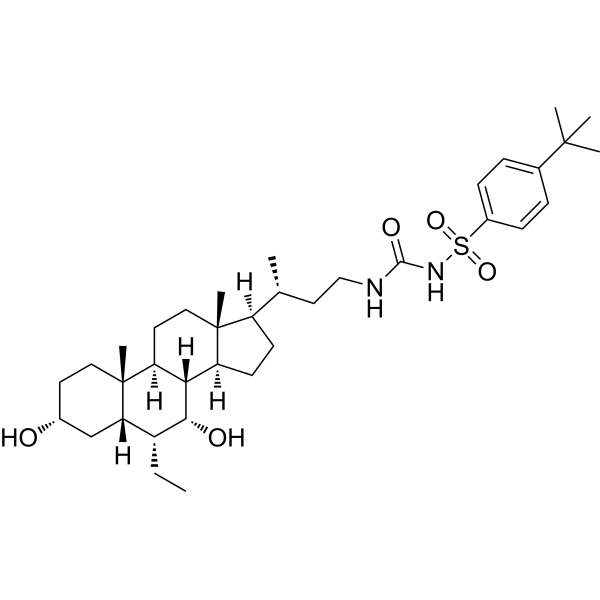
EDP-305 is an orally active, potent and selective farnesoid X receptor (FXR) agonist, with EC50 values of 34 nM (chimeric FXR in CHO cells) and 8 nM (full-length FXR in HEK cells). EDP-305 shows a potent and consistent antifibrotic effect. EDP-305 can be used for primary biliary cholangitis (PBC) and non-alcoholic steatohepatitis (NASH) research .
loading...
    loading...
Cat. No.: HY-B1043
CAS No.: 19562-30-2
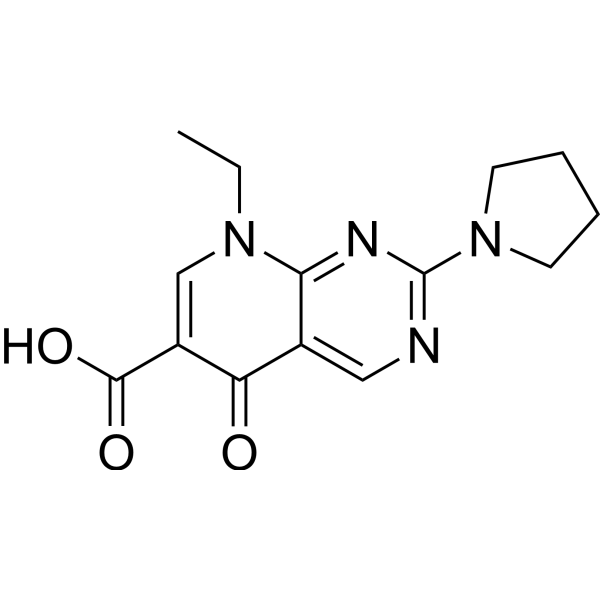
Piromidic acid is an antibacterial agent. Piromidic acid is active against gramnegative bacteria and staphylococci and can be used for the research of intestinal, urinary, and biliary tract infections .
loading...
    loading...
Cat. No.: HY-N6987
CAS No.: 29913-71-1
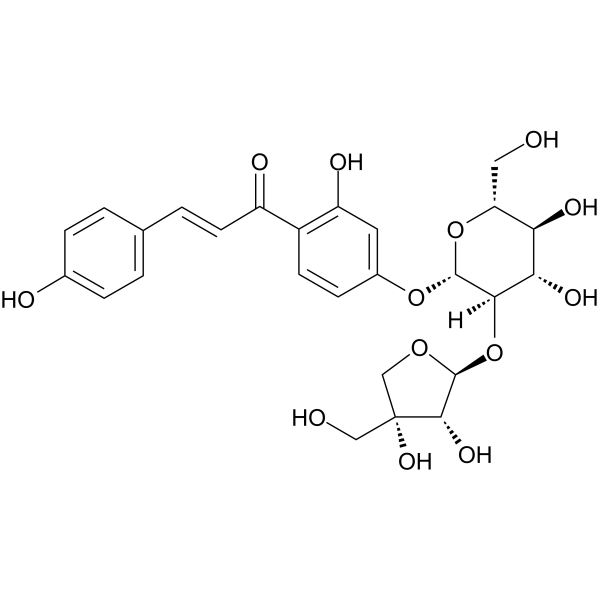
Licraside, found in Glycyrrhiza glabra, is a Farnesoid X receptor (FXR) activator. Licraside activates FXR to induce upregulation of SHP and BSEP, regulates bile acid homeostasis, reduces elevated biliary and serum TBA, serum ALT, AST, GGT, ALP, and TBIL levels, and attenuates liver histopathological damage. Licraside inhibits factor Xa with an IC50 of 48.54 mM. Licraside can be used for the research of cholestasis and thromboembolic diseases .
loading...
    loading...
Cat. No.: HY-B2091
CAS No.: 17243-38-8
Target:  

Antibiotic Bacterial

Research Areas:  

Infection

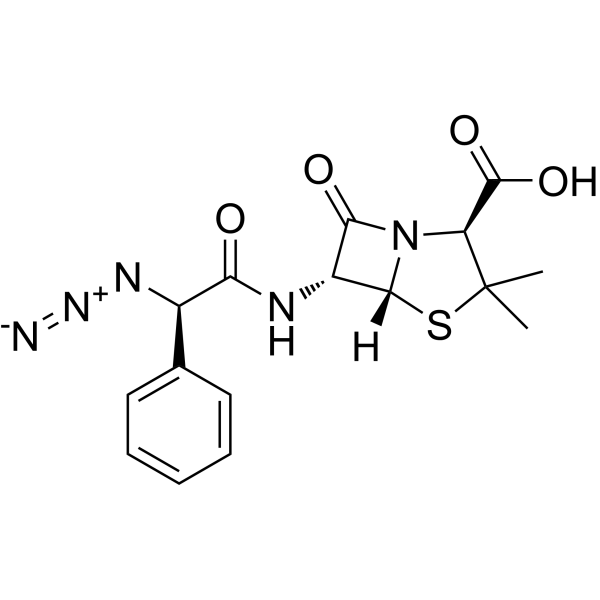
Azidocillin, a semi-synthetic Penicillin, is an orally active β-lactam antibiotic. Azidocillin bears an azide functionality and retains on-target activity within bacteria. Azidocillin can be used to research osteitis caused by dental surgery, otitis media, enterococcal septicemia and other bacterial infectious diseases . Azidocillin is a click chemistry reagent, it contains an Azide group and can undergo copper-catalyzed azide-alkyne cycloaddition reaction (CuAAc) with molecules containing Alkyne groups. It can also undergo strain-promoted alkyne-azide cycloaddition (SPAAC) reactions with molecules containing DBCO or BCN groups.
loading...
    loading...
Cat. No.: HY-153821
CAS No.: 2378257-72-6
Purity:  98.45%
Target:  

PROTACs Ras

Research Areas:  

Cancer

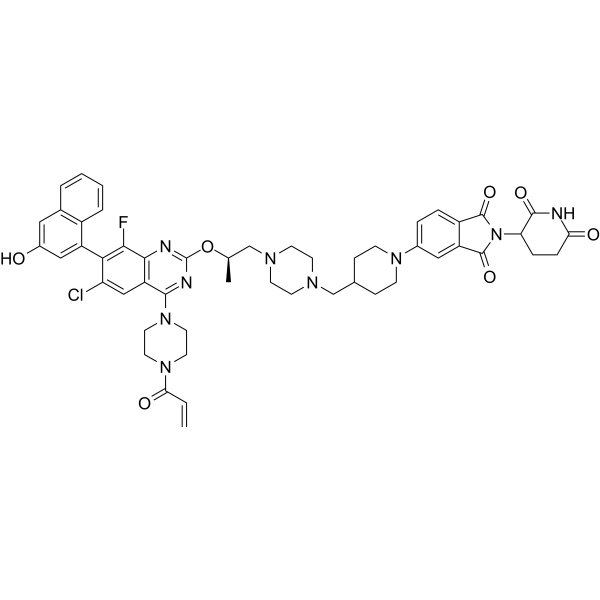
PROTAC KRAS G12C (Compound 432) degrader-2 is a PROTAC degrader that targets KRAS G12C by recruiting cereblon. PROTAC KRAS G12C degrader-2 covalently modifies KRAS G12C. PROTAC KRAS G12C degrader-2 can be used for the research of non-small cell lung cancer .
loading...
    loading...
Cat. No.: HY-P990059
CAS No.: 2760250-47-1
Synonyms: INT-016; AZD8205 Antibody

Research Areas:  

Cancer

Puxitatug (INT-016; AZD8205 Antibody) is a monoclonal antibody targeting VTCN1/B7-H4. Puxitatug can be used to synthesize antibody-drug conjugates (ADCs), such as Puxitatug samrotecan (HY-171689), which can be applied to various solid tumors. Puxitatug can also be used for researching adjuvant therapies for gastric cancer .
loading...
    loading...
Cat. No.: HY-118483
CAS No.: 68-90-6
Synonyms: L-2329
Benziodarone is a potent inhibitor of S-arylglutathione transferase enzyme system. Benziodarone catalyzes BSP conjugation with GSH. Benziodarone inhibits biliary excretion of synthetic BSP-GSH conjugates .
loading...
    loading...
Cat. No.: HY-N9516
CAS No.: 517-37-3
Synonyms: TDHC
Taurodehydrocholic acid is a biliary cholesterol secretion activator. Taurodehydrocholic acid significantly increases the expression of Abcg5 and decreases the expression of abc8. Taurodehydrocholic acid can be used in the study of cholesterol metabolism .
loading...
    loading...
Cat. No.: HY-W585876
CAS No.: 58814-71-4
Chenodeoxycholic acid 3-glucuronide is a derivative of chenodeoxycholic acid (HY-76847). Chenodeoxycholic acid 3-glucuronide activates FXR-dependent transcription, with an EC50 of 8 μM for hFXR. Chenodeoxycholic acid 3-glucuronide upregulates the expression of BSEP, OSTα, and OSTβ transporters. Chenodeoxycholic acid 3-glucuronide accumulates under cholestasis and biliary obstruction conditions, its levels decrease after biliary stent implantation, and it participates in the hepatic detoxification process of chenodeoxycholic acid. Chenodeoxycholic acid 3-glucuronide can be used in the study of cholestasis .
loading...
    loading...
Cat. No.: HY-N0545R
CAS No.: 145-42-6
Synonyms: Sodium taurocholate (Standard); N-Choloyltaurine sodium (Standard)
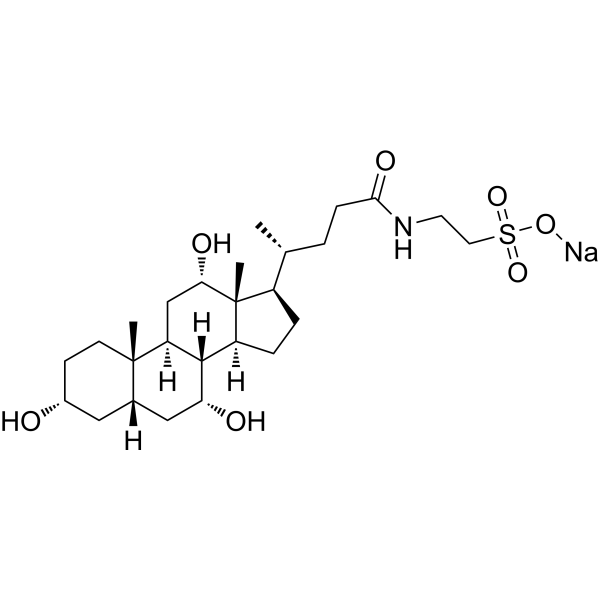
Taurocholic acid (sodium) (Standard) is the analytical standard of Taurocholic acid (sodium). This product is intended for research and analytical applications. Taurocholic acid sodium (Sodium taurocholate) has marked bioactive effects such as an inhibitory potential against hepatic artery ligation induced biliary damage by upregulation of VEGF-A expression. Taurocholic acid sodium has immunoregulation effect .
loading...
    loading...
Cat. No.: HY-W018512R
CAS No.: 4651-67-6
Synonyms: 3α-Hydroxy-7-oxo-5β-cholanic acid (Standard)
7-Ketolithocholic acid (Standard) is the analytical standard of 7-Ketolithocholic acid. This product is intended for research and analytical applications. 7-Ketolithocholic acid (3α-Hydroxy-7-oxo-5β-cholanic acid), a bile acid, can be absorbed and suppresses endogenous bile acid production and biliary cholesterol secretion .
loading...
    loading...
Cat. No.: HY-N9516A
CAS No.: 57011-24-2
Target:  

Endogenous Metabolite

Research Areas:  

Metabolic Disease

Taurodehydrocholic acid sodium is a biliary cholesterol secretion activator. Taurodehydrocholic acid sodium significantly increases the expression of Abcg5 and decreases the expression of abc8. Taurodehydrocholic acid sodium can be used in the study of cholesterol metabolism .
loading...
    loading...
Cat. No.: HY-176510
Elafibranor (GFT505) sulfoxide is a sulfoxide metabolite of Elafibranor (HY-16737). Elafibranor is a PPARα/δ agonist with EC50s of 45 and 175 nM, respectively. Elafibranor can be used for the study of primary biliary cholangitis .
loading...
    loading...
Cat. No.: HY-B2119
CAS No.: 41945-48-6
Synonyms: Tauroglycocholic acid sodium salt
Research Areas:  

Metabolic Disease

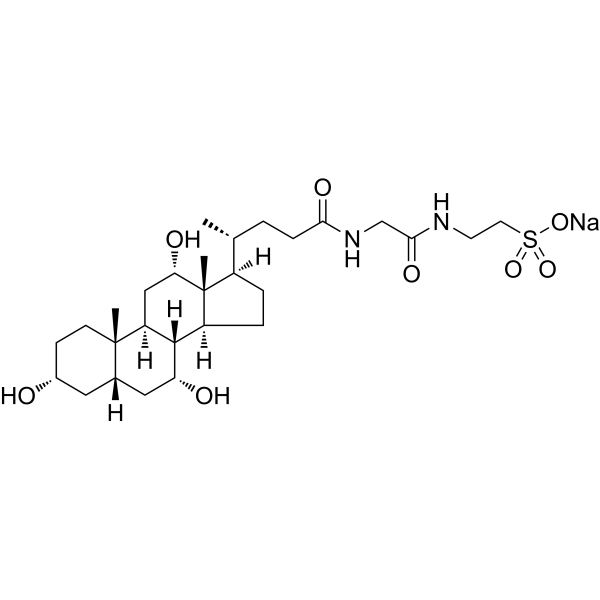
Sodium tauroglycocholate (Tauroglycocholic acid sodium salt) is a multifunctional surfactant and penetration enhancer that can serve as a cholegraphic contrast agent. In organic solvents, Sodium tauroglycocholate embeds and stabilizes invertase by forming reverse micelles, and prolongs its active lifespan. In terms of transdermal absorption, Sodium tauroglycocholate effectively regulates the flux of aminophylline through snake slough by binding to keratin filaments, disrupting keratinocytes and altering lipid components of the stratum corneum. It exhibits rapid penetration characteristics without lag time at a concentration of 100 μg/mL. Sodium tauroglycocholate does not interfere with the hepatic uptake of Gd-EOB-DTPA by the bile acid transport system in rat hepatocytes .
loading...
    loading...

