60 Results for "

C pockets

" in MedChemExpress (MCE) Product Catalog:
Products (60)

60 Results for "C pockets" in MCE Product Catalog:

Cat. No.: HY-175252
Research Areas:  

Cancer

PROTAC EGFR degrader 14 is a EGFR PROTAC degrader, with a DC50 of 2.9 nM against EGFR L858R/T790M/C797S. PROTAC EGFR degrader 14 forms a stable ternary complex by bridging the ATP-binding pocket of the target protein EGFR with VHL E3 ubiquitin ligase, induces efficient and specific degradation of EGFR mutants via the ubiquitin-proteasome system, and ultimately induces cell cycle arrest and apoptosis. PROTAC EGFR degrader 14 can be used in studies related to non-small cell lung cancer carrying the EGFR C797S drug-resistant mutation .
loading...
    loading...
Cat. No.: HY-130245
Purity:  98.33%
Target:  

HyT PCSK9

Research Areas:  

Metabolic Disease

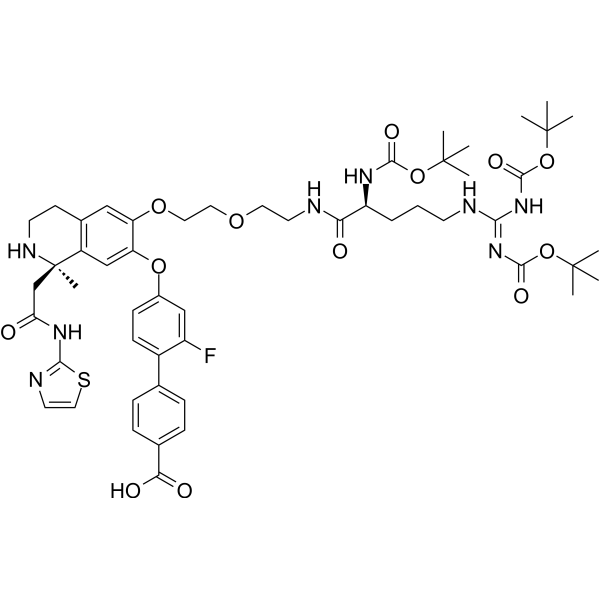
PCSK9 degrader 1 is a HyT-like PCSK9 degrader with a Ki of 107 nM. PCSK9 degrader 1 binds to the allosteric pocket between the catalytic domain and C-terminal domain of PCSK9. While maintaining key interactions with this protein, it extends the proteasome-recruiting moiety, thereby driving degradation via the proteasomal pathway. PCSK9 degrader 1 induces the degradation of both the precursor and mature forms of PCSK9, with DC50 values of 4.8 μM and 3.4 μM respectively, and does not significantly affect cell viability or the expression of housekeeping proteins. PCSK9 degrader 1 can be used in the research of coronary heart disease .
loading...
    loading...
Cat. No.: HY-126247B
CAS No.: 2375482-49-6
Purity:  97.32%
Target:  

Drug Derivative Ras

Research Areas:  

Cancer

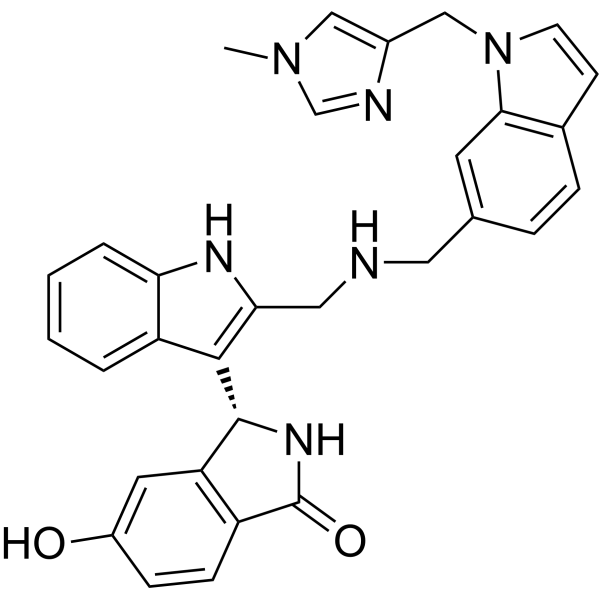
(R)-BI-2852 is the isomer of BI-2852 (HY-126247), and can be used as an experimental control. BI-2852 is a KRAS inhibitor for the switch I/II pocket (SI/II-pocket) by structure-based agent design with nanomolar affinity. BI-2852 is mechanistically distinct from covalent KRASG12C inhibitor (binds to switch II pocket) and binds ten-fold more strongly to active KRASG12D versus KRASwt (740 nM vs 7.5 μM). BI-2852 blocks GEF, GAP, and effector interactions with KRAS, leading to inhibition of downstream signaling and an antiproliferative effect in KRAS mutant cells.
loading...
    loading...
Cat. No.: HY-13856
CAS No.: 1410101-89-1
Purity:  98.09%
Target:  

PDK-1

Research Areas:  

Cancer

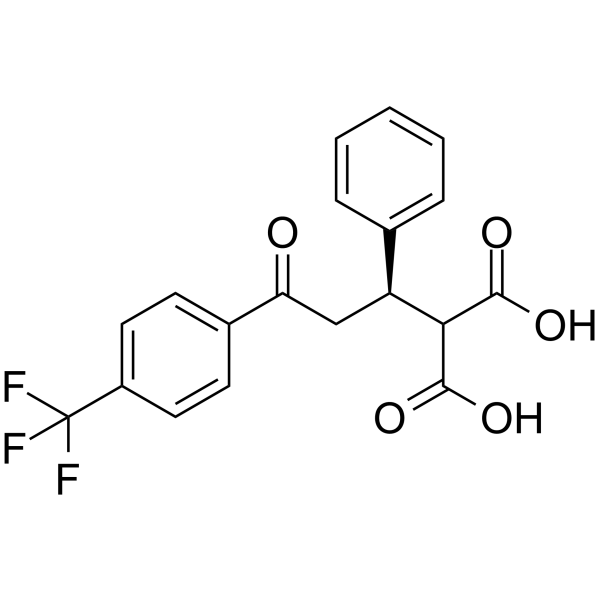
(R)-PS210, the R enantiomer of PS210 (compound 4h-eutomer), is a substrate-selective allosteric activator of PDK1 with an AC50 value of 1.8 μM. (R)-PS210 targets to the PIF-binding pocket of?PDK1. PIF: The protein kinase C-related kinase 2 (PRK2)-interacting fragment .
loading...
    loading...
Cat. No.: HY-175453
CAS No.: 3050683-03-6
Target:  

Molecular Glues

Research Areas:  

Cancer

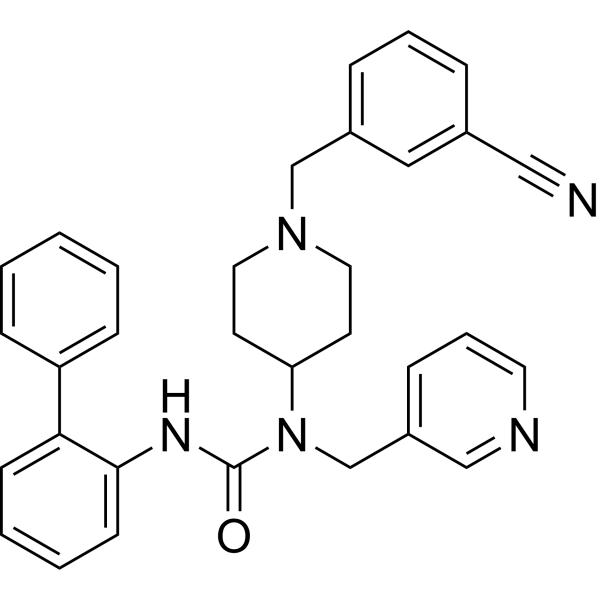
MRT-23227 is a CRBN-recruiting molecular glue degrader targeting VAV1. MRT-23227 binds to the tryptophan triad pocket of CRBN, forms a ternary complex with the SH3c domain of VAV1, and induces proteasomal degradation of VAV1 through hydrogen-bond interactions between CRBN residues and the RT loop and side chains of VAV1. MRT-23227 can be used in the research of T-cell leukemia and lymphoma .
loading...
    loading...
Cat. No.: HY-119102
CAS No.: 909664-41-1
Purity:  98.01%
Target:  

HCN Channel

Research Areas:  

Inflammation/Immunology

BPU-11 is a hyperpolarization-activated cyclic nucleotide-gated (HCN) C-linker pocket (CLP) HCN4 CLP ligand. BPU-11 can be used for the research of congenital immune disease .
loading...
    loading...
Cat. No.: HY-169228
CAS No.: 2759280-09-4
Target:  

Btk

Research Areas:  

Cancer

WS-11 is a non-covalent reversible BTK inhibitor with IC50s of 3.9 nM and 2.2 nM for wild type, C481S mutation BTK, respectively. WS-11 can form strong π-π interaction with PHE540 and form p-π interaction with LYS430 within the active pocket, besides the strong hydrogen bonds .
loading...
    loading...
Cat. No.: HY-178343
Target:  

Aurora Kinase Apoptosis

Research Areas:  

Cancer

Aurora A-IN-5 is a potent and highly selective Aurora A inhibitor (IC50 = 0.02 μM), showing 362-fold selectivity for over Aurora B. Aurora A-IN-5 shows its selectivity through unique C−H/π interactions, enhanced hydrophobic contacts, an open binding pocket, and tighter protein packing. Aurora A-IN-5 suppresses Aurora A autophosphorylation, thereby inhibiting cancer cell proliferation by inducing G2/M phase arrest, triggering apoptosis, and suppressing colony formation. Aurora A-IN-5 inhibits tumor growth in MDA-MB-231 xenograft mouse models. Aurora A-IN-5 can be used for breast, cervical, prostate, and lymphoma cancer research .
loading...
    loading...
Cat. No.: HY-151437
CAS No.: 3033702-89-2
Target:  

Fungal

Research Areas:  

Infection

Antifungal agent 40 is an antifungal agent which extends into the narrow hydrophobic pocket II of C.alb. CYP51. Antifungal agent 40 has an inhibitory effect on lanosterol 14α-demethylase (CYP51). Antifungal agent 40 inhibits biofilm formation .
loading...
    loading...
Cat. No.: HY-150286A
CAS No.: 2715974-36-8
Target:  

Prion Protein

Research Areas:  

Infection

(R)-SM875 is a cellular prion protein (PrP) degrader with an IC50 of 3 μM in HEK293 cells. (R)-SM875 interacts with PrP folding intermediates, binds to a binding pocket unique to FI-PrP, inhibits PrP C maturation, blocks prion replication, and induces cytotoxicity, autophagy, PrP C aggregation, as well as lysosome-dependent autophagy-mediated post-translational degradation of PrP C, without altering the mRNA level of PrP C. (R)-SM875 can be used in research related to prion diseases .
loading...
    loading...
Cat. No.: HY-B1221S1
CAS No.: 1325559-30-5
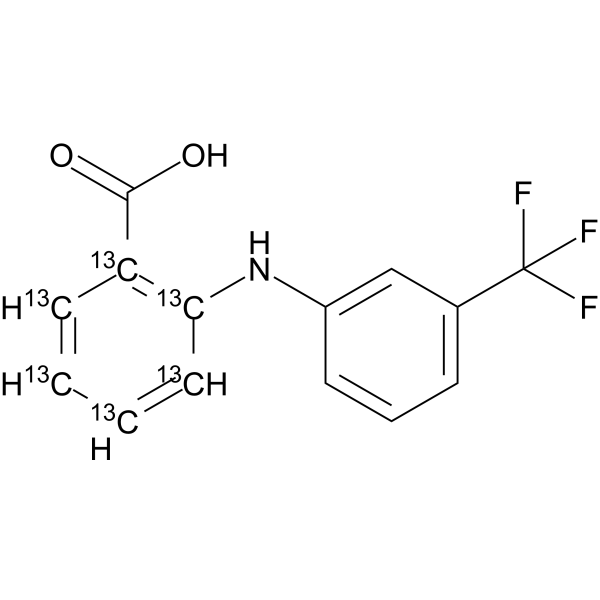
Flufenamic acid- 13C6 is the 13C6 labeled Flufenamic acid. Flufenamic acid is a non-steroidal anti-inflammatory agent, inhibits cyclooxygenase (COX), activates AMPK, and also modulates ion channels, blocking chloride channels and L-type Ca 2+ channels, modulating non-selective cation channels (NSC), activating K+ channels. Flufenamic acid binds to the central pocket of TEAD2 YBD and inhibits both TEAD function and TEAD-YAP-dependent processes, such as cell migration and proliferation.
loading...
    loading...
Cat. No.: HY-159170
Target:  

Bacterial

Research Areas:  

Infection

Quorum sensing-IN-7 (compound HSL 4) is a potent quorum sensing (QS) inhibitor. Quorum sensing-IN-7 interacts with Leu 72 and Gln 95 in the CviR binding pocket. Quorum sensing-IN-7, an antibacterial agent, is highly effective at inhibiting the production of homoserine lactones (HSLs) and biofilm in C. violaceum at 0.25-1 mg/mL .
loading...
    loading...
Cat. No.: HY-12491
CAS No.: 691388-62-2
Target:  

PI3K Apoptosis

Research Areas:  

Cancer

PIK-C98 is a potent and selective PI3K inhibitor, with IC50s of 0.59, 1.64, 3.65, and 0.74 μM for α, β, δ, and γ isoforms, respectively. PIK-C98 inhibits all class I PI3Ks but has no effects on AKT or mTOR activity. PIK-C98 interferes with the ATP-binding pockets of PI3Ks by forming H-bonds and arene-H interactions with specific amino acid residues. PIK-C98 induces apoptosis by inhibiting PI3K. PIK-C98 can be used for the research of multiple myeloma .
loading...
    loading...
Cat. No.: HY-173132
CAS No.: 3114057-78-9
Research Areas:  

Cancer

AKR1Cs-IN-1 (Compound 29) is a potent and broad-spectrum inhibitor targeting members of the Aldo-Keto Reductase 1C family (AKR1C1-1C4). By simultaneously occupying the SP2 and SP3 pockets, it effectively inhibits multiple isoforms and disrupts metabolic pathways associated with drug resistance. In enzymatic activity assays, AKR1Cs-IN-1 exhibited significant inhibitory potency, with IC50 values of 0.09, 0.28, 0.05, and 0.51 µM against AKR1C1, AKR1C2, AKR1C3, and AKR1C4, respectively. In the doxorubicin (DOX)-resistant breast cancer cell line MCF-7/ADR, AKR1Cs-IN-1 showed remarkable resensitization effects and significantly enhanced the cytotoxicity of DOX. AKR1Cs-IN-1 holds promise for research on overcoming drug resistance in breast cancer .
loading...
    loading...
Cat. No.: HY-178031
Research Areas:  

Infection

HIV-1-IN-87 (Compound 11x) is a dual-site HIV-1 inhibitor targeting the non-nucleoside reverse transcriptase inhibitor binding pocket (NNIBP) and its adjacent site (NNIAS). HIV-1-IN-87 has potent antiviral activities against wild-type and mutant strains (such as L100I, K103N and Y181C) (EC50: 4.1-150 nM). HIV-1-IN-87 can be used for HIV-1 infections like acquired immune deficiency syndrome (AIDS) research .
loading...
    loading...
Cat. No.: HY-W013724S
Synonyms: IDP-15N4 dilithium; Inosine-5'-diphosphoric acid-15N4 disodium
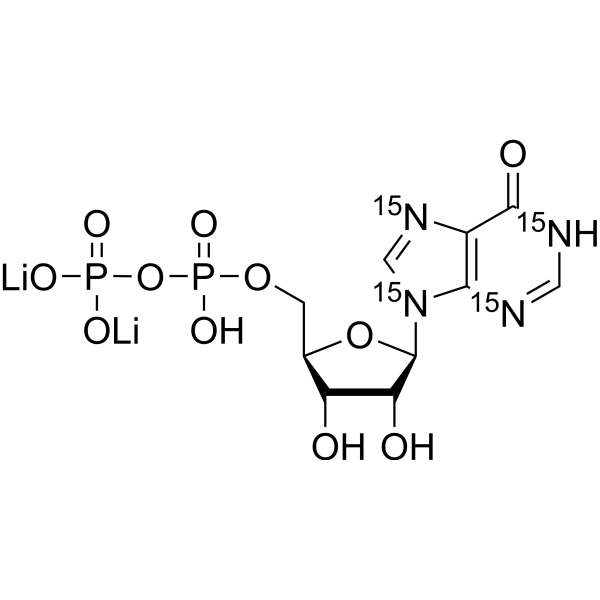
Inosine-5'-diphosphate- 15N4 dilithium (IDP- 15N4 dilithium) is 15N labeled Inosine-5'-diphosphate dilithium. Inosine-5'-diphosphate (IDP) is a decoy substrate of NM23-H2. Inosine-5'-diphosphate has a superior bond capacity on GDP-binding pocket of NM23-H2 (KD: 5.0 μM). Inosine-5'-diphosphate abrogates c-MYC transcription, induces apoptosis and G2/M cell cycle arrest by disrupting NM23-H2-Pu27-GQ interactions without affecting NM23-H2-mediated kinase properties. Inosine-5'-diphosphate has antihypoxic, antihyperthermic and antiarrhythmic activity and protects animals against the noxious effects of γ-irradiation. Inosine-5'-diphosphate can be used for cancers like Burkitt's lymphoma and cardiovascular diseases research .
loading...
    loading...
Cat. No.: HY-184372
CAS No.: 720672-18-4
Target:  

Sirtuin

Research Areas:  

Cancer

SIRT1-IN-7 is a weak inhibitor of SIRT1 with an IC50 > 100 μM. SIRT1-IN-7 can be used in cancer-related research, such as breast cancer research .
loading...
    loading...
Cat. No.: HY-187340
Target:  

c-Kit c-Fms

CSF1R/c-Kit-IN-1 is a CSF-1R and c-Kit inhibitor, with an IC50 of 5.88 nM against human CSF-1R and an IC50 of 1.47 nM against human c-Kit. CSF1R/c-Kit-IN-1 binds to the ATP-binding pocket of CSF-1R, forming a hinge interaction with Cys666 via the oxazole nitrogen atom and adjacent amino group, and binds to residues in the hydrophobic binding pocket. CSF1R/c-Kit-IN-1 binds to the ATP-binding pocket of c-Kit, maintains a hinge interaction through its 2-amino-oxazole core, and binds to a broader hydrophobic surface near the solvent-exposed region via its morpholine substituent. CSF1R/c-Kit-IN-1 inhibits CSF-1-induced phosphorylation of ERK, which is a downstream readout of the CSF-1R signaling pathway. CSF1R/c-Kit-IN-1 can be used in the research of neuroinflammation-related neurodegenerative diseases .
loading...
    loading...
Cat. No.: HY-181891
CAS No.: 3107904-58-2
XAT-13 is an orally active antiallergic agent. XAT-13 binds to the active pocket of MRGPRX2, and inhibits C48/80-induced calcium influx and β-hexosaminidase release. XAT-13 can be used for the research of pseudo-allergic diseases .
loading...
    loading...
Cat. No.: HY-184157
IB15C is an ILT3 (LILRB4) inhibitor with a human Kd of 0.92 μM. IB15C binds to a specific ILT3 pocket, disrupts ApoE interaction, and interferes with downstream inhibitory signaling pathways. IB15C reduces SHP1 and SHP2 phosphorylation, suppresses pro-inflammatory cytokine secretion, enhances amyloid uptake, and attenuates NF-κB activation. IB15C can be used for the research of alzheimer's disease .
loading...
    loading...

