40 Results for "

ESCC

" in MedChemExpress (MCE) Product Catalog:
Products (40)

40 Results for "ESCC" in MCE Product Catalog:

Cat. No.: HY-132891A
Research Areas:  

Cancer

RSK4-IN-1 TFA is a potent RSK4 inhibitor with a IC50 value of 9.5 nM. RSK4-IN-1 TFA has antitumor activity .
loading...
    loading...
Cat. No.: HY-178826
LSD1-IN-45 is an LSD1 inhibitor and a ligand for the target protein for PROTAC. LSD1-IN-45 can be used to synthesize PROTAC LD-110 (HY-178825) .
loading...
    loading...
Cat. No.: HY-130559
CAS No.: 2000199-45-9
Research Areas:  

Cancer

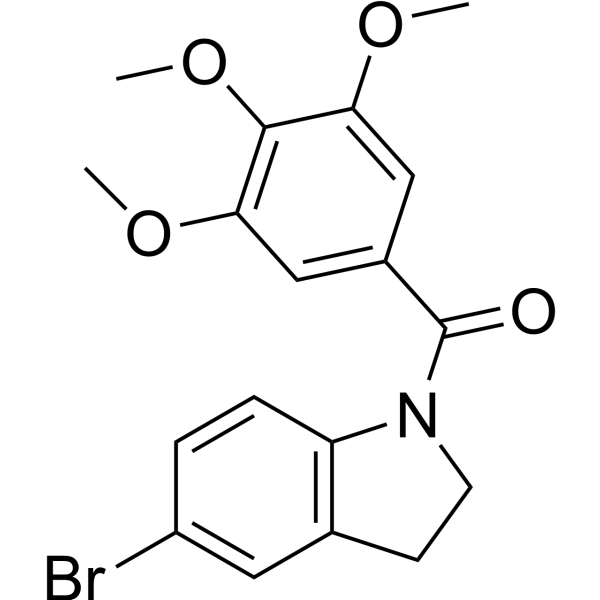
SL-3-19 is a tubulin ligand. SL-3-19 exhibits antitumor activity against esophageal squamous cell carcinoma (ESCC) both in vitro and in vivo by inhibiting microtubule assembly, inducing G2/M phase cell cycle arrest and apoptosis, and disrupting tumor blood vessels. SL-3-19 has a higher activity than SL-1-73 (HY-130558). SL-3-19 can be used for the research of ESCC and other tumors .
loading...
    loading...
Cat. No.: HY-10261D
CAS No.: 1398312-64-5
Synonyms: BIBW 2992 oxalate
Research Areas:  

Cancer

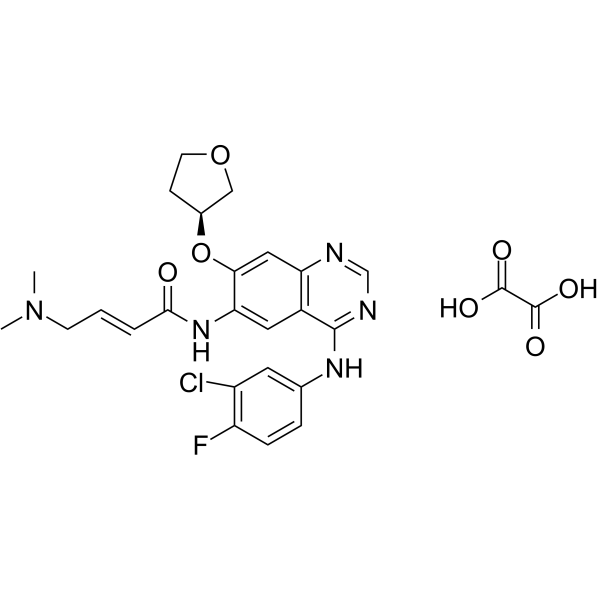
Afatinib (BIBW 2992) oxalate is an orally active, potent and irreversible dual specificity inhibitor of ErbB family (EGFR and HER2), with IC50 values of 0.5 nM, 0.4 nM, 10 nM and 14 nM for EGFR wt, EGFR L858R, EGFR L858R/T790M and HER2, respectively. Afatinib oxalate can be used for the research of esophageal squamous cell carcinoma (ESCC), non-small cell lung cancer (NSCLC) and gastric cancer .
loading...
    loading...
Cat. No.: HY-10261E
CAS No.: 439081-17-1
Synonyms: (R)-BIBW 2992
Target:  

EGFR c-Met/HGFR p38 MAPK

Research Areas:  

Cancer

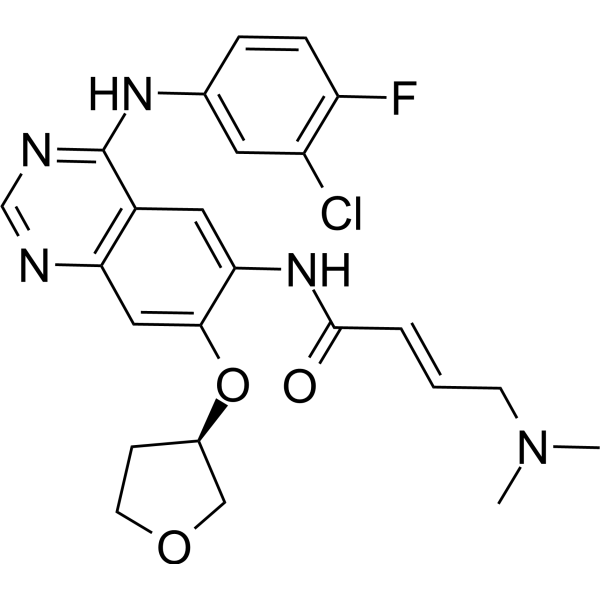
(R)-Afatinib ((R)-BIBW 2992) is the Afatinib isomer. Afatinib (HY-10261) is an orally active, potent and irreversible dual specificity inhibitor of?ErbB?family (EGFR?and?HER2), with?IC50?values of 0.5 nM, 0.4 nM, 10 nM and 14 nM for?EGFR wt, EGFR L858R,?EGFR L858R/T790M?and HER2, respectively. Afatinib can be used for the research of esophageal squamous cell carcinoma (ESCC), non-small cell lung?cancer?(NSCLC) and gastric?cancer .
loading...
    loading...
Cat. No.: HY-151934
Target:  

Apoptosis

Research Areas:  

Cancer

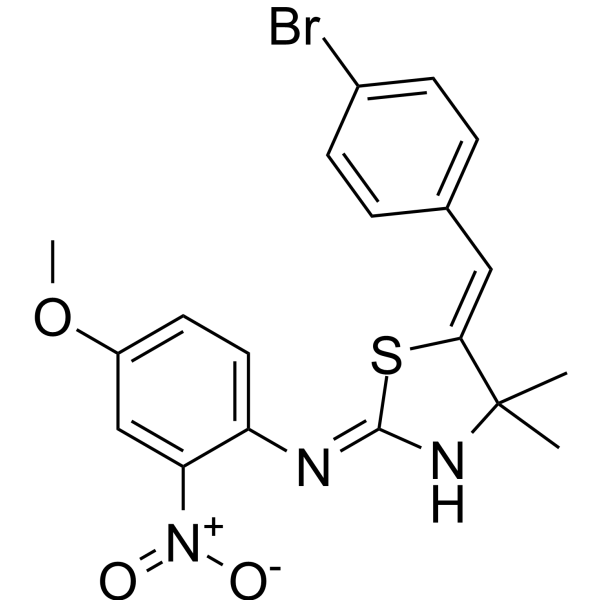
ERK-IN-6 (compound 6g) is an potent anti-proliferation agent against esophageal squamous cell carcinoma (ESCC). ERK-IN-6 induces cell apoptosis via ERK pathway. ERK-IN-6 can be used for the research of ESCC .
loading...
    loading...
Cat. No.: HY-N11050
CAS No.: 167894-15-7
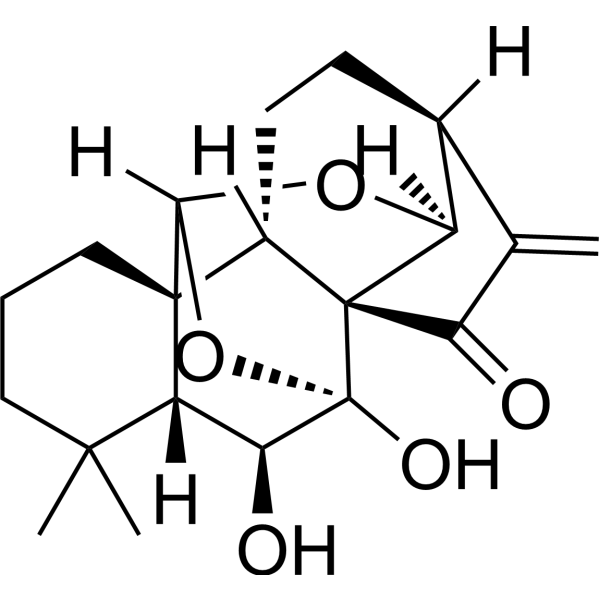
Xerophilusin B, an anticancer agent isolated from Isodon xerophilus, exhibits antiproliferative effects on esophageal squamous cell carcinoma (ESCC) cell lines, induces G2/M cell cycle arrest, and mediates apoptosis .
loading...
    loading...
Cat. No.: HY-144299
CAS No.: 3033213-12-3
Research Areas:  

Cancer

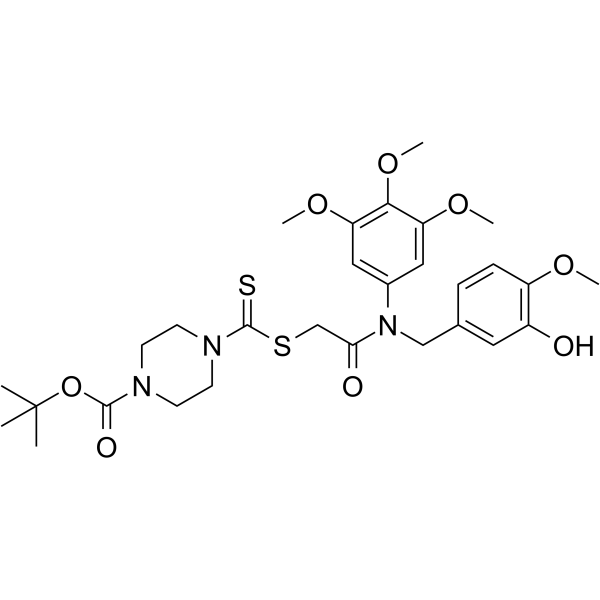
Tubulin polymerization-IN-5 (compound 20q) is a potent tubulin inhibitor with potential anticancer activities. Tubulin polymerization-IN-5 can arrest ESCC cells at G2/M phase and cause cells apoptosis .
loading...
    loading...
Cat. No.: HY-10261AR
CAS No.: 850140-73-7
Synonyms: BIBW 2992MA2 (Standard)
Afatinib (dimaleate) (Standard) is the analytical standard of Afatinib (dimaleate). This product is intended for research and analytical applications. Afatinib (BIBW 2992) dimaleate is an orally active, potent and irreversible dual specificity inhibitor of ErbB family (EGFR and HER2), with IC50 values of 0.5 nM, 0.4 nM, 10 nM and 14 nM for EGFRwt, EGFRL858R, EGFRL858R/T790M and HER2, respectively. Afatinib dimaleate can be used for the research of esophageal squamous cell carcinoma (ESCC), non-small cell lung cancer (NSCLC) and gastric cancer .
loading...
    loading...
Cat. No.: HY-172878
CAS No.: 3062141-62-9
Research Areas:  

Cancer

HDAC/PSMD14-IN-1 (Compound 8B) is a thiolutin derivative. HDAC/PSMD14-IN-1 is a orally active dual-target inhibitor of PSMD14/HDAC1 (IC50 238.7 nM/141.2 nM, respectively). HDAC/PSMD14-IN-1 has good cytotoxicity against ESCC cell lines (IC50: 30-250 nM) and effectively reverses epithelial-mesenchymal transition (EMT). HDAC/PSMD14-IN-1 can induce apoptosis. HDAC/PSMD14-IN-1 has anti-tumor activity in a KYSE30 cell mouse xenograft model. HDAC/PSMD14-IN-1 can be used in anti-esophageal cancer research .
loading...
    loading...
Cat. No.: HY-173147
Target:  

CDK

Research Areas:  

Cancer

CDK2-IN-42 (Compound H63) is a CDK12 inhibitor with an IC50 value of 10 nM. CDK2-IN-42 has anti-ESCC (Esophageal Squamous Cell Carcinoma) cell activity. It can block transcriptional elongation, downregulate the core genes in the G1 phase to induce cell cycle arrest, and alter the CDK12-ATM/ATR-CHEK1/CHEK2 signaling axis, resulting in DNA damage. CDK2-IN-42 can effectively inhibit tumor growth in a xenograft mouse model of human ESCC KYSE150. CDK2-IN-42 holds great promise for research in the field of cancer .
loading...
    loading...
Cat. No.: HY-126324
CAS No.: 2326007-49-0
Target:  

Apoptosis

Research Areas:  

Cancer

IV-23 (Compound 20) is a potent Noxa mediated apoptosis inducer, and it is a promising anticancer agent with potential. IV-23 inhibits cell growths in vitro and in vivo, reduces colony formation, arrests cell cycle at M phase, and induces esophageal squamous cell carcinoma (ESCC) .
loading...
    loading...
Cat. No.: HY-B0432R
CAS No.: 54063-53-5
Synonyms: SA-79 (Standard)
Propafenone (Standard) is the analytical standard of Propafenone. This product is intended for research and analytical applications. Propafenone (SA-79), a sodium-channel blocker, acts an antiarrhythmic agent. Propafenone also has high affinity for the β receptor (IC50=32 nM) . Propafenone blocks the transient outward current (Ito) and the sustained delayed rectifier K current (Isus) with IC50 values of 4.9 μm and 8.6 μm, respectively . Propafenone suppresses esophageal cancer proliferation through inducing mitochondrial dysfunction and induce apoptosis .
loading...
    loading...
Cat. No.: HY-180897
CAS No.: 3034203-03-4
Research Areas:  

Cancer

RSK4-IN-2 (compound 16o) is a potent, orally active RSK4 inhibitor with an IC50 of 17 nM. RSK4-IN-2 suppresses esophageal squamous cell carcinoma (ESCC) cell growth and invasion, by inhibiting phosphorylation of RSK4 downstream targets. RSK4-IN-2 inhibits tumor growth and metastasis in ESCC mouse models. RSK4-IN-2 can be used for ESCC research .
loading...
    loading...
Cat. No.: HY-130558
CAS No.: 2000199-44-8
Research Areas:  

Cancer

SL-1-73 is a tubulin ligand. SL-1-73 exhibits antitumor activity against esophageal squamous cell carcinoma (ESCC) both in vitro and in vivo by inhibiting microtubule assembly, inducing G2/M phase cell cycle arrest and apoptosis, and disrupting tumor blood vessels. SL-1-73 can be used for the research of ESCC and other tumors .
loading...
    loading...
Cat. No.: HY-184535
CAS No.: 3008320-14-4
PDIC-DPC is a HMGA1 inhibitor and lung-targeting agent. PDIC-DPC upregulates STING expression and enhances STING-mediated immune signaling. PDIC-DPC inhibits the TGFβ-Smad pathway and activates AMPK. PDIC-DPC forms nanocomplexes with fibrinogen β chain and vitronectin, and achieves lung-specific accumulation by binding to pulmonary endothelial receptors. PDIC-DPC reverses established pulmonary fibrosis, reduces collagen deposition, restores alveolar structure, improves pulmonary function, and inhibits in situ ESCC growth. PDIC-DPC can be used for the research of esophageal squamous cell carcinoma and idiopathic pulmonary fibrosis .
loading...
    loading...
Cat. No.: HY-180880
CAS No.: 668435-69-6
Target:  

Apoptosis

Research Areas:  

Cancer

TFAP2β modulator-1 (compound A6) is a potent TFAP2β modulator that promotes TFAP2β condensation by inducing conformational changes in the intrinsically disordered region. TFAP2β modulator-1 promotes TFAP2β condensation, induces apoptosis, and exhibits anti-tumor functions in esophageal squamous cell carcinoma (ESCC) cells, mouse models, and organoids. TFAP2β modulator-1 can be used for ESCC research .
loading...
    loading...
Cat. No.: HY-189202
CAS No.: 2912371-82-3
Target:  

MAP3K Akt JNK

Research Areas:  

Cancer

LZK-IN-1 is an orally active and selective LZK inhibitor with a Kd of 2.7 nM. LZK-IN-1 disrupts the LZK-AKT protein-protein interaction, blocks AKT autophosphorylation, and reduces the activation of the downstream JNK pathway. LZK-IN-1 inhibits the proliferation of cancer cells with MAP3K13 amplification and reduces in vivo tumor growth in xenograft mouse models. LZK-IN-1 can be used for the study of esophageal squamous cell carcinoma and head and neck squamous cell carcinoma with MAP3K13 amplification .
loading...
    loading...
Cat. No.: HY-178825B
Research Areas:  

Cancer

LD-110 trihydrochloride is a PROTAC degrader targeting LSD1 with a DC50 of 0.44-1.24 μM. LD-110 trihydrochloride acts through the CRBN E3 ubiquitin ligase and the ubiquitin-proteasome system, leading to H3K4me2 accumulation. LD-110 trihydrochloride induces apoptosis and inhibits the growth and survival of multiple esophageal squamous cell carcinoma (ESCC) cell lines. LD-110 trihydrochloride inhibits tumor growth in the KYSE-150 xenograft model. LD-110 trihydrochloride can be used in research related to esophageal squamous cell carcinoma .
loading...
    loading...
Cat. No.: HY-178825A
Research Areas:  

Cancer

LD-110 triTFA is a PROTAC degrader targeting LSD1 with a DC50 of 0.44-1.24 μM. LD-110 triTFA acts through the CRBN E3 ubiquitin ligase and the ubiquitin-proteasome system, leading to H3K4me2 accumulation. LD-110 triTFA induces apoptosis and inhibits the growth and survival of multiple esophageal squamous cell carcinoma (ESCC) cell lines. LD-110 triTFA inhibits tumor growth in the KYSE-150 xenograft model. LD-110 triTFA can be used in research related to esophageal squamous cell carcinoma .
loading...
    loading...

