

76 Results for "

macromolecules

" in MedChemExpress (MCE) Product Catalog:
Products (76)

76 Results for "macromolecules" in MCE Product Catalog:

Cat. No.: HY-W010514
CAS No.: 1460-57-7
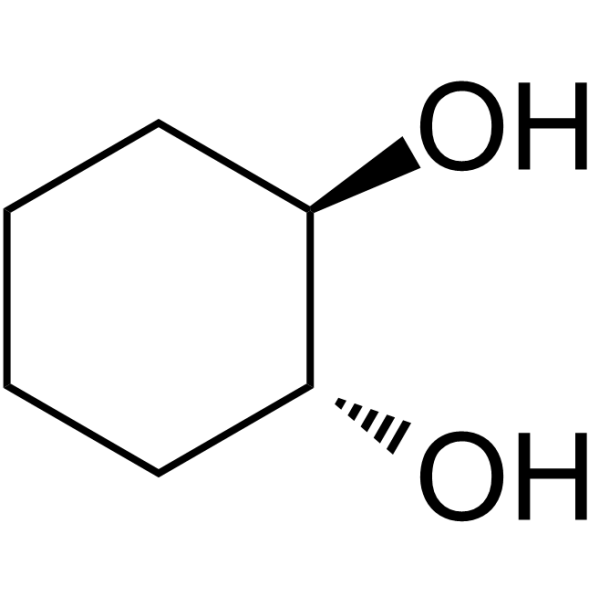
trans-Cyclohexane-1,2-diol (TCHD) is a transient dilator of the nuclear pore complex (NPC). By interacting with the hydrophobic core (FG nucleoporin) of the NPC, trans-Cyclohexane-1,2-diol can disrupt the NPC structure and reversibly increase the permeability of the nuclear pore, allowing macromolecules larger than 40 kDa (such as plasmid DNA) to enter the cell nucleus by passive diffusion, thereby enhancing the nuclear import efficiency of non-viral vectors. trans-Cyclohexane-1,2-diol can improve the efficiency of in vitro electrotransfection or lipid-mediated gene transfection, especially significantly increasing gene expression in differentiated airway epithelial cells .
loading...
    loading...
Cat. No.: HY-137295
CAS No.: 59086-90-7
Purity:  99.96%
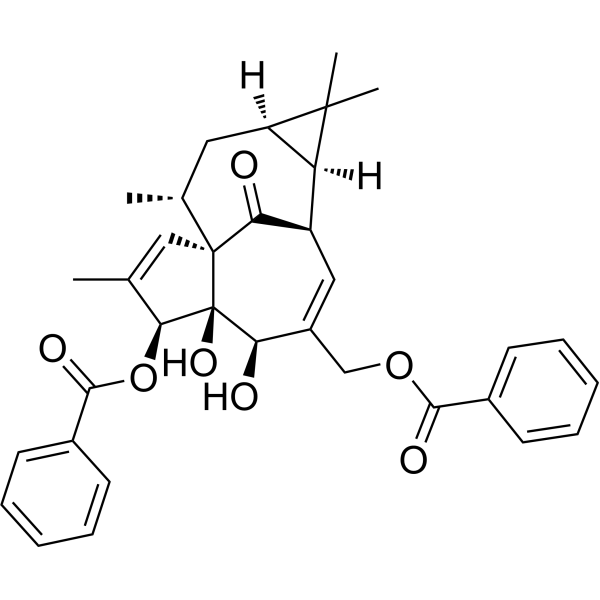
Ingenol 3,20-dibenzoate is a potent protein kinase C (PKC) isoform-selective agonist. Ingenol 3,20-dibenzoate induces selective translocation of nPKC-delta, -epsilon, and -theta and PKC-mu from the cytosolic fraction to the particulate fraction and induces morphologically typical apoptosis through de novo synthesis of macromolecules. Ingenol 3,20-dibenzoate increases the IFN-γ production and degranulation by NK cells, especially when NK cells are stimulated by NSCLC cells .
loading...
    loading...
Cat. No.: HY-114299S
Synonyms: SNAC-d4 sodium
Salcaprozate-d4 (sodium) is a deuterated labeled Salcaprozate (sodium) . Salcaprozate sodium (SNAC), an oral absorption promoter, and has the potential as a delivery agent for oral forms of heparin and insulin. Salcaprozate sodium could increase passive transcellular permeation across small intestinal epithelia based on increased lipophilicity arising from non-covalent macromolecule complexation .
loading...
    loading...
Cat. No.: HY-118099
CAS No.: 108656-33-3
Purity:  99.45%
Target:  

Drug Metabolite

Research Areas:  

Infection

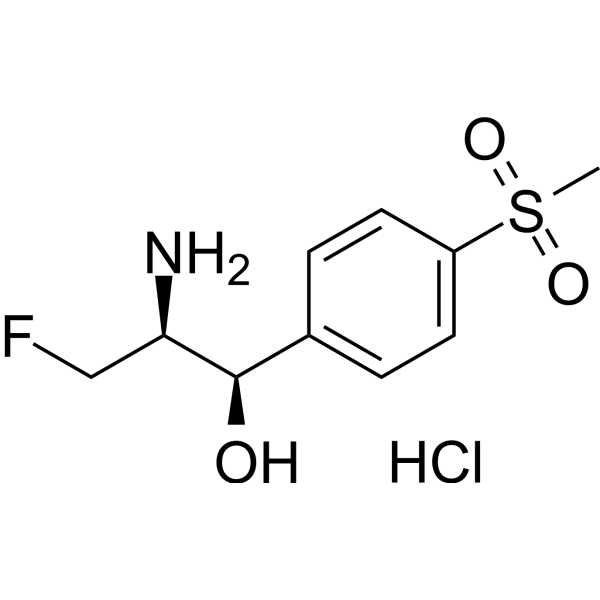
Florfenicol amine hydrochloride is the major metabolite of Florfenicol (HY-B1374) and serves as a marker residue in studies of the in vivo disposition and residue depletion of Florfenicol. Florfenicol amine hydrochloride is eliminated more slowly than the parent compound and persists in plasma and tissues. Florfenicol amine hydrochloride is used in veterinary research for studies on the metabolism, pharmacokinetics, and residue depletion of Florfenicol .
loading...
    loading...
Cat. No.: HY-114299R
CAS No.: 203787-91-1
Synonyms: SNAC (Standard)
Research Areas:  

Others

Salcaprozate (sodium) (Standard) is the analytical standard of Salcaprozate (sodium). This product is intended for research and analytical applications. Salcaprozate sodium (SNAC), an oral absorption promoter, and has the potential as a delivery agent for oral forms of heparin and insulin. Salcaprozate sodium could increase passive transcellular permeation across small intestinal epithelia based on increased lipophilicity arising from non-covalent macromolecule complexation .
loading...
    loading...
Cat. No.: HY-156045B
CAS No.: 12774-36-6
Cross-linked dextran G 150 is a hydrophilic gel based on molecular size exclusion and targeted for the separation of macromolecules. Cross-linked dextran G 150 functions through the gel permeation mechanism, where the cross-linked structure forms a three-dimensional network with specific pore diameters, achieving separation based on the molecular volumetric flow. Cross-linked dextran G 150 can be used to regulate the distribution coefficient of permeating solutes and maintain the permeation balance, such as in gel filtration chromatography for the purification and analysis of biological macromolecules like proteins and nucleic acids. Cross-linked dextran G 150 can also be used as a gel filtration filler (particle size range: 40-120 μm; spherical protein separation range: 5-300 kDa) .
loading...
    loading...
Cat. No.: HY-P1565
CAS No.: 888486-23-5
Synonyms: TD 1 Disulfide(peptide)
Target:  

Na+/K+ ATPase

Research Areas:  

Inflammation/Immunology

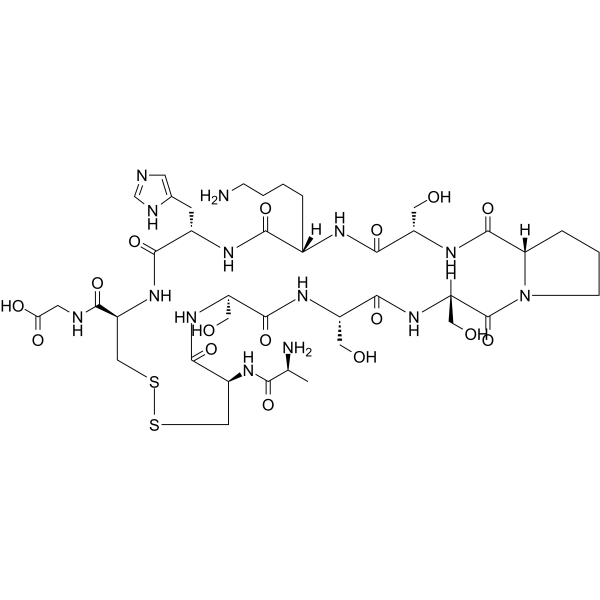
Transdermal Peptide Disulfide (TD 1 Disulfide(peptide)) is a 11-amino acid peptide, binds toNa +/K +-ATPase beta-subunit (ATP1B1), and mainly interacts with the C-terminus of ATP1B1. Transdermal Peptide Disulfide can enhance the transdermal delivery of many macromolecules .
loading...
    loading...
Cat. No.: HY-P1565A
Synonyms: TD 1 Disulfide(peptide) TFA
Target:  

Na+/K+ ATPase

Research Areas:  

Others

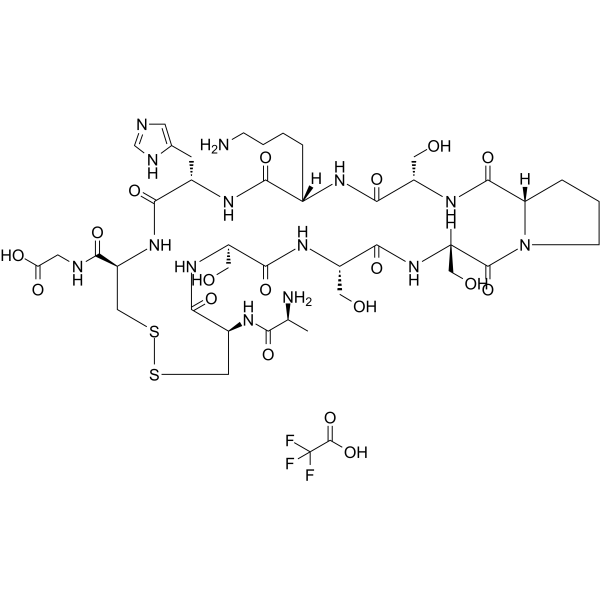
Transdermal Peptide Disulfide TFA (TD 1 Disulfide(peptide) TFA) is a 11-amino acid peptide, binds to Na +/K +-ATPase beta-subunit (ATP1B1), and mainly interacts with the C-terminus of ATP1B1. Transdermal Peptide Disulfide TFA can enhance the transdermal delivery of many macromolecules .
loading...
    loading...
Cat. No.: HY-173703
CAS No.: 3025108-11-3
β-Glu-PAB (CH2NH2)-Exatecan is a linker-payload conjugate composed of Exatecan (HY-13631) and β-Glu-PAB (CH2NH2). β-Glu-PAB (CH2NH2)-Exatecan also serves as an intermediate of Mal ((3S,3aR,6S,6aR)-Hexahydrofuro[3,2-b]furan-3,6-diamine-PEG12)-β-Glu-PAB-Exatecan (HY-173634). β-Glu-PAB (CH2NH2)-Exatecan is specifically cleaved by β-glucuronidase, which is highly expressed in the tumor microenvironment, to release Exatecan that exerts cytotoxic effects. β-Glu-PAB (CH2NH2)-Exatecan can be used in cancer research .
loading...
    loading...
Cat. No.: HY-P11423
Target:  

Inhibitory Antibodies

Research Areas:  

Others

CSK peptide is a peptide that improves transport of macromolecules across the intestinal mucosal barrier targeting goblet cells. CSK peptide can be used for oral delivery system research .
loading...
    loading...
Cat. No.: HY-176206H
Biotin-PEG40000-COOH is a linear heterobifunctional PEG compound with biotin and carboxylic acid functional groups. Biotin can bind to avidin and streptavidin with high specificity and affinity. Biotin-PEG40000-COOH can be used to biotin-label antibodies, proteins and other macromolecules containing primary amines in the presence of a condensing agent .
loading...
    loading...
Cat. No.: HY-133695S
CAS No.: 1217625-88-1
Research Areas:  

Infection

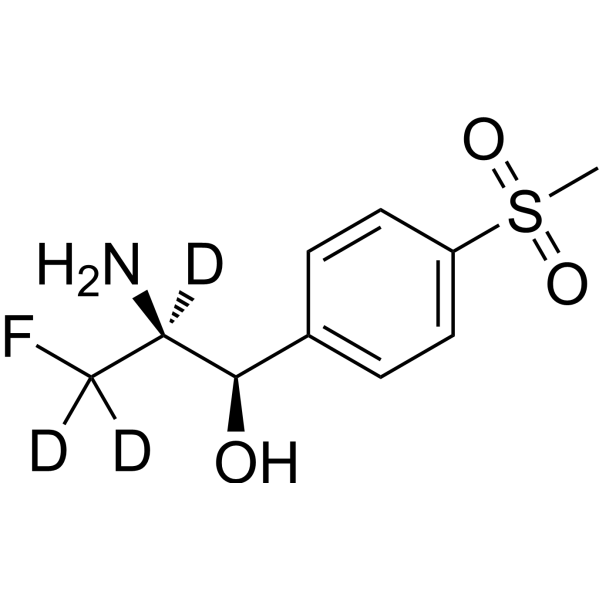
Florfenicol amine-d3-1 is the deuterated-labeled Florfenicol amine (HY-133695). Florfenicol amine is the major metabolite of Florfenicol (HY-B1374) and serves as a marker residue in studies of the in vivo disposition and residue depletion of Florfenicol. Florfenicol amine is eliminated more slowly than the parent compound and persists in plasma and tissues. Florfenicol amine is used in veterinary research for studies on the metabolism, pharmacokinetics, and residue depletion of Florfenicol .
loading...
    loading...
Cat. No.: HY-W653871
CAS No.: 3023974-39-9
Research Areas:  

Infection

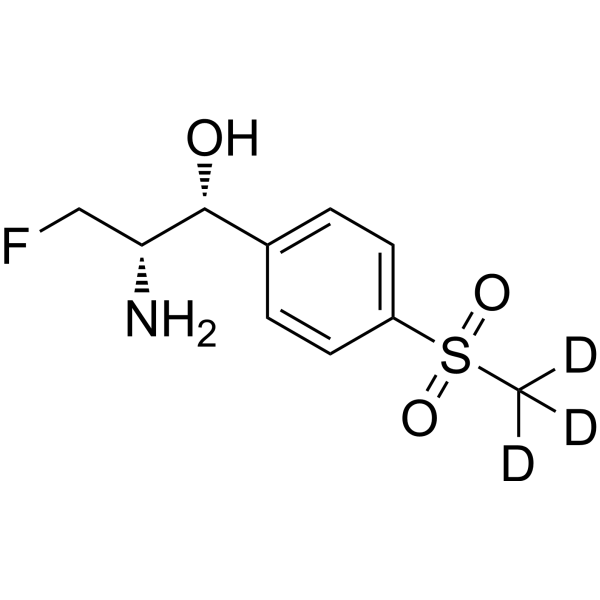
Florfenicol amine-d5 is the deuterated-labeled Florfenicol amine (HY-133695). Florfenicol amine is the major metabolite of Florfenicol (HY-B1374) and serves as a marker residue in studies of the in vivo disposition and residue depletion of Florfenicol. Florfenicol amine is eliminated more slowly than the parent compound and persists in plasma and tissues. Florfenicol amine is used in veterinary research for studies on the metabolism, pharmacokinetics, and residue depletion of Florfenicol .
loading...
    loading...
Cat. No.: HY-151769
CAS No.: 2353409-48-8
Target:  

ADC Linkers

Research Areas:  

Others

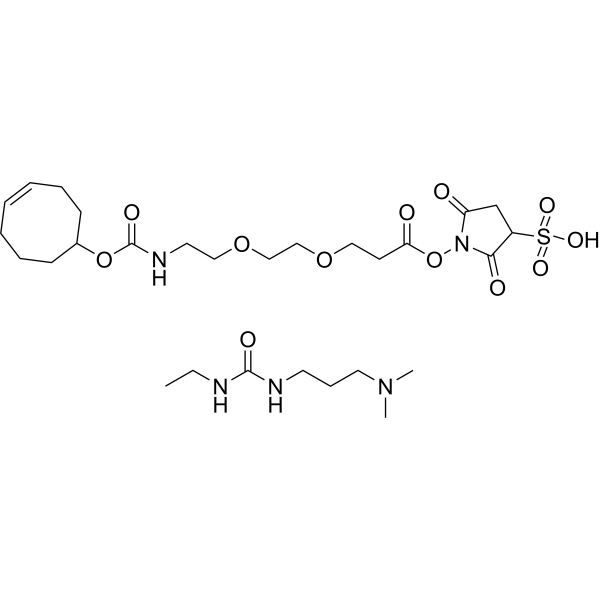
TCO-PEG2-Sulfo-NHS ester-EDC Urea is a click chemistry reagent containing an azide group. TCO-PEG2-Sulfo-NHS ester is a PEG linker containing a TCO moiety and a sulfo-NHS ester moiety. The sulfo group makes this molecule soluble in waqueous buffer. This reagent can be used to label antibodies, proteins and other primary amine-containing macromolecules with TCO moiety. Reagent grade, for research use only . TCO-PEG2-Sulfo-NHS ester-EDC Urea is a click chemistry reagent, it contains a TCO group that can undergo an inverse electron demand Diels-Alder reaction (iEDDA) with molecules containing Tetrazine groups.
loading...
    loading...
Cat. No.: HY-W077242
CAS No.: 635-12-1
Target:  

DNA/RNA Synthesis

Research Areas:  

Cancer

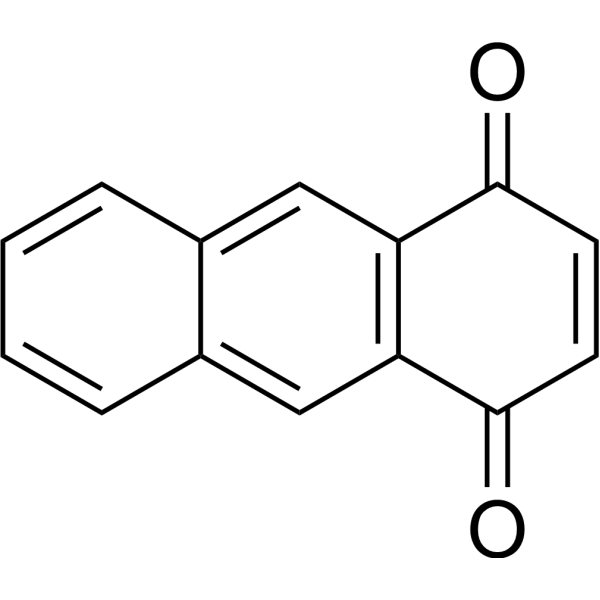
1,4-Anthraquinone is a potent anticancer agent. 1,4-Anthraquinone blocks nucleoside transport, inhibits macromolecule synthesis, induces DNA fragmentation, and decreases the growth and viability of cancer cells. 1,4-Anthraquinone can be used to research anti-leukemia .
loading...
    loading...
Cat. No.: HY-W923132
CAS No.: 193419-86-2
Synonyms: Acryloyloxy fluorescein
Fluorescein O-acrylate (Acryloyloxy fluorescein) is a highly efficient fluorescent monomer that exhibits strong quantum yield in aqueous solutions, with its excitation and emission wavelengths situated within the visible light spectrum. This versatile monomer can be copolymerized with various compounds, including styrene, and acrylamide, enhancing its ability to bond with macromolecules.
loading...
    loading...
Cat. No.: HY-157236
Research Areas:  

Others

AEX Anion-exchange resin 1 is a strong anion exchange chromatography resin, based on monodisperse polystyrene/divinylbenzene (PS-DVB), with a particle size of 50 μm and an ionic ligand of –CH2N + (CH3)3. AEX Anion-exchange resin 1 can be used for the separation and purification of biological macromolecules such as proteins, antibodies, and viral vaccines.
loading...
    loading...
Cat. No.: HY-133954
CAS No.: 872307-34-1
Synonyms: 19-Hydroxyheptatriacontane
Research Areas:  

Others

19-Heptatriacontanol is used to combine macromolecules and small molecules.
loading...
    loading...
Cat. No.: HY-W014125R
CAS No.: 1852-04-6
Undecanedioic acid (Standard) is the analytical standard of Undecanedioic acid (HY-W014125). Undecanedioic acid is an oral activie nndogenous metabolite. Undecanedioic acid is associated with intercellular matrix macromolecules and specifically with elastin .
loading...
    loading...
Cat. No.: HY-B1843
CAS No.: 3878-19-1
Synonyms: BAY 33172; Furidazole
Research Areas:  

Infection

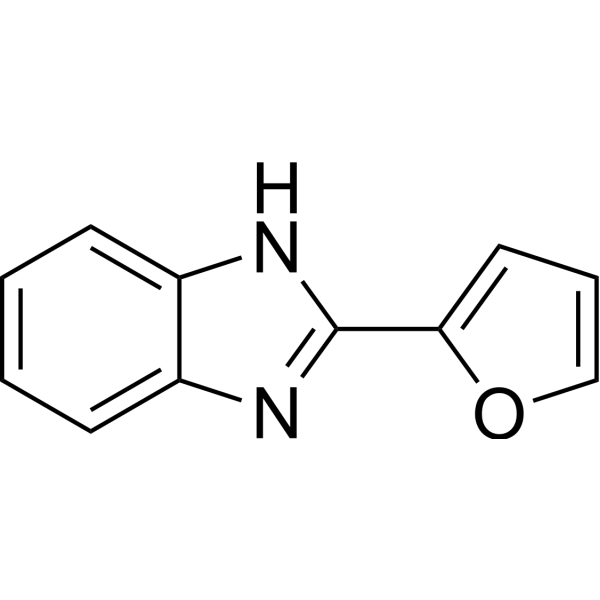
Fuberidazole (BAY 33172; Furidazole) is a fungicide. Fuberidazole shows a synergistic effect with cucurbituril (CB) macromolecules, such as CB7 and CB8. Studies have shown that, CB8 induces pKa shifts on Fuberidazole. Fuberidazole significantly inhibits the growth of B. cinerea .
loading...
    loading...

