

55 Results for "

synapses

" in MedChemExpress (MCE) Product Catalog:
Products (55)

55 Results for "synapses" in MCE Product Catalog:

Cat. No.: HY-139692
CAS No.: 892415-28-0
Purity:  98.91%
Target:  

EAAT

Research Areas:  

Neurological Disease

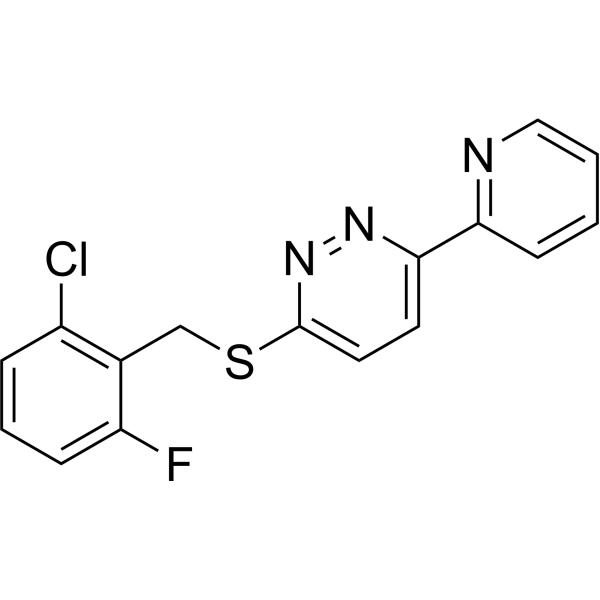
EAAT2 activator 1 is the potent activator of excitatory amino acid transporter 2 (EAAT2). EAAT2 is the major glutamate transporter and functions to remove glutamate from synapses. EAAT2 activator 1 increases EAAT2 protein levels dose-dependently .
loading...
    loading...
Cat. No.: HY-173371
Target:  

Phospholipase

Research Areas:  

Neurological Disease

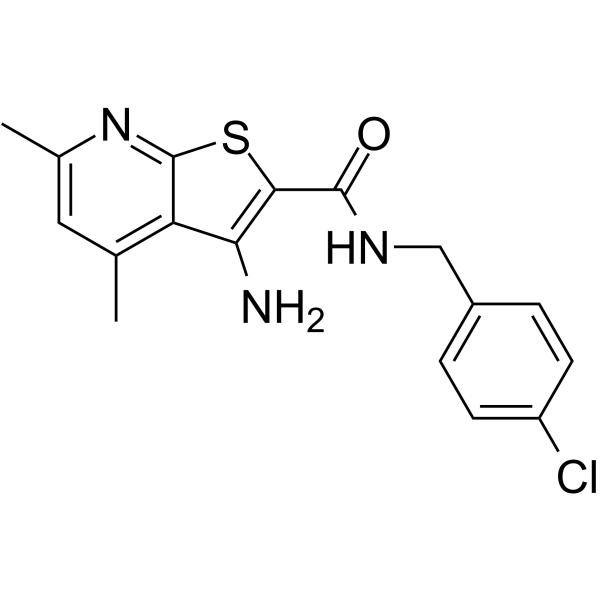
BRI-50460 is an inhibitor of cytosolic calcium-dependent phospholipase A2 (cPLA2) that has the ability to penetrate the blood-brain barrier, with an IC50 of 0.88 nM. BRI-50460 exerts the activities of regulating neuroinflammation and restoring lipid homeostasis by inhibiting cPLA2, regulating the downstream inflammatory lipid signaling pathway, and alleviating the effects of amyloid β42 oligomers on the activation of cPLA2, the hyperphosphorylation of tau protein, and the reduction of synapses and dendrites. BRI-50460 can be applied to the research in the fields of Alzheimer's disease and other neurodegenerative diseases .
loading...
    loading...
Cat. No.: HY-Y0364
CAS No.: 609-15-4
Synonyms: A 21960
Target:  

Fungal

Research Areas:  

Infection

Ethyl 2-chloroacetoacetate (A 21960) is a Tn3 resolvase inhibitor, and inhibit synapse formation between resolvase and two directly repeated res sites. Ethyl 2-chloroacetoacetate is commonly used in in vitro enzymatic experiments. Ethyl 2-chloroacetoacetate inhibits the dehalogenation reaction by consuming intracellular GSH in yeast cells .
loading...
    loading...
Cat. No.: HY-100808S
CAS No.: 1414348-52-9
Synonyms: (R)-Serine-d3
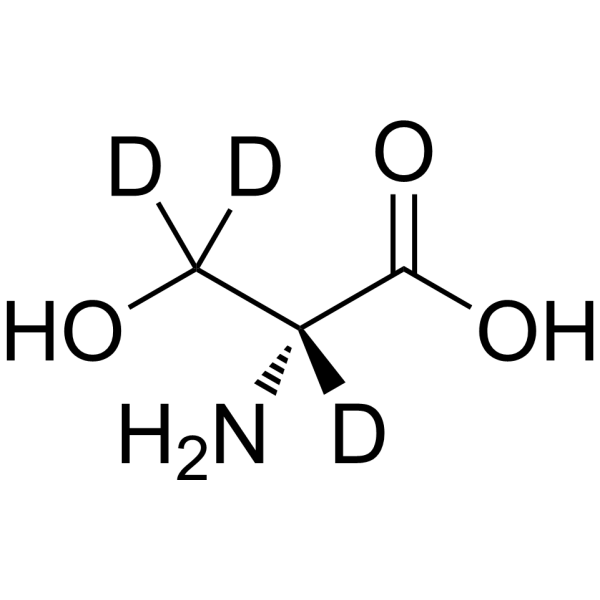
D-Serine-d3 ((R)-Serine-d3) is a deuterium labeled D-Serine (HY-100808). D-Serine ((R)-Serine), an endogenous amino acid involved in glia-synapse interactions that has unique neurotransmitter characteristics, is a potent co-agonist at the NMDA glutamate receptor. D-Serinee has a cardinal modulatory role in major NMDAR-dependent processes including NMDAR-mediated neurotransmission, neurotoxicity, synaptic plasticity, and cell migration .
loading...
    loading...
Cat. No.: HY-P990730
CAS No.: 2755301-09-6
Synonyms: ARB202

Target:  

CD3 Cadherin

Research Areas:  

Cancer

Cabotamig is a humanized bispecific T-cell engager antibody targeting CDH17/CD3. Cabotamig is generated from anti-CDH17 monoclonal ARB102 by linking a CD3-binding scFv in the format of IgG4-scFv. Cabotamig can be used for the research of cancer, such as gastric cancer and colon cancers .
loading...
    loading...
Cat. No.: HY-14563
CAS No.: 633283-39-3
Purity:  98.70%
Target:  

mAChR

Research Areas:  

Neurological Disease

VU10010 is a potent, highly selective and allosteric M4 mAChR potentiator with an EC50 of 400 nM. VU10010 binds to an allosteric site on M4 mAChR and increases affinity for acetylcholine and coupling to G proteins. VU10010 increases carbachol-induced depression of transmission at excitatory but not inhibitory synapses in the hippocampus .
loading...
    loading...
Cat. No.: HY-P3795
CAS No.: 361443-81-4
Target:  

HSV

Research Areas:  

Infection Neurological Disease

G2-Peptide is a 3-O-sulfated heparan sulfate (3-OS HS) binder and antiviral agent. G2-Peptide blocks herpesvirus attachment, entry, cell-to-cell spread and syncytium formation, and reduces viral protein translocation. G2-Peptide exhibits antiviral activity against both HSV-1 and HSV-2. G2-Peptide inhibits neural activity and impairs synapse assembly. G2-Peptide can be used in the research of genital herpes, ocular herpes infection and keratitis .
loading...
    loading...
Cat. No.: HY-15136B
CAS No.: 193275-86-4
Synonyms: Sch66336 racemate
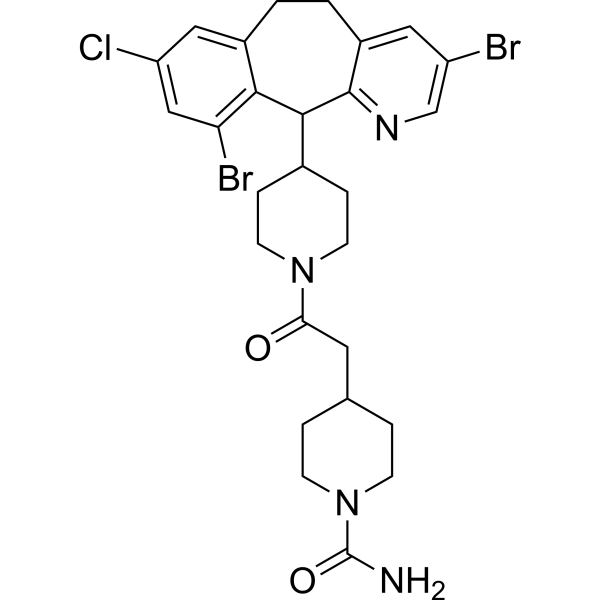
(Rac)-Lonafarnib (Sch66336 racemate) is an isomer of Lonafarnib (HY-15136). Lonafarnib (Sch66336) is an orally active, blood-brain barrier penetrant farnesyltransferase (FPTase) inhibitor. Lonafarnib increases the phosphorylation levels of Akt, CaMKII and CREB, upregulates BDNF expression in the hippocampus, elevates the content of α7nAChR on cell membranes, and blocks the isoprenylation of H-Ras. Lonafarnib repairs synapses and reverses spatial memory deficits in Aβ1-42 model mice. Lonafarnib inhibits RSV fusion and replication, and alleviates virus-induced lung injury. Lonafarnib activates the lysosomal and autophagic pathways, and reduces the phosphorylation and aggregation of tau. Lonafarnib acts synergistically with Sorafenib (HY-10201) to promote apoptosis, and inhibits the proliferation and invasion of melanoma cells. Lonafarnib inhibits the farnesylation of progerin, repairs nuclear membrane defects, and activates the cGAS-STING-STAT1 signaling pathway. Lonafarnib can be used in research related to diseases including Alzheimer's disease, viral infections, melanoma, and progeria .
loading...
    loading...
Cat. No.: HY-124985
CAS No.: 2165325-42-6
Target:  

mGluR

Research Areas:  

Neurological Disease

VU6010608 is a blood-brain barrier-crossing mGlu7 negative allosteric modulator (IC50 = 0.76 μM). VU6010608 can block long-term enhancement (LTP) of SC-CA1 synapses in mouse brain slices induced by high-frequency stimulation. VU6010608 can be used for research on neurological diseases .
loading...
    loading...
Cat. No.: HY-D2994
CAS No.: 2434651-49-5
Synonyms: SNAP-MaP555
Target:  

Fluorescent Dye

Research Areas:  

Others

SPY555-BG (SNAP-MaP555) is a cell-permeable fluorescent dye for SNAP-tag labeling of HIV-1 Gag, which enables visualization of HIV-1 intercellular transmission via SNAPf. SPY555-BG relies on irreversible covalent binding to the active-site cysteine of the SNAPf tag fused to HIV-1 Gag .
loading...
    loading...
Cat. No.: HY-10932R
CAS No.: 72432-10-1
Synonyms: Ro 13-5057 (Standard)
Research Areas:  

Neurological Disease

Aniracetam (Standard) is the analytical standard of Aniracetam. This product is intended for research and analytical applications. Aniracetam (Ro 13-5057) is an orally active neuroprotective agent, possessing nootropics effects. Aniracetam potentiates the ionotropic quisqualate (iQA) responses in the CA1 region of rat hippocampal slices. Aniracetam also potentiates the excitatory post synaptic potentials (EPSPs) in Schaffer collateral-commissural synapses. Aniracetam can prevents the CO2-induced impairment of acquisition in hypercapnia model rats. Aniracetam can be used to research cerebral dysfunctional disorders .
loading...
    loading...
Cat. No.: HY-131686A
CAS No.: 59247-13-1
Ganglioside GT1b (porcine) ammonium is a member of the ganglioside family. Ganglioside GT1b (porcine) ammonium acts as a protective signal against nerve injury-induced spinal synapse elimination. Ganglioside GT1b (porcine) ammonium induces HA synthesis and the phosphorylation of Akt/mTOR in orbital fibroblasts. Ganglioside GT1b (porcine) ammonium enhances porcine oocyte maturation and induces activation of EGFR and ERK1/2 signaling. Ganglioside GT1b (porcine) ammonium is a putative host cell receptor for the Merkel cell polyomavirus. Ganglioside GT1b (porcine) ammonium can be used for the researches of cancer, infection, immunology, endocrinology and neurological disease, such as Thyroid eye disease .
loading...
    loading...
Cat. No.: HY-121503
CAS No.: 68207-21-6
Target:  

Others

Research Areas:  

Neurological Disease

FD44 is a phenothiazine small molecule that inhibits the interaction between neuronal calcium sensor 1 (NCS-1) and the guanine exchange factor Ric8a, a key regulator of synapse number and neurotransmitter release probability. In the Drosophila genetic autism model of fragile X syndrome (FXS), FD44 restored normal synapse number and associative learning .
loading...
    loading...
Cat. No.: HY-134261
CAS No.: 59259-77-7
Synonyms: 8-Bromoadenosine-5'-O-diphosphoribose
Target:  

TRP Channel CaMK

Research Areas:  

Metabolic Disease Cancer

8-Br-ADPR (8-Bromoadenosine-5'-O-diphosphoribose) is a TRPM2 inhibitor and ADPR signaling pathway antagonist. 8-Br-ADPR inhibits glucagon-mediated nuclear calcium signaling and downstream CaMKII/CREB phosphorylation by blocking ADPR-induced TRPM2 activation. 8-Br-ADPR significantly reduces gluconeogenic gene expression and blood glucose levels in diabetic models. 8-Br-ADPR effectively blocks ADPR-mediated calcium signal transduction in NK cells, inhibits immune synapse formation, granzyme B release and cytolytic activity against melanoma cells. 8-Br-ADPR is widely used in studies related to diseases such as diabetes, melanoma and lymphoma .
loading...
    loading...
Cat. No.: HY-P990905
CAS No.: 2871775-98-1
Synonyms: SAR-443579

Target:  

Interleukin Related

Research Areas:  

Cancer

Bexatamig (SAR-443579) is a trifunctional natural killer cell engager targeting IL-3R α/CD123, NKp46/NCR1/CD335 and Fc gamma RIIIA/CD16a. Bexatamig forms a cytolytic synapse between natural killer cells and CD123-positive tumor cells. By activating natural killer cells to induce tumor cell death, Bexatamig effectively reduces the burden of CD123-positive acute myeloid leukemia (AML) blasts. Bexatamig has been granted FDA Fast Track designation, and is primarily investigated for relapsed or refractory acute myeloid leukemia, B-cell acute lymphoblastic leukemia, and high-risk myelodysplastic syndromes .
loading...
    loading...
Cat. No.: HY-N8693
CAS No.: 362472-81-9
Withanoside IV is an orally active, blood-brain barrier-permeable withanolide derivative. Withanoside IV specifically binds to the Sudlow I site of HSA, induces secondary structural changes in HSA, and forms stable HSA complexes. Withanoside IV inhibits the enzymatic activity of COX-2. Withanoside IV induces axonal regeneration, peripheral nervous system myelination and increased axonal density in spinal cord tissue, reduces reactive gliosis-related changes, and improves hindlimb motor function. Withanoside IV binds to amyloid-β 1-42 to inhibit its aggregation, induces neurite outgrowth and synapse reconstruction, repairs damaged axons and dendrites, enhances mitochondrial biogenesis, exerts neuroprotective effects via the BDNF and SIRT1 signaling pathways, reduces ROS production and neuronal apoptosis, and ameliorates memory deficits. Withanoside IV inhibits the activity of the SARS-CoV-2 main protease. Withanoside IV can be used in research related to spinal cord injury, Alzheimer's disease, and coronavirus disease 2019 (COVID-19) .
loading...
    loading...
Cat. No.: HY-15136R
CAS No.: 193275-84-2
Synonyms: Sch66336 (Standard)
Lonafarnib (Standard) (Sch66336 (Standard)) is the analytical standard of Lonafarnib (HY-15136). This product is intended for research and analytical applications. Lonafarnib (Sch66336) is an orally active, blood-brain barrier penetrant farnesyltransferase (FPTase) inhibitor. Lonafarnib increases the phosphorylation levels of Akt, CaMKII and CREB, upregulates BDNF expression in the hippocampus, elevates the content of α7nAChR on cell membranes, and blocks the isoprenylation of H-Ras. Lonafarnib repairs synapses and reverses spatial memory deficits in Aβ1-42 model mice. Lonafarnib inhibits RSV fusion and replication, and alleviates virus-induced lung injury. Lonafarnib activates the lysosomal and autophagic pathways, and reduces the phosphorylation and aggregation of tau. Lonafarnib acts synergistically with Sorafenib (HY-10201) to promote apoptosis, and inhibits the proliferation and invasion of melanoma cells. Lonafarnib inhibits the farnesylation of progerin, repairs nuclear membrane defects, and activates the cGAS-STING-STAT1 signaling pathway. Lonafarnib can be used in research related to diseases including Alzheimer's disease, viral infections, melanoma, and progeria .
loading...
    loading...
Cat. No.: HY-153172
CAS No.: 2274723-90-7
Synonyms: Phenylbenzothiazole-PEG4-OH; SPG302
Target:  

Drug Intermediate

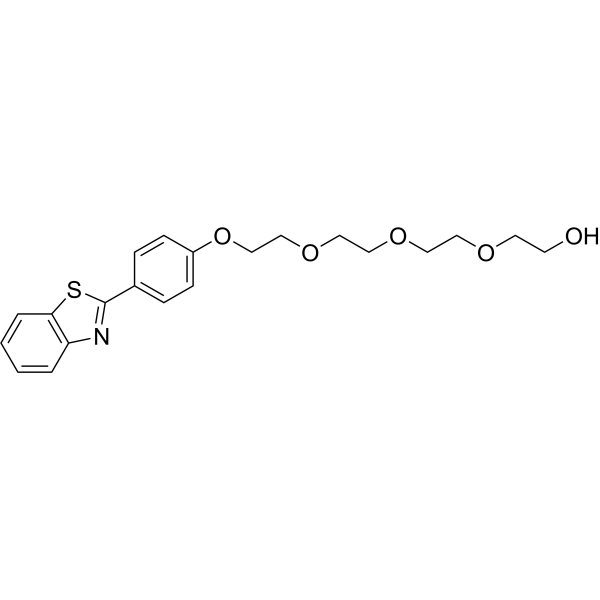
Tazbentetol (Phenylbenzothiazole-PEG4-OH) is a synaptogenic compound. Tazbentetol partially preserves inner retinal neurotransmission function and maintains retinal function. Tazbentetol increases dendritic spine glutamatergic synapses via cytoskeleton signaling pathways, enhances synaptic density both in vitro and in vivo, and restores glutamatergic synapses. Tazbentetol improves the progression of motor symptoms and enhances memory. Tazbentetol can be used in the research of glaucoma, diabetic retinopathy and amyotrophic lateral sclerosis .
loading...
    loading...
Cat. No.: HY-12153
CAS No.: 929562-28-7
Target:  

Cholinesterase (ChE)

Research Areas:  

Neurological Disease

JNJ-1930942 is a selective and blood-brain barrier (BBB) penetrant α(7) nAChR positive allosteric modulator.JNJ-1930942 enhances the Choline (HY-B0282)-evoked rise in intracellular Ca 2+ levels and neurotransmission at hippocampal dentate gyrus synapses. JNJ-1930942 reverses the naturally occurring sensory gating deficit in DBA/2 mice .
loading...
    loading...
Cat. No.: HY-P3340
CAS No.: 189224-35-9
Target:  

iGluR

Research Areas:  

Neurological Disease

Leptin (116-130) is a bioactive leptin fragment. Leptin (116-130) promotes AMPA receptor trafficking to synapses and facilitate activity-dependent hippocampal synaptic plasticity. Leptin (116-130) prevents hippocampal synaptic disruption and neuronal cell death in models of amyloid toxicity. Leptin (116-130) has the potential for the research of Alzheimer's disease (AD) .
loading...
    loading...

