

130 Results for "

physiological functions

" in MedChemExpress (MCE) Product Catalog:
Products (130)

130 Results for "physiological functions" in MCE Product Catalog:

1
1 Cited Publications
Cat. No.: HY-W009444
CAS No.: 1463-10-1
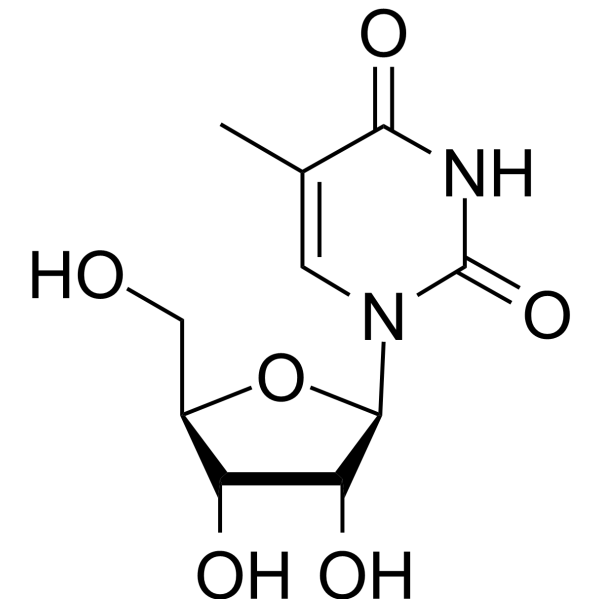
5-Methyluridine (m 5U) is an RNA modified nucleotide generated by RNA methyltransferases (such as TrmA and RumA), which mainly targets specific uracil sites in RNA molecules such as the T arm of tRNA and rRNA. 5-Methyluridine relies on enzyme recognition of RNA secondary/tertiary structures (such as the T loop of tRNA or the specific stem-loop structure of rRNA) and participates in physiological processes such as translation accuracy and ribosome function by stabilizing RNA folding or regulating base pairing .
loading...
    loading...
Cat. No.: HY-W013706
CAS No.: 35908-31-7
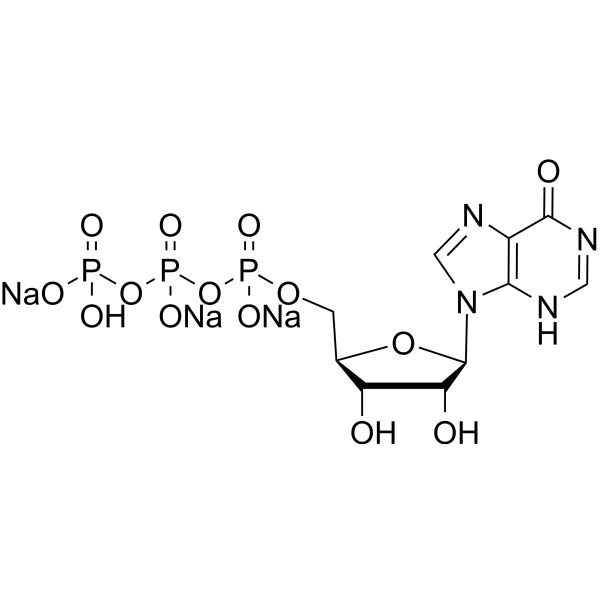
Synonyms: ITP trisodium salt; Inosine triphosphate trisodium salt
Inosine-5'-triphosphate trisodium salt is a nucleotide analogue that acts on multiple G proteins and is widely used in G protein-related research. It can bind to the α -subunit of G proteins and participate in G protein-mediated signal transduction as a substitute for GTP. Its mechanism of action is to interact with the nucleotide-binding site of the G protein α -subunit, affecting the activity and function of G proteins. In the research field, it is mainly used to explore the role of the G protein signaling pathway in cellular physiological and pathological processes. For example, in HL-60 leukemia cells, its impact on G protein-mediated signal transduction can be studied .
loading...
    loading...
Cat. No.: HY-150097
Purity:  ≥99.0%
Recombinant Human Serum Albumin (rHSA) is a non-glycosylated monomeric plasma protein that acts as a core factor for maintaining plasma colloid osmotic pressure. Recombinant Human Serum Albumin (rHSA) possesses multiple physiological functions including carrier, metabolic regulation, detoxification, antioxidation and enzyme mimicking. Recombinant Human Serum Albumin (rHSA) not only scavenges reactive oxygen and nitrogen species via specific residues and binds a variety of endogenous and exogenous compounds to maintain redox homeostasis, but also serves as a biomarker for multiple diseases such as cancer and inflammation. Recombinant Human Serum Albumin (rHSA) broadly supports the development of implantable materials, surgical adhesives and ligand capture, and can be used for research on critical illnesses including hypovolemia, liver failure, severe sepsis and various types of trauma resuscitation .
loading...
    loading...
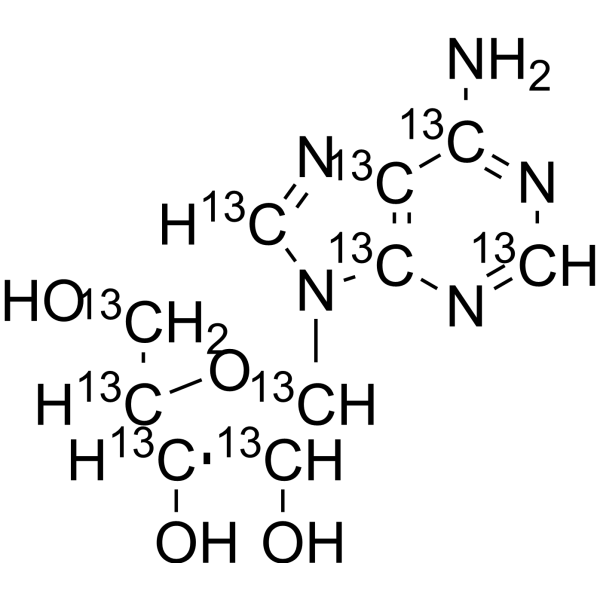
Cat. No.: HY-B0228S1
CAS No.: 159496-13-6
Synonyms: Adenine riboside-13C5; D-Adenosine-13C5
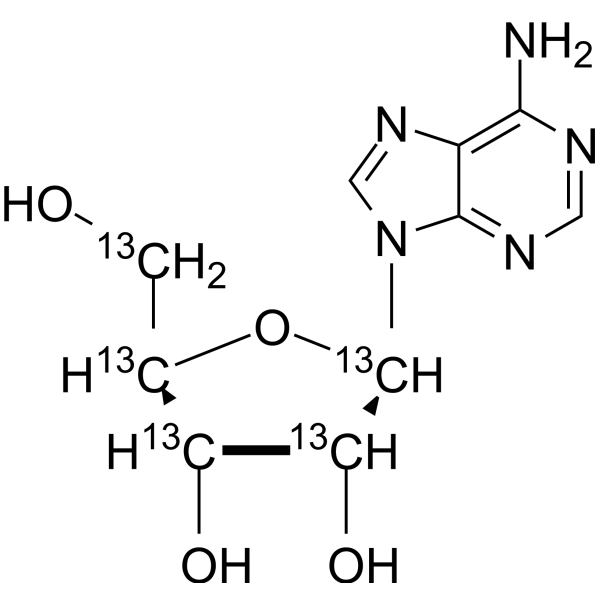
Adenosine- 13C5 is the 13C labeled Adenosine . Adenosine (Adenine riboside), a ubiquitous endogenous autacoid, acts through the enrollment of four G protein-coupled receptors: A1, A2A, A2B, and A3. Adenosine affects almost all aspects of cellular physiology, including neuronal activity, vascular function, platelet aggregation, and blood cell regulation .
loading...
    loading...
Cat. No.: HY-133971
CAS No.: 1250-95-9
Purity:  98.40%
Synonyms: 5α,6α-Epoxycholesterol
Target:  

Liposome

Research Areas:  

Others

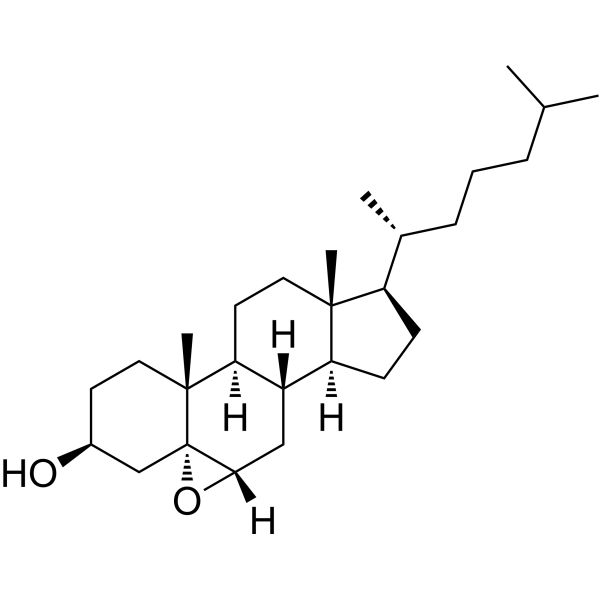
Cholesterol-5α,6α-epoxide is an epoxide derivative of cholesterol formed by the enzymatic oxidation of cholesterol in the liver and other tissues. Cholesterol-5α,6α-epoxide has unique chemical properties that make it an important intermediate in the biosynthesis of bile acids, which play a key role in the digestion and absorption of dietary fats. It also has a potential physiological role in regulating cholesterol metabolism and transport, although its biological function is not fully understood.
loading...
    loading...
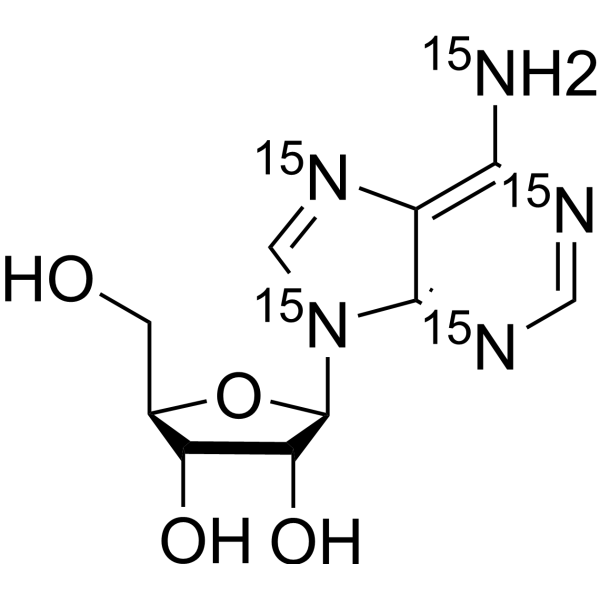
Cat. No.: HY-B0228S11
CAS No.: 168566-57-2
Synonyms: Adenine riboside-15N5; D-Adenosine-15N5
Adenosine- 15N5 (Adenine riboside- 15N5; D-Adenosine- 15N5) is the 15N labled Adenosine (HY-B0228). Adenosine (Adenine riboside), a ubiquitous endogenous autacoid, acts through the enrollment of four G protein-coupled receptors: A1, A2A, A2B, and A3. Adenosine affects almost all aspects of cellular physiology, including neuronal activity, vascular function, platelet aggregation, and blood cell regulation .
loading...
    loading...
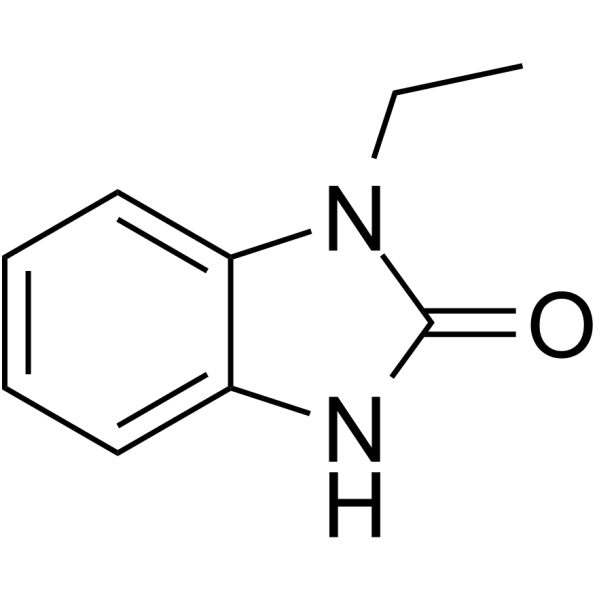
Cat. No.: HY-101360
CAS No.: 10045-45-1
Purity:  99.96%
Synonyms: 1-Ethyl-2-benzimidazolinone
Target:  

Potassium Channel

Research Areas:  

Neurological Disease

1-EBIO is an activator of Ca 2+ sensitive K + channels. 1-EBIO is used to study the role of K + channels in diverse physiological functions .
loading...
    loading...
Cat. No.: HY-P2280
CAS No.: 2247617-97-4
Synonyms: P110
Target:  

Dynamin

TAT-P110, a peptide inhibitor of Drp1-Fis1 interaction, reduces pathology in numerous models of neurodegeneration, ischemia, and sepsis without blocking the physiological functions of Drp1 .
loading...
    loading...
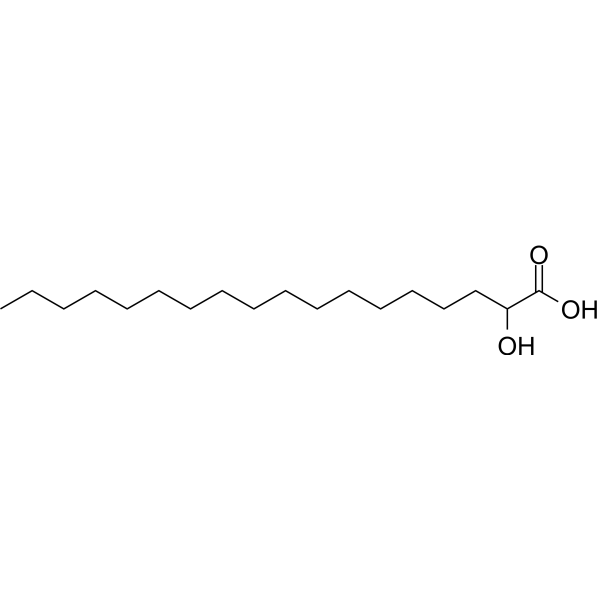
Cat. No.: HY-134120
CAS No.: 629-22-1
Purity:  99.86%
Synonyms: DL-2-Hydroxystearic acid
Research Areas:  

Others

2-Hydroxystearic acid is an alpha-hydroxy fatty acid commonly used in a variety of personal care products, especially cosmetic and skin care formulations. 2-Hydroxystearic acid has unique chemical properties that make it an effective emulsifier and stabilizer, improving the texture and shelf life of cosmetic products. It also has a potential physiological role in improving skin hydration and elasticity, although its biological function is not fully understood.
loading...
    loading...
Cat. No.: HY-B0228R
CAS No.: 58-61-7
Synonyms: Adenine riboside (Standard); D-Adenosine (Standard)
Adenosine (Standard) is the analytical standard of Adenosine. This product is intended for research and analytical applications. Adenosine (Adenine riboside), a ubiquitous endogenous autacoid, acts through the enrollment of four G protein-coupled receptors: A1, A2A, A2B, and A3. Adenosine affects almost all aspects of cellular physiology, including neuronal activity, vascular function, platelet aggregation, and blood cell regulation .
loading...
    loading...
Cat. No.: HY-B0228S13
CAS No.: 1887761-94-5
Synonyms: Adenine riboside-13C10; D-Adenosine-13C10
Adenosine- 13C10 (Adenine riboside- 13C10; D-Adenosine- 13C10) is 13C-labeled Adenosine (HY-B0228). Adenosine (Adenine riboside), a ubiquitous endogenous autacoid, acts through the enrollment of four G protein-coupled receptors: A1, A2A, A2B, and A3. Adenosine affects almost all aspects of cellular physiology, including neuronal activity, vascular function, platelet aggregation, and blood cell regulation.
loading...
    loading...
Cat. No.: HY-B0228S9
CAS No.: 202406-75-5
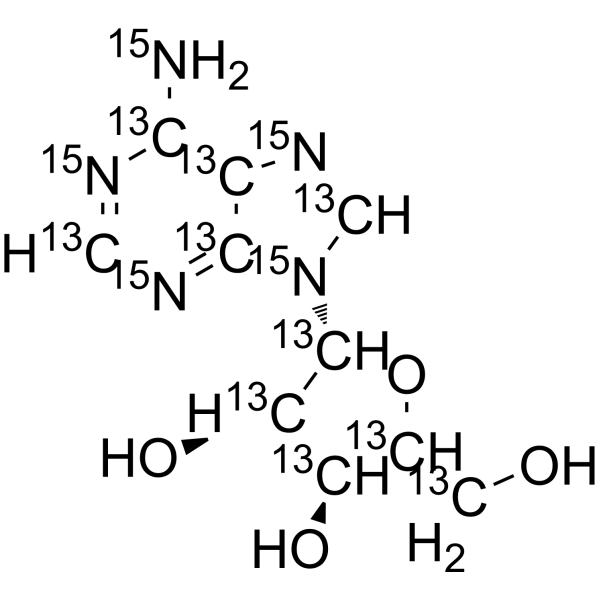
Adenosine- 13C10, 15N5 is the 13C and 15N labeled Adenosine (HY-B0228) . Adenosine (Adenine riboside), a ubiquitous endogenous autacoid, acts through the enrollment of four G protein-coupled receptors: A1, A2A, A2B, and A3. Adenosine affects almost all aspects of cellular physiology, including neuronal activity, vascular function, platelet aggregation, and blood cell regulation .
loading...
    loading...
Cat. No.: HY-DY1020
CAS No.: 145037-81-6
Rhod-2 (solution) is a high-affinity visible light excitation wavelength Ca 2+ fluorescent probe, Rhod-2, AM is an acetyl methyl ester derivative of Rhod-2, which has cell membrane permeability and can easily enter cells with simple culture. Once it enters the cell, it is sheared by its lactesterase to produce Rhod-2 without membrane permeability, which remains in the cell to perform the corresponding physiological functions. Maximum excitation/emission wavelength: 549/578 nm .
Solvent and concentration: DMSO: 1 mM
loading...
    loading...
Cat. No.: HY-12499
CAS No.: 21416-43-3
Purity:  98.93%
Synonyms: (-)-Willardiine
Target:  

iGluR

Research Areas:  

Neurological Disease

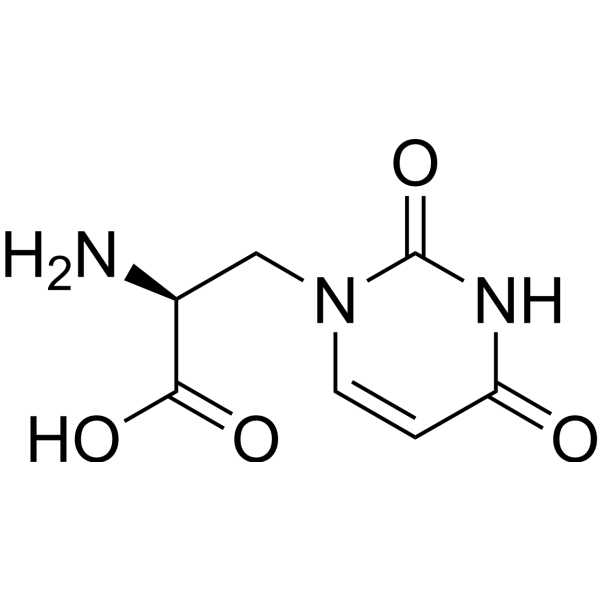
(S)-Willardiine ((-)-Willardiine) is a subtype-selective glutamate receptor agonist and the active isomer of Willardiine. Willardiine binds to and activates hGluR1, hGluR2, hGluR4 and hGluR5, with Ki values of 3.6 nM and 0.24 nM for hGluR4 and hGluR5, respectively. (S)-Willardiine is used to investigate the distribution and physiological functions of glutamate receptor subunits in the central nervous system .
loading...
    loading...
Cat. No.: HY-P0070
CAS No.: 316791-23-8
Target:  

Endogenous Metabolite

Research Areas:  

Inflammation/Immunology

Thymus peptide C is a hormonal agent derived from the thymus glands of young calves, which works as a substitute for the physiological functions of the thymus.
loading...
    loading...
Cat. No.: HY-B0228S
CAS No.: 109923-50-4
Synonyms: Adenine riboside-d1; D-Adenosine-d
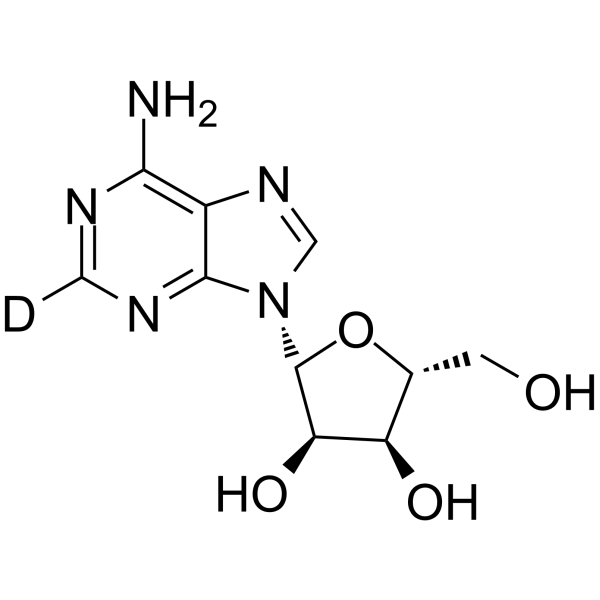
Adenosine-d is the deuterium labeled Adenosine. Adenosine (Adenine riboside), a ubiquitous endogenous autacoid, acts through the enrollment of four G protein-coupled receptors: A1, A2A, A2B, and A3. Adenosine affects almost all aspects of cellular physiology, including neuronal activity, vascular function, platelet aggregation, and blood cell regulation .
loading...
    loading...
Cat. No.: HY-116753
CAS No.: 201529-58-0
Purity:  99.92%
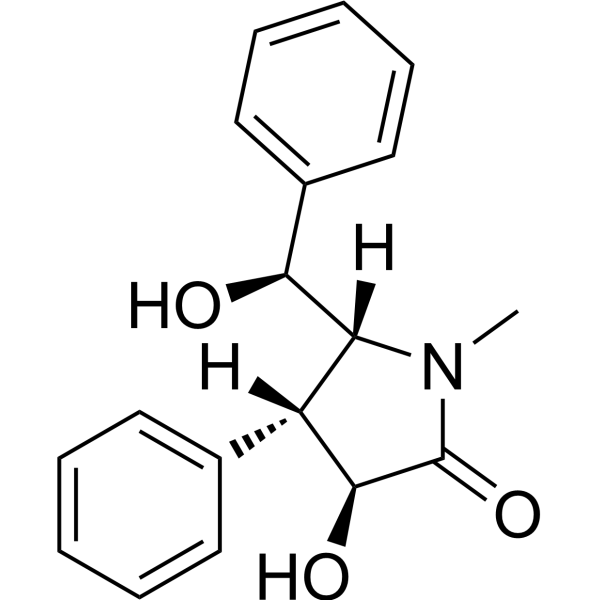
(-)Clausenamide is an active alkaloid isolated from the leaves of Clausena lansium (Lour.) Skeels, and improves cognitive function in both normal physiological and pathological conditions. (-)Clausenamide inhibits β-amyloid (Aβ) toxicity, blocking neurofibrillary tangle formation by inhibiting the phosphorylation of tau protein. (-)Clausenamide exerts a significant neuroprotective activity against Aβ25-35. (-)Clausenamide can be used for researching Alzheimer's disease (AD) .
loading...
    loading...
Cat. No.: HY-108498
CAS No.: 217480-27-8
Purity:  99.80%
Target:  

Somatostatin Receptor

Research Areas:  

Endocrinology

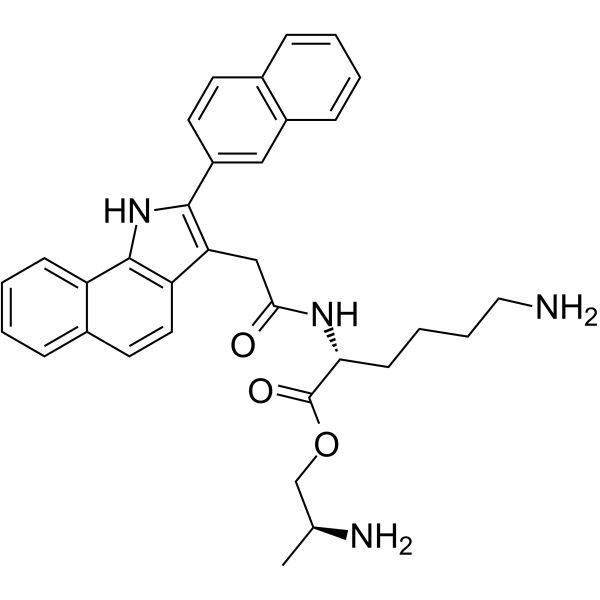
L-817818 is a potent and subtype-selective agonist of the somatostatin receptor. L-817818 provides a direct approach to defining somatostatin receptor physiological functions
loading...
    loading...
Cat. No.: HY-B0722R
CAS No.: 56-92-8
Histamine dihydrochloride (Standard) is the analytical standard of Histamine dihydrochloride (HY-B0722). This product is intended for research and analytical applications. Histamine dihydrochloride is the agonist for histamine receptor and a vasodilator. Histamine dihydrochloride is an organic nitrogen compound that participates in local immune responses, regulates intestinal physiological functions, and acts as a neurotransmitter. Histamine dihydrochloride affects p38 MAPK/Akt signaling pathway, exhibits antitumor, antioxidant and anti-inflammatory activities. Histamine dihydrochloride can be used in the research of acute myeloid leukemia, malignant melanoma, and renal cell carcinoma .
loading...
    loading...
Cat. No.: HY-B1204R
CAS No.: 51-45-6
Synonyms: Ergamine (Standard)
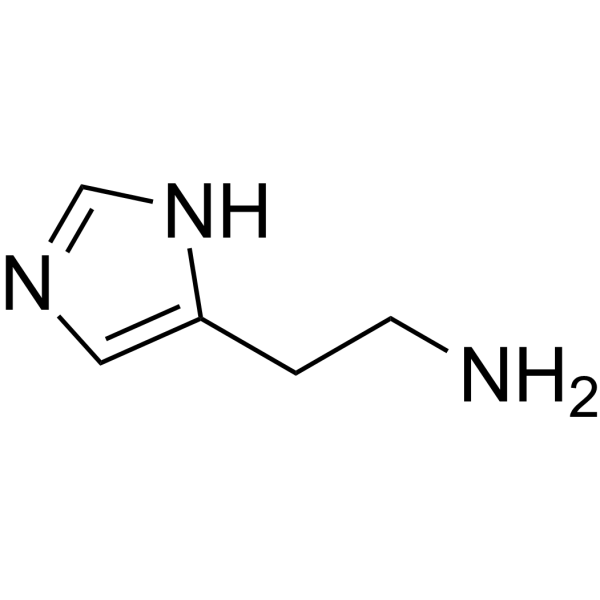
Histamine (Standard) is the analytical standard of Histamine (HY-B1204). This product is intended for research and analytical applications. Histamine is the agonist for histamine receptor and a vasodilator. Histamine is an organic nitrogen compound that participates in local immune responses, regulates intestinal physiological functions, and acts as a neurotransmitter. Histamine affects p38 MAPK/Akt signaling pathway, exhibits antitumor, antioxidant and anti-inflammatory activities. Histamine can be used in the research of acute myeloid leukemia, malignant melanoma, and renal cell carcinoma .
loading...
    loading...

