405 Results for "

selective anticancer activity

" in MedChemExpress (MCE) Product Catalog:
Products (405)

405 Results for "selective anticancer activity" in MCE Product Catalog:

Cat. No.: HY-184495
Target:  

PROTACs Apoptosis

Research Areas:  

Cancer

PROTAC YTHDC1 Degrader-1 is a selective, CRBN-recruiting YTHDC1 PROTAC degrader with a DC50 of 11.42 nM. PROTAC YTHDC1 Degrader-1 induces ubiquitination and degradation of YTHDC1. PROTAC YTHDC1 Degrader-1 induces G1 phase arrest and inhibits cell cycle progression. PROTAC YTHDC1 Degrader-1 also induces Apoptosis. PROTAC YTHDC1 Degrader-1 exhibits anticancer activity against leukemia. PROTAC YTHDC1 Degrader-1 can be used for the research of acute myeloid leukemia .
loading...
    loading...
Cat. No.: HY-14151R
CAS No.: 179474-81-8
Prucalopride (Standard) is the analytical standard of Prucalopride. This product is intended for research and analytical applications. Prucalopride is an orally active, selective and specific 5-HT 4 receptor agonist (high affinity), with pKis of 8.6 and 8.1 for human 5-HT4a/4b receptors, respectively. Prucalopride improves intestinal motility by promoting regeneration of the intestinal nervous system in rats. Prucalopride also shows anticancer activity by blocking of the PI3K/AKT/mTor signaling pathway. Prucalopride can be used in studies of chronic constipation, pseudo-intestinal obstruction and cancer .
loading...
    loading...
Cat. No.: HY-183544
Platinum (IV) Prodrug-1 is a Pt (IV) prodrug and selective TrxR1 inhibitor. Platinum (IV) Prodrug-1 induces ferroptosis (Ferroptosis) by depleting glutathione, accumulating intracellular lipid peroxides, and inactivating Glutathione peroxidase 4. Platinum (IV) Prodrug-1 triggers endoplasmic reticulum stress and immunogenic cell death via excessive accumulation of intracellular ROS. Platinum (IV) Prodrug-1 exhibits anticancer activity against both Cisplatin (HY-17394)-sensitive and Cisplatin-resistant triple-negative breast cancer cells. Platinum (IV) Prodrug-1 can be used for the research of triple-negative breast cancer .
loading...
    loading...
Cat. No.: HY-12215R
CAS No.: 1454846-35-5
Synonyms: PF-06463922 (Standard)
Lorlatinib (Standard) is the analytical standard of Lorlatinib. This product is intended for research and analytical applications. Lorlatinib (PF-06463922) is a selective, orally active, brain-penetrant and ATP-competitive ROS1/ALK inhibitor with anticancer activity. Lorlatinib has Kis of <0.025 nM, <0.07 nM, and 0.7 nM for ROS1, wild type ALK, and ALK L1196M, respectively. Lorlatinib targets to EML4-ALK, and inhibits ALK phosphorylation with IC50s of 15-43 nM (ALK L1196), 14-80 nM (ALK G1269A), 38-50 nM (ALK 1151Tins), 77-113 nM (ALK G1202R), respectively .
loading...
    loading...
Cat. No.: HY-12694R
CAS No.: 179474-85-2
Synonyms: R-108512 (Standard)
Prucalopride (succinate) (Standard) is the analytical standard of Prucalopride (succinate). This product is intended for research and analytical applications. Prucalopride succinate is an orally active, selective and specific 5-HT 4 receptor agonist (high affinity), with pKis of 8.6 and 8.1 for human 5-HT4a/4b receptors, respectively. Prucalopride succinate improves intestinal motility by promoting regeneration of the intestinal nervous system in rats. Prucalopride succinate also shows anticancer activity by blocking of the PI3K/AKT/mTor signaling pathway. Prucalopride succinate can be used in studies of chronic constipation, pseudo-intestinal obstruction and cancer .
loading...
    loading...
Cat. No.: HY-145432
CAS No.: 2747100-02-1
Target:  

PI3K

Research Areas:  

Cancer

PI3K-IN-28 (Compound 6c) is a potent inhibitor of PI3K. PI3K-IN-28 displays the most potent activity with lower toxic effects on MCF-10a. PI3K-IN-28 displays half-maximal inhibitory concentration (IC50, μM) values of 5.8, 2.3, and 7.9. PI3K-IN-28 is the most potent one with a selectivity index (SI) of 39 and is considered as a latent lead for further optimization of anticancer agents .
loading...
    loading...
Cat. No.: HY-N20639
CAS No.: 464-71-1
Synonyms: 3-Deoxycaryoptinol
Clerodin (3-Deoxycaryoptinol) is a natural diterpenoid compound that can be isolated from traditional Chinese medicinal plants such as Clerodendrum infortunatum. Clerodin exhibits caspase-3 regulation, apoptosis induction, cell cycle arrest, ROS induction and glutathione depletion effects, along with anti-cancer and antifeedant activities. It shows selective cytotoxicity against leukemia cells and breast cancer cells, but has no obvious toxicity to normal human blood cells and lymphocytes. Clerodin also reduces the feeding behavior of Helicoverpa armigera larvae on cabbage leaf discs, but has no significant contact toxicity to these larvae. Clerodin can be used in research related to acute monocytic leukemia and human breast cancer .
loading...
    loading...
Cat. No.: HY-N3945
CAS No.: 475-81-0
Synonyms: O,O-Dimethylisoboldine; S-(+)-Glaucine; NSC 34396
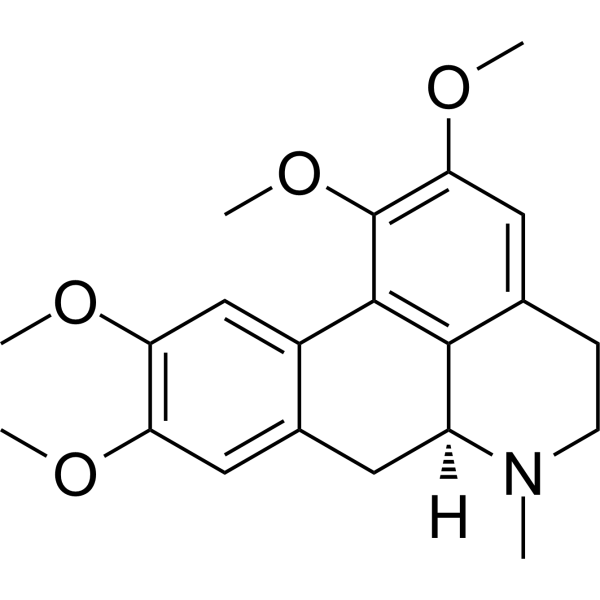
Glaucine (O,O-Dimethylisoboldine) is an alkaloid extracted from Glaucium flavum that possesses various activities, including cough relief, bronchodilation, anti-inflammatory effects, analgesia, antipyretic properties, and anticancer effects. Glaucine acts as a selective and orally active inhibitor of phosphodiesterase 4 (PDE4), with a Ki of 3.4 µM in human bronchial tissues and polymorphonuclear leukocytes. Glaucine induces relaxation of human isolated bronchi by antagonizing calcium channels. Additionally, Glaucine inhibits the activation of NF-κB, leading to a reduction in the expression of the MMP-9 gene, thereby suppressing the migration and invasion of breast cancer cells. Therefore, Glaucine holds potential for research in asthma and breast cancer .
loading...
    loading...
Cat. No.: HY-B1173R
CAS No.: 464-49-3
Synonyms: D-(+)-Camphor (Standard); (1R)-(+)-Camphor (Standard)
(+)-Camphor (Standard) is the analytical standard of (+)-Camphor. This product is intended for research and analytical applications. (+)-Camphor (D-(+)-Camphor; (1R)-(+)-Camphor) is an isomer of Camphor. Camphor is an agonist of monoterpenoid transient receptor potential (TRP) channels (such as TRPV1, TRPV3, TRPM8) and an inhibitor of TRPA1 channels. Camphor's derivatives have multiple biological activities, including antibacterial, antiviral, antioxidant, analgesic and anticancer. Camphor can selectively activate cold-sensitive TRP channels and inhibit TRPA1-mediated nociceptive signals. Camphor stimulates the cold-sensing nerve endings in the skin and regulates the activity of ion channels to exert analgesic, anti-inflammatory and anti-itching effects. It also has anti-proliferative and anti-mutagenic activities on tumor cells, which may be related to inhibiting ribosome function or inducing cell apoptosis. Camphor can be absorbed through the skin and (+)-Camphor can be used in the study of muscle and joint pain and inflammation .
loading...
    loading...
Cat. No.: HY-169921
Target:  

c-Myc Apoptosis

Research Areas:  

Cancer

c-Myc inhibitor 15 (Compound A5) is a selective c-Myc inhibitor that exerts anticancer effects by disrupting the interaction between c-Myc and Max, leading to the degradation of c-Myc protein and the induction of apoptosis. Its IC50 values are 4.08 μM and 7.86 μM in A549 and NCI-H1299 lung cancer cell lines, respectively, demonstrating strong cytotoxic activity. In a syngeneic tumor model, c-Myc inhibitor 15 exhibited outstanding antitumor efficacy, achieving a tumor growth inhibition rate of 76.4% and significantly reducing c-Myc protein expression levels. c-Myc inhibitor 15 holds promise for research related to c-Myc-driven lung cancers .
loading...
    loading...
Cat. No.: HY-170438
CAS No.: 1574321-31-5
Target:  

EGFR

Research Areas:  

Cancer

EGFR-IN-139 (compound PD 18) is an epidermal growth factor receptor (EGFR) inhibitor, with IC50s of 12.88 (wild type), 10.84 (L858R/T790M), 42.68 (L858R/T790M/C797S) nM, respectively. EGFR-IN-139 displays strong anticancer activity against A549 and H1975 cancer cell lines, which are highly expressed EGFR. EGFR-IN-139 has a strong selectivity to cancer cells. EGFR-IN-139 can be used for nonsmall cell lung cancer (NSCLC) research[1].
loading...
    loading...
Cat. No.: HY-173331
Research Areas:  

Cancer

Antitumor agent-201 (Compound 10) is a chloride transport activator that targets the Golgi apparatus. Its EC50 for promoting the transmembrane transport of chloride ions is 1.53 mol%, and its IC50 against HepG2 cells is 7.13 μM. Antitumor agent-201 exerts its anti-cancer activity by selectively acting on the Golgi apparatus, disrupting the chloride ion homeostasis within it, reducing the expression of key proteins such as GM130 and GRASP55, altering the structure and function of the Golgi apparatus, triggering Autophagy of the Golgi apparatus, and further inducing Apoptosis of cancer cells and arresting cancer cells in the G2/M phase. Antitumor agent-201 can be used in the research field of cancer diseases .
loading...
    loading...
Cat. No.: HY-184288
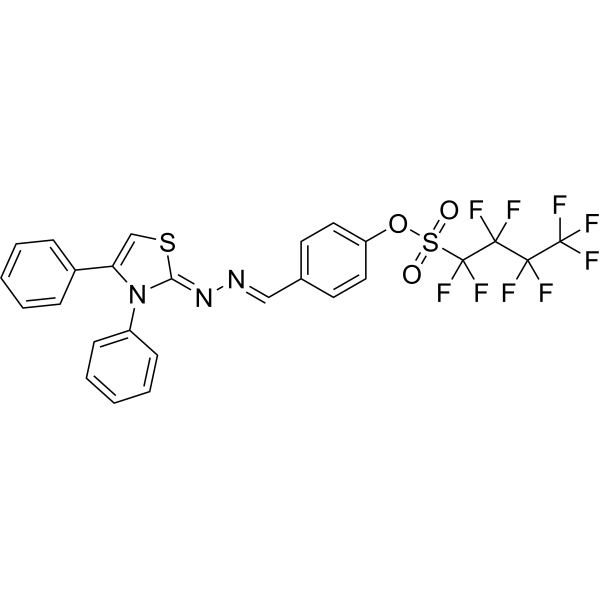
Nrf-2/HMOX-1-IN-1 is a Nrf-2 and HMOX-1 inhibitor, as well as a Ferroptosis inducer. Nrf-2/HMOX-1-IN-1 inhibits GPX activity and upregulates p53 gene expression. Nrf-2/HMOX-1-IN-1 increases intracellular ROS and MDA levels, reduces GSH content, and elevates intracellular iron levels simultaneously. Nrf-2/HMOX-1-IN-1 exerts selective anticancer effects against breast cancer. Nrf-2/HMOX-1-IN-1 can be used in breast cancer-related research .
loading...
    loading...
Cat. No.: HY-N2435R
CAS No.: 36700-45-5
-Shogaol (Standard) is the analytical standard of -Shogaol. This product is intended for research and analytical applications. -Shogaol, a kind of stimulating compound in ginger, has antiplatelet (IC50=5 μM), anti-cancer and anti-inflammatory activity. -Shogaol inhibited COX-2 (IC50=17.5 μM), which led to the decline of human leukemia cells. 8-Shogaol Selective direction TAK1 sum TAK1-TAB1 (IC50=5 μM), suppress IKK, Akt sum MAPK signal pathway, and reverse synovitis synovial sum Air dampness (RA) .
loading...
    loading...
Cat. No.: HY-P11902
Research Areas:  

Cancer

IRS1 is an integrin-targeted, ROS-responsive self-assembling peptide prodrug molecule with selective anti-cancer activity against integrin-overexpressing tumor cells. IRS1 contains an RGD motif for integrin binding, can covalently bind to DR4/DR5, and promotes DR4/DR5 aggregation. After oxidation by ROS, IRS1 undergoes a morphological transition from nanoparticles to nanofibers, exposes the pharmacophore of Chlorambucil (HY-13593), disrupts cell membrane integrity, activates the extrinsic apoptosis pathway, and can penetrate and inhibit the three-dimensional uveal melanoma spheroid model. IRS1 can be used for the research of uveal melanoma .
loading...
    loading...
Cat. No.: HY-114243
CAS No.: 1382469-39-7
Purity:  98.28%
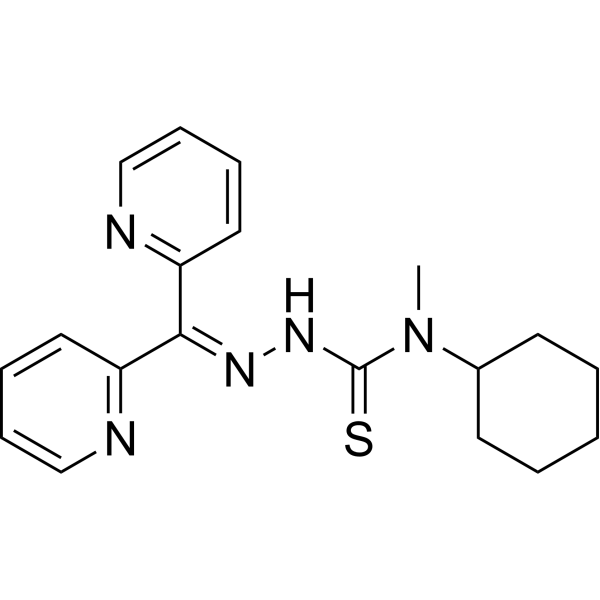
DpC is a selective, orally active iron chelator with anticancer activity. DpC acts on signaling pathway-related targets such as JNK, NF-κB, and its activity is competitively inhibited by another iron chelator Dp44mT (HY-18973). By chelating intracellular iron and copper ions in tumor cells to form redox-active complexes, DpC induces oxidative stress, activates the JNK, NF-κB pathways and downregulates IκBα, upregulates the expressions of neuroglobin and cytoglobin, activates caspase 3/9 to induce tumor cell apoptosis. It also overcomes P-glycoprotein-mediated multidrug resistance through a lysosome-targeting mechanism, and exhibits broad-spectrum synergistic effects when combined with various chemotherapeutic agents. DpC inhibits tumor metastasis and increases TNF-α levels in the tumor microenvironment to enhance endogenous immune responses. DpC is applicable to the research of various malignancies including neuroblastoma, pancreatic cancer, prostate cancer, lung cancer, and breast cancer .
loading...
    loading...
Cat. No.: HY-114243A
CAS No.: 1382469-40-0
DpC hydrochloride is a selective, orally active iron chelator with anticancer activity. DpC hydrochloride acts on signaling pathway-related targets such as JNK, NF-κB, and its activity is competitively inhibited by another iron chelator Dp44mT (HY-18973). By chelating intracellular iron and copper ions in tumor cells to form redox-active complexes, DpC hydrochloride induces oxidative stress, activates the JNK, NF-κB pathways and downregulates IκBα, upregulates the expressions of neuroglobin and cytoglobin, activates caspase 3/9 to induce tumor cell apoptosis. It also overcomes P-glycoprotein-mediated multidrug resistance through a lysosome-targeting mechanism, and exhibits broad-spectrum synergistic effects when combined with various chemotherapeutic agents. DpC hydrochloride inhibits tumor metastasis and increases TNF-α levels in the tumor microenvironment to enhance endogenous immune responses. DpC hydrochloride is applicable to the research of various malignancies including neuroblastoma, pancreatic cancer, prostate cancer, lung cancer, and breast cancer .
loading...
    loading...
Cat. No.: HY-149824
CAS No.: 2955607-40-4
Purity:  99.66%
Target:  

EGFR Apoptosis

Research Areas:  

Cancer

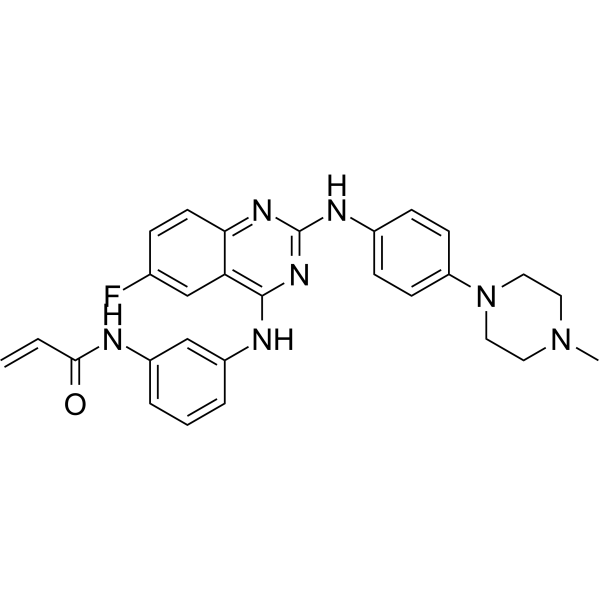
EGFR T790M/L858R-IN-2 is a potent and selective EGFRT790M/L858R inhibitor with IC50 values of 3.5, 1290 nM for EGFRT790M/L858R, EGFR WT, respectively. EGFR T790M/L858R-IN-2 decreases the expression of p-EGFR, P-AKT, P-ERK1/2. EGFR T790M/L858R-IN-2 induces Apoptosis and cell cycle arrest in the G1 phase. EGFR T790M/L858R-IN-2 shows anti-cancer activity .
loading...
    loading...
Cat. No.: HY-P11298
CAS No.: 2120397-85-3
d-T101 peptide, a human hormone-peptide, is a T1/ST2 receptor ligand. d-T101 peptide binds to the T1/ST2 receptor and activates caspases 8, 9 and 3 mediated apoptosis, together with activation of JNKinase and p38 MAPKinase. d-T101 peptide also changes Golgi structural with function loss and downregulation of the endoplasmic reticulum (ER) stress repair mechanism. d-T101 peptide has immunostimulatory and anticancer activity, selectively induces apoptosis in proliferating cancer cells and increases IL-2 and IFN-γ expression as well as the recruitment of NK cells and M1 macrophages to the tumor site .
loading...
    loading...
Cat. No.: HY-P12127
CAS No.: 233273-63-7
Synonyms: BF2-B
Buforin IIb (BF2-B) is an anticancer peptide, as well as an Antibacterial and Antifungal agent. Buforin IIb is derived from histone H2A. Buforin IIb activates SAPK/JNK and p38 MAPK. Buforin IIb induces mitochondria-dependent Apoptosis . Buforin IIb achieves selective targeting by interacting with gangliosides on the surface of cancer cells, and can penetrate cancer cell membranes without causing damage. Buforin IIb exhibits antibacterial activity against Gram-negative bacteria, Gram-positive bacteria and fungi. Buforin IIb can be used in the research of cervical cancer, as well as cancers including leukemia, central nervous system cancer, ovarian cancer, breast cancer, melanoma, colon cancer, non-small cell lung cancer, renal cancer and prostate cancer .
loading...
    loading...