

432 Results for "

Advanced

" in MedChemExpress (MCE) Product Catalog:
Products (432)

432 Results for "Advanced" in MCE Product Catalog:

Cat. No.: HY-15163A
CAS No.: 1354567-82-0
Target:  

FLT3 JAK CDK

Research Areas:  

Cancer

Zotiraciclib hydrochloride is a novel small molecule multi-target enzyme inhibitor with activity in inhibiting tumor growth. Zotiraciclib hydrochloride exerts its anti-tumor effect by reducing the level of Myc through inhibiting cyclin-dependent kinase 9 (CDK9). Zotiraciclib hydrochloride may be useful for inhibiting cancers that cross the blood-brain barrier. The high protein level of MCL-1 of Zotiraciclib hydrochloride is associated with survival, suggesting that it may serve as a prognostic factor and inhibitory target in further studies .
loading...
    loading...
Cat. No.: HY-B0926B
CAS No.: 131-49-7
Synonyms: N-Methyl-D-glucamine diatrizoate
Diatrizoate meglumine (N-Methyl-D-glucamine diatrizoate) is an orally active, water-soluble, poorly absorbable iodinated contrast agent. Diatrizoate meglumine is widely used as an adjuvant for radiological diagnosis and can also be applied to studies of small bowel obstruction in non-malignant conditions .
loading...
    loading...
Cat. No.: HY-D3071
CAS No.: 1510814-96-6
Target:  

Fluorescent Dye

Research Areas:  

Inflammation/Immunology

LW-1 is a fluorescent probe targeting polarity detection of lipid droplets (LD). LW-1 produces a strong solvatochromic effect via the intramolecular charge transfer (ICT) mechanism: as environmental polarity increases, the emission wavelength red-shifts and the fluorescence intensity decreases significantly (emission at 557 nm in toluene and 642 nm in acetonitrile, with an 85 nm red-shift); fluorescence enhances in low-polarity lipid droplets. LW-1 can be used for lipid droplet polarity detection, differentiation between cancer cells and normal cells, monitoring of lipid droplet polarity changes under different physiological conditions such as starvation, oleic acid treatment and oxidative stress, as well as ex vivo imaging of polarity changes in lung tissues of asthmatic mice. The detection wavelength for cell imaging with LW-1 is Ex/Em = 405/500-550 nm (green channel) .
loading...
    loading...
Cat. No.: HY-107133
CAS No.: 1247847-78-4
Research Areas:  

Cancer

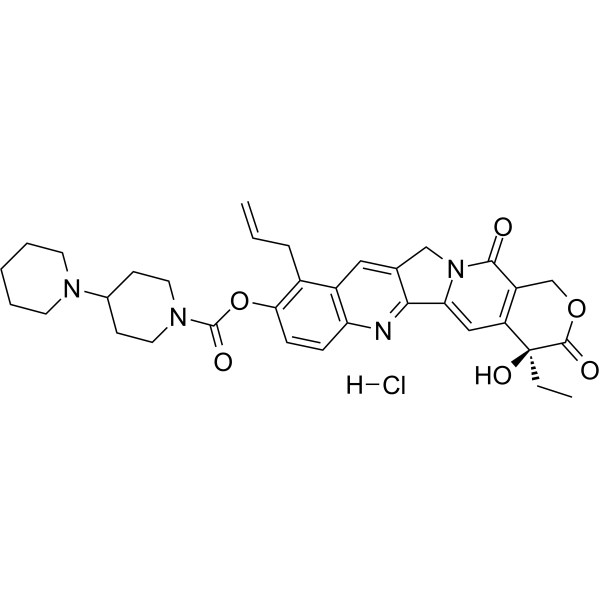
Simmitecan hydrochloride is a potent topoisomerase I (TOP1) inhibitor, which is a 9-substituted lipophilic camptothecin (Camptothecin (HY-16560)) derivative. Simmitecan hydrochloride blocks DNA replication and transcription, thereby inducing tumor cell apoptosis by inhibiting the activity of TOP1. Simmitecan hydrochloride can be used for research on cancers such as liver cancer .
loading...
    loading...
Cat. No.: HY-107133A
CAS No.: 951290-31-6
Research Areas:  

Cancer

Simmitecan is a potent topoisomerase I (TOP1) inhibitor, which is a 9-substituted lipophilic camptothecin (Camptothecin (HY-16560)) derivative. Simmitecan blocks DNA replication and transcription, thereby inducing tumor cell apoptosis by inhibiting the activity of TOP1. Simmitecan can be used in the research of cancers such as liver cancer .
loading...
    loading...
Cat. No.: HY-161612
CAS No.: 149092-45-5
Mycosporine 2 glycine is an anti-inflammatory agent and TYRP1 inhibitor. Mycosporine 2 glycine inhibits the expression of inflammatory genes and reduces nitric oxide production. Mycosporine 2 glycine binds tightly to the active pocket of TYRP1 and inhibits the activity of melanogenesis-related enzymes. Mycosporine 2 glycine can be used in the research of hyperpigmentation and inflammation-related diseases .
loading...
    loading...
Cat. No.: HY-P0109
CAS No.: 105637-38-5
Target:  

Cathepsin

Research Areas:  

Others

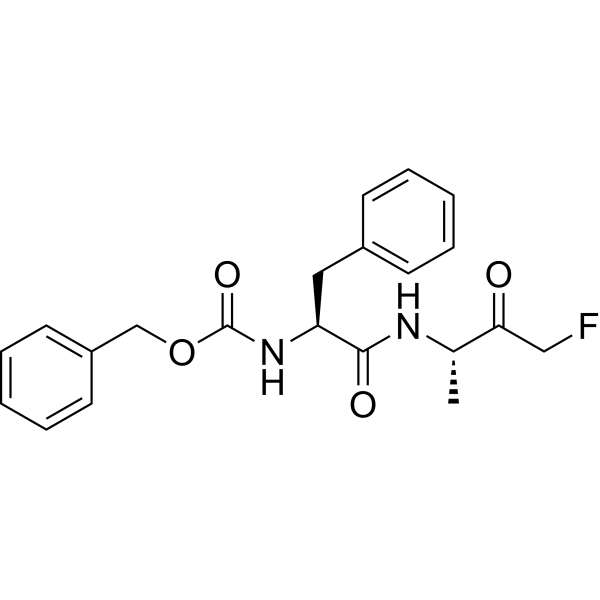
(S,S)-Z-FA-FMK is a cell-permeable, irreversible cathepsin B inhibitor. (S,S)-Z-FA-FMK blocks LPS-induced production of IL-1α and IL-1β. (S,S)-Z-FA-FMK can be used as a negative control for caspase-1 and caspase-2 inhibitors because it lacks an aspartic acid residue at the P1 position .
loading...
    loading...
Cat. No.: HY-P992460

Target:  

Tim3

Research Areas:  

Cancer

SHR-1702 is a monoclonal antibody targeting TIM-3, which specifically binds to and blocks the TIM-3 signaling pathway. SHR-1702 restores the function of immune cells and inhibits the proliferation process of malignant cells. SHR-1702 is mainly used in relevant research on acute myeloid leukemia and myelodysplastic syndromes .
loading...
    loading...
Cat. No.: HY-101126A
CAS No.: 1418143-09-5
Synonyms: TP-3654 hydrochloride
Research Areas:  

Cancer

Nuvisertib hydrochloride (TP-3654 hydrochloride) is an orally active second-generation pan-PIM kinase inhibitor with Ki values of 5 nM, 239 nM, and 42 nM against PIM-1, PIM-2, and PIM-3, respectively. Nuvisertib hydrochloride inhibits JAK-independent inflammatory and survival signaling pathways, reduces the production of proinflammatory cytokines, restores apoptotic sensitivity, inhibits mTORC1, MYC, and TGF-β signaling pathways, and decreases the expression of fibrosis markers. Nuvisertib hydrochloride selectively impairs the transport function of ABCG2, resensitizes multidrug-resistant cancer cells to cytotoxic drugs, and overcomes JAK2 inhibitor resistance. Nuvisertib hydrochloride can be used in research related to myelofibrosis, renal cell carcinoma, multidrug-resistant cancer, advanced solid tumors, urothelial carcinoma, and prostate adenocarcinoma .
loading...
    loading...
Cat. No.: HY-107207R
CAS No.: 32602-81-6
Synonyms: Kaempferol 3-O-neohesperidoside (Standard)
Kaempferol 3-neohesperidoside (Kaempferol 3-O-neohesperidoside) Standard is the analytical standard of Kaempferol 3-neohesperidoside (HY-107207). This product is intended for research and analytical applications. Kaempferol 3-neohesperidoside (Kaempferol 3-O-neohesperidoside) is a flavonoid. Kaempferol 3-neohesperidoside mimics insulin action via the PI3K/PKC pathway, significantly promoting glucose uptake and increasing muscle glycogen content in rat soleus muscles. Kaempferol 3-neohesperidoside also exhibits anti-glycation activity. Kaempferol 3-neohesperidoside binds to albumin through hydrogen bonding and hydrophobic interactions, and inhibits the formation of advanced glycation end products. Kaempferol 3-neohesperidoside can be used in studies of diabetes and its related complications .
loading...
    loading...
Cat. No.: HY-400902
CAS No.: 2506273-81-8
Target:  

YAP VEGFR Hippo (MST)

Research Areas:  

Cancer

VT3989 is an orally active pan-TEAD autopalmitoylation inhibitor that modulates the Hippo signaling pathway. VT3989 directly binds to TEAD transcription factors to block their palmitoylation modification, thereby disrupting the formation of YAP/TAZ-TEAD complexes and inhibiting downstream oncogenic transcriptional activity. VT3989 effectively inhibits the growth of NF2-deficient schwannoma and meningioma cells and reverses the Schwann cell phenotype. In addition, VT3989 exerts a synergistic effect when combined with Osimtinib (HY-15772) in EGFR-mutant non-small cell lung cancer models, significantly delaying tumor recurrence and prolonging survival. VT3989 can be used for the research of epithelioid hemangioendothelioma, malignant pleural mesothelioma, type 2 neurofibromatosis and related advanced solid tumors .
loading...
    loading...
Cat. No.: HY-P990033
CAS No.: 2543693-10-1
Synonyms: CC-95251; BMS-986351

Target:  

CD47

Research Areas:  

Cancer

Anzurstobart (CC-95251; BMS-986351) is a CD47/SIRPα inhibitor with human SIRPα Kd of 0.0541 nM and human SIRPα IC50 of 100 nM. Anzurstobart binds SIRPα at a CD47-overlapping site, blocks CD47-SIRPα interactions, inhibits CD47-SIRPα axis signaling, and binds across 6 prevalent human SIRPα haplotypes. Anzurstobart binds SIRPγ and inhibits CD47-SIRPγ interactions. Anzurstobart can be used for the research of non-Hodgkin's lymphoma, colorectal cancer, squamous cell carcinoma of the head and neck, diffuse large B-cell lymphoma, and advanced solid and hematologic malignancies .
loading...
    loading...
Cat. No.: HY-P991097
Synonyms: PM-8002; BNT-327

Target:  

VEGFR PD-1/PD-L1

Research Areas:  

Cancer

Pumitamig (PM-8002, BNT-327) is a bispecific antibody targeting PD-L1 and VEGF-A, with immune activation and anti-angiogenic activities. By binding to PD-L1, Pumitamig restores the function of effector T cells, while neutralizing VEGF-A in the tumor microenvironment to reverse its inhibition on the infiltration and activation of immune cells and normalize tumor blood vessels. Pumitamig can also be combined with various ADCs targeting TROP2, B7H3, HER2, HER3 for the research of advanced/metastatic solid tumors, including non-small cell lung cancer, ovarian cancer, triple-negative breast cancer, cervical cancer, etc. Pumitamig also exhibits potential efficacy in "cold" tumors with low PD-L1 expression that are insensitive to immunotherapy .
loading...
    loading...
Cat. No.: HY-P992524
Target:  

CD3

Research Areas:  

Cancer

PF-07260437 is a bispecific monoclonal antibody targeting B7-H4 and CD3, with Kd values of 63.5 nM and 66.75 nM against human and cynomolgus monkey CD3, respectively. PF-07260437 simultaneously binds B7-H4 on tumor cells and the CD3ε subunit in the T cell receptor complex, forming a tumor cell-bispecific antibody-T cell trimer. This process establishes an immune synapse and initiates non-MHC-dependent T cell activation, proliferation, and release of cytotoxic molecules such as granzyme B to kill tumor cells. PF-07260437 can be used in research related to advanced or metastatic breast cancer, ovarian cancer, and endometrial cancer .
loading...
    loading...
Cat. No.: HY-P99781
CAS No.: 1610761-46-0
Synonyms: MLN-1202

Target:  

CCR

Research Areas:  

Inflammation/Immunology Cancer

Plozalizumab (MLN-1202) is a humanized anti-CCR2 IgG1 monoclonal antibody. Plozalizumab blocks the recruitment of myeloid cells to the tumor microenvironment by inhibiting the CCL2/CCR2 axis. In addition, Plozalizumab also ameliorates synovial inflammation in rheumatoid arthritis. Plozalizumab can be used in the research of malignant melanoma and bone metastasis-related cancers. Recommended isotype control: Human IgG1 kappa, Isotype Control (HY-P99001) .
loading...
    loading...
Cat. No.: HY-15334
CAS No.: 402857-39-0
Target:  

VEGFR

Research Areas:  

Cancer

CEP-5214, derived from a new indenopyrrolocarbazole template, is a potent inhibitor of vascular endothelial growth factor R2 (VEGF-R2) tyrosine kinase. Structurally, it features optimal substitutions at positions 9 (ethoxymethyl) and 12 (hydroxypropyl) on the indeno[2,1-a]pyrrolo[3,4-c]carbazole-5-one scaffold, leading to high potency against VEGF-R2 (IC50 8 nM). Compound 21 (CEP-5214) exhibits low-nanomolar inhibition of human VEGF-R tyrosine kinases (IC50 4 nM for VEGF-R2/KDR), with good selectivity over other kinases. The compound demonstrated significant cellular and in vivo antitumor activity across various models and advanced into phase I clinical trials as a water-soluble prodrug (CEP-7055) to enhance oral bioavailability .
loading...
    loading...
Cat. No.: HY-177434
CAS No.: 2873366-83-5
Synonyms: Precem-TcT; M 9140
Precemtabart tocentecan (Precem-TcT; M 9140) is an anti-CEACAM5 (carcinoembryonic antigen-related cell adhesion molecule 5) antibody-drug conjugate (ADC). Precemtabart tocentecan consists of a tumor-specific anti-CEACAM5 monoclonal antibody Precemtabart (HY-P990940), a highly hydrophilic and stable cleavable β-glucuronide linker, and a topoisomerase 1 inhibitor payload Exatecan (HY-13631), and the drug-linker conjugate for ADC is Mal-Gly-PAB-Exatecan-D-glucuronic acid (HY-153179). Precemtabart tocentecan inhibits the growth of CEACAM5-positive cancer cells. Precemtabart tocentecan exhibits significant antitumor activity in CEACAM5-expressing xenograft models. Precemtabart tocentecan can be used for the study of CEACAM5-expressing advanced solid tumors, especially mCRC .
loading...
    loading...
Cat. No.: HY-P990957
CAS No.: 2764727-44-6
Synonyms: BCA-101; FMAB2

Target:  

EGFR TGF-beta/Smad

Research Areas:  

Inflammation/Immunology Cancer

Ficerafusp alfa (BCA-101) is a bispecific antibody targeting EGFR and TGFβ, with a Kd of 2.58 nM against EGFR and a Kd of 61.3 nM against TGFβ1. Ficerafusp alfa binds to EGFR, inhibits EGFR phosphorylation, blocks EGF-dependent cell proliferation, and mediates antibody-dependent cellular cytotoxicity against EGFR-positive tumor cells. Ficerafusp alfa sequesters TGFβ via its TGFβRII ECD domain, neutralizes the activity of TGFβ and TGFβ1, and blocks TGFβ-dependent processes, including epithelial-mesenchymal transition, cell invasion, and differentiation of inducible regulatory T cells. Ficerafusp alfa is applicable to research related to head and neck squamous cell carcinoma, advanced solid tumors, squamous non-small cell lung cancer, anal squamous cell carcinoma, colorectal cancer, and pancreatic cancer .
loading...
    loading...
Cat. No.: HY-122967
CAS No.: 142115-17-1
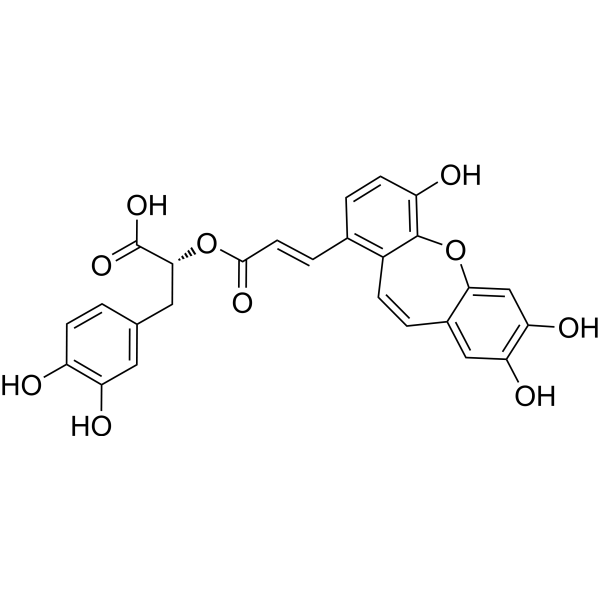
Isosalvianolic acid C is a naturally derived phenolic compound that acts as a signal modulator, antioxidant, and enzyme inhibitor. Isosalvianolic acid C induces the phosphorylation of PLC-γ, IP3R, PKC, and P38, triggering Ca 2+ mobilization, degranulation, and chemokine release. Isosalvianolic acid C activates MRGPRX2 and its murine homolog MrgprB2, leading to pseudo-allergic reactions in vivo. Isosalvianolic acid C inhibits Cu 2+-induced LDL peroxidation. Isosalvianolic acid C can be used in studies related to pseudo-allergy, diabetes, and atherosclerosis .
loading...
    loading...
Cat. No.: HY-13995
CAS No.: 52757-95-6
Target:  

FXR

Research Areas:  

Metabolic Disease Endocrinology

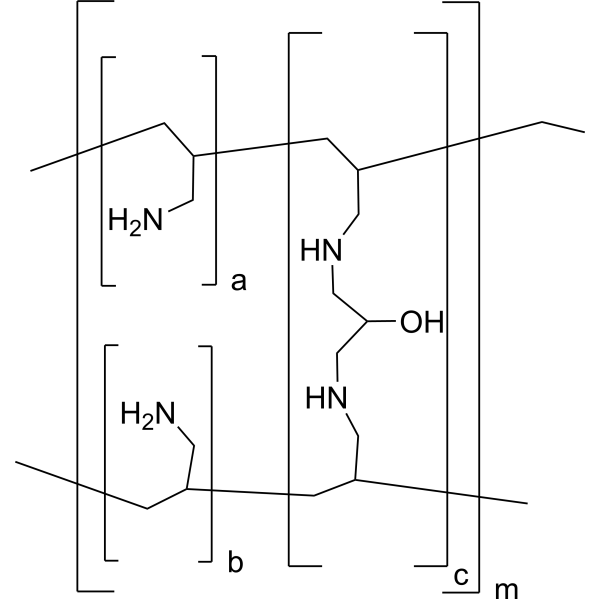
Sevelamer is an orally active polymeric phosphate binder and bile acid sequestrant. Sevelamer binds dietary phosphate in the gastrointestinal tract, reducing phosphate absorption and serum phosphorus levels, and reduces urinary phosphate excretion. Sevelamer binds polyanion bile acids, increases bile acid faecal excretion, and reduces total cholesterol and LDL cholesterol levels. Sevelamer can be used for the research of hyperphosphataemia, hyperparathyroidism, chronic renal failure, kidney disease, and type 2 diabetes .
loading...
    loading...

