66 Results for "

CSCs

" in MedChemExpress (MCE) Product Catalog:
Products (66)

66 Results for "CSCs" in MCE Product Catalog:

Cat. No.: HY-B0965AR
CAS No.: 50-52-2
Thioridazine (Standard) is the analytical standard of Thioridazine. This product is intended for research and analytical applications. Thioridazine, an antagonist of the dopamine receptor D2 family proteins, exhibits potent anti-psychotic and anti-anxiety activities. Thioridazine is also a potent inhibitor of PI3K-Akt-mTOR signaling pathways with anti-angiogenic effect. Thioridazine shows antiproliferative and apoptosis induction effects in various types of cancer cells, with specificity on targeting cancer stem cells (CSCs) .
loading...
    loading...
Cat. No.: HY-164480
CAS No.: 1588866-45-8
Target:  

IKK NF-κB

Research Areas:  

Inflammation/Immunology Cancer

GTCpFE inhibits IKKα/β in the NF-κB pathway with anti-inflammatory activities and blocks p65 nuclear entry, which consists of Dimethyl fumarate (DMF) (HY-17363) linked to Aspirin (ASA) (HY-14654). GTCpFE exhibits selective anti-cancer stem-like cell (CSC) activity by reducing mammosphere growth and the CD44 + CD24 - immunophenotype. GTCpFE inhibits breast cancer stem cells, an important NFκB- and PGE2-dependent phenotype in aggressive cancers .
loading...
    loading...
Cat. No.: HY-161072
CAS No.: 354559-44-7
Research Areas:  

Inflammation/Immunology

CSC-6 is a NLRP3 inhibitor. CSC-6 can significantly inhibit IL-1β secreted by PMATHP-1 cells with an IC50 value of 2.3 μM. CSC-6 specifically binds NLRP3 and inhibits NLRP3 activation by blocking ASC oligomerization during NLRP3 assembly. CSC-6 effectively reduces the symptoms of NLRP3 overactivation-mediated sepsis and gout in mouse models .
loading...
    loading...
Cat. No.: HY-152225
CAS No.: 1776116-75-6
Target:  

HDAC Apoptosis

Research Areas:  

Cancer

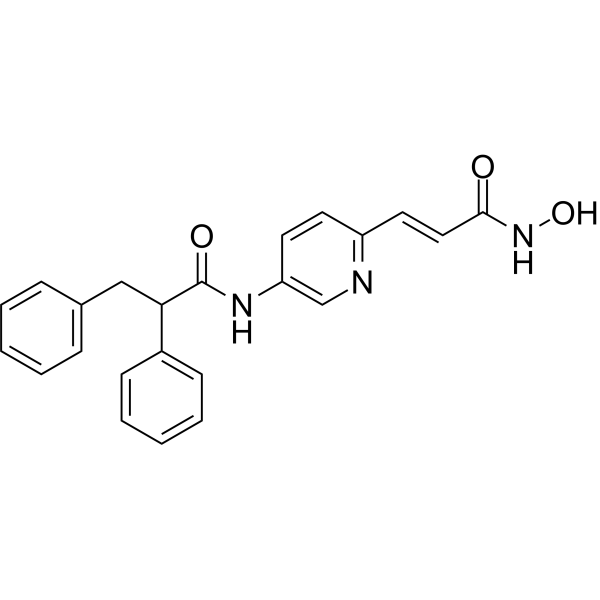
MC2625 is a potent pyridine-containing histone deacetylase (HDAC) inhibitor. MC2625 show selective HDAC3 and HDAC6 inhibition with IC50s of 80 nM and 11 nM. MC2625 increases acetyl-H3 and acetyl-tubulin levels and inhibits cancer stem cells (CSCs) growth by apoptosis induction .
loading...
    loading...
Cat. No.: HY-132883
CAS No.: 2820447-02-5
Target:  

EGFR

Research Areas:  

Cancer

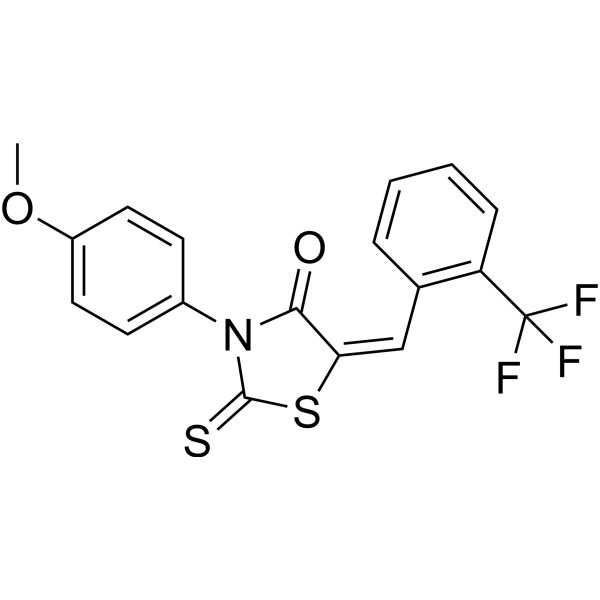
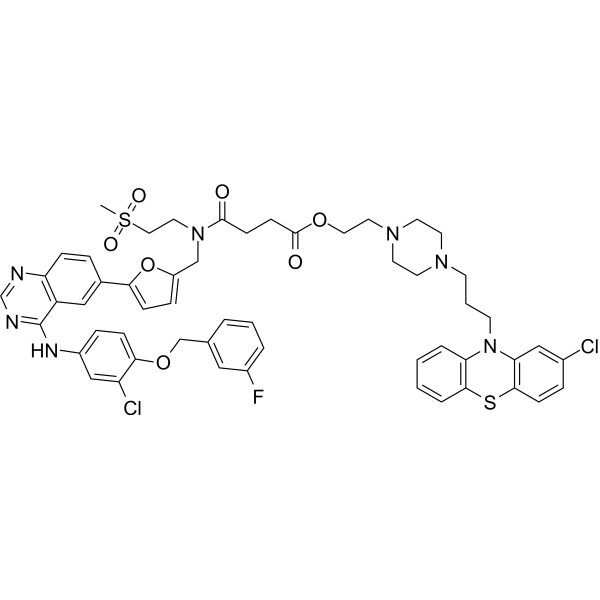
EGFR/CSC-IN-1 is a potential EGFR (IC50 10.52 nM) and cancer stem cell (CSC) dual inhibitor for triple-negative breast cancer research.
loading...
    loading...
Cat. No.: HY-163279
CAS No.: 885902-66-9
Target:  

Glycosidase

Research Areas:  

Others

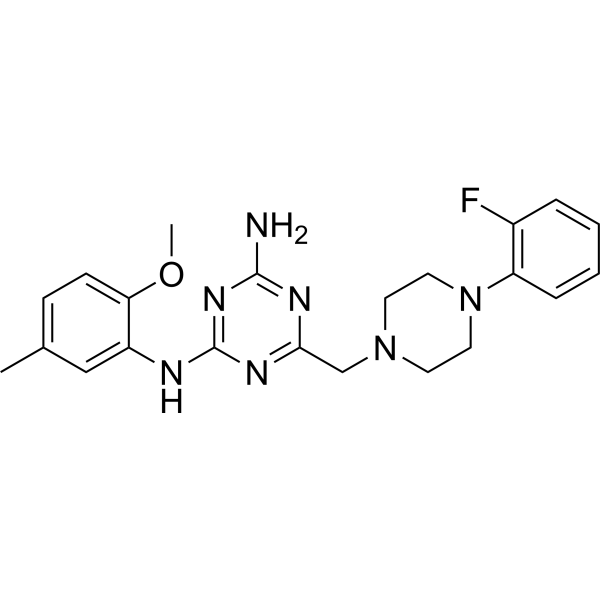
Fluopipamine is an antagonist for Cellulose Synthase 1 (CESA1) with an IC50 of 0.78 μM. Fluopipamine leads a decrease in glucose uptake into cellulose and hyperaccumulation of CESAs at the PM in etiolated Arabidopsis seedlings .
loading...
    loading...
Cat. No.: HY-129694
CAS No.: 51257-84-2
Synonyms: Ro 21-6150; Antibiotic A-130-A
Lenoremycin (Ro 21-6150) is a microbial metabolite. Lenoremycin decreases β-catenin and cyclin D1 proteins levels. Lenoremycin decreases cancer stem cells (CSCs) populations via inducing reactive oxygen species production .
loading...
    loading...
Cat. No.: HY-143491
CAS No.: 2471865-38-8
Research Areas:  

Cancer

VS 8 (Compound VS 8) is a potent, orally active VEGFR-2 inhibitor with significant anti-angiogenic effects. VS 8 induces cancer cell apoptosis and migration. VS 8 is active against CSCs (Cancer stem cells) .
loading...
    loading...
Cat. No.: HY-N9790
CAS No.: 79907-44-1
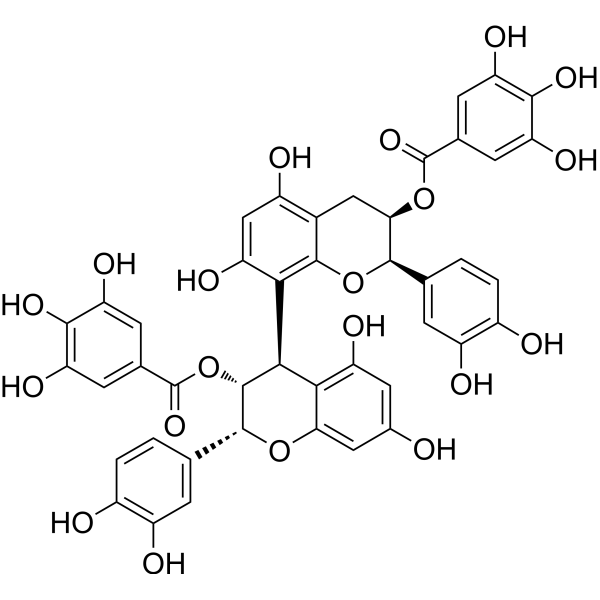
Procyanidin B2, 3,3'-di-O-gallate is an active constituent. Procyanidin B2, 3,3'-di-O-gallate can be isolated from grape seed extract (GSE) procyanidin mix. Procyanidin B2, 3,3' -di-o-gallate target cancer stem cells (CSCs) in prostate cancer (PCa). Procyanidin B2, 3,3'-di-O-gallate targets both unsorted and sorted CSCs at lower doses. Procyanidin B2, 3,3'-di-O-gallate strongly suppresses the constitutive as well as Jagged1 (Notch1 ligand)-induced activated Notch1 pathway .
loading...
    loading...
Cat. No.: HY-119666
CAS No.: 83644-00-2
Rooperol is a norlignan analog with antitumor, anti-inflammatory, and antioxidant activities. Rooperol induces apoptosis in CSCs through a mitochondrial-induced increase in ROS and a p53-dependent pathway, while also downregulating the expression of key stem cell regulatory factors, such as Oct4, Nanog, and Sox2, ultimately exerting its anticancer effects .
loading...
    loading...
Cat. No.: HY-B0520AS1
CAS No.: 202529-16-6
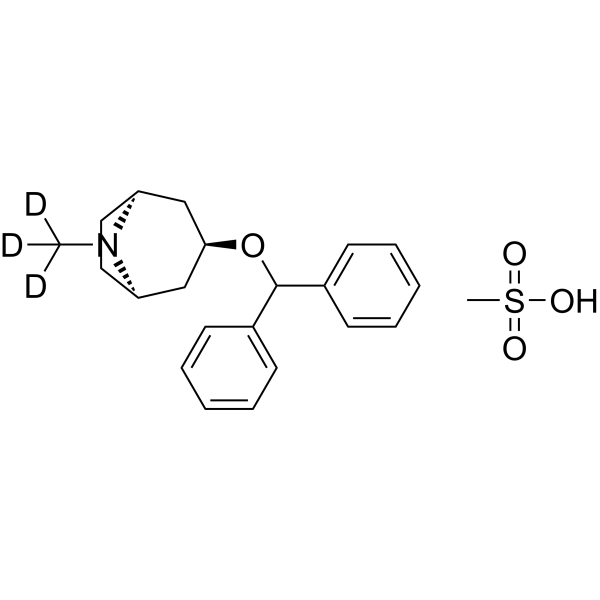
Benztropine-d3 (mesylate) is the deuterium labeled Benztropine mesylate . Benztropine mesylate (Benzatropine mesylate) is an orally active centrally acting anticholinergic agent that can be used for Parkinson's disease research. Benztropine mesylate is an anti-histamine agent and a dopamine re-uptake inhibitor. Benztropine mesylate is also a human D2 dopamine receptor allosteric antagonist. Benztropine mesylate also has anti-CSCs (cancer stem cells) effects .
loading...
    loading...
Cat. No.: HY-B0520AR
CAS No.: 132-17-2
Synonyms: Benzatropine mesylate (Standard); Benzotropine mesylate (Standard); Benztropine methanesulfonate (Standard)
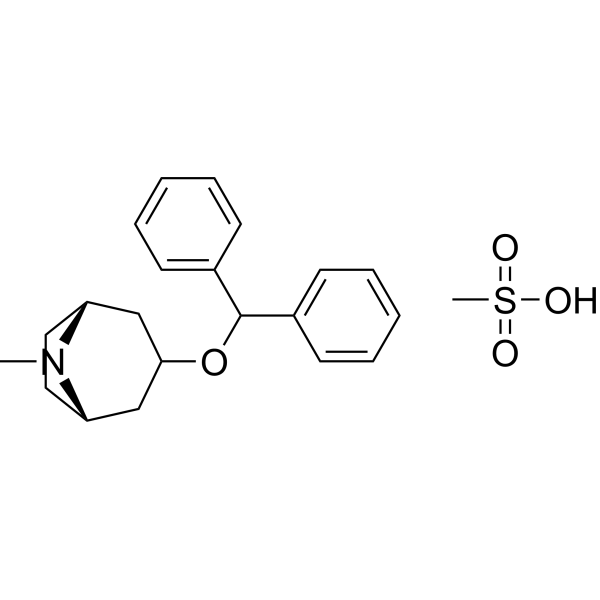
Benztropine (mesylate) (Standard) is the analytical standard of Benztropine (mesylate). This product is intended for research and analytical applications. Benztropine mesylate (Benzatropine mesylate) is an orally active centrally acting anticholinergic agent that can be used for Parkinson's disease research. Benztropine mesylate is an anti-histamine agent and a dopamine re-uptake inhibitor. Benztropine mesylate is also a human D2 dopamine receptor allosteric antagonist. Benztropine mesylate also has anti-CSCs (cancer stem cells) effects .
loading...
    loading...
Cat. No.: HY-16397AS
Synonyms: Phenethylbiguanide-d5 hydrochloride
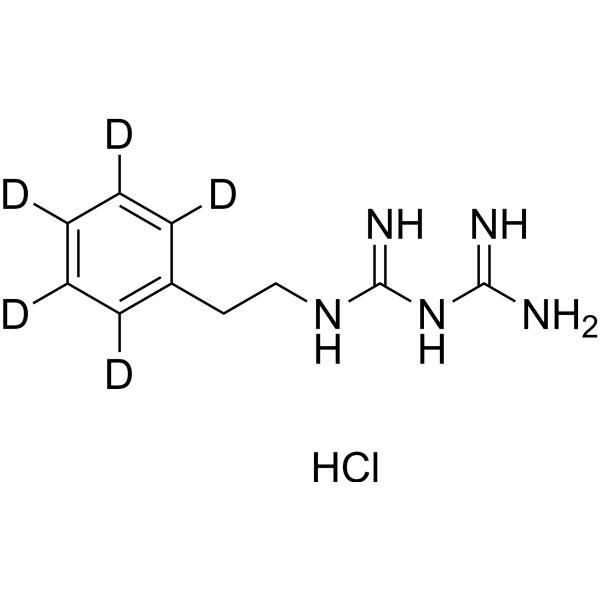
Phenformin-d5 (Phenethylbiguanide-d5) hydrochloride is the deuterium labeled Phenformin hydrochloride. Phenformin hydrochloride is an orally active biguanide hypoglycemic agent. Phenformin hydrochloride inhibits mitochondrial respiratory chain complex I, leading to an increased AMP/ATP ratio, activation of AMPK, and subsequent inhibition of the mTOR pathway, thereby suppressing cell proliferation, inducing apoptosis and autophagy. Phenformin hydrochloride inhibits cancer stem cells (CSCs) and possesses potent antitumor potential.
loading...
    loading...
Cat. No.: HY-B0520AS
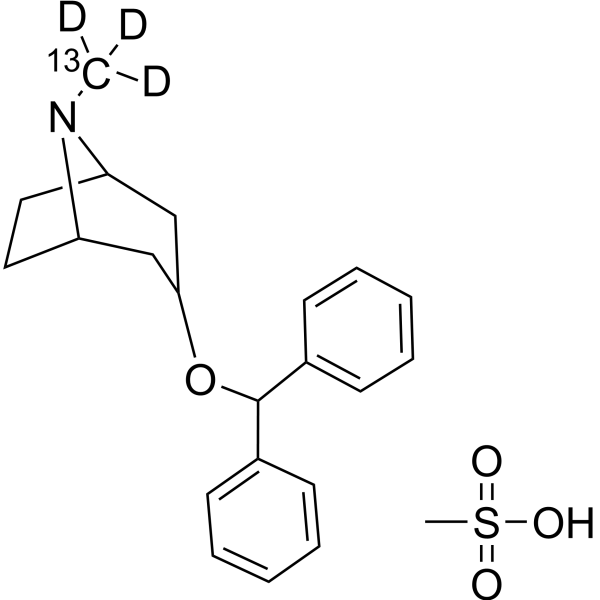
Benztropine- 13C,d3 (mesylate) is the 13C- and deuterium labeled Benztropine (mesylate). Benztropine mesylate (Benzatropine mesylate) is an orally active centrally acting anticholinergic agent that can be used for Parkinson's disease research. Benztropine mesylate is an anti-histamine agent and a dopamine re-uptake inhibitor. Benztropine mesylate is also a human D2 dopamine receptor allosteric antagonist. Benztropine mesylate also has anti-CSCs (cancer stem cells) effects .
loading...
    loading...
Cat. No.: HY-16397AR
CAS No.: 834-28-6
Synonyms: Phenethylbiguanide hydrochloride (Standard)
Phenformin (Phenethylbiguanide) hydrochloride (Standard) is the analytical standard of Phenformin hydrochloride (HY-16397). This product is intended for research and analytical applications. Phenformin hydrochloride (Phenethylbiguanide) is an orally active biguanide hypoglycemic agent. Phenformin hydrochloride inhibits mitochondrial respiratory chain complex I, leading to an increased AMP/ATP ratio, activation of AMPK, and subsequent inhibition of the mTOR pathway, thereby suppressing cell proliferation, inducing apoptosis and autophagy. Phenformin hydrochloride inhibits cancer stem cells (CSCs) and possesses potent antitumor potential.
loading...
    loading...
Cat. No.: HY-16397R
CAS No.: 114-86-3
Synonyms: Phenethylbiguanide (Standard)
Phenformin (Phenethylbiguanide) (Standard) is the analytical standard of Phenformin (HY-16397). This product is intended for research and analytical applications. Phenformin (Phenethylbiguanide) is an orally active biguanide hypoglycemic agent. Phenformin inhibits mitochondrial respiratory chain complex I, leading to an increased AMP/ATP ratio, activation of AMPK, and subsequent inhibition of the mTOR pathway, thereby suppressing cell proliferation, inducing apoptosis and autophagy. Phenformin inhibits cancer stem cells (CSCs) and possesses potent antitumor potential.
loading...
    loading...
Cat. No.: HY-B1690AR
CAS No.: 1229-35-2
Thioridazine (Standard) is the analytical standard of Thioridazine. This product is intended for research and analytical applications. Thioridazine, an antagonist of the dopamine receptor D2 family proteins, exhibits potent anti-psychotic and anti-anxiety activities. Thioridazine is also a potent inhibitor of PI3K-Akt-mTOR signaling pathways with anti-angiogenic effect. Thioridazine shows antiproliferative and apoptosis induction effects in various types of cancer cells, with specificity on targeting cancer stem cells (CSCs) .
loading...
    loading...
Cat. No.: HY-B0965R
CAS No.: 130-61-0
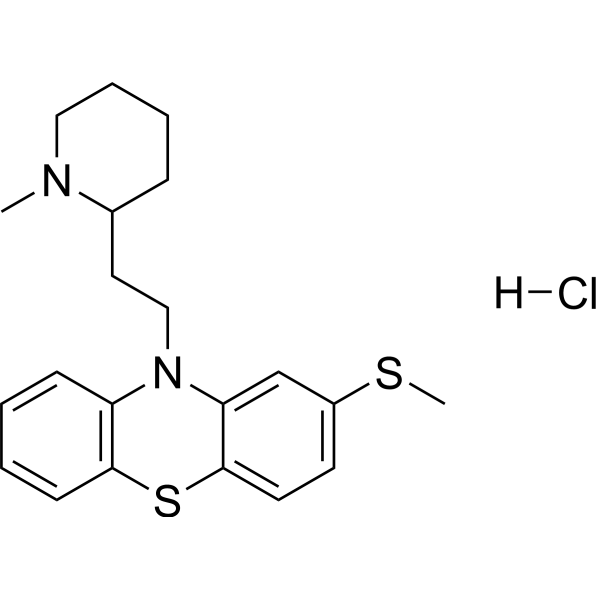
Thioridazine (hydrochloride) (Standard) is the analytical standard of Thioridazine (hydrochloride). This product is intended for research and analytical applications. Thioridazine hydrochloride, an orally active antagonist of the dopamine receptor D2 family proteins, exhibits potent anti-psychotic and anti-anxiety activities. Thioridazine hydrochloride is also a potent inhibitor of PI3K-Akt-mTOR signaling pathways with anti-angiogenic effect. Thioridazine hydrochloride shows antiproliferative and apoptosis induction effects in various types of cancer cells, with specificity on targeting cancer stem cells (CSCs) .
loading...
    loading...
Cat. No.: HY-B0965S
CAS No.: 1329652-09-6
Thioridazine-d3 2-Sulfone is the deuterium labeled Thioridazine hydrochloride. Thioridazine hydrochloride, an orally active antagonist of the dopamine receptor D2 family proteins, exhibits potent anti-psychotic and anti-anxiety activities. Thioridazine hydrochloride is also a potent inhibitor of PI3K-Akt-mTOR signaling pathways with anti-angiogenic effect. Thioridazine hydrochloride shows antiproliferative and apoptosis induction effects in various types of cancer cells, with specificity on targeting cancer stem cells (CSCs) .
loading...
    loading...
Cat. No.: HY-103164A
CAS No.: 148589-13-3
Synonyms: CSC
Target:  

Endogenous Metabolite

Research Areas:  

Neurological Disease

8-(3-Chlorostyryl)caffeine (CSC) is an adenosine antagonist with selective activity at the A2a adenosine receptor. 8-(3-Chlorostyryl)caffeine showed 520-fold selectivity in radioligand binding experiments in rat brain. Antagonism of adenylylase by 8-(3-Chlorostyryl)caffeine shows 22-fold selectivity in rat chromaffin cells When 8-(3-Chlorostyryl)caffeine is co-administered with the A1-selective antagonist CPX, It can also further increase exercise activity. 8-(3-Chlorostyryl)caffeine exhibits good MAO-B inhibitory activity in primate mitochondria. 8-(3-Chlorostyryl)caffeine also has excellent A2A receptor affinity .
loading...
    loading...

