

131 Results for "

FAS

" in MedChemExpress (MCE) Product Catalog:
Products (131)

131 Results for "FAS" in MCE Product Catalog:

Cat. No.: HY-P99133

Target:  

TNF Receptor

Research Areas:  

Inflammation/Immunology Cancer

Anti-Mouse Fas Ligand Antibody (MFL3) is an anti-mouse Fas Ligand IgG antibody inhibitor derived from host Armenian Hamster. Anti-Mouse Fas Ligand Antibody (MFL3) can block Fas Ligand (FasL). Anti-Mouse Fas Ligand Antibody (MFL3) can be used for the researches of cancer and immunology .
loading...
    loading...
Cat. No.: HY-P3779
CAS No.: 155178-13-5
Synonyms: Aβ(17-42)
Target:  

Apoptosis

Research Areas:  

Neurological Disease

Amyloid 17-42 (Aβ(17-42)) is a major constituent of diffuse plaques in Alzheimer's disease and cerebellar pre-amyloid in Down's syndrome, derived by alpha- and gamma-secretase cleavage of the amyloid precursor protein (APP). Amyloid 17-42 can induce neuronal apoptosis via a Fas-like/caspase-8 activation pathway .
loading...
    loading...
Cat. No.: HY-103323
CAS No.: 189109-90-8
Target:  

FAP

Research Areas:  

Others

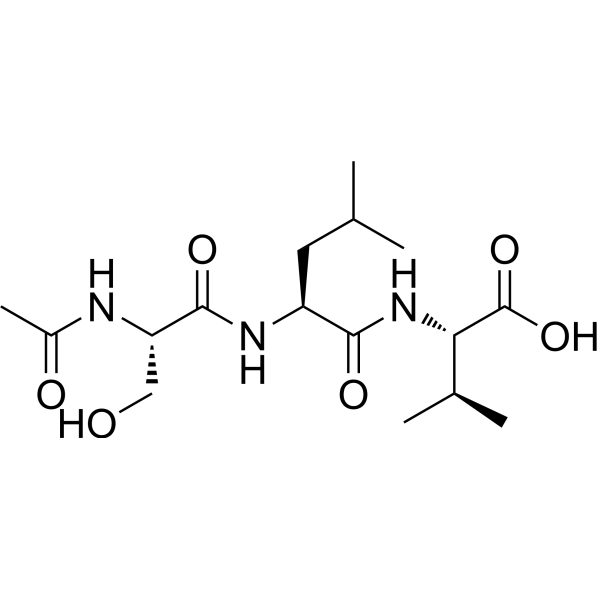
Fas C-Terminal Tripeptide is a C-terminal tripeptide of Fas. Fas C-Terminal Tripeptide shows the inhibitory effect on Fas/FAP-1 binding .
loading...
    loading...
Cat. No.: HY-N7521
CAS No.: 37064-31-6
Synonyms: Procyanidine C2
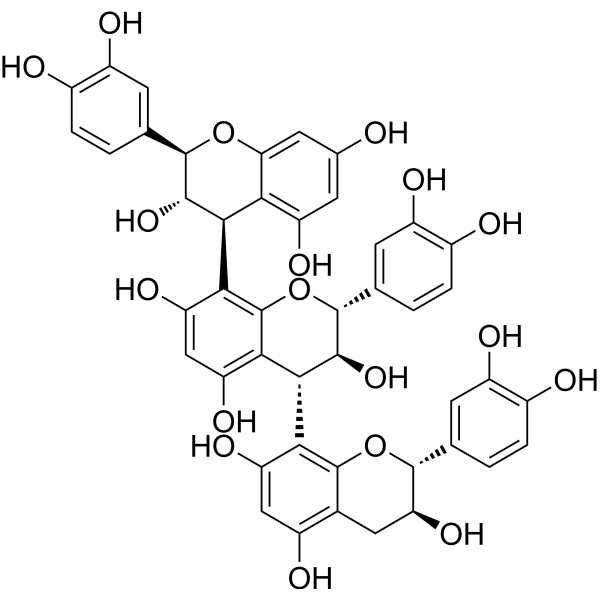
Procyanidin C2 (Procyanidine C2) is a lipid metabolism regulator and antioxidant with free radical scavenging activity. Procyanidin C2 down-regulates ACC, SREBP-1c, FAS, SCD-1 and PPARγ. Procyanidin C2 increases the level of phosphorylated AMPKα and inhibits the level of phosphorylated mTOR. Procyanidin C2 reduces lipid accumulation, alleviates oxidative stress, enhances fatty acid oxidation and improves mitochondrial function. Procyanidin C2 can be used in the research of non-alcoholic fatty liver disease .
loading...
    loading...
Cat. No.: HY-118147
CAS No.: 1808260-45-8
Research Areas:  

Cancer

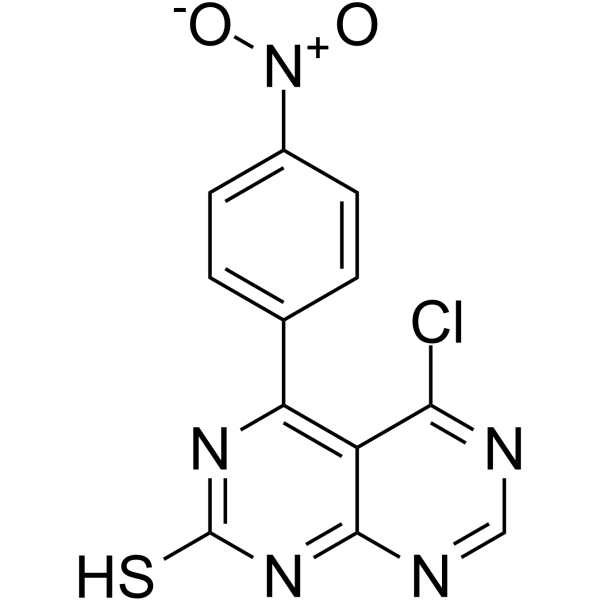
ML356 (Compound 16) is an inhibitor for fatty acid synthase (FAS), that inhibits the thioesterase domain of FAS (FAS TE) with an IC50 of 0.334 μM, and blocks the de novo palmitate synthesis in PC-3 cell with an IC50 of 20 μM. ML356 exhibits good membrane permeability, and good stability in human and mouse plasma .
loading...
    loading...
Cat. No.: HY-RS04751
Research Areas:  

Others

FAS Human Pre-designed siRNA Set A contains three designed siRNAs for FAS gene (Human), as well as a negative control, a positive control, and a FAM-labeled negative control.

loading...
    loading...
Cat. No.: HY-RS16712
Research Areas:  

Others

Fas Mouse Pre-designed siRNA Set A contains three designed siRNAs for Fas gene (Mouse), as well as a negative control, a positive control, and a FAM-labeled negative control.

loading...
    loading...
Cat. No.: HY-101849R
CAS No.: 392721-37-8
Fasentin (Standard) is the analytical standard of Fasentin. This product is intended for research and analytical applications. Fasentin, a potent glucose uptake inhibitor, inhibits GLUT-1/GLUT-4 transporters. Fasentin preferentially inhibits GLUT4 (IC50=68 μM) over GLUT1. Fasentin is a death receptor stimuli (FAS) sensitizer and sensitizes cells to FAS-induced cell death. Fasentin is also a tumor necrosis factor (TNF) apoptosis-inducing ligand sensitizer. Fasentin blocks glucose uptake in cancer cell lines and has anti-angiogenic activity .
loading...
    loading...
Cat. No.: HY-129624
CAS No.: 125313-65-7
Synonyms: Ro 31-7549; Bis VIII
Target:  

PKC Apoptosis

Research Areas:  

Inflammation/Immunology Cancer

Bisindolylmaleimide VIII (Ro 31-7549) is a potent and selective protein kinase C (PKC) inhibitor with an IC50 of 158 nM for rat brain PKC. Bisindolylmaleimide VIII has IC50s of 53, 195, 163, 213, and 175 nM for PKC-α, PKC-βI, PKC-βII, PKC-γ, PKC-ε, respectively . Bisindolylmaleimide VIII facilitates Fas-mediated apoptosis and inhibits T cell-mediated autoimmune diseases .
loading...
    loading...
Cat. No.: HY-103347R
CAS No.: 54135-60-3
Research Areas:  

Inflammation/Immunology

M50054 (Standard) is the analytical standard of M50054. This product is intended for research and analytical applications. M50054 is a potent inhibitor of apoptosis. M50054 inhibits Etoposide-induced caspase-3 activation of U937 cells with an IC50 of 79 μg/mL. M50054 does not directly inhibit the enzymatic activity of caspase-3. M50054 can be used for the research anti-Fas-antibody-induced hepatitis and chemotherapy-induced alopecia .
loading...
    loading...
Cat. No.: HY-RS04754

Fasn Mouse Pre-designed siRNA Set A contains three designed siRNAs for Fasn gene (Mouse), as well as a negative control, a positive control, and a FAM-labeled negative control.

loading...
    loading...
Cat. No.: HY-174713
Target:  

mRNA

Research Areas:  

Inflammation/Immunology

Human FASLG mRNA encodes the human Fas ligand (FASLG) protein, a member of the tumor necrosis factor superfamily. The primary function of the FASLG is the induction of apoptosis triggered by binding to FAS. The FAS/FASLG signaling pathway is essential for immune system regulation, including activation-induced cell death (AICD) of T cells and cytotoxic T lymphocyte induced cell death. It has also been implicated in the progression of several cancers.
loading...
    loading...
Cat. No.: HY-P5798
Synonyms: FAS-I
Target:  

Cholinesterase (ChE)

Research Areas:  

Neurological Disease

Fasciculin-I is isolated from the mambas venom. Fasciculin-I exerts its toxic effects by inhibiting acetylcholinesterase (AChE). Fasciculin-I blocks α-neurotoxins of nicotinic acetylcholine receptors and cardiac toxins that interact with cell membranes .
loading...
    loading...
Cat. No.: HY-146197
CAS No.: 2490538-26-4
Target:  

Apoptosis

Research Areas:  

Cancer

Apoptotic agent-1 (Compound 8a) is an apoptotic agent with high antiproliferative activity against cancer cells and low cytotoxic effect. Apoptotic agent-1 induces over-expression of Fas receptor and Cyto C genes .
loading...
    loading...
Cat. No.: HY-167879A
NPD6433 is a triazenyl indole with broad-spectrum activity against all screening fungal strains. NPD6433 targets the enoyl reductase domain of fatty acid synthase 1 (Fas1), covalently inhibiting its flavin mononucleotide-dependent NADPH-oxidation activity and arresting essential fatty acid biosynthesis .
loading...
    loading...
Cat. No.: HY-N7930
CAS No.: 63026-02-8
Crenulatin is a gallotannin that can be isolated from Rhodiola rosea. Crenulatin can be used as a biomarker to identify potentially adulterated R. rosea products. Crenulatin has dual- direction effects on apoptosis of cerebral microvascular endothelial cells, via regulating Fas/Bcl-2 expression and caspase-3 activity .
loading...
    loading...
Cat. No.: HY-103243R
CAS No.: 76150-91-9
Research Areas:  

Cancer

TCPOBOP (Standard) is the analytical standard of TCPOBOP. This product is intended for research and analytical applications. TCPOBOP is a constitutive androstane receptor (CAR) agonist that induces robust hepatocyte proliferation and hepatomegaly without any liver injury or tissue loss . TCPOBOP attenuates Fas-induced murine liver injury by altering Bcl-2 proteins .
loading...
    loading...
Cat. No.: HY-167879
CAS No.: 895908-81-3
(Rac)-NPD6433 is a racemate of NPD6433. NPD6433 is a triazenyl indole with broad-spectrum activity against all screening fungal strains. NPD6433 targets the enoyl reductase domain of fatty acid synthase 1 (Fas1), covalently inhibiting its flavin mononucleotide-dependent NADPH-oxidation activity and arresting essential fatty acid biosynthesis .
loading...
    loading...
Cat. No.: HY-P991606
TRX585 is a humanised anti-immunoglobulin-like transcript 5 (ILT5) monoclonal antibody. TRX585 has a potent immunoregulatory activity. TRX585 significantly activates human T cells and upregulates NKG2D and Fas ligand, followed by enhancing antitumor activity with potent cytotoxicity. TRX585 can be used for viral infections and malignancies research .
loading...
    loading...
Cat. No.: HY-168877
FMP is a Platinum(IV) complexe. FMP significantly upregulates the expression of γ-H2AX and p53. FMP increases the production of ROS. FMP markedly upregulates the expressions of Apoptosis-related proteins (DR5, Fas, caspase-8, Cyt-c, caspase-3, cleaved-PARP1, Bax). FMP shows antiproliferative activity against breast cancer .
loading...
    loading...

