
222 Results for "

Lymphoblastic

" in MedChemExpress (MCE) Product Catalog:
Products (222)

222 Results for "Lymphoblastic" in MCE Product Catalog:

Cat. No.: HY-148530
CAS No.: 2417408-46-7
Purity:  99.22%
Target:  

PROTACs CDK FOXM1

Research Areas:  

Cancer

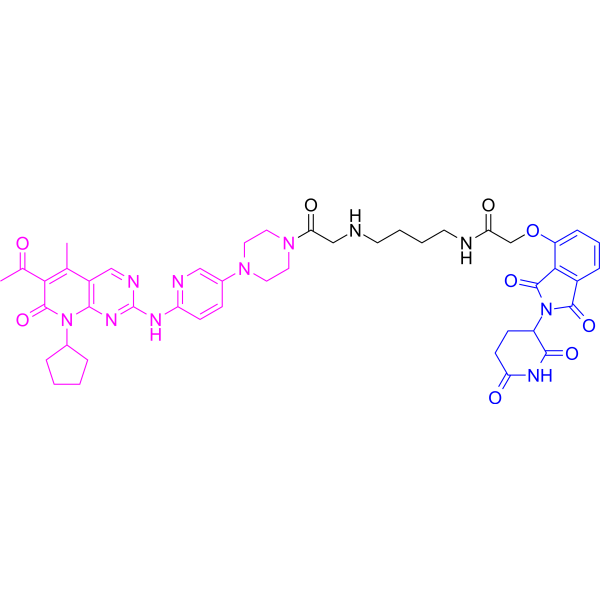
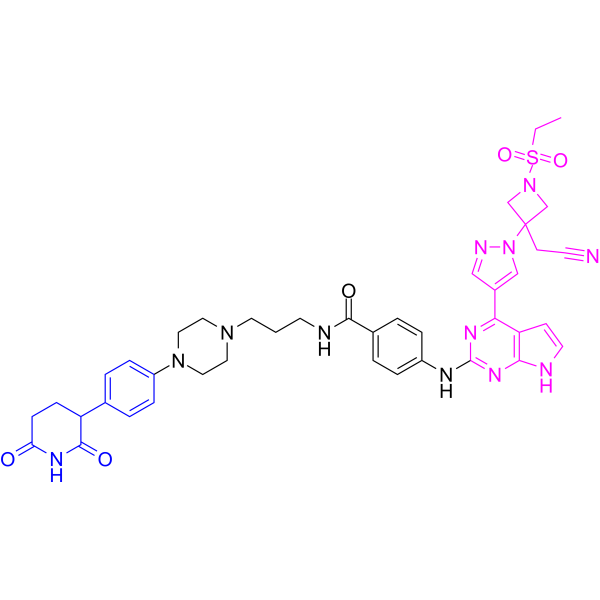
YX-2-107 is a PROTAC (IC50= 4.4 nM) that selectively degrades CDK6. YX-2-107 effectively inhibits RB phosphorylation and FOXM1 expression in vitro and inhibits the development of Ph + ALL in rats. YX-2-107 can be used in the study of Ph chromosome-positive (Ph +) acute lymphoblastic leukemia (ALL) .
loading...
    loading...
Cat. No.: HY-173523
CAS No.: 3054009-82-1
Target:  

PROTACs CDK c-Myc

Research Areas:  

Cancer

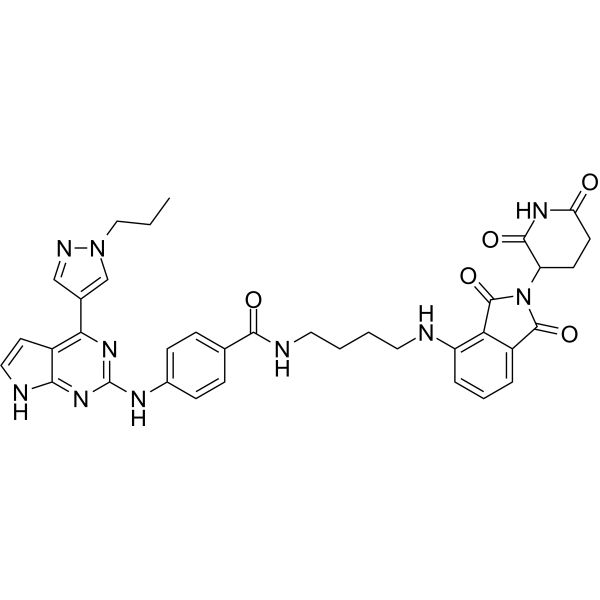
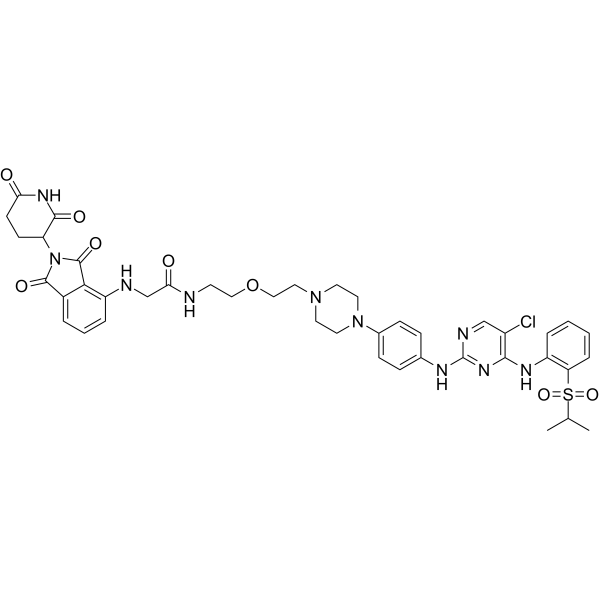
KI-CDK9d-32 is a selective CDK9 PROTAC degrader (IC50 = 3 nM; DC50 = 0.89 nM). KI-CDK9d-32 induces CDK9 degradation via the ubiquitin-proteasome pathway to abrogates CDK9 enzymatic and scaffolding functions, downregulates MYC expression and MYC-dependent signaling, represses TNF-alpha signaling pathways activity and pre-rRNA levels. KI-CDK9d-32 disrupts nucleolar homeostasis, blocks cell cycle progression and cellular translation by reducing 4EBP1 phosphorylation, and elicits cancer cell cytotoxicity in a CRBN-dependent manner, while high ABCB1 activity attenuates the efficacy. KI-CDK9d-32 can be used for the research of acute lymphoblastic leukemia, rhabdomyosarcoma, pancreatic adenocarcinoma .
loading...
    loading...
Cat. No.: HY-156794
CAS No.: 2412555-70-3
Purity:  99.88%
Synonyms: DSP-5336
Research Areas:  

Cancer

Enzomenib (DSP-5336) is an orally active Menin inhibitor (IC50=1.4 nM, Kd=6.0 nM). Enzomenib disrupts the interaction between Menin and KMT2A/MLL fusion proteins, specifically inhibits the expression of leukemia driver genes such as HOX/MEIS1, and upregulates ITGAM. Enzomenib effectively induces cell differentiation, inhibits tumor cell proliferation, and suppresses primitive cell colony formation. Enzomenib reduces disease burden and prolongs survival, but causes adverse reactions including differentiation syndrome and QTc interval prolongation. Enzomenib is used for research on relapsed/refractory acute myeloid leukemia, acute lymphoblastic leukemia, and other hematologic malignancies with mixed lineage leukemia (MLL) rearrangements or NPM1 mutations .
loading...
    loading...
Cat. No.: HY-176244
CAS No.: 1351116-34-1
Research Areas:  

Cancer

KI-TOX-A3 is a TOX protein-protein interaction inhibitor that blocks the TOX-KAT7 protein-protein interaction with an IC50 of 0.51 μM. KI-TOX-A3 induces proteasomal degradation of TOX, restores KAT7-mediated H3K14 acetylation, reverses exhaustion of CD8 + T cells, and inhibits the proliferation of T cell acute lymphoblastic leukemia (T-ALL) cells. KI-TOX-A3 shows promise for use in studies of hematological malignancies such as T-ALL .
loading...
    loading...
Cat. No.: HY-151902
CAS No.: 2595365-41-4
Purity:  98.05%
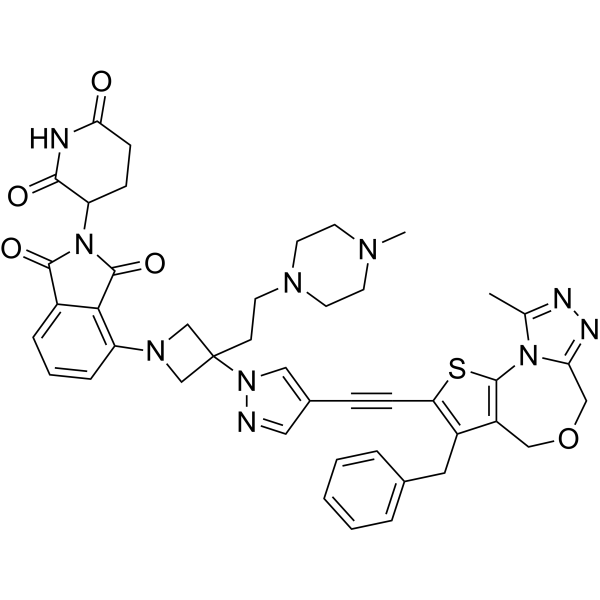
SJ988497 is a PROTAC degrader targeting JAK2. SJ988497 induces the proteasomal degradation of CRBN-mediated JAK2, JAK1, JAK3, GSPT1, and IKZF1, and functions as a CRBN neosubstrate for GSPT1. SJ988497 retains binding affinity for the kinase domain of JAK2. SJ988497 can be used in studies related to cancers such as crlf2-rearranged acute lymphoblastic leukemia .
loading...
    loading...
Cat. No.: HY-150109
CAS No.: 2650188-32-0
Purity:  99.45%
Synonyms: Purinostat mesylate
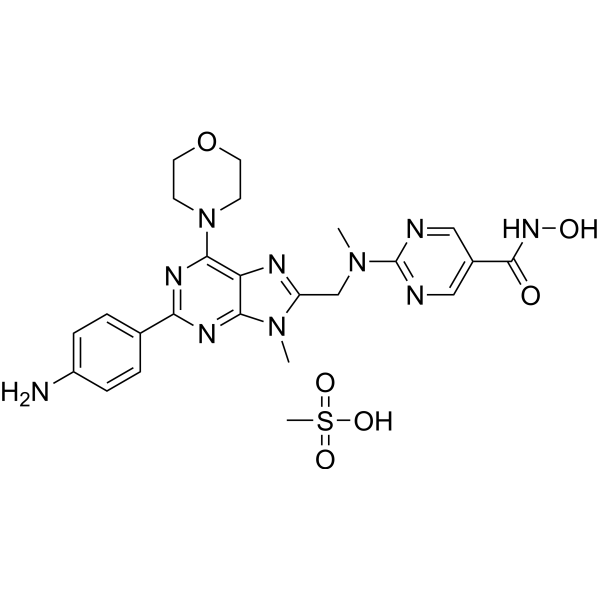
Puzerinostat mesylate (Purinostat mesylate) is a highly selective class I/IIb histone deacetylase (HDAC) inhibitor, with IC50 values of 0.81 nM, 1.4 nM, 1.7 nM, 3.8 nM, 11.5 nM, and 1.1 nM against HDAC1, HDAC2, HDAC3, HDAC8, HDAC6, and HDAC10, respectively. Puzerinostat mesylate enhances glutamine metabolism by upregulating GLS1. Puzerinostat mesylate induces cell Apoptosis and downregulates the expression of BCR-ABL and c-MYC. Puzerinostat mesylate delays the progression of Ph + B-cell acute lymphoblastic leukemia and prolongs the survival of relevant mouse models. Puzerinostat mesylate regulates the immune microenvironment. Puzerinostat mesylate can be used in research related to chronic myeloid leukemia, Philadelphia chromosome-positive B-cell acute lymphoblastic leukemia, relapsed/refractory multiple myeloma, relapsed/refractory lymphoma, diffuse large B-cell lymphoma, and double-expression lymphoma .
loading...
    loading...
Cat. No.: HY-168654
CAS No.: 3090685-34-7
Target:  

Wee1

Research Areas:  

Cancer

WEE1 degrader 1 (Compound 10) is a CRBN-dependent molecular glue degrader of WEE1 and casein kinase 1α (CK1α) with sub-2 nM DC50 values for both targets. WEE1 degrader 1 can be used for the research of acute lymphoblastic leukemia, acute monocytic leukemia, acute promyelocytic leukemia, colorectal adenocarcinoma, diffuse large b cell lymphoma .
loading...
    loading...
Cat. No.: HY-149878
CAS No.: 3037514-38-5
Purity:  98.81%
Research Areas:  

Cancer

BD-9136 is a selective BRD4 PROTAC degrader with a DC50 of 1.2 nM, and exhibits a selectivity of ≥1000-fold over BRD2 and BRD3. BD-9136 preferentially forms a ternary complex with the BD1 domain of BRD4, and downregulates the expression of B7-H4 by disrupting the PR-P300-BRD4 axis. BD-9136 depletes BRD4 protein in tumor tissues, inhibits tumor growth, reduces B7-H4 protein expression, increases CD8+ T cell infiltration, and enhances tumor sensitivity to anti-PD-L1. Degradation of BRD4 by BD-9136 rescues the erythroid differentiation block induced by LSD1 inhibition, and transient administration restores erythroid output while retaining HbF induction. BD-9136 causes no adverse effects in mice at effective doses. BD-9136 can be used in studies related to acute myeloid leukemia, acute lymphoblastic leukemia and breast cancer .
loading...
    loading...
Cat. No.: HY-108860
CAS No.: 130167-69-0
Purity:  ≥99.0%
Synonyms: PEG-L-asparaginase; Pegasparaginase
Research Areas:  

Inflammation/Immunology

Oncaspar (PEG-L-asparaginase; Pegasparaginase), a pegylated form of native Escherichia coli-derived L-asparaginase, breaks down the amino acid asparagine that are circulating in the bloodstream. Oncaspar plays an important role in acute lymphoblastic leukemia (ALL) through asparagine hydrolysis and activation of the integrated stress response (ISR) pathway .
loading...
    loading...
Cat. No.: HY-174876
Research Areas:  

Cancer

PZ671 is a Bcl-xL PROTAC degrader that recruits cereblon, with a DC50 of 0.9 nM in MOLT-4 T-ALL cells. PZ671 induces apoptosis via activation of caspase-3 and cleavage of PARP, and exhibits antitumor activity in T-cell acute lymphoblastic leukemia and small cell lung cancer models. PZ671 can be used for the research of T-cell acute lymphoblastic leukemia and small cell lung cancer .
loading...
    loading...
Cat. No.: HY-145696
CAS No.: 2789678-92-6
Purity:  99.92%
Target:  

PROTACs JAK

Research Areas:  

Cancer

SJ10542 is a potent and selective JAK2/3 PROTAC degrader, with DC50 values of 14 nM and 11 nM against JAK2 and JAK3, respectively. SJ10542 exhibits anti-tumor activity and can be used for research on acute lymphoblastic leukemia .
loading...
    loading...
Cat. No.: HY-137341
CAS No.: 2769753-23-1
Purity:  98.33%
Target:  

PROTACs YTHDF

Research Areas:  

Neurological Disease Cancer

SK-3-91 is a multi-kinase PROTAC degrader that induces the degradation of the maximum number of unique kinases (over 125 distinct kinases) simultaneously. SK-3-91 induces protein degradation via the ubiquitin biotinylation (E-STUB) pathway, such as inducing the degradation of YTHDF2. SK-3-91 also inhibits cell proliferation and induces cell morphological changes. SK-3-91 can be used in research related to acute lymphoblastic leukemia, multiple myeloma, neuroblastoma, ovarian cancer, mantle cell lymphoma, and gastric cancer .
loading...
    loading...
Cat. No.: HY-117948
CAS No.: 1560968-49-1
Research Areas:  

Cancer

ML399 is a Menin-MLL1 protein-protein interaction inhibitor with an IC50 of 90 nM. ML399 inhibits the proliferation of transformed mouse bone marrow cells. ML399 binds to the hERG potassium channel, exhibits superior in vitro physicochemical, drug metabolism and pharmacokinetic (DMPK) parameters, and has an extended half-life in rodents. ML399 can be used for research on acute myeloid leukemia and acute lymphoblastic leukemia .
loading...
    loading...
Cat. No.: HY-10087R
CAS No.: 923564-51-6
Synonyms: ABT-263 (Standard)
Navitoclax (Standard) (ABT-263 (Standard)) is the analytical standard of Navitoclax (HY-10087). This product is intended for research and analytical applications. Navitoclax (ABT-263 ) is an orally active BH3 mimetic and an inhibitor of Bcl-2, Bcl-xL, and Bcl-w, with a Ki value of <1 nM for each target. Navitoclax triggers endogenous Apoptosis and downregulates the expression of Survivin and TGFβ2. Navitoclax alleviates fibrosis and induces thrombocytopenia. Navitoclax exhibits anticancer activity against a variety of tumors and enhances the efficacy of chemotherapy and radiotherapy. Navitoclax can be used in the research of acute lymphoblastic leukemia, ovarian cancer, and fibrotic diseases .
loading...
    loading...
Cat. No.: HY-171178
CAS No.: 2902651-64-1
Target:  

p38 MAPK

Research Areas:  

Cancer

DK2403 (compound 25) is a MAP2K7 inhibitor (IC50= 0.01 μM). DK2403 can effectively inhibit MAP2K7 without significantly disrupting the larger kinase group and can be used to study childhood T-cell acute lymphoblastic leukemia .
loading...
    loading...
Cat. No.: HY-P99264A
CAS No.: 1660159-36-3
Synonyms: Humanized Anti-CD22 Recombinant Antibody (powder)

Research Areas:  

Cancer

Inotuzumab (Humanized Anti-CD22 Recombinant Antibody) (powder) is a humanized IgG4κ antibody that targets human CD22. Inotuzumab (powder) can be linked to a toxic agent Ozogamicin as an antibody-drug conjugate (ADC), Inotuzumab ozogamicin (HY-P9959). Inotuzumab (powder) can be used for the research of acute lymphoblastic leukemia and non-Hodgkin lymphoma .
loading...
    loading...
Cat. No.: HY-14572
CAS No.: 680199-06-8
Synonyms: SN 27858
Research Areas:  

Cancer

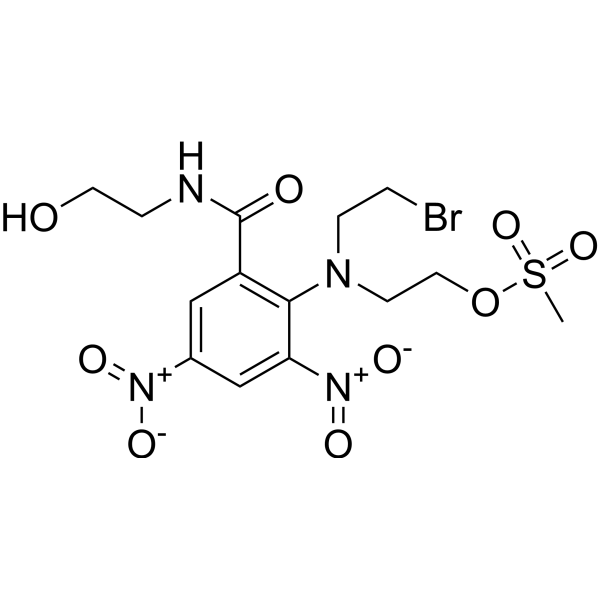
PR-104A (SN 27858) is the alcohol metabolite of phosphate proagent PR-104. PR-104A is a hypoxia-selective DNA cross-linking agent/DNA-damaging agent and cytotoxin. Antitumor Activity . PR-104A is metabolized under hypoxia by the 1-electron NADPH:cytochrome P450 oxidoreductase. PR-104A can be used for the research of relapsed/refractory T-lineage acute lymphoblastic leukemia (T-ALL) .
loading...
    loading...
Cat. No.: HY-172798
Target:  

PROTACs Bcl-2 Family

Research Areas:  

Cancer

XZ338 is a highly potent and selective BCL-XL PROTAC degrader derived from A-1331852 (HY-19741), with a DC50 of 0.43 nM in MOLT‑4 cells. XZ338 induces the formation of a ternary complex with BCL-XL and VHL E3 ligase, mediates target protein degradation via the ubiquitin-proteasome system, and exhibits significantly weaker degradation activity in platelets than in tumor cells. XZ338 possesses anti-cancer activity. XZ338 can be used in the research of T-cell acute lymphoblastic leukemia (T-ALL) .
loading...
    loading...
Cat. No.: HY-159175
CAS No.: 3098519-83-3
Research Areas:  

Cancer

XM-U-14 is a selective PROTAC USP7 Degrader (DC50: 0.74 nM in inducing USP7 degradation in RS4;11 cell line). XM-U-14 upregulates the levels of p53 and p21. XM-U-14 also significantly inhibits acute lymphoblastic leukemia (ALL) cell growth (IC50: 0.5 nM and 8.3 nM for RS4;11 cells and Reh cells respectively). XM-U-14 induces apoptosis and cycle arrest. XM-U-14 inhibits tumor growth. (Blue: VHL ligand (HY-159465), Black: linker (HY-W539783); Pink: USP7 inhibitor (HY-159464)) .
loading...
    loading...
Cat. No.: HY-150109A
CAS No.: 1929583-17-4
Synonyms: Purinostat
Puzerinostat (Purinostat) is a highly selective class I/IIb histone deacetylase (HDAC) inhibitor, with IC50 values of 0.81 nM, 1.4 nM, 1.7 nM, 3.8 nM, 11.5 nM, and 1.1 nM against HDAC1, HDAC2, HDAC3, HDAC8, HDAC6, and HDAC10, respectively. Puzerinostat enhances glutamine metabolism by upregulating GLS1. Puzerinostat induces cell Apoptosis and downregulates the expression of BCR-ABL and c-MYC. Puzerinostat delays the progression of Ph + B-cell acute lymphoblastic leukemia and prolongs the survival of relevant mouse models. Puzerinostat regulates the immune microenvironment. Puzerinostat can be used in research related to chronic myeloid leukemia, Philadelphia chromosome-positive B-cell acute lymphoblastic leukemia, relapsed/refractory multiple myeloma, relapsed/refractory lymphoma, diffuse large B-cell lymphoma, and double-expression lymphoma .
loading...
    loading...

